
White strawberries are a remarkable berry that attracts gardeners and gourmets with their unusual color and distinctive flavor. Unlike their more familiar red counterparts, they have a soft, sweet aroma with light fruity notes and hypoallergenic properties, making them particularly valuable for baby food and dietary use.
What is a white strawberry?
This rare garden berry is distinguished by its light-colored fruit and mild, sweet flavor. It is chosen for its decorative qualities and unusual aromatic notes. This fruit combines aesthetic appeal with beneficial properties, making it attractive both for cultivation and culinary use.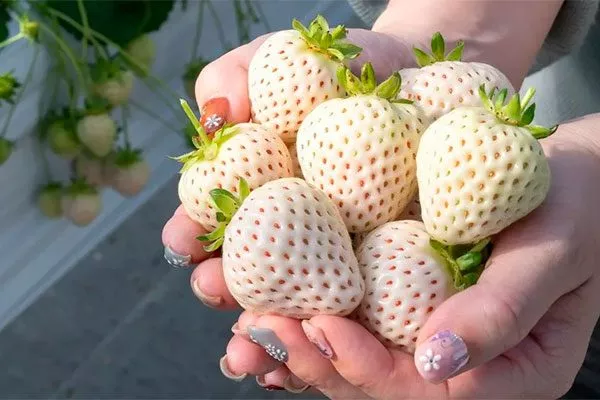
Historical notes on the origin of the white variety
The history of white strawberries goes back deep into history. As early as the 16th and 17th centuries, there were references to wild strawberries with unusually light-colored fruits in Europe. Such plants were long considered natural curiosities and had no commercial value.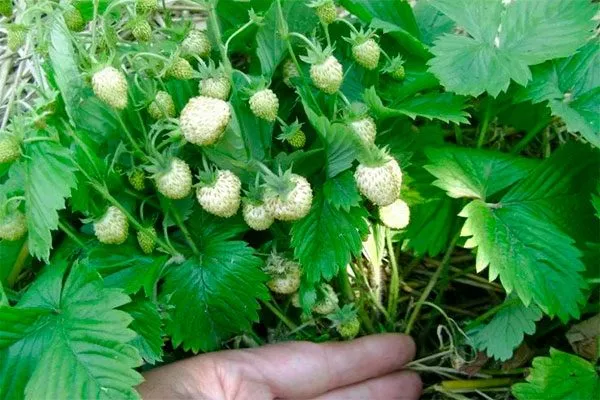
Interesting facts:
- In the 19th century, breeders began actively studying the properties of strawberries, and it was then that attention was drawn to white-fruited varieties.
- South America played a special role in the development of the crop: it was from there that the pineapple strawberry (Fragaria × ananassa) was brought to Europe, becoming the basis for many hybrids, including white varieties.
- In the 20th century, breeders in Sweden, Holland, and Japan consolidated the white-fruited traits, creating stable lines with good yields.
Biological characteristics of white strawberries
White strawberries are not a distinct species, but rather a color variation within known varieties. Their uniqueness stems from the absence of anthocyanin pigments, which give the fruit its red color.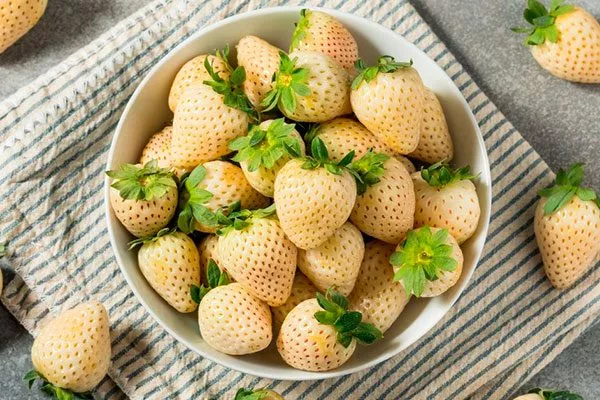
At the same time, the berries retain all their beneficial substances:
- vitamins C and B group;
- organic acids;
- iron;
- calcium;
- magnesium.
The taste is unusual: the tender flesh is distinguished by a harmony of sweetness and aroma.
In terms of bush structure, white strawberries are identical to red varieties: they have compact rosettes of leaves, well-developed runners, and flower stalks that produce clusters of berries. Yield depends on care, but on average, a bush produces 200 to 400 grams of fruit.
Why have white strawberries become popular among gardeners?
In recent years, white strawberries have ceased to be a rare curiosity and are increasingly common in garden plots and even on farms. They are prized not only for their unusual appearance but also for the practical benefits that make this crop convenient and rewarding to grow.
The popularity of the culture is explained by several reasons:
- Unique taste and aroma. The berries have a soft sweetness with tropical notes, making them popular in cooking: they are used in desserts, jams, as a garnish, and as a fresh delicacy.
- Hypoallergenic properties. White strawberries have become a true salvation for those who are intolerant to red berries. They are suitable for children and those with allergies.
- Exotic appearance. In the garden, the white berries look very unusual and striking, especially in contrast with the green foliage and bright flowers. Many gardeners also plant them for their decorative value.
Features of white strawberries
White strawberries are not just a rare, colored variety, but a distinct breeding trend characterized by a whole host of unique characteristics. To better understand their value, it's important to explore their key differences and positive attributes.
Differences between white strawberries and traditional red ones
To understand the value of white strawberries, it's important to compare them with familiar red-fruited varieties. Despite similarities in care and growing conditions, the differences between them are quite significant, manifesting themselves in both the appearance and the taste and properties of the berries.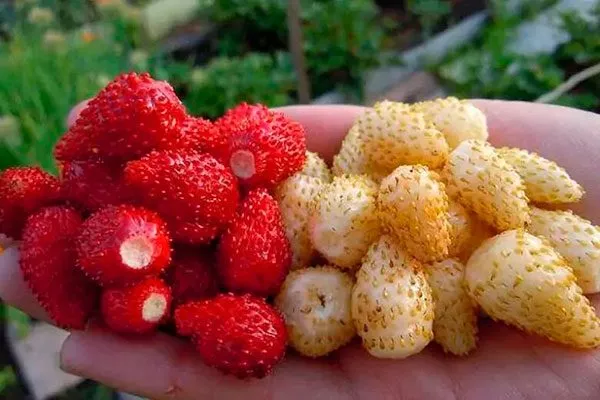
Distinguishing features:
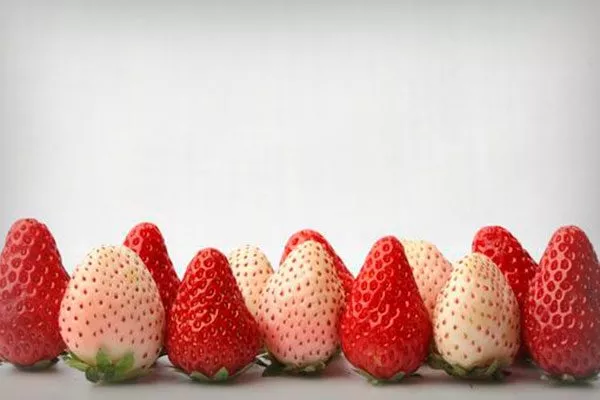
- Fruit color. White strawberries lack the pigment anthocyanin, so the fruits don't turn red when ripe, but remain white, cream, or slightly pinkish. However, the seeds on the surface are often yellow or red, creating an interesting contrast.
- Aroma and taste. Unlike the familiar red strawberry with its characteristic tartness, white strawberries have a soft, sweet flavor with unusual fruity notes. Many note a resemblance to pineapple, giving rise to the unofficial name "pineapple strawberry."
- Hypoallergenic. The red color of traditional strawberries often causes allergies, especially in children. White strawberries, however, do not contain the allergenic pigment, so they are safe to eat even for those with hypersensitivity.
- Application. Red varieties are traditionally used for preserves, jams, and compotes, while white strawberries are prized fresh and used in exquisite desserts. Their distinctive flavor often becomes a culinary highlight.

Advantages and disadvantages of white strawberries
White strawberries have both strengths and weaknesses. It's important for gardeners to consider these before choosing this variety for cultivation.
Main varieties of white strawberries
Today, white strawberries are no longer just a botanical rarity and have become a fully-fledged garden crop with a wide variety of cultivars. Breeders have developed several hardy and productive varieties with unique characteristics.
Pineberry
Characterized by white fruits and a pineapple flavor, this hybrid was created by Dutch breeder Hans de Jong and introduced in 2009 under the name Ananaserdbeeren. It was created by crossing Chilean and Virginia strawberries.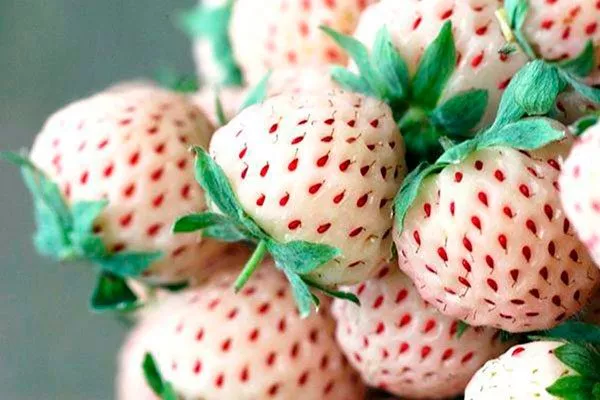
Key Features:
- Forms large bushes 20-30 cm high. The leaves are green, pubescent, the seeds are burgundy-red.
- Thin flower stalks often bend to the ground under the weight of the fruit.
- The fruits reach 1.5-2.5 cm in diameter and weigh about 30 g, making them considered small. They are distinguished by their snow-white skin and creamy flesh, sometimes with a slight orange tint.
- The flavor is characterized by a distinct pineapple aroma, complemented by the aroma of pineapple and tropical mango. The sweetness is moderate.
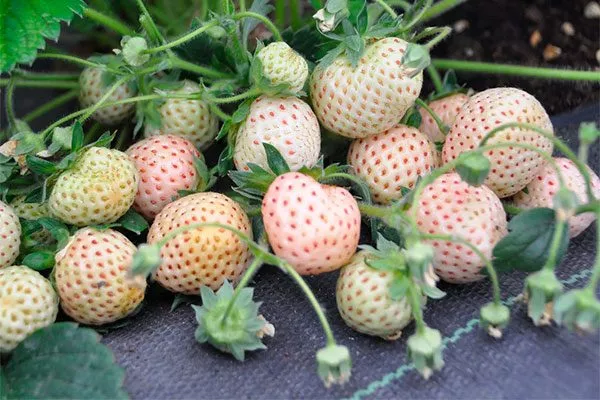
Fruit ripening begins in late June, with the distinctive deep red color of the seeds being a defining characteristic. The yield is good, but due to poor transportability, Pineberry is not suitable for commercial cultivation. Approximately 1 kg of berries can be harvested per square meter.
Alba
The variety, patented in 2003, was developed by the Italian company New Fruits through complex breeding to produce large, tasty fruits. The Cal. 97.85-6 and Albion varieties were used as parent varieties.
Characteristics of the culture:
- The plants are vigorous, reaching a height of 30-35 cm. The bushes are compact, densely foliated, and bear large, upright, bright green leaves. The petioles are long and pointed upward.
- The flower stalks are quite strong, but under the weight of the ripening berries they often bend towards the ground, being at the level of or slightly below the leaves.
- The berries are an attractive bright red color and conical in shape. They range in size from medium to large, weighing 25-30 g on average. The flesh is firm and juicy. The fruit separates easily from the stem with a dry peel.
- The variety is characterized by an excellent sweet taste and a moderate pleasant aroma.
Alba is an early strawberry variety that ripens in May and June. Its yield is considered average, with one bush yielding 1 to 1.2 kg of ripe berries.
White Swede
This unique variety was created in Europe in the late Middle Ages by hybridizing Chilean and Virginia strawberries. The breeding effort was led by Hans de Jong.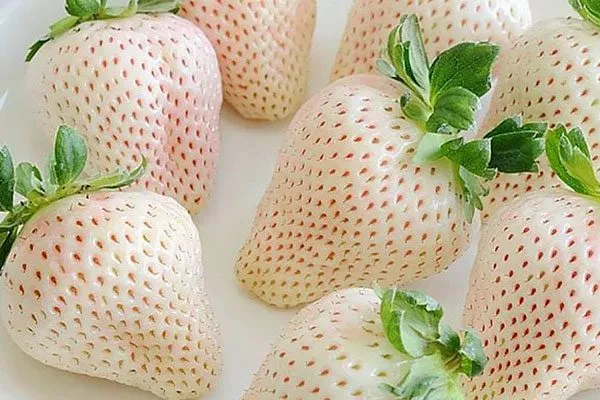
Botanical description:
- The bush has a compact, squat shape, which makes harvesting and fertilizing somewhat difficult, requiring the gardener to work in a sitting position.
- White, cone-shaped berries are considered large for colorless strawberry varieties.
- The fruits have a tart flavor with an aroma reminiscent of mulberry and pineapple, with an average weight of 20-23 g. Due to their delicate texture, they require careful transportation in a single layer or in small containers.
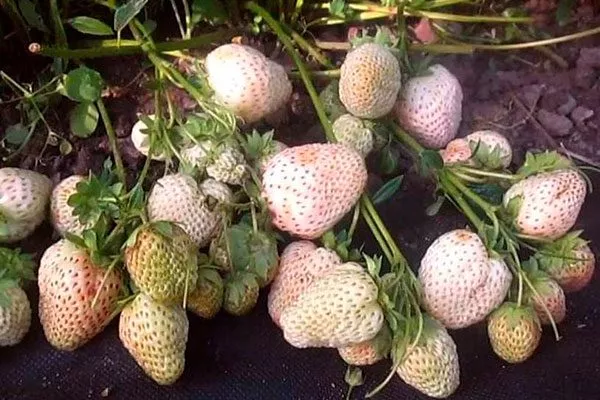
It is distinguished by its average ripening period in June and a yield of 0.4-0.65 kg per bush.
Growing white strawberries
White strawberries differ little in their cultivation requirements from red-fruited varieties, but to ensure a consistent harvest, it's important to consider their specific characteristics. Choosing the right location, quality soil, and proper preparation determine not only the quantity of berries but also their flavor.
Ideal growing conditions
The plant prefers sunny, well-lit areas, but can also tolerate light partial shade. In too much shade, the yield is significantly reduced, and the berries become more watery in flavor. The best location is an open bed or an area near shrubs that provide light shade during the hottest hours.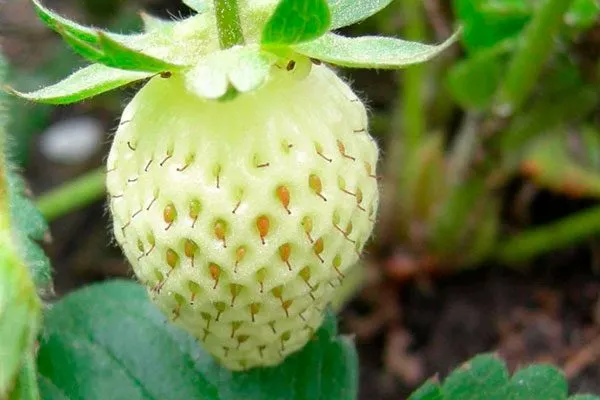
The ideal soil is loose, fertile, and neutral to slightly acidic (pH 5.5-6.5). It should be well-drained, as waterlogging leads to root rot. Loam or sandy loam enriched with humus is ideal.
White strawberries respond well to the right planting conditions. They can be planted next to the following crops:
- garlic;
- onions;
- salad;
- spinach;
- radish;
- calendula.
Planting with marigolds is useful – these plants repel pests.
Preparatory activities
Before planting, the site must be carefully prepared. Follow these recommendations:
- Dig the soil to a depth of 20-25 cm, removing weed roots.
- Add organic matter to the soil – humus or compost at a rate of 5-6 kg per 1 sq. m, as well as wood ash or potassium fertilizers to increase fertility.
- If the soil is heavy, lighten it by adding sand.
- To prevent diseases, water the area with a solution of potassium permanganate or Fitosporin.
- 1-2 weeks before planting, form the beds and water them well.
Sowing seeds
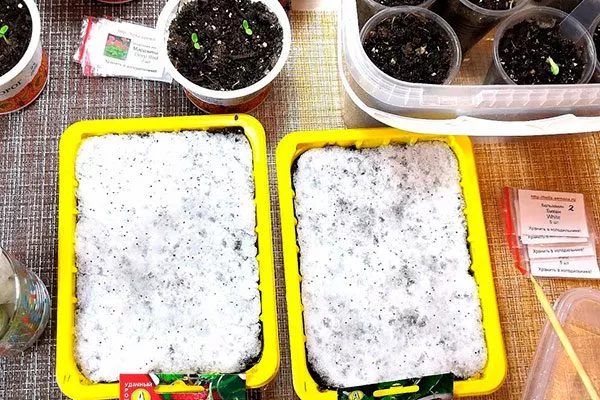
To improve germination, stratify the seeds: Refrigerate the seeds for 2-3 weeks in a damp cloth or sand. Then, proceed to the following steps:
- In early spring (February-March), sow the seeds in containers or boxes filled with light peat soil. Don't plant them too deeply—just press them lightly into the surface and spray with water.
- Cover the containers with plastic or glass to create a mini greenhouse. Maintain a temperature of 20–22°C and provide good lighting.
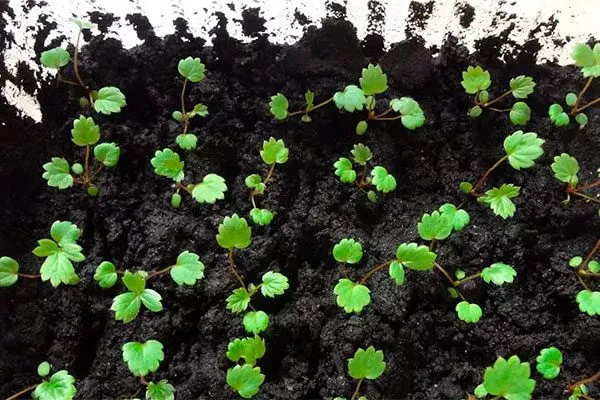
- When the plants have 2-3 true leaves, carefully transplant them into separate cups or peat pots.
- 7-10 days before planting in the ground, gradually acclimate it to fresh air, taking it outside for a few hours at first, and then leaving it for the whole day.
Plant care
To ensure a consistent harvest and maintain its decorative appeal, white strawberries require regular care. Key activities include watering, fertilizing, thinning and trimming runners, and maintaining clean and loose soil.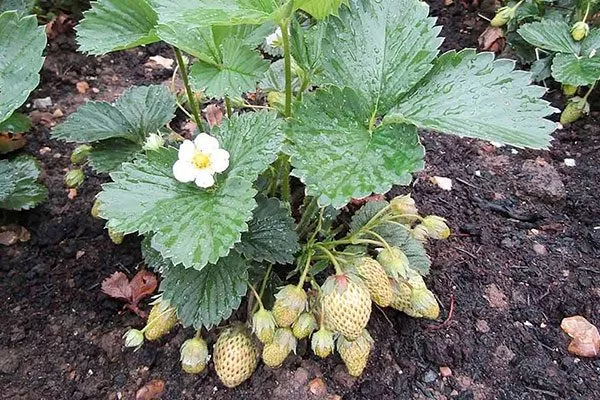
Watering
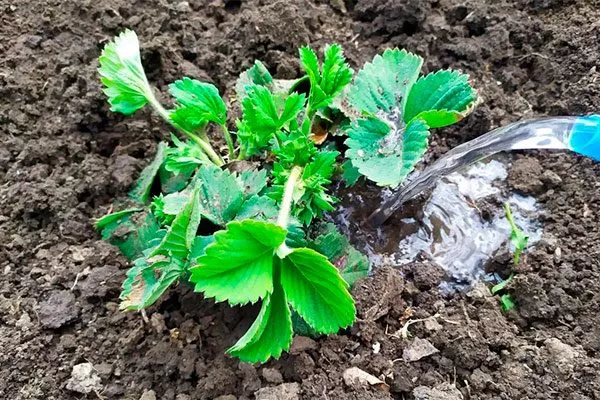
White strawberries prefer moderate humidity but don't tolerate stagnant water. Follow these basic guidelines:
- Water the bushes 1-2 times a week, depending on the weather. In hot weather, water more often, but in small amounts.
- Use only warm, settled water. Cold water can slow growth and cause root problems.
- Direct water to the roots, avoiding contact with leaves and berries to avoid creating conditions conducive to the development of fungal infections.
- After watering, loosen the soil or mulch the bed with straw, grass, or peat.
Top dressing
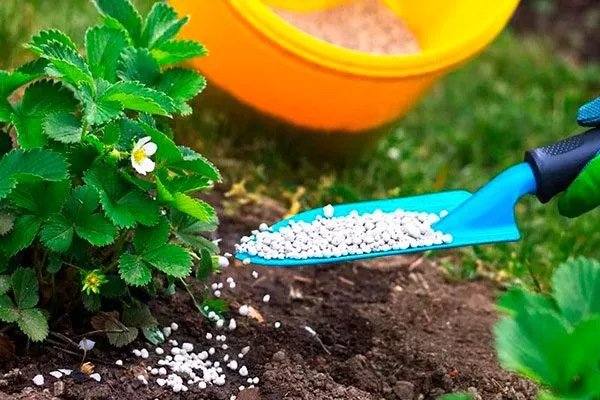
White strawberries respond well to regular feeding. Feed them during the following periods:
- Early spring Use nitrogen fertilizers (infusion of mullein, bird droppings or urea) to stimulate leaf growth.
- Before flowering Apply phosphorus-potassium fertilizers, which help the formation of buds and ovaries.
- During fruiting Give preference to organic matter (ash, herbal infusions) so that the berries are sweet and aromatic.
- In the fall Apply potassium and phosphorus to strengthen plants and prepare them for winter.
Thinning and pruning
White strawberries actively form runners and new rosettes. If left unchecked, the bushes will become dense, and yields will decline.
Follow these recommendations:
- Regularly remove excess whiskers, leaving only those needed for reproduction.
- Thin out dense plantings, especially if bushes grow too close to each other.
- After fruiting, trim off old and damaged leaves – this will reduce the risk of disease and allow the plants to recover more quickly.
Harvesting and storage
White strawberries ripen gradually, so they need to be picked regularly, every 2-3 days. Timely picking allows you to get the sweetest and most flavorful fruits and prolongs the fruiting period.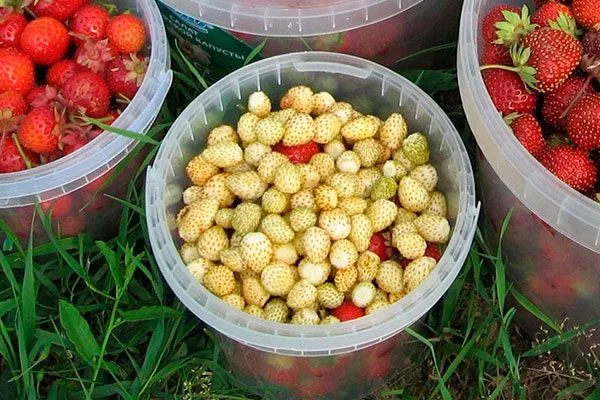
Basic requirements:
- Collect in dry weather. Morning or evening picking is preferable, as the berries at this time are more elastic and do not get crushed.
- Remove together with the stalk. This allows the product to remain fresh longer and reduces the risk of damage to the delicate flesh.
- Use shallow baskets or boxes. In them, the berries do not get crushed under their own weight.
White strawberries don't store well for long periods of time, so they're best eaten fresh. However, under the right conditions, their shelf life can be slightly extended:
- in the refrigerator, berries do not spoil for up to 2-3 days at a temperature of +2…+4°C;
- for a longer shelf life, they can be frozen whole or ground with sugar - in this form, the taste and aroma remain rich until winter;
- The berries are suitable for making jam, preserves, and compotes, but due to their delicate taste they are often used in combination with other fruits;
- When dried or made into pastilles, white strawberries retain their sweetness and light pineapple aroma.
Methods of reproduction
White strawberries can be propagated in several ways, each with its own characteristics and advantages. The choice of method depends on the goals: preserving varietal qualities, accelerating harvest, or expanding plantings.
Popular methods of reproduction:
- With a mustache. Select strong plants with large berries. Secure the runner to the ground using a pin or lightly cover the rosette at the end of the runner with soil. Wait for the roots to develop; they usually appear within 2-3 weeks. Carefully detach the plant from the mother plant and transplant it to its permanent location.
- By dividing the bush. This is an ideal option for older bushes, allowing you to replant and preserve the variety. Dig up a mature bush and carefully separate the roots and rosettes. Divide into several sections—each should have a developed root system and several leaves. Plant in a prepared spot, water well, and mulch.
- Green cuttings. This method is less common, but effective for some varieties. Select healthy shoots and cut 8-10 cm long cuttings with 2-3 leaves. Prepare the planting soil using a mixture of sand and peat.
Plant the cuttings 2-3 cm deep and provide moisture and indirect light. Wait for rooting—roots usually form within 3-4 weeks.
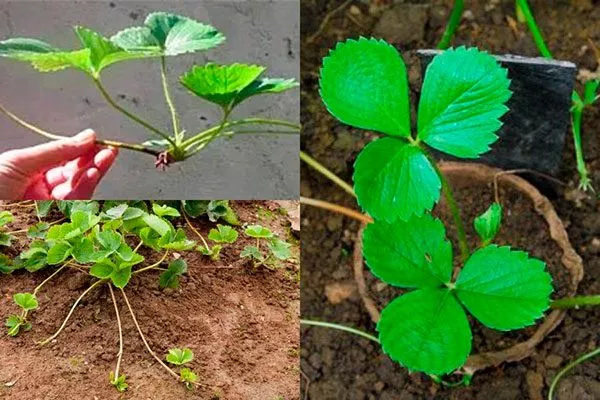

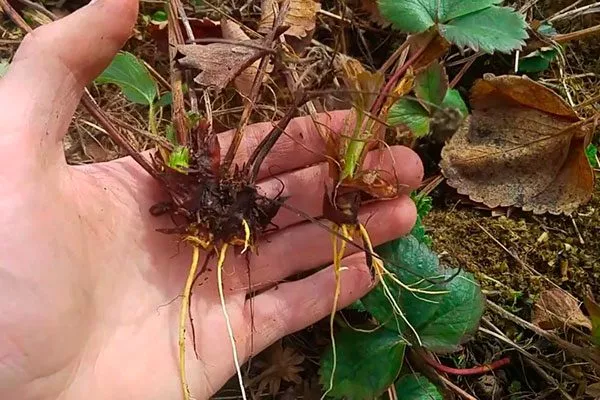
The choice of propagation method for white strawberries depends on the goals: runners are most often used for expanding beds, while seeds are used for breeding experiments or mass cultivation. Dividing the bush and taking cuttings are suitable for renewing plantings and preserving varietal qualities.
Problems and difficulties in growing
Growing white strawberries requires careful attention to a number of factors. Despite the ease of cultivation of some modern varieties, gardeners may encounter difficulties due to various factors. Understanding these issues and how to solve them helps ensure a consistent harvest of high-quality berries.
Possible difficulties and ways to overcome them
White strawberries have a number of characteristics that can create difficulties. Let's look at the main ones:
- Sensitivity to overwatering. Stagnant water leads to root rot and fungal infections. Ensure drainage in the beds, mulch the soil, and water moderately.
- Poor adaptation to sudden temperature changes. Young plants are especially vulnerable to late frosts. If necessary, cover the bushes with agrofibre or film, and use hardened seedlings.
- Low yield in the first years when propagated by seeds. Seedlings may produce fewer berries. Ensure regular fertilizing, adequate watering, and loosening of the soil.
- Competition with weeds. Weeds steal moisture and nutrients. Regular weeding, mulching, and tilling the soil before planting will help solve this problem.
Common diseases and insect pests
White strawberries are susceptible to various diseases and insect attacks. The most common are:
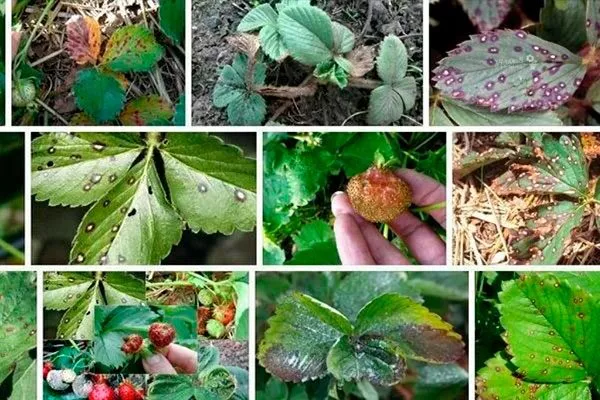
- Fungal diseases: Gray mold, powdery mildew, late blight, and white rot. Symptoms include leaf spots, wilting, and fruit rot.
- Viral infections: Strawberry mosaic, chlorosis. Symptoms include leaf discoloration and growth retardation.
- Insect pests: Spider mites, aphids, strawberry weevils, and slugs damage leaves, flowers, and fruit, reducing yield.
Ways to combat negative factors
To successfully grow white strawberries, it's important to use a combination of measures. Follow these recommendations:
- Prevention. Observe crop rotation, do not plant plants in the same place for more than 3-4 years, remove diseased bushes, and disinfect tools.
- Agricultural technology. Perform simple maintenance procedures: loosen the soil, mulch, water regularly, thin out dense plantings, and remove old and damaged leaves.
- Biological methods. Attract beneficial insects (ladybugs, spiders), use infusions of garlic, onion peel or herbal decoctions against pests.
- Chemical protection. In case of widespread infestation, fungicides and insecticides are effective. Strictly follow the instructions and waiting periods before harvesting berries.
- Hardening and care of seedlings. They help plants cope better with stressful conditions and reduce the risk of disease.
A comprehensive approach to growing white strawberries minimizes the negative impact of environmental factors, diseases, and pests, ensuring healthy bushes and high-quality harvests of flavorful berries.
Snow-white strawberries in cooking and dietary nutrition
White strawberries are a valuable culinary and healthy food ingredient. Their unique flavor and aroma offer a wide range of possibilities for desserts, drinks, and fresh salads, while their hypoallergenic properties make them suitable even for those sensitive to red strawberries.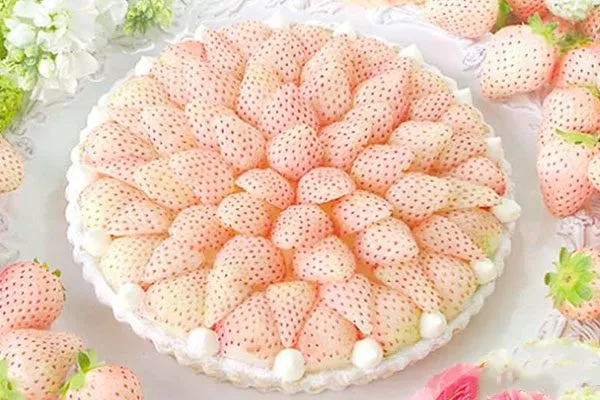
Using white strawberries in recipes
White strawberries are known for their versatility. They can be used in a variety of dishes:
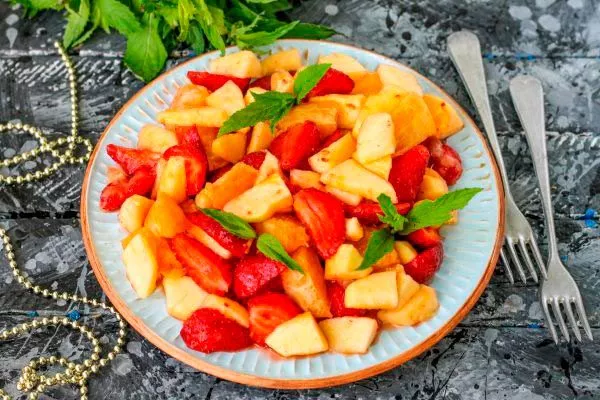
- Fresh desserts and salads. Berries can be added to fruit salads, combining them with pineapple, kiwi, banana and berries of other colors.
- Desserts and pastries. It looks beautiful on cakes, pies, tartlets, and crème soufflés. The white berries create a contrast with the chocolate and red icing.
- Drinks. White strawberries are used to make smoothies, cocktails, fruit drinks, and lemonades, which are distinguished by their delicate sweet taste and aroma.
- Blanks. Due to their mild flavor, the berries are used for jams, pastilles, and compotes, often combined with citrus fruits or other berries.


The health benefits of white strawberries
White strawberries are valued not only for their flavor but also for their other beneficial qualities. Beneficial properties:
- Vitamins and minerals. Contains vitamin C, B vitamins, iron, calcium and magnesium, supporting immunity and metabolism.
- Antioxidants. The absence of anthocyanins does not reduce the benefits of the berries: they are rich in flavonoids and polyphenols, which fight free radicals.
- Hypoallergenic. Suitable for baby and dietary nutrition, safe for people with allergies to red strawberries.
- Low calorie content. Berries are easy to include in your diet for weight loss and maintenance; they satisfy your sweet tooth without adding extra calories.
Original recipes for dishes and drinks with white strawberries
White strawberries can be used to make a variety of delicious treats. Below are a few popular recipes:
- Smoothie "White Tenderness". In a blender, combine white strawberries, banana, yogurt, and a little honey. You'll get a smooth, sweet drink with a light pineapple flavor.
- Tartlets with mascarpone cream. Use crispy tartlets, fill them with cream and decorate with berries – the dessert looks like little pearl baskets.
- Fruit salad. Combine berries with kiwi, blueberries and mint, season with natural yogurt or light honey sauce.
- Compote or fruit drink. White strawberries can be cooked with apples and mint – the drink turns out light, aromatic and refreshing.
- Pastila or dessert made from baked berries. Place the fruit on a baking sheet, sprinkle lightly with sugar or honey and bake at a low temperature to preserve the aroma and sweetness.
White strawberries open up new horizons in culinary and dietary nutrition: they combine aesthetics, unique flavor, and health benefits, allowing you to create both simple summer appetizers and spectacular holiday desserts.
Reviews
White strawberries are not only a rare and beautiful berry but also a healthy addition to your garden and diet. With the right variety, proper care, and disease protection, they yield a steady harvest of fragrant and sweet berries. It's important to follow basic recommendations and adhere to the basic rules.