
The Asia garden strawberry is one of the new Italian varieties, attracting our gardeners with its high yield and excellent marketability. Let's learn how to grow this heat-loving variety in a temperate climate.
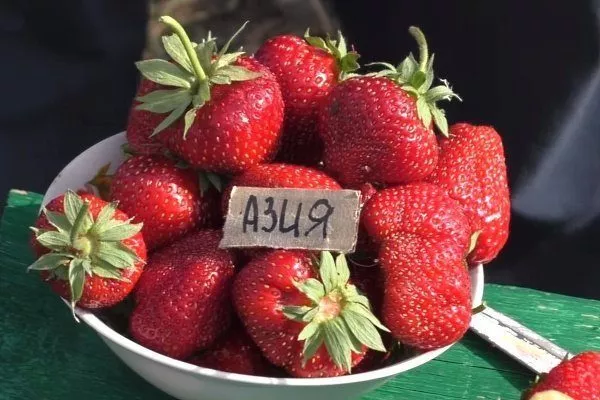
Strawberry "Asia": a high-yielding mid-early variety
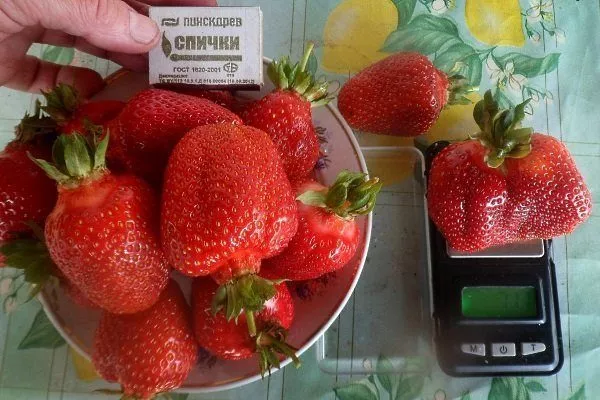
The berries are large and dense
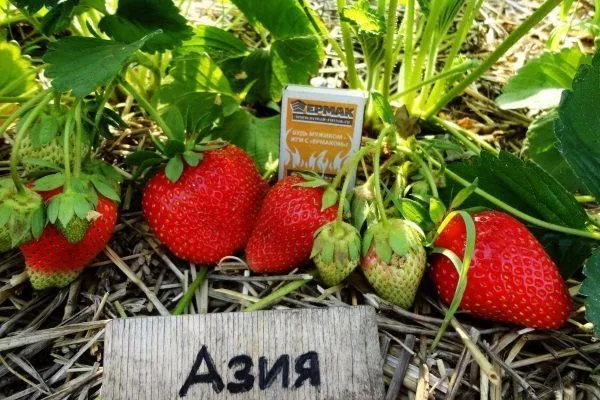
Strawberry bush "Asia"
Where did the variety originate?
The variety was developed by Italian breeders in 2005. The patent holder for "Asia" is New Fruits. The variety was created for commercial cultivation in the climate of northern Italy, but has also become popular among home gardeners. Moreover, not only in the northern Italian Peninsula, "Asia" is now actively grown in Russia, especially in its southern regions.
Description of strawberry characteristics
Brief botanical description:
- Bushes. Large, spreading, with a moderate number of leaves and a strong, well-developed root system. The plant forms numerous flower stalks and rosettes. The number of runners is moderate.
- Leaves. Large, glossy, rich green. Slightly corrugated, with jagged edges.
- Fruit. Large, uniform, with a shiny, glossy surface. Cone-shaped. Seeds are yellow, moderately depressed. Sepals are bright green and raised. At the technical ripeness stage, the tip of the berry retains a white-green color. Full coloring occurs at final ripening. The berries detach easily from the stalks.
Characteristics of the Asia variety:
| Characteristics | Meaning/Description |
| Ripening time | mid-early (the first berries appear in June) |
| Bloom | in the month of May |
| Fruiting | uniform, about three weeks |
| Productivity | 1-1.2 kg per bush |
| Weight of berries | The average weight of berries is 30-35 g (in the first half of fruiting, there are specimens up to 90 g; giants usually differ from standard berries in their modified shape) |
| Life cycle | 4 years |
| Resistance to diseases and pests | resistant to spotting, fungi and root diseases;
susceptible to powdery mildew, chlorosis and anthracnose |
| Drought resistance | high |
| Frost resistance | withstands temperatures down to -15 degrees Celsius
(It is advisable to grow in greenhouses, and when growing in open ground, it is necessary to cover it for the winter) |
| Taste and aroma | the pulp is sweet and juicy, with a bright strawberry aroma (no internal cavities) |
| Tasting evaluation | 4.6 |
| Purpose | universal (suitable for any purpose, including freezing) |
| Transportability | high |
| Safety | high |
- ✓ Optimum soil acidity for the Asia variety: pH 5.5-6.5.
- ✓ Recommended distance between bushes when planting: 40 cm.
We also suggest watching a video review of the harvest of this strawberry variety:
Comparison of Asia with other varieties
Compared to similar varieties with similar ripening times, yields, and intended uses, the Asia variety has many significant advantages:
- The main quality that distinguishes Asia from other large-fruited varieties is the absence of voids. This is true, provided it is properly watered.
- High adaptability – this variety, designed for hot Italy, easily adapts to new climatic conditions.
- High yield, easy transportability, and shelf life. This variety is a good choice for sale.
- Can be grown in any conditions - in open and closed ground, in bags.
- These berries are very sweet. They retain their flavor even after cooking and freezing.
- High resistance to strawberry diseases.
Among mid-early varieties, Asia leads in flavor. While it offers good transportability, it falls behind mid-early varieties Elegance, Figaro, Raurika, and Roxana. It also yields less than these varieties.
How can the variety be propagated?
Strawberries "Asia" are propagated by any convenient method:
- With a mustache. This is the simplest, most convenient, and most effective method of propagation. This variety produces few runners, so there's no need to remove them all. Propagation procedure:
- Pin the rosette located near the mother bush to the soil and trim off the remaining portion of the runner. Choose the first rosette from the bush—it's the strongest and will produce berries the following summer.
- In August, when the rosettes have rooted, separate them from the bush using a disinfected knife and cut off the tendril. Then dig up the rosette with a clump of soil.
- Plant the extracted seedlings for further growth in a specially designated bed, and in the spring they can be transplanted to a permanent location.
- By dividing the bush. For propagation using this method, select the best bushes—healthy, vigorous, and free of any signs of disease. Propagation procedure:
- Dig up the bush and shake the soil off the roots.
- Rinse the roots with warm water.
- Using a sharp, clean knife, divide the bush into several parts—divisions. Each division should have roots and a rhizome.
- Sprinkle the cuts with powder - crushed activated carbon.
- Plant the cuttings directly in a permanent location.
- Seeds. This method is rarely used by gardeners. Propagation procedure:
- Soak the seeds in melted water and place in a cool place. Place the seeds on a cotton pad. Soak for 2-3 days.
- Prepare a substrate of turf, peat, and sand. Pour the substrate into the container. Top with snow, then add the seeds. Don't cover the seeds with the substrate—the snow will melt and pull them deeper.
- Cover the container with a transparent lid and refrigerate for 2 weeks.
- Remove the container and place it in a warm place. Sprouts will appear within a week. Water the plants as needed.
- When 2-3 true leaves appear, open the lid.
- Plant the seedlings in cups.
- Plant seedlings in the garden bed when the danger of recurrent frosts has passed.
Correct and incorrect proximity of cultures
When choosing a plot for garden strawberries, as well as planting vegetables, shrubs, and flowers, consider their compatibility with berry plants. The following crops are distinguished:
- Favorable. Garden strawberries get along well with beans, spinach, parsley, garlic, lettuce, onions, radishes, radishes, beets, as well as herbs such as sage and borage.
- Unfavorable. You cannot plant any vegetables from the nightshade and carnation families, raspberries, sunflowers, Jerusalem artichokes and horseradish near strawberries.
It is useful to plant parsley between strawberry beds – it repels slugs well.
Selecting a location and preparing the soil
Optimal conditions for a site for planting the Asia variety:
- Good lighting. Some shade is possible at midday.
- Protection from northern and gusty winds.
- Groundwater should be no closer than 0.8 m from the soil surface. If there is a risk of flooding, drainage or raised beds (30-40 cm high) should be installed.
- The site should be level, or if it's on a slope, it should have a slope of 2-4 degrees. The soil warms up earlier in such areas.
Once the site has been selected, it's time to begin preparing it. The soil should be prepared in advance, preferably a month before planting the strawberry seedlings. planting is done in spring, then the soil is usually prepared in the fall.
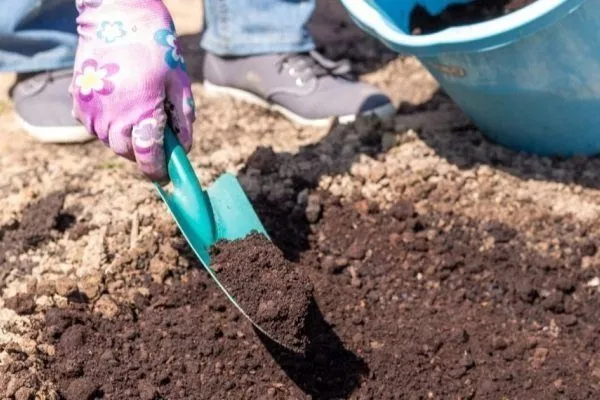
Soil preparation procedure:
- Dig the soil to a depth of 30 cm.
- When digging, remove weed roots from the soil. Pay particular attention to the rhizomes of couch grass, sow thistle, and dandelions. If the infestation is severe, consider treating the soil with herbicides such as Roundal, Tornado, Hurricane, etc.
- Eliminate all harmful insects living in the soil – wireworms, cockchafer larvae, etc. If there are many pests, treat the soil with Actofit, Actellic, or another suitable insecticide.
- If you're planting strawberries in loam or clay soil, add humus, rotted manure, or compost to loosen the soil. A good rule of thumb is one bucket per square meter. To improve the soil structure, also add sand or sawdust.
- If the soil is acidic, add ash – 2 cups per 1 sq. m.
- Fertilize the soil with potassium fertilizers – 10-15 g per 1 sq. m, and phosphorus fertilizers – 20-30 g.
- Immediately before planting, water the soil with a copper sulfate solution. Use 2 tablespoons per bucket. The recommended watering rate is one bucket per square meter.
Preparing seedlings
For planting, select high-quality seedlings:
- with a fibrous root system, about 5-7 cm long;
- horn thickness – 0.7-1 cm;
- 2-3 developed leaves.
Before planting, transplanted seedlings are moved to a sunny spot. The plants are gradually hardened off to prevent stress from occurring. Start with half an hour, gradually increasing the hardening time to 3-4 hours. The seedling containers are then moved outside or to a balcony. Before planting, the roots are soaked in a growth stimulant for several hours. Immediately before planting, the roots are also dipped in a clay slurry.
It is recommended to disinfect purchased seedlings before planting. Dissolve 1 teaspoon of copper sulfate and 3 tablespoons of table salt in a bucket of water. Soak the seedling roots in the solution for 10-15 minutes.
Planting methods
Seedlings of garden strawberries Asia are planted in three ways:
- In a checkerboard pattern. This planting method saves space without compromising the seedlings' nutrition and light. Planting procedure:
- In the formed beds, dig holes 15 cm from the edge. The holes should be 10-15 cm deep and 30-40 cm wide. The intervals between adjacent holes should be 40 cm.
- Space the next row 25 cm apart from the first row. Dig the holes in the second row in a staggered pattern relative to the holes in the first row.
- After pinching the roots of the seedlings, plant them so that the growth point is located at ground level.
- Water the planting and sprinkle with mulch—sawdust, humus, straw, or grass clippings. Apply a 5 cm layer of mulch.
- In rows. The most traditional planting method. Here's how:
- Dig a trench along the bed, stepping back 15 cm from the edge. Dig the second row parallel to the first, stepping back 40 cm from the first.
- Water the dug trenches.
- Place the seedlings along the rows, spacing them 40 cm apart.
- Cover the seedling roots with soil. Spread them out so they're vertical. The growing point, the "heart," should be level with the soil.
- Water the rows with warm water. Sprinkle the soil between the seedlings with mulch—straw, sawdust, or hay.
- In peat bags. The variety is successfully grown without soil, using Dutch technology. If grown in greenhouses, several harvests are obtained per year. Strawberries can also be grown in bags without a greenhouse.
This technology significantly simplifies care – there's no need to loosen the soil or remove weeds, and the berries are easy to pick; they're clean and free of soil. Clean berries are less susceptible to gray mold. To use this advanced technology, you'll need bags (regular ones, like those used for flour or sugar), peat, perlite, and potassium fertilizer. Step-by-step instructions for planting strawberries in bags:- Mix the ingredients to make a nutrient substrate.
- Make holes in the bags. The side holes are for the seedlings, and the bottom holes are for water drainage.
- Place the substrate in bags and water it.
- Plant strawberry seedlings in the side holes.
- Place the bags horizontally or vertically, at intervals of 50 cm from each other.
- When growing strawberries in a greenhouse, it is necessary to provide lighting with lamps and drip irrigation.
Post-planting care
Features of caring for young strawberry bushes:
- Top dressing. Young seedlings do not need additional feeding during the first season – sufficient fertilizer has been added to the soil before planting.
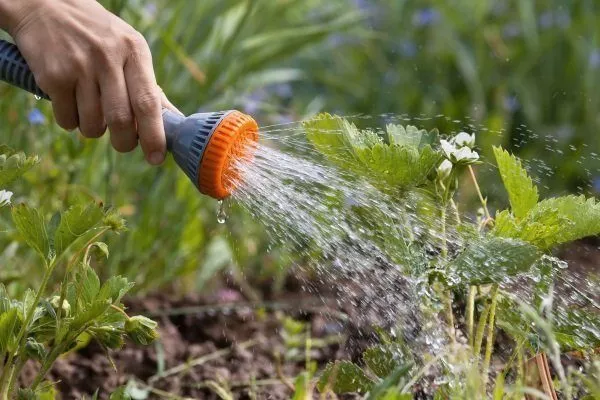
- Watering. Water the planted strawberries as needed – the soil should always be slightly moist, but not flooded.
Subsequent agricultural technology
After planting, garden strawberries Asia require regular care:
- Watering. This variety thrives in moisture. However, it tolerates drought well—it can withstand several days of dryness without significant consequences. Infrequent but generous watering is recommended, as the soil dries out. During hot periods, water the plantings every 2-3 days—3 liters per plant. Avoid frequent and infrequent watering, as this can cause fungal diseases.
- Loosening. Weed and loosen the soil periodically. If you don't want to do this, use black agrofibre for planting.
- Mulching. After watering, the soil is mulched with mown grass or straw. This prevents moisture evaporation and weed growth.
- Top dressing. At the beginning of the growing season, plants require ample nitrogen fertilizers, and during fruiting, organic fertilizers are needed. Root and foliar feeding is performed three times per season. To strengthen the strawberry's immunity, it is regularly fed with mineral fertilizers and micronutrients. Since the Asia variety is non-remontant and produces a single crop, it does not require frequent feeding.
Timing and dosage of fertilizer application:
| Period | Top dressing |
| Spring. The beginning of the growing season. | Urea (50-60 g) and ash (2 tbsp.) per 1 sq. m.spring feeding of strawberriesYou can read more about it on the pages of our website. |
| Before flowering | Mullein or bird droppings, dissolved in water at a ratio of 1:15 and 1:30, respectively (1 liter per bush). Foliar feeding with specialized strawberry fertilizers, such as Agricola or Zavyaz, is recommended (dilute according to the instructions). |
| After fruiting. Late August - early September. | A solution of mullein or bird droppings (1 liter per bush). Chemical fertilizers (potassium sulfate, superphosphate, nitrophoska, etc.) – granules are scattered over the soil surface, loosened, and then watered. |
| End of September | Organic fertilizers – rotted manure or compost. |
When applying nitrogen fertilizers, it is important not to exceed the norm - excess will negatively affect the size and taste of the fruit.
Diseases, treatment and prevention
The Asia variety is resistant to most strawberry diseases. With proper care, the risk of disease is minimal. For prevention, plants are periodically treated with garlic infusion, and the soil is watered with potassium permanganate in the spring and fall.
Common diseases of the Asia variety and their control:
| Disease | Symptoms | How to fight? |
| Powdery mildew | The entire above-ground portion of the plant is affected. The leaves curl, turn purple, and become covered with a coating. The berries become deformed and smell like mushrooms. | Before budding, spray with a solution of copper sulfate and laundry soap (20 g of each per bucket).
They are also treated with fungicides – Topaz and Azocen. |
| Anthracnose | The petioles and tendrils become covered with sunken reddish-brown ulcers, then they turn black and the plant withers. | Treatment with Horus (according to instructions). |
| Chlorosis | The leaves become pale, then yellow, and dry out. | Soil treatment with Heterophos - granules are scattered over the soil and then watered. |
For preventative purposes, only healthy seedlings are planted, previously soaked in a fungicide solution - the roots are dipped for half an hour, for example, in Horus (2 g per 6-8 l).
- In early spring, treat the plants and soil with a solution of copper sulfate (2 tablespoons per 10 liters of water).
- Before flowering, apply foliar feeding with microelements.
- After harvesting, treat the plants with a fungicide to prevent fungal diseases.
Pests and their control
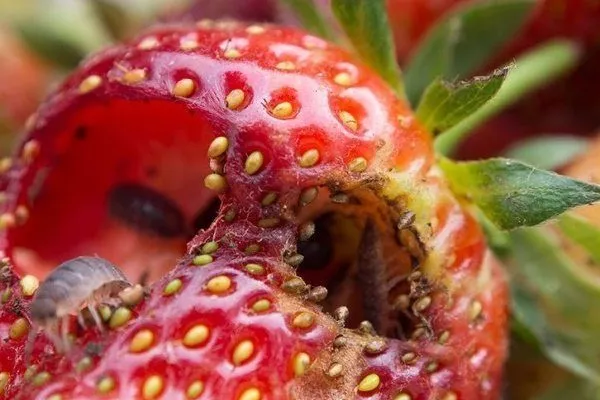
The Asia variety is most often attacked by strawberry mites and spider mites. Strawberry nematodes and weevils can also damage the crop.
Common pests of the Asia variety and their control:
| Pests | Damage caused | How to fight? |
| Strawberry nematode | Tiny worms, up to 1 mm long, parasitize the plant, causing metabolic disruption and the near-complete disappearance of berries. Leaves become deformed, flowers turn a dirty green, and fruits become small and malformed. | Before boarding – contrast shower (48°C – for 10 minutes, cold – for 15 minutes). |
| Weevil | The larvae eat out the peduncles. | Treatment at the budding stage with Inta-Vir. |
| Strawberry mite | They suck the juices from the leaves, causing them to become wrinkled and oily. | Treat with colloidal sulfur or Karbofos in early spring. Two weeks before flowering, apply Neoron. |
The main preventative measure for preventing strawberry pests is crop rotation. All diseased bushes must be dug up and destroyed.
Strawberry wintering
Italian strawberries aren't particularly frost-hardy, which is why they're grown primarily in southern regions. In areas with harsh winters, shelter is essential. Cover the plants when daytime temperatures drop below freezing. Covering them earlier will simply cause them to rot.
The easiest way to cover the plantings is with straw. However, this method has a serious drawback: rodents love to crawl into the straw, which can damage the bushes. A better option is spruce branches or spunbond. You can also create mini-tunnels by placing plastic arches over the beds and, when the weather gets cold, stretching agrofibre over them. The minimum density of agrofibre is 50 g per square meter. This creates an ideal microclimate for overwintering – the bushes won't rot or freeze.
How to properly harvest and store crops?
The berries are picked slightly unripe and immediately placed in a single layer in a container for storage or transportation. The fruits are picked with the sepals still attached. They can be stored at 0-2°C for three days.
Reviews of the Asia variety
The Asia variety, recently introduced to Russia, is quickly gaining popularity. With a few adjustments to their cultivation techniques, our gardeners and farmers can successfully grow this delicious Italian variety in temperate climates.
I've been looking for a variety that can easily tolerate extreme heat for a long time, because that's a problem in the South. There is, for example, a variety that only needs full sun, but in the heat we have, the rays burn the plant. Thank you so much for the review; I'll definitely buy the Asia and plant it. Especially since the reviews are all positive (I looked at other resources, too).