
Aprica strawberries are not everbearing, but they are large-fruited and early-maturing, making them suitable for all-purpose use. A unique feature of this variety is its ability to produce fruit vigorously and consistently even in poor soils. Furthermore, Aprica can adapt to both hot and harsh climates, and is resistant to disease even in heavy and frequent rainfall.
History of selection
This Italian-bred variety appeared relatively recently, but the exact date of its development is unknown. It is also not listed in the State Register of the Russian Federation.
Despite this, there is information that an agricultural company with a consortium of several CIV nurseries participated in the development. However, seedlings are sold only in two nurseries – Salvi vivai and Mazzoni.
Description of the variety
The variety is fully self-fertile, meaning it requires no additional pollination. This is advantageous for commercial cultivation, as it eliminates the need to plant other varieties nearby.
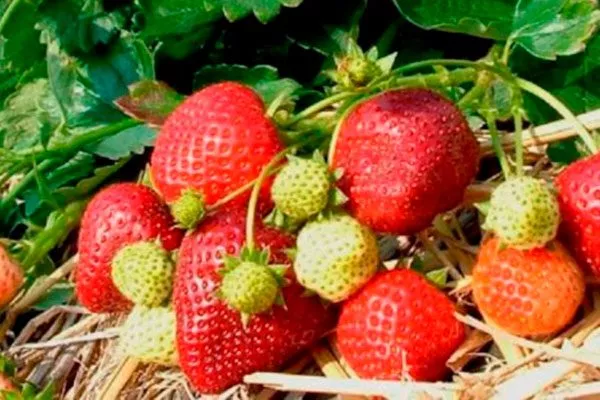
Bushes
Non-everbearing strawberry bushes are quite hardy plants, although they are considered to be short and semi-spreading. There are other characteristic features of this variety:
- form - spherical;
- leaf blades – dark green, medium in size, with smooth serrations along the edges;
- shoots – erect;
- antennae – not in very large quantities;
- peduncles – of insignificant parameters, with small flowers and a huge amount of pollen.
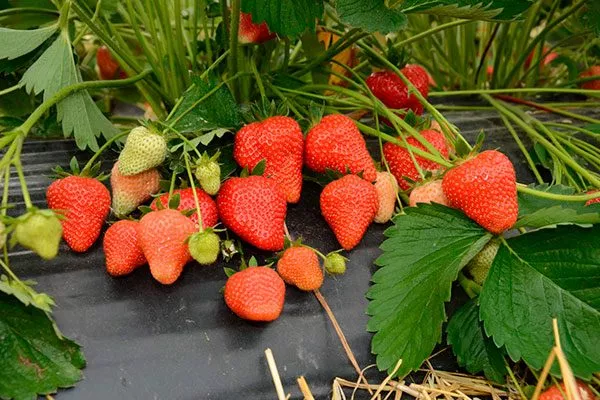
Berries
Aprica fruits are very transportable – their texture is more dense and fleshy than watery. However, when bitten, they retain a moderate juiciness. Other characteristics:
- form - one-dimensional, smooth and conical, usually without bifurcation;
- dimensions – large (the weight of the berries reaches 30, sometimes 50 g);
- surface – shiny;
- coloring – deep red;
- seeds – small and yellow, located superficially.
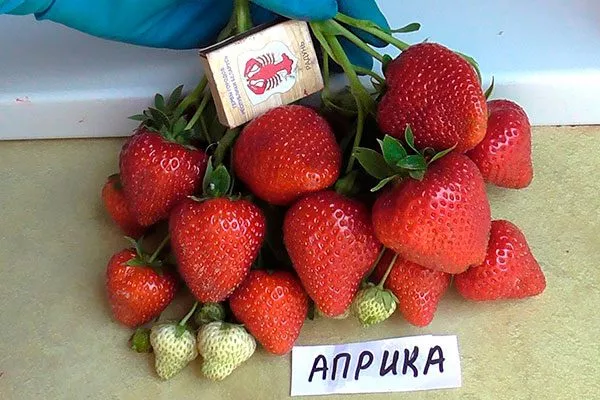
Commercial and taste characteristics of berries
Aprica berries are sweet but also have a slight tartness. The aroma is bright and inviting. After tasting, the variety earned 4.3 points. Marketability is high, as the berries do not release juice during transportation and storage, and they are uniformly large and perfectly uniform.
Ripening time, yield and shelf life
Berry harvesting begins when the berries are technically ripe, but the timing depends on the summer weather and climate zone. In the southern half of Russia, harvesting begins after May 15th, while in the central part of Russia, it begins 2-3 weeks later.
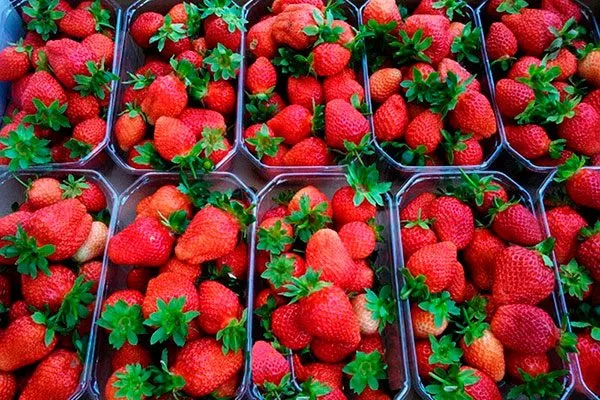
Fruiting is prolonged, lasting approximately 1.5-2 months. Yields are consistently high, with up to 1.1-1.3 kg harvested from a single bush. Productivity is unaffected by adverse weather conditions. Storage quality is rated at 7 out of a possible 10.
Growing regions, frost resistance
When developing this variety, the goal was to create a strawberry that could be grown in all continental conditions. Therefore, Aprika is planted in the south, as well as in the Moscow region, the Leningrad region, and the Urals.
Resistance to diseases and pests
This variety is highly resistant to diseases affecting both the above-ground portion of the plant and the root system. With proper care and careful planting, it successfully resists common diseases, including powdery mildew, rot, and leaf spot.
Pest infestations are rare, but preventative measures are recommended. Planting garlic, lemon balm, or marigolds around strawberry plants is particularly effective and safe.
Advantages and disadvantages of the variety
Although this variety has only recently appeared in our country, gardeners and farmers in various regions have already appreciated all of Aprika's characteristics and qualities. Among its advantages are the following:
Aprica is currently undergoing testing, so gardeners haven't reported any critical drawbacks. However, some believe that planting material is only available from foreign nurseries, and at a very high cost.
Methods of reproduction
One of the most effective methods for propagating Aprica strawberries is using runners. The most productive shoots are those that are already 2-3 years old. Rosettes located close to the mother plant are especially valuable.
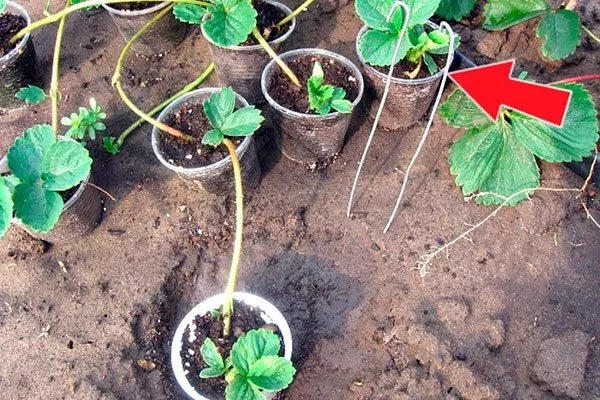
To obtain high-quality seedlings with a developed root system, experienced gardeners recommend placing a container of fertile soil under each rosette.
Planting and care
A sunny location with good drainage is ideal for growing strawberries. Soil can vary, as the plant is quite undemanding. However, for a stable and abundant harvest, it is recommended to use soil with a neutral pH, and a groundwater table of at least 1.5 meters.
- ✓ The soil acidity level must be strictly neutral (pH 6.5-7.0) for optimal growth and fruiting.
- ✓ Groundwater should be at least 1.5 m below the surface to avoid rotting of the root system.
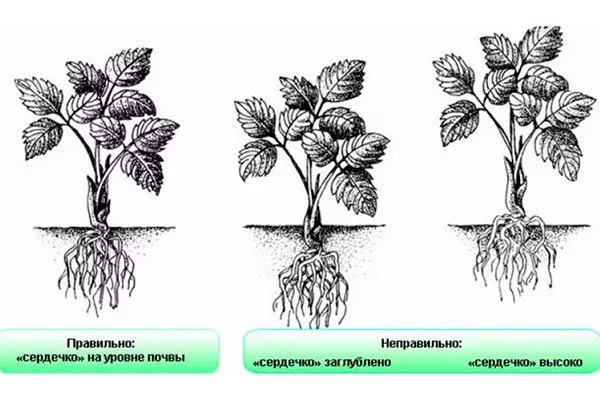
There are other planting features for Aprica:
- Humus is desirable in the soil, as it promotes vigorous bushes and the formation of large berries. If humus is lacking, it can be added using rotted manure and wood ash (2.5-3 kg and 150 g, respectively, per square meter).
- It is best to plan planting for spring or summer so that the rosettes have time to strengthen by autumn and begin to bear fruit the following year.
- When planting in bushes, there should be approximately four seedlings per square meter, spaced 30-35 cm apart. When planting in strips, the distance between plants should be identical, and between strips, 50 cm.
- It is important not to bury the root collar into the soil during planting.
- After work, it is necessary to thoroughly moisten the soil for 10-12 days.
Caring for Aprica doesn't require any special skills. Planting this crop involves standard agricultural practices for other berry plants. However, for this variety, it's important to continue watering the area even after the berries have been picked. Watering frequency depends on the weather: on hot days, watering every three days is recommended, but a better solution is to install an irrigation system.
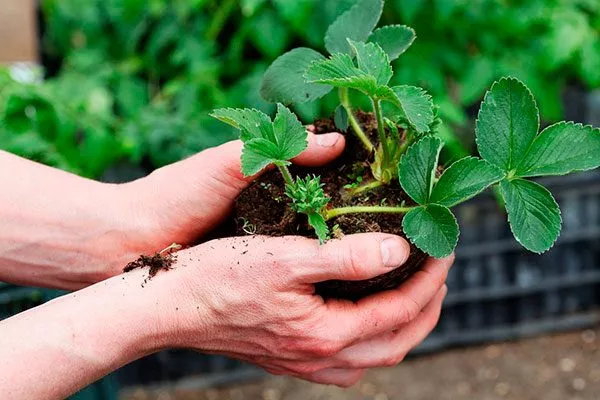
Other care measures:
- Weed your beds more often, as weed control is crucial in berry patches, as they create shade, impede ventilation, and deplete the soil.
- Loosen the soil, but do it properly. In central Russia, this process begins after the snow melts, and in southern regions, when the first new leaves emerge. Loosen the soil periodically to prevent crusting. If regular mechanical loosening isn't possible, you can use agrofibre or mulch.
- It's important to remove runners frequently, as they rob the plant of nutrients needed for fruiting. The Aprica variety has few runners, making it easier to care for.
- Plants are fertilized 3-4 times per season. The first application is in early spring, using live or dry yeast. The second application is done when the fruit is setting, and the third after it has ripened.
- In early spring, apply a complex mineral fertilizer with a predominance of nitrogen to stimulate leaf growth.
- During flowering, use fertilizers high in potassium and phosphorus to improve fruit set.
- After harvesting, feed the plants with organic fertilizer to restore strength.
Preparing for winter
Aprica demonstrates good frost resistance, down to -10 degrees Celsius. In most regions, covering the bushes with a layer of mulch made of straw, leaves, or wood chips is sufficient. In warmer climates, additional cover is not necessary.
Gardeners' reviews of the Aprica strawberry variety
The Aprika strawberry quickly became a favorite among our farmers and gardeners – it's easy to grow, highly productive, and delicious. However, the variety does have a significant drawback: planting material is unavailable from domestic nurseries. Despite this, many hope this will change in the near future, as strawberries are easy to propagate.