
Trailing strawberries are a variety of the common strawberry, developed through selective breeding. This crop, relatively new to our gardeners, combines practical and aesthetic benefits. Producing fruit abundantly and for a long time, trailing varieties make elegant additions to homes, gardens, and patios.
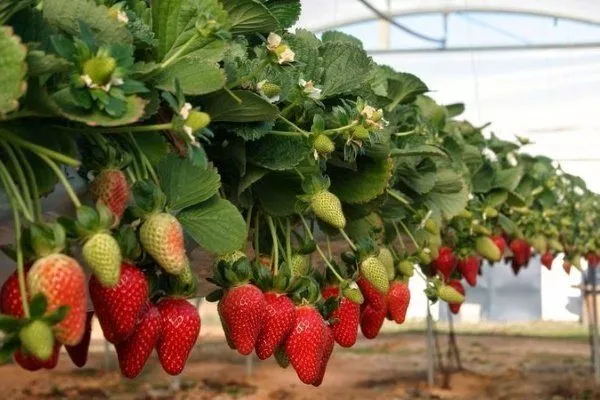
What is a hanging strawberry?
The main difference between trailing strawberries and regular varieties is that the fruit forms not only on the stems but also on the runners. The plants look very attractive, especially when planted in tall vases and pots – they are often used for decorative purposes in rooms and gardens.
Features of hanging strawberries:
- All varieties of trailing strawberries share a number of similar characteristics. They have compact bushes, 20-30 cm in diameter, and runners that grow 50-100 cm long. The flowers are predominantly white, but there are a few varieties with pink petals.
- Most of the time, the bushes bear berries, which give the plant an extraordinary decorative effect.
- Plants produce numerous long runners that can form fruiting rosettes without touching the ground. These in turn produce new runners with rosettes. This results in intensive growth of the bush, which is why trailing strawberries are often called "climbing." However, in fact, they are not—the runners do not curl, but simply hang down.
The formation of runners begins before the first flower stalks appear. Therefore, when the mother bush reddens with the first berries, the first buds are already forming on the rosettes.
"Ampel" means hanging lamp in German. Initially, hanging varieties were considered purely decorative – they were planted in pots that were suspended from the ceiling.
Fruiting
Today, trailing, long-lasting strawberries are actively grown for their harvest, as they bear fruit almost year-round. New ovaries and branches immediately form in the place of ripened berries, and this continues uninterrupted throughout the entire growing season.
Ampelous varieties produce berries not only from flower stalks, but also from runners, which don't even require soil—they can bear fruit by feeding solely on the mother plant.
Repairability
Abundant fruiting thanks to runners isn't the only advantage of trailing varieties. Another quality that has made them beloved by gardeners worldwide is their repeated harvests. Almost all trailing varieties are remontant—they produce harvest after harvest within a single growing season.
Self-fertility
Self-fertile varieties are those that can bear fruit without the help of pollinators. For non-self-fertile varieties to bear fruit, pollinators must be planted nearby or the flowers must be pollinated by hand. Many trailing strawberry varieties are self-fertile; this can be easily verified by checking the list of characteristics printed on the seed packet.
Conditions
Trailing varieties tolerate low light levels well. They thrive in conditions with only slight light deficits, such as balconies, terraces, and greenhouses. Trailing strawberries can be planted in vertical "beds"—this is convenient and cost-effective, saving a lot of space. They also grow well on tall structures—the berries don't touch the ground, preventing many diseases, including rot.
Climbing strawberries climb reluctantly. But if the runners are tied to supports, they will twine around them.
In his video, a gardener demonstrates hanging strawberries, which he grows in unusual conditions – in hanging beds:
Sustainability
Most trailing varieties have average frost resistance and low drought tolerance. Only a few varieties boast drought tolerance. Trailing strawberries, grown at higher altitudes, are less vulnerable to fungal diseases and rot. Most varieties have good resistance to all types of diseases.
Taste and application
All trailing varieties produce large, sweet, and delicious berries. Fruit shapes vary—some have cone-shaped, elongated fruits, while others have spherical berries. Everyone can find the perfect fit. The average fruit weight is 20-30 g. The berries ripen quickly. They have a pleasant strawberry flavor with a hint of tartness.
The saturation of the berry color is affected by air humidity, as well as the presence of potassium fertilizers in the soil.
The crop is versatile – used for landscaping, as an ornamental plant, and for its delicious berries. The fruits are suitable for all types of preserves.
Advantages and disadvantages
Hanging strawberry varieties have earned the highest praise from gardeners and decorators – by planting these berries, you'll decorate your home or garden, and the added reward will be a bountiful harvest.
Advantages of ampelous varieties:
- the ability to fully develop and bear fruit in the absence of light;
- long fruiting;
- high taste characteristics;
- possibility of vertical placement;
- high yield.
Flaws:
- regular replanting is necessary – every 2-3 years;
- high frequency of watering;
- Demanding of soil fertility - if there is not enough fertilizer, the berries become smaller.
The best hanging varieties
Previously, ornamental strawberry varieties didn't require much—they just needed to grow and look beautiful. Today, breeders have developed dozens of varieties that are not only ornamental but also possess all the qualities of the best strawberries: they are productive, produce tasty fruit, and are resistant to viruses, bacteria, and fungi.
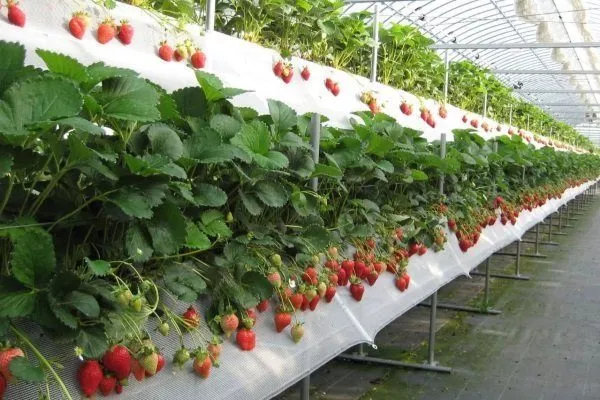
Table 1 shows the most popular varieties of hanging strawberries and their characteristics.
Table 1
| Variety | Average weight of berries, g | Repairability | Brief description |
| Tuscany | 30 | Yes | The yield per bush is 1 kg. This is a relatively young variety (bred in 2011). The bushes are compact, up to 30 cm in diameter. The shoots reach 1 m in length. |
| Temptation F1* | 15-25 | Yes | A mature bush produces up to 20 flower stalks. The fruits are large and juicy. Harvesting begins a month after flowering. The flesh is sweet, dense, and pleasantly fragrant. A bush yields up to 1.2 kg of berries. |
| Queen Elizabeth II | 30-40 | Yes | This variety is native to Russia. The fruits are perfectly conical in shape. The color is rich red, and the skin is smooth and glossy. It bears fruit 2-3 times per season. Repotting is necessary every 1.5 years. |
| Kletter Star | 40-50 | Yes | Highly drought and frost resistant. Can survive winters without shelter. Compact bushes with numerous runners. Flower stalks bend downward under the weight of the fruit. The fruits are juicy, bright red, and intensely aromatic. They transport well. |
| Temptation | 30 | Yes | The bushes are small and densely foliated. The peduncles are long, bearing large flowers. The berries are large, oblong, cone-shaped, and bright red. The aroma has muscat notes. High frost resistance. It does not tolerate heat or drought well. Yield: 1.5 kg. |
| Geneva | 45-50 | Yes | The bushes are medium-sized and spreading. They shouldn't be planted too close together—they need space. Crowding increases the risk of gray mold. There are few runners—about seven per plant. The berries are truncated cones with a glossy red surface. The flesh is juicy and aromatic. The flavor is sweet, without any tartness. The main distinguishing feature of this variety is its ability to bear fruit in one place for a long time—5-6 years, not 5-2. |
| Ostara | 50-60 (first berries), then 15-30 | Yes | A reliable variety that sets fruit regardless of daylight hours. It's an early-ripening variety. Bushes reach 25 cm in height. The first berries appear in June, and the bulk of the harvest—80%—ripens in August-September. One bush produces 1.2 kg of berries. A distinctive feature of this variety is the fruiting of the vines, which grow from runners. These vines are separated from the mother bush, root, and bear fruit. The maximum berry size is 75 g. The flavor is sweet and sour, aromatic. The berries become smaller as the season progresses. |
| Eternity S1** | 10-15 | Yes | The yield per bush is 0.5 kg. This variety is suitable for amateur gardeners. Fruiting occurs from early summer until frost. Its distinctive feature is its pink flowers. This variety is winter-hardy and resistant to drought, pests, and diseases. |
| Fresco | 20 | Yes | It bears fruit from June to September. The fruits are small but numerous. The flavor is sweet and sour, the aroma is strong, and the flesh is firm yet juicy. Its distinguishing feature is its resistance to temperature fluctuations and its high immunity. |
| Pink miracle | 20-30 | long fruiting period | A pineapple-type hybrid with delicious berries. The bushes are vigorous, with pink flowers. The variety is frost-hardy and highly resistant. The berries are harvested as they ripen. |
| Elsanta | 40-45 | Yes | A high-yielding variety, with up to 2 kg of berries harvested from a single bush. The surface is shiny and glossy. The first berries have light tips. The berries are medium to large. The stems are easily removed. |
*The F1 symbol indicates that the plant is a hybrid, created by crossing two different varieties. Seeds from the hybrid are not collected for further cultivation. This is because it is unlikely that a good harvest will be obtained from such seeds, and other positive qualities will not be passed on to the next generation.
**The S1 symbol denotes the first generation of a varietal plant. Simply put, S1 is the seed collected from the first-year harvest of a varietal plant. S2 is a generation from S1. S1 has a higher yield and other characteristics than S2, and so on.
How is it grown?
Trailing strawberries are grown in a variety of ways—in planters, pots, vases, vertical cassettes, and pyramids. The latter are constructed from whatever is available, such as barrels, pots, and the like. This crop is also used to decorate lawns, shaping the bushes into trellises.
The plant looks great in winter gardens and on balconies—it can be used to create a continuously fruiting arch. The bushes can also be planted in open ground, but this method of cultivation is much less common.
Landing requirements
To ensure that hanging strawberries grow well and bear fruit, they are provided with optimal growing conditions:
- soils are light, drained, with neutral acidity (5.2-5.5 pH);
- 8-10 hours of daylight – in too shady a place the crop may stop bearing fruit;
- no drafts;
- Crushed green manure crops such as nasturtium, mustard, rapeseed, and phacelia are added to the soil used for planting.
- ✓ The soil acidity level must be strictly within the range of 5.2-5.5 pH, otherwise the plant will not be able to absorb nutrients.
- ✓ The soil must contain at least 30% organic matter to ensure the necessary structure and water-holding capacity.
When planting trailing varieties, avoid planting the seedlings too deep or too close together. If planting in the ground, especially in early spring, it's important to prevent the seedlings from freezing by covering them with plastic or other covering material.
Planting methods and instructions
Seedlings are usually planted in April-May or August. Here are some methods for growing trailing strawberries:
- In pots. For planting, select a container large enough to hold 1,500 cubic centimeters of soil per mature plant. Next, prepare the substrate, which is made from 1 part sand, 3 parts turf, and 6 parts peat. To improve soil fertility, add organic matter. You can also buy ready-made soil at a specialty store.
To speed up the seedlings' establishment, they are placed in a dark place and buried in the soil before planting. There are no special requirements for the pot, but it must be at least 30 cm high. Holes are made in the bottom to allow excess water to drain. Here's the planting procedure:- Place a thin drainage layer at the bottom of the pot. Expanded clay, pebbles, or broken brick are all suitable. Place the prepared potting mix on top.
- The seedling is placed in a container – the roots should be positioned vertically – and covered with soil.
- Seedlings planted in pots are watered generously.
- On the grill. The seedlings are planted in open ground. A trellis, mesh, or wicker fence is installed nearby. The growing shoots are tied to the trellis. The minimum height of the trellis is 1 m. When planting seedlings in open ground, the minimum distance between them is 30-35 cm.
- Pyramid. A pyramidal structure is constructed from boxes of various sizes. For example, boxes of the following sizes are used: 20x20x20 cm, 30x30x30 cm, and 60x60x60 cm. The boxes are stacked on top of each other and filled with soil.
- Vertical beds. One way to grow trailing strawberries is in greenhouses. The beds are most conveniently made from inexpensive plastic pipes, which are installed vertically in the greenhouse. The pipes are approximately 50 cm in diameter, with 25 cm holes drilled in them. The pipes are filled with nutrient substrate, irrigated, and then the seedlings are planted.
You can also grow strawberries in vertically suspended plastic bags filled with growing medium. The plants are planted in pre-drilled holes in the plastic.
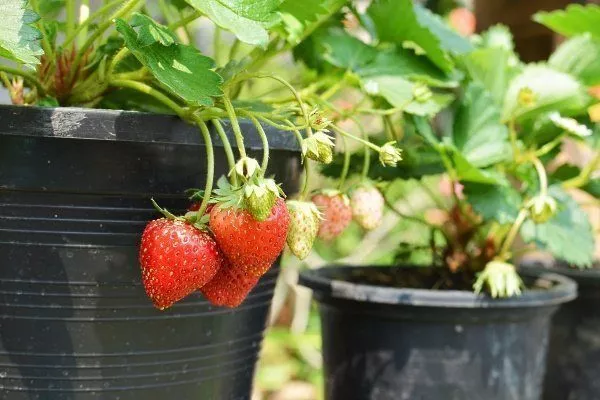
method of growing hanging strawberries "in pots"
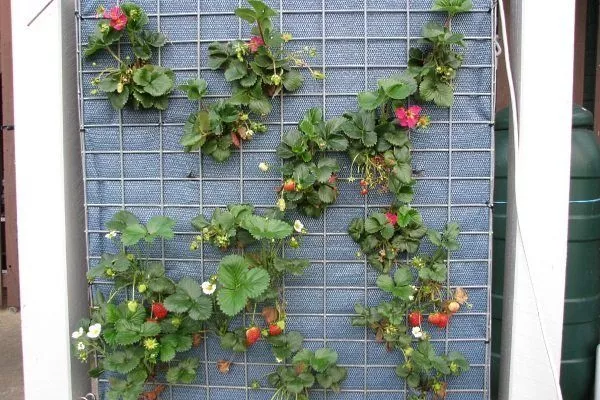
growing strawberries "on a trellis"
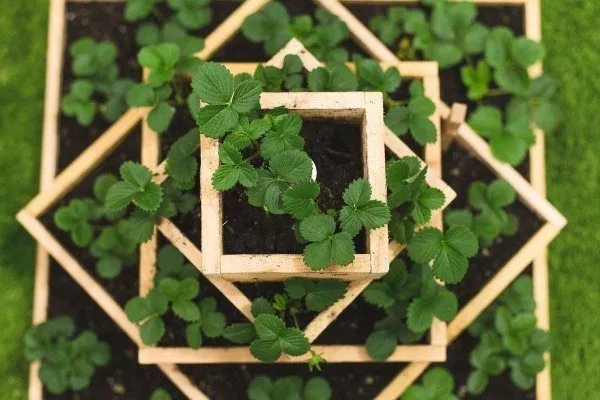
planting strawberries in pyramid-shaped beds
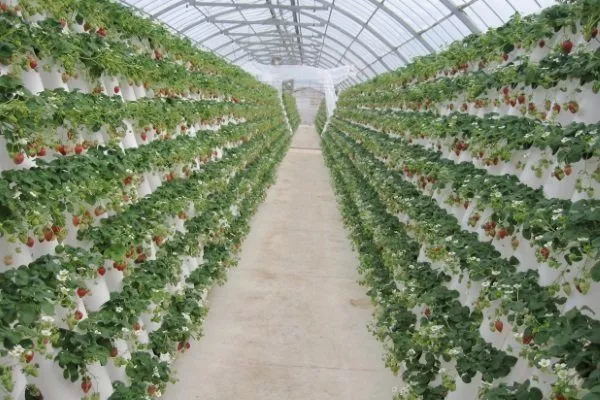
"vertical beds" (growing strawberries in bags)
Let's assume you've decided to plant strawberries in 3-liter pots for further cultivation in a greenhouse. Here's the procedure:
- Pots are spaced 70-80 cm apart in height. If the greenhouse is about 2.5 m high, it will accommodate three rows of strawberries. The intervals between adjacent pots are 40 cm.
- The greenhouse is equipped with drip irrigation.
- The optimal temperature in a greenhouse is 19-25°C. At higher temperatures, proper pollination does not occur.
- When the plants begin to bloom, the greenhouse is opened to improve pollination of non-self-fertile varieties. If the varieties are self-fertile, the greenhouse must be kept at a constant high humidity level—at least 90%.
If the greenhouse area is 1-2 acres, then the total harvest will be 5 buckets, which is half as much as when growing regular strawberries.
How to care for berries?
Trailing strawberries are easy to grow, so caring for them is incredibly simple. It's important to consider the following growing considerations:
- It doesn't tolerate heat and scorching sun well. A location in partial shade or artificial shade is recommended.
- Until the fruiting period begins, the optimal conditions for development are 80% humidity and an air temperature of 5-7°C.
- During the fruiting period, optimal conditions are 60% humidity and air temperature of 20-25°C.
- ✓ Yellowing of leaves between the veins indicates a magnesium deficiency.
- ✓ Leaf curling can be a sign of calcium deficiency or overwatering.
Caring for hanging strawberry plantings:
- Watering. Twice a day—morning and evening. Don't add a lot of water—just moisten the soil slightly. If the strawberries are growing in hanging pots, simply place them in a tray of water and leave them there for about half an hour. This method allows the plant to be properly watered without overwatering.
- Top dressing. Plants are fed every 15-20 days. Fertilizers, pre-dissolved in water, are added during watering. The best option is a mixture of superphosphate (180 g), boric acid (40 g), potassium permanganate (20 mg), ammonium nitrate (30 g), copper (1 mg), and zinc (2 mg). The ingredients are diluted in 10 liters of water—this solution is enough for 50 plants.
- Trimming. As soon as the first harvest is collected, the lower leaves and flowering buds are trimmed. Some gardeners recommend trimming the runners. Others believe that the first flowers should also be cut off to increase the yield.
If hanging strawberries are grown indoors, then preference is given to complex fertilizers; if in open ground, then organic fertilizers are used.
If harvesting is the priority when growing trailing varieties, rather than decorative appeal, then the most important care procedure is removing excess rosettes and runners. A bush can support two rosettes; all others are removed as soon as they appear. The maximum number of runners is five. However, each gardener can experiment with the number of runners, monitoring the development of the plantings.
Reproduction
The newest varieties and hybrids of trailing strawberries are runnerless. Propagation by division is problematic. The best way to propagate small-fruited varieties is by seed, while large-fruited varieties are best propagated using nursery seedlings. Trailing strawberries are propagated in the following ways:
- Rooting of rosettes. One bush produces several new plants within a year. In the first year, five runners are left on the bush for fruiting, and the remaining runners are transplanted into nearby pots to allow the rosettes to root. The pots are placed in a slightly shaded area for 10-12 days. Flower stalks are removed from the new, rooted bushes.
Propagation begins in May, giving the plants time to grow before frost sets in. When frost sets in, the pots are placed in a basement or other dark place and not watered until March. In the spring, the strawberries are brought out of the basement, but not exposed to sunlight for 3-4 days. After 1.5 months, the strawberries will bloom. - Seeds. When buying seeds, keep in mind that they quickly lose their germination capacity. Don't delay sowing them until next year, as the number of seedlings will be significantly reduced. Seed propagation is a good method for producing large numbers of seedlings at once. Seedlings grown from seeds will bear fruit the following year. Avoid using seeds from hybrids, as the resulting plants may lose all of their parent's characteristics.
Work order:- Prepare a light, breathable substrate. The seeds are very small and shouldn't be buried deep in the soil—they germinate only when exposed to light. The best option is peat soil with added coconut fiber. Calcined river sand is sprinkled on top of the substrate. Snow can be placed on top—it will melt and pull the seeds down, pressing them into the soil.
- Cover the crops with glass or film. Place them in a warm room (25°C) and ventilate them daily, removing the cover for 5-10 minutes.
- The seeds germinate in 1-3 weeks. Once the seeds have sprouted, place the container in a well-lit area and continue to ventilate.
- Remove the film/glass when two true leaves appear. Water the seedlings with a syringe or pipette to avoid over-watering the substrate. Excess moisture can trigger a dangerous disease called blackleg.
- When the seedlings have 2-3 leaves, they are pricked out. The optimal temperature during this period is 15-16°C.
- When the seedlings have 5-6 leaves, they are transplanted to a permanent location.
Propagation by runners is dangerous due to the accumulation of viral diseases in the bushes, but these infections are not transmitted through seeds.
Diseases and pests
Any strawberry variety, whether garden or trailing, is susceptible to the same pests, microbes, viruses, and fungi. Due to their high altitude, trailing strawberries are less susceptible to diseases. Table 2 lists common diseases and pests of trailing varieties and their control measures.
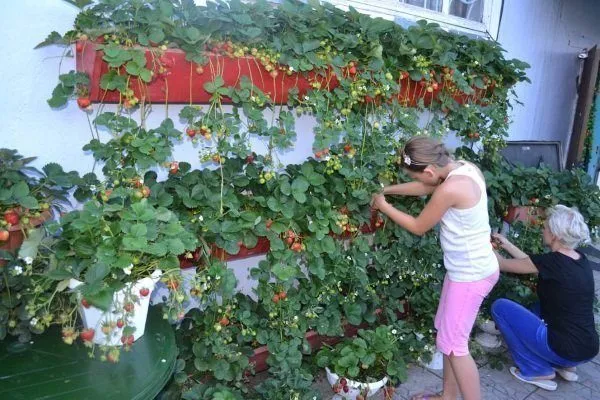
Table 2
| Pests/diseases | Damage/symptoms | How to fight? |
| Powdery mildew | The edges of the leaves curl and the berries become covered with an ash-colored coating. | Removing dried and diseased leaves.
In spring, spray with Bordeaux mixture 3, and after harvesting, treat the plantings with a 1% solution. For prevention, plantings are sprayed in the spring with a solution of sulfaride (2 tablespoons per 10 liters). |
| Strawberry mite | The fruits of the affected bushes are deformed, the leaves are weakened. | In spring – preventive spraying with Nero, Actellik, Fufanon.
One of these preparations is also sprayed on the crops after harvesting and before the cold weather. If a mite infestation has already occurred, spraying should be done every 3 weeks. This is essential before flowering and before fruit set. |
| Nematodes | Transparent microscopic worms up to 1 m long suck the juices from leaves and stems. The foliage wrinkles, the stems shorten, and the berries harden. | Affected bushes are watered with a bleach solution, then uprooted and burned. The remaining bushes are sprayed with a phosphamide or mercaptofos solution 2-3 times at intervals of 4-5 days. |
| Strawberry weevil | Holes appear in the leaves and larvae appear in the buds. | Spray the plantings with Decis, Iskra, Karbofos. |
| Gray mold | A fungal disease that develops in high humidity. Light brown, fluffy spots appear. The disease can destroy 90% of the crop. | To prevent the disease, spray the plants with 3% Bordeaux mixture. After harvesting the berries, spray with Azocene (20 g per 10 liters of water). |
| Late blight | Wilting and drying of leaves. Root death. | After removing diseased bushes, disinfect the soil. Treat with copper-containing compounds such as copper oxychloride or Bordeaux mixture. If signs of disease appear, spray with Ridomil, Horus, or other fungicides. |
Interesting facts
The unique aroma and flavor of strawberries adds a special charm to culinary dishes, baked goods, cosmetics, and perfumes. But strawberries are not only delicious but also healthy, a generous source of nutrients. Nutritionists strongly recommend incorporating strawberries into your diet.
Benefits of strawberries for the body:
- lowering blood pressure;
- normalization of heart rhythm;
- improving muscle tone;
- stimulation of blood circulation;
- improving the functioning of the digestive tract;
- improving metabolism.
Some more interesting facts about strawberries:
- Fresh berries have a disinfectant and wound-healing effect.
- Strawberry extract is included in lotions, anti-aging creams, soaps, tonics, and other cleansing products.
Thanks to the work of breeders, even city dwellers can now grow strawberries on their own balconies.
Reviews
Trailing strawberries, requiring little care from gardeners, can not only provide sweet berries for the whole family but also create a cheerful atmosphere. The bright, sparkling berries, growing on stems and runners, decorate gardens, yards, and balconies from spring to late fall. Highly productive, trailing varieties are also suitable for growing in greenhouses for their harvest.
I planted trailing strawberries for the first time last year. The bushes look neat, and I'm almost always growing strawberries. They can be grown in shade or partial shade. Thank you for your help with care tips. Your article was very helpful!