
The Albion strawberry is one of the few foreign-bred varieties suitable for cultivation in Russia. Our farmers are drawn to this imported strawberry for its productivity. By growing Albion under cover, berries can be harvested year-round.
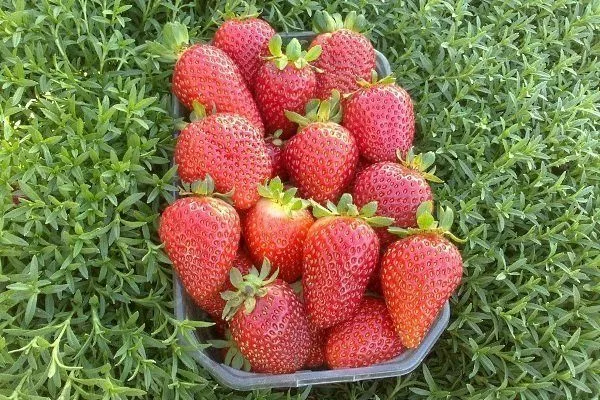
strawberry variety 'Albion'
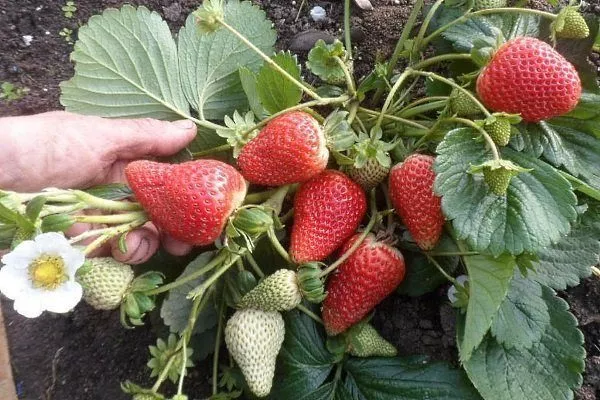
The Albion strawberry variety is demanding of soil fertility and requires intensive fertilizing.
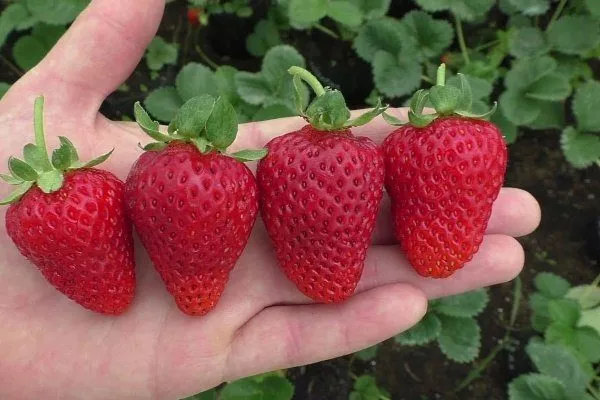
The dense flesh of the Albion variety allows for safe transportation and storage of the harvested crop
Description of the variety
The Albion variety is a hybrid native to America. It was created in the early 21st century by crossing the large-fruited Diamante and Cal 94.16–1 varieties. The variety was developed specifically for commercial cultivation.
Botanical description
| Name | Productivity | Ripening time | Frost resistance |
|---|---|---|---|
| Albion | 0.5-2 kg per bush | early ripening | not tall |
Brief botanical description:
- Bushes. Vigorous, well-foliated plants reach 40-45 cm in height. Flower stalks are raised high and can support a significant weight. Fruit is raised above the ground, which reduces the risk of rot. Leaves are medium-sized, glossy, and dark green. The bushes produce few runners.
- Fruit. Large, slightly elongated, conical in shape. As they ripen, they turn red and shiny. When ripe, the berries take on the color of garnet. The flesh is juicy, pink, and quite firm.
- Flowers. Bisexual. Size – medium. Color – white.
Main characteristics
The Albion variety, besides the United States and southern Canada, is popular in Italy and Russia. In central Russia, it is rarely grown outdoors, but is usually grown in greenhouses with good lighting. The hybrid is not included in the Russian State Register.
Main agrotechnical indicators:
| Characteristics/parameters | Description/Meaning |
| Fruiting | remontant variety, harvests 4 times |
| Beginning of flowering | May |
| Ripening time | early ripening |
| Average weight of berries | 40-50 g or 35-45 t/ha |
| Productivity | 0.5-2 kg per bush |
| Taste | sweet, with a hint of sourness |
| Aroma | rich strawberry |
| Tasting score | 3.5-4.5 |
| Frost resistance | not tall |
Albion fruits are uniform in size. They have a unique feature: their shape can change by the third or fourth fruiting season. For example, from conical to heart-shaped or oval.
A gardener made a video review of the Albion strawberry, weighing it and describing its properties:
Advantages and disadvantages of the variety
Pros:
- It grows and sets fruit continuously. In temperate climates, it produces fruit from May to October. If grown under cover, it produces fruit almost continuously.
- The fruits are uniform in size, without voids.
- Continuous fruiting. This everbearing variety, having produced its first crop in May, continues to bear fruit in waves until September.
- Good shelf life and transportability are typical of a commercial variety. The berries withstand transportation well, remaining undamaged and maintaining their marketability.
- Disease resistance. Albion is resistant to heart rot and all fungal infections.
- The berries are environmentally friendly. Thanks to their resistance to fungi, this variety can be grown without chemical treatment.
The disadvantages are rather peculiar to the variety:
- Growing conditions influence the flavor. Ideally, the berries are sweet; in unfavorable climates, they become sweet and sour.
- Fruiting begins only in the second year of planting.
- Weather conditions and care affect the volume of the harvest.
- Affected by spotting - brown and white.
- After 3 years the plantings are renewed.
- In moderate climates it freezes if insulation is not used.
Preparation and planting
In southern regions, Albion is planted primarily in late summer or early September. Then, the first harvest is harvested the following year. Planting in the spring means a longer wait for the harvest. Read on to learn how to plant strawberries in the spring. Here.
In autumn, seedlings are planted a month before the onset of persistent frost. In temperate climates, autumn planting is not advisable. The variety does not tolerate severe frosts, and planting it before winter is impractical. In central regions, spring planting is practiced. This begins when the soil warms to 15°C. The runners and flower stalks of seedlings planted in spring are removed as they grow, so that the plant does not waste energy on reproduction and fruiting, but rather develops a strong root system.
Requirements
The variety was bred for a mild climate with warm winters, so Russian frosts prove detrimental to it. Albion grows well in the south of the country—in the Krasnodar Krai, Crimea, and the North Caucasus. In the temperate zone, the variety is grown in greenhouses or carefully insulated for the winter—but there's no guarantee the bushes won't freeze.
- ✓ Optimum temperature for growth and fruiting: +20…+25°C during the day, not lower than +15°C at night.
- ✓ Required daylight hours: at least 12 hours to stimulate flowering.
Albion should be planted in well-lit, level, well-drained areas. The variety grows well in any soil, but prefers fertile loams with a weak or neutral pH.
Soil preparation
The soil is prepared 3-4 weeks before planting the seedlings. The goal is to remove all weeds, both above and below ground, and to improve soil fertility.
For 1 square meter of soil prepared for planting Albion seedlings, add:
- superphosphate – 70 g;
- potassium sulfate – 30 g;
- ammonium nitrate – 30 g;
- humus – 2-2.5 buckets.
After spreading the fertilizer, dig the soil to the depth of a spade. If planting in raised beds, form them. The standard height for strawberry beds is 25-30 cm. Raised beds are optional; they are usually created when the area experiences stagnant water.
Prepare the beds a week before planting to allow the soil to settle. Albion bushes are large and need space to grow, so space adjacent beds at least 45 cm apart.
Selection and preparation of planting material
For a good harvest, healthy seedlings are needed.
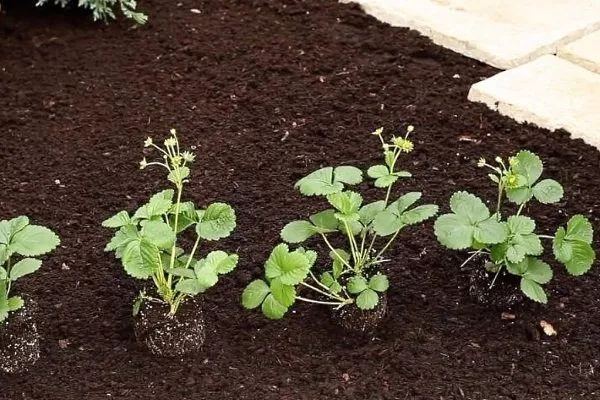
You can distinguish high-quality seedlings by the following characteristics:
- powerful roots;
- root collar diameter from 6 mm;
- The seedlings should have a strong and healthy appearance - no dryness or defects.
Preparing seedlings for planting:
- shorten any excessively long roots – their length should not exceed 8-10 cm;
- tear off excess leaves - when planting there should be no more than three;
- Place the roots in a growth stimulator for 24 hours.
Experienced gardeners recommend keeping seedlings in a dark and cool place for 6 days before planting.
Albion planting methods
The procedure for planting seedlings in open ground:
- On a level area or in prepared beds, prepare planting holes. They should be deep enough to accommodate the seedlings' roots comfortably, without curling upward or bending. Recommended hole placement:
- between neighboring bushes – 30 cm;
- between rows – 40 cm.
- Throw a handful of humus into the hole. Pour in 200 ml of warm water. And add a teaspoon of ash.
- If you're using plastic film for planting, make cuts in the desired locations. Plastic film simplifies strawberry care—it retains soil moisture, eliminating the need for regular weeding.
- Place the seedling in the hole, spreading out the roots. Cover them with soil and gently compact them with your hands. Pay attention to the growing point – it shouldn't be buried deep in the soil; ideally, it should be exactly level with the ground.
- If the sun is bright outside, shade the beds for a few days using agrofibre or straw.
Other methods of growing Albion:
- Dutch. Each bush is planted in containers, boxes, or trays filled with a special substrate. This method prevents the fruit from coming into contact with the soil, preventing the berries from becoming susceptible to many diseases and maintaining their marketable appearance.
This method ensures continuous productivity; seedlings are planted regularly—every 1.5–2 months. The Dutch method requires special soil—low-acid soil mixed with sand, ash, sawdust, compost, and urea. - Hydroponic. Used in regions with clay and marshy soils, this method involves growing plants without soil. Plants receive everything they need to thrive through nutrient solutions, which are specially prepared for a specific variety and growing season. This method accelerates plant development and increases yields, eliminating the need for loosening, pests, and diseases. Maintenance is significantly simplified, and yields increase.
There are several types of hydroponics, the following are suitable for strawberries:- Periodic flooding system – suitable for large strawberry plantings. A well-established nutrient solution delivery system is used.
- Nutrient layer In the systems used, nutrients are constantly circulated along the bottom of the strawberry containers. The strawberry plants themselves are placed in cups. As they grow, the plant roots are immersed in the solution, receiving nutrients.
| Method | Advantages | Flaws |
|---|---|---|
| Open ground | Natural growing conditions | Dependence on weather conditions |
| Greenhouse | Climate control | High initial costs |
| Hydroponics | High yield | Requires special equipment |
Growing and care
One of the advantages of modern commercial varieties is high yields with minimal maintenance. Albion is one such variety—it requires nothing special, just watering and fertilizing. Other measures depend on the growing method.
Watering and fertilizing
Albion should be watered as soon as the soil dries out. Overwatering is unacceptable, as it can kill the bushes. Underwatering is equally harmful, as it causes the berries to lose flavor and quality. Watering frequency is once every five days. Drip irrigation is the best option.
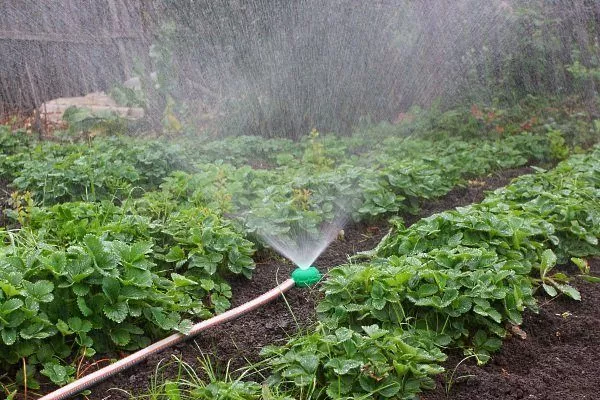
Albion has to expend a lot of energy—it requires additional nutrition to produce four harvests per season. Both organic and mineral fertilizers are applied.
The variety responds to feeding from:
- cow dung;
- bird droppings.
Humus and compost are added to the roots, which also act as mulch. In the spring, mulch is added to the organic fertilizers, and in the summer, the plantings are enriched with complex fertilizers.
Fertilizers are applied three times:
- Early spring. Water the roots with diluted urea, 1 tablespoon per bucket of water. Learn more about spring fertilizing. here.
- Before flowering. Water with potassium sulfate (1 teaspoon per 10 liters).
- Autumn. For 10 liters – 2 tablespoons of nitrophoska and a glass of ash.
Mulching
To retain moisture in the soil longer, it is mulched with sawdust, hay, or straw. If agrofibre or other mulch is not used when growing strawberries, the soil must be loosened and weeds removed.
Mulch not only retains moisture, it has several other important benefits:
- eliminates the need for regular weeding and loosening;
- protects bushes from overheating;
- prevents the berries from touching the ground, which helps avoid damage and contamination of the fruit.
You can learn more about soil mulching by reading this article.
Reproduction
Intensive fruiting quickly ages strawberries, reducing yield and degrading berry quality. Regular plantings are necessary. Seedlings are purchased from nurseries, or homegrown, taken from the mother plants.
Albion seedlings are expensive, so gardeners try to propagate them themselves. There are three propagation methods—seed, division, and runners—with the first two most commonly used.
Reproduction methods:
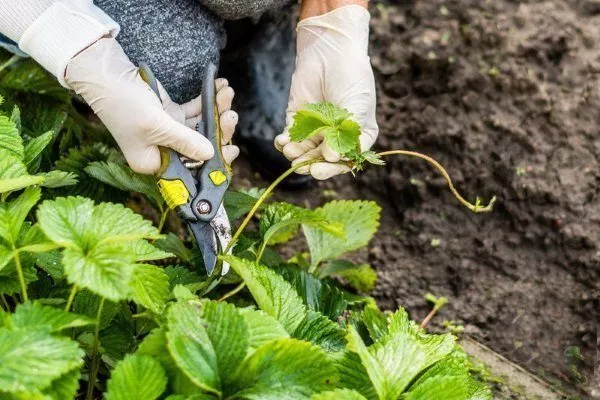
- With a mustache. Albion bushes produce few runners, so to obtain a sufficient number, all flower stalks are removed from the mother plant. The first rosettes from the mother plant are cut off and planted near the mother plant, at a distance of 30 cm. All remaining rosettes are planted in a nursery. During the first year, the plants should not bear fruit, and all flower stalks are removed—this allows the plants to root better.
- By dividing the bush. This is the simplest and most reliable method. However, only 4-5 year old plants are used for this.
- Seeds. They are taken from ripe berries. The seeds are soaked in rainwater/meltwater for a couple of days, changing the water twice a day. The seeds are sown in a nutritious soil mixture. This labor-intensive method does not guarantee that the seedlings will bear the Albion varietal characteristics.
Diseases and pests
Albion requires preventative treatment. First, after the snow melts, and then after flowering, the plants are sprayed with fungicides. Spraying with a soap-iodine solution is also helpful: 30 drops of iodine and 40 grams of laundry soap are dissolved in a bucket of water.
To protect strawberries from pests, plants are sprayed, either for preventative or therapeutic purposes, with the following preparations:
- Colloidal sulfur (60 g per 10 l) – against strawberry mites.
- Ash or metaldehyde (3-4 g/m) – against slugs. They are used to pollinate crops twice: before flowering and after harvest.
- Insecticide BI-58 – against nematodes. The best option is to uproot the affected bushes and burn them.
Gardeners recommend:
- To prevent powdery mildew, rot, white and brown spots, spray the plantings with Topaz before flowering - dilute one ampoule in 10 liters.
- When slugs appear, set traps. Take a smooth-rimmed jar and bury it so the mouth is level with the ground. If you pour beer into it, the slugs will fall into the jar and drown.
- If your plot is being attacked by wasps, make a trap. Cut a plastic bottle down the middle. You should have two halves—a top and a bottom. Insert the top half into the bottom half and turn it upside down. Fill the trap with kvass or jam and place it in your garden bed. Once trapped, wasps won't be able to escape.
These simple methods will help save the harvest without using pesticides.
When and how to harvest?
When grown outdoors, Albion typically produces four harvests. The berry's peak ripening periods are:
- end of May;
- beginning of July;
- mid-August;
- in the second half of September.
How to pick berries:
- It's recommended to pick the berries when they're fully ripe. Unripe berries won't be as sweet.
- The harvest is collected by hand.
- The best time to pick berries is morning or evening. Harvesting should be done in dry weather.
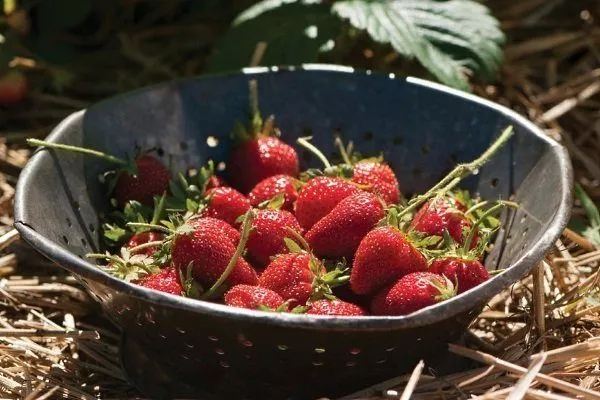
- The berries are picked off along with the stalks and immediately placed into containers for transportation.
Unlike other varieties, Albion berries can be stacked on top of each other in a thick layer. They don't bruise or release juice.
Transportation and storage
Albion has excellent shelf life, as befits a commercial variety. The berries are stored in refrigerators, where they retain their freshness and flavor for 7-8 days.
Albion is one of the best varieties for transportation. Its firm berries withstand transport well, and can be stacked on top of each other.
Uses of fruits
Albion berries are eaten fresh and used to make jams and compotes—the fruits are firm and retain their shape. Like all strawberries, Albion berries are used not only in cooking, but also in:
- improve metabolism;
- have a diuretic and diaphoretic effect;
- Decoctions and infusions of strawberries are useful for stomatitis and pharyngitis;
- Infusion of leaves is indicated for high blood pressure, stops bleeding;
- Decoctions of the roots are used for hemorrhoids and colitis.
Strawberry Reviews
Gardeners who have tried the Albion variety in their plots have left reviews in which they noted both the advantages and serious disadvantages of the variety.
Positive aspects:
- excellent taste;
- good tolerance for long-distance transportation;
- long fruiting period.
Observed shortcomings:
- average disease resistance;
- demanding in terms of care and climate.
This is an industrial variety, and what seems simple for mass cultivation can be challenging for amateurs. For example, the variety grows well hydroponically—the growing process is practically automated. However, if you tend to Albion manually, you'll have to spend the entire summer running around with hoses and fertilizers.
Albion can seriously compete with the best commercial varieties. Gardeners claim it has no equal in terms of shelf life and transportability, and its yield justifies all the investment in cultivation. Hobby gardeners are drawn to this commercial variety by its long fruiting period and the superb flavor of its berries.