
Alba is an elite garden strawberry variety recognized by European and Russian gardeners. This large-fruited, highly productive variety boasts excellent flavor, making it popular in both commercial and amateur gardening.
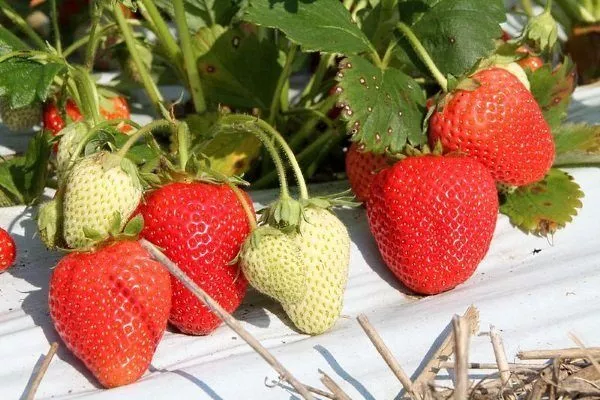
strawberry variety "Alba"
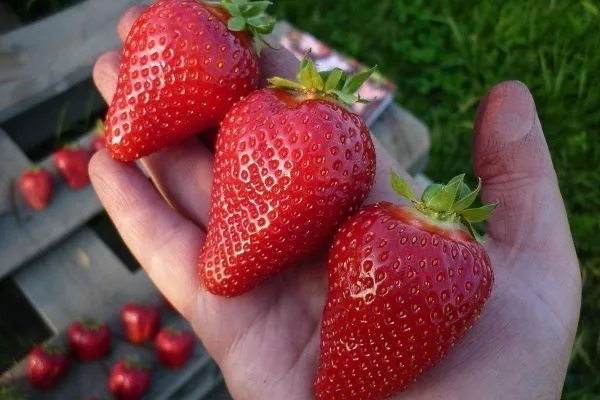
The Alba strawberry variety has a long shelf life and is not affected by long-distance transportation.
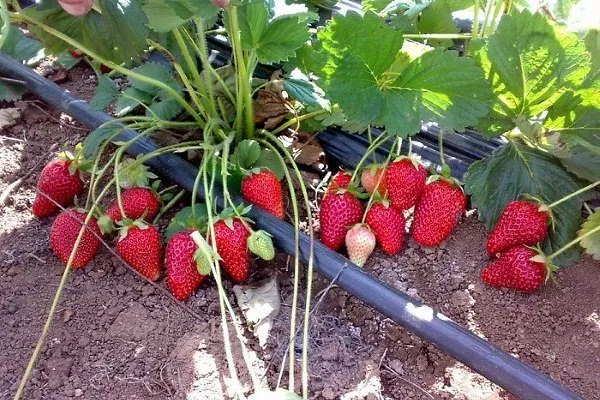
The Alba variety maintains its weight throughout the growing season
How did Alba come about?
The Alba variety was developed by Italian breeders working for the company New Fruts. The goal was to create a variety that would combine transportability, shelf life, and marketability with excellent taste. The hybrid NF311, later registered as a variety, was created in the 1970s. The parent pair is Albion and Cal. The variety is registered in the State Plant Registers of Russia, Belarus, and Ukraine.
Description of strawberries
Brief botanical description of the plant:
- Bush. Vigorous, medium foliage. Height: 30-35 cm.
- Leaves. Large, bright green.
- Peduncles. Powerful, elongated, the fruits lie down when ripe.
- Fruit. Large, elongated-conical in shape. Average weight: 25-30 g. Berries are uniform in size. Color: red, surface: smooth, shiny.
Gardeners often confuse strawberries with garden strawberries. It's worth noting that Alba is a variety of garden strawberry, but it's more commonly called "strawberry" by the common people—it's more familiar. We'll also occasionally use the shorter, more common name.
Characteristics of the variety
To assess the benefits of growing Alba and understand whether this variety is suitable for a particular region, pay attention to the variety's agronomic characteristics.
Characteristics of the Alba variety:
| Parameter | Description |
| Productivity | The stated yield is up to 1.2 kg of berries per plant, while the actual yield is 0.3-0.7 kg. On an industrial scale, the yield is 200-250 c/ha. |
| Resistance to diseases and pests | Virtually immune to powdery mildew. Moderate resistance to verticillium wilt and fusarium wilt. May be susceptible to brown and white spot. |
| Drought resistance | Resistance to summer droughts. |
| Frost resistance | Resistance to spring frosts. |
| Ripening time | An early-ripening variety. The first berries ripen in late May, even earlier in the south. |
| Flowering time | In the south – mid-April, in the central zone – May. Flowering lasts for two weeks. |
| Taste characteristics | The taste is good – sweet, with a hint of tartness. At the technical ripeness stage, it's slightly sour. |
| Aroma | Strawberry |
| Transportability | Excellent |
| Fruiting period | Long-term |
| Purpose | Universal |
Advantages and disadvantages
Advantages of Alba:
- Ultra-early ripening. Early-ripening strawberries can be sold profitably.
- The flowering period allows to avoid spring frosts.
- High productivity. In Russian conditions, Italian yields of 1.2 kg are unattainable, but 0.8 kg is still quite respectable.
- High-quality berries. Ideal for commercial use – the berries are large, have firm flesh, transport well, don't leak, and have an excellent appearance.
- A good dessert flavor. There are better ones, but for Alba's transportability and shelf life, the flavor is simply excellent.
- After harvesting, the fruits are stored without losing their taste.
- The variety is unpretentious and adapts well to different climates.
- It has good immunity and is resistant to various pathologies.
- Tolerates winter well and does not require insulation.
Disadvantages of the Alba variety:
- In high heat, the surface of the berries becomes slightly “baked”.
- When compared to dessert varieties, it is significantly inferior in taste.
- It is affected by some types of spotting and other diseases.
An overview of the Alba variety is provided in the video below:
Growing regions and suitable climate
This variety is suitable for commercial cultivation. It is actively cultivated by agricultural companies in Italy, Russia, Ukraine, and Belarus. Alba is officially recommended for cultivation in the North Caucasus region of the Russian Federation. The variety is adapted to continental and temperate continental climates, various soil types, and natural zones (mixed forests, forest-steppes, and steppes).
Choosing a site for planting Alba strawberries
To obtain the promised harvest from Alba, optimal growing conditions must be created. This involves selecting a suitable site, planting the plants, and providing them with proper care—watering, fertilizing, and other agricultural practices.
The location for the beds is selected according to the following criteria:
- Illumination. The area should be well-lit. Shaded areas, such as near tall trees, are not suitable.
- Wind protection. To prevent the bushes from being damaged by gusts of wind, you can plant currant or gooseberry bushes between the beds.
- Soil. Sandy and sandy-loamy soils with a humus content of at least 3% are most suitable. Saline and calcareous areas are not suitable.
- Humidity. Areas with low humidity levels are suitable - on elevated areas, and with shallow groundwater levels.
- Predecessors. It is recommended to plant strawberries after radishes, beans, garlic, peas, and mustard. It is not recommended to plant strawberries after raspberries. Strawberries should not be planted with nightshade-type crops (tomatoes, eggplants, peppers, and potatoes), as they are susceptible to the same dangerous disease: late blight.
It's also not recommended to plant strawberries after sunflowers and corn, as these vigorous plants greatly deplete the soil. Legumes are dangerous because of nematodes—while they don't themselves suffer from the strawberry nematode, they carry it. Cabbage and cucumbers are also unsuitable, as they share the same diseases as strawberries: stem nematode and verticillium wilt.
- ✓ The optimal soil pH level should be in the range of 5.5-6.5 for maximum yield.
- ✓ Humus content of at least 3% to ensure the necessary nutrition of plants.
Strawberries should not grow in one place for more than 3-4 years – the location of the beds must be changed regularly.
Soil preparation
Open horizontal beds are the best option for growing strawberries. They are very easy to construct:
- Once you've chosen a spot for your garden beds, decide on their size. If you'll have one or two rows, the width will be 40 and 80 cm, respectively. Leave 30-40 cm between rows.
- Dig over the soil. Carefully remove weed roots. Prepare the soil in advance, at least two weeks before planting the seedlings.
- When digging, apply the following mixture of fertilizers per 1 square meter of area:
- humus – 1 bucket;
- complex fertilizer – 50 g (or 30 g superphosphate with 1/2 cup ash).
- Dig rows for planting. The sides of the bed can be reinforced, for example, with boards or pieces of slate.
It is better to prepare the soil for spring planting of strawberries in the fall, and for autumn planting – in the spring.
Helpful tips for soil preparation:
- To prevent weeds from growing on the soil where you plan to plant strawberries in the summer, sow it with green manure.
- Do not apply fresh manure to strawberries – it contains many pathogenic bacteria and weed seeds.
- If you're preparing the strawberry beds in advance, you can add half-rotted manure. But be sure to water the soil with "Baikal" or "Siyanie"—they contain microorganisms that will break down organic matter into compounds accessible to the strawberries.
Landing
Strawberries can be planted at any time except winter. Gardeners prefer spring planting.
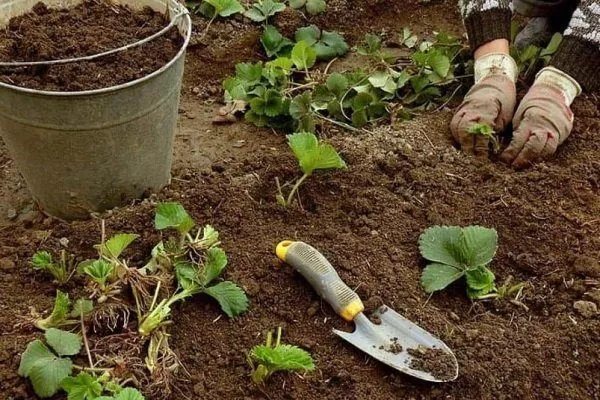
Its timing depends on the region:
- in the south – in the first half of March;
- in the middle zone - in the last three weeks of April;
- in the north – in the first half of May.
The process of planting strawberries:
- In a pre-prepared bed, dig small holes – 6-8 cm deep. The distance between adjacent bushes is 20-25 cm.
- Add humus, 1 tablespoon of ash, and a pinch of complex mineral fertilizer to each hole. Water with a warm solution of potassium permanganate (light pink) for disinfection. The recommended watering rate is 0.5 liters per hole. Add the same amount of water after planting.
- Remove the seedlings from their containers and keep them in the shade for about 6 hours. Plants grown from runners up to one year old are suitable for planting. Water the seedlings one hour before planting.
- It is recommended to soak the seedlings in a nutrient solution before planting. Dissolve humate (1/2 teaspoon) and phytosporin or rooting agent (less than a tablespoon) in 2 liters of water.
- If the bushes have grown roots that are too long, use pruning shears to cut them down to 8-10 cm.
- Carefully place the plant in the hole. Pay attention to the apical bud—it shouldn't be buried in the soil. Don't bend the roots when planting—they should be vertical.
- At first, protect the planting from direct sunlight.
Tips for planting strawberries:
- If you're planting seedlings in the summer, choose cool, cloudy weather. The recommended planting period is mid-July to mid-August.
- When planting in the fall, avoid applying nitrogen fertilizers—they promote leaf growth. The best time to grow seedlings is late August to the second week of September.
- In the first year after planting, pick off the flowers – let the plant first get stronger and form strong roots.
Further care
After planting, whether in spring or summer, strawberries require regular care. When planting in the fall, all maintenance is postponed until spring—except for winterization, if any.
Watering
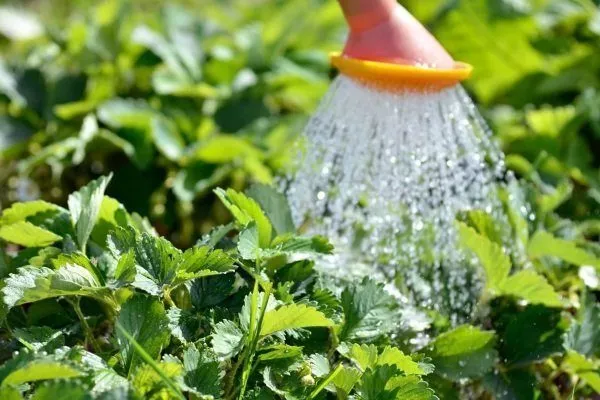
Water as needed. On average, strawberry beds are watered every 5-6 days. It's important to maintain a balance when watering – Alba doesn't like dry soil, but it also shouldn't be overwatered. Overwatering leads to the development of fungal diseases.
Water strawberries with warm water (around 20°C). Apply 10 liters per square meter. Apply water at the roots, taking care not to splash on the leaves, flowers, or berries. Watering is best done with a watering can or drip irrigation; a hose is not recommended, as a strong stream can erode the soil and expose the roots. The best time to water is in the evening.
Top dressing
Feeding procedure:
- Fertilizing begins with the onset of warm weather. The soil temperature should reach 8-10 degrees Celsius. We also recommend reading our article on spring feeding of strawberries.
- After clearing the bed of weeds, water the bushes with an iodine solution (7-10 drops per bucket of water). Water in the evening to prevent leaf burn. Repeat the treatment 2-3 times until fruiting begins. Iodine baths will protect the plants from gray mold.
- A week after treating with iodine, add urea to the soil. Prepare a solution: add 1 tablespoon of urea per 10 liters of soil. Water the bushes with this solution – 0.5 liters per bush.
- During the flowering period, yeast feeding is recommended. How to prepare the mixture:
- Take a 3-liter jar. Pour in sugar (0.5 kg) and dry yeast (10 g).
- Fill the ingredients with water, leaving a few centimeters from the top.
- Place the mixture in a warm place for a couple of days to ferment.
- Dilute the mixture with water (1 tablespoon per 10 liters) and water the bushes. Apply 0.5 liters of the solution under each bush. Two weeks after applying the yeast fertilizer, sprinkle the space between the rows or the soil around the bushes with ash.
- During the fruiting period, it's also helpful to apply ash, either dry or in solution. Apply dry ash at a rate of a handful per bush. Apply a solution at a rate of 0.5 liters per bush. Prepare the solution as follows:
- Pour boiling water over 0.5 liters of ash and leave for 3 hours;
- dilute the mixture with 10 liters of water.
- It is also recommended to feed strawberry plantings in the summer with potassium monophosphate (1 tablespoon per 10 liters) and cow manure (dissolve in water 1:10) or chicken manure (1:12).
- In autumn, repeat the ash feeding or add a complex fertilizer.
- At the beginning of the growing season, apply nitrogen fertilizer to stimulate leaf growth.
- During the flowering period, use potassium-phosphorus fertilizers to improve the quality of the fruit.
- After harvesting, apply a complex fertilizer to restore the plants.
Mulching
If agrofibre/film was not used during planting, it is necessary to carry out this later soil mulchingAdvantages of mulching:
- no need to weed the beds;
- the number of waterings is reduced;
- a stable soil temperature is maintained;
- prevents the leaching of nutrients.
You can mulch the beds:
- compost;
- straw;
- sawdust;
- agrofibre.
Mulch should be renewed periodically. Gardeners who don't want to mulch their beds should regularly loosen the soil and weed. It's also advisable to periodically hill up the plants, as roots can become exposed after watering.
Preparing for winter
Pre-winter preparation activities:
- Remove all dried leaves.
- Trim the tendrils so that only the apical bud with green leaves remains.
- In regions with harsh winters, it is recommended to cover strawberry beds, for example, with spruce branches.
When and how to pick berries?
The early-ripening Alba produces a harvest in May. The bushes bear fruit for a long time, so the berries are harvested in several stages. This variety is good for fresh consumption, but it is also commonly used for preserves, such as strawberry jam, jellies, and sweet desserts.
Picking the berries is easy—they separate easily from the stems. Experienced gardeners often cut the berries with the stems attached—this is a more painstaking task. Picking is done in the morning, after the dew has cleared, or in the evening, when the sun's heat has subsided. Dry weather is essential.
To ensure berries last longer, gardeners recommend:
- collect berries 2 days before technical ripeness;
- Do not water the plantings excessively, especially shortly before harvesting.
During harvesting, the berries are immediately rejected:
- crumpled;
- affected by mold;
- damaged.
If one bad berry gets into the box, then in one day all its contents can be spoiled.
Transportability and storage
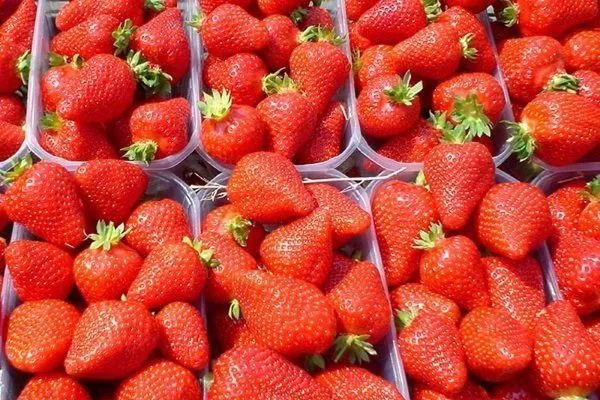
The Alba variety is ideal for commercial cultivation, as it can be easily transported over long distances without losing its commercial qualities or taste.
Berries are stored in wooden or plastic boxes, lined with paper or thin fabric. The shelf life of berries depends on temperature. If placed in the refrigerator (at a temperature of 0 to 2°C), they will remain fresh for 3-4 days. If stored outside the refrigerator, the shelf life is 24 hours.
Diseases and pests
The Alba variety, while immune to a number of strawberry/garden strawberry diseases, is not immune to some diseases to which it is not as resistant.
The most common diseases of the Alba variety:
| Disease | Symptoms | How to fight? |
| Late blight | The leaves turn gray, become cup-shaped, wilt, and dry up. Fruits are few or nonexistent. If left untreated, the bushes die within 2-3 years. | Maintain crop rotation. For prevention, treat roots with solutions of Humate (15 g per liter) or Agat 25K (7 g per liter). |
| Brown and white spot | Reddish-brown spots appear on the leaves. Later, round spots develop, gray or white in the center. The leaves wilt and die. Fruit stalks and petioles are also affected. | Spring treatment with 4% Bordeaux mixture. Treatment with a weak solution of potassium permanganate, Falcon, Metaxil, or Ridomil. |
| Anthracnose | Dark spots appear on leaves, ovaries, and fruits. Dead tissue breaks, and the inside of the rosette stem turns brown. | For prevention, starting from the moment the leaves emerge, treat the bushes 2-3 times with 2% Bordeaux mixture. At the first signs of the disease, spray the bush with Antracol (15 g per 10 liters), but no later than 7 days after the onset of symptoms. |
The most common pests of the Alba variety:
| Pests | Damage caused | How to fight? |
| Aphid | It sucks the juices from the leaves and other parts of the plant. The leaves curl and die. The entire bush withers. | Spray with a soap solution (60 g per 1 liter of water) or special insecticides. You can also spray the plants with a garlic solution (for 10 liters, use a glass of garlic and onion juice, and 150 ml of dandelion juice). |
| Weevil | Beetle larvae eat flowers and ovaries. Buds dry up, and ovaries and fruits develop poorly. | Avoid planting raspberries near strawberries. Remove diseased and old leaves promptly, and loosen the soil. Spray with a potassium permanganate solution and treat with Inta-Vir. |
| Strawberry mite | Damages leaves and fruits. Leaves curl, darken, and die. If left untreated, the plant dies. | Treatment is with Karbofos or colloidal sulfur (8 g per 10 liters). In severe cases, the dose is increased to 15 g. |
How is the variety propagated?
Alba can be propagated in a variety of ways. Common methods include rooting tendrils or dividing the plant. Gardeners rarely resort to seed propagation.
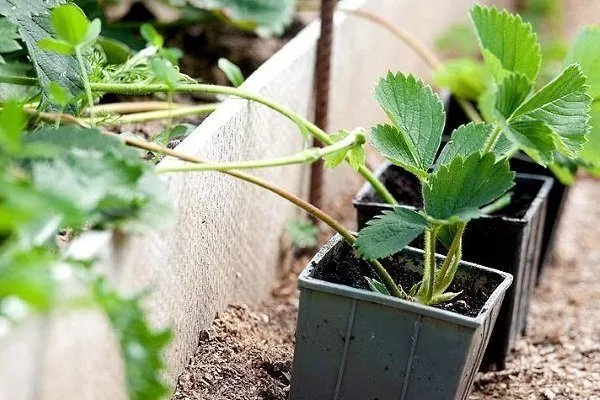
Methods of propagation of garden strawberries Alba:
- Dividing the bush. Procedure:
- in spring, when the temperature is above zero, choose 2-3 year old, consistently fruiting bushes;
- carefully remove the bushes from the soil, trying not to damage the roots;
- divide the roots into 2-3 parts using a sharp sterile instrument - each fragment should have a rosette with leaves;
- the cut site is treated with a solution of potassium permanganate;
- The separated bushes are planted in prepared holes.
- Rooting of tendrils. Harvesting takes place at the end of June. Procedure:
- Prepare a soil mixture by mixing peat and soil in a 1:1 ratio. Add humus.
- The tendrils are transplanted into containers with potting soil. They are placed in a greenhouse or hotbed. They are watered regularly and fertilized with a mullein infusion.
- After three pairs of leaves have formed on the rosette, the remaining tendrils are removed, and the plants are transplanted into the beds.
- Propagation by seeds. This method is unreliable—varietal traits may be lost. Seeds should always be obtained from a nursery. Procedure:
- the seeds are soaked for 2-3 days in a weak pink solution of manganese or in a growth stimulator;
- sow the seeds in containers with nutritious soil and place them in a warm, well-lit place;
- when the first true leaf appears, the seedlings are pricked out;
- The seedlings are planted in the ground in the spring, after preliminary hardening.
Reviews
The Alba garden strawberry is more suitable for commercial cultivation. Thanks to its excellent transportability, shelf life, and excellent presentation, it can be successfully sold at markets. This large-fruited variety will appeal to those who enjoy a combination of sweetness and a hint of tartness.