
Blueberries are a fruit crop that can be grown in your own garden. Some varieties boast high yields, but they can be lost due to viral infections, fungal diseases, or pest attacks. If the problem is diagnosed early, it can be eliminated without significant losses.
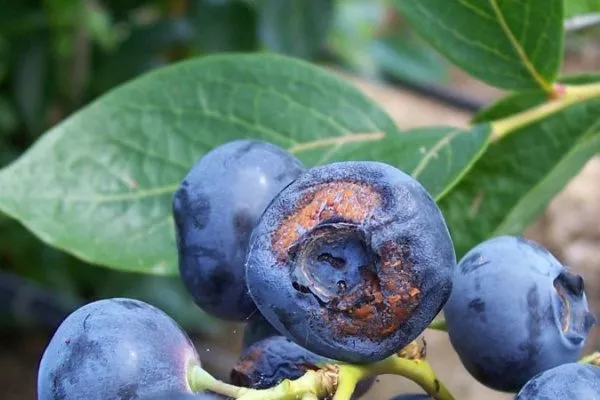
Fungal diseases
Blueberries are often damaged by fungal infections. These detrimentally affect the plant's immune system, inhibiting growth and development. The disease can be identified by the appearance of the leaves, shoots, and fruits.
Anthracnose
The most common blueberry disease. It affects branches and berries. Fungal spores are spread by the wind during rainy weather. Infestations are highest in regions with hot climates and high humidity.
Ripe fruits are especially vulnerable. Some hybrids are immune to the disease and are highly resistant. Infection can appear in early spring. However, the problem is only detected when the blueberries reach biological maturity.
Symptoms:
- Initially, the tips of the shoots are affected, they turn brown or black, then the fungus begins to attack the flowers;
- dark spots of various sizes and round shapes appear on the leaves;

- The berries wrinkle, become soft, and change color to bright pink.
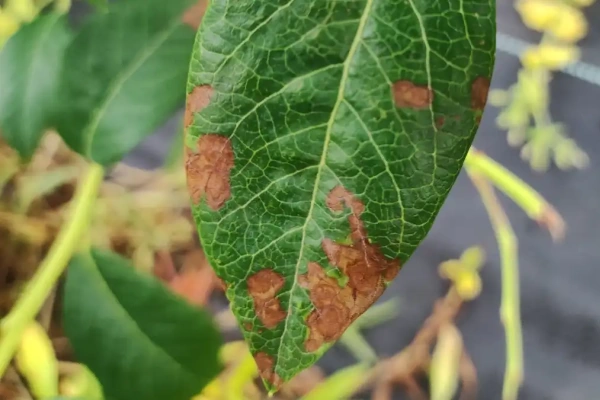
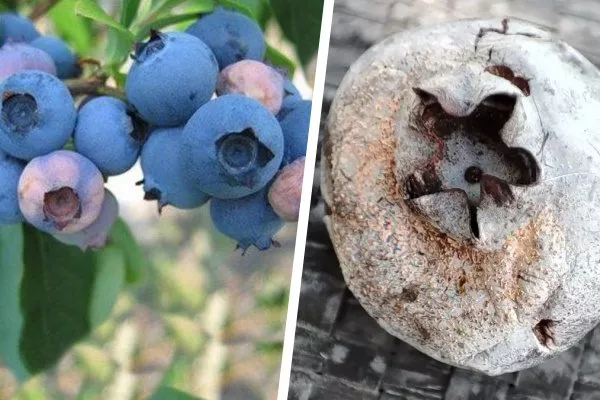
The fight is being waged comprehensively. What to do:
- Avoid watering the plant. Avoid keeping parts of the plant wet for extended periods.
- Place the harvested crop in a cool place.
- Prune to ensure adequate air flow to all shoots.
- In early spring, carry out preventative treatment with Rovral (2 g of substance per 10 liters of water).
- If the problem has already occurred, treat with Skor: 3 ml per 10 liters of water. Two foliar treatments are required, 14 days apart. Consumption: 1 liter of solution per 1 square meter of leaf surface.
- ✓ The air temperature during treatment should be no lower than +10°C and no higher than +25°C for maximum effectiveness of the preparations.
- ✓ Time of day for treatment - early morning or late evening to avoid leaf burns.
Gray mold
A dangerous blueberry disease. This parasite most often attacks low-growing varieties. The fungus overwinters in the tissue of berries, branches, and leaves. It spreads during rainy weather. Varieties growing in humid climates are particularly susceptible.
Signs:
- the petals acquire a brown tint;
- brown ulcers form on the stem and leaves;
- no berries;
- wilting of the bush;
- dying off of shoots;
- a grey or light brown coating forms on the stems, leaves and fruits.
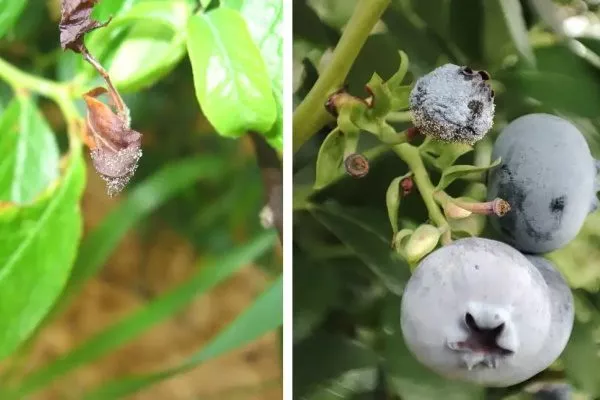
Treatment involves treating the bush with fungicides. Switch (1 g per square meter) has proven effective. Various products from the same group can be used, but all are applied three times, with a weekly interval.
Phomopsis wilt
Tall blueberry varieties are most susceptible to the disease. Infection begins at the crown of the bush. The fungus then spreads throughout the entire plant. Signs can even be seen on the buds.
Symptoms:
- the appearance of brown spots, which, as the disease progresses, merge into one continuous spot;
- formation of brown ulcers with a gray border;
- drying out of the plant 2-3 months after infection;
- twisting of shoots.
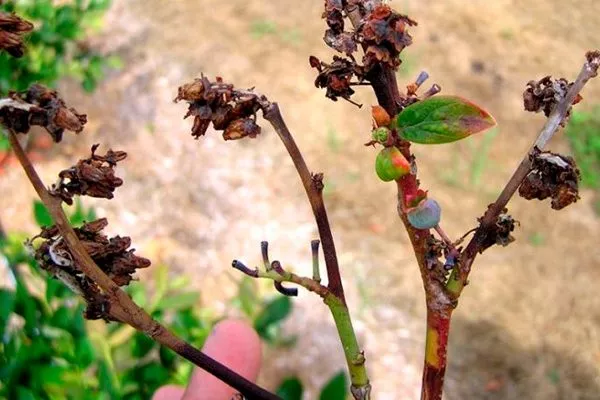
Treatment involves heavy pruning and spraying with Fundazol at a rate of 1 g per 1 liter of water. This is sufficient for one mature bush. The treatment can be applied up to five times, but it should not be used for the next two years.
Stem cancer
Blueberry infection occurs in the spring. Spores are spread by the wind. If the region is characterized by cold weather and relatively low temperatures even in summer, red spots are a sign of infection.
Symptoms:
- initially red ulcers on the stems, later turning into conical tubercles;
- If the disease is caused by the Godronia fungus, the bark additionally dries out, cracks, the wood dies, and a small ulcer with raised edges forms (most often the problem is noted at the base of the stems and at the fork of the branches).
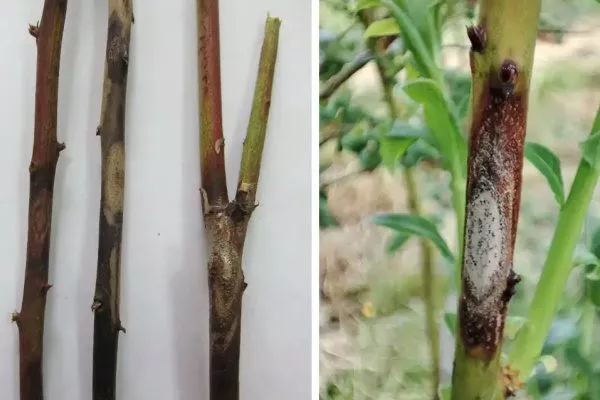
These are common signs of infection. Much depends on the variety. For example, on hybrids, canker appears as a brown, sunken spot. On susceptible varieties, cracks may be visible at the site of the lesion.
What to do:
- Peel the bark back to healthy tissue.
- In spring, spray with Azofos: 100 ml per 10 liters. The norm is 2 liters per adult bush.
- The rest of the time, use copper sulfate – 30 g per 1 liter of water. The norm is per 1 square meter.
Black spot
The fungus begins to infest areas where water stagnates, most often leaves. It spreads from the crown of the bush to its base. The infection is especially serious for varieties grown in humid climates. The pest's spores are suspended in the liquid, and after it evaporates, they are carried by wind or insects.
Symptoms:
- the leaf blade is dotted with oval black-brown dots;
- the bark becomes discolored;
- brown ulcers appear on the internodes;
- the top of the blueberry withers and darkens;
- the affected parts die off.
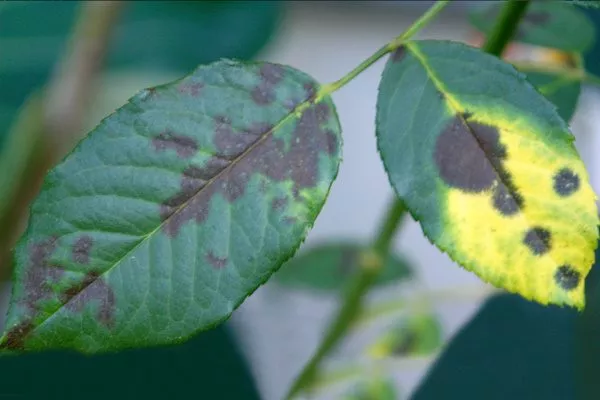
Treatment:
- Remove and burn any deformed branches and leaves. Prune back to healthy tissue.
- Use Topsin: 2 g per 1 liter of water. Apply foliar treatment. To ensure effective fungal control, begin treatment in early spring (before flowering) and after berry harvest. Three sprays are required at each stage, spaced one week apart.
Moniliosis (or fruit rot)
The disease affects all blueberry varieties, with the exception of highly disease-resistant hybrids. The fungus, which parasitizes the buds, can be transmitted by bees during pollination.
There are many signs of the disease. The first is that young shoots and leaves wilt in early spring. Other symptoms include:
- the leaf blade and veins turn brown and fall off after 2 days;
- infected branches die off;
- flowers with a brown tint dry out;
- The berries turn pink or cream, then orange or grey, and clusters of mycelium are visible at the cut site.
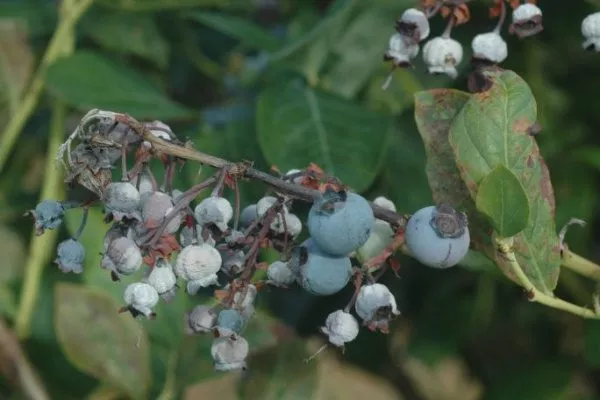
There is no cure for this disease. The only solution is to follow proper blueberry cultivation practices and remove any deformed parts of the bush.
Powdery mildew
The fungus begins to actively parasitize in dry, hot climates, as high temperatures cause the bark to crack. Through these cracks, the fungus penetrates into the plant tissue.
The disease attacks young leaves, branches, and buds at the fruit-setting stage. The shoots become deformed and dry out, thereby weakening the plant's immunity. As a result, blueberries die in winter, as their resistance is significantly reduced.
Signs:
- a white fluffy coating forms on the outer side of the leaf blade;
- the leaves are wilted, there are brown spots with a red border, they fall off prematurely;
- the affected areas turn grey and dry out.
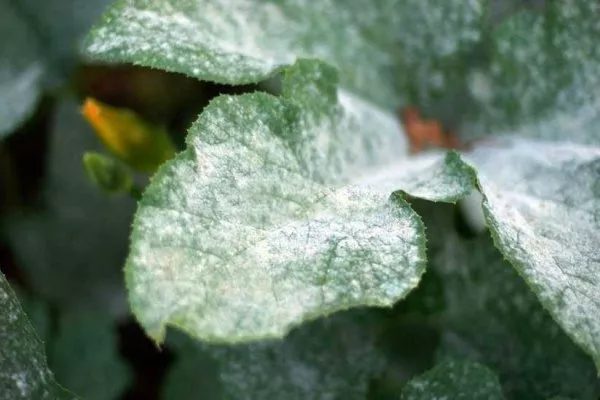
When choosing a powdery mildew control product, consider the plant's growth stage. Colloidal sulfur powder is suitable before flowering. Water the plant before use. Then, spread the solution in a thin layer at a rate of 15 g per square meter.
After flowering, Switch can be used. Spray the leaves on both sides.
Phyllostictosis (or brown spot)
Large, dark-brown spots with a purple border appear on blueberry leaves, indicating a phyllostictosis infection. The spots are always round, but their color varies. Over time, the centers of the spots become gray.
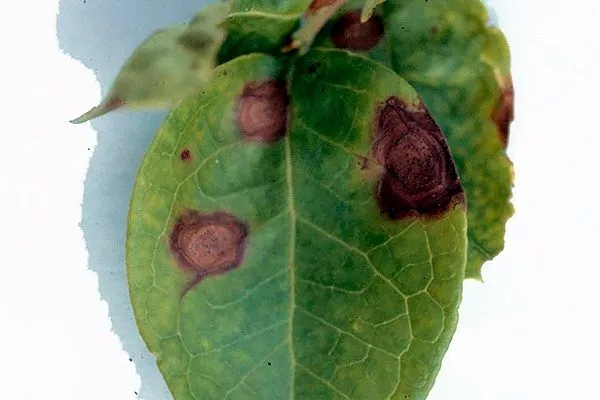
Affected leaves may fall prematurely. The infection persists even in dried parts of the plant.
Control measures:
- Use only healthy planting material.
- Follow the agricultural practices for growing blueberries.
- Cut off and burn affected leaves.
- During the green growth stage, spray with Abiga-Peak at a rate of 40 g per 10 liters of water. This is sufficient for treating 10 square meters of planting.
- If a widespread outbreak of the disease is observed, repeat the elimination steps after harvesting, using the same Abiga-Peak product.
Septoria (white spot)
The fungus reduces the health of blueberries. The bark on the trunk dies, and the stems gradually dry out. The infection persists in fallen vegetation.
Symptoms:
- in early to mid-summer, reddish-brown spots appear on the leaves, and their centers gradually become lighter;
- the affected parts die off;
- In case of severe infestation, unusual spots appear on petioles, young shoots and branches.
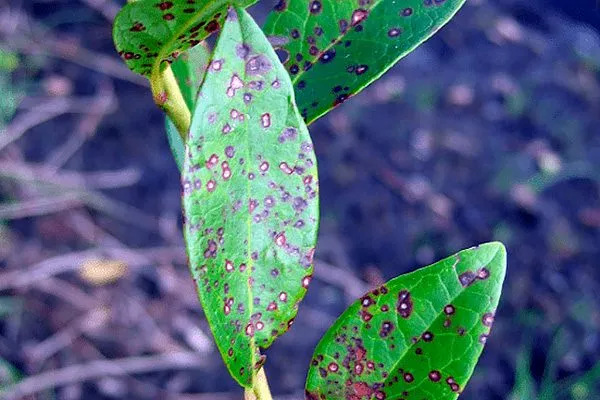
The symptoms are very similar to stem canker or Phomopsis. Treatment is the same as for phyllostictosis.
Cytosporosis
The main symptom of the disease is the drilling and death of the bark. Convex, tuberculous stromata form on the wood. Their number is unlimited. Initially, they are embedded in the plant tissue, but as the disease progresses, they break out. The bark disintegrates into fibers.
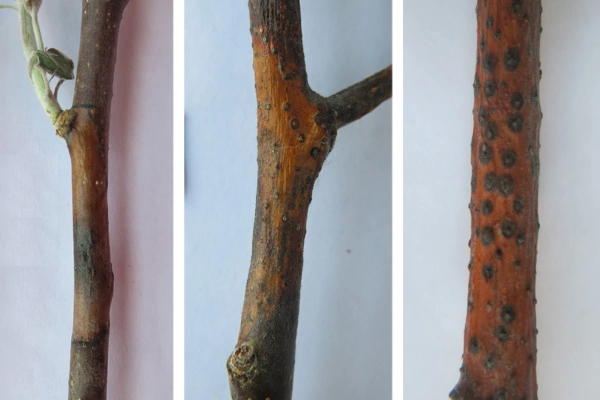
Treatment is the same as for stem canker. Topsin spraying can be used. For blueberries, the treatment principle and dosage are the same for all diseases.
Phytophthora root rot
The disease occurs in blueberries growing in moist soil. High temperatures are favorable for the spread of the disease. Spores migrate through water and soil.
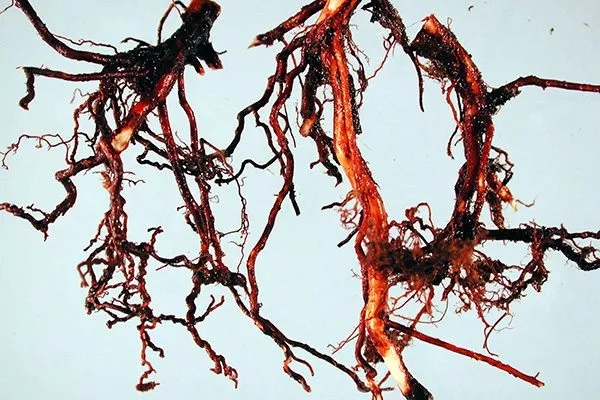
Affected roots
Symptoms:
- yellowing of foliage;
- plant growth arrest;
- dryness of parts of the bush is noted (not typical for all varieties).
The most effective method of disease control is proper agricultural practices. Here's what's important:
- Plant the seedling in well-drained soil.
- Regularly disinfect the tools used for pruning.
- Use only clean, settled water for watering.
Bacterial diseases
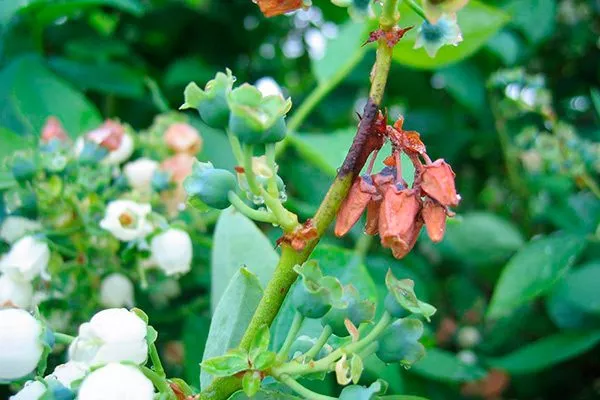
Of all similar diseases, only fire blight of blueberries is noted. The disease spreads in cool weather. High humidity in the spring or fall can trigger the development and proliferation of the fungus. Blueberries damaged by frost are most often affected.
Symptoms are visible during bud break:
- annual stems become a rich brown color;
- the buds and inflorescences adjacent to the diseased branch turn brown and die;
- new leaves do not appear.
The disease spreads quickly and can affect other plants growing near blueberries. Treatment is with antibiotics. Ampicillin works well: 1 g per 10 liters of water. Foliar treatment. After two weeks, apply Acrobat: 2 g of pure solution per 1 sq. m.
Viral diseases
Viral diseases can destroy an entire blueberry planting. They are transmitted by insects and birds. The disease can progress rapidly if the cut is poorly prepared or if a gusty wind causes a break. Infection can also be caused by improper tillage or a cut to the root.
Mycoplasmosis (blueberry stunt virus)
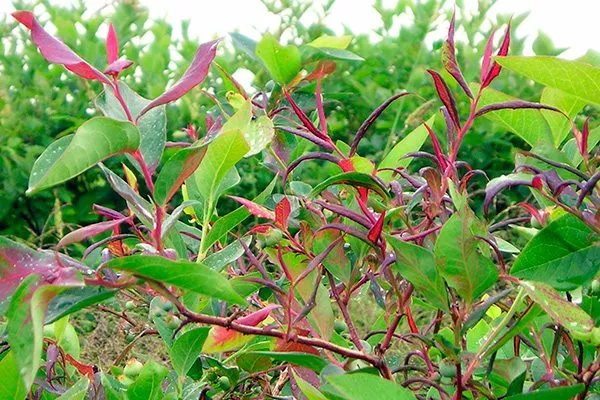
The disease is caused by a life form intermediate between bacteria and viruses. It takes several years to develop. It is impossible to detect the infection at an early stage. The culture weakens and stops growing. The negative impact is gradual.
Symptoms:
- redness of the leaves;
- deformation of the sheet plate;
- early leaf fall;
- stripes on shoots of the second year of life.
There is no treatment for the disease.
Red leaf spot
Gardeners rarely encounter this problem. The disease is common in regions with dry, hot climates. The pathogen is found in the soil and is introduced to the garden via poor-quality seedlings.
Symptoms:
- old leaves and shoots die off;
- Ring-shaped spots appear on the leaves.
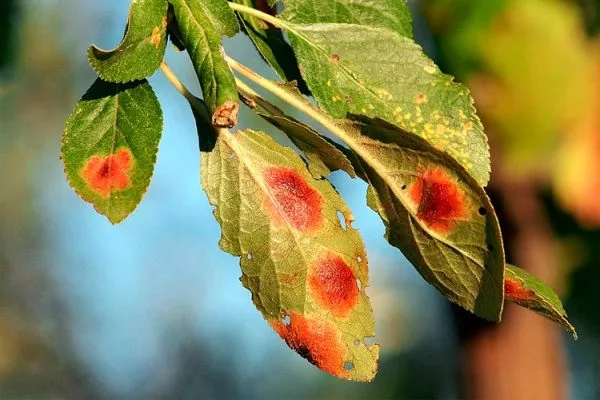
Saving blueberries is extremely difficult. Chemical treatments are effective only in the early stages of the disease. Spraying with Topsin is an option. Removing the affected parts is essential. In advanced cases, the plant must be uprooted and burned.
Viral mosaic
This viral disease develops rapidly and can lead to the death of the plant. Symptoms that don't appear immediately include:
- growth and development of shoots is not observed;
- there are no ovaries, the berries do not ripen;
- light mosaic-shaped spots form on the leaf blade;
- branches and stems become deformed and wither.
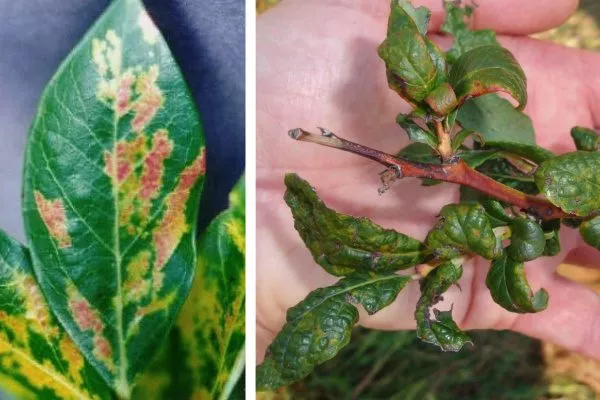
There is no cure for the disease. At the initial stage, use malathion – 75 g per 10 liters of water. Spray the entire area. This won't save the blueberries. The bush should be dug up and burned. This action is aimed at protecting other crops in the garden.
Pest overview and control methods
Insects are just as problematic as fungus. It's impossible to completely protect a blueberry planting, as pests are everywhere. Eliminating them is easy; the key is to detect pest infestations early.
Who a gardener may encounter:
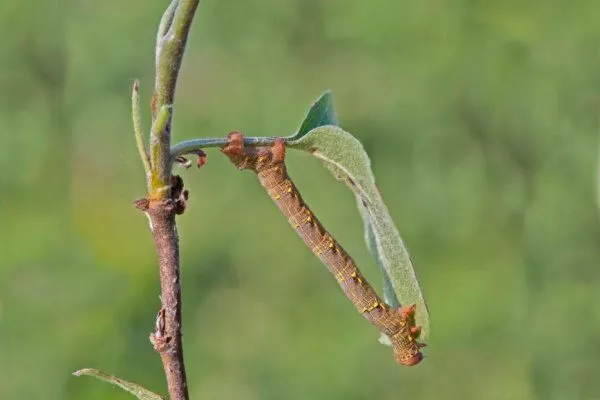
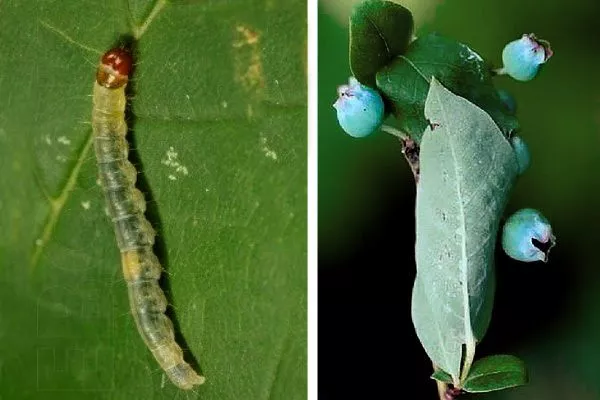
- Caterpillar. Blueberries are eaten by two species: the arrowhead moth and the geometer moth. The arrowhead moth is brownish-black with white spots, an elongated body, and fine hairs all over its body. It parasitizes blueberries all summer, damaging leaves and stems. The geometer moth is yellow and has four abdominal legs. It feeds only on leaves and appears in May.
Geometrid caterpillar
Small numbers of caterpillars can be removed manually. In severe cases, treat with Fufanon (13 ml per 10 liters).
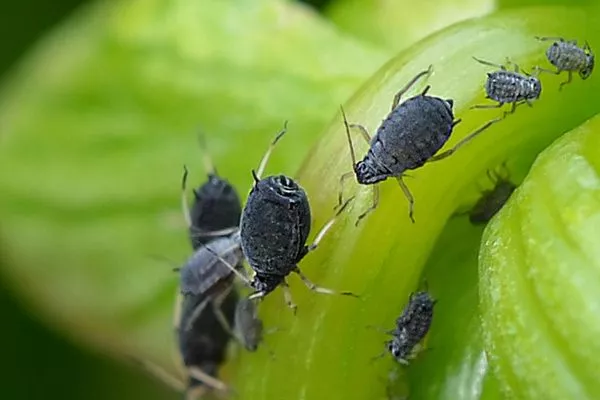
- Beet aphid. This is a small, dark insect. It damages leaves, causing them to curl, turn yellow, and fall off. Plants can be affected at any stage of growth. Calypso 480 (2 ml per 10 liters of water) is suitable for control.
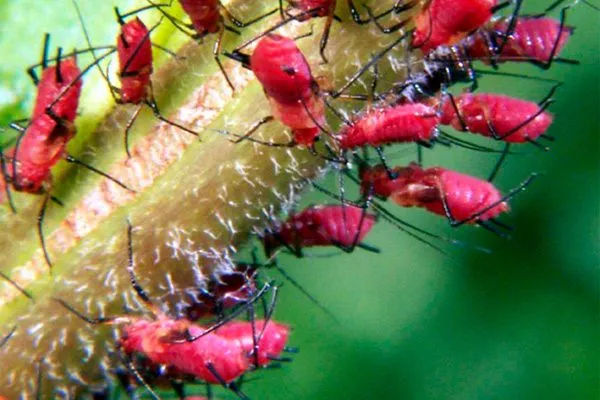
- Blood aphid. The pest feeds on young shoots. Clusters are found at the base. Negative impacts result in smaller fruits. It lives on blueberries throughout the season and is a vector of viruses. Iskra-M (1 tablet per 10 liters of water) is suitable for control.
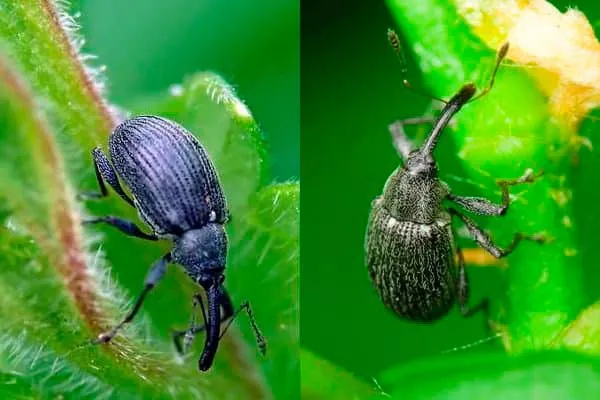
- Flower beetle. Another name for this pest is the weevil. It has a black body and hairy wings. It attacks the entire bush, sometimes even eating buds and fruit. Spraying with Fufanon can help control this pest.
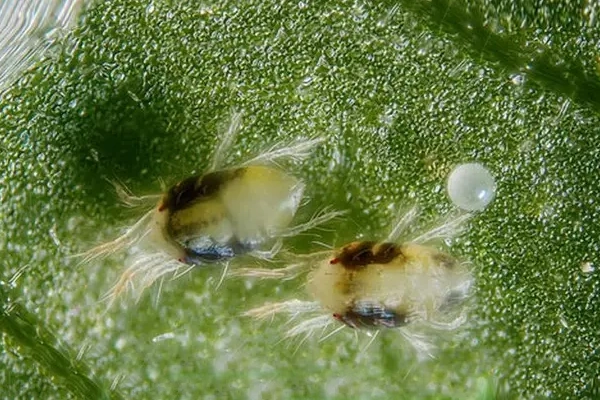
- Mite. Blueberries are destroyed by mite larvae, which eat the buds. Treatment is with Nitrafen (200 g per 10 liters of water). The parasite overwinters in the foliage.
- Leaf roller. This miniature butterfly prefers young bushes. The most dangerous pests for blueberries are their caterpillars, which feed on shoots, flowers, and leaves. The insecticide Omite (10 g per 10 liters of water) can help repel the pest.
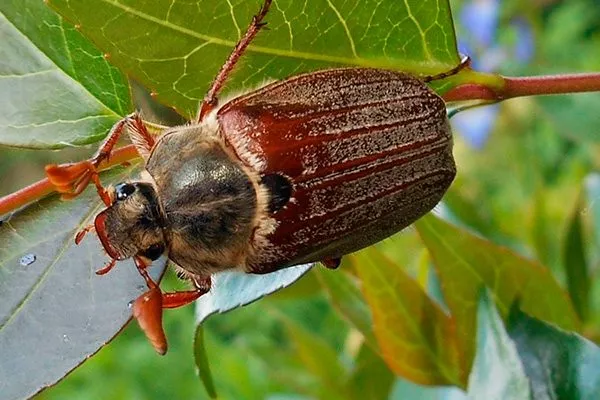
- May beetle. May beetles attack plantings in May. The beetles feed on young leaves, eating them down to the veins. The insect larvae destroy the roots. They are active at night. Confidor (1.5 g per 10 liters of water) is suitable for control.
- Birds. All species cause the same damage: they eat fruit, reducing harvest yields. Repellents should be installed in the garden. This could be a shiny strip.
Prevention methods
To prevent diseases and pests, apply Bordeaux mixture in the spring and use fungicides in the fall. Apply three times: after foliage appears, after harvest, and at the end of the growing season. A 1% Bordeaux mixture is recommended.
What other work needs to be done:
- sanitary cleaning of the soil from fallen berries, leaves, branches and debris;
- soil acidity control;
- maintaining optimal soil moisture;
- pruning of damaged, deformed, weak branches;
- weed removal;
- application of fertilizers;
- mulching the tree trunk circle with sawdust or bark;
- Covering with spruce branches for the winter.
- ✓ The mulch layer thickness should be 5-10 cm for optimal moisture retention and soil temperature control.
- ✓ Mulching material must be free of weed seeds and pathogens.
Blueberry crops can be lost due to a number of diseases, including fungal and viral ones. In the latter case, there is no treatment; the plant is uprooted and burned. Various pests can have a detrimental effect on the crop. Control is essential, as they transmit viruses. Effective treatments are readily available. Any gardener can eliminate the problem themselves.