
Blueberries are deciduous shrubs. They belong to the Ericaceae family, genus Vaccinium, and species type. Their main relatives are bilberries and lingonberries, with which they are often confused. They prefer northern regions, forested, mountainous, peatland, and marshy areas. As they grow, they form extensive marshes.
What is blueberry?
Unlike similar shrubs, blueberries have a truly vast array of names. In Latin, they are known as Vaccínium uliginósum, and in common parlance and popular science literature, they are also known as drunkard, gonoboi, blue grape, fool, drunkard, fool, blueberry, golubets, water drunkard, tit, bog blueberry, swamp blueberry, dwarf blueberry, gonobob, and so on.
Botanical description
Bush blueberry is a branched plant that can be either a shrub or a subshrub, characterized by the following appearance characteristics:
- Bush. Its height depends on the main species, varying from 30 to 250 cm. The stem rarely (depending on the variety) spreads. It is woody all the way to the top, which is not the case with bilberries, which are often confused with blueberries. Both plants have similar leaves, but the blueberry's stem is lighter in color.
The leaves are 2-3 cm long, oblong or obovate, and have a compacted leaf blade. During the growing season, they are green, but turn reddish in autumn and quickly fall off. - Root system. The roots are fibrous, so they lack hairy appendages. Nutrients are absorbed through fungal mycorrhiza.
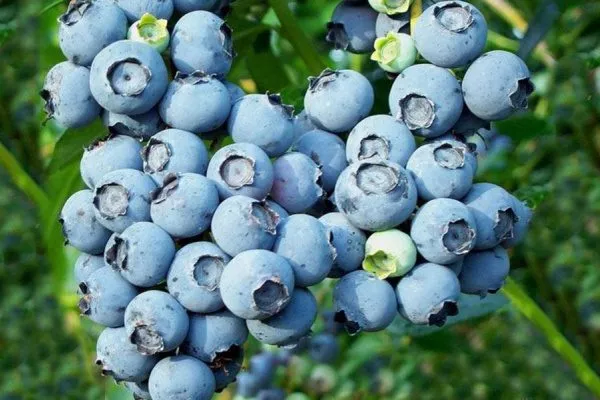
- Berries. They have a blue or bluish tint and are resistant to shedding, so even after frost, the fruit can be seen on bare-branched bushes. The juice of the pulp is pale blue, as is the flesh itself. The berries are round, with a bluish-gray surface. The fruit is approximately 1-1.2 cm long.
- Flowers. They have a five-toothed configuration, a drooping habit, and are small in size. The corolla is pink or snow-white. The receptacle is broken in shape (blueberries have a round, smooth-edged receptacle).
Fruiting, yield and harvesting
Blueberries grown in our country's gardens ripen in mid-summer—earlier in the South, 2-3 weeks later in the North. The fruiting period also depends on the variety: early berries ripen in mid-July, late ones at the end of that month. The growing season lasts until mid-September, so the harvest ripens unevenly.
The yield is quite high, but also depends on the variety. On average, one bush can yield about 5-7 kg. The first flowering occurs in the third year of the plant's life, and the berries can be harvested 5-6 years after planting.
The fruits are collected at different stages of ripeness:
- If the harvest needs to be transported for sale or preserved for the winter, the berries are picked when half-ripe;
- If you are planning to eat it fresh within 3-4 days, then when the fruit becomes juicy and soft.
Types of blueberries
| Name | Bush height (cm) | Berry size (cm) | Frost resistance (°C) |
|---|---|---|---|
| Ordinary | 30-100 | 1-1.2 | -35 |
| Tall | up to 200 | 1.2-1.5 | -25 |
Blueberries are divided into two main types, each with its own varieties. What types of blueberries are there?
- Common (Vaccinium uliginosum). Characterized by a highly branched and low-growing bush, plants typically reach heights of 70 to 100 cm in gardens and 30 to 50 cm in the wild. Fruiting lasts approximately 75-80 years. The first berries are harvested at 6-10 years of age.
- Tall (Vaccinium corymbosum). This is a subspecies of the common blueberry, but the bush grows to about 2 meters in height and about the same in width. It produces berries that are exceptionally sweet. The first fruiting occurs four years after planting.
Unlike the previous variety, the berries are slightly larger, the root system does not like swampy areas, and does not tolerate frosts of -25 degrees.
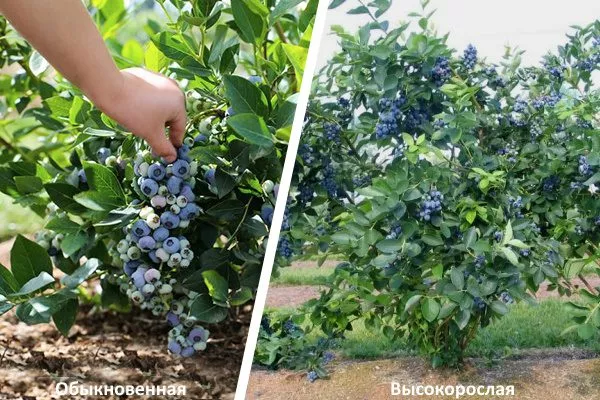
There are many varieties of blueberries, both common and highbush, but the most commonly grown are the following:
- Bluecrop;
- Duke;
- Patriot;
- Bluegold;
- Elizabeth;
- Denis blue.
Top the best varieties of blueberries are presented in our next article.
Composition and caloric content
Blueberries contain a huge amount of nutrients for only 55 calories. For example, 100 grams of blueberries contain:
- 0.74 g protein;
- 0.33 g fat;
- 14.5 g carbohydrates;
- 84.2 g of water;
- 0.24 g ash.
Among the beneficial substances, vitamins C, B3, B4, B5, E, K, magnesium, phosphorus, potassium, calcium, sodium, etc. are particularly noted. In addition, the berry contains the following:
- fiber;
- organic acids, chlorogenic, triterpene;
- pectins;
- anthocyanins;
- flavonols;
- leucoanthocyanins;
- catechins.
Health benefits of blueberries
Based on the composition of blueberries, the plant possesses a number of medicinal properties. It is used in various fields—medicine, folk remedies, cooking, cosmetology, and more.
The benefits of blueberries for humans
If you eat blueberries daily, they will be very beneficial for the whole body:
- For women. Improves skin tone and condition, prevents aging, restores the structure of nails and hair, and reduces the risk of varicose veins during pregnancy.
- For men. Normalizes the functioning of the genitourinary system, is used for prostatitis, improves vision and endurance.
- For children. Giving berries to a child accelerates the development of all body structures. Additionally, the beneficial substances strengthen the immune system, protect against viruses, and promote activity.
Culinary uses
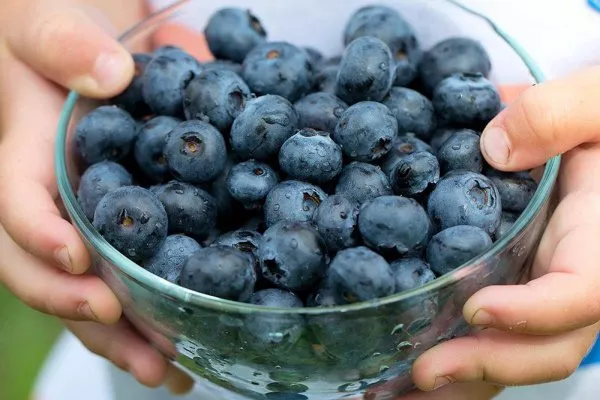
Since blueberries are completely edible and non-toxic, they are commonly eaten raw as well as processed. Culinary uses:
- Freshly squeezed juice – can reduce sugar levels and strengthen blood vessels;
- jam, preserves and marmalade – combination with lingonberries, blueberries, and cranberries is acceptable;
- wine;
- sauce for meat dishes;
- pies, pastries;
- salads.
Use in medicine
Conventional medicine also recognizes blueberries as a medicinal remedy, and therefore, as a complement to conventional therapy. They are recommended for the following conditions:
- depressive disorders;
- colds;
- catarrh of the stomach;
- pyelitis;
- diabetes mellitus;
- diseases of the heart and circulatory system;
- memory loss;
- violation of psychomotor functions.
In folk medicine
In folk medicine, not only the berries but also the plant's leaves are used. They are used to make infusions, decoctions, and teas. Some features:
- Tea. To prepare it, you need 250 ml of boiling water and 20 g of berries or leaves. It's best to let it steep in a thermos for 40-60 minutes. It's recommended to drink it with 1 teaspoon of honey.
- Decoction. To prepare, you'll need 250 ml of boiling water and 50 g of leaves, which can be substituted with young shoots. Simmer the mixture for 30 minutes.
- Tincture. It is prepared in the same way as a decoction, but it should not be boiled, but rather infused in a thermos for about 6-8 hours.
For weight loss
Blueberry juice helps neutralize accumulated visceral fat. Additionally, its nutrients prevent the formation of new fat deposits. This effect is achieved by accelerating metabolism, specifically lipid, carbohydrate, and fat metabolism.
In cosmetology
Cosmetologists also recommend blueberry as a berry extract. It helps reduce fine wrinkles, provides an antioxidant barrier, and protects against harmful UV rays.
Products made from the plant's seeds are also available—a coarse powder is made from it and used as a scrub. At home, the berries can be used for masks, infusions for washing, or in a tonic bath.

Blueberry's dangerous properties and contraindications
Blueberries are not an allergenic product, but nevertheless, they are prohibited in the following cases:
- pregnancy, lactation, individual intolerance – an allergic reaction may occur;
- taking blood thinning medications (it will, on the contrary, bind);
- biliary dyskinesia (affects the outflow of bile).
How to plant blueberries correctly?
Before planting, it is important to carry out a number of preparatory measures, thanks to which the bush will quickly take root and begin to develop rapidly.
Saplings
Planting material must be of high quality. The best seedlings are those that are 2 or 3 years old. They should have strong, two-year-old branches and one-year-old growth. What should be avoided:
- the presence of mold, diseases, pests;
- twisted leaves;
- spots;
- signs of wilting;
- broken roots.
Before planting in open ground, be sure to prepare young bushes:
- Inspect the root system. If the roots are tangled or curved upward, gently straighten them out.
- If you purchased a seedling with a closed root system, moisten the soil before planting, otherwise you will not be able to straighten the shoots.
- If necessary, soak the seedling in a rooting agent.
Landing site
The location where your blueberry bush will grow will determine the plant's health, future fruiting, and yield, so pay attention to the following criteria:
- the culture requires a lot of sunlight, so any shading is excluded;
- drafts should be avoided;
- Blueberries love high humidity, but do not tolerate excessive waterlogging, so if groundwater is close, install a drainage system in the planting hole;
- the optimal side in relation to buildings is the south;
- a good option is a slight elevation;
- tall trees nearby are prohibited, otherwise they will create unwanted shadows;
- Good neighbors are azalea, cranberry, lingonberry, rhododendron.
Planting dates
Blueberries can be planted in either spring or fall, but the former is preferred. This is because the bush adapts more easily, takes root more quickly, and, most importantly, has time to establish roots. If planted in the fall, the seedling may grow sickly and weakened, as young plants are less able to withstand sudden cold snaps.
If you decide to plant blueberries in the spring, do it before the buds open; if in the fall, do it immediately after harvesting in the garden.
Depending on your region of Russia, please note the following planting times:
- Moscow region and the Central Belt – from April 10 to 20;
- Urals, Siberia, Leningrad region – first days of May;
- Kuban, Caucasus – the last days of March.
Keep in mind that the soil temperature must be consistently at least +5°C (41°F). The snow must be completely melted.
Planting hole
The planting site is prepared at least 2-3 weeks before planting. The planting hole dimensions depend on the soil type:
- if the soil is light, a 40x50 cm pattern is used;
- if it is heavy – 30x70 cm (in this case, a drainage system with a layer of about 7-10 cm must be laid).
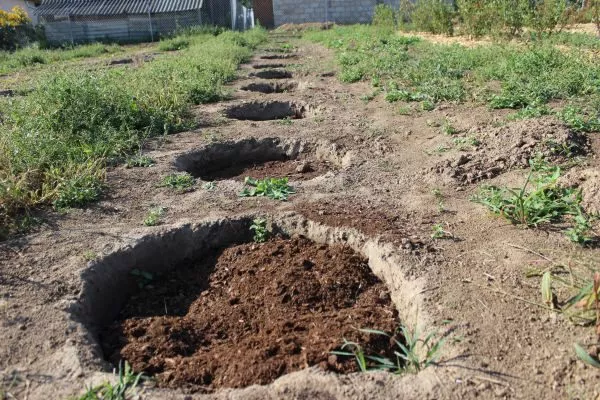
How to prepare a hole:
- Remove the sod soil.
- Install borders inside the hole. These can be made from pieces of slate, plastic, brick, or metal sheets. They prevent the acidic soil mixture from washing out of the hole and allowing regular soil to penetrate.
- If necessary, lay a drainage layer of broken brick, expanded clay, perlite, or stones. For blueberries, experts recommend using pieces of conifer bark, as decomposition leads to soil acidification.
- Add the substrate. There are two options: store-bought or homemade. To do this, combine 2 parts pine needles and river sand, then add 6 parts high-moor peat.
Maintain the proper distance between planting holes. This depends on the type of bush:
- low-growing – minimum 80 cm, maximum 100 cm;
- tall – from 120 cm to 150 cm.
Soil
The main requirement for blueberry soil is a high pH level. Optimal parameters range from 2.5 to 4.5 pH. This means the soil should be sandy loam, sandy soil, or peaty.
If the soil doesn't meet the parameters, it will have to be artificially acidified; otherwise, the plant won't bear fruit and its immunity will be weakened. Consequently, diseases will develop, which will kill the plant.
- ✓ The soil acidity level should be strictly within the range of 2.5 to 4.5 pH.
- ✓ Lack of organic fertilizers in the soil, as they promote alkalization.
Planting blueberries step by step
After the soil mixture in the planting hole has settled, begin planting the pre-prepared seedlings.
How to do it right:
- Inside the hole, create a small mound in the central part.
- Place the bush on top, spreading the root shoots along all sides of the mound.
- Fill the hole with the same soil as in the trench. Try to gently shake the trunk to distribute the soil mixture more evenly.
- Compact the surface using your palms. You can remove any air pockets with a patting motion.
- Make a small hole near the trunk. Pour about 30-40 liters of water into it. Do this gradually to prevent the soil from eroding – first add 5 liters of water, then add the same amount again after it's absorbed, and so on.
- Sprinkle with pine needle mulch. Layer 6-7 cm.
To learn how experienced gardeners plant blueberries, watch the following video:
Caring for blueberries
Growing blueberries isn't without its challenges, as a variety of care procedures are essential. While you can, of course, ignore some of them, you won't get a decent harvest, and the tree will be susceptible to disease and pest attacks.
Loosening and weeding
Blueberry roots require oxygen, which becomes available only after loosening the soil around the tree trunk. Perform this along with weeding, ensuring all the nutrients reach the plant, not the weeds.
Watering
If the blueberry bush doesn't have enough moisture in the soil, it will begin to suffer from drought. This is especially true during the first two months after planting, as the root system hasn't yet fully adapted to its new environment. During this period, add settled water almost daily.
In the future, please adhere to these rules:
- in rainy weather conditions, do not water the bushes at all, but if the weather is warm and dry, then moisten them every 3 days, adding 10-12 liters of liquid;
- During the period of active fruiting (from July to August-September), blueberries require abundant watering - 20-30 liters of water every 2-3 days.
During drought, irrigation is essential, including spraying the green foliage. Specific hours are designated for this: from 12:00 to 1:00 PM and from 3:00 to 4:00 PM.
Soil acidity level
Almost 95% of all crops prefer a neutral pH, but blueberries do not. Therefore, it's important to closely monitor this level. There are many ways to increase this level. How to acidify soil for blueberries:
- Citric acid. When watering blueberries, use citric acid, using just 5 g (1 teaspoon) per 3 liters of water, which is enough for 1 square meter. This is essentially the dosage for a young plant, but for an adult plant, you need to pour 10 liters of water with 2 teaspoons of citric acid added.
- Oxalic acid. It stimulates bush growth and acidifies the soil. Dilute 5 g per 10 liters of water. This is the recommended dose for one bush.
- Vinegar. You need a table variety with a concentration of 9%. For 10 liters of water, you need 100 to 150 ml of vinegar, depending on the soil's acidity.
For extreme acidification, use 200 to 250 ml for the same amount of water. This is used if the shrub is rapidly wilting due to neutral soil. - Electrolyte. Although the product is intended for automobiles, the electrolyte is also used for blueberries. It consists of sulfuric acid and distilled water, but these substances do not harm the plants. Features:
- if you mix with 10 liters of ordinary water, it is enough to pour in 10 to 15 ml of electrolyte;
- If you use lime water, increase the dosage to 20 or 30 ml;
- Pour only into the root area, making sure that the liquid does not come into contact with the trunk or leaves.
- Pickle brine. Besides acidifying the soil, cucumber brine accelerates the development of the shrub and fruit and helps repel wireworms and midges. Watering with this solution is permitted once a month, as it contains salt in addition to acid.
Dilute the brine from one three-liter jar in 10 liters of water. - Peat. To avoid using folk remedies like citric acid, vinegar, etc., buy or find high-moor peat in the forest. It's suitable for acidifying the soil—its pH is a maximum of 4.5.
Don't confuse high-moor peat with low-moor or transitional peat, as other types are not suitable for blueberries. Features:- Peat can be found in damp forests, swamps, river floodplains, etc.;
- the raised variety consists of vegetation, moss and humus;
- It is important to mix this peat with a small amount of sand, pine needles or sawdust from spruce or pine trees;
- It is easy to recognize – the color is brownish, reddish or chestnut, the structure is porous.

Top dressing
Blueberries don't require high fertility, but they do require periodic fertilization. It's important to apply minerals three times:
- during bud swelling;
- during flowering;
- after June 20.
Complex preparations such as Azofoska, Florovit, and Fertik Universal are used. The dosage depends on the age of the shrub. For the season, it is necessary:
- at 2 years of age 1 tbsp.;
- at 3 years old 2 tbsp.;
- in 4 – 4 tbsp;
- in 5 – 8 tbsp;
- at 6, etc. – 16 tbsp.
Pruning blueberries
Bushes need to be pruned as they become denser. Sanitary procedures are also important, meaning removing all frozen, broken, and diseased branches in spring and fall. However, shaping blueberries is crucial. Here are some tips:
- Between the ages of 2 and 5 years, the skeleton strengthens, so cut off weakened shoots and the lowest ones that touch the ground surface.
- After 5-6 years, use one of the following methods:
- to enlarge the fruit, remove 5-year-old shoots from the stump;
- To increase yield, cut off 6-year-old branches.
Shelter for the winter
Blueberries are not afraid of recurrent frosts, as their flowers easily tolerate temperatures as low as -6 to -7 degrees Celsius. However, in winter, the maximum temperature limit for most varieties is -30 to -35 degrees Celsius. Plenty of snow is essential for this. Without it, the bush will freeze.
Therefore, experts recommend covering blueberries in this way:
- use agrofibre or burlap;
- cover with a thick layer of spruce branches;
- Hill up with high-moor peat or wood sawdust.
How to understand what blueberries lack?
If your shrub is lacking nutrients, pay attention to the following negative signs:
- yellowing of foliage, weakening of growth – lack of nitrogen;
- formation of spots, dying off, blackening – low potassium;
- foliage deformation – no calcium;
- leaf edges turn red – lack of magnesium;
- formation of a purple tint on the green mass - add phosphorus;
- the formation of green veins on yellowed leaves in autumn is a lack of iron;
- yellowing of leaves in spring and summer – lack of boron;
- Whitening of leaves - low sulfur, which regulates soil acidity.
To replenish nutrients, use complex fertilizers – zinc, ammonium, potassium and other sulfates.

Diseases and pests
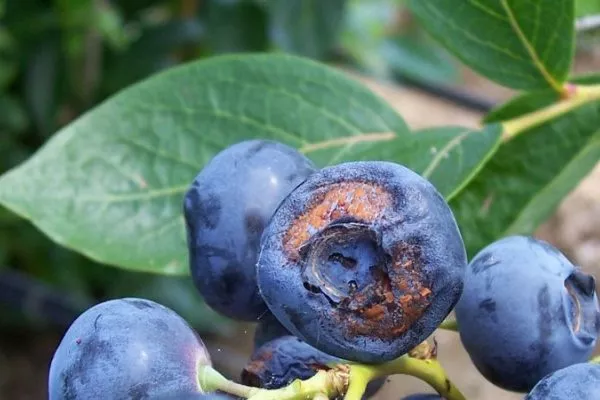
Blueberries are most susceptible to viral and fungal diseases. These include mosaic, red ring spot, dwarfing, phomopsis, stem canker, gray rot, and white spot. Powerful fungicides are used for treatment, such as Topsin, Euparen, and Bordeaux mixture.
Pests include mites, aphids, leaf rollers, and silkworms. These are controlled with insecticides. Birds are particularly common, requiring traps or repellents.
Blueberry propagation
Blueberry bushes reproduce in different ways, each with its own characteristics:
- Seeds. The process is lengthy and labor-intensive, and varietal traits are not preserved, so the method is used by breeders to develop new varieties. It looks like this:
- seeds are collected from overripe fruits and then dried;
- then they are planted in containers to obtain seedlings;
- then they are transferred to a greenhouse and after the seedlings have formed, they are planted in open ground (after 1.5-2 years).
- By dividing the bush. This method is quick but labor-intensive, as you need to remove the bush from the soil, divide it into several parts, and plant each one separately.
- By cuttings. A strong cutting needs to be cut from the bush, rooted over the winter, and planted in the garden in the spring.
- By layering. This method is only used on bushes with flexible shoots. Two or more lower branches should be bent to the ground, secured, and allowed to develop roots. After this, cut them off from the mother bush with pruning shears and transplant them into open ground.
- Root shoots. Without digging up the bush, the cutting is cut off along with the root and immediately transplanted to a permanent location.
Storage
To ensure long-lasting storage, choose berries that are not fully ripe, uniformly colored, and undamaged. Never wash blueberries, as this will remove the protective wax coating and ruin the berries.
How to store:
- on the refrigerator shelf – maximum 4 weeks;
- in the freezer – about 6 months;
- in dried form - almost a year;
- in the room – 7-10 days.
Why does it dry up and not bear fruit?
Sometimes blueberry bushes begin to dry out rapidly and stop producing fruit. There are many reasons for this:
- Violation of agricultural technology. It's always associated with errors in planting and care. Namely:
- lots of shade;
- lack of humidity;
- lack of nutrients;
- too alkaline soil;
- freezing;
- poor drainage;
- incorrect pruning;
- there is no mulch layer.
- Diseases. Not all diseases manifest themselves immediately, so if you haven't violated agricultural practices, the following conditions are likely to be the culprit:
- dwarfism;
- necrotic spotting, red ring spotting, double spotting;
- threadiness;
- stem cancer;
- moniliosis;
- mosaic.
To avoid such problems, water your bushes regularly, apply mineral fertilizers, acidify the soil mixture, perform sanitary pruning, spray with fungicides for preventative purposes, and inspect the branches frequently.
Blueberry Reviews
Growing blueberries isn't particularly difficult, even for novice gardeners. The key is to strictly adhere to planting patterns, agricultural requirements, and timely care for the plants. Only then will the blueberries reward you with a bountiful harvest of delicious berries.