
Before you cover blackberries for the winter, carefully read all the methods, which may differ depending on the convenience for the gardener and varietiesPay special attention to the timing of your winterization preparations and weather conditions. Damage to shrubs can be caused by covering them too early or too late.
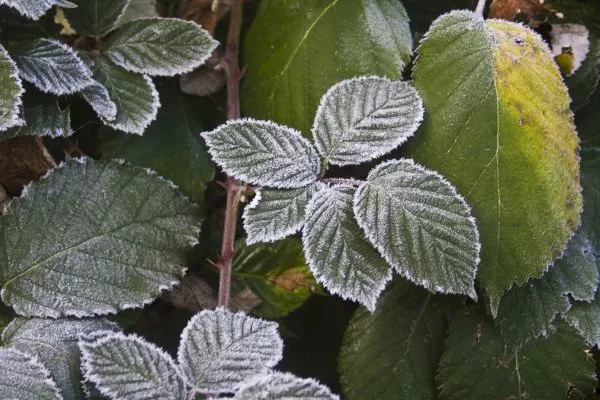
Do blackberries need to be covered for the winter?
The need for covering blackberries depends on several factors. First and foremost, the variety—some bushes can withstand temperatures as low as -20°C (for example, Navajo, Black Satin, etc.). Therefore, in a suitable climate (when frosts below these temperatures are not observed), covering the plants is pointless.
It's commonly believed that snow provides natural and optimal cover for shrubs, but in reality, this can lead to problems. In general, failing to protect blackberries can lead to the following consequences:
- branches and buds will freeze because moisture accumulates in the plant structure, which, when the air temperature drops sharply, turns into ice;
- If you cover the tree only with snow, then after it melts, moisture will form on the branches, which, under the influence of a cold wind or new frosts, will turn into an icy crust, which also leads to freezing;
- If there is no cover at all, the melted snow will over-wet the root system in the area around the trunk (it will not be able to absorb such a quantity of water), which will contribute to rotting and death of the plant.
When to cover, at what temperature?
The length of time to cover blackberry bushes depends on weather conditions and the climate zone. However, there are other requirements for the timing of the work.
General rules
Blackberries, regardless of variety and speciesBlackberries are considered a cold-hardy crop. They can easily withstand temperatures as low as -15 degrees Celsius, but only if the cold comes on gradually. If the frost occurs suddenly, the bush will die at temperatures as low as -7-8 degrees Celsius. Therefore, the optimal temperature range for covering blackberries is considered to be between 0 and -5 degrees Celsius.
Avoid working during the very first frost, as it's usually followed by a temporary thaw. If you cover the plant during this period, the roots won't receive enough oxygen before winter, which will harm the entire plant. What will happen if you cover it too early?
- a greenhouse effect will arise, promoting the development of fungal diseases;
- the blackberry will not go into hibernation, therefore, it will begin to produce buds, skipping the dormant period, which is very necessary for plants to rest and bear fruit next year;
- High humidity reduces oxygen availability, causing the blackberries to suffocate and die.
In the Moscow region, the Volga region, and the Central Belt
The climate in these regions isn't particularly harsh, but sudden temperature fluctuations are common. For example, short-term, but quite severe, frosts can occur, followed by an equally sudden rise in temperature. To avoid these damaging effects, experts recommend covering blackberries in mid-November.
In the Urals, in Siberia
The climate is harsh, and frosts arrive early, so covering is done after October 15th. Keep in mind that this applies to all varieties—both winter-hardy and cold-intolerant. Covering should be multi-layered.
In the Leningrad region
Winter in St. Petersburg and the surrounding region is snowy, which is good for all crops. However, high humidity is detrimental. Therefore, the risk of bush rot increases if you prepare your plants for winter too early. The recommended time is November (early, mid, or late, depending on the current weather).
Preparing blackberries for shelter
You can't just cover the bushes and leave them to overwinter. Plants need to be as comfortable as possible during their dormant period, and this requires providing them with the necessary moisture, nutrients, and so on. Therefore, don't neglect the preparatory work.
- Carry out sanitary pruning of bushes.
- Treat the bushes against diseases and pests.
- Apply fertilizer 1-2 weeks before covering.
Top dressing
Fertilizers are applied approximately 1-2 weeks before covering. Both organic and mineral components are used. Standard components for 1 square meter:
- from 40 to 50 g of superphosphate;
- from 25 to 30 g of potassium magnesia;
- from 20 to 25 g of potassium sulfate.
The quantity depends directly on the level of soil fertility.
What else can be used:
- compost, chicken manure, manure - about 5 kg is required for 1 sq. m, layer - 3 cm;
- peat – thickness is from 10 to 15 cm (the harsher the climate, the more);
- wood ash – about 150 g per bush.
Experts recommend alternating fertilizers annually: apply organic fertilizers one year, and mineral fertilizers the next.
Trimming
Pruning is necessary largely for sanitary and hygienic reasons, ensuring the bush will be free of disease and pests by spring. This also promotes adequate air circulation between the branches and access to light. Pruning performed in the fall:
- increase future crop yields;
- stimulate the growth of new shoots in spring;
- allow young branches to obtain the maximum amount of useful substances (old branches will no longer absorb them);
- reduce the size of the bush, which makes the covering process easier.
Prune immediately after harvesting (within a week). Here's how to do it right:
- First, remove any shoots that bore fruit this year, leaving only the year-old ones. These are distinguished by a browner bark color and the presence of stalks and inflorescences. If the blackberry is a remontant variety, then the pruning is done at the root, meaning all shoots are pruned.
- Carefully inspect the bush for sanitary pruning. Remove any diseased or pest-infested branches, any branches that have dried out over the summer, or any broken or deformed ones.
- Now thin out the plant. To do this, remove all short stems that didn't have time to grow over the summer, as well as shoots that are growing in the wrong direction. In total, the bush should have 5 to 8 shoots (the strongest and healthiest). Keep in mind that in northern regions, it's acceptable to leave more robust stems.
- Next, pinch back the branches. To do this, pinch back the branches in the center of the bush, then shorten the side branches until the shoots remain about 55-60 cm long.
Treatment against diseases and pests
These manipulations will kill insect larvae, fungal spores, and other bacteria, ensuring the blackberries remain healthy in the spring. Features:
- for prevention, a 1% solution of Bordeaux mixture is used;
- If the plant has been sick this season, then a 3% solution or powerful fungicidal preparations are used (there is a wide choice).
It is enough to spray the bush generously with the product after pruning.
How to cover blackberries?
A wide variety of materials are used as covering materials. They can be both natural and artificial. Each type has its own advantages and disadvantages, as well as characteristics that are important to consider.
- ✓ Humidity level in the region in winter.
- ✓ Average temperature in winter and the presence of sharp changes.
- ✓ Presence of rodents and pests in the area.
Natural raw materials
Covering with natural materials has an important advantage: they provide the shrub with air exchange, thanks to which the branches and root system are saturated with oxygen.
Most popular materials:
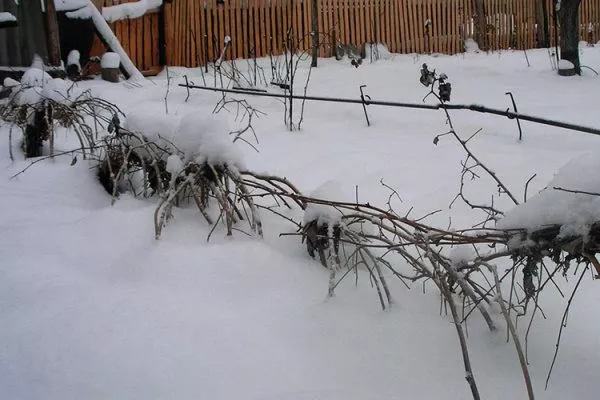
- Snow. This method is only used when snow remains throughout the winter and the air humidity is not high. An important condition is that the snow must fall during the first frost. This natural precipitation retains heat well, protecting the roots from freezing. However, a sudden thaw can cause problems such as icing and freezing.

- Root crop tops, grass. This could be the tops of tomatoes, beets, carrots, potatoes, etc., or weeds. The material must be dried before use. Vegetation is a good covering material, but it has a significant drawback: you'll have to carefully sort through the tops to remove any diseased or pest-infested elements.
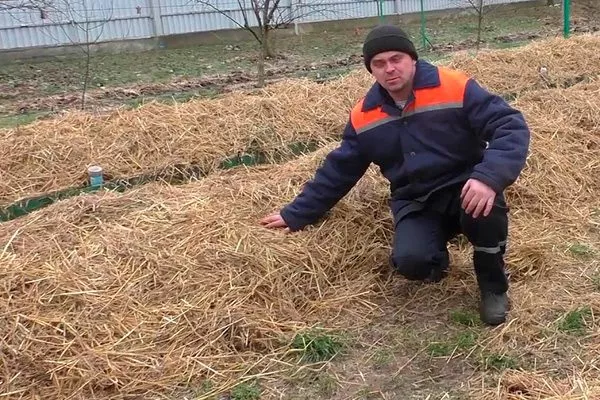
- Straw and hay. The material is light in weight, crumbles quickly, but attracts rodents.
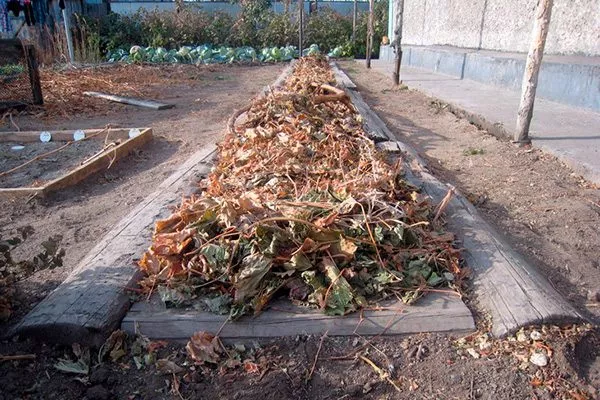
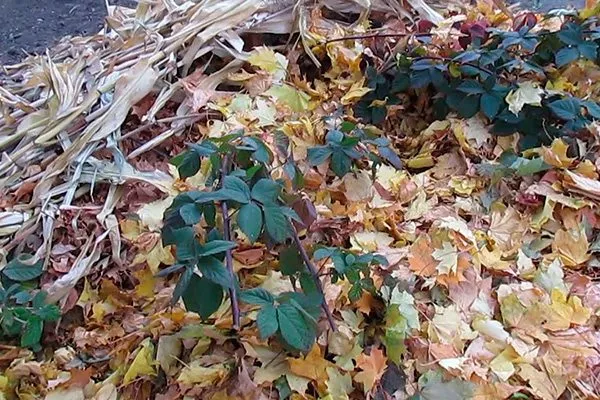
- Leaves. This is the most popular material for covering crops for the winter. It prevents plants from rotting and allows air to pass through. There are no downsides, but one recommendation is to avoid using fruit tree leaves (insects love their scent).
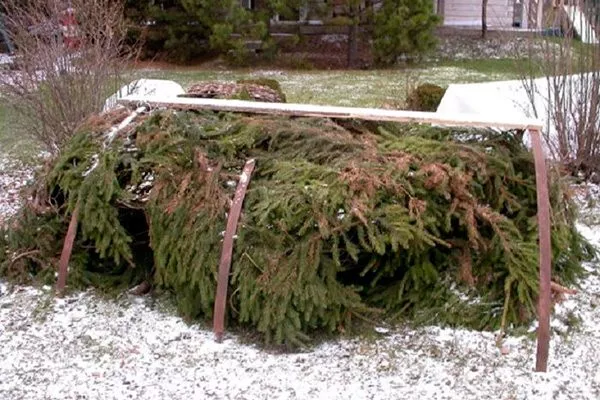
- Coniferous branches. This is the most optimal method, as the specific smell repels both rodents and insects, and the antibacterial properties of the pine needles prevent the formation of bacteria. No disadvantages have been identified.
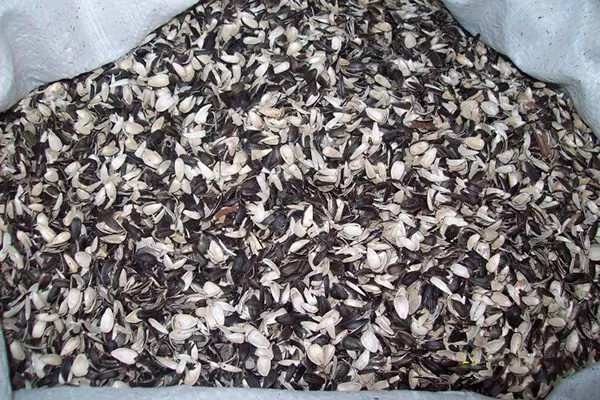
- Sunflower seed husks. An excellent option, but one question remains: where to get so much husk.
- Wood sawdust/shavings. Not a very good option, as the soil becomes more acidic, rotting processes may begin, and insects are attracted.
Artificial canvases
It's not always possible to use natural cover, and sometimes it's extremely inconvenient due to the upright nature of the shoots. In these cases, it's advisable to use artificial materials. These may include:
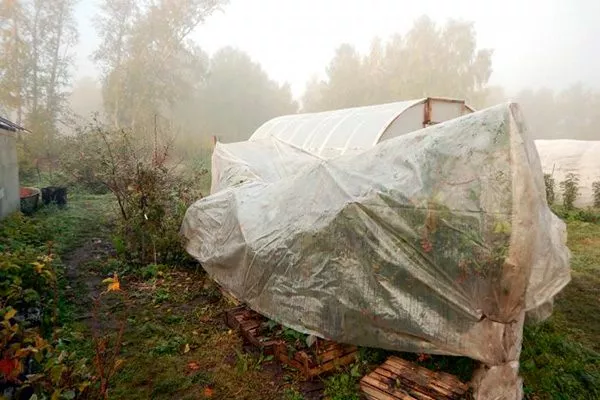
- Polyethylene film. It's reliable and durable, inexpensive, and versatile. However, after a thaw, a lot of moisture accumulates under the film, leading to overwatering of the blackberries. The only solution is to create a mini-greenhouse by stretching polyethylene over a frame instead of covering the bushes.
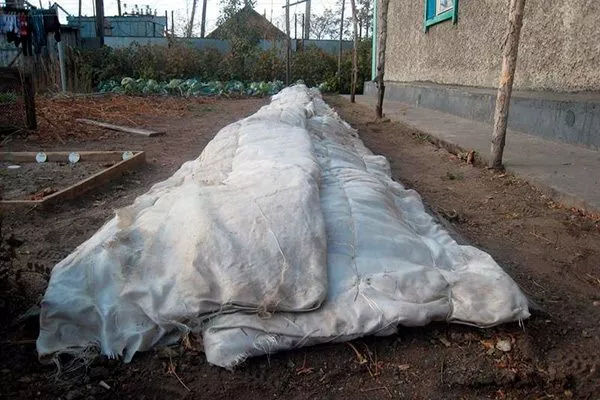
- Felt. This is a very warm material, used in dry climates and long, snowy winters. There are no particular drawbacks, except that it's important to remove the felt cover promptly, as it quickly becomes damp. Batting and synthetic padding can be used as substitutes.
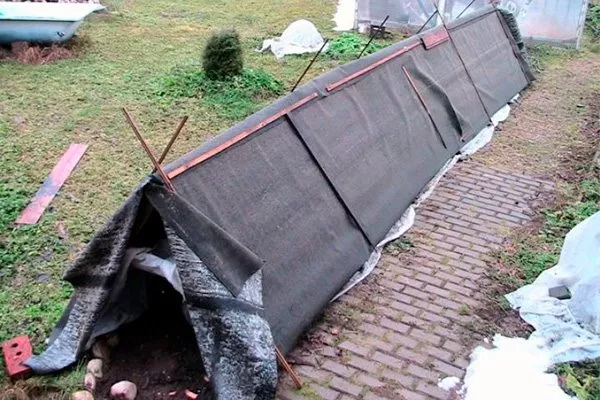
- Roofing felt. It's a perfectly adequate covering material, protecting not only from precipitation, frost, and wind. It has one drawback: it can crack in very low temperatures. Linoleum is an alternative.
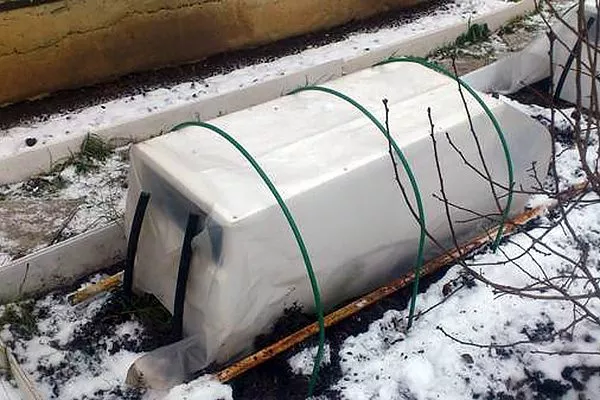
- Styrofoam. Ideal for blackberries, but with the disadvantage that it can be chewed by rodents.
- Agrofibre and spunbond. The most popular artificial material, as it doesn't promote condensation, is breathable, and doesn't attract pests or rodents. Furthermore, spunbond and agrofibre are primarily used for covering agricultural crops. The only drawback is cost.
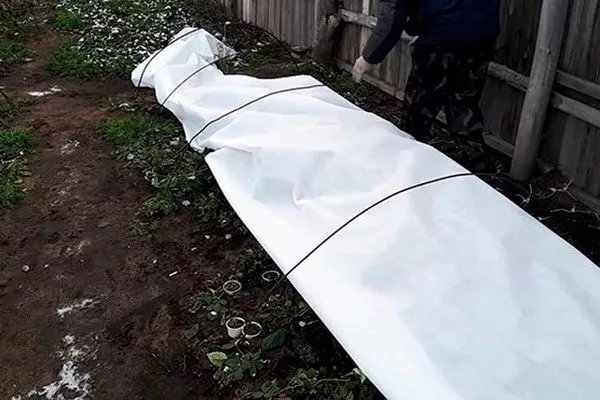
Technique for covering blackberries for the winter
The method of covering depends largely on the type of blackberry, as the shoots can be either upright or climbing. The main options are:
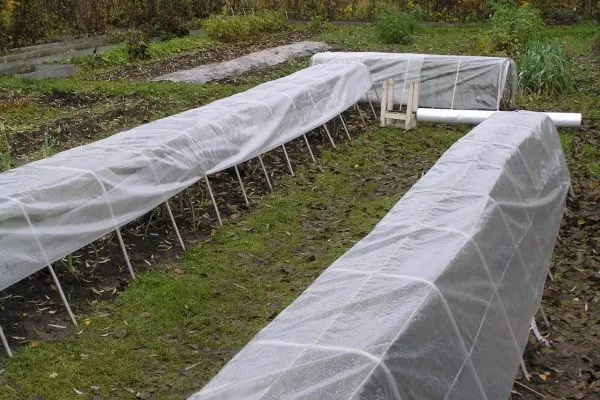
- Frame. This is the best option, especially for upright blackberry varieties. Covering can be applied to a single bush, a whole row, etc. Simply install a base of metal rods or sturdy wooden stakes, and then stretch non-woven fabric, film, etc.
Keep in mind that the canopy shouldn't touch the branches, and it needs to be carefully secured underneath to prevent the wind from blowing it away and rodents from getting to the blackberries. The simplest option is to cover the edges with a thick layer of soil, lay bricks, cinder blocks, or similar.
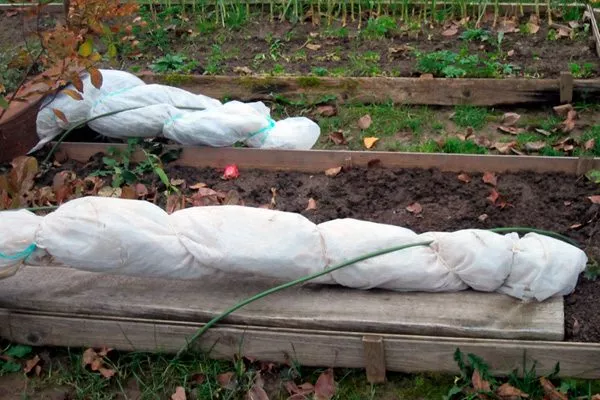
- Wrapping. This method is best used for climbing blackberries, as they easily press themselves to the ground. The process is as follows:
- Place some cushioning material on the ground near the bush (the area where the branches will be placed). This could be boards, old mattresses, boxes, sheets of plywood, etc.
- On top is heat-insulating material – cardboard, pine branches, leaves, straw.
- Now connect the shoots of the bush together and tie them with a soft rope.
- Wrap them with heat-insulating fabric (agrofibre, etc.) and secure them.
- Carefully bend the whips, pressing them against the surface of the lining layer.
- Cover the structure with agrofibre or polyethylene film.
- Secure the edges. Metal staples or wire work best for this.
Covering is easiest with thornless blackberries. Any covering method is suitable for these varieties (such as Natchez, Thornfree, etc.). The main advantage of thornless bushes is that there's no risk of pricking your hands, and the covering material won't puncture, especially plastic film.
For more information on how experienced gardeners cover blackberries for the winter, watch the video below:
Methods and features of plant sheltering
It is very important to use the correct technique for covering blackberries for the winter based on the age of the bush, since the plant has its own requirements at different stages of its life.
In the first year
Immediately after transplantation, the seedling does not yet have time to fully strengthen and improve its immunity, especially if landing It was carried out in the fall. Moreover, young shoots are a favorite snack for pests, hares, and other rodents. Therefore, before wintering, it is necessary to cover them in the following manner:
- Wrap the bush with agrofibre.
- Install a mesh protection around it (in a circle). The total diameter is 50-70 cm.
- Fill the void inside the structure with straw or hay.
Instead of mesh, you can cover the seedling with foam sheets.
Young bush
Young bushes are also considered vulnerable, so the work is carried out as follows:
- Place mulch (leaves, straw, peat, humus, etc.) around the tree trunk. The layer should be at least 10 cm thick.
- Tie the whips or twist them into a rope (at this age this is possible).
- Wrap with non-woven material.
- Place cardboard, boards or spruce branches on the ground.
- Bend the shoots from above.
- Fix it.
- Cover completely with straw.
- Install the mesh structure.
If the bushes are upright, then install a net, as when working with seedlings.
Old bush
At a more mature age, blackberries are not so demanding, so any method is suitable, taking into account the variety, climate conditions and weather.
When to open in spring
Removing winter cover, as well as preparing for winter, is carried out in strict accordance with the regulations. Timing is also essential. Here's what to pay attention to:
- When exactly to remove the cover depends on the climate, but the most important thing is for the weather to settle to a daytime temperature range of +5 to +7 degrees Celsius. Be sure to take into account the possibility of recurrent frosts. In this case, you'll have to cover the bushes again at night, but not as drastically as in the fall.
- The optimal period is until the buds have fully opened.
- Open the branches slowly to avoid breaking them. Do this in the morning on a sunny, dry day, so the shoots have time to dry out during the day.
- The vine is very sensitive after winter, so try to avoid direct exposure to sunlight at midday.
- Cover the bush with a breathable material overnight, then uncover it again in the morning. Continue this process for 1-2 weeks.
- The shoots can be fixed to the support posts only 7-10 days after the first opening.
Mistakes when covering blackberries
Most often, novice gardeners make mistakes, but to avoid this, familiarize yourself with the most common ones:
- Without a mesh structure, rodents eat not only the shoots but also the buds. But if this isn't possible, mice can be repelled by poison placed in the root zone.
- Using sawdust will cause the bush to rot. When carefully examining the materials, pay attention to all the points – using sawdust is not recommended.
- Covering too early or too late can cause the bushes to rot or freeze. Therefore, ignoring the deadlines is prohibited.
- Low strength of the covering material leads to excessive pressure under the weight of the fallen snow, resulting in branches breaking.
Tips from experienced gardeners
Experienced gardeners have long since mastered the art of properly covering blackberries for the winter, so they are happy to share their experience and skills:
- If there are frequent thaws during the winter, remove the cover at this time, otherwise rotting processes cannot be avoided;
- It is better to choose a light color for the covering material, rather than black, since in the spring the black shade will attract the sun's rays (the bush will get burned);
- Do not pick leaves from branches in the spring, as this will damage the structure of the bark, and this is undesirable before winter.
Knowing how to properly insulate blackberries will ensure their health all year long, ensuring a bountiful harvest of large, sweet berries. The key is to follow the preparatory steps and strictly follow the instructions and recommendations.