
Blackberries have been gaining popularity as an agricultural crop in the former Soviet Union in recent years. However, domestic breeding lags significantly behind American efforts, resulting in most innovative varieties being imported from the United States.
History of selection
Triple Crown was developed in 1996 through a collaboration between the Northeast Zonal Research Center in Beltsville, Maryland, and the Pacific West Agro-Research Station in Portland, Oregon, by crossing Black Magic and Columbia Star.
Before being made available for widespread distribution, the blackberry underwent eight years of testing in Oregon.
Description of berry crops
Triple Crown is one of the best dessert blackberries grown on private farms, and is also popular in commercial farming in the United States, where flavor is paramount, not just yield.
General idea of the variety
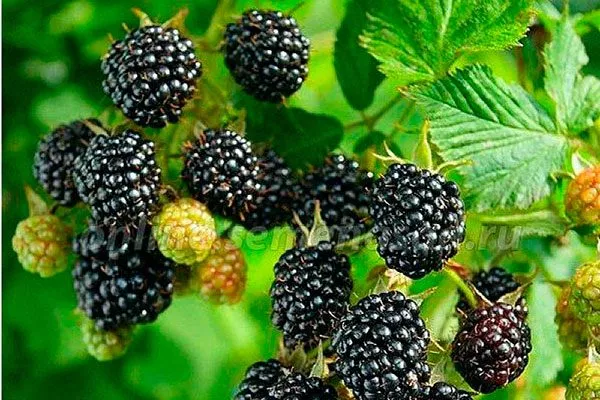
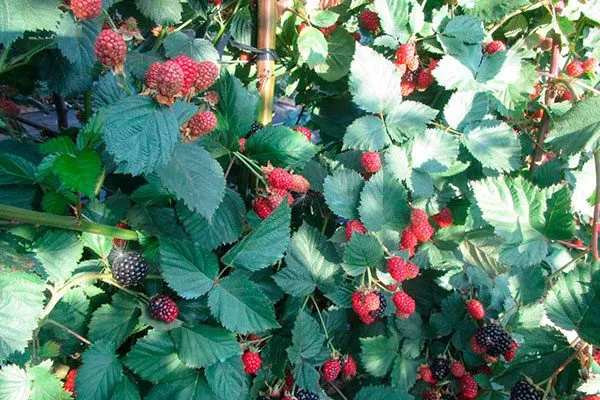
Triple Crown is distinguished by its vigorous bushes, a cross between dewberries and brambles. In the first year of cultivation, thornless shoots can reach 200 cm in length, later reaching 300 cm. Other characteristics:
- Leaves They have a rich dark green color and a shape similar to blackcurrant leaves.
- Root system is highly developed.
- Flowering and fruiting occurs on last year's shoots.
- Escapes have a semi-erect type.
- ✓ The high sugar content of the berries (about 5.5%) makes them especially sweet.
- ✓ The absence of thorns makes harvesting and plant care easier.
Berries
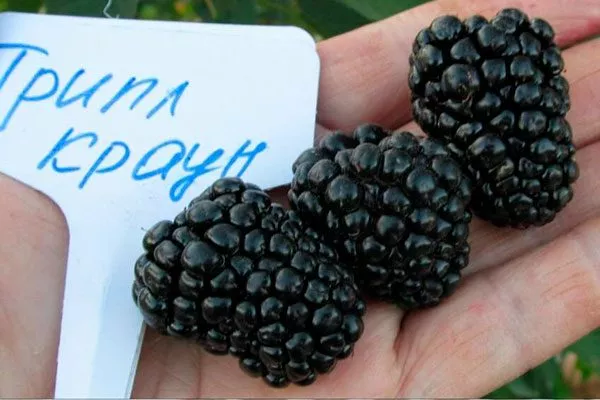
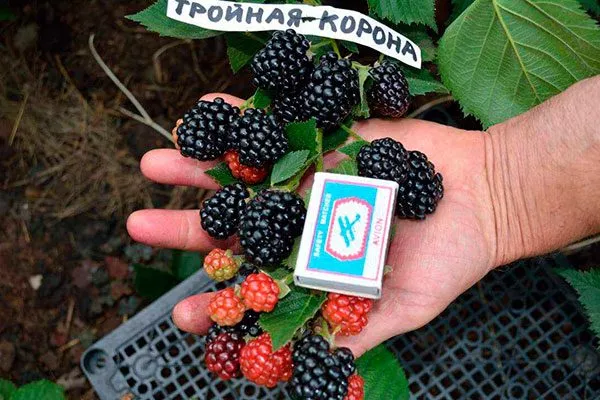
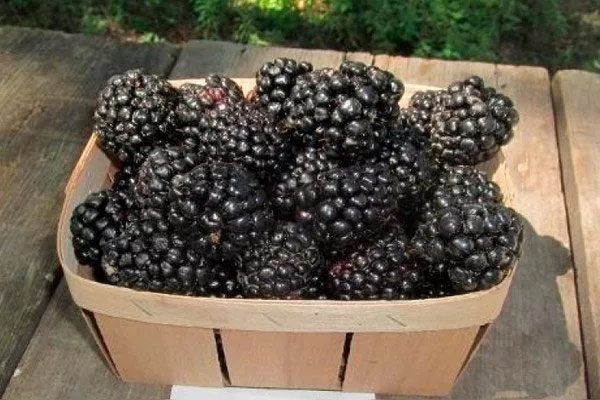
It stands out among industrial varieties for its berry size, weighing between 7 and 9 grams each. The berries, tightly packed on the clusters, are round-conical in shape and black in color with a characteristic blackberry sheen. The fruits are small but have a sweet flavor with a well-balanced acidity and a rich blackberry aroma with hints of cherry and plum.
Characteristics
Triple Crown berries are distinguished by their sugar content in ripe fruit – approximately 5.5% and organic acids – 0.75%. The ascorbic acid content in 100 g of ripe berries is approximately 9.5 mg.
Key Features
The variety's description emphasizes the excellent taste of the produce, good transport resistance, and the absence of thorns. In America, where blackberries are grown commercially and where the climate is mild and winters are warm, these qualities are particularly prized. In Russia, the requirements for the variety are slightly different.
Other characteristic features:
- Frost resistance is quite low, so in cold climates, blackberries require additional winter cover. Even in central and southern regions, bushes should be covered for reliable frost protection. In the central zone, unprotected bushes can die from the cold.
- This variety adapts well to summer heat and drought. The fruits do not burn in the sun and do not lose size when provided with adequate water. However, during periods of intense sunlight, the plant may require some shade.
Flowering period and ripening time
The flowering period and fruit ripening times vary depending on the climate zone. In the central region of Russia, flowering begins in mid-June, and in colder climates, these dates may shift.
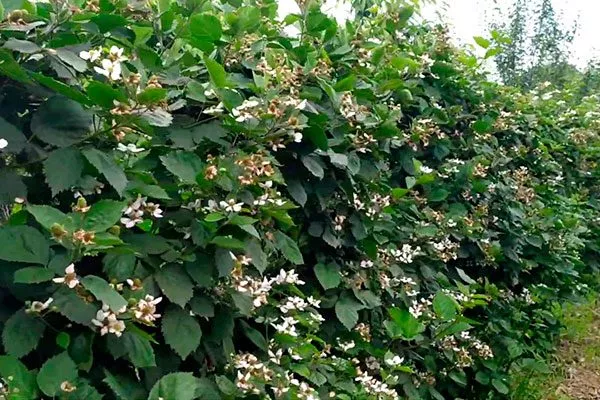
Fruiting typically begins in late July or early August and continues until mid-September; in warmer regions, harvesting can take longer. However, in colder climates, a prolonged fruiting period can result in a loss of up to 12-16% of berries due to autumn frosts.
Yield indicators, fruiting periods
The yield is approximately 13-16 kg per mature bush, which is quite impressive compared to other elite varieties, making it one of the most productive in its class. Fruiting begins in the second or third year after planting.
Application of berries
Triple Crown is a noteworthy dessert variety, characterized by good shelf life and transportability. The berries are eaten fresh and are also ideal for juices, wines, canning, freezing, desserts, and baked goods.
In addition, the tops of the plant with flowers and berries can be dried and used as a fragrant and healthy tea, even after the first light frosts.
Advantages and disadvantages
For more than two decades, this variety has been recognized in the USA as one of the best according to many criteria.
Methods of reproduction
For propagation, rooting of shoot tips or cuttings are most often used:
- During the rooting process, from mid-July to early August, one-year-old shoots are bent to the ground and buried or earthed up to a depth of 10-13 cm. After 3-4 weeks, developed roots and new stems will form on the buried portion of the shoot, which are protected for the winter with leaves and spruce branches. In the spring, the new plant is separated from the main plant and replanted.
- When propagating by cuttings, woody shoots 20-35 cm long are taken and grafted using an improved copulation method. After grafting, the cuttings are bent toward the ground and buried to a depth of 2-4 cm, up to the grafting point.
Landing rules
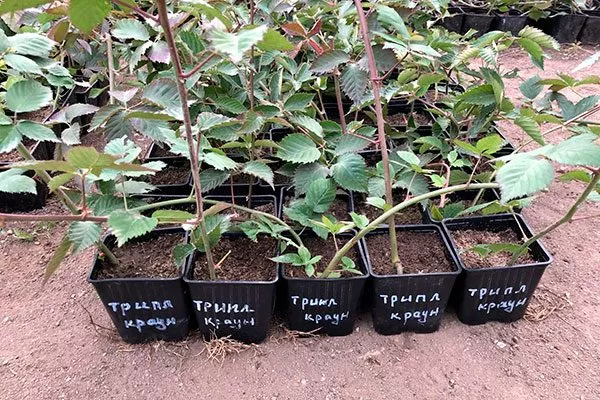
For planting, choose a sunny location protected from strong winds. Ideally, choose sites near a fence or buildings that provide these conditions.
Consider other subtleties:
- Fertile loams with a sod-podzolic structure are preferable, as they retain moisture well but prevent stagnation. Purely sandy or clayey soils are not suitable for this purpose.
- When planting blackberries, maintain a distance of 1.2-1.5 meters between bushes and 2.3-2.5 meters between rows. A growing site can be used for 8-10 years, so it's important to plan ahead. Blackberries can be planted after any vegetable crops.
- It's best to plant seedlings in spring or late summer. If the soil in the chosen area has depleted its nutrients, it's necessary to apply fertilizer first. Typically, a mixture consisting of:
- humus manure (preferably cow manure) – 3-5 kg;
- 3 tbsp. l. Superphosphate;
- 2 tbsp. potassium sulfate;
- 200-300 g of wood ash.
- This mixture is included in the top layer of soil removed from the planting holes and placed at the bottom of each hole (approximately 5-7 cm thick).
- Then the seedling is placed in the hole, the roots are evenly distributed and covered with soil, after which it is watered generously.
- The soil around each seedling is mulched with humus to a depth of up to 2 cm. If there is a risk of water stagnation, a drainage layer of approximately 5-7 cm is added to the bottom of the holes.
- The root collar should be buried 4-5 cm into the soil to prevent the buds at the base of the bush from drying out.
Subsequent care of the culture
Caring for blackberries is relatively simple and consists of the following main aspects:
- Watering. The key to care is timely and adequate soil moisture, especially during the fruit ripening period. From early July until the end of August, watering is necessary, applying 16-18 liters of water per bush once a week.
In addition, it is necessary to carry out abundant autumn watering before the onset of winter to create a moisture reserve in the soil. - Top dressing. If sufficient compost and mineral fertilizers were added during planting, blackberries will not require additional fertilizing for the first four years. Features:
- In the spring, it is enough to add 1 tablespoon of mineral fertilizer with nitrogen under each bush.
- In subsequent years, it is recommended to apply 4 tablespoons of phosphate and 1-1.5 tablespoons of potassium salt in the fall. It is also beneficial to add organic fertilizers, such as compost, at a rate of approximately 5-7 kg per bush, planting them to a depth of 6-8 cm.
- After fertilizing, it is advisable to water the plants thoroughly.
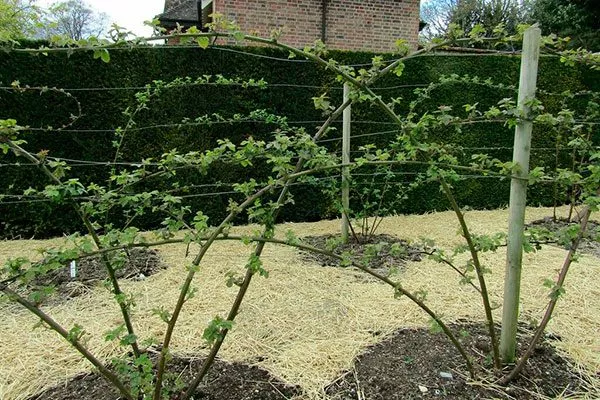
- Support and formation of the bush. It is necessary to regularly tie the shoots to supports, such as trellises or wire fences, distributing young and fruiting branches in different directions for better lighting and ventilation.

- Trimming. In the autumn, plants are pruned, leaving no more than six buds on young shoots, removing all fruiting and old stems.
Preparing for winter
Preparing for winter involves removing the vines from their supports, bending them to the ground, and securing them with staples. Coverings are made from lightweight materials such as pine needles, straw, corn stalks, or Jerusalem artichokes, as well as agrofibre or spunbond.
Diseases and pests: methods of control and prevention.
The Triple Crown variety is highly resistant to many diseases and pests, but preventative measures should be taken, such as spraying plants with copper-based preparations before the onset of winter and immediately after removing winter shelters.
Reviews
With its high yield and excellent flavor, the Triple Crown blackberry has earned a well-deserved reputation among blackberry enthusiasts for many years. Despite its weak frost resistance, the berries can be found for sale in the northern regions of the country, as they easily withstand long transportation.