
The Thornfree blackberry is a thornless variety, and it was the first thornless blackberry to be brought to Russia and the CIS. Translated from English, the name means "thornless." Initially, the variety was intended only for commercial production.
History of selection
The variety's origin is America, and its creator is D. Scott. Development was completed back in 1966, but Thornfree was only added to the Russian State Register in 2006 as a hybrid, a cross between the Eldorado, Merton Thornless, and Brained blackberry varieties.
Description of berry crops
Thornfree is a Maryland-group everbearing blackberry, so its canes are semi-spreading. It has a mixed growth habit: initially, the branches grow upward, but as they mature, they droop, allowing them to spread horizontally.
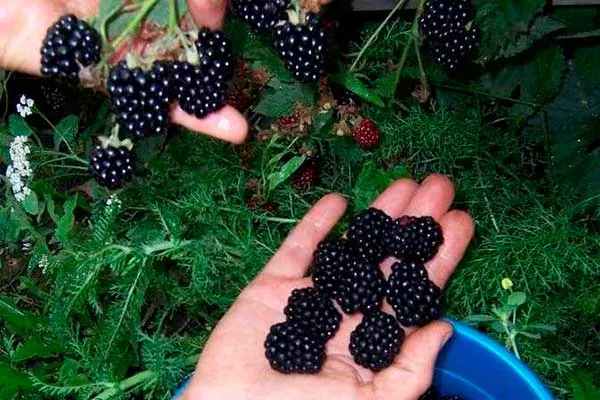
Characteristic features of the plant:
- height of the bush – not very large, since the length of the shoots that bend to the ground reaches only 250 cm, but if you do not pinch and shape them, the branches will easily reach 600 cm;
- shoots – their diameter does not exceed 3 cm, the cross-section is round, and the base is faceted;
- color of stems – up to 1 year of age they are bright green, after which they acquire a cherry-purple tone;
- bush density – strong, as lateral shoots form quickly;
- leaves - large and varied, because on one branch there may be corrugated plates with both 3 and 5 segments;
- shade of foliage – dark green;
- root system – well developed, but does not produce shoots;
- flowers – They are pink in color and have a diameter of 3-3.5 cm.
Berries
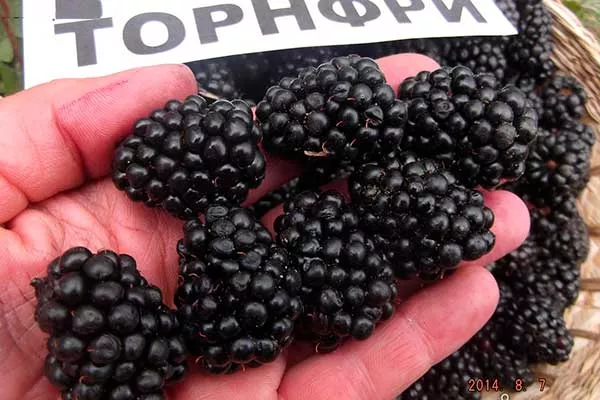
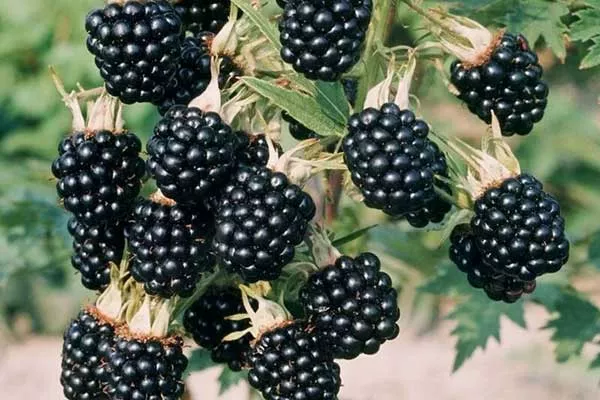
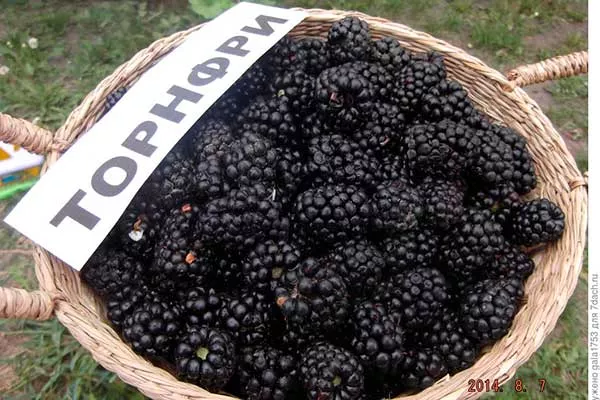
The variety is characterized by large fruits, reaching up to 5 g in weight, but some weighing 7-8 g. The sugar content is 5.5%, and the acidity is only 0.8%. The berries can also be identified by other characteristics:
- color at full maturity – almost black;
- low tide – violet-gray;
- surface of segments – shiny, but slightly pubescent;
- form - oval-round;
- strength of attachment to the stalk – powerful, due to which spontaneous shedding does not occur;
- peduncle – shortened;
- drupes – quite large;
- the number of drupes in one brush – about 25-30 pcs.;
- taste - sweet with a slight sourness;
- aroma – blackberry, strong;
- fetal length – from 2 to 4 cm;
- the number of berries on one fruiting branch – 100-120 pcs.
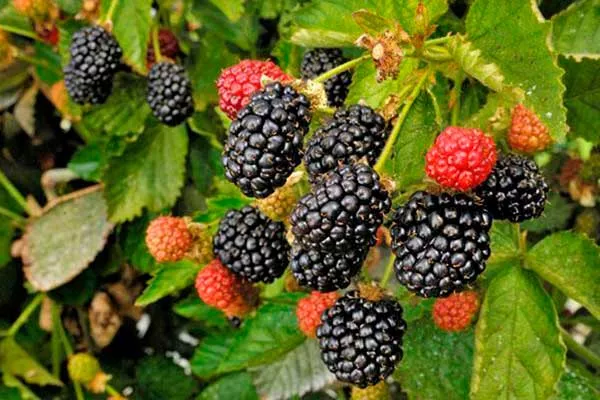
The expert assessment after tasting studies is 4-4.4 points. This range depends on the berries' ability to change flavor depending on the ripening stage:
- when technically ripe, the pulp is dense, the taste is slightly sweet;
- At biological ripeness, the fruits become extremely sweet, but the pulp becomes soft, to the point that it turns into mush.
Characteristics
The variety's defining characteristic is its sensational success after selection—its berries were the most delicious and yielded the highest of all blackberry varieties. Hybrids and varieties have now been developed that surpass Thonfree in these and other respects.
Flowering period and ripening time
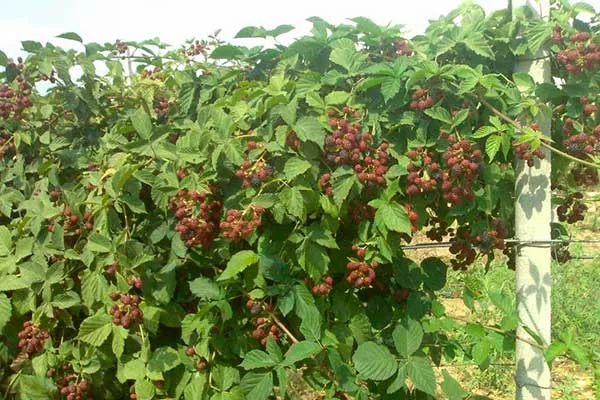
In central Russia, the shrub begins flowering in the second half of June. Fruiting occurs later and can last up to six weeks: harvesting typically begins after August 20 or in early September, depending on the specific region and current weather conditions.
The Thornfree variety is a remontant blackberry, allowing harvesting as early as the second half of July under favorable conditions. This applies to the southern regions of the country. In regions with short summers, the blackberries may not fully ripen, and this variety can be challenging to grow in northwestern Russia.
Yield indicators, fruiting periods
One bush can yield 14 to 20-23 kg of berries per season. This variety is not suitable for long-term storage or long-distance transportation: after ripening, blackberries should be consumed or processed immediately. In commercial cultivation, yields of up to 70-80 centners per hectare are possible.
Application of berries
Thornfree was originally developed as a variety for industrial use and intended for processing. However, when grown in a backyard, the fruit's uses expand significantly:
- fresh consumption;
- preparation of homemade fruit and berry preserves;
- drying berries;
- freezing for long-term storage.
Advantages and disadvantages
In addition to its excellent flavor, the Thornfree variety boasts a number of other advantages, including high disease resistance and versatility. Among other benefits, gardeners note the following:
The variety also has its disadvantages:
Methods of reproduction
Thornfree plants are easily propagated by cuttings and layering due to their lack of thorns. These methods are considered among the simplest and most popular among gardeners.
Landing rules
Each bush produces a large number of shoots, so bushes should be planted at a sufficient distance from each other – at least 100 cm. There are two main methods for planting blackberries:
- Bushy. Using this method, a cord is used to mark out the area, and planting holes are marked at intervals of 120-150 cm. The first line will serve as a guide for subsequent holes, which can be placed either in line with the first line or staggered. It is important to maintain the required spacing between plantings.
- Ribbon. With this method, the distance between holes in a row is set at 50-60 cm, while 200-250 cm is left between parallel rows. This approach is more labor-intensive and complicates subsequent plant care. However, the belt method has its advantage: it accelerates fruiting by two years.
Planting can be done either in the fall, from approximately September 15 to October 10, or in the spring, as soon as warm weather sets in but before buds appear on the shoots. The site should be well-lit and protected from winds.
- ✓ The soil pH level should be strictly within 5.7-6.6 for optimal absorption of microelements.
- ✓ Drainage is essential to prevent root rot due to overwatering.
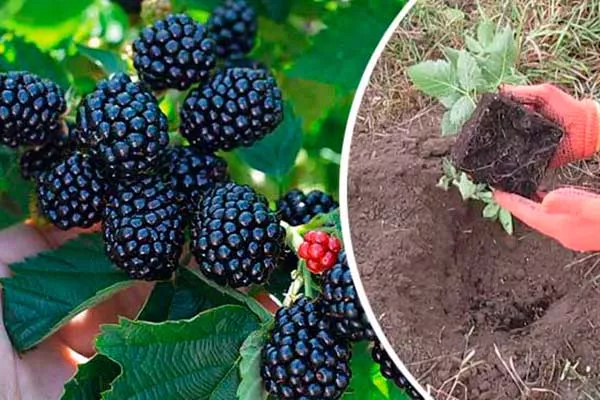
Soil preparation and optimal conditions:
- Blackberries are not recommended for planting on calcareous soils due to low fertility and high pH, which interferes with the absorption of some micronutrients and can lead to diseases.
- Well-drained, fertilized loamy soil with a pH of 5.7 to 6.6 is considered ideal.
- Drainage is necessary to prevent excess moisture, as overwatering can cause root rot.
- To prepare the soil for planting, it is recommended to dig the soil to a depth of 50 cm and apply the following fertilizer mixture per 1 square meter:
- 8-10 kg of compost or humus,
- 40 g Superphosphate,
- 20 g potassium chloride or sulfate.
When caring for Thornfree blackberries, it's important to remember that the bushes can produce abundant fruit in one place for 10-15 years, but their powerful roots deplete the soil, so it's important to regularly replenish the nutrient supply.
Subsequent care of the culture
Blackberries will continue to produce fruit even without proper care, but over time, the quality and size of the berries may decline. A lack of care makes the plants more vulnerable to diseases and pests. Spring fertilization is an important part of growing blackberries, helping them recover from winter and stimulating their growth.
Rules for feeding:
- In spring, it is recommended to apply 45-50 g of ammonium nitrate per bush, around which the soil should be loosened and mulched.
- During the fruiting period, 20-25 g of ammonium nitrate or 15-20 g of urea are added under each bush.
- In autumn, 85-90 g of superphosphate and 20-25 g of potassium sulfate are added after mulching.
Plants require regular watering for the first 30-50 days after planting. During the rest of the growing season, water only when there is no rain. During berry ripening, it is important to ensure adequate watering to ensure full development.
To maintain the soil structure, loosening is recommended: if the bushes are not mulched, loosen the space between the rows up to 5-7 times in the summer to a depth of 10 cm and 2-4 times per season directly under the bushes to a depth of 7-9 cm, which helps remove weeds and control pests.
Bush formation technology
This is a key agricultural technique necessary to prevent unruly shoot growth and simplify plant care. Follow these guidelines:
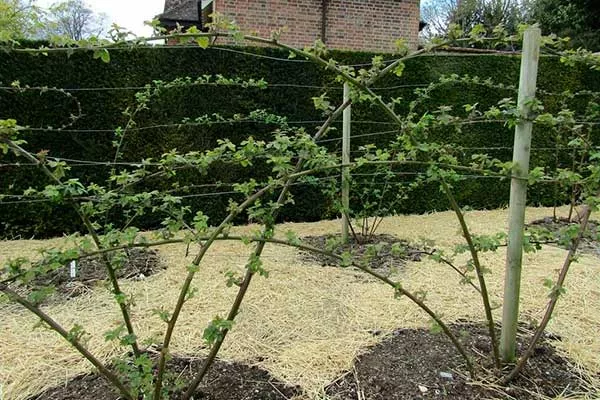
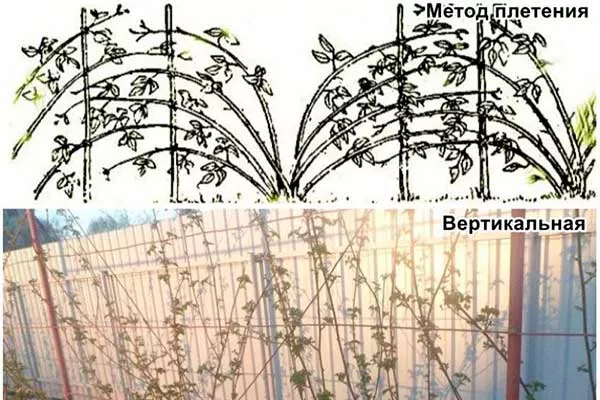
- For best results, it is recommended to arrange the branches on two different sides: new, one-year-old shoots are guided and secured on one side, while last year's shoots, which have already yielded a harvest, are placed on the other.
Young shoots that are in the growth stage are attached to the supporting structure. - Forming a bush in the shape of a fan - fruiting branches are laid one on top of the other and intertwined with each other, while young shoots are directed only in the desired direction.
Harvesting
Thornfree is known for its delicious and healthy berries, which develop an attractive aroma when ripe. However, the berries of this variety are prone to softening quickly. To prevent this, the harvest is done slightly before full ripeness.
Preparing for winter
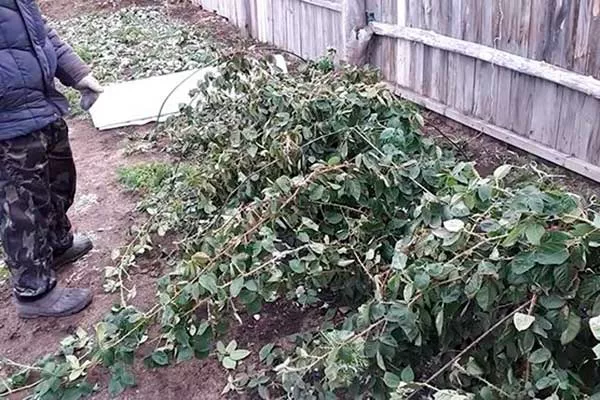
Before the first frost, the vines are carefully removed from their supports and covered for the winter. By this time, all shoots that have already yielded fruit should be removed. Natural materials such as spruce branches, straw, spunbond, or agrofibre, as well as dry soil, are used to protect the plants from the cold.
Treatment against diseases and pests
The variety is characterized by excellent immunity, but sometimes problems arise, so pay attention to precautions against diseases and pests:
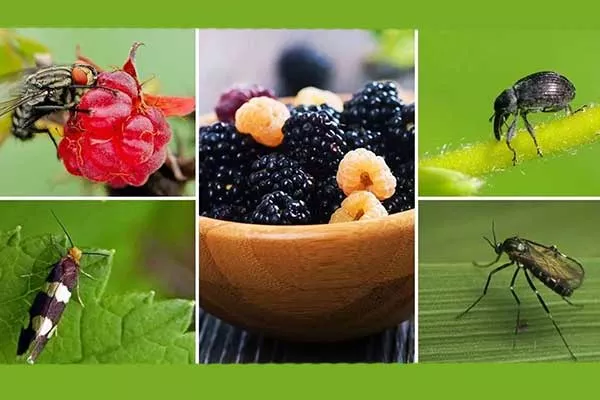
- Insects. In early spring, when the buds begin to open, it is necessary to treat the plants against pests with a 1% solution of nitrofen, which is effective against aphids, caterpillars, and gall mites that have overwintered on the plants.
When the first plowing of the soil is carried out, it is necessary to use agents against soil pests that damage the roots (larvae of the May beetle and mole crickets).

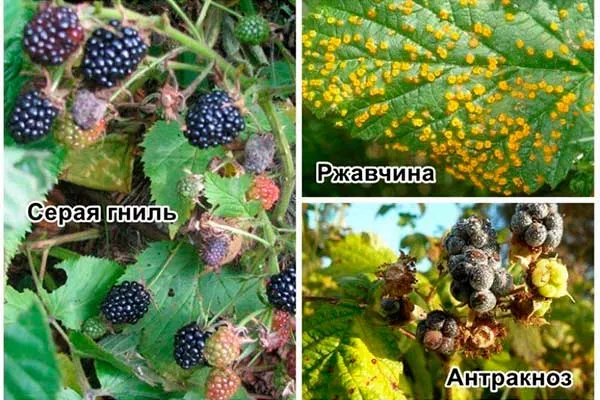
- Diseases. To prevent anthracnose and purple spot, treat plants with a 3% Bordeaux mixture solution in the fall. If signs of the disease are detected during berry ripening, avoid using toxic chemicals to prevent fruit contamination, choosing biofungicides instead.
Tips and recommendations for growing
To maximize the harvest, gardeners recommend following a few principles when growing Thornfree blackberries:
- The bushes should be planted approximately 15 days before the expected first frost, and in the spring before they begin to actively grow.
- To achieve a good harvest, it is important to choose a suitable planting location and ensure that the planting hole is filled properly.
- It is important to water the plants generously after the flowering period has ended.
- Crown formation directly affects yield, so blackberries need to be pruned regularly.
- To cover plants for the winter, it is recommended to use natural materials instead of film to avoid air blockage.
Reviews
Although Thornfree was developed several decades ago and many new varieties have appeared since then, it remains popular due to its high yields and thornlessness. Today, seedlings are easily found in Russian nurseries, unlike five years ago.