
Recently, more and more gardeners have chosen to plant blackberries in their plots. Today, there are so many varieties available that it can be confusing for the uninitiated. However, once you understand them, you can choose the most suitable variety for your garden or yard.
What is blackberry?
Blackberries are shrubs or subshrubs with perennial rhizomes and shoots that live only a few years. The plant is characterized by picturesque compound leaves: whitish underneath and green above.
- ✓ The optimal soil pH for blackberries should be between 5.5 and 6.5. Outside this range, the plant will not be able to absorb the necessary nutrients.
- ✓ The depth of groundwater should not exceed 1.5 meters to avoid rotting of the root system.
There are evergreen varieties of blackberries. In late May or June, the plant is covered with clusters of flowers in shades of white and pink. The berries turn dark blue when ripe, but some varieties have a bluish-gray bloom, while others have a glossy sheen.
Thornless blackberry
Bush thornless blackberries are very popular among many gardeners today. This is the result of the intensive work of breeders, who created thornless plants by crossing the cut variety with other varieties. These bushes make it much easier and quicker to pick berries.
| Name | Growth type | Fruiting period | Disease resistance |
|---|---|---|---|
| Chester | Semi-creeping | End of August | High |
| Black Satin | Semi-creeping | August-October | High |
| Loch Tay | Semi-creeping | 2-3 years after planting | High |
| Doyle | Semi-erect | Early August - mid-September | High |
| Waldo | Creeping | Early to mid-July | High |
| Loch Ness | Semi-creeping | The following year after planting | High |
| Oregon Thornless | Creeping | August | High |
Chester
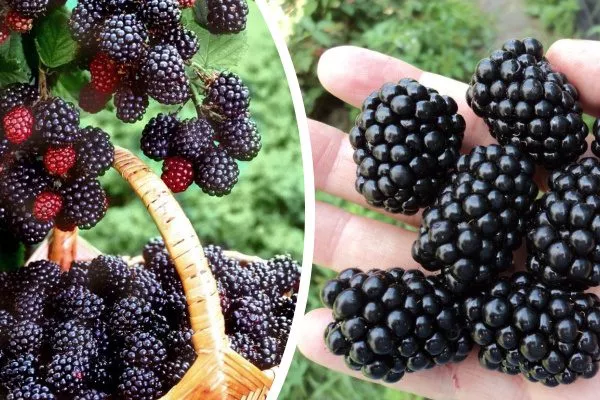
The variety grows as a semi-creeping bush. The woody vines reach up to 3 meters in length and typically grow upright.
Characteristics of the variety:
- The plant is covered with large, glossy, dark green leaves. During flowering, it is covered with snow-white flowers up to 4 cm in diameter.
- Fruiting is mid-late, occurring in late August. Fruits form on two-year-old shoots.
- The berries are round, with a deep black skin, weighing 5-7 g. The flavor is pleasant and sweet. The fruits are firm, making them excellent for transportation.
- Up to 20 kg of fruit can be harvested from one adult bush.
Advantages:
- high frost resistance;
- good yield;
- resistance to common diseases.
Black Satin
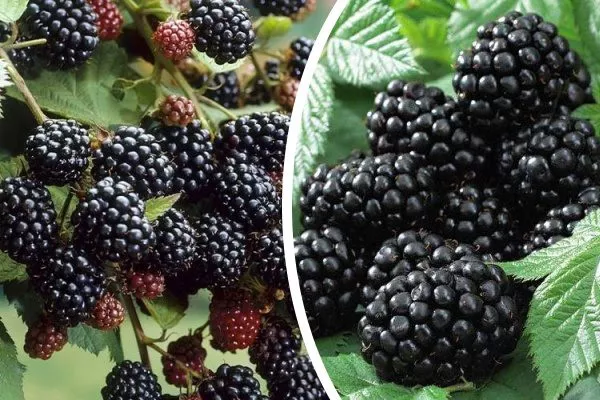
Blueberries grow as a semi-creeping bush, with stiff, long stems that can reach up to 5 m.
Other characteristics of the variety:
- The plant is covered with stiff, trifoliate leaves of a bright green color. The inflorescences are pinkish in color, gradually fading to white.
- Fruiting begins in the second year of development, and is very abundant. The harvest ripens from August to October.
- The berries are large, shimmering black, sweet and sour, with a rich aroma. Each fruit weighs up to 8 g.
- One adult plant produces 5-8 kg of berries in one season.
Advantages:
- high yield rates;
- disease resistance;
- undemanding to growing conditions.
Loch Tay
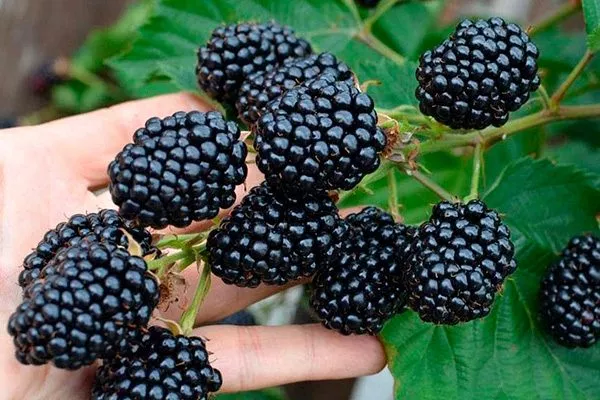
A semi-creeping type of shrub whose shoots can reach 3-4.5 m in length.
Features of the variety:
- The stems are light brown. They grow straight to the middle of the bush, then arch. The shrub is covered with dark green leaves with serrated edges and white flowers gathered in inflorescences.
- The plant begins to bear fruit 2-3 years after planting.
- The berries are dark in color, have a regular cylindrical shape, and are slightly curved. They are sweet with a pleasant aftertaste. Each berry weighs on average 10-12 g.
- One adult plant produces a yield of up to 20 kg.
Advantages:
- excellent taste;
- good transportability;
- high yield rates.
Doyle
Considered one of the best thornless blackberry varieties, this fruitful variety ripens mid-late.
Specifications:
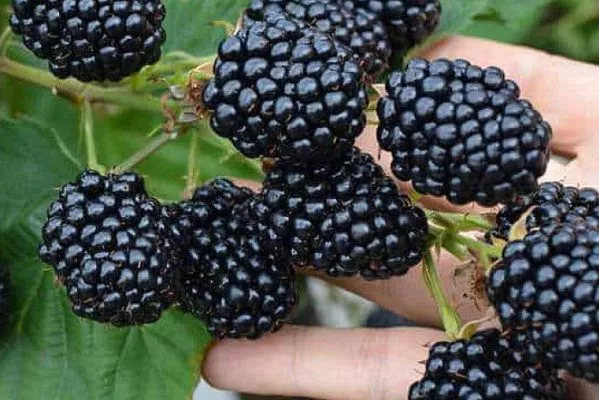
- A semi-erect bush with long shoots reaching up to 5-6 m. The plant is covered with compound palmate leaves consisting of five individual leaflets.
- It begins bearing fruit 2-3 years after planting. The fruits ripen from early August to mid-September.
- The fruits are dark, dense, and sweet and sour. Each berry averages 7-9 g.
- One adult plant produces up to 50 kg of harvest.
Advantages:
- high yield;
- resistance to drought and heat;
- good transportability.
Waldo
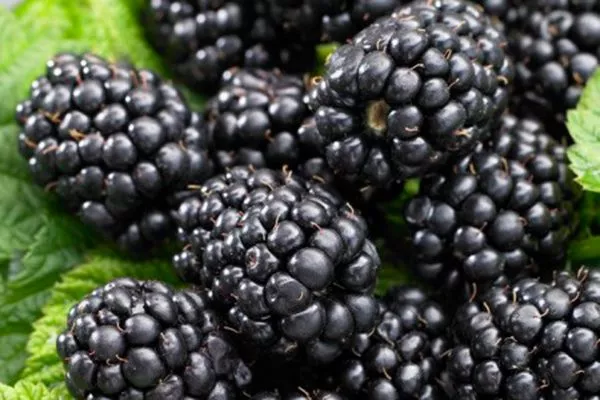
A non-spreading plant with creeping stems reaching up to 2 m in length. The branches have smooth bark.
Specifications:
- The shrub is covered with large, bright green leaves with jagged edges and sparse teeth. Flowering occurs in June, when the plant is covered with small white flowers.
- It begins bearing fruit the following year after planting. The fruits begin to ripen in early to mid-July.
- The fruits are large, juicy and aromatic, pleasant to taste, weighing on average 6-8 g.
- One adult plant produces a large harvest – 15-17 kg.
Advantages:
- light cover for winter;
- compact dimensions;
- excellent taste.
Loch Ness
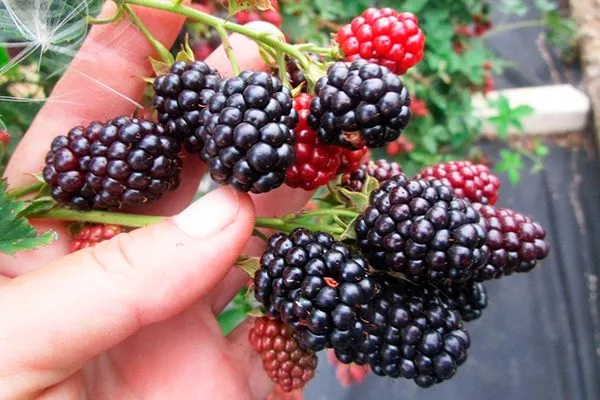
A semi-creeping shrub with shoots that reach up to 4 m in length. The plant requires trellis support.
Specifications:
- Abundant flowering is observed. The shrub is covered with serrated leaves of a bright green hue.
- The first fruits begin to ripen already the following year after planting.
- The berries are medium to large, fleshy, sweet, purple-hued, and conical in shape. They average 5 to 12 grams in weight.
- One adult plant produces from 15 to 30 kg of berries.
Advantages:
- ease of care;
- fast and easy reproduction;
- consistently high productivity.
Oregon Thornless
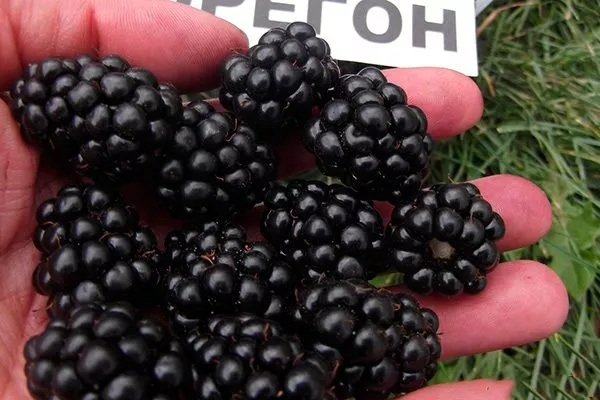
A creeping blackberry that requires a trellis for cultivation. Its shoots are long, reaching up to 4 m.
Features of the variety:
- The shrub has dense, leathery leaves consisting of several serrated, green leaf blades. Young shoots are initially green, later turning reddish.
- Blackberries begin to bear fruit after just one to two years. The berries ripen in August.
- The berries are small, with sweet, firm flesh and a pleasant aroma. A single cluster contains 25 to 70 berries, each weighing 3-6 g.
- An adult bush produces a yield of up to 10 kg.
Advantages:
- decorativeness;
- excellent taste;
- ease of covering for the winter.
Everbearing blackberry
Everbearing blackberries bear fruit twice a season: in June-July and in late summer. However, these varieties are unprofitable to grow in regions with harsh climates, as early berries can be damaged by frost, and late ones won't ripen before the cold weather sets in.
Black Magic
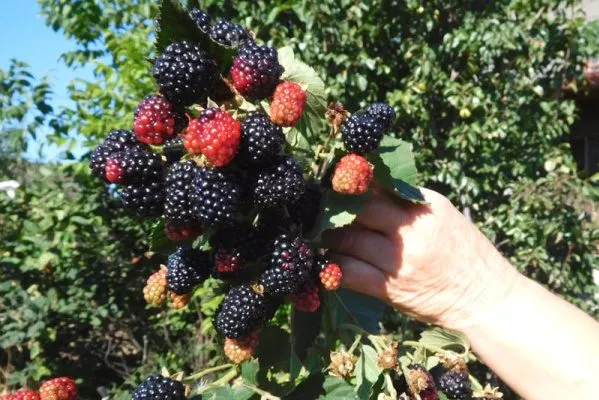
A fast-growing plant with erect stems. The shoots reach 1.5-2.5 m in length.
Characteristics of the variety:
- The leaves are large and green. The plant produces large white flowers up to 4 cm in diameter.
- Already in the second year of development, blackberries begin to bear fruit.
- The berries are large, black, and glossy. They are oblong, oval, or cone-shaped. Each fruit weighs 7-10 g. They have a dessert-like flavor and a pleasant blackcurrant aroma.
- One adult bush produces up to 5 kg of ripe fruits.
Advantages:
- adaptability to the conditions of our country;
- high quality fruits and excellent taste;
- good productivity;
- resistance to drought and heat.
Reuben
The shrub grows to 1.6-2.5 m in height. It is a vigorous, medium-sized plant with upright shoots.
Characteristics of the variety:
- Young branches are light green, while mature branches are light brown. The leaves are shaped like currants, with serrated edges.
- The first fruits appear within 1-2 years. Large white inflorescences form in mid-April.
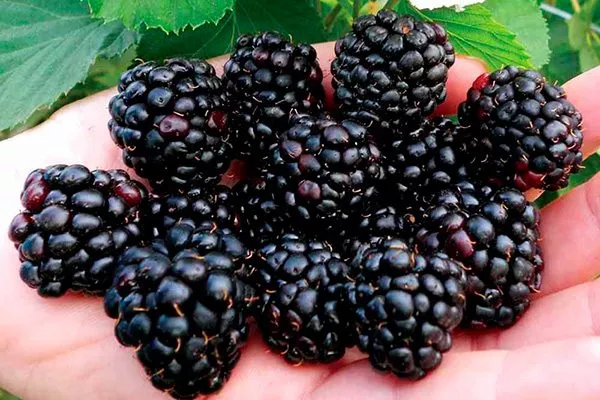
- The fruits are large, elongated, juicy, and sweet, with a subtle aroma and a subtle tartness. The berries have firm flesh. Each blackberry averages 14.5 g.
- The yield from one adult bush is 6 kg.
Advantages:
- frost resistance;
- poor shade tolerance;
- excellent transportability.
Prime-Ark Freedom
This is a thornless remontant bush with erect, medium-sized stems about 2 m high.
Features of the variety:
- The bush is covered with green leaves that have a diamond-shaped configuration.
- You will be able to enjoy the first fruits already the following year after planting.
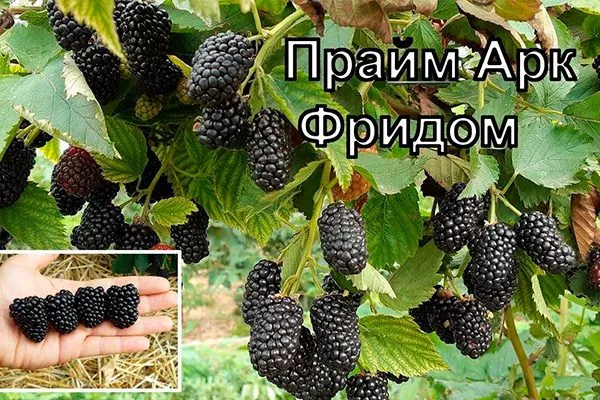
- The berries are large, sweet, and firm, weighing up to 20 g each.
- One adult plant produces up to 7 kg.
Advantages:
- high productivity;
- excellent taste;
- large size of berries.
Traveler – Prime-Ark Traveler
An upright bush growing to 1.9-2.2 m in height. The shoots are thornless, making care and harvesting much easier.
Features of the variety:
- The leaves are compact, smooth-surfaced, and slightly serrated along the edges, and are bright green. During flowering, the shrub is covered with large pinkish flowers up to 5 cm in diameter.
- In the second year of development, blackberries begin to bear fruit.
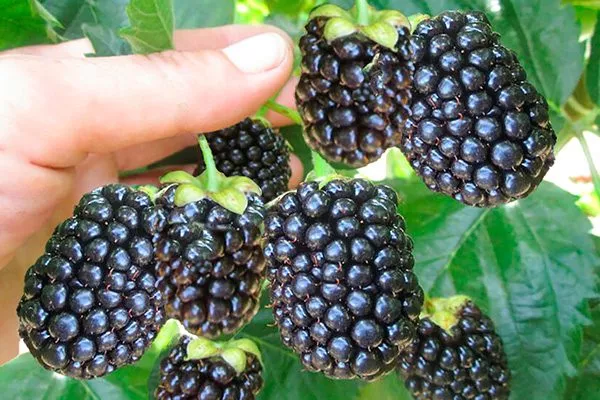
- The berries are round and elongated, black in color, with a glossy surface. They have a fruity aftertaste, firm flesh, and a high juice content. On average, one blackberry weighs up to 6 g.
- Gardeners harvest 3-4 kg of fruit from one bush.
Advantages:
- absence of thorns on shoots;
- excellent taste;
- juiciness of fruits.
Early blackberries
Early blackberries are popular with many gardeners. The fruits ripen early, so they can be eaten as early as midsummer.
Natchez
This thornless variety produces high yields. Upright bushes with long shoots reaching up to 3 m in length.
Specifications:
- The plant is covered with light green leaves with light pubescence and serrations along the edges.
- It begins bearing fruit 2-3 years after planting. By early June, the bush is covered in snow-white flowers with 5-6 petals.
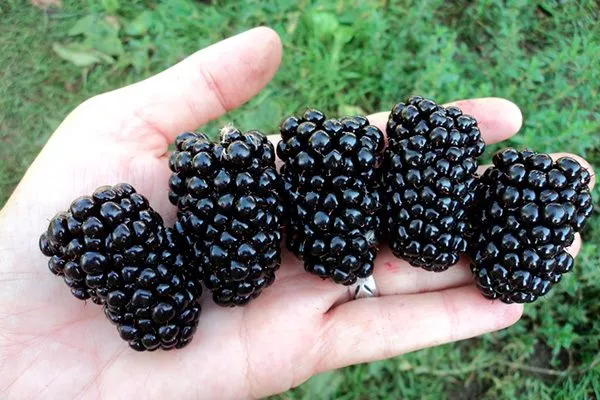
- The fruits are large, cylindrical, and elongated. They are grouped into clusters of 15-25 berries. The skin is dark blue, almost black. Each berry weighs 10-12 g.
- On average, one adult plant produces up to 20 kg.
Advantages:
- excellent shelf life;
- high yield;
- large-fruited;
- early ripening;
- transportability.
Ouachita
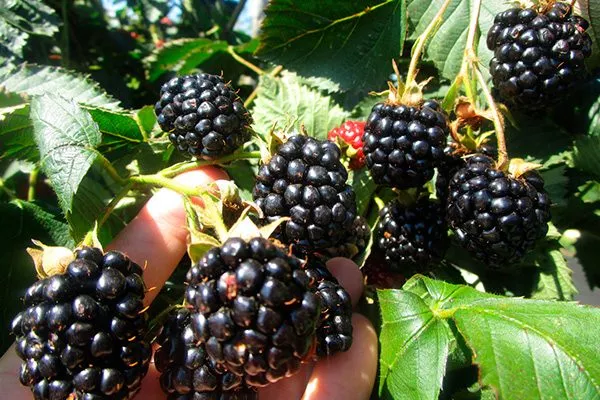
An upright, powerful bush with long shoots up to 2.5-3 m, devoid of thorns.
Characteristics of the variety:
- The plant is covered with dark green elongated leaves with a matte surface.
- After just 1-2 years, the plant begins to bear its first fruit. Fruiting is prolonged, lasting almost several months.
- The fruits are large, have a unique flavor, are juicy, firm, and aromatic. Each berry averages 6-7 g.
- The yield from one bush reaches up to 30 kg.
Advantages:
- high resistance to diseases;
- excellent taste;
- good shelf life and transportability;
- high yield.
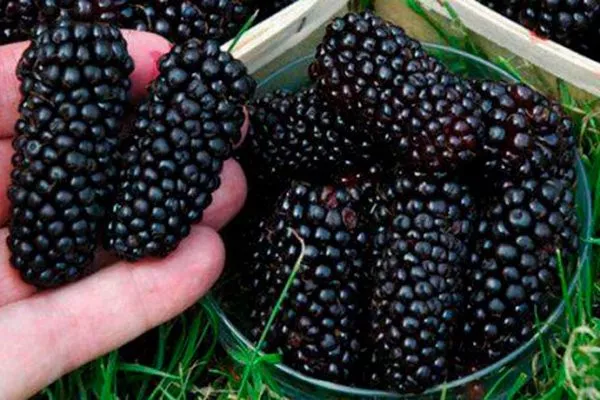
Giant (Bedford Giant)
Blackberries grow as a spreading bush, reaching 1.5-2.5 m. The plant has strong and flexible shoots.
Characteristics of the variety:
- In June, large white inflorescences form on the shrub's stems. Due to the late flowering, the buds are not damaged by spring frosts.
- Blackberries begin to bear fruit in the second year after planting.
- The fruits are elongated and conical in shape. At first ripening, the berries are green, then turn brown, and eventually acquire a reddish-brown color. The blackberries are sweet and sour, with a distinct aroma, weighing up to 20 g.
- On average, up to 30 kg of berries are collected from one bush.
Advantages:
- high frost resistance;
- easy to care for;
- transportability;
- long-term storage;
- remontancy.
Columbia Star
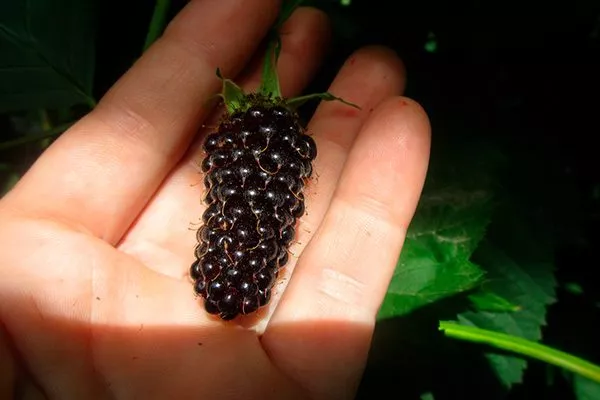
A shrub reaching 4-5 m in height. It has medium-sized internodes and numerous lateral branches.
Specifications:
- The stems are thornless and gray-green, sometimes tinged with red. The leaves are large and bright green. When in bloom, the shrub is covered with large white flowers.
- Fruiting begins in the second year of development, and the fruits begin to ripen in mid-June.
- The berries are large, sweet, and firm, with a distinct cherry flavor. They are conical in shape and have dark brown skin. Each berry weighs 12-15 g on average.
- One bush produces 7-9 kg of ripe blackberries.
Advantages:
- excellent taste;
- attractive appearance of berries;
- high yield rates;
- absence of thorns on shoots;
- resistance to drought and heat.
Chačanska Bestrna
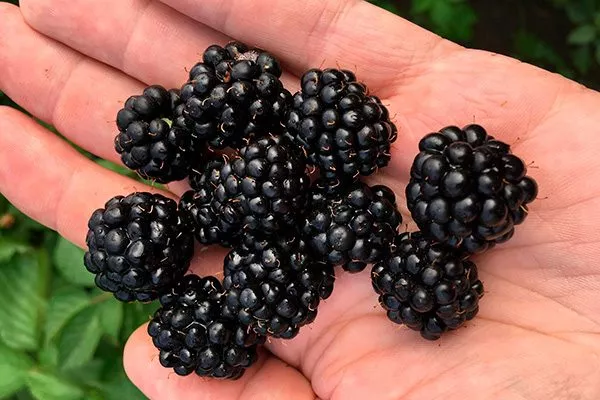
A semi-creeping, thornless shrub that can grow up to 3-3.5 m tall without pruning. The plant branches well and forms numerous stems.
Specifications:
- The leaves are large, wide, emerald in color.
- Fruiting begins the following year after planting. The berries begin to ripen as early as the second half of July.
- The fruits are large, sweet and sour, and dark in color. Each blackberry weighs 9-14 g.
- From one adult plant, gardeners collect 13-14 kg of fruit.
Advantages:
- unpretentiousness (grows even in the shade);
- high yield;
- resistance to drought and heat, diseases;
- extended fruiting period (28-35 days);
- excellent taste.
Blackberry hybrids
Breeders are working tirelessly to develop various blackberry varieties. They are developing hybrids of fruit bushes, including many popular species with excellent characteristics.
| Name | Growth type | Fruiting period | Disease resistance |
|---|---|---|---|
| Brzezina | Erect | The second year after planting | High |
| Thornfree | Semi-creeping | 2 years after planting | High |
| Triple Crown | Semi-creeping | 2 years after planting | High |
| Agawam | Erect | The second year after planting | High |
| Navajo | Erect | The second year after planting | High |
| Jumbo | Semi-creeping | The second year after planting | High |
Brzezina
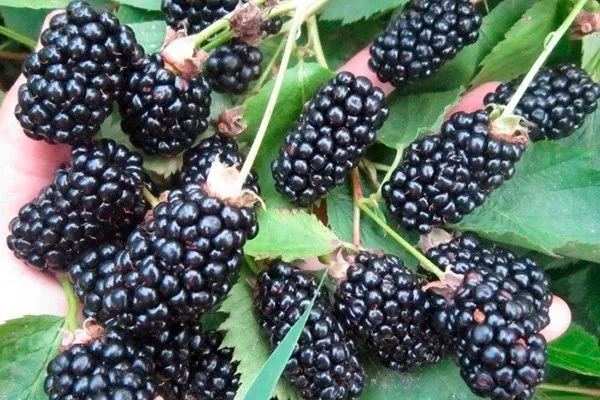
The shrub grows up to 3 meters in height. The hybrid plant is thornless, making harvesting much easier.
Specifications:
- The leaves are medium to large, dark green in color.
- Fruiting begins in the second year after planting, with maximum varietal development observed in the third year of development. The berries ripen in the second half of July.
- The fruits are medium-sized, conical in shape, sweet with a slight tartness. They are an intense black color with a characteristic sheen. Each berry weighs 5-6 g.
- One adult plant produces up to 8 kg of ripe blackberry fruits.
Advantages:
- frost resistance;
- high yield rates;
- early ripening;
- disease resistance;
- excellent transportability;
- high taste qualities.
Thornfree
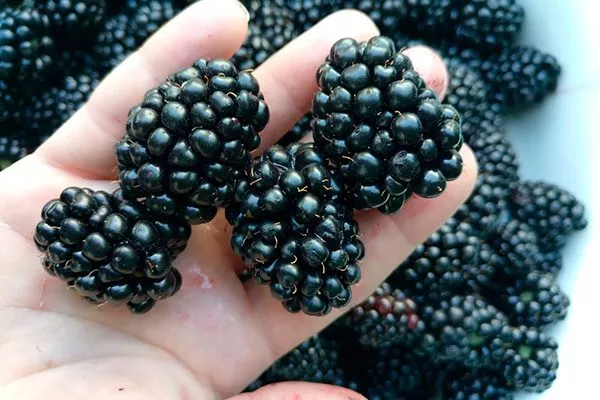
This blackberry hybrid is a late-ripening dessert variety. It is a vigorous, semi-prostrate bush with thick, rounded, thornless shoots. It reaches 3-5 m in height.
Characteristics of the variety:
- The plant has large, doubly serrated and slightly pubescent leaves of a dark green hue.
- The tree begins bearing fruit two years after planting. The berries ripen in late August to early September.
- The fruits are conical in shape and medium in size. They remain glossy until fully ripe. The blackberries are sweet, aromatic, and slightly tart.
- One adult bush produces an excellent harvest – up to 20 kg.
Advantages:
- disease resistance;
- unpretentiousness in cultivation;
- easy to care for;
- high yield.
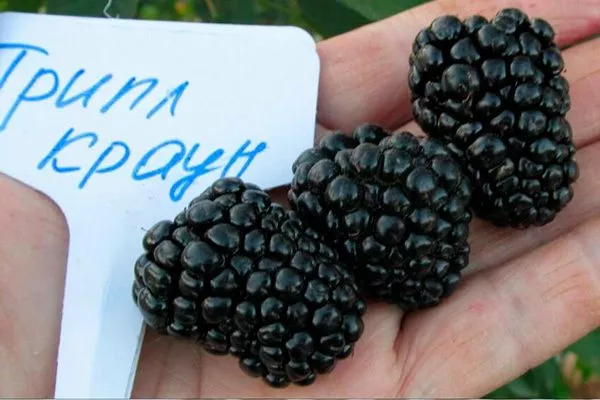
Triple Crown (triple crown)
A semi-creeping plant with strong, straight stems reaching 6-7 m in length.
Main characteristics:
- The leaves are serrated, similar in shape and density to currant leaves, and are colored bright green.
- It begins bearing fruit in its second year of development. The berries ripen in late July or mid-August.
- The fruits are large, oval, and dark purple, with a glossy sheen of burgundy or blue. The berries are sweet and sour, without being cloying, with a pleasant cherry or plum aftertaste. Blackberries average 8 grams in weight.
- One adult plant produces good yields – 13-15 kg.
Advantages:
- high drought resistance;
- absence of thorns on the vines;
- excellent taste;
- presentation;
- transportability and unpretentiousness.
Agawam
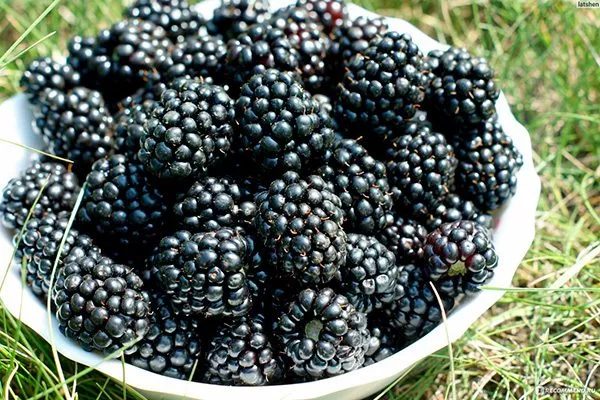
An early-ripening dessert variety. The bush is not spreading, medium-sized, and thorny. It grows 1.8-3 m in height.
General characteristics:
- The plant is covered with heavily pubescent green leaves.
- The plant begins to bear fruit in the second year after planting. The flowers grow large, clustered in clusters, and are white in color.
- The berries are small, oval, and stand on a short, slightly spiny stalk. They are sweet and sour, black, and have a delicate aroma. Each blackberry averages 4.5-5 g.
- Gardeners collect from 5 to 15 kg from one adult bush.
Advantages:
- continuous fruiting for 15 years or more;
- unpretentiousness;
- resistance to drought, frost and shade;
- high yield rates;
- excellent taste.
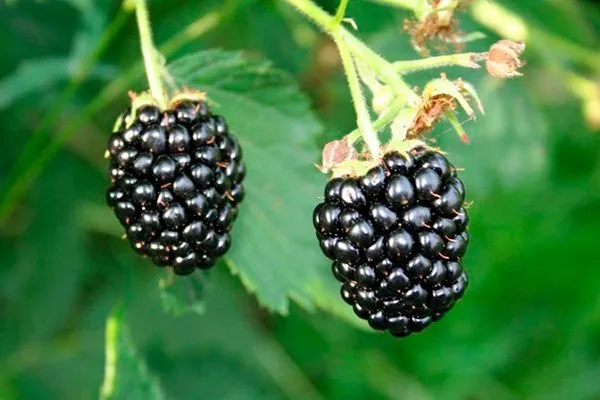
Navajo
A bush whose shoots grow straight and do not exceed 1.5-2 m in height.
Characteristics of the variety:
- The bush has numerous dense leaves of a dark green hue.
- Blackberries show good yield already in the second year of development.
- The fruits are short, conical, black, and sweet. Each berry averages 4-5 g, with some weighing up to 7 g.
- One adult plant produces a low yield – up to 6 kg.
Advantages:
- self-fertility;
- excellent transportability;
- excellent taste.
Jumbo
The plant is compact, semi-creeping, with strong, upright shoots. It reaches a height of up to 1.5 m.
Characteristics of the variety:
- The shrub is covered with oval, medium-sized leaves with veins and teeth. The foliage is dark green.
- The first berries appear as early as the second year after planting. A good harvest is likely in the third year of development.
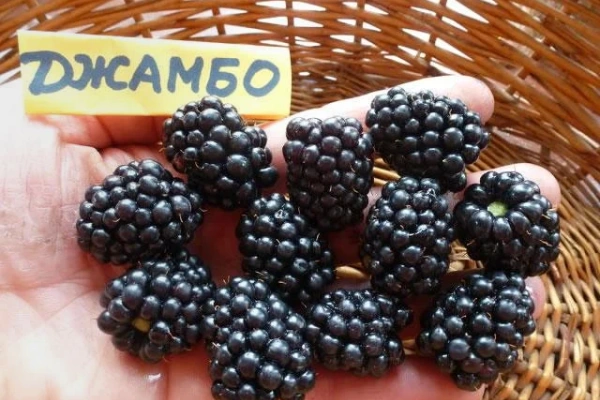
- The fruits are large, dense, and black with a glossy surface. The sweet berries with a pleasant aroma average up to 30 g in weight.
- One bush produces a good harvest – 20-25 kg.
Advantages:
- absence of thorns;
- universal use;
- resistance to heat and drought;
- transportability;
- disease resistance;
- fruiting within 35-50 days.
Selection criteria
When choosing a blackberry variety, take into account the climate of the region where you plan to grow the plant.
Recommendations for selection:
- If you live in the southern regions, choose any variety. For the central regions, all varieties are also suitable, but they must be protected for the winter. For planting in the north, choose frost-hardy varieties with early and mid-season ripening periods.
- Most varieties are drought-resistant due to their long roots, which are located deep underground, allowing the plant to obtain its own moisture.
- When choosing a variety, pay attention to yield figures. Keep in mind that when grown in a private plot, the yield will be less than the manufacturer's stated yield.
- It's best to choose mid- or late-ripening varieties, as they have excellent flavor. Early varieties are less sweet and have a milder aroma.
Among the vast number of blackberry varieties, you can find the one most suitable for growing in your garden. Pay attention to the characteristics, advantages, and disadvantages of each variety when choosing one to ensure you grow a fruit bush with good qualities.