
The Polish Polar blackberry will appeal primarily to lovers of sweet varieties. It is thornless, easy to grow, and suitable for all types of cultivation, whether amateur or commercial.
Origin
The Polar variety is a product of Polish breeding, created at the Institute of Horticulture and Floriculture in Brzeźno. When developing it, the breeders' primary goal was high frost resistance.
The Poles sought to develop a variety that would not require winter shelter. The Polar variety was officially registered in 2008. In Russia, the Polar variety grows best in southern and temperate latitudes.
Description of the plant
Polar blackberry bushes are vigorous, with upright shoots reaching 2.5-2.7 m in length in mature plants. The ends of the shoots may droop slightly, bending toward the ground, especially under the weight of the berries. The shoots are thornless.
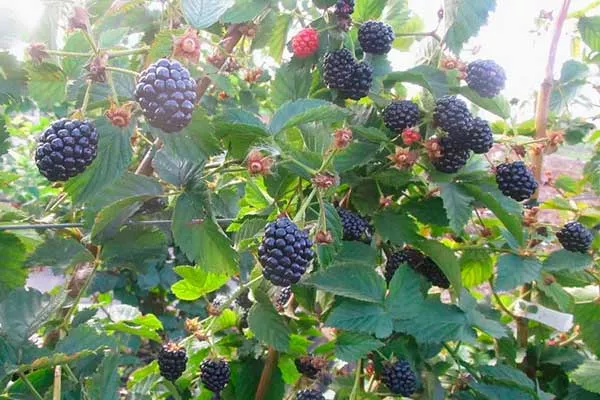
Young shoots are initially bright green, then, at the end of the season, light brown. Fruiting (annual) shoots are darker—brown. The leaves are large, green, consisting of 3-5 segments. The roots are strong, producing virtually no suckers. The buds are pinkish, the flowers are white, fairly large, with black stamens.
Description of fruits and taste
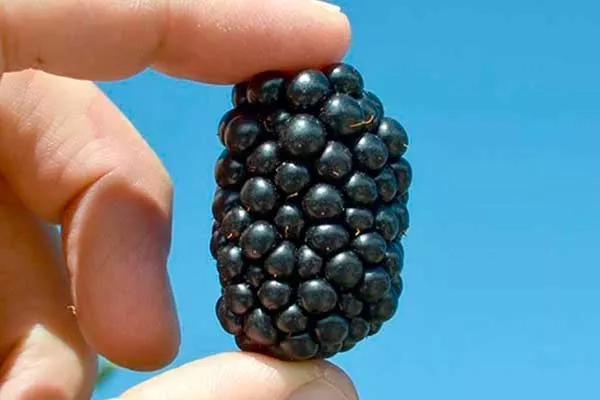
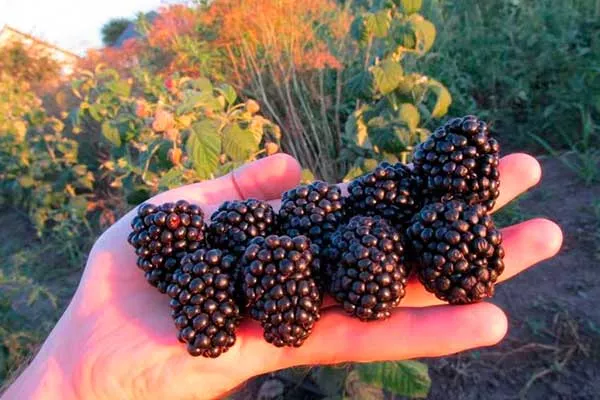
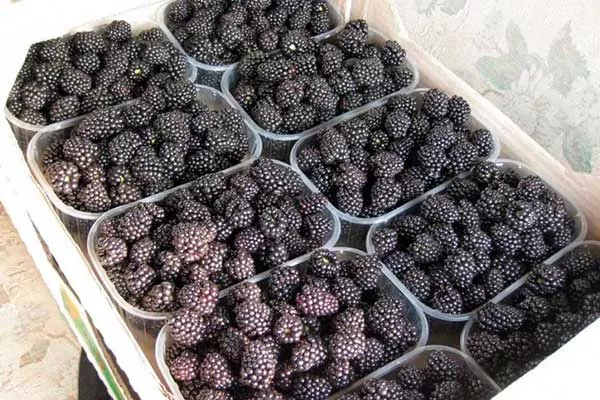
The berries are large, deep black, and have a pleasant blackberry aroma. They are smooth, glossy, uniform, and oval in shape. Each berry weighs between 9 and 11 grams. The surface has a light bluish bloom.
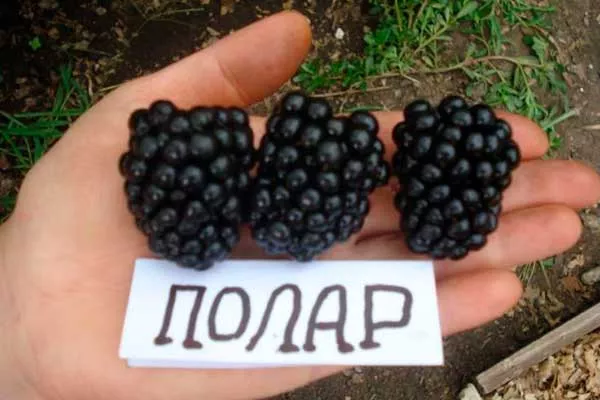
Polar blackberries are very tasty, ranking among the top 7 sweetest varieties. They have very little acidity and no astringency. The flesh is quite firm, and the seeds are small and undetectable when eaten. Tasting score: 4.5.
Productivity
The Polar variety produces a fairly good yield, but this depends largely on care and, in regions with cold winters, on the availability of adequate shelter. A single bush yields approximately 5-6 kg of berries. If the flower buds freeze in winter, the yield drops by 3-5 times.
Ripening time
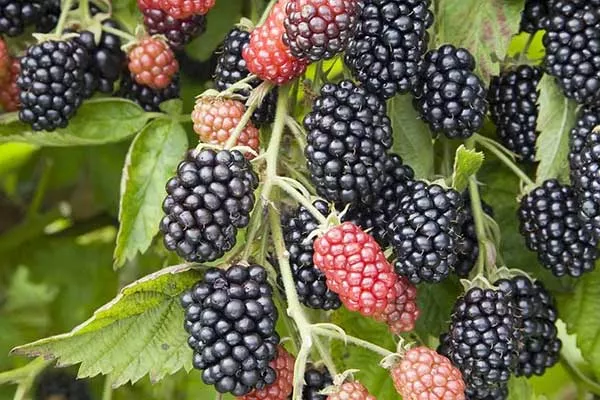
Fruiting begins in the third year after planting. In the temperate climate zone, Polar blackberries begin blooming around early May. It's an early-ripening variety, with the first berries ready to eat as early as July. Fruiting peaks in August, and the last fruits are harvested in September. The first harvest always produces the largest berries, which then become smaller.
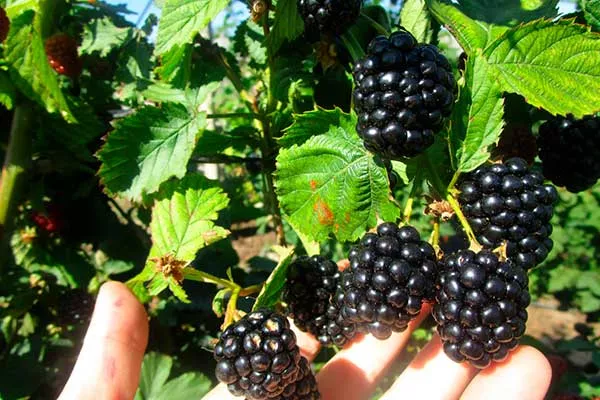
Ripening times depend on the climatic conditions in the region; in the south, the fruits ripen in early July, while in the central zone, the berries are harvested 2-3 weeks later.
Application
Polar blackberries are delicious and have an excellent marketable appearance that remains intact during transportation. This makes them ideal for commercial cultivation and subsequent sale at markets and retail chains. The fruits are suitable for fresh consumption, freezing, winemaking, and various preserves (juices, jams, preserves, etc.).
Pros and cons
Polar blackberry was originally developed as a variety for commercial cultivation, but thanks to its high-quality fruit and low maintenance, it has become popular with gardeners and homesteaders. However, before planting it in your garden, it's worth familiarizing yourself with all its advantages and disadvantages.
Pros:
The Polar variety has no particular drawbacks, except that in regions with harsh winters it still needs to be covered, as its frost resistance is sufficient for Poland, but not for central Russia, Siberia, or the Urals. It's also worth noting that ripe Polar blackberries may fall from the branches.
Landing features
There's nothing special to do when planting Polar blackberries; the gardener's job is to follow generally accepted techniques. It's important to choose the right location and adhere to the recommended planting times for fruit and berry crops.
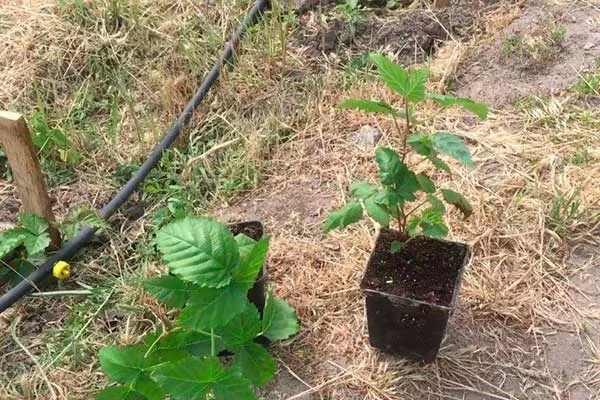
What to look for when planting Polar blackberries:
- In the south, seedlings are planted in the fall, a month before the cold weather sets in. They have ample time to adapt and establish themselves, successfully surviving the mild southern winter. In regions with harsh winters, spring planting is a less risky option—young seedlings have a hard time surviving their first winter, when temperatures reach -30°C or even lower.
- Plant in a sunny, wind-protected location. The maximum groundwater level is 1.5 meters above the ground surface.
- Optimal soils are fertile, humus-rich, slightly acidic loams.
- Planting hole size: 50x50x50 cm. Distance between adjacent bushes: 1.5-2 m, between rows: 2.5 m. Polar blackberries should not be planted too densely, as this will negatively affect their yield.
- Fill the holes two-thirds full with nutrient-rich potting soil and add water. Let the soil sit for approximately two weeks. To prepare the mixture, use fertile soil obtained from digging the holes, rotted manure (10 liters), and potassium and phosphorus fertilizers (50 and 150 g, respectively).
- Acidic soils are deoxidized with lime, dense soils are loosened with sand, and acidic peat is added to alkaline and neutral soils.
- The seedlings should have brown (mature) bark and be free of thorns. The root system should be developed, free of rotten or dry shoots, and free of unpleasant odors. Before planting, soak the roots in water for 12 hours.
- Before planting, the seedling is shortened to 15-20 cm. It is placed on a mound of earth, carefully distributing the root shoots. The hole is then filled with soil so that the root collar is buried 1.5-2 cm deep. The soil is compacted, the seedling is watered generously, and once the moisture has been absorbed, it is mulched with humus, peat, grass clippings, sawdust, etc.
- ✓ Seedlings must have at least 3 healthy roots at least 15 cm long.
- ✓ The bark on the shoots should be smooth, without cracks or signs of disease.
When planting blackberries in your garden, remember that they should not be placed closer than 50 m from raspberries, strawberries and nightshade crops.
Care
The growth and development of Polar blackberry bushes, their yield, and the quality of their fruit depend on their care. To maximize their yield, it's essential to provide the blackberry with the proper care.
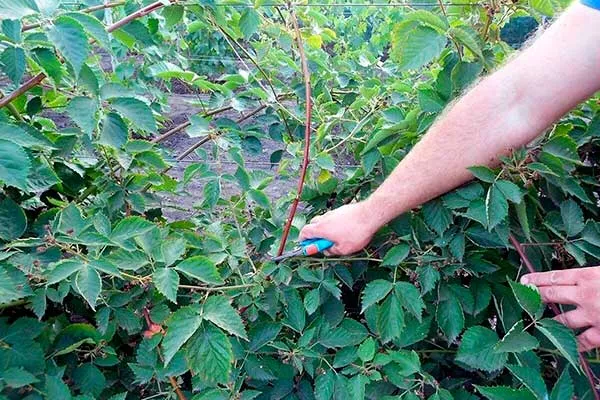
How to properly care for Polar blackberries:
- This variety tolerates moisture deficits well and can grow for long periods without watering, but requires watering during dry periods to prevent the fruit from becoming smaller. Water the bushes weekly; after planting, young plants should be watered more frequently—once every four days.
- Nitrogen-containing fertilizers are applied in the spring, and complex mineral fertilizers are used during the flowering stage. After harvesting, potassium fertilizers are applied to stimulate the formation of generative buds. However, Polar blackberries are generally capable of growing and bearing fruit without any additional fertilizer.
- When yellow leaves appear (a sign of chlorosis), it is recommended to feed the blackberry foliarly with iron chelate.
- It is recommended to loosen the soil around tree trunks several times per season; this is necessary to provide the roots with oxygen and remove weeds.
- Polar blackberry shoots are tied to trellises. After fruiting has finished, they are pruned immediately. This procedure should be done promptly, allowing the bark to mature before frost sets in. Five to seven fruiting shoots are left on the bush, and side branches are pinched back once they reach 40 cm. Dry, broken, and diseased shoots are pruned completely.
Prevention
Polar blackberries have excellent immunity to most viral and fungal pathogens, so diseases and pests usually avoid them. However, the bush is sprayed with copper-containing products, such as Bordeaux mixture, in the spring. This is done as a preventative measure to eliminate the risk of damage.
Shelter for the winter
The Polish Polar blackberry requires insulation in all regions except the southern ones. If temperatures don't drop below -15°C, earthing up the roots is sufficient. The vines are then covered with agrofibre directly on the trellises, ensuring that the fibre doesn't freeze after rain and subsequent drops in temperature.
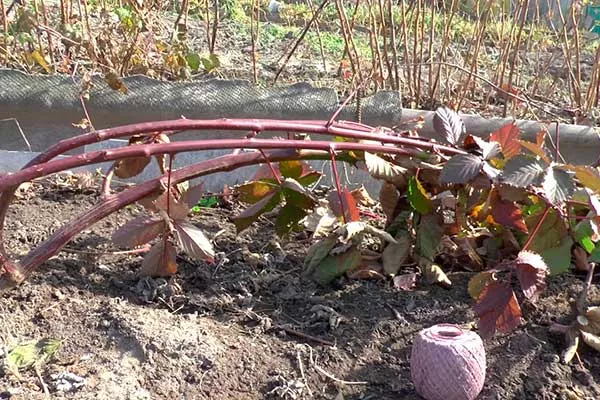
In regions with harsh winters, the vines are removed from the trellises, laid on the ground, and pinned down. They are then covered with spruce branches, straw, and dried corn stalks, and covered with agrofibre.
Harvesting
The berries are harvested after they are fully ripe, as they do not ripen further after picking. Harvesting should only take place in dry weather; the berries must be dry, with no traces of rain or dew, as raw berries quickly become moldy. The berries can be stored in the refrigerator for up to 4 days.
Reproduction
Polar blackberries produce almost no root suckers, so pulving (rooting the tips) is usually used for propagation. To do this, the tops of young shoots are trimmed back by 2.5-3 cm, and the leaves are removed, leaving a 10 cm gap from the top. The shoot is then bent down to the dug furrow. The area where the leaves were removed is covered with soil and regularly moistened.
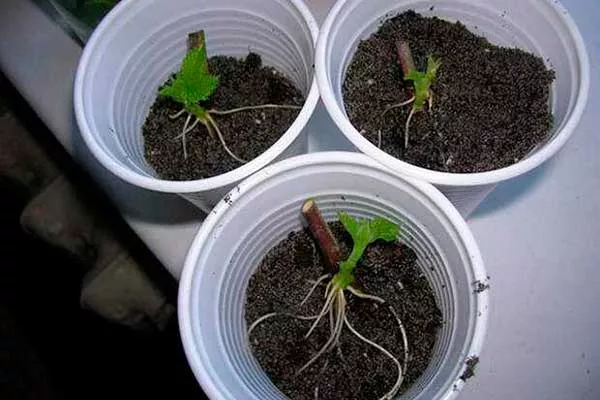
- ✓ The soil temperature must be at least +10°C for successful rooting.
- ✓ Soil moisture should be maintained at 70-80% of the total moisture capacity.
Rooting is usually carried out in August; the following year, the rooted plants are separated from the parent plant and transplanted to a permanent location.
Polar Blackberry Reviews
The Polar blackberry is undoubtedly a high-yielding and promising variety that has proven itself among our gardeners. It successfully combines excellent berry flavor with high yields and low maintenance, making it ideal for growing in garden plots, homesteads, and even on an industrial scale.