
Blackberries, native to America, are directly related to our raspberries, but have distinct characteristics. For example, they have a different color and are considered more frost-hardy. Planting blackberries is no more difficult than planting raspberries, so our gardeners actively propagate them.
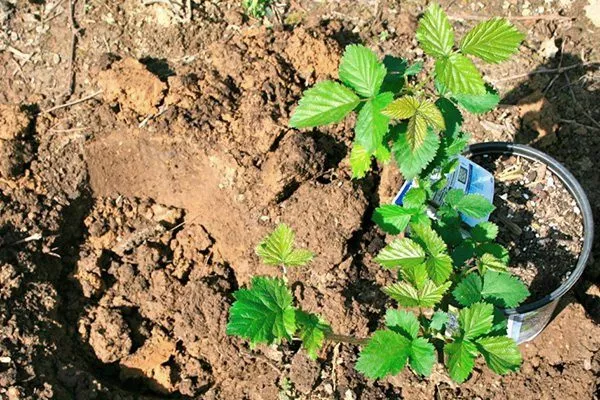
Timing of planting in open ground
Blackberries are planted in spring or fall. The exact date depends on the region. Each season has its own characteristics, advantages, and disadvantages.
In the spring
This is considered the most optimal time, as the root system will be able to take root firmly. Other advantages of spring planting:
- the roots will have time to grow;
- no need to create winter shelter;
- it will be possible to carry out the required post-planting care - watering, fertilizing, etc.;
- Due to the warm soil, even in the Northern regions the bush easily adapts and takes root.
There is also a downside: you will have to water a lot and shade the bushes from the scorching sun.
Pre-planting conditions: air temperature must stabilize at 15 degrees Celsius or higher. Planting time varies by region of Russia:
- Moscow Region and the Central Belt – from April 15 until the end of the month;
- Urals, Siberia, Northwest – from April 20 to May 10;
- South – first days of April.
In the fall
The main requirement for fall planting is that there should be at least a month before the first frost. To prevent frost damage, plants should be planted only with the same root ball they were in beforehand. Winter shelter is essential, even for frost-hardy varieties. These are the most significant drawbacks.
There are also advantages:
- young bushes will not get sunburned and will not suffer from drought;
- Plants that survive the winter at a young age will become more frost-resistant in the future;
- Due to cool weather, green mass will not grow, but root system growth will be activated.
Autumn planting dates by region:
- Moscow region and the Central Belt – from September 20 to October 10;
- Urals, Siberia, North-West – throughout September;
- South – during October.
Blackberry planting methods
There are only two ways to grow blackberries: in strips and in bushes. In the former case, it's recommended to use varieties that produce numerous shoots, while in the latter case, it's recommended to use varieties that don't produce as many shoots.
Ribbon
This method involves planting bushes in a single long row, spacing them 50-100 cm apart. The row spacing is 200-250 cm. When using trellises for support, the spacing can be reduced by exactly half, significantly saving space in the garden.
Bushy
With this method, the planting is shaped like a square, with sides measuring 200-250 cm. Planting holes are dug in the corners, each accommodating approximately three bushes. One support post is required to create a compact appearance and simplify harvesting.
Peculiarities of blackberry planting in different regions
The success of growing blackberries in a garden plot largely depends on climatic conditions, so it is important not only to select suitable variety, but also to know some of the subtleties of planting work:
- Krasnodar Krai, Caucasus. In these regions, blackberries can be planted in any way and with a wide variety of varieties. Here are some recommendations:
- the area should be shaded;
- planting period: autumn and spring;
- Varieties with low winter hardiness will still need to be covered for the winter.
- Central part, Middle belt, Siberia, Urals. Due to long and frosty winters, choose varieties accordingly. The most frost-hardy include Chester Thornless, Ufimskaya Mestnaya, Darrow, Gazda, and similar varieties. Please note the following:
- choose upright varieties, as creeping ones do not tolerate frost at all, so the cover should be as multi-layered as possible;
- planting should be carried out only in spring;
- Be sure to cover the plants with additional snow in winter.
Pre-planting preparation process
The survival rate of young bushes and subsequent yields depend on the quality of preparatory measures, so do not ignore the requirements and rules described below.
How to choose a good seedling?
You can buy a seedling at a specialty store, a nursery, or from friends or neighbors. However, you can also stock up on planting material yourself. The key is to choose the right specimen suitable for planting.
- ✓ Presence of live buds on the root system, at least 3.
- ✓ No signs of fungal diseases on the root collar.
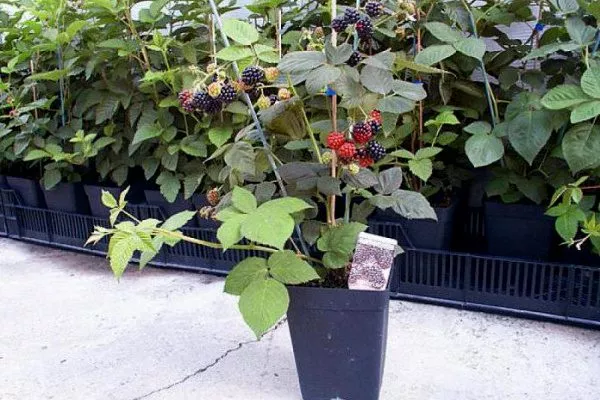
When choosing, consider the following:
- bush age – 1 year, maximum 2;
- root system – developed with roots 10-15 cm long and the presence of 3 powerful roots;
- quality, that is, damage, dryness, rot, signs of disease and mold, breaks - should not be on either branches or roots;
- shoot thickness – 5-8 mm;
- the bush must consist of at least 2 shoots;
- bud - must be on the root system.
Preparing blackberries for planting
Planting stock is sold with either a closed or open root system. Depending on this indicator, preparatory measures are taken that influence the speed of the plant's establishment in the new conditions:
- OKS. Since with exposed roots you can not only carefully examine them, but also make adjustments, proceed as follows:
- Trim any branches that are too long.
- Trim off dried out elements and those that are slightly damaged.
- Treat the cut areas with wood ash (you can use crushed activated carbon).
- Soak the root system in water for 24 hours. A more rapid growth stimulant (Kornevin, Heteroauxin, etc.) is another option.
- ZKS. If the seedling is in a container, moisten the soil approximately 4-6 hours before planting. This will make it easier to remove the plant from the container. No other preparatory steps are necessary.
For any type of root system, lightly trim the above-ground part, remove the lower tier of foliage, leaving only the top.
What kind of soil do you need?
Blackberries prefer loose, light soil that doesn't allow water to stagnate in the upper layers. Otherwise, rotting processes occur. If the soil is heavy, it's thinned with peat or sand, and drainage material such as stones, expanded clay, and the like is added to the planting hole.
Pay special attention to the soil's pH. It should range from 5.5 to 7. If it's not, try the following:
- if below 5.5, lime the soil;
- if over 8.0, add compost, humus or manure (you can plant any green manure, for example, legumes, mustard).
Selecting a location on the site
Blackberries need to develop sweetness during the growing season, and this is only possible if the bush is placed in a well-lit area. If it's shaded, the berries will be tasteless, the yield will be reduced, and growth will be stunted.
Other important factors:
- Since the bush has difficulty supporting a large number of fruits, it needs to be protected from gusty winds. Therefore, drafts should be avoided in the area.
- If summers in your region are short and cool, plant bushes near buildings to provide side and top cover. Otherwise, the plant will suffer.
- An excellent option for terrain is flat with a slight slope for the drainage of melt water and liquid after rain.
- The groundwater level is at least 1.5-2 m.
Don't ignore crop rotation rules:
- good predecessors are cereals, beans, zucchini, cucumbers, carrots, and green manure;
- bad predecessors and neighbors – raspberries, strawberries;
- It is recommended to plant parsley, beans, zucchini, grapes, pears, and apple trees nearby.
Preparing the site and planting hole
If you plan to plant blackberry seedlings in the spring, prepare the site and hole in the fall, a couple of weeks before the first frost. If you plan to plant in the fall, prepare the site and hole approximately 30 days before the first frost. Here's what you need to do:
- Clear the area of grass residues, roots of other crops, debris, branches, fallen leaves and stones.
- Dig the beds to a depth of 50-70 cm.
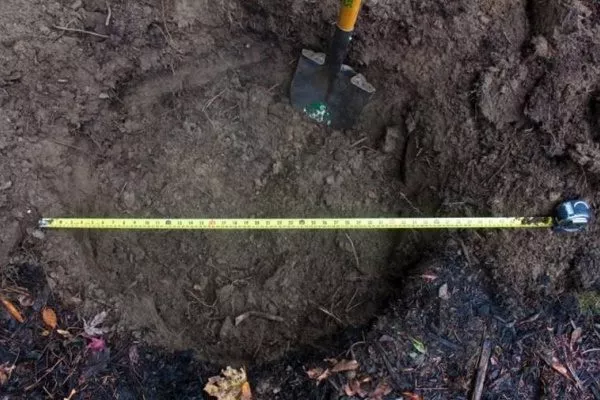
- Dig a hole of the required size (depending on the planting material), but most often the depth is about 50 cm, the diameter is 40 cm.
- Apply fertilizer. For example: superphosphate – 100 g, potassium salt – 50 g, humus – 10 kg, turf soil – 7-10 kg.
Step-by-step planting instructions, depending on the propagation method
Blackberries are usually propagated by seeds, root suckers, cuttings, seedlings, root shoots, division, etc. Depending on the method, different planting patterns are used.
Seeds
This method preserves varietal characteristics perfectly, which is a definite advantage. However, it is time-consuming, and germination is considered low. To improve germination, experts recommend the following procedures:
- scarification – it is necessary to break the integrity of the grain shell, which will speed up the process of seed germination;
- stratification - you will have to place the whole grain in a moist environment until germination (for example, in gauze, water for swelling).
How to plant blackberries from seeds:
- Stratify by first soaking the grains in warm water for 48-60 hours.
- Prepare a container, fill it with peat, deepen the planting material, and moisten it.
- Cover with plastic wrap and leave for 2-2.5 months. The temperature should be between 2-4°C. Water the planting regularly, and open the cover daily for ventilation; otherwise, rot will begin.
- After 2 months, bring the tray into the room and keep it open at a temperature of +20 degrees.

- Wait until the sprout has formed at least 3 true leaves.
- Transplant into open ground, making a planting hole the size of the plant's root system. To do this, place the seedlings together with peat moss, 10-15 cm apart.
- Cover with leaves for the winter, and in the spring transplant to a permanent location using the transshipment method.
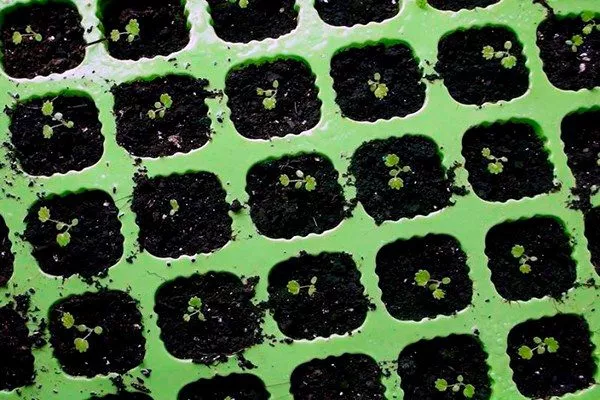
The first fruiting when planted from seeds is observed in the fourth year.
Planting with root cuttings
The work can be carried out at any time of year (spring, fall). First, you need to prepare cuttings, choosing a healthy plant that's at least 3-4 years old. Then, follow the plan:
- Make a small undercut on one side (if you plan to take one shoot).
- Identify a thick mother root (at least 10 mm in diameter) and cut the cutting off at the rhizome.
- Dig the hole.
- Cut the shoot into pieces 10 to 15 cm long.
- Dig a trench 7-8 cm deep and about 9-11 cm wide.
- Insert the cuttings and cover with soil.
- Water generously.
- Leave until root shoots form, then transplant in the standard way to a permanent location.
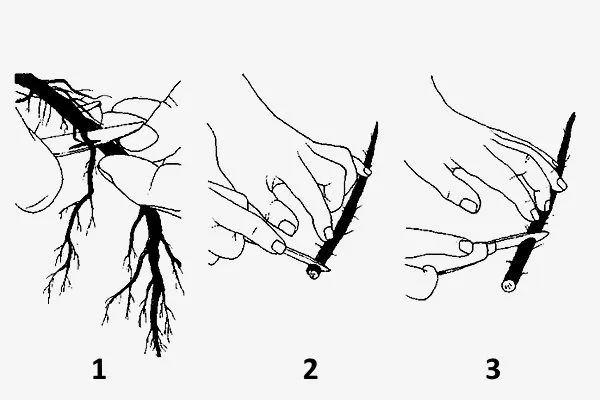
If you take cuttings in the fall, leave the cut shoots in a cool place until spring, placing them first in moistened sand or peat.
Harvesting and planting green cuttings
This planting technique involves cuttings from the above-ground portion of the bush. The top third is taken, but the top itself is removed. The rest of the process is identical to the previous method.
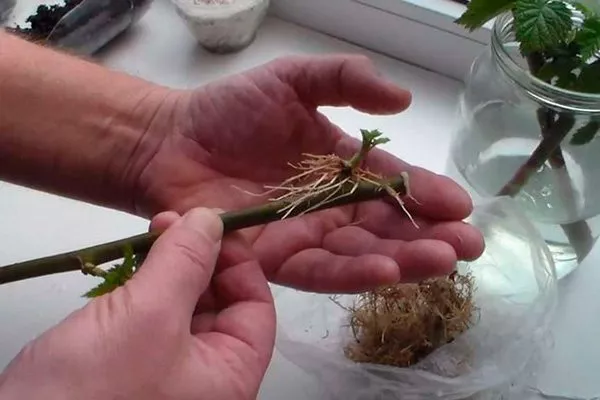
Planting with seedlings
This is a classic technique for many gardeners, as it is much easier to buy ready-made planting material or grow it from layers, cuttings, seeds, etc.
The algorithm of actions is as follows:
- Mark out the area so that the plantings look beautiful.
- Prepare planting holes.
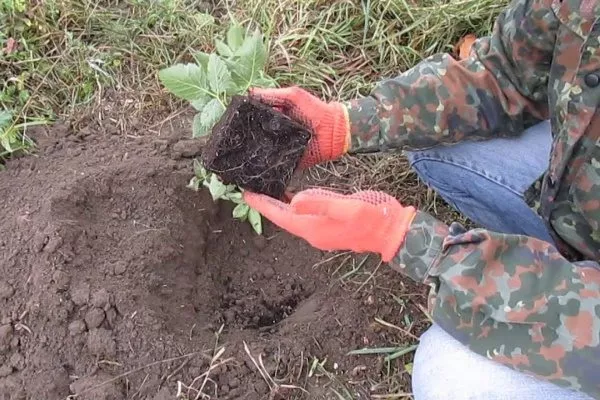
- When the day arrives to plant the seedlings, take the shoot with the root ball and place it in the hole. If the seedling is bare-root, form a small mound inside the hole and place the cutting on it.
Be sure to straighten the root shoots along the slope. - Sprinkle with substrate. It should have the same composition as the soil mixture in the planting hole.
- Compact it with your palms, patting the surface periodically to eliminate any voids.
- Water generously and cover with mulch made from spruce branches or fallen leaves, peat, or compost. The latter is especially useful for fall planting, as it will release its heat during frosts.
For information on how to plant thornless blackberries, watch the video below:
Less common methods of reproduction
The most popular options for planting blackberries are described above, but there are others that some gardeners prefer:
- Root suckers. Such shoots are usually located a short distance from the mother plant. Most often, gardeners simply remove them by digging them up to prevent them from robbing the mature plant of nutrients. However, the shoots can be used to advantage.
This method is only used on upright blackberries. Planting material is collected in May-June, and the shoots should be 10-15 cm tall, 0.8 cm thick at the base, and 15-20 cm long at the root. Removal from the soil and planting are the same as for root cuttings.
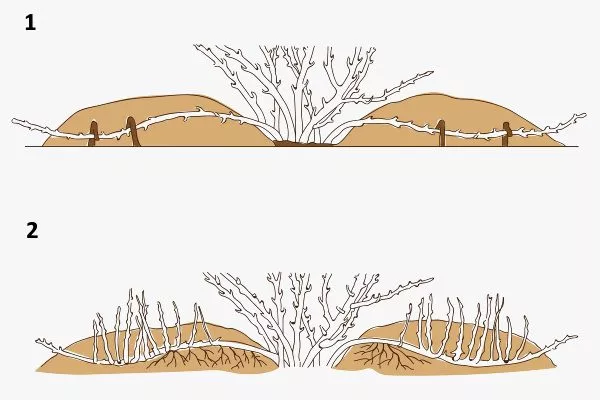
- By layering. This method is only used for trailing blackberry varieties. All you need to do is bend a good stem to the ground, cover it with soil, and water it periodically. Once the root has formed, transplant it to its permanent location.
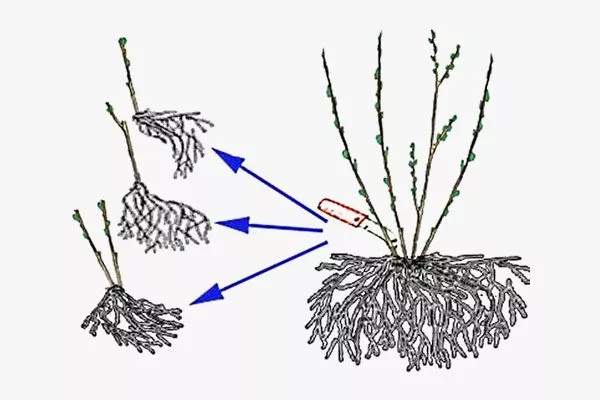
- By dividing the bush. It's useful for varieties that don't produce root suckers or produce few shoots. The process is labor-intensive, but effective. To divide the plant, the bush is completely dug out of the ground and divided using a hatchet, saw, or a large, sharp knife. Planting is carried out in the standard manner.
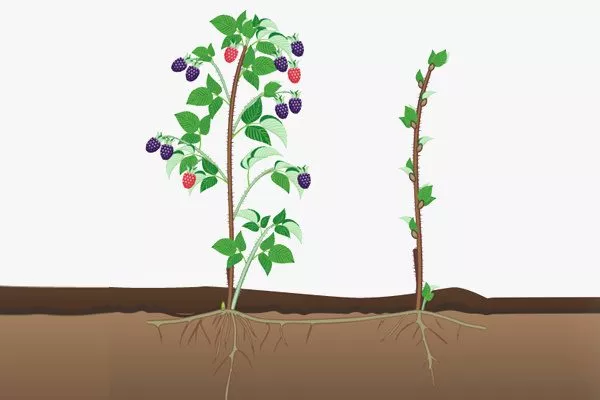
Transplanting blackberries
The crop is replanted in several situations: if the planting was too dense, the site is unsuitable, or the plant needs to be refreshed. This should be done exclusively in the following manner:
- Water the plant. One mature specimen requires about 20 liters of water. This procedure is important because the plant should be transplanted only with the root ball still attached. If you transplant it with the root system exposed, it will take longer to adapt, establish roots, and establish itself.
- Dig out the soil from all sides of the bush.
- Gently pull the main stem from the bottom with both hands.
- Immediately place the plant on a bag, cloth or thick plastic.
- Move to a new location and plant in the standard way.
When working, please observe the following requirements:
- If the transplant is carried out in the spring, the buds should not yet have awakened;
- if in autumn – 25-35 days before the first frost;
- In the first year, it is important to properly cover the bush before wintering;
- Do not fertilize the crop immediately after work for 6-10 months.
Staking blackberries during planting
Blackberries must be supported. This applies to both upright and trailing varieties. This is most often done using a trellis—support posts with wire or twine stretched horizontally, preferably in several tiers.
Why install trellises – main reasons and benefits:
- the process of seedling formation is simplified;
- care becomes easier;
- the berries do not touch the soil surface;
- convenient for watering, mulching, loosening, weeding and fertilizing;
- saves space in the garden;
- the fruits receive sufficient fresh air and light;
- It's easier to harvest.
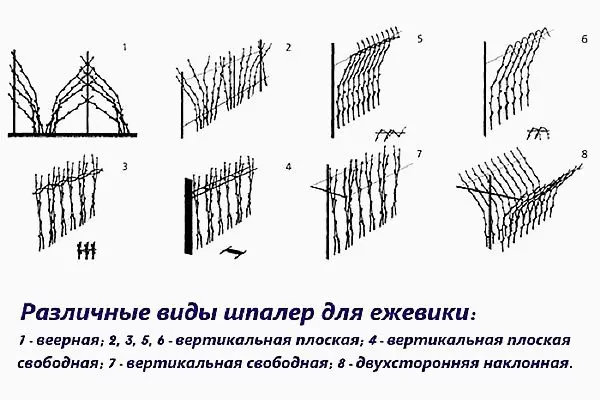
Trellis are divided into two main types, which are further subdivided into subtypes:
- Single-lane. Used for small numbers of bushes. Available in the following types:
- fan-shaped;
- vertical flat;
- horizontal;
- inclined;
- free.
- Two-lane. Used for large-scale cultivation of blackberries. Subspecies:
- T-shaped;
- V-shaped;
- Y-shaped.
It is very important to install the trellis structure correctly:
- If the strip planting method is used, the trellises are installed at a distance of 5 m from each other.
- If a bush design is assumed, the supports are placed on the opposite side of the blackberry bush.
- The hole for the posts is dug to a depth of 60-70 cm. Pieces of broken brick should be placed at the very bottom. Otherwise, the support will sink and become lower.
- The posts are covered with soil very tightly. If the soil is very loose and sandy, add clay. After filling, compact the surface, and after 2-3 weeks, add more soil and compact it again, as there will be some slight settling.
- The wire is stretched as tightly as possible. The distance between rows should be 55-65 cm.
Caring for a seedling after planting
Agronomic practices for growing blackberries are developed with the specific variety in mind. However, there are general requirements and actions for blackberries, which include the following nuances:
- Watering, loosening and mulching the soil. During the first 3 months after planting blackberries, moisten the soil every 4 days; then, watering once every 6-7 days is sufficient.
Immediately after watering, loosen the soil and apply mulch. This will allow oxygen to reach the roots and allow the soil to maintain the required moisture level for a long period. - Fertilizer supply. Blackberries grow quite quickly, which requires a lot of energy and, consequently, nutrients. To replenish these nutrients, fertilize with nitrogen-containing fertilizers in the spring, potassium-rich fertilizers in the summer, and complex fertilizers in the fall, such as superphosphate.
The first fertilizing is carried out 2-3 years after planting, depending on the degree of soil fertility. - Correct pruning and garter. Due to the rapid growth of branches, the bush needs shaping, circumcision and garters, which will help maintain a beautiful shape and improve yields. Please note the following:
- tie up the shoots only with soft rope, as their covering is sensitive;
- the first pruning is carried out after a year – long shoots are removed (their parameters should remain within 1.6-1.8 m);
- In autumn and spring, carry out sanitary pruning, and in summer, thinning.
- Protective measures against diseases and pests. Blackberry crops rarely get sick when properly managed, but they do occasionally become infected with viruses, bacteria, and fungi. Pests also attack the plant.
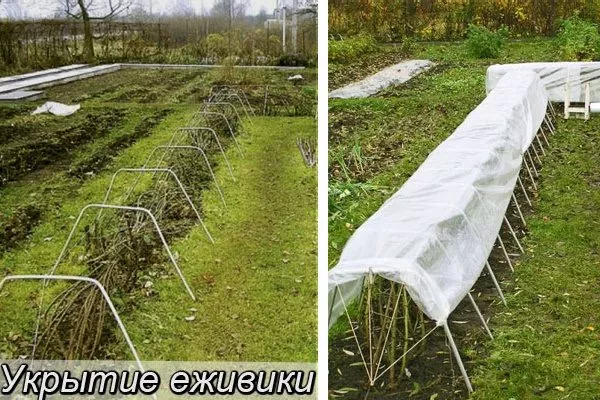
To avoid this, treat the bushes in early spring with biological preparations, fungicides and insecticides. - Preparing for winter. About a month before covering, water the bushes generously, applying at least 40-50 liters per spot. Apply a thick layer of mulch (peat, humus, or sawdust) on top. Then wrap the branches with agrofibre.
Mistakes when planting blackberry seedlings
Novice gardeners often make mistakes when planting blackberries, which can lead to not only disease or failure to bear fruit, but even death. To prevent this, pay attention to the following key mistakes:
- poor quality planting material;
- incorrect distance between seedlings;
- plenty of shade on the site;
- neglect of agricultural technology and crop rotation;
- failure to comply with the rules of fertilizing, especially with regard to dosages (excess is just as harmful as a lack of nutrients);
- planting a bush so that the root collar is too high above the ground surface.
When planting blackberries, it's important to follow all recommendations. Don't ignore the specific variety's requirements, as this will minimize the risk of bush loss, reduced yield, and so on.