
Blackberries are related to raspberries, but are native to the United States. They are black berries that grow wild in any forest. They belong to the Rosaceae family and belong to the Rubus genus, native to temperate and northern latitudes.
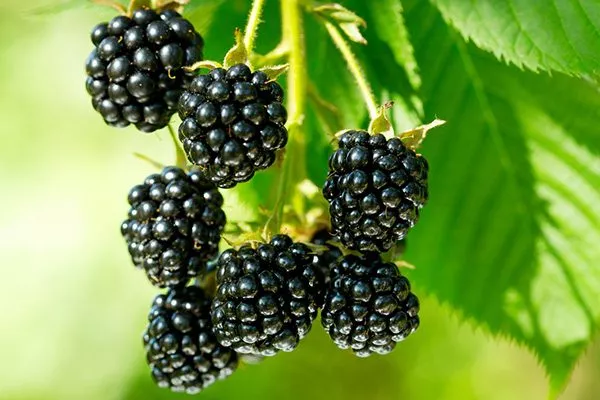
Description of blackberries
The blackberry plant is characterized by upright or trailing shoots. The root system is considered perennial, while the aboveground part is only biennial. The bush and berries each have their own individual characteristics, which are important to understand before growing.
- ✓ Optimum soil pH for blackberries: 5.5-6.5.
- ✓ Minimum temperature for overwintering without cover: -20°C for most varieties.
Basic botanical characteristics of the plant
Blackberries include many varieties and cultivars and have different names – blackberry, kumanika, rosyanika, azhina.
What does the bush look like:
- Escapes. They have a green hue, with some varieties having a purple tint. The stems can either trail along the ground or grow upright. They are characterized by rapid and vigorous growth. When young, the shoots are slightly lighter.
After fruiting, that is, at the age of 2 years, the stems dry out greatly, therefore they die, but young branches grow in their place. - Green mass. The foliage is medium-sized, reaching its peak growth at 30 days. Unlike raspberries, it has a complex structure, with 3, 5, or 7 lobes. The leaves are sessile on the sides and petiolate on the top. The underside is a slightly lighter green.
The surface is covered with tiny hairs. The leaf axils contain two buds—the main bud and the reserve bud—which are located one above the other. The upper bud is used to form fruiting branches, while the lower bud is used to form rosettes of leaves. Lateral buds are also present. - Flowers. This part is characterized by white or pink hues. The flowers are bisexual (there are varieties with only male or female flowers), self-pollinated, and the perianth is double and regular. There are also other characteristics:
- one corolla contains 5 oblong petals with notches;
- the cup is five-partite, the surface is grayish, felt-like;
- the flower is strewn with many pistils and stamens;
- ovary type – superior;
- There are 3 types of sepals: bent downwards, standing horizontally or near berries;
- the shape of the receptacle is convex, conical;
- inflorescence transitional;
- brushes are shortened, elongated, sparse or with spines;

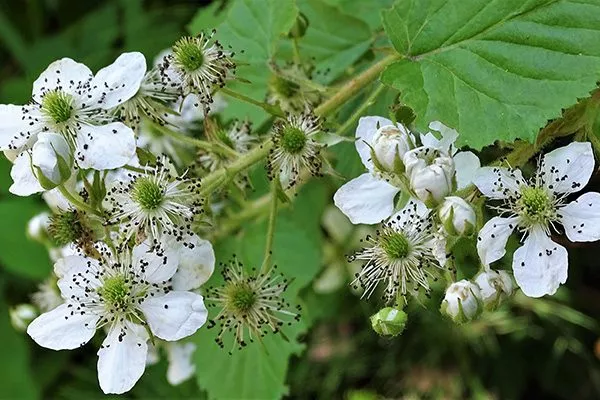
Other characteristics:
- Bloom. It begins in June or July, depending on the growing region. The first flowers form at the top, then in the middle, and finally at the base. Flowering lasts 25-30 days.
- Fruiting. Blackberries have a long blooming period—like flowering, lasting about a month. Peak fruiting occurs from mid-July to late August (again, depending on the climate zone).
- Productivity. Blackberries, unlike raspberries, are considered more productive, but much depends on the quality of care. Plantation cultivation yields up to 15-20 tons per hectare, depending on the climate and variety.
At home, you can harvest from 20 to 70 kg of berries from one bush (climbing varieties are more productive).
Characteristics of blackberries
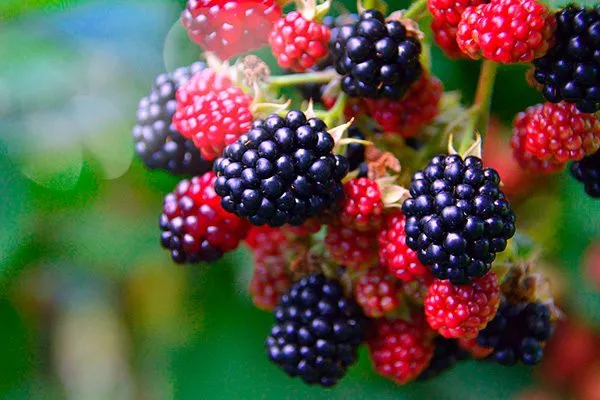
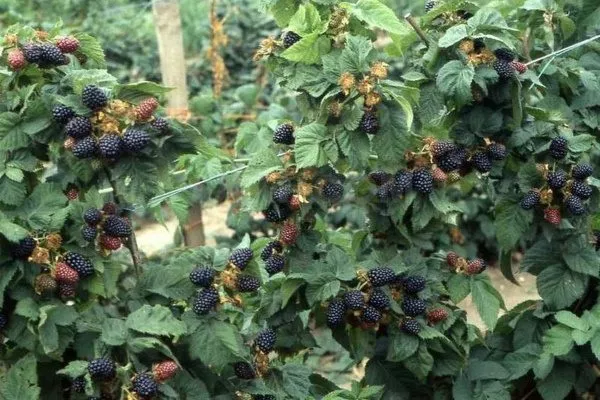
Blackberries are polydrupes, meaning they are made up of many small drupes fused together. Their primary color is black, but some specimens have shades of purple, white, blue-gray, red, and dark yellow. A typical black berry changes color several times as it ripens:
- at first the fruit is green;
- then pinkish with a brown tint;
- further just brown;
- just before ripeness, bright red;
- black at the end.
Other characteristic features of the fruits:
- taste – sweet, with hints of sourness;
- the pulp is juicy;
- application – cooking, cosmetology, medicine, canning (jam, preserves, etc.).
Types of garden blackberries
Each crop has its own classification. For example, by shoot type (erect, prostrate), frost resistance, ripening time, etc. A single species can include many cultivars, just as a single cultivar can belong to one, two, or even three species. Thus, a variety consists of several cultivars that share common characteristics.
Simple upright
Another common name is cloudberry. Areas of widespread natural distribution include Russia, Scandinavia, and England. Cultivated varieties of this species include Larro, Darrow, Black Satin, Apache, Kiowa, Navajo, Agawam, Fantasia, and others. Each variety has its own unique characteristics, but the general characteristics are as follows:
- type of shoots – upright or slightly drooping;
- height – maximum 2-3 m;
- fruits are medium, but usually large;
- the surface of the berries has a waxy coating;
- pollination – independent;
- frost resistance – high;
- demanding - for moisture.
Upright bushes have a very powerful root system that produces numerous root suckers. Consequently, they will need to be regularly pruned or used as planting material for propagation. Apical propagation methods are not available.
Curly
Another name for this plant is climbing dewberry. It is characterized by long, spreading vines that reach up to 5 meters with pruning and 10 meters in the wild. The berries are quite large. The most popular varieties include Izobilnaya, Lucretia, Thornless Evergreen, Texas, and others.
Other indicators:
- increased resistance to drought, but average resistance to frost;
- propagation type – cuttings, layering, etc., except for basal shoots;
- yield – very high (due to the length of the stems, many ovaries are formed);
- The requirement is for strong tying, since the vines are flexible and fall heavily under the weight of berries.
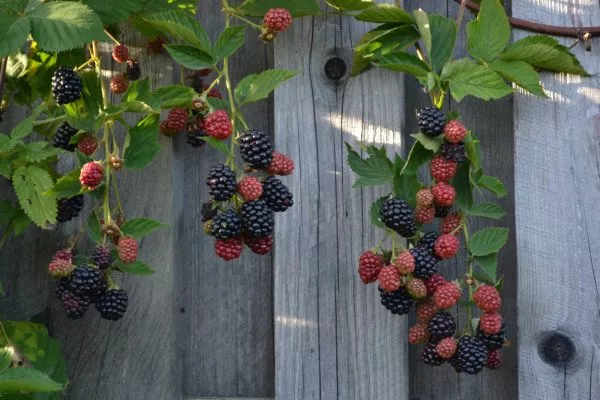
Standard
The standard variety is called the blackberry tree. It resembles the upright variety in appearance, but grows 2-4 meters taller. The bush consists of 1-3 main stems, from which numerous branches develop (like those of trees).
Characteristic:
- unlike other species, it does not require garters (since the shoots are quite strong);
- Due to its height and low spreading, it takes up little space (it can be planted according to a pattern with minimal distance indicators);
- fruits are the largest;
- Frost resistance is average, as is yield.
The most famous varieties are Osage, Natchez, and Polar.
Everbearing varieties
This type was artificially developed relatively recently (in the first 10 years of the 21st century). All varieties are distinguished by their enhanced adaptability to any climatic conditions. Other features:
- double fruiting, starting already at the beginning of June;
- the first harvest is collected in the year of planting (for example, if you plant a seedling in the spring, the berries will ripen by August);
- It is permissible to cut all branches before wintering under the stump, as they will quickly grow back in the spring;
- This species includes both climbing and upright varieties;
- height – about 2 m, the length of the creeping vines is slightly longer, so the bush looks neat and compact;
- demanding - you will have to water it often, as it does not tolerate drought;
- Young shoots are very thin, old ones are strong, so only one-year-old branches need to be supported on trellises.
The most popular varieties are Reuben, Black Magic, Traveller, and Prime Ark.
Red-fruited varieties
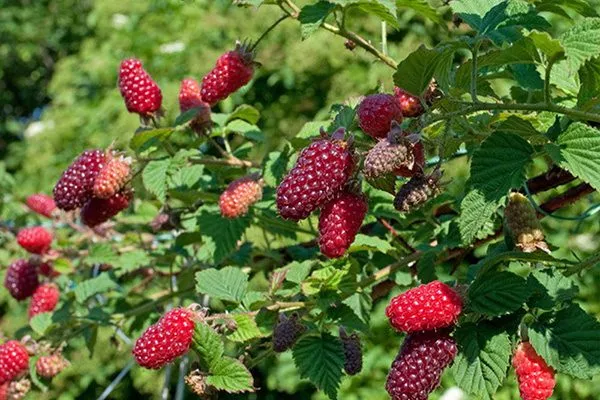
This species most closely resembles raspberries—the berries are always dark red, with snow-white hairs and a shiny surface. Most varieties are equipped with numerous prickly spines. Stems are approximately 2-3 meters long, frost resistance is very low, the fruits are small, and fruiting occurs late—around July 15-20.
The variety was developed by crossing blackberries and raspberries. Popular varieties include Loganberry, Texas, and Boysenberry.
Blue blackberry
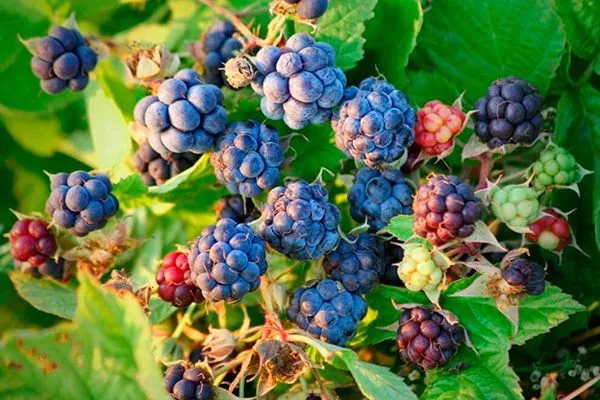
This variety is also called "glaucous." The height of the shrub ranges from 50 to 150 cm. When young, the shoots are pubescent or smooth, but always have a greenish-yellow color.
Other characteristics:
- the color of the berries is blue-gray;
- thorns - small in size, numerous in number;
- fruiting late - from the end of July;
- the bones are large and flattened;
- the taste is always sour.
There is only one cultivated variety so far (Darrow), but breeders are working on inventing new ones that will be sweeter.
Thornless
These are innovative varieties bred at research institutes. The primary goal of their development is thornlessness, which significantly simplifies harvesting and growing. Currently, there are approximately 40-50 thornless hybrids, half of which originate from Russia.
Key features of thornless blackberries:
- frost resistance and productivity are at a high level;
- ripening periods – mostly early;
- shrub type – dwarf and tall;
- increased resistance to all diseases;
- compactness of bushes.
The varieties grown in our country are Agate, Loch Tay, Chester, Black Satin, Loch Ness, Columbia Star and others.
Useful properties of blackberries and their application
Blackberries have been studied for decades, revealing their medicinal properties. Consequently, the berry has a wide range of uses, including medicine, cosmetology, dietary nutrition, and, of course, culinary applications.
Composition and caloric content
Nutritionists recommend blackberries as a low-calorie food, as 100 grams contain only 40-43 kcal. The fruit contains the following nutrients:
- 0.49 g fat;
- 1.39 g protein;
- 9.61 g carbohydrates;
- 0.37 g ash;
- 88.15 g of water.
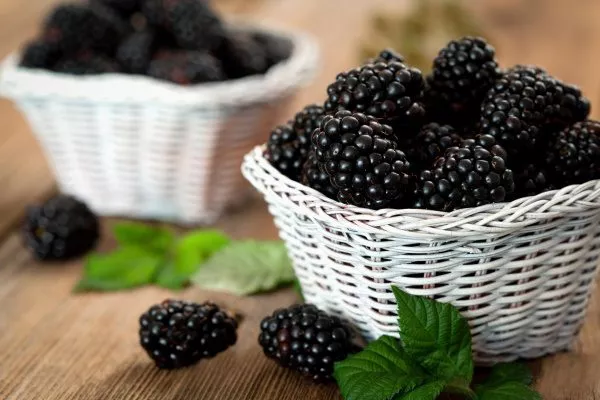
Medicinal properties
Not only blackberry berries, but also leaves and shoots are used for medicinal purposes. All components of this plant have the following effects:
- normalization of the functioning of the brain, digestive organs, heart, blood vessels, liver, etc.;
- acceleration of bile flow and release of toxic deposits from the liver/kidneys;
- reduction of arterial and intracranial pressure;
- cleansing the walls of the circulatory system;
- strengthening of blood vessels, acceleration of blood supply;
- elimination of fatigue, both physical and psycho-emotional;
- decrease in body temperature;
- strengthening the immune system;
- dissolution of kidney stones;
- elimination of inflammatory processes in the genitourinary system.
Contraindications
It is not advisable to consume or use blackberries for treatment in the following cases:
- intestinal disorder;
- vomiting and nausea;
- some diseases of the renal system;
- individual intolerance to berries;
- myocardial diseases;
- increased acidity of the stomach;
- intestinal problems.
If contraindications are ignored, the risk of exacerbation of underlying diseases and deterioration of the condition increases.
Use in medicine and folk remedies
Due to its rich composition, blackberry extracts and the berries themselves are used as adjuvants in the treatment of various diseases and conditions:
- atherosclerosis and hypertension;
- enterocolitis and gastritis;
- stomach bleeding and diarrhea;
- shortness of breath and increased nervous excitability;
- liver disease, kidney stones;
- colds and flu;
- diseases of the genitourinary organs, cystitis, menstrual irregularities;
- enteritis and rheumatism;
- pathological disorders in the joints;
- mouth ulcers, gingivitis, stomatitis.
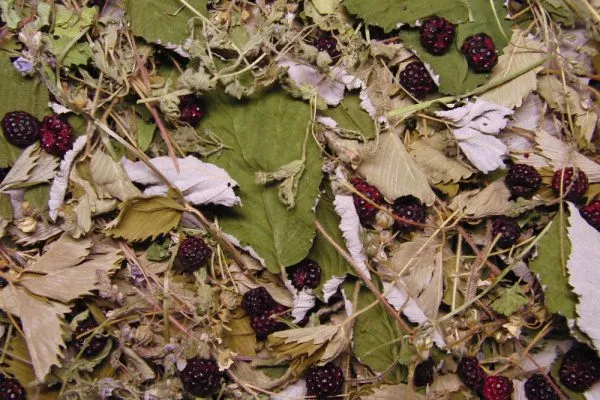
In folk medicine, the leaves are most often used. They are used to prepare infusions, decoctions, extracts, and tea. Some remedies are also applied externally to treat skin problems such as dermatitis, eczema, and so on. The root is also used, for example, for gargling and rinsing the mouth.
In cooking
Blackberries are traditionally used to make winter preserves, including jams, jellies, marmalades, and compotes. The fruits are also used to make marmalades and pastilles, juices, syrups, and food concentrates. Blackberries are also frozen and dried. They are then used for fillings in baked goods, etc.
In cosmetology
Almost all parts of the blackberry are used for cosmetic purposes, as they contribute to the following effect:
- reduction of the level of inflammation of the dermis;
- reduction of facial sebum;
- softening of the epidermis;
- regeneration of damaged tissues at the cellular level;
- nutrition and hydration of the skin;
- neutralization of rosacea;
- elimination of redness;
- wound healing.
The products are available in the form of oils, creams, masks, and preparations for problem skin.
Features of cultivation
To ensure the crop bears fruit every year, gardeners must adhere to basic agricultural practices. For blackberries, these are as follows:
- How to choose a variety? It makes no sense to buy planting material intended for growing in the South for a cool climate zone, so frost-resistant varieties are needed for the North, for example. There are other criteria as well:
- goal - if you are creating a hedge, then give preference to climbing plants; for planting on plantations, buy bush varieties;
- yield - if you grow blackberries for personal consumption, you can buy less productive varieties, but if you grow them for business, then only high-yielding ones;
- taste qualities - there are those who like sweet fruits, but there are also those with a sour taste.
- Favorable conditions. Please note the parameters at which blackberry bushes feel comfortable:
- soil – loose, loamy, neutral or slightly acidic;
- the area is sunny, without drafts;
- side - south, southwest;
- groundwater – at least 2 m from the ground surface.
- Planting diagram. Depends on the type of bushes and method:
- ribbon - planted in rows, between which a distance of 2-2.5 m is maintained, between plantings 0.5-1.0 m;
- Bushy – planting is carried out in a square pattern, the distance between bushes is 2-2.5 m.
The landing process
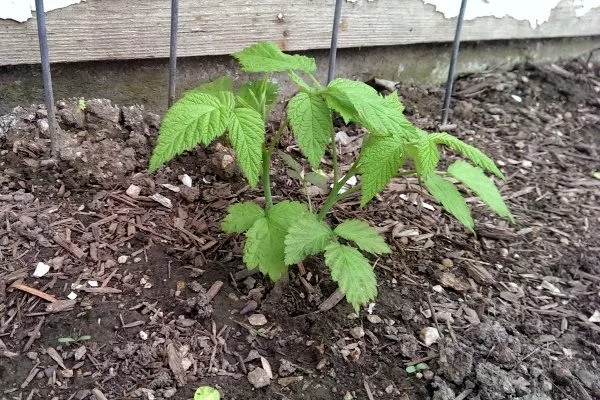
Before planting bushes in the garden, be sure to prepare the seedlings by trimming, inspecting, and soaking them in a growth stimulant. Next, prepare the planting hole. Here's how:
- About a month before planting, dig the garden to a depth of 1-1.5 spade depths. Be sure to remove any remaining roots and grass, branches, fallen leaves, and other debris from the soil. If the soil is very poor, add 7-9 kg of humus per square meter.
- Three weeks before planting, dig a hole about 40-50 cm deep and in diameter. Separate the topsoil from the bottom layer. Add 5-6 kg of compost, 100-120 g of superphosphate, and 40 g of potassium sulfate to the topsoil. Mix thoroughly and fill the hole 2/3 full.
Cover with plastic wrap and leave until planting. - Open the planting hole, loosen the substrate in it and create a mound.
- Place a bare-root seedling on it, spreading out the root shoots. If the roots are tightly packed, instead of creating a mound, form a depression in the center into which to place the seedling.
- Cover with the soil mixture left over from preparing the hole. If there isn't enough soil, make another batch from the bottom layer of soil.
- As you add soil, compact the planting, patting the surface to prevent air pockets from forming. The root collar should be planted 2 to 3 cm deep.
- Pour in 5-7 liters of settled warm water.
- Mulch with peat or humus in the fall and straw or sawdust in the spring.
How does blackberry reproduce?
There are many methods used for reproduction, each with its own characteristics:
- By apical layering. Only climbing varieties are suitable for this method, as the branches need to bend easily. The process is as follows:
- Select a healthy vine.
- Bend it to the ground and secure it with clips/staples.
- Sprinkle with soil to a height of about 18-20 cm.
- After about two months, check to see if the branch has sprouted roots. If so, separate the shoots with roots from the mother plant.
- Plant it.
- Cuttings. The most popular method used for all types of blackberries. To propagate, simply select a strong shoot, cut it, divide it into several 20 cm pieces, and root it (there are different methods).
- By division. This method requires digging up a bush that's about 3-4 years old. Then divide it into 2-4 pieces and plant them in the standard manner.
- By root suckers. There are always shoots around the bush that can be used for propagation. The idea is as follows:
- Select good shoots.
- Dig around them until you find the mother root.
- Cut and replant.
- Seeds. This method is rarely used, as obtaining seedlings is difficult and time-consuming. It is essential to stratify the seeds, plant them in peat moss in individual cups, and then transplant them into a greenhouse or larger pots. After approximately 1-2 years, transplant the seedlings to their permanent location.
Basic principles of blackberry care
Blackberries are a relatively low-maintenance crop, especially when it comes to watering and fertilizing. To minimize this effort, simply plant the plants in the right area—one with fertile soil and the right groundwater level.
Key steps to take:
- Watering. The first watering after planting the seedlings should be done a week later. For two months, water every four days, then once a week. The amount of water depends on the age of the plant and the weather. The main thing is to avoid a dry crust forming on the soil surface.
A month before wintering and immediately after removing the cover in the spring, water each bush with 50 liters of water. - Top dressing. Blackberries can be fertilized three times: in the spring with nitrogen-containing fertilizers, in the summer with potassium fertilizers, and in the fall with potassium-phosphorus fertilizers. If the soil is fertile, it's sufficient to fertilize the bushes only in the spring and once every 2-3 years with superphosphate. What you'll need for spring fertilization per square meter:
- nitrogen – 20 g;
- potassium – 40 g;
- manure/compost – 4-5 kg.
- Garter. All types of blackberries, except standard blackberries, require support. Trellis are used for this purpose. Most often, support poles made of metal pipes or wood are installed at intervals of 5 meters. Wire is attached to these poles in one or two rows.
Many gardeners install arches for climbing varieties, tie the vines to fences, or install mesh structures. - Pruning blackberries. Held twice per season:
- in spring – sanitary, during which all frozen, broken, pest- and disease-affected branches are cut off;
- In the fall - thinning and rejuvenation, during which two-year-old stems are removed, one-year-old stems are slightly shortened, and branches growing in the wrong direction are cut out.
- Bush formation. Required exclusively for upright varieties. What to do:
- after the shoots reach 100 cm, they are shortened to 90 cm;
- in the future, shoots no more than 2 m long are left;
- total number of stems – 8 pcs.
- Blackberry growth on the plot. Blackberries spread rapidly throughout the garden through root suckers. To prevent this process, "walls" of slate, plastic, metal, or wood are dug in around the perimeter of the blackberry garden. The depth of the walls is 50-70 cm.
Storage and collection rules
Fresh blackberries don't keep for long – a maximum of 3-4 days from picking, and that's only if the storage procedure is carried out correctly. Here's how:
- the weather is dry and warm;
- time of day – early morning;
- collection option - with stalk;
- tool - fruit picker.
After picking, do not wash the berries or transfer them from one container to another, as they are very delicate, quickly lose juice, and are easily crushed. The only way to preserve fresh berries is by freezing.
Berries similar to blackberries
There are a few berries in the world that resemble blackberries. Some are edible and some are poisonous:
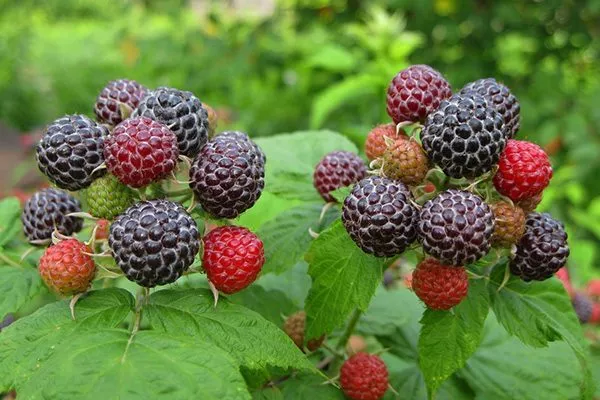
- Black raspberry. These are the Cumberland and Ugolyok varieties. Although both plants are related, they have differences. Unlike blackberries, raspberries have the following characteristics:
- the berries are empty inside;
- the surface is not shiny;
- the pulp is soft;
- the shape is not so elongated;
- there is fluffiness;
- the spines are hairy.
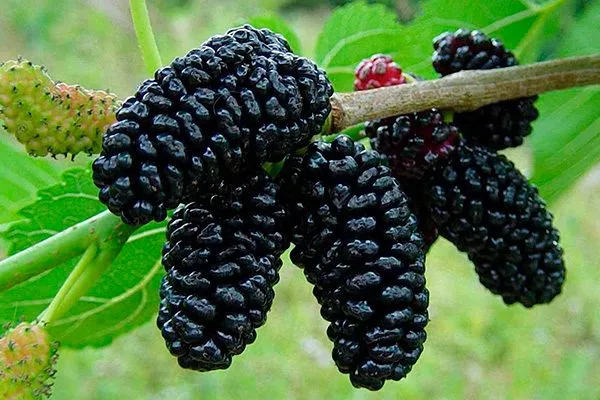
- Mulberry. Blackberry-like varieties include Smuglyanka and Shelly-150. The main difference is that mulberry is a tall-growing tree, while blackberry is a shrub.
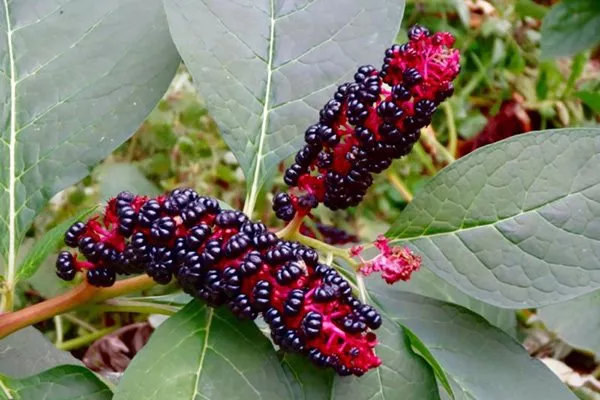
- Phytolacca. This is the only poisonous crop. The berries are only vaguely similar. The main difference is that the fruits are located on elongated cobs.
Interesting facts
It turns out that blackberries are relatively new to our latitudes, but have been known abroad for a long time, dating back to ancient times. This prompted interested people to collect this unusual information about the crop.
For example, in Russia, the berry is called "blackberry" because of its "hedgehog-like" spines. However, all other names, such as "ozhina," "turquoise," "holodok," and so on, derive from its black and bluish hue.
Other interesting facts:
- In Celtic mythology, blackberries are associated with fairies;
- The English believe that on October 11th the devil spits on the fruit, so eating the berries is prohibited (and therefore picking them after this day is also prohibited);
- Blackberries were used in mythical rituals – bushes were planted along the edge of forests to protect villages from evil spirits;
- Some peoples perform anti-rheumatic rituals - the patient needs to crawl under blackberry bushes 3 times (on the back from the west to the east and on the stomach in the opposite direction);
- In the mid-20th century, blackberries became too popular in Western Europe, which led to their uncontrolled spread (to this day, authorities are unable to get rid of the rapidly growing plants);
- bees collecting nectar from blackberries produce particularly tasty honey;
- This berry appeared on a postage stamp in 1964;
- Blackberries were added to embalming potions back in Ancient Egypt.
Blackberries are a healthy, tasty, and versatile berry that grows on a variety of bushes. They're not cheap in stores, but you can grow them yourself. The key is choosing the right variety, following planting guidelines, and following care and growing recommendations.