
The Navajo blackberry was developed in the United States, where blackberries are grown on a massive scale. Breeders who developed this variety sought to instill in it the qualities considered most valuable in cultivated blackberries.
Who brought it out?
The Navaho blackberry was developed by American breeders in 1987. The variety was created at the University of Arkansas during a period of research into thornless blackberries, and Navaho is just one of a group of varieties. The Thornfree and Cherokee varieties were used in developing this new variety.
The Navajo blackberry takes its name from the Native American tribe. Today, this variety is extremely popular both in the United States and abroad, including in Russia. Navajo blackberries are grown not only in gardens and homesteads, but also commercially.
Description of the plant
The Navajo variety grows vigorously, like a brambleberry. Its tall, upright stems reach a height of 2 meters. They are quite strong, but can sag due to the abundance of berries. The branches are thornless. This variety is characterized by rapid shoot growth, characterized by vigorous suckering.
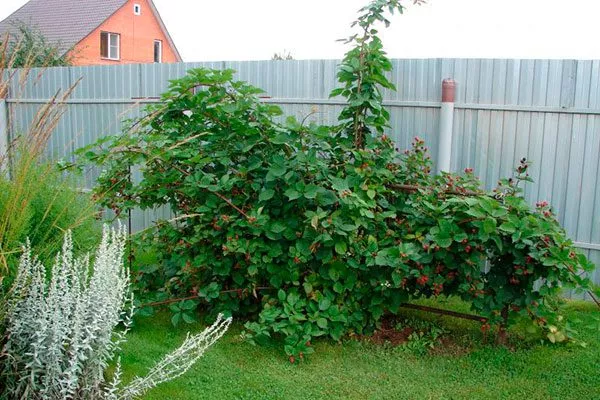
Berries and their taste
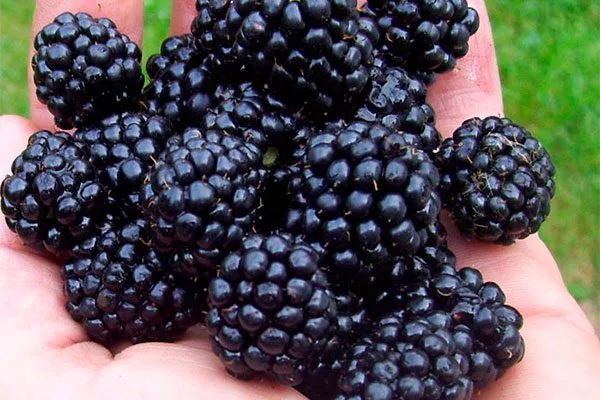
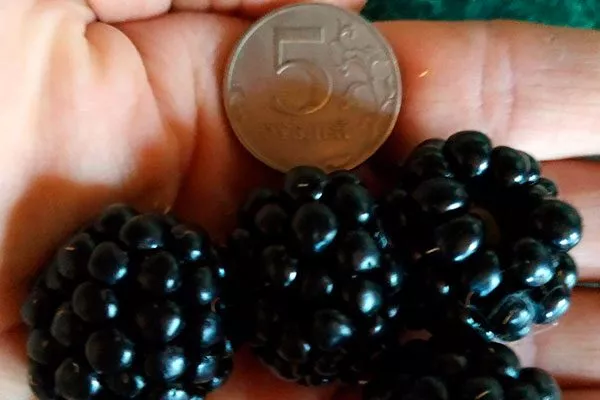
The Navaho variety produces uniform, short-conical fruits. The berries are relatively small, averaging 4-7 g in weight. The small size of the fruits is more than compensated for by their enormous quantity. One mature bush can produce over 500 berries. The average yield of a blackberry plantation is 9 kg per square meter.
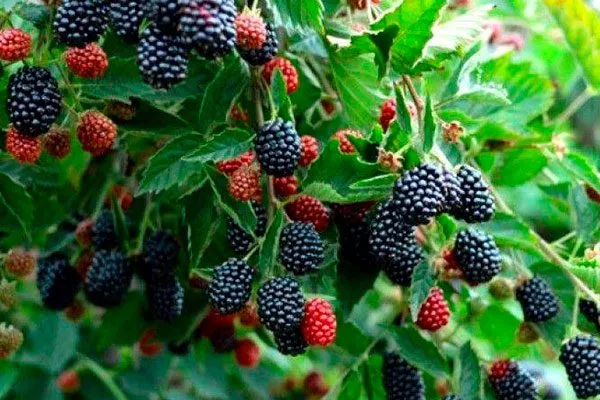
The fruits are dark blue in color and have a glossy surface. Upon reaching biological maturity, they turn a deep black. The flavor is very good, with tasters rating it 4.9 out of 5. Many gardeners even consider the Navajo berry's flavor to be the benchmark.
Characteristics of the Navajo variety
The Navaho blackberry is a late-season variety, considered versatile and suitable for any purpose. Flowering begins in mid-June, and fruiting occurs between August and September. The timing and duration of fruiting largely depend on care, climate, and soil conditions.
The Navaho blackberry is relatively frost-hardy, able to withstand temperatures down to -20°C. It also tolerates drought well, is self-fertile, and has high resistance to diseases and pests.
Pros and cons
Before planting the Navajo variety, it is useful to evaluate all its advantages and disadvantages to understand how suitable it is for the tasks at hand.
Site requirements
This variety is considered easy to care for, but favorable conditions are required for successful growth, development, and fruiting. Choose a moderately lit planting site free from drafts, strong winds, and high groundwater levels, which can cause root rot.
Sites with some shade are suitable for planting. Ideally, the bushes should receive some shade during midday and lunchtime. However, planting in shade is strictly contraindicated, as the berries will be small and slightly tart. Both level and elevated areas are suitable for planting, and areas near fences and buildings are also recommended.
Navajo blackberries grow best in loamy and sandy loam soils. These should be fairly loose, well-drained, and neutral to slightly acidic. If you choose a good site, the blackberry will produce fruit reliably for about 15 years.
- ✓ Soil pH should be between 5.5-6.5 for optimal growth.
- ✓ The soil must have good drainage to avoid water stagnation.
Landing features
The entire subsequent life of the blackberry, its health and yield depend on how correctly the planting is carried out.
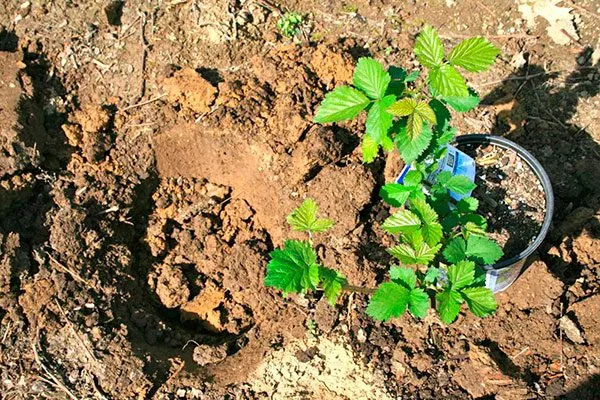
Landing features:
- Planting is best done in spring, and in northern regions even in early summer. Fall planting is not recommended due to the high risk of freezing of young seedlings, which do not tolerate prolonged and severe frosts.
- Select one-year-old seedlings with well-developed roots, no damage, or signs of disease. They should have several strong shoots with rich green (not faded) leaves.
- The plot is prepared in the fall or spring, dug over and fertilized with organic matter (compost, rotted manure) and mineral fertilizers. A couple of weeks before planting, the plot is leveled with a rake and holes are dug approximately 60 cm deep and wide. Spaces of at least 1.5-2 meters are left between adjacent holes.
- Add approximately 10 liters of compost and 500 ml of ash to the planting hole. Top with fertile soil to prevent the roots from coming into contact with the fertilizer.
- Before planting, seedlings are prepared by immersing their roots in a solution of Kornevin or another root formation stimulator.
- Before planting, fill the holes with warm, settled water. Once the water has been absorbed, place the seedling in the hole, spread its roots, and cover them with soil up to the growth bud.
- The seedling shoots are trimmed with pruning shears, leaving no more than 2-3 buds on each. The area around the trunk is covered with straw, peat, sawdust, freshly cut grass, etc.
- Sturdy supports are installed near the planted blackberries, to which the branches are then tied. Alternatively, wire is stretched between two supports to create a trellis.
- Soak the roots of the seedlings in water for 2-3 hours before planting to restore moisture.
- Trim damaged roots back to healthy tissue.
Caring for Navajo Blackberries
Caring for Navaho blackberries is simple. If done correctly, the bushes will produce fruit consistently starting in the fourth year.
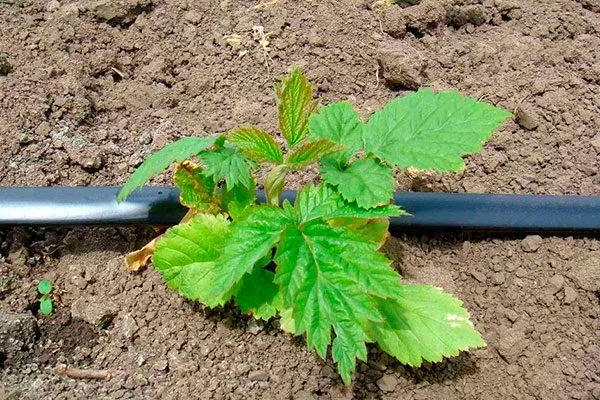
Care tips:
- After planting, seedlings are watered fairly frequently to help them establish quickly. Watering is also important during flowering, fruit formation, and active growth. It's advisable to set up a drip irrigation system in the area.
- After each watering, when the soil in the tree trunk circles dries out a little, shallow loosening, weeding, and then mulching are carried out.
- In early spring, ammonium nitrate and urea are applied to the roots. During the fruit ripening stage, blackberries are fed with potassium-rich fertilizers. Every three years, 30-40 liters of compost are added to the soil under the bush.
- Blackberry bushes are prepared for winter in the standard way: they are sprayed, pruned, fertilized, and then the root zone is covered with humus or other suitable material. The shoots are removed from the trellises, tied, and bent to the ground. They are then covered with a covering material: spunbond, spruce branches, or any other material. In winter, the coverings are covered with snow.
- Navajo blackberries have excellent immunity, but can be susceptible to damage under a combination of unfavorable factors. The greatest threats to this variety are blackberry and spider mites, as well as fungal diseases such as septoria leaf spot and anthracnose. These are controlled with fungicides.
Features of pruning
Pruning is essential for Navajo blackberries. Already in the second year after planting, the bushes develop numerous shoots that need to be trimmed back. At the end of spring, shoots longer than 1 m are shortened by 10-15 cm to prevent sideways growth and maintain a compact bush.
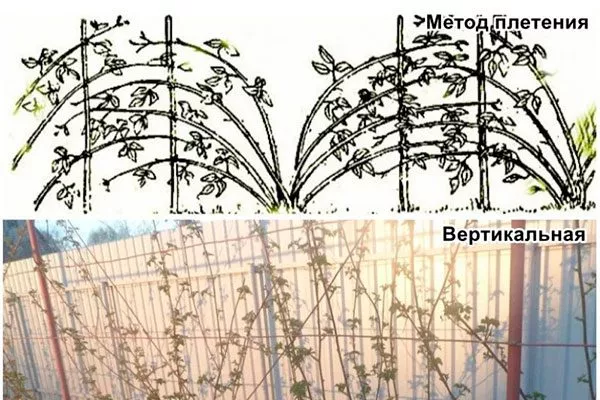
Repeat pruning is carried out in the fall, after fruiting has ended. Branches where berries were ripening are completely pruned, and new shoots are only slightly shortened.
Crown shaping and sanitary pruning can be done, in principle, at any time—spring, summer, or fall. The main thing is to follow the pruning technique, otherwise you risk losing your entire harvest.
Harvesting
Berries are picked as they ripen. You can distinguish ripe from unripe berries not only by color but also by their ability to be pulled off. If a berry pulls easily from the branches, it's ready for picking. If you notice resistance, don't pick the berry; it's not ripe yet.
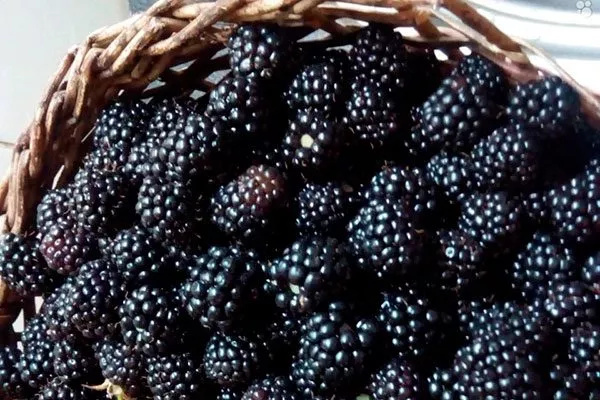
The berries are harvested in dry weather. They are placed in breathable containers. They are stored unwashed. Navajo blackberries retain their marketable appearance and flavor for up to 5 days.
Application
Navajo berries are suitable for all purposes—they can be eaten fresh, preserved, or frozen. They can also be used to make fillings for baked goods, compotes, kissels, jellies, jams, preserves, various desserts, and homemade preserves.
Reviews
The American Navaho blackberry is very popular among our gardeners due to its low maintenance and high yield. The only thing worth noting is its limited frost resistance, which necessitates winter protection.