
In Russia and neighboring countries, blackberry crops were considered exotic just a few decades ago, so few people understand the intricacies of growing them, much less the variety of varieties. Among them is the Natchez blackberry, which is in high demand abroad among both consumers and farmers and gardeners.
History of the Natchez variety
The variety was first developed in 1998. American agronomists worked on the selection, crossing Ark. 1857 with Ark. 2005. Only three years later did the first decent harvest occur. But the breeders didn't stop there – they selected the best seedlings and conducted trials until 2007.
As a result, the patent was granted to John Clark of Arkansas. At the time of patenting, the variety was given the name Black Natchez.
Description of the variety
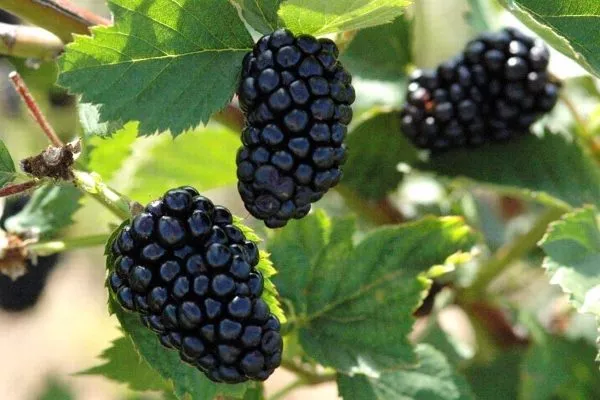
Natchez differs from most blackberry varieties in that it lacks thorns, making harvesting twice as easy and quick. It's a semi-creeping, everbearing variety—the shoots are erect at the beginning of the growing season, later becoming drooping.
Characteristics of the shrub and fruits
The bush grows quickly—in the first season after planting, its shoots reach 3-4 meters in length. As it matures, the growth rate increases even more, with each shoot forming numerous lateral branches. These branches are destined for the formation of ovaries and berries.
If a branch breaks, immediately treat the broken area with garden pitch or another antiseptic. Otherwise, diseases will develop inside, and insects will enter the cracks.
Characteristics of the Black Natchez blackberry variety:
- Bush. It is considered a vigorous and very spreading plant. The vines are thick and long (up to 7 m, and even more in very favorable conditions). The leaves on the shrub are oval-ovate, with pointed tips and finely serrated edges.
The leaflets have a terry surface, creating a decorative appearance. The color is light green with an emerald tint. - Root system. It's also powerful and robust, spreading, with numerous root shoots. A distinctive feature is that the roots correspond to the size of the crown; the more green mass grows, the more extensive the root growth.
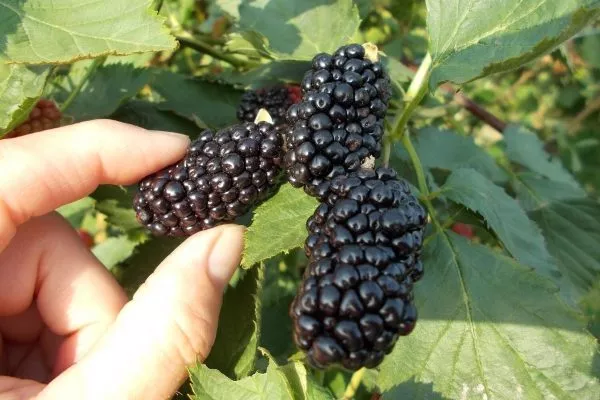
- Fruit. They are distinguished by their attractive appearance – the berries are smooth, with a shiny surface and identical drupes. The shape is slightly elongated and cylindrical. Other characteristics:
- the weight of one fruit is 7-25 g;
- length – from 3.7 to 4 cm;
- the stalk is firmly attached, so when the berry is torn off, it does not burst and the juice does not leak out;
- color - black at full maturity, reddish at the beginning of development;
- One branch contains from 10 to 30 berries, depending on the age of the plant and growing conditions;
- drupe type – small;
- fruit density – average;
- juiciness – high;
- transportability – good.
- Taste indicators. The tasting score on a 5-point scale among foreign experts reaches 4.6, while among domestic gardeners it's only 4.3. This score depends largely on growing conditions, so the question remains open.
The flavor is sweet, with a slight, but barely noticeable, tartness. According to connoisseurs, the berries from the first seasonal harvest have a delicate coffee flavor.
Flowering period and ripening time
This thornless blackberry is an early-ripening variety, blooming after May 10th in warmer climates, later that month in the central part of the country, and early June in harsher climates. The flowers are a pure white, with 5 to 6 petals.
The berries ripen in about a month, so in the South you can enjoy the fruits as early as mid-June, and in the North after July 10.
Yield indicators, fruiting periods
Natchez bears fruit for a long time—30-40 days—with ovaries forming on the previous year's shoots. Over the course of a year, these shoots are fully saturated with nutrients, so they can support a large number of berries.
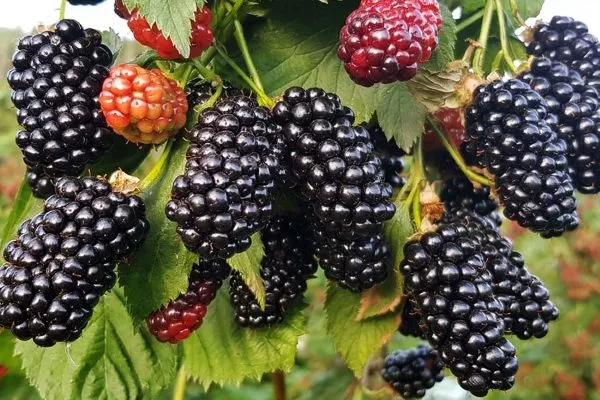
Black Natchez has a high yield – a single healthy bush can yield 15 to 20 kg of fruit per season. Keep in mind that a large number of berries requires a two-year cycle, meaning young shoots must be pruned during fruiting. This is because replacement shoots develop too slowly, necessitating rejuvenation of the bush.
Application of berries
The increased sweetness and juiciness of Natchez berries allows them to be used for preserving juices and compotes without adding sugar. However, making jams and preserves is not recommended, as they will be overly sweet. If the harvest is abundant, you can make a mixed jam by adding any tart berry to the blackberries.
Growing regions
The optimal conditions for growing the Black Natchez variety are a warm climate. The highest yields are observed in southern Russia. However, it's important to provide light shelter during periods of intense sun exposure, otherwise both the berries and the foliage will be burned.
Blackberries grow quite easily in moderate climates (Middle Belt, Central part), but the main thing here is to choose the right site and strictly adhere to agricultural technology.
Today, Natchez is grown in harsh conditions. It's best grown in greenhouses, but open beds are also acceptable. However, in this case, the bushes will need to be carefully covered for the winter.
Frost and drought resistance
Black Natchez tolerates drought well, provided temperatures don't exceed 30-35 degrees Celsius. If temperatures are higher, shade and frequent watering are necessary.
Blackberries have average frost resistance; they can easily tolerate temperatures down to -14-15 degrees Celsius. Frost is especially dangerous for flower buds.
Advantages and disadvantages of the variety
Natchez has excellent characteristics in many respects, but gardeners and experts particularly highlight the following strengths and weaknesses of the variety:
Landing
Planting always begins with preparing the site, soil, planting hole, and the seedling itself. Every detail is crucial, as the bush's survival and future yield depend on it. If done correctly, you can harvest delicious, juicy berries the following season.
- ✓ Soil pH should be between 5.5-6.5 for optimal nutrient absorption.
- ✓ The distance between bushes should be at least 2.5 m to prevent thickening and ensure good ventilation.
How to choose a suitable location and what are the soil requirements?
Black Natchez is considered a heat-loving crop, preferring plenty of light. The site should be in an open area with ample sunlight. The only exception is the south—in this case, the crop should be planted so that it doesn't receive direct sunlight between 11 a.m. and 3 p.m.
Other parameters for choosing a location:
- Gusty winds and drafts are unacceptable. This is largely due to the brittleness of the shoots, which can crack under the influence of such natural phenomena.
- The soil should be well-drained, loose, and fertile. It should also be low in acidity. Sandy loam and loamy soil are ideal.
- The groundwater table is low (at least 1.5-2 m from the ground surface), since the Natchez root system does not tolerate excessive moisture – it will begin to rot.
- The soil should be calcified, so dolomite flour and eggshells are added to the beds. Along with enriching the soil with calcium, it also reduces acidity. Experts also recommend adding red peat for the same purpose.
- Undesirable neighbors include crops such as strawberries, raspberries and other varieties of blackberries, and members of the nightshade family.
Planting dates
It's generally accepted that Natchez is best planted in the spring, but this only applies to the Central Russian region, Siberia, and the Urals. In other regions, spring is also acceptable. Specific planting timing considerations:
- Spring. The temperature should be stable, ranging from 5 to 7 degrees Celsius. Recurrent frosts are undesirable, as young plants cannot withstand them. The optimal month is April (early April in the South, late April in the North).
Keep in mind that the buds should not swell yet. - Autumn. It takes about 2.5 months for the root system to establish itself. Therefore, autumn planting is done precisely this period before frost, or 1.5 months before the first frost.
Selecting and preparing a seedling
Regardless of whether the planting material is purchased or taken from your own garden, it must meet the following requirements:
- Quality – shoots and root system are strong, without damage or signs of disease. Check the freshness and vitality of the branches and roots.
- Age – 1 or 2 years, but not older.
- The root system can be either open or closed. In the first case, the roots can be seen, but they may be slightly dry at the edges. In the second case, the root ball should be fresh (without unpleasant odors) and moderately moist.
- Soak the roots of the seedling in water for 12 hours before planting to restore turgor.
- Treat the roots with a rooting stimulator according to the manufacturer's instructions.
- Trim damaged and overly long roots back to healthy tissue.
It's easy to check the quality of shoots: try bending a branch. It should be pliable when young.
Pre-planting treatment includes the following options:
- if the roots are exposed, you can soak them in regular water for a day or use a preparation like Kornevin (a root formation stimulator);
- when the roots are closed, light moistening of the soil ball is required (you can use water or a stimulant).
Preparing the beds and planting holes
The site and the planting hole itself are prepared 2-3 weeks before planting the seedling. This is necessary to allow the soil to absorb nutrients.
Sequence of work:
- Clear the beds of any debris, leaves, and branches.
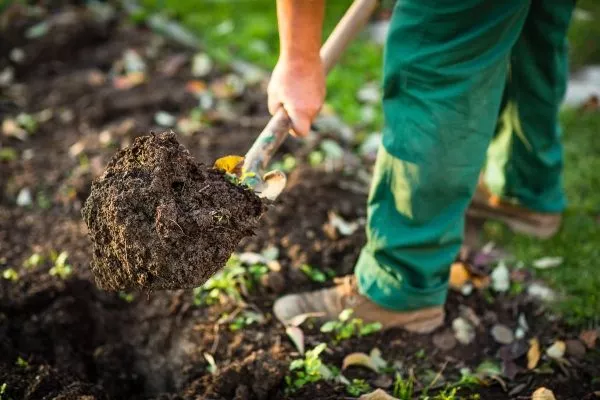
- Dig up the garden to the depth of a spade, simultaneously removing any remaining roots of previous crops and weeds from the soil.
- Level the surface with a rake.
- Dig planting holes according to the chosen pattern. Each hole should be 55-60 cm deep and 50 cm in diameter.
- First lay drainage consisting of broken brick, crushed stone or pieces of slate, then cover the soil mixture with agrofibre.
What to fill the planting hole with:
- turf soil and humus – 8-10 kg each;
- potassium salt – 100-120 g;
- superphosphate – 200-230 g.
If necessary, add 200 g of wood ash, 100 g of broken eggshells or 200 g of high-moor peat.
Rules for planting blackberry seedlings
It's important to adhere to a specific planting pattern when planting blackberries, as overcrowding of Black Natchez bushes can lead to significant yield reductions. Options:
- the optimal parameters between bushes are from 2.5 to 3 m;
- dense planting – 2 m (but you will have to limit the shoots and intensively “feed” the plant).
Landing is carried out as follows:
- Remove the agrofibre from the hole and thoroughly mix the substrate inside.
- Add topsoil. If the root system is open, form a mound; if it's closed, make a slight depression.
- Place the seedling on top of the mound, carefully spreading the roots out to the sides (or insert it into the hole along with the root ball).
- Cover with potting soil. Lightly compact the soil, patting it on the surface to prevent air pockets. Keep in mind that the growing point should be no more than 3 cm deep.
- Water the hole and add mulch (peat, sawdust, or humus). The layer should be 4-5 cm thick.
- Cut the upper shoots to 30 cm.
Watch the following video to see how gardeners plant blackberries in open ground:
Agrotechnical measures – how to care for the crop
Care is a crucial part of post-planting cultivation. After each watering, be sure to loosen the soil around the plant, mulch the root zone, and weed. This will protect against weeds and pests and maintain the desired moisture level. Consider other measures as well.
Watering
Moisturizing should be moderate, so follow these rules:
- one bush requires 30 to 40 liters of settled water;
- before flowering and after the berries have ripened, water the bushes once a week; during the formation and filling of berries, water them twice in 7 days;
- Avoid watering during rainy periods, and water every 2-4 days during droughts.
Fertilization
Natchez blackberries require only three fertilizer applications per season. If the soil is very poor, four fertilizer applications may be necessary.
How and when to do this per bush:
- Before the buds open, use organic matter (one of the options):
- 200 g of wood ash and 10 kg of rotted manure;
- 5 kg of compost or humus and 50 g of ammonium nitrate.
- Before flowering begins, use the following:
- bird droppings 1 kg and water 10-15 l;
- mullein 1-1.5 kg and water 10 l.
- After harvesting, 100 g of Superphosphate and 400 g of charcoal are required.
Preparing for winter
Protecting Natchez blackberries for the winter is a bit more difficult than other varieties—you'll need to be careful to avoid breaking the shoots. Here's how:
- Remove the branches from the supports.
- Perform sanitary pruning.
- Press the shoots to the surface of the soil.
- Secure with staples.
- Cover with leaves, straw, or sawdust. If the winter is harsh, cover additionally with agrofibre or plastic film.
Diseases and pests
Black Natchez is characterized by excellent resistance to all diseases and pests, but sometimes (with poor care) rust, anthracnose, septoria leaf spot, aphids, and spider mites are observed. For prevention and treatment, use the following:
- For diseases:
- cleaning up fallen leaves, removing affected branches;
- treatment with Bordeaux mixture solution (1%);
- soil mulching;
- introduction of the drug Oxychom (0.4%).
- Against pests:
- tobacco solution - 200 g of tobacco dust per 10 liters of water (leave for 2 days, dilute in another 10 liters of water);
- any insecticides;
- tobacco-soap mixture – a solution of tobacco dust (20 l), carbolic or brown laundry soap (100 g).
Trimming
According to pruning rulesUnnecessary shoots are removed only when the plant is dormant. This occurs in two periods: early spring and late fall (when the bush has not yet awakened and is beginning to fall asleep).
In addition to pruning, shaping and tying are also performed. Key steps:
- Thinning and rejuvenating pruning. It's necessary to prune branches that are growing in the wrong direction or that are overly dense. It's important to leave 6 to 8 healthy shoots. On secondary lateral shoots, the tips are shortened to a maximum of 30 cm.
- Sanitary pruning. This is also done twice a year. Branches damaged by disease and pests are removed.
- Formation. This is done once every 2 or 3 years. All shoots are cut back except for the 8 healthiest and strongest ones. Additionally, the plant is pinched at a height of about 120-150 cm.
- Garter. This is done every spring after removing the cover. This will strengthen the bush, prevent breakage, and facilitate harvesting. A trellis method is used for staking: supports are installed at a height of about 2 m, with three tiers of taut twine or wire.
For more detailed information, please watch the video:
Reproduction - main methods
Natchez blackberries can be propagated in a variety of ways. The most effective and simple are:
- By apical shoots. This method, called pulsing, is considered the best for Black Natchez. To do this, the apical shoots are cut off—they should be 10 to 15 cm long. The underside of the cuttings are then soaked in water or a rooting stimulant.
Next, place the cuttings in pots filled with fertile soil (Universal Garden) at a depth of 5 cm. Be sure to leave at least 3 nodes at the top. This work is carried out in the fall, and the shoots are planted in the ground in the spring. - Root cuttings. To do this, dig up the cuttings with their roots in the fall, place them in a container filled with wet sand, and leave them until spring. Transplant them into the garden beds after three leaves have formed and they are fully rooted.
- By layering. In spring, make small cuts on the undersides of the lateral shoots to facilitate pressing them into the soil. Then, spread the vines out over the soil and cover them with 10 cm of moistened soil. By the end of summer, roots and aboveground growth should have formed at the bud sites.
Cut off the rooted parts with pruning shears and plant in a permanent location.
Another unique method is using root cuttings. For proper propagation, watch the video:
Harvesting and storage
If the berries are for immediate consumption, pick them without the stems. If you're picking them for canning, it doesn't matter how you harvest them. But if you need to transport them long distances, it's best to pick the berries with the stems on.
Natchez cheese can be stored for about 1 week, preserving all its taste and appearance, provided it is placed in the refrigerator.
Reviews of the variety
The Black Natchez blackberry variety is characterized by high yields, moderate frost and drought resistance, and early ripening. Its care requires little effort and skill, making it a successful variety even for beginners.