
The Karaka Black blackberry is characterized by large berries, high yields, excellent transportability, and shelf life. However, to achieve positive results, special attention to care will be required, as this variety is considered delicate. It is also susceptible to frost.
History of selection
The Karaka Black variety is often presented as a newcomer to our market, but its development began in New Zealand back in 1982. Karaka Black is a complex hybrid, a cross between blackberries and raspberries, with the parent varieties being Aurora, developed in Oregon, and Comanche, created in Arkansas.
Harvey Hall, a researcher at New Zealand's Hort Research Station, first isolated several promising hybrid seedlings by crossing the aforementioned crops. He then combined genes from the largest-fruited specimen with dense, firm fruit. The result was the Karaka Black blackberry variety, registered in 2003.
Description of berry crops
Karaka Black is a compact sundew, reaching up to 200 cm in height. Its stems range from 300 to 500 cm in length. The stems are flexible and bendable, so they droop toward the ground, resulting in a much shorter bush.
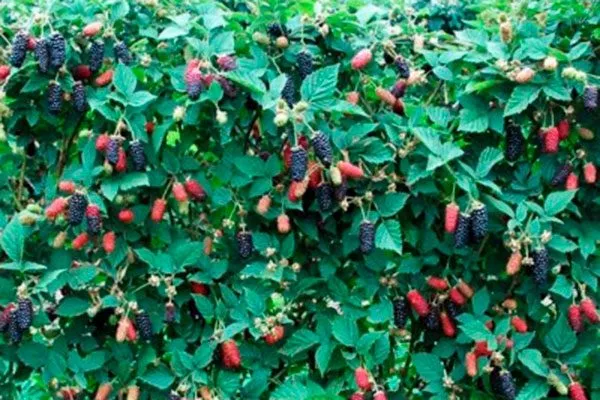
Other characteristic features:
- crown – spreading;
- arrangement of branches – horizontal;
- shoots – have strong shortened internodes and many very sharp spines;
- brittleness of stems – absent;
- shoot formation – at an average level;
- the number of fruits on numerous fruit shoots – at a young age no more than 3 pieces, at an older age about 5-6;
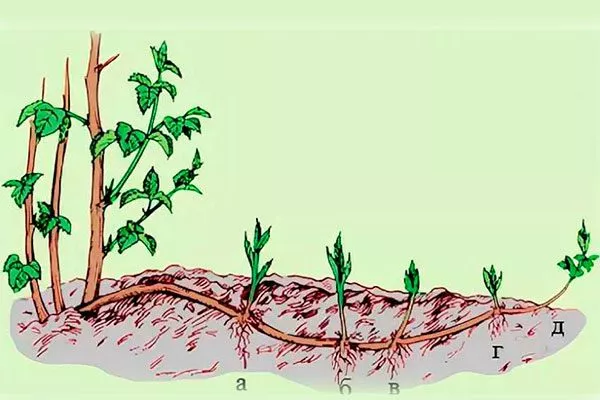
- root system – powerful and developed, but rarely produces shoots (and to increase their number, it is enough to damage the root shoots with a shovel);
- leaves - three- or five-toothed blades;
- fruiting – is noted only on last year's growth.
Berries
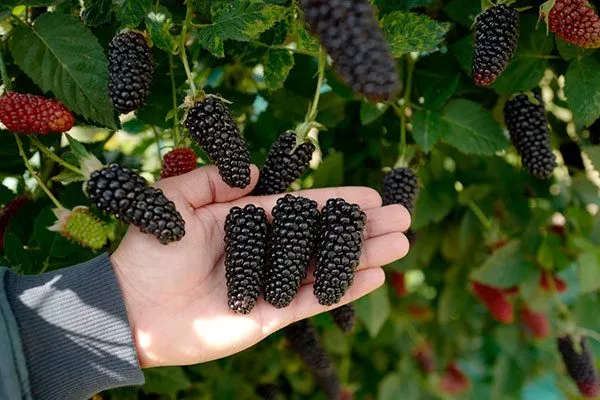
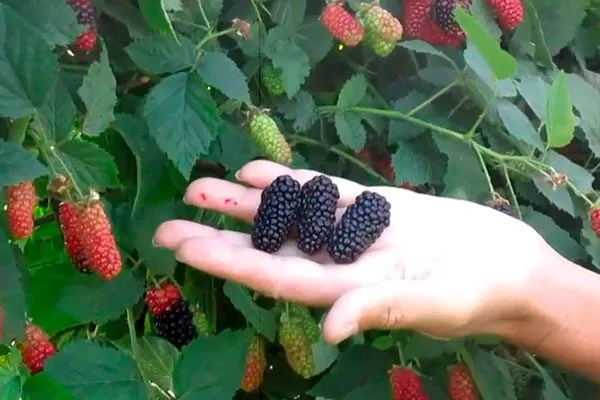
The fruits are quite large and beautiful, of an unusual uniform shape:
- weight of one berry – varies from 10 to 16-18 g, depending on the age of the bush;
- length - about 5 cm;
- form - cylindrical, elongated, more similar to mulberry fruits, but the top is usually slightly pointed;
- color - black, but under the open rays of the sun a dark purple tint is visible;
- surface – glossy;
- pulp – compacted, juicy when crushed;
- taste - It is mostly sweet, but there is also a slightly noticeable sourness; based on the tasting score, the variety was awarded 4.5 points.
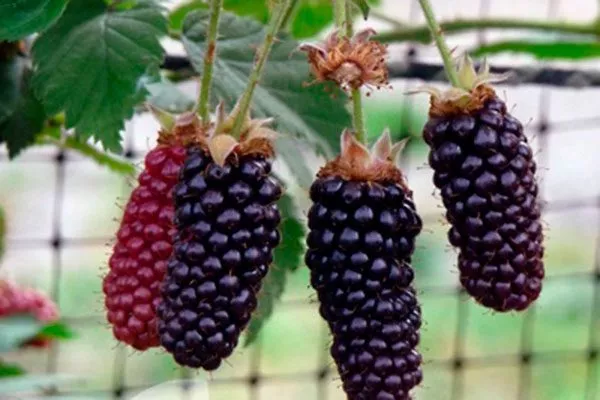
It is easy to determine the full ripeness of berries: when unripe they are reddish, when technically ripe they are purple, and when biologically ripe they are black.
Characteristic
This variety is highly decorative, from early spring to late autumn, and is therefore often used by landscape designers to brighten up dull garden plots.
Flowering period and time of fruit ripening
In southern regions, Karaka Black begins flowering in early May, while in the north, it begins a few weeks later. This variety is characterized by a wave-like fruiting process, with the upper buds blooming first, and then the process spreading downwards to the remaining branches.
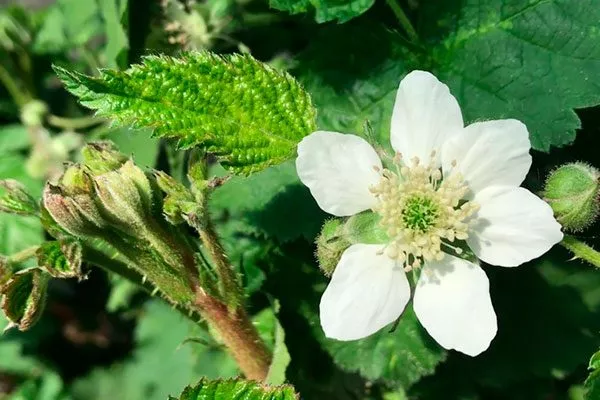
Karaka Black is one of the first blackberries to ripen: in the south, the first harvest begins between June 10th and June 10th, and in the central part of the country, it begins around the same time in July. The fruiting period lasts 1.5-2 months, which is considered a long one.
Yield indicators, fruiting periods
Karaka Black is a highly productive variety – a mature bush can produce an average of 9-13 kg of fruit, and under optimal agronomic conditions, up to 15-16 kg. Up to 13-15 tons can be harvested per hectare, while in New Zealand, this figure can reach up to 25 tons per hectare, but with active fertilizing and proper care.
The long fruiting period, which can last up to two months, may not always be convenient for large agricultural enterprises, but the early ripening of the berries provides the opportunity to sell them at attractive prices.
For small farms, this fruiting regime is convenient – they can enjoy freshly picked berries for a longer period of time.
Application of berries
The berries are versatile in their uses: they are suitable for fresh consumption, freezing for subsequent winter use, making wine, juices and jams.
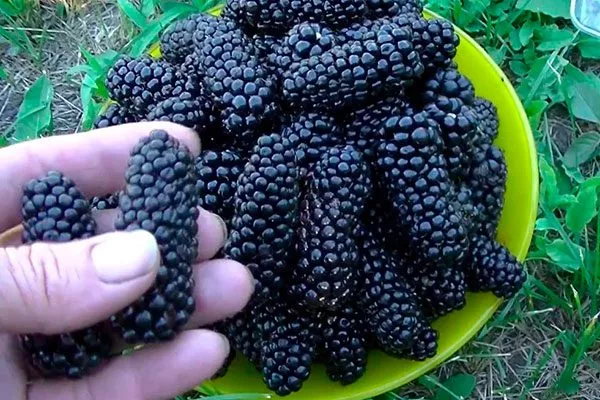
At the technical maturity stage, Karaka Black fruits tolerate transportation well, have a long shelf life and can be effectively sold in markets and supermarkets.
Winter hardiness, drought tolerance
This variety is characterized by insufficient tolerance to low temperatures, requiring additional measures to prepare the bush for winter. When temperatures drop to -15 degrees Celsius or below, shoots and flower buds are susceptible to freezing and are unable to recover in the spring. Even in regions with relatively warm climates, the plant requires protective cover during the winter.
The variety also doesn't tolerate dry periods well; it requires regular and generous watering during prolonged hot periods. Furthermore, extreme heat can negatively affect the fruit's flavor.
Advantages and disadvantages
The advantages of the Karaka Black variety for cultivation in private households and small farms are the following:
However, there are also disadvantages:
Methods of reproduction
The variety is universal in propagation, because almost all available methods are used:
- Pulsing. This is called rooting the tips of shoots. To do this, pots filled with nutritious soil are placed between rows of plants. The slanted tips of the stems are placed in the pots and pressed into the soil, after which the soil is watered generously. After three weeks, the rooted shoot is separated from the mother plant and transplanted to its permanent location.

- Cuttings. In the fall, lignified cuttings 14-17 cm long are taken from one-year-old shoots for propagation. The cuttings are soaked for 2 hours in a 0.02% heteroauxin solution and then planted in loose, moist soil. Cover the cuttings with plastic to create a greenhouse effect. It is important to regularly ventilate the cover and maintain constant soil moisture.
The film is removed after the cuttings have rooted. The ideal time for collecting green cuttings is late July. At this time, the tips of young shoots, 10-12 cm long, are cut, placed in containers or pots, and covered to allow them to root. After this, the cuttings are ready for replanting.
- Young growth. New growth is produced in small quantities, making propagation by this method difficult. The most developed elements of the young shoots are selected, carefully dug up, and cut out, along with the underground portion. This material is then transferred to a new location and dug in. Care is similar to other vegetative propagation methods.
- By layering. The second half of August is the ideal time for layering. At this point, dig a trench 2-25 cm deep and lay the shoot, leaving its tip exposed. Then, trim the tip by 10 cm to stop growth and promote rooting. Fill the trench with soil, water, and mulch.
After two months, roots form on the cuttings, after which the new seedlings are separated and replanted.
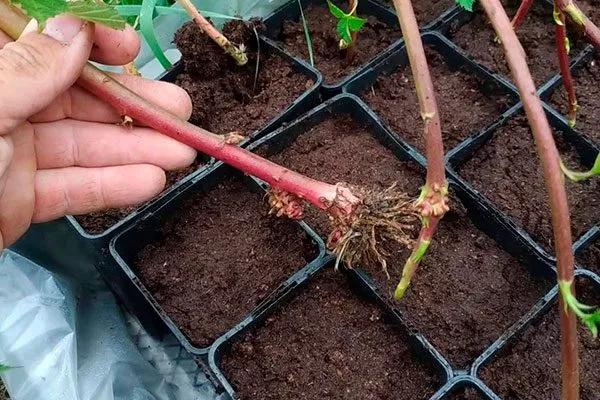
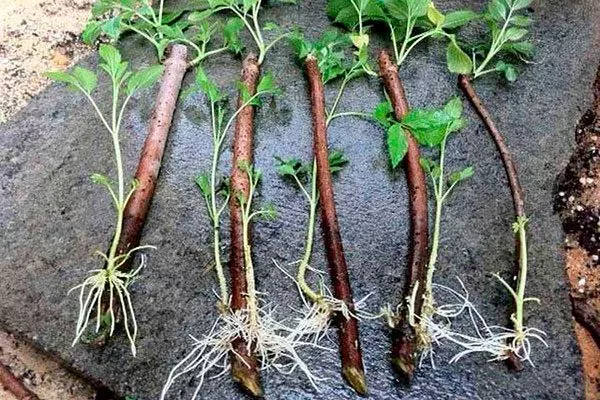
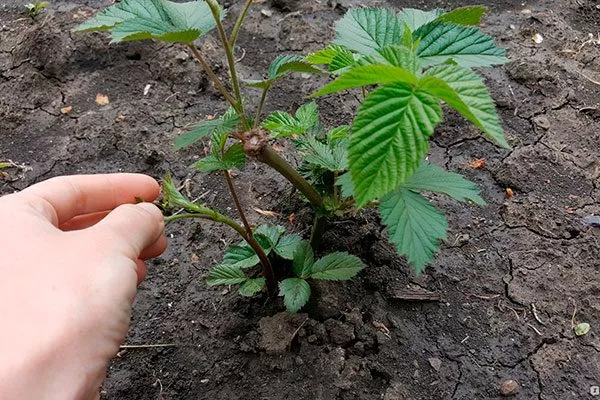
- ✓ Optimum soil temperature for rooting: 18-22°C.
- ✓ Required air humidity under cover: 85-90%.
Landing rules
Plant yield is determined by many factors, including location and the quality of the planting material. Seedlings purchased from a nursery and kept in containers can be planted in open ground throughout the planting season. To facilitate better adaptation, plants should be transplanted with the root ball still attached.
Bare root material should be planted at a specific time:
- For regions with a temperate climate, it is recommended to plant in early spring, before the growing season begins, so that the root system has time to strengthen before the onset of winter.
Autumn planting does not guarantee success, as young plants may not take root firmly enough before the first frost. - In southern regions, autumn planting is possible, but it must be done several months before the onset of frost.
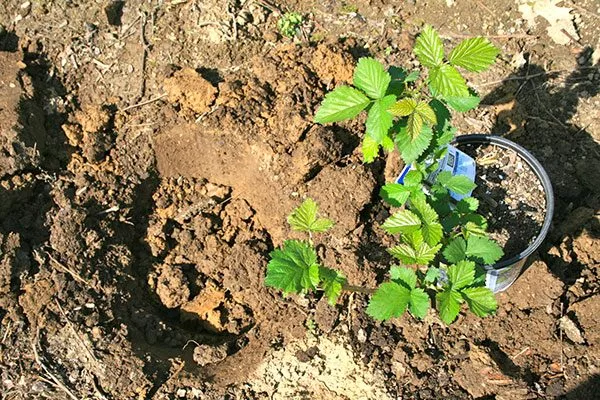
Blackberries require plenty of sunlight, which affects the flavor and color of the berries. Some shade is acceptable, but keep in mind that it reduces the number of berries set. Other important planting considerations:
- The ideal soil for blackberries is loam with a slightly acidic or neutral pH. The presence of horsetail or sorrel in the area indicates acidic soil, which can be neutralized by adding lime at a rate of 450-550 g per square meter.
When planting in sandy soil, regular fertilization and watering are necessary. Growing blackberries in low-lying areas is not recommended due to the high risk of fungal diseases. - Prepare the planting site two weeks before the intended planting date. It is recommended to dig the soil, remove weeds, and dig a 45x45 cm planting hole.
- When planting plants, it is necessary to leave a distance of 100 to 150 cm between them.
- The following components are added to the bottom of the planting hole:
- 1.5-2.5 kg of humus;
- 80-120 g Superphosphate;
- 35-45 g of potassium salt or 100-120 g of crushed charcoal.
Subsequent care of the culture
Caring for the Karaka Black blackberry requires special attention to watering. It should be regular and abundant, which is especially important during the ripening period. Soil moisture should be monitored, avoiding both dryness and overwatering.
Other events:
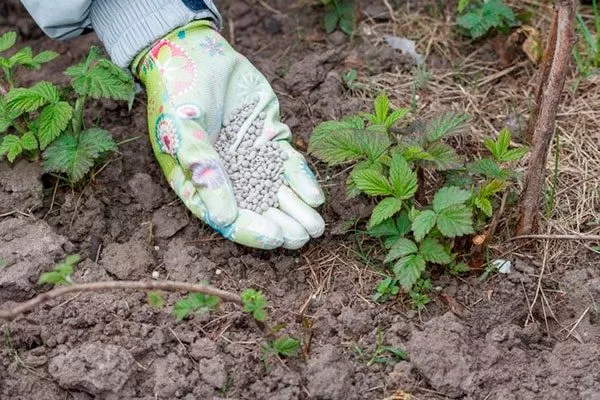
- Top dressing. Nitrogen-containing fertilizers are applied in the spring. Complex fertilizers are beneficial during flowering, and foliar feeding, including chelated forms of elements, is recommended during the berry-filling stage. After harvesting, mixtures containing monopotassium phosphate should be used.
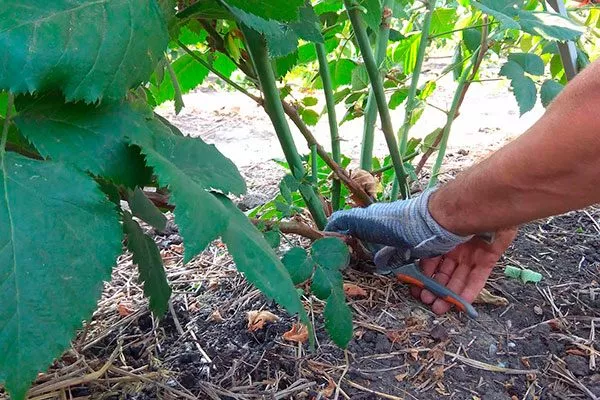
- Trimming procedure. This is a critical element of care: after fruiting has finished, it is advisable to perform sanitary pruning, removing old and diseased shoots. For rejuvenation, it is optimal to leave about 6-8 strong main shoots, without pinching side shoots.
It is recommended to test different pruning methods, including shortening some canes while leaving others to grow freely, to determine the most suitable pruning method for specific garden conditions.
Harvesting
The berries are harvested over a long period, but for processing they must reach biological maturity (turn black). If long-distance transportation is required, the fruit color should be dark purple. This is due to the variety's tendency not only to drop but also to soften and lose flavor.
- ✓ The berries are easily separated from the stem without any effort.
- ✓ The appearance of a characteristic shine on the surface of the berries.
Preparing for winter
The Karaka Black variety's shoots bend easily, making it easy to cover for the winter. It's important to pin the branches to the ground correctly and cover them with insulating material. The choice of insulation depends on the region's climate—colder climates require more thorough insulation.
Treatment against diseases and pests
It is resistant to most diseases and pests, although moderately susceptible to anthracnose and gray mold. To avoid problems, avoid planting raspberries, nightshades, and strawberries nearby, and treat blackberry bushes with copper-based preparations in the spring and fall.
Reviews
The Karaka Black variety is widely grown in England and other European countries, both commercially in open ground and under plastic covers. This variety is relatively new to Russia. Small farmers and gardening enthusiasts have already appreciated its qualities, despite its thorns.