
The Guy blackberry is considered a relatively new and promising variety. It has many advantages, but there are also a number of requirements that cannot be ignored. If grown correctly, this blackberry will delight its owners with excellent harvests every year.
History of creation
The Gai variety was developed by Polish breeder Jan Dajnek after 30 years of work. The work was conducted at the Brzezina experimental station. The variety was first introduced to the market in 2006, and began to be sold in large quantities in 2008.
Description of the plant
The 'Guy' blackberry bush grows upright and compact. This subshrub with branched, semi-prostrate stems reaches a height of 3.5 m. Its massive shoots are completely thornless, and the foliage is medium. The leaves are small, light green, with serrated edges and a moderately wrinkled surface.
Description of fruits
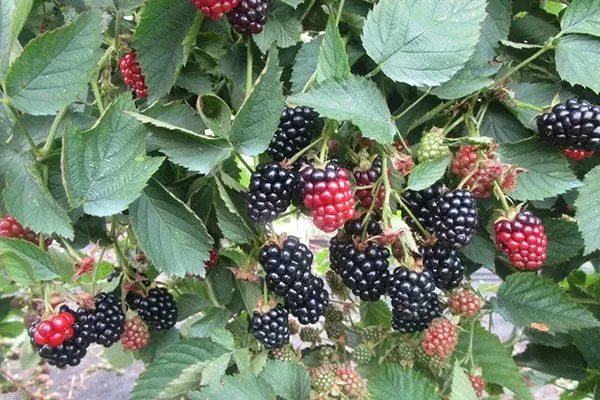
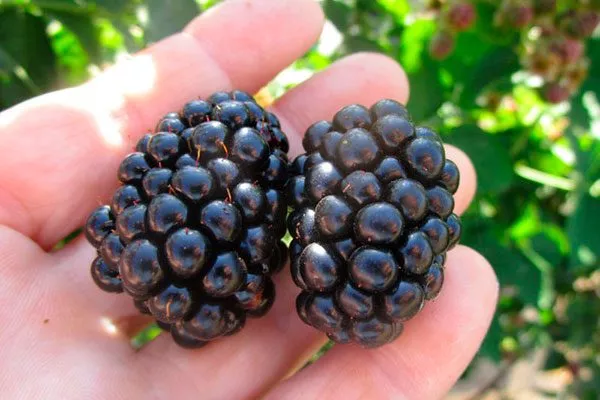
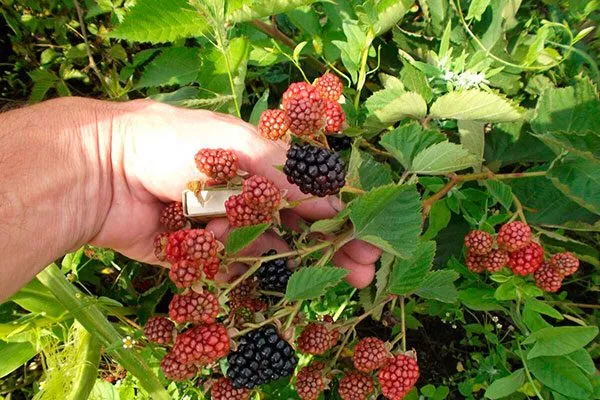
The fruits are oval, glossy, and black. Average weight is 6-7 g, but specimens up to 16 g can be found. The shape is oval. The fruits are large, moderately firm, attractive, and have juicy flesh.
Taste and application
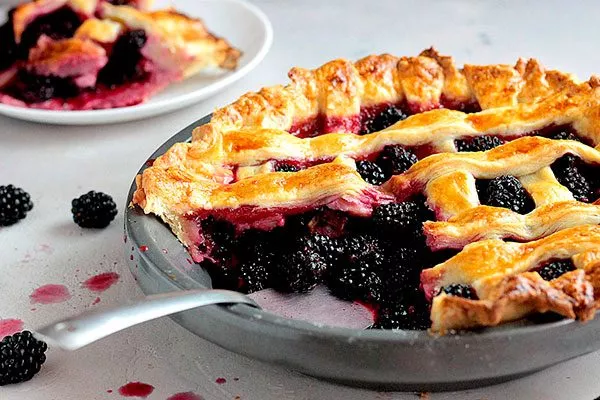
The Guy blackberry has a sweet, mulberry-like flavor with virtually no acidity. The fruit is rich in magnesium and iron. They are eaten fresh, frozen, used in various winter dishes, fillings, and desserts.
Productivity
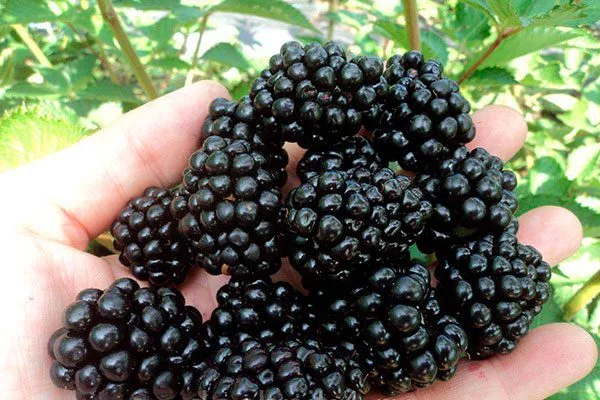
This variety is characterized by high yields. Thanks to its varietal characteristics and proper care, a single bush can yield 17-20 kg of berries. These yields are among the highest for this crop.
Climate resistance
The Gai variety is characterized by moderate frost and drought resistance. The bushes can withstand temperatures down to -30°C. Given the severity of Russian winters, even in temperate climates, insulating the bushes is recommended, and this is especially necessary in the Urals and Siberia.
Ripening time
The Gaj blackberry is a mid-season variety. Flowering and fruiting depend on the region's climate. In temperate climates, the first berries ripen in July and last until August. In more northern latitudes, the fruiting period extends from August to September.
Pros and cons
Before planting the Gai honeysuckle in your garden, it's helpful to familiarize yourself not only with its advantages but also its disadvantages. This variety may not be suitable for certain reasons, and you'll need to find another option.
Landing features
Growing blackberries will be successful if you consider all the characteristics of the crop in general and the Guy variety in particular. First and foremost, it's important to plant this crop correctly so that it not only thrives but also doesn't interfere with neighboring plants.
- ✓ The optimal soil acidity should be strictly 6 pH, deviations of even 0.5 can significantly reduce yield.
- ✓ Soil drainage should ensure that water does not stagnate for more than 2 hours after watering.
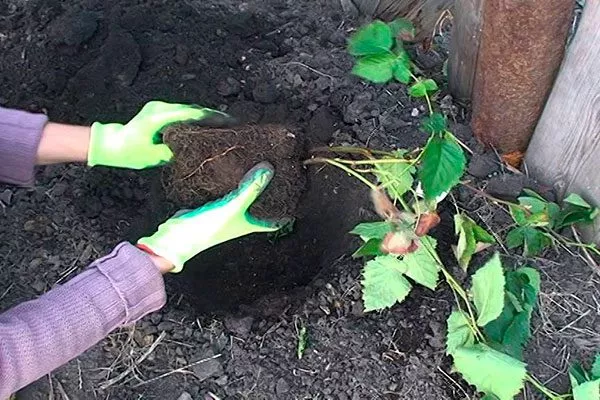
Features of planting blackberries Guy:
- Gaj blackberries are planted in sunny, well-lit areas, but with some shade during midday and afternoon hours. While more light promotes more flavorful ripening, the plant does not tolerate scorching sunlight, so it's important to strike a balance.
- Planting usually occurs in the spring, from late April to mid-May. In the south, planting occurs earlier, in March or April.
- Any soil is suitable for growing; the variety is undemanding in this regard, growing in red soils, loamy chestnut soils, and even podzolic mixtures. However, the highest yields are observed in well-drained loams.
Blackberries prefer soils with a moderately alkaline reaction and a pH of 6. Acidic soils are unsuitable and should be deacidified with wood ash. - It's recommended to select one-year-old seedlings for planting. They should have a well-developed rhizome and a formed root bud. They should have two shoots approximately 4-5 mm thick. Seedlings with these characteristics quickly take root and begin to grow.
- Blackberries are planted in holes dug at intervals of 1-1.5 m. The row spacing is 2.5 m. The holes are filled with a nutritious soil mixture, which must be supplemented with potassium fertilizer, superphosphate, and rotted manure.
- If you are planting a part of a bush obtained by dividing the mother plant, add layers of sand, peat and compost into the hole to speed up the rooting process.
- Before covering the roots with soil, it is recommended to pour 10 liters of water into the hole and wait for it to be absorbed.
- A circle is formed around the planted seedling and water is added, not all at once, but gradually. Watering is done with warm, settled water. Once the moisture has been absorbed, the circles around the tree trunks are mulched with sawdust or straw.
If planted correctly, the plant will produce new stems in the second year, which will be much thicker than the old ones. Over the summer and fall, the new growth will become woody.
Care Features
The Guy blackberry, as befits its species, is highly adaptable. The key is to control its growth. If the bushes aren't trained, they grow too quickly and bear fruit poorly, losing their yield. Furthermore, uncontrolled blackberry growth interferes with neighboring plants, choking out raspberries and currants, and ultimately outcompetes them for space.
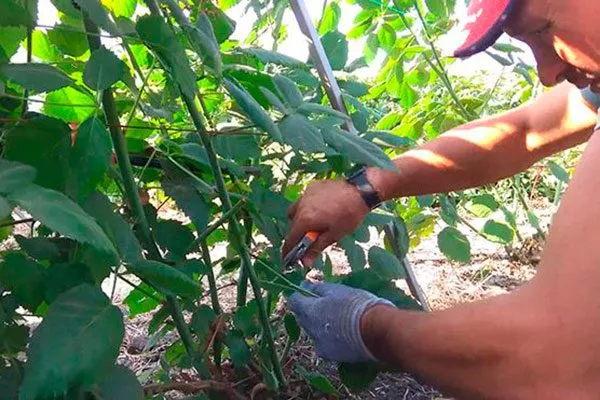
How to care for the Guy blackberry:
- During the growing season, potassium and phosphorus compounds are added to the bushes. These promote timely renewal and the growth of new shoots. It is recommended to remove old branches during this period. Manure and urea, which are sources of nitrogen, are also added to the blackberry bushes in the spring.
- Watering should be moderate. Maintain soil moisture at 55%, no more. Overwatering can cause root death. After watering, sprinkle the soil with sawdust or shredded leaves/grass to reduce the frequency of watering by approximately 2-3 times.
- Pruning is carried out annually, in early spring, before the sap begins to flow. Annual branches are shortened to 2 m. Broken, diseased, and frozen branches are removed at the same time.
- In the fall, tree trunks are covered with straw, peat, or humus. In regions with particularly harsh winters, where temperatures drop below critical levels, it is recommended to cover the bushes with spunbond.
Diseases and pests
The variety is characterized by moderate resistance to diseases and pests. In mild climates, the plant is less frequently pruned, increasing its immunity. The bushes are most often affected by rainy and damp weather, typically fungal infections such as powdery mildew, gray mold, purple spot, and anthracnose.
- In early spring, before the buds open, treat the bushes with a 3% solution of Bordeaux mixture.
- After flowering, repeat the treatment with a 1% solution of Bordeaux mixture or another copper-containing preparation.
- In the fall, after harvesting, carry out final treatment to destroy overwintering forms of pests and diseases.
It is recommended to spray bushes with Bordeaux mixture or other copper-containing preparations as a preventative measure. If signs of disease appear, the plants should be treated with appropriate fungicides.
The most dangerous pests for the Gai blackberry are aphids, spider mites, weevils, gall midges, and bud moths. Systemic insecticides are used to control them.
How to propagate?
Blackberries have a small root system, so cuttings are considered the best method of propagation. This is usually done in the fall, after fruiting has ended. Cuttings are taken from stems older than one year.
The cuttings are buried in the soil to a depth of 20 cm. In the spring, the seedlings are dug up and transplanted to their permanent location. To speed up the establishment and adaptation of the plants, they are watered regularly.
Harvesting
The berries ripen gradually and can be picked daily for 6-8 weeks. The harvested berries are eaten fresh or added to curds and yogurts. The fruits are picked based not only on color but also on the texture of the flesh—ripe berries are soft and easily separated from the branches.
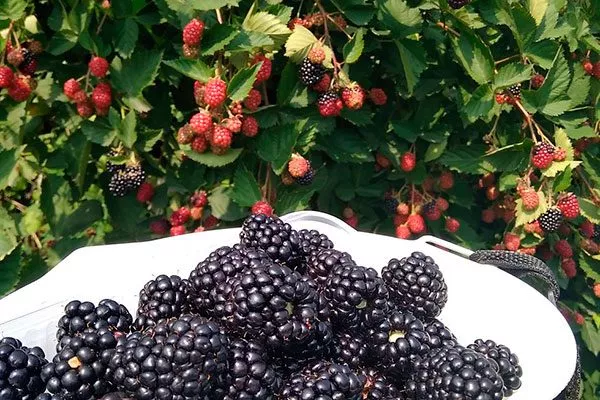
If you have a plentiful supply of berries, they can be used to make preserves—jams, compotes, and jams. Blackberries are also used to make fillings and desserts, ice cream, jellies, and juices. Fresh berries can be frozen. To do this, first spread the berries out on a flat surface, and once frozen, place them in foil bags.
Reviews
The Guy blackberry is an excellent variety, worthy of the attention of even the most discerning blackberry enthusiasts. With proper care, it will delight its owners with bountiful harvests of sweet and delicious berries every year.