
The Darrow blackberry has become very popular among gardeners in our country. It offers numerous advantages, is frost-resistant, and is disease-resistant when properly cared for. With timely care, you can reap abundant harvests of delicious, juicy berries every year.
History of selection
Blackberries are cultivated commercially. The variety was developed in the 1940s by American breeder J. Darrow in Maryland, USA. The aromatic and fleshy berry was the result of crossing two varieties—Eldorado and Henrik.
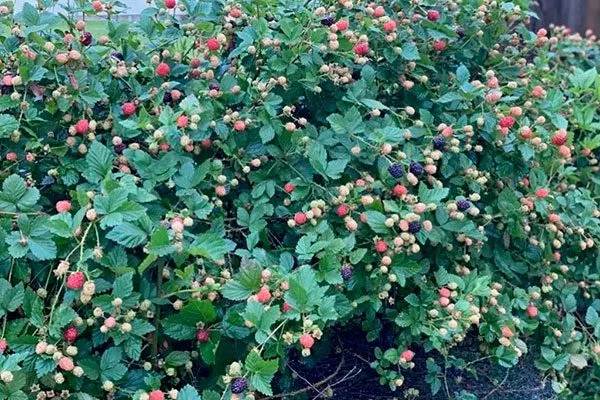
External description of the Darrow blackberry variety
It grows as an upright shrub, reaching up to 3 m in height. Distinguishing qualities:
- Long, climbing branches are covered with pinnate, five-lobed leaves, colored green.
- At the beginning of the flowering period, it delights with white flowers, collected in panicles of 8-12 pieces.
- The fruits have a conical, elongated configuration and become completely black in color after ripening.
- The berries are about 2.5 cm long, and under optimal growing conditions and good agricultural technology, their weight reaches 4 g.
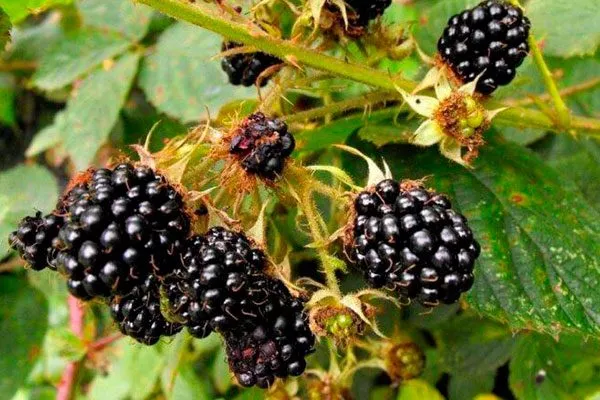
Characteristics of the thornless blackberry Darrow
This variety has received many positive reviews from gardeners who grow it in their plots. It boasts numerous varietal characteristics, including an attractive appearance, high yields, and early ripening.
Flowering period, ripening period and yield
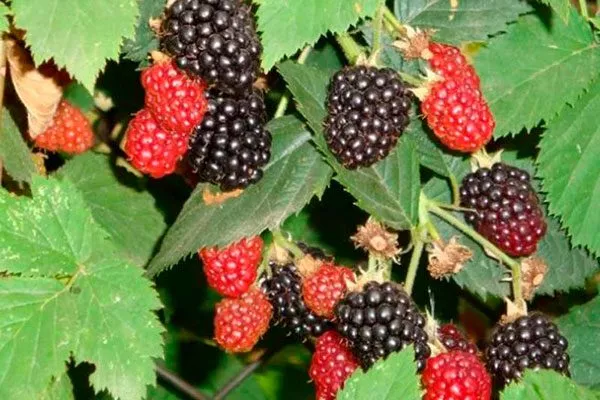
The shrub begins flowering in late June. Fruit forms on the shoots in mid-July. Initially, they are red, then turn black. Ripening takes 1.5 months, when the berries become soft and firm.
With proper care, a single plant can yield up to 10 kg of fruit. The berries can be stored in the refrigerator (for two weeks) or frozen (for over six months). At room temperature, they will keep for no more than two days.
Fruiting period
This self-fertile variety doesn't require cross-pollination. Its fruits are easy to pick, as they grow on the surface of the bush and aren't hidden among the foliage. It begins bearing fruit early, and some fresh berries can be harvested even in the fall.
Frost resistance
In temperate climates, it exhibits excellent frost resistance. The shrub can withstand temperatures down to -34°C without the need for additional shelter. It is recommended to simply mulch the area around the tree trunk with organic material to insulate the plant's roots.
Resistance to diseases and pests
This variety has good disease resistance, but can be susceptible to disease and pest attacks if proper cultivation practices are not followed. The plant suffers from the following ailments:
- Rust. It appears as orange spots and growths on shoots and leaves, which can reduce yields by up to two times.

- Anthracnose. Causes the appearance of purple areas on young shoots, which turn into ulcers and lead to the wilting of the bush.
- Didymella. It is accompanied by purple spots, falling leaves and drying out shoots and buds.
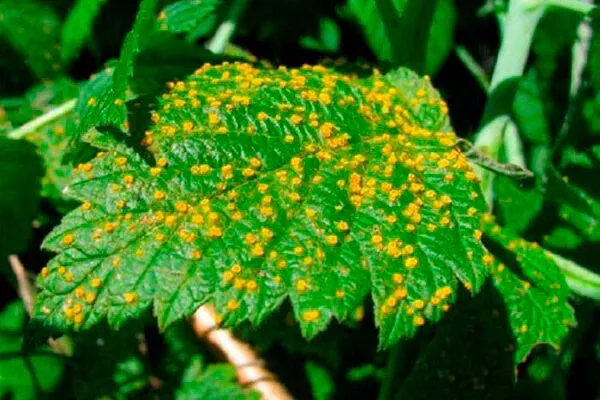
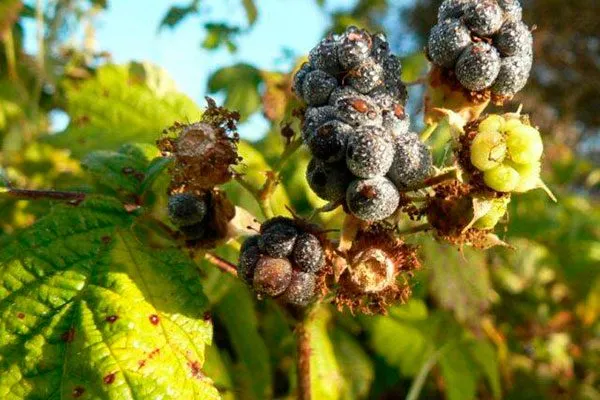
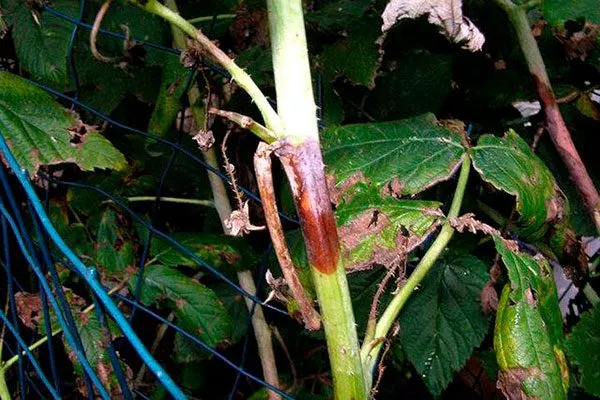
To treat diseases, use 1% Bordeaux mixture, garlic infusion, and sulfur preparations. To prevent disease, monitor the soil around the shrub's roots and promptly remove plant debris.
The most dangerous pests include raspberry aphids, mole crickets, and raspberry stem flies. Spraying with a 1% solution of Nitrafen and other insecticides is effective against them. Apply the treatments several times per season. Traps and poisoned baits are effective against mole crickets.
Pros and cons of the variety
Darrow blackberry has a number of advantages, but also some disadvantages. Before planting this variety, carefully evaluate its positive and negative qualities.
Gardeners' opinions on the taste of the Darrow blackberry vary. The variety is rated as medium in flavor due to its distinct tartness. Some gardeners note that the berries become noticeably sweeter when using organic fertilizers.
Landing features
Plant the seedling in the spring so it has time to take root before winter. In warmer regions, this procedure can be carried out in the fall. Choose a sunny location protected from strong winds. The soil should be well-drained. The groundwater level should not exceed 1.5 m.
- ✓ Soil pH should be between 5.5-6.5 for optimal blackberry growth.
- ✓ The soil should be enriched with organic matter such as compost or humus before planting.
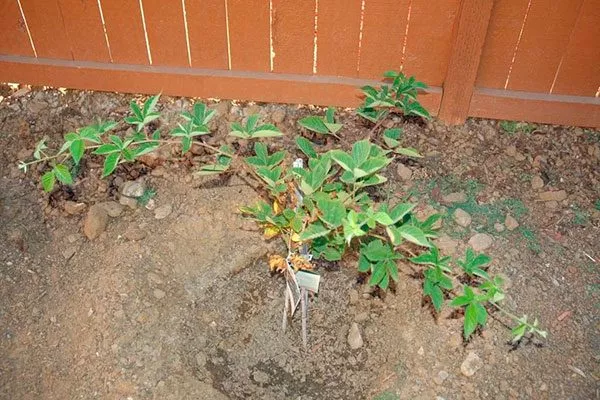
Step-by-step planting instructions:
- Dig a planting hole measuring 40x40 cm.
- Place fertilizer at the bottom of the hole and form a mound of earth.
- Place the planting material in a growth stimulator for several hours.
- Place the seedling in the center of the hole, carefully spreading out the roots.
- Gently compact the soil. The root collar should be 3-5 cm above the soil level.
- Mulch the tree trunk circle with straw or sawdust.
Caring for Darrow Blackberries
Caring for blackberries is fairly simple and involves a few basic procedures. Follow these basic agricultural practices:
- Watering. The plant tolerates drought well, but requires regular watering for best fruiting. During planting, during summer heat, and while the berries are ripening, water the bushes weekly at the roots, using 3-6 liters of water.
- Top dressing. Do not fertilize the first year after planting. In subsequent years, apply manure in the spring and feed with compost combined with superphosphate and potassium sulfate in the fall.
- Loosening. Regularly loosen the soil around the tree trunk to a depth of 5-8 cm to remove weeds and improve oxygen supply to the roots.
- Trimming. After harvesting, prune old and spent branches along with dry and diseased parts of the bush.
How to prepare for winter?
It has high frost resistance and doesn't require complex insulation measures. In the fall, it's enough to prune the shrub, dig up the soil, and mulch the area around the trunk with organic material.
Methods of reproduction
The Darrow blackberry variety can be propagated vegetatively, as seed propagation does not preserve the hybrid's unique characteristics. Choose the most appropriate method for increasing the number of seedlings:
- By apical layering. At the end of August, form a trench in the soil and place a one-year-old shoot in it. Trim the top of the shoot and bury it, securing it with a hook or wire. Water and mulch regularly. After 1-2 months, the new shoot will develop roots, and you can separate it from the main plant for replanting.
- Root suckers. Separate cuttings about 15 cm tall from the plant. Soak them in a Kornevin solution and plant them in the soil. After planting, water thoroughly and mulch.
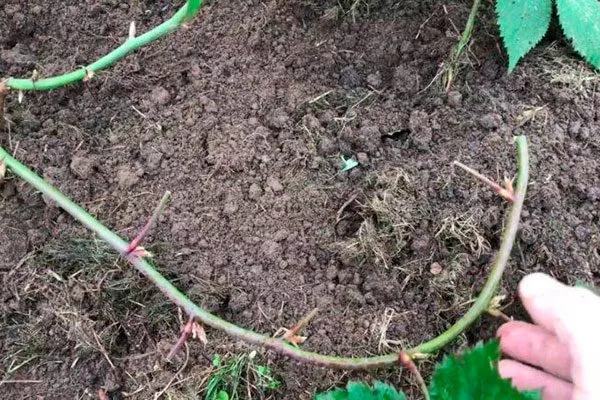
Reproduction allows you to maintain the productivity of the main bush and ensure high viability of new plants.
Gardener reviews of the Darrow blackberry
The Darrow blackberry is a remarkable variety with excellent characteristics. It's easy to care for, has excellent flavor, and is rich in nutrients. Due to its high yields and good disease resistance, it's grown in virtually every region of Russia. Achieving high yields is only possible with the implementation of important agricultural practices.