
The Asterina blackberry attracts gardeners with its early maturity, high yield, and thornless shoots. Its compact bushes are easy to care for, and the large, sweet berries are perfect for fresh consumption and preserving. This variety is resistant to most diseases, adapts well, and is versatile in use, making it an excellent choice for private gardens.
History of selection
The variety was developed by Swiss breeder Peter Hauenstein. His goal was to create a thornless blackberry with a rich, dessert-like flavor. His goal was successfully achieved.
External description of the Asterina blackberry variety
The plant is compact and upright, with shoots reaching a height of up to 2 m. Distinguishing characteristics:
- The bushes are neat and not spreading, making them easy to care for.
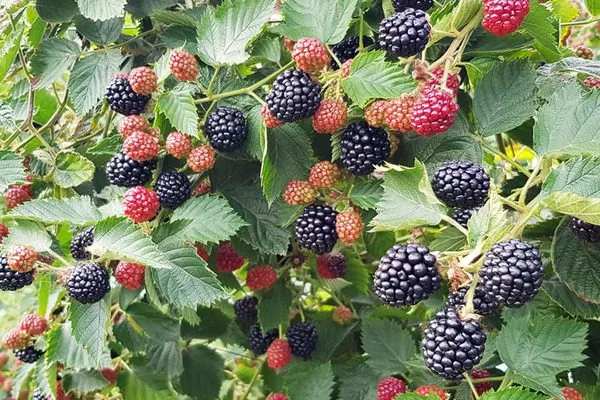
- The leaves are medium-sized, with pointed tips and serrated edges, light green in colour, and rough to the touch.
- The shoots of the aboveground part live for two years.
- Each season, young shoots emerge from dormant buds on the roots, which in the second year produce lateral branches up to 40 cm long. At their ends, vertically directed racemose inflorescences form.
- Asterina's flowers are large, up to 2 cm in diameter, with white petals. They are self-pollinating, ensuring consistent fruiting even in unpredictable weather.
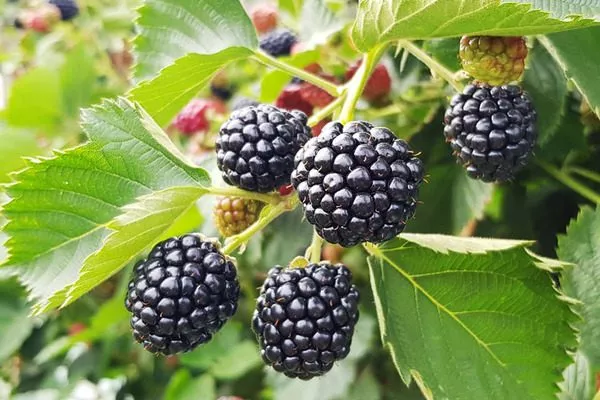
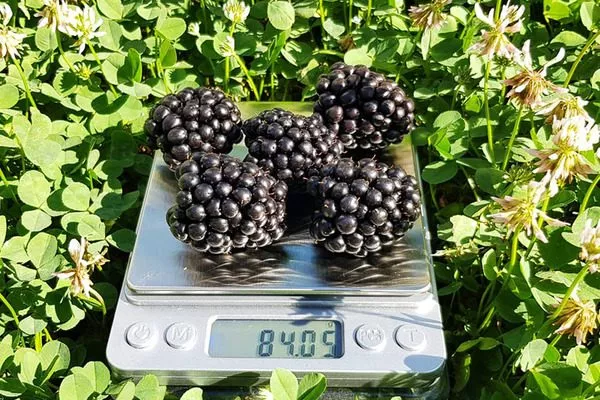
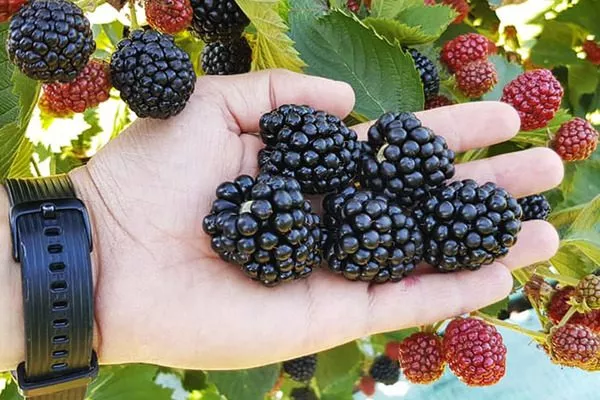
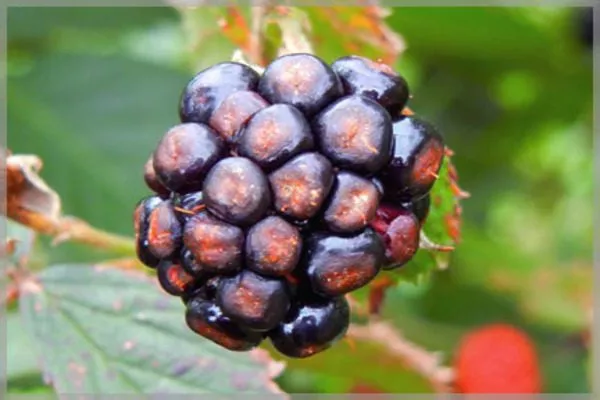
- The berries are large, weighing about 7 grams, and are round or oval in shape. They initially have a reddish hue, then turn a deep black, shiny, and aromatic.
- The taste of the fruit is sweet and pleasant.
Characteristics of the Asterina blackberry
Before choosing a crop for planting, it's important to study its key characteristics. This will help you objectively evaluate its key performance indicators and compare them with other varieties. Furthermore, knowing the variety's characteristics will help you create the right conditions for its successful cultivation and full fruiting.
Flowering period, ripening period and yield
Asterina is an early blackberry variety. Flowering begins in the first half of June and continues until the end of August, with the first berries ripening as early as mid-July. Fruiting is extended, lasting up to two months, allowing you to enjoy the harvest all summer long.
The bushes consistently yield between 3 and 7 kg of berries per season—the final yield depends on the number of fruiting shoots. Ripe fruits hold well on the branches, without falling off or losing their appearance.
Frost and drought resistance
The crop is well adapted to hot climates and exhibits drought tolerance. However, during prolonged periods of drought, the plant requires watering, especially during flowering and fruit set, when regular watering is essential.
The variety has average frost resistance: the bushes can withstand temperatures down to -20°C without damage. In regions with harsher winters, such as the central and northern parts of the country, winter protection is required to protect against freezing.
Resistance to diseases and pests
This variety is characterized by high resistance to most common diseases. Blackberries are resistant to rust, powdery mildew, gray mold, and white spot. However, there is a risk of anthracnose.
Landing features
Growing blackberries doesn't require much effort—even a beginner can handle it if they master the basic principles of care. The key is planting the seedlings correctly. You can learn all the nuances of planting here. Here.
Timing and choice of location
The optimal time for planting blackberries is spring, as the plants establish themselves more quickly and develop actively. However, in southern regions with mild winters, fall planting is also possible. In this case, it's important to take care of winter protection for the seedlings well in advance.
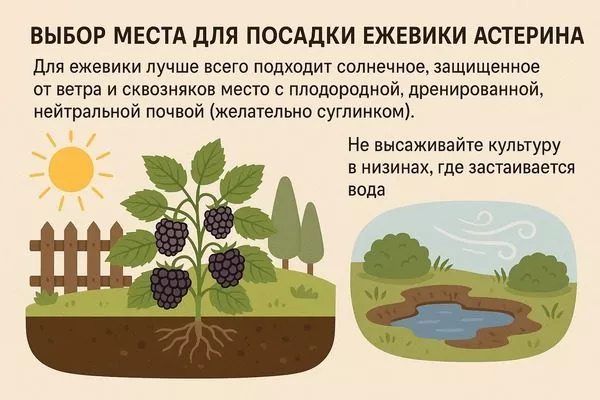
Basic requirements:
- The planting site should be well lit, warm and protected from draft winds.
- Loamy, well-drained soils with a neutral pH are ideal. Areas with stagnant water, alkaline conditions, or limestone are unsuitable.
Before planting, the soil must be carefully prepared:
- remove weeds with roots;
- level the surface;
- adjust acidity if necessary;
- dig the ground deeply.
Selection and preparation of planting material
To ensure the desired results from cultivation, purchase seedlings from reputable nurseries or specialized farms. If you buy at a market, ask the seller for clarification about the variety. Uncertain or vague answers are a reason to refuse the purchase. Annual plants thrive better.
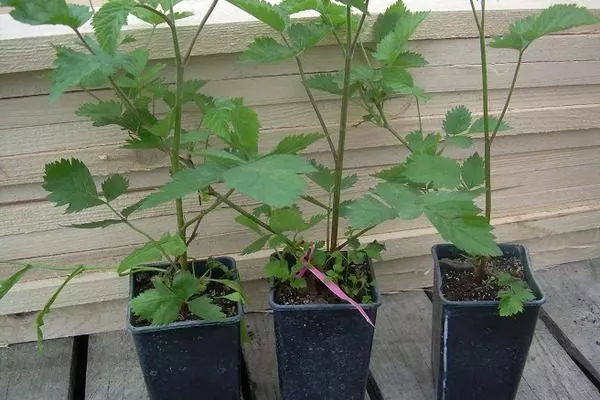
A good seedling should meet the following criteria:
- have strong, powerful shoots;
- have a well-developed root system;
- contain at least two thick shoots with a diameter of 5 cm;
- a dormant bud should be formed at the base.
Planting diagram
Prepare the nutrient mixture in advance. To do this, mix fertile soil with 10 kg of humus or compost, add 20-30 g of superphosphate, 30-40 g of potassium sulfate, or 50-60 g of wood ash. If the soil is acidic, add an additional 50-70 g of lime.
Step-by-step instructions:
- Inspect the root system: remove damaged and excessively long roots, trim if necessary.
- If the roots are slightly dry, soak them in a growth stimulator for 2-3 hours.
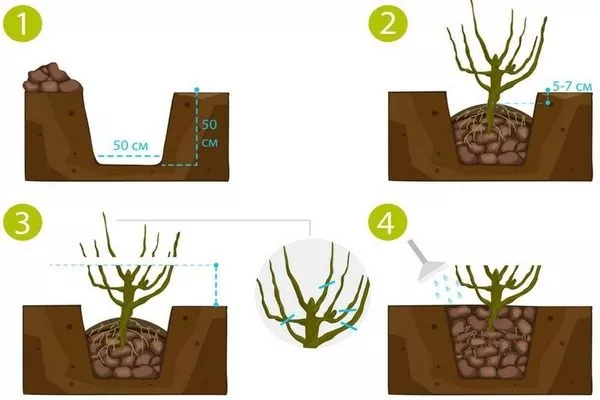
- Dig planting holes approximately 50-70×50-70 cm in size.
- Place the prepared mixture at the bottom of each hole, fill with water and wait until it is absorbed.
- Carefully place the seedling, spreading the roots evenly.
- Fill the hole with planting mixture, gently shaking the plant so that the mixture settles between the roots.
- Sprinkle soil over the top and compact it well. The bud at the base of the stem should be buried 2-3 cm deep.
- Make a watering hole around the bush and add 5-7 liters of water.
- Mulch the tree trunk circle with a 10 cm layer using peat, straw, humus, sawdust, etc.
- After planting, cut the shoots back to a height of about 20 cm from ground level.
Care instructions
Proper care of blackberries is the key to healthy growth and abundant fruiting. Regular agricultural practices guarantee a strong immune system and bountiful harvests. Learn how to properly grow this berry crop in your garden. Here.
Main events
Blackberries require support, and a trellis is the best option. Install poles or sturdy pipes at least 2 m high on both sides of the row, spaced about 10 m apart. Stretch three rows of wire between them, carefully securing the shoots to these. Staking young plants is not necessary.
Other important procedures:
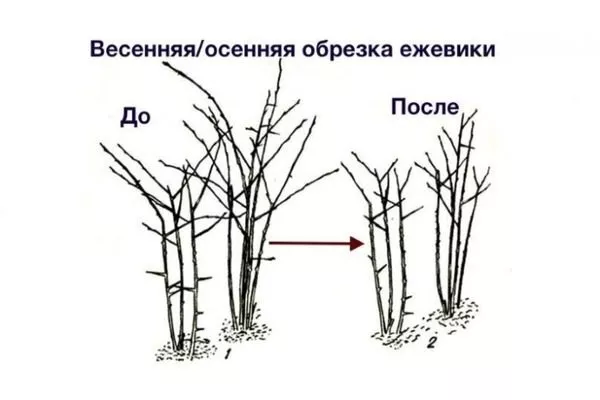
- Proper pruning is equally important. Asterina begins to bear fruit in the second year after planting. When the central shoots reach a length of over 100 cm, pinch the tops back by 10-15 cm. Trim the lateral branches when they reach a length of about 50 cm, but not earlier.
In the spring, remove frozen ends down to living buds, and in the fall, remove dry, damaged, and weak shoots, as well as old branches that have stopped bearing fruit. As a result, after the fall pruning, only strong young branches remain.
- Pay special attention to watering. For the first 1.5 months after planting, water regularly. Once established, water the bushes about once a week, and regularly during the fruiting period until harvest.
- Blackberries do not tolerate weeds well, so keep the area clear.
- To make maintenance easier, mulch the soil under the bushes—this will help retain moisture, suppress weed growth, and reduce the need for frequent tilling. Mulch the space between the rows 6-7 times per season.
- In the spring, apply fertilizer: apply nitrogen fertilizers (urea, ammonium nitrate or organic matter) annually, potassium fertilizers every year, and phosphorus fertilizers every three years.
Harvesting and storage
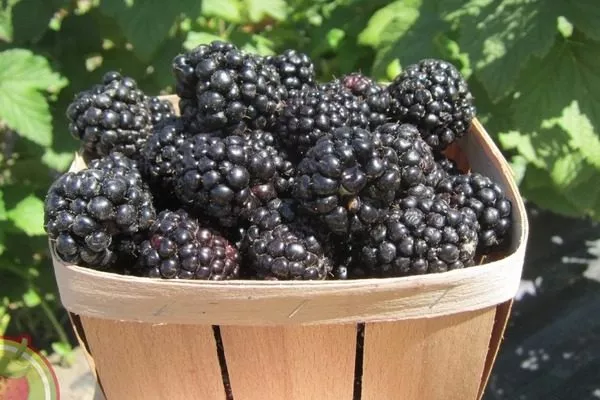
Asterina berries begin to ripen in late June or early July, with the berries ripening gradually rather than all at once. Pick ripe berries with a purple-black hue, handling them carefully to avoid damaging them. Use small containers and store them immediately in a cool place or at least protect them from direct sunlight.
Helpful tips:
- Pre-sort and remove any bruised, damaged, or moldy fruits, which could ruin the entire harvest. Don't wash the fruit before storing; it's best to do so immediately before eating.
- To freeze, remove the berries from their stems, rinse under running water, spread them out on a clean towel, and dry thoroughly. Freeze them using a special method: spread them in a single layer on a flat surface—a tray, board, or thick cardboard—and place them in the freezer.
Once completely frozen, transfer them to a storage container and return them to the freezer.
Arrange the berries in individual portions, as refreezing is not recommended. Before freezing, remove any insects by soaking the blackberries in cold water for 5-10 minutes, then dry thoroughly. They will keep for up to 3 years. - An equally useful storage method is to grind the berries with sugar—even slightly damaged berries are suitable for this purpose. Use 1 kg of sugar per 1 kg of berries, mix thoroughly, and leave in a cool, dark place for 10-12 hours. Then transfer the mixture to jars or storage trays. This product can be stored in the refrigerator, basement, or frozen to extend its shelf life—up to 6 months.
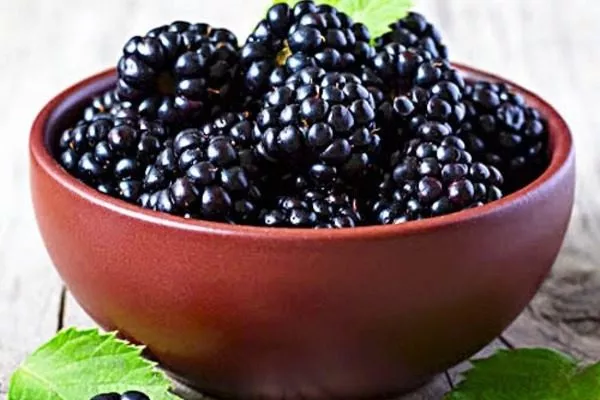
When stored fresh in the refrigerator, blackberries retain their freshness and flavor for up to 20 days.
Preparing for winter
In the fall, it's important to thoroughly prepare your bushes for winter. Follow these steps:
- Prune: remove branches that have already yielded fruit, cut off any shoots affected by disease or pests at the root, leaving no stumps. Remove weak and thin green shoots. Young branches intended for wintering are about three-quarters of the way long.
After pruning, at least seven strong young shoots should remain on the bush. Collect all plant debris, including mulch, and burn it outside the area to prevent the spread of disease. - Loosen the soil around the bushes, add humus and potassium fertilizers, moisten well, and then cover with a thick layer of mulch.
- As a preventative measure, spray with Bordeaux mixture. If there are sudden temperature changes, carefully remove the branches from their supports, bend them to the ground, and cover them to protect them from frost.
You can find out more details about preparing berry crops for winter. Here.
Methods of reproduction
You can increase the number of blackberry seedlings yourself. There are several propagation methods:
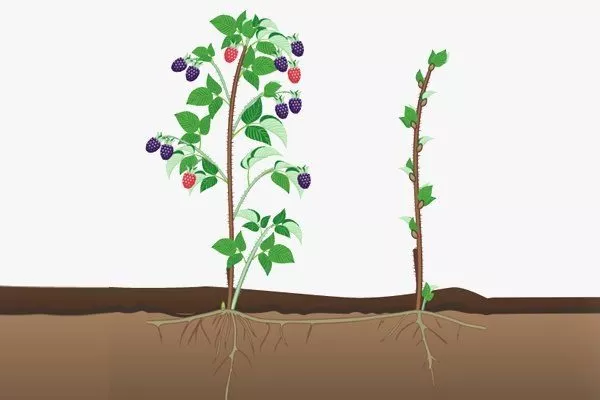
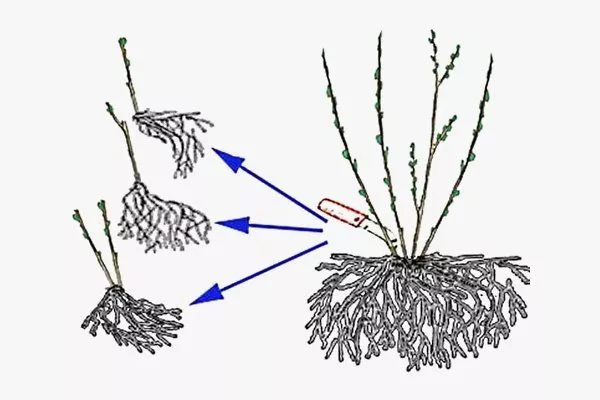
- Root suckers. These are young shoots that develop from the plant's roots. They are usually removed to prevent crowding, but they provide excellent, free planting material for propagation.
In May, dig up 10-15 cm tall shoots, complete with soil, and transplant them to their permanent location. Select the strongest one-year-old seedlings with shoots thicker than 10 mm and roots at least 20 cm long.
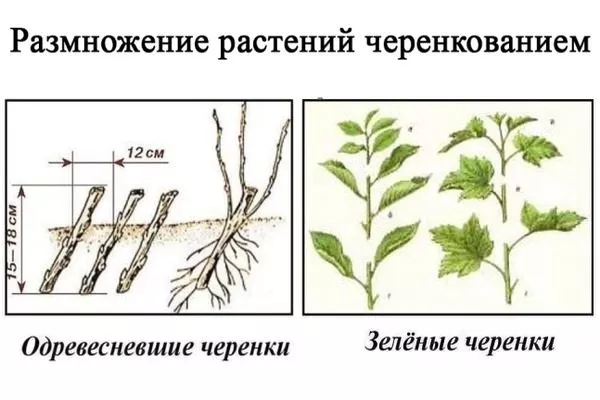
- Green cuttings. This method is used to preserve varietal qualities. Cut off the top of the shoot with the last two buds and form a cutting with one bud and one leaf.
Treat with growth stimulants and plant in a mixture of equal parts sand and peat, in small containers (for example, paper cups or film cylinders).
Create a microclimate under the film with a temperature of 22-25°C, soil humidity of 90%, and air humidity of 100%. After a month, transplant the seedlings into open ground.
- By dividing the bush. This method is used when replanting a mother plant. Dig it up, separate young, strong shoots with well-developed root systems, and move them to a new location. Leave a few young shoots on the mother plant and remove the older shoots.
Diseases and pests
The Asterina blackberry is characterized by good resistance to diseases and pests, but it is sometimes susceptible to problems. Anthracnose is a fungal disease that affects the entire plant, especially the leaves.
Main difficulties:
- The disease develops with frequent rains, excessive watering and high humidity.
- Gray spots with a purple border appear on the leaf blades along the veins and edges, then holes form.
- The fruits are also affected: brown or grey ulcers appear on them, they develop poorly and fall off.
As a preventative measure, remove all damaged branches in the spring, and if disease is detected, treat the bushes with fungicides according to the instructions. In the fall, after pruning and tilling the soil, spray with Bordeaux mixture.
Apply fungicides three times per season:
- before flowering;
- when the shoots reach 40 cm;
- after harvesting.
In addition to anthracnose, blackberries can be affected by brown and white spots, rust, and phyllostictosis – all of these fungal diseases are treated in the same way as anthracnose.
Pests can also cause serious damage. Viral infections are often transmitted by insects, so prevention is essential.
Key recommendations:
- If aphids are found, cut off and burn the affected shoots.
- For prevention in spring, before the sap begins to flow, use a 1% solution of Nitrafen.
- To reduce the risk of disease and pest infestation, plant blackberries away from raspberries and strawberries, which are their relatives.
Pros and cons
Reviews
The Asterina blackberry combines ease of cultivation with excellent berry flavor. It exhibits consistent fruiting and good productivity. The thornless vines make harvesting convenient and easy. This balance of characteristics makes the variety attractive to fruit lovers and gardening enthusiasts.