
The Agawam blackberry is a delicious and nutritionally valuable fruit, rich in folate, potassium, and other minerals. Many gardeners prefer to grow this variety in their backyards because it produces a bountiful harvest of delicious fruit and is recommended for anyone seeking a bountiful harvest.
Who developed the variety and when?
The Agawam variety was developed by breeding experts in the mid-19th century, but information about its exact origins is limited. Credit for its creation is attributed to American breeder John Perkins. The variety was based on blackberry species native to North America, the exact varieties of which remain unknown.
Known by its alternative or Latin name, Agawam, this variety has been a popular cultivar in the US and Europe for many decades and was added to the Russian State Register in 2006.
Description of berry crops
The Agawam blackberry was initially prized for its exceptional flavor and large fruit size. This variety was bred primarily as an industrial berry, and for over eight decades, it held a coveted position as a leader in the European and American markets.
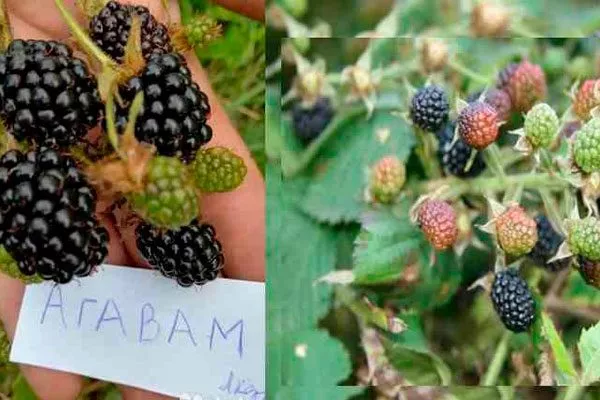
General idea of the variety
The Agawam variety's description describes it as a vigorous and compact plant, typical of the bramble family. The bushes grow to a height of 170-230 cm. It is distinguished by the following characteristics:
- Sturdy, upright stems with drooping tips, adorned with downward-curving spines. These medium-sized, dark brown spines are distinctly strong and pointed.
- New shoots have a green tint, which darkens by the end of the growing season and turns brown in the second year of life.
- The leaves have a unique corrugated texture, are dark green, and have a five-lobed design. They are covered in fine hairs and tapered at the tips, while small spines run along the central veins on the underside of the leaf blade.
- The leaves are very strongly attached to the stems, so many of them remain on the plant until the winter frosts.
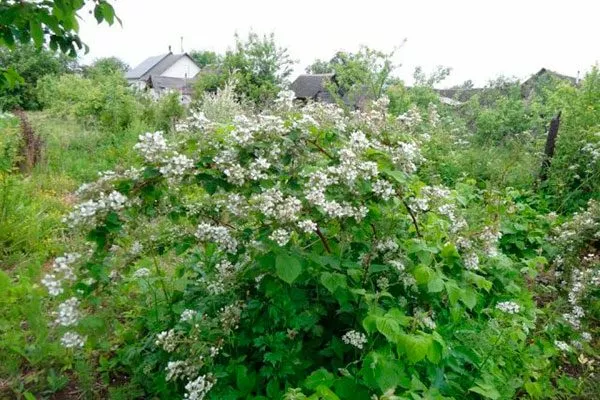
- Large, snow-white flowers are collected in racemose inflorescences, making the bush lush and decorative.
- The variety bears fruit on shoots from last year's growth.
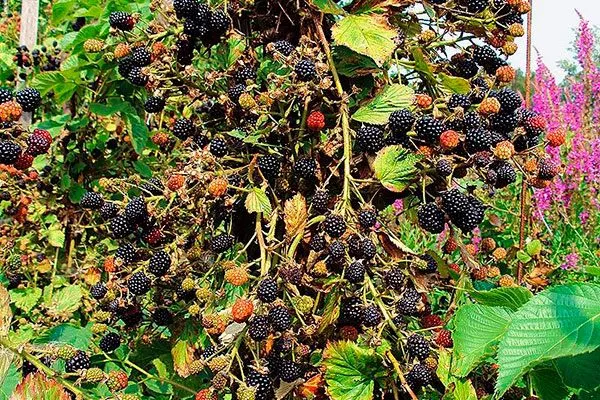
Berries
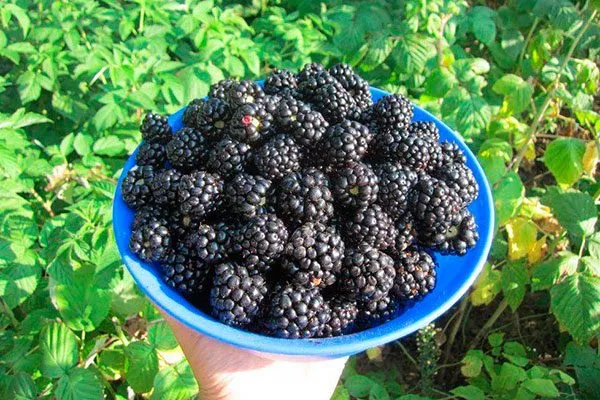
Agawam berries are medium-sized, weighing approximately 4-6 g, and are slightly pubescent. Other characteristic features include:
- They are painted in a rich black color and can have a shape resembling a truncated cone or oval.
- The fruits are attached to spiny short stalks with moderate strength.
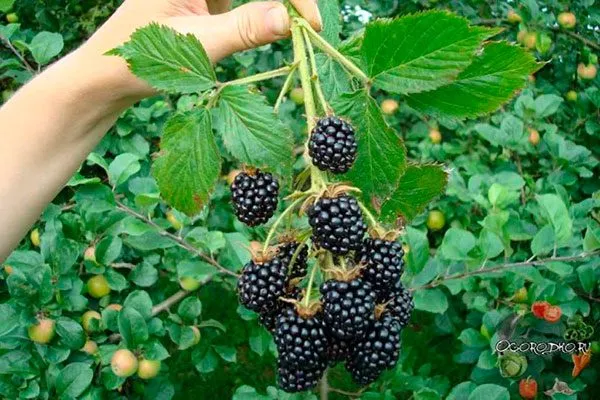
- One brush produces from 14 to 22 berries, which can be at different stages of ripeness.
- The ripe berry has a sweet and sour taste and a subtle aroma.
- They are distinguished by their density and tolerate transportation well.
- Fruits that are overripe become soft, watery, and their flavor is lost, making them slightly bland.
- Unripe berries, even though technically ripe, have a grassy flavor and are not overly sour, so it's important to harvest them promptly. This may be the reason why the Agawam variety's tasting score is only 3.5 out of the maximum possible.
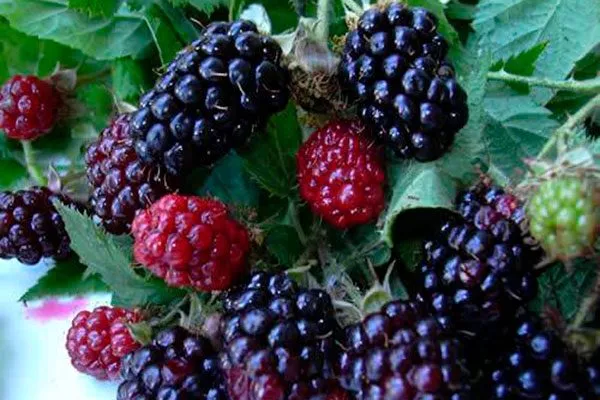
Gardeners' opinions on this variety vary: some consider Agawam to be of low quality and recommend replacing it with varieties with larger, sweeter berries, preferably thornless. Meanwhile, others claim that if harvested in a timely manner, the fruit is excellent, and there's no need to look for a replacement among the thornless varieties.
Characteristics
The Agawam blackberry is one of the most frost-resistant varieties, allowing it to be grown without cover in Ukraine, Belarus, and the central regions of Russia.
Key Features
The variety tolerates short-term temperature drops to -27-30 degrees Celsius without problems. Agawam is used in breeding as a frost-hardiness donor, as its flower buds are less susceptible to frost damage than other cultivars.
Other qualities:
- Extreme heat negatively affects this variety, as the berries may burn. In hot regions, it is recommended to plant blackberries in partial shade, which will not significantly affect the yield.
- Requires regular watering to achieve a good harvest, as in conditions of insufficient moisture the variety produces small fruits.
- Agawam is less demanding in terms of soil types and can grow even in moderately alkaline conditions.
- The transportability of berries is good at the stage of technical and full maturity, however, overripening of the fruits makes them suitable only for processing.
- Care errors are mainly related to difficulties in harvesting due to sharp and curved thorns, as well as the need to cover the plant in very cold regions.
Overall, this blackberry is a hardy and tolerant variety, perhaps due to its close relationship to wild blackberry species that grow without much care.
Flowering period and ripening time
Flowering begins after May 10th. In warmer regions, the white flowers open 8-9 days earlier than in cooler areas, making the plant brightly decorated during the flowering period. The berries ripen unevenly, approximately around mid-August, which can be considered the average time for blackberries.
Yield indicators, fruiting periods
The variety's yield is impressive, reaching approximately 95-105 centners per hectare, which is significantly higher than the standard yield of 30 centners per hectare. This is possible thanks to the dense planting pattern and the variety's ability to tolerate shade: even in partial shade, the berries ripen fully. However, this does not mean it can be grown in full shade.
Application of berries
The fruits have a wide range of uses: they can be eaten fresh, frozen, or used for various processing purposes, including making excellent jam.
Advantages and disadvantages
Methods of reproduction
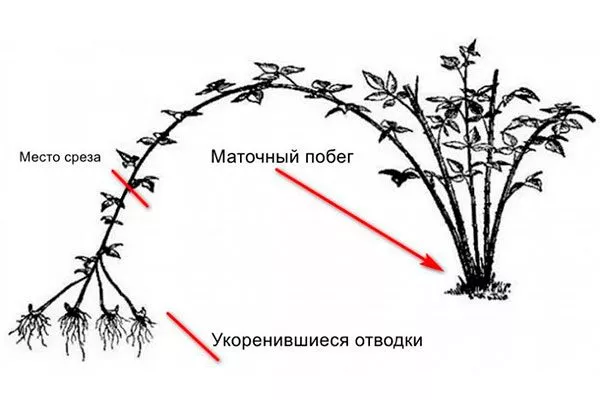
This variety can be propagated in several ways: by suckers, seeds, cuttings, and division. The easiest method is to use suckers. In the spring, they are dug up, trimmed, and replanted. Seed propagation is rarely used, as it is difficult and not always effective.
Dividing the bush is another reliable method: an adult plant is divided into parts, each of which should have a developed root system.
Landing rules
The planting guidelines for this variety are similar to those for other blackberry varieties. Particular attention should be paid to timing: in southern regions, it is planted in the fall, a month or a month and a half before the onset of cold weather, while in northern regions, it is best to plant in the spring, when the soil has warmed up. This allows the plant to better adapt to the conditions and successfully survive the winter.
- ✓ Soil pH should be between 5.5-6.5 for optimal growth.
- ✓ Drainage is mandatory to prevent water stagnation.
Peculiarities:
- The variety is moisture-tolerant, allowing it to be planted even in low-lying areas. However, marshy areas should be avoided.
- Agawams prefer slightly acidic or neutral soil. If high-moor (red) peat is available, it is recommended to use it to enrich the soil. This will help prevent chlorosis, a common blackberry disease that is promoted by low soil acidity.
- Suitable for semi-shaded areas. In southern climates, this is especially important, as it helps protect the berries from overheating. However, in colder regions, choose a well-lit location protected from the wind.
- Properly preparing the planting hole will significantly facilitate subsequent care of Agawam blackberry bushes. Dig a hole 45-55 cm deep and in diameter. Mix the excavated topsoil with 10 kg of humus, 40 g of potassium fertilizer, and 130 g of phosphorus fertilizer. Depending on your soil type, add:
- sand - if the soil is dense;
- lime – to neutralize acidity;
- organic matter – if there is a high content of carbonates;
- acidic peat – for alkaline or neutral soils.
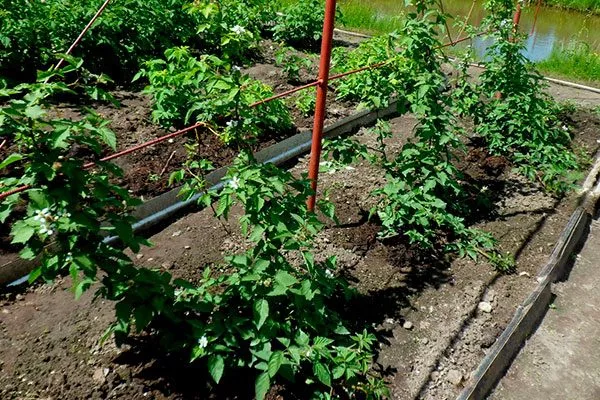
- If planting several agave bushes, it's recommended to space them 180-200 cm apart. This will ensure easier maintenance and protect them from the thorns common to agave plants. For larger numbers of plants, space them as closely as 100-140 cm apart, while maintaining a distance of 200-280 cm between rows.
Subsequent care of the culture
Caring for the Agawam blackberry is simple, allowing even novice gardeners to successfully grow this variety. To ensure proper care, follow these important guidelines:
- Trimming bushes. In the fall, all bushes that are two years old must be pruned. All shoots must be removed.
- Watering. Blackberries require systematic soil moistening, preferably with warm water, at least once a week, at a rate of 20-30 liters per bush.
- Loosening the soil. To ensure oxygen access to the roots and prevent weed growth, it is necessary to periodically loosen the soil around the bushes.
- Fertilizer. At the beginning of the growing season, plants should be fertilized with nitrogen fertilizers. Potassium fertilizers should also be applied once per season.
Preparing for winter
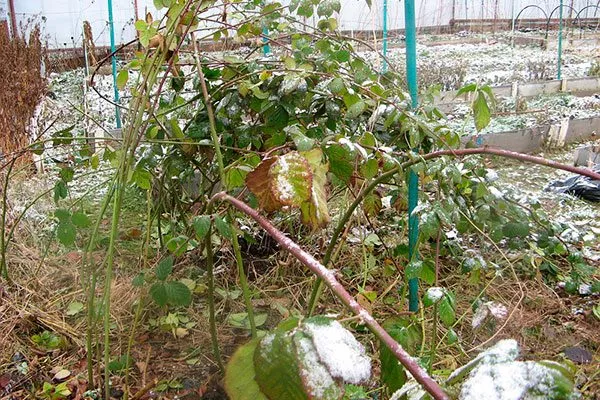
In southern regions and most of central Russia, blackberries don't require winter cover. However, in colder areas, other varieties are recommended, as covering Agaves can be challenging due to their strong, upright shoots. However, if cover is necessary, you can mound soil over the root system and wrap the shoots with burlap and agrofibre directly on the support.
- Prune all two-year-old shoots in the fall.
- Cover the root system with a 5-10 cm layer of soil.
- Wrap the shoots in burlap and agrofibre, securing them to the support.
Diseases and pests: methods of control and prevention
This variety is well-protected against diseases and insect pests, but can occasionally suffer from insects such as the cockchafer or mole cricket. To prevent these insects, it's recommended to plant marigolds and calendula near the blackberries, as their essential oils repel insects.
To prevent disease, blackberries should be planted at least 45 meters away from raspberries, nightshades, and strawberries. As a preventative measure, treat the shoots with copper-containing products in the spring and fall.
Reviews
Despite its age, the Agawam blackberry survives winter well in most regions and is characterized by excellent health thanks to its kinship with wild blackberries. Its flavor is quite good if the berries are picked in time, which is why many experienced gardeners still prefer this reliable old variety.