
The Yubari King melon, also known as the Yubari King, is one of the most sought-after and expensive varieties in the world. It was developed in Japan and named after the city of Yubari, located on the island of Hokkaido. It is characterized by high yields and is not a hybrid. In Japan, local farmers meticulously care for their melons, including using melon massage techniques.
What are Yubari king melons and why are they so expensive?
Yubari belongs to the cantaloupe family and is particularly prized in Mediterranean countries. It is grown exclusively in greenhouses on the island of Hokkaido, in the city of the same name.
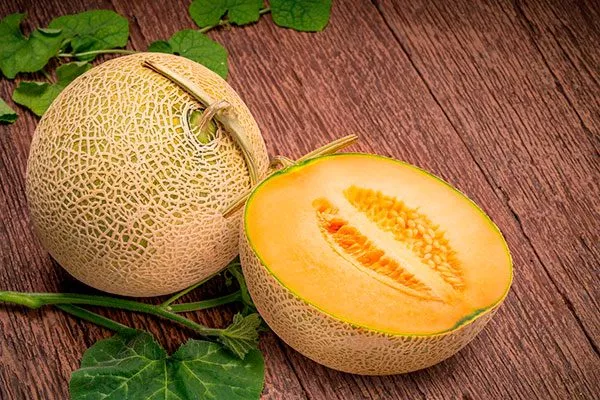
Melons are famous not only for their unique taste, but also for their unique processing techniques:
- During the growing process, melons are carefully rubbed, creating an even and fine pattern on their surface.
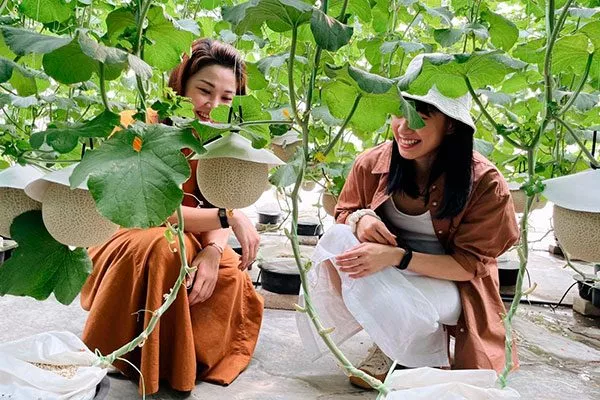
- Experienced specialists, usually working in snow-white gloves, use a special massage technique that makes the fruits even sweeter.
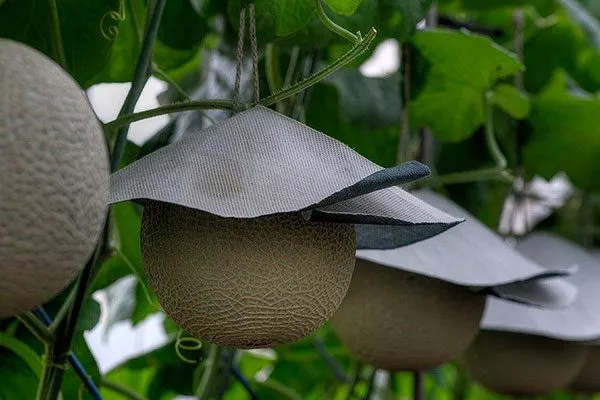
- During the period of growth and ripening of fruits, protective cone-shaped caps made of paper are fixed over them to prevent sunburn on their light skin.
The Yubari King variety is a hybrid of two varieties of cantaloupes known as muskmelons – the English Earl's Favorite and the American Spicy.
Developed in 1961, this variety combines the best characteristics of both parents. However, the plant, with its robust stems and leaves, is indistinguishable from other cantaloupe varieties.
Why is culture so expensive:
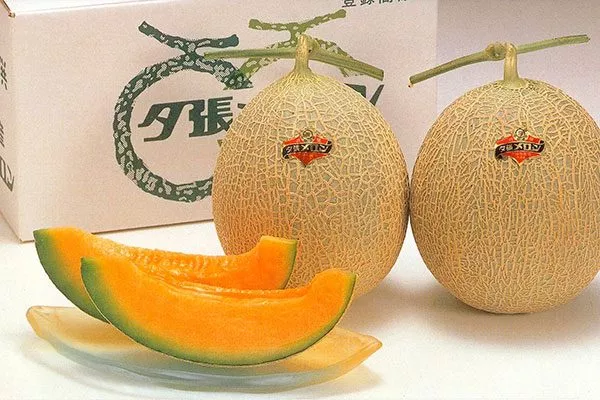
- A distinctive feature of Yubari is its perfectly round shape and a small tail that remains when cut, giving the fruit a well-groomed appearance.
- In Japan, these melons are often given as gifts during holidays, symbolizing the exquisite taste and high social status of the giver.
- This melon is highly valued for its unique aroma, taste, perfect round shape, soft orange flesh and aesthetic appearance, reminiscent of the patterns on antique porcelain.
Description of the Japanese Yubari melon
The Yubari King melon is an early-ripening variety. It takes approximately 45 to 55 days from seed germination to fruit maturity. Mature plants begin bearing fruit 75 to 85 days after germination.
The harvest period depends on specific growing conditions and preferences regarding the ripeness of the melons. Typically, the harvest is done when the fruits reach biological maturity, characterized by sweet and juicy flesh. This typically occurs 90-100 days after the first shoots appear.
The Japanese hold Yubari in high esteem, and a true Yubari King must meet the following requirements:
- be perfectly round;
- have a distinct mesh pattern reminiscent of the patterns found on antique Japanese porcelain;
- have tender, bright orange flesh with high juiciness.
Description of fruits and plants:
- The melon has a thin rind with an exquisite pattern that evokes the cracks in traditional Japanese porcelain.
- Despite the exquisite name and high price, the size of these melons is not large: the average weight of the fruit is about 550-650 g, and the maximum is 1500 g.
- The Yubari King variety of plant belongs to the medium-climbing type, with a main stem of considerable length.
- Its leaves are round, with entire edges and a rich green color, small in size.
- The pulp of the fruit is sweet, with a sugar content of 6.0-6.3%, it is soft but dense, with a small number of seeds and a creamy color.
- The shape of the fruit is oval.
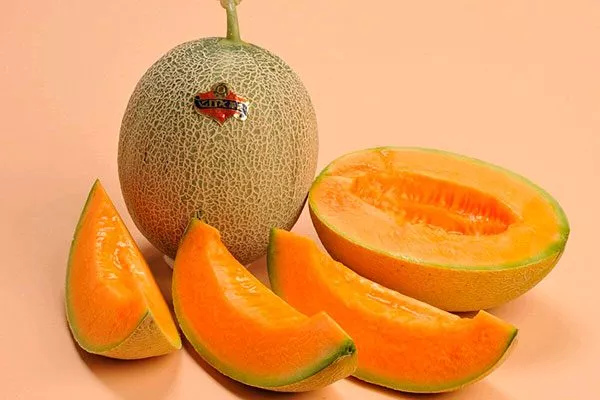
The Yubari King melon has a distinctive spiciness and a variety of nuances:
- At first, the aroma of cantaloupe melon is felt;
- then the taste is reminiscent of watermelon;
- At the end, notes of pineapple emerge.
Yubari King melons are grown under strict control in greenhouses, where ideal artificial conditions are created for their development and ripening. Throughout the growing season, from fruit set to ripening, the temperature and humidity in the greenhouses are regulated and adjusted to achieve the maximum flavor and quality.
Are there varieties within the cultivars?
Definitely not, but the Yubari melon can also be called Yubari Royal, Yubari King, and Yubari Meron. Its flavor is distinguished by a unique combination of spiciness, sweetness, spice, juiciness, and sugariness, making it sought after by gourmets.
Role in the economy
Only 150 people are employed in growing King Cantaloupes in the Yubari district, generating up to 97% of the local agricultural sector's income. The Yubari Melon trademark is registered by the Yubari City Agricultural Cooperative, granting the exclusive right to sell the King Yubari cantaloupe variety grown on this farm.
The price of Yubari melon
Ripe Yubari melons are quickly purchased by wholesalers, after which they reach retail outlets.
Seasonal price fluctuations are significant:
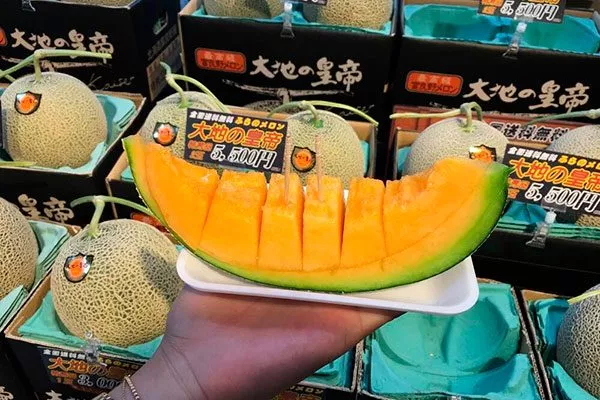
- The most expensive specimens are sold in early spring, and can fetch up to 1.5-1.6 million yen (over $15,000). The Japanese particularly value the uniformity of the melon's rind patterns, so at auctions where the fruits are sold in pairs, the most symmetrical ones can fetch the highest profit.
- During harvest, melon prices drop, and late-ripening specimens are available in supermarkets for between $50 and $200 for two melons.
Who paid the most for Yubari?
The Yubari melon occupies a high price niche among exotic fruits, surpassing even the renowned black watermelons, ruby grapes, and the highly prized white truffle. Its high price stems from its unique flavor and the status that locals ascribe to the ideal Yubari fruit, considering it the epitome of taste.
The record price for Yubari melons was set by a supermarket owner in Niigata Prefecture, who paid approximately $28,000 for a pair in 2017. In the spring of 2023, Pokka Sapporo Food & Beverage Ltd. in Tokyo purchased a pair of these melons for a record price of 5 million yen (or $46,000).
Is it possible to grow it in Russia?
The area suitable for cultivating this delicacy is limited: the small town of Yubari, located near Sapporo on the island of Hokkaido. Japan, a country renowned for its advanced technology, has created optimal conditions for growing this delicacy:
- specialized greenhouses;
- an automatic air and soil humidity control system, adjustable in accordance with plant growth phases;
- an optimal watering regime that takes into account all the nuances of cultivating Yubari melon;
- balanced fertilizers that meet the needs of the plant at different stages of its development.
- ✓ The temperature in the greenhouse should be maintained at +24°C during the day and not lower than +18°C at night for optimal growth.
- ✓ Air humidity in the greenhouse should be within 60-70% during flowering and reduced to 50-60% during fruit ripening to prevent fungal diseases.
The key factor giving Yubari melon its unique flavor is believed to be its unique soils, rich in volcanic ash. In Russia, similar soils can only be found in Kamchatka.
| Parameter | Japan (Hokkaido) | Russia |
|---|---|---|
| Temperature in the greenhouse | +24°C during the day, +18°C at night | Additional heating required |
| Air humidity | 60-70% (flowering), 50-60% (ripening) | Control and adjustment are required |
| Soil | Rich in volcanic ash | Similar products only in Kamchatka |
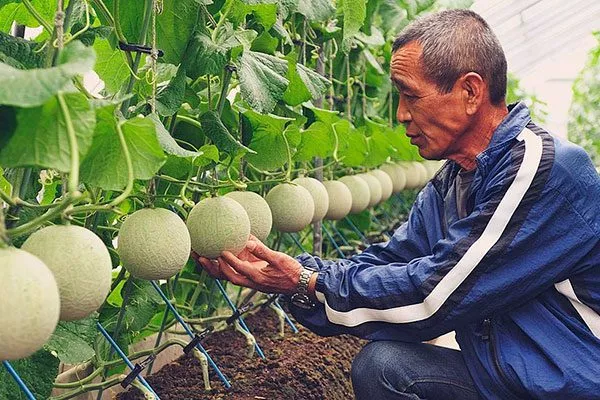
However, attempting to grow the variety on your own plot is possible, but you should expect the taste to be different from the original, as achieving strict adherence to the technology in a conventional greenhouse is difficult.
Features of cultivation
Recommendations for growing Yubari melon for Russian regions:
- This variety ripens late and is often grown from seedlings. In southern regions, seeds can be sown directly in a greenhouse a month before transplanting into individual containers filled with fertile, loose soil.
- Optimal conditions for seedlings are a temperature of about +24 degrees, watering with warm water, sufficient lighting and two feedings with a weak solution of fertilizer with microelements.
- Experienced gardeners recommend soaking seeds in sweet wine for 24 hours before sowing to improve the taste of the fruit.
- The ideal soil for Yubari melon should be nutritious, loose, and have a pH close to neutral. Add 9-10 kg of humus and 1 tablespoon of complex mineral fertilizer per square meter.
- The best conditions for growing melons are pre-prepared warm beds.
- A full light regime throughout the day is important; this should be taken into account when choosing a planting location.
- The seedlings are planted in the soil when it warms up to +18 degrees, keeping a distance of about 55-65 cm between plants.
- Before planting, acclimatize the seedlings for a week, gradually acclimating them to outdoor conditions. This method is also applicable to greenhouse cultivation.
- Since melon does not tolerate damage to the root system, planting is carried out using the transshipment method.
- After planting, the plants are watered and shaded until they take root.
- When planning to grow on a trellis, it is important to take care of tying it to taut ropes or pegs.
- When cultivating, a piece of plastic or plywood is placed under each fruit to prevent spoilage and protect it from rot.
- To ensure that the seedlings are strong, pinch them above the fourth leaf, leaving only the two strongest stems for further growth.
- Water the plants with warm water when the top layer of soil dries out. Once the plants begin to form fruit, stop watering to avoid the fruit becoming too waterlogged. Avoid overwatering because the melon's root system is susceptible to rot.
- In open ground conditions, during the ripening period of fruits, be sure to install protective film covers to protect the plants from rain.
- At the initial growth stage, a single application of nitrogen-containing fertilizer is necessary. During the flowering phase, the need for phosphorus and potassium increases.
- In cool climates, the plant should be trained by pruning shoots after 3-4 ovaries have formed, leaving 1-2 extra leaves above the last ovary. Similar steps are taken when growing outdoors.
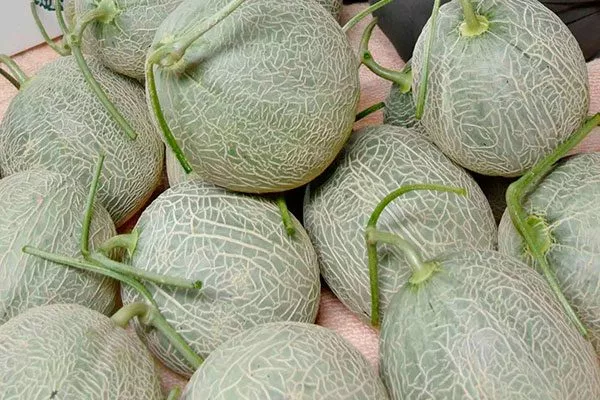
Melons are harvested when they are fully ripe, which is indicated by the change in skin color, the appearance of a characteristic net, and an enhanced aroma. To enhance the flavor, the fruits require additional curing for several days after harvest.
Where can I buy seeds of rare melon varieties?
Regarding the acquisition of seeds of rare melon varieties, they can be ordered from specialized foreign online stores or from hobbyists who collect such varieties.
Although you can grow your own, the authentic Yubari King Melon, distinguished by its exceptional flavor, is grown only in the city of Yubari itself. Furthermore, there's no guarantee you'll get the original variety's seeds.
Diseases and pests
To successfully grow the Yubari melon variety, it's crucial to prevent diseases and pests. Here's what to watch out for:
- Fusarium wilt, caused by fungi of the genus Fusarium, causes plant wilting and can be prevented with regular, proper watering, soil fertilization, and moisture control. Damaged plants and the topsoil should be removed and destroyed.
- To control powdery mildew, caused by the fungus Sphaerotheca fuliginea, it is necessary to ensure good ventilation, avoid dense planting, and use systemic fungicides when the first symptoms of the disease are detected.
- The cucumber beetle, a dangerous pest of the Yubari King melon, can damage the root system. To prevent it, regularly remove weeds, use insecticides, and mechanically remove beetles and their larvae.
- Aphids, or aphids, are another pest that feed on plant sap, which can lead to plant deformation and reduced yields. To protect against aphids, it's necessary to regularly treat plants with insecticides and employ biological control methods, including the use of predatory insects such as ladybugs and hoverflies.
Are there any similar varieties?
There are no varieties identical in taste, characteristic properties, or fruit appearance. Yubari is the only and unique Japanese melon.
Yubari melon holds a special place among exotic delicacies due to its high price. Not everyone has the opportunity to visit Hokkaido during this fruit's harvest season and taste it on site. But those with their own garden can try growing this unique variety of Japanese honeydew melon and compare its flavor with other melon varieties.