
"Torpedo" is considered one of the best melon varieties. It's easily recognizable by its impressive size, oblong shape, and rich melon aroma. Despite its Uzbek roots, "Torpedo" grows well in Russia. Let's learn how to plant and grow this Uzbek melon in a temperate climate.
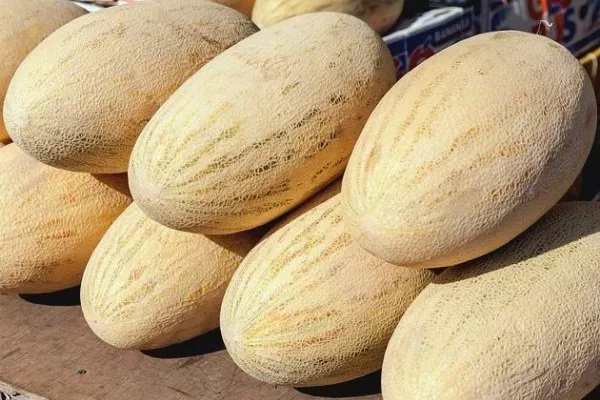
melon variety "Torpedo"
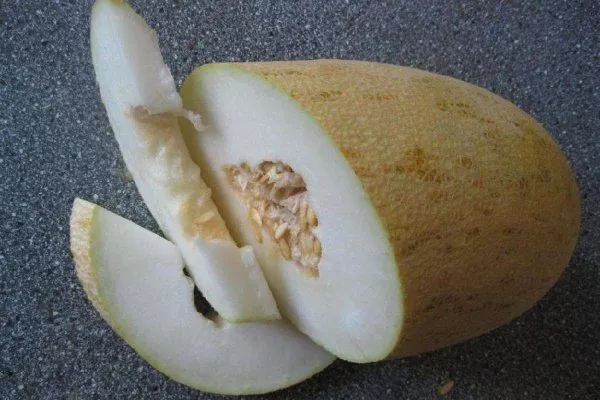
Torpedo melon is juicy and sweet right down to the rind
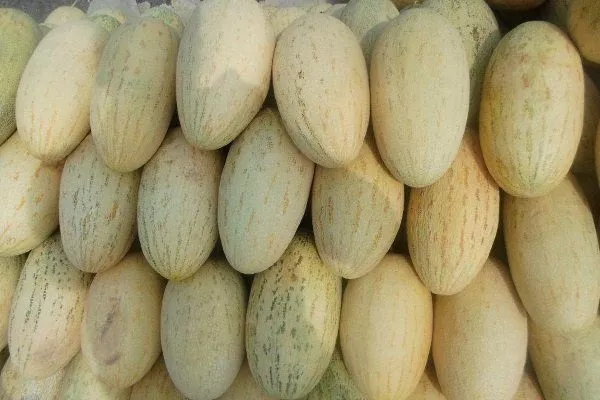
A ripe Torpedo melon gives off a delicious, sweet aroma
How did the variety appear?
The Torpedo melon originates from Asia Minor and Central Asia. In sunny Uzbekistan, this melon has been cultivated for about three centuries. The Uzbeks call this variety Mirzanchulskaya, a nickname of their own. It is a true calling card of Uzbekistan. The official name under which the variety is registered in the Russian Federation is Raduzhnaya.
Description of the Torpedo melon
Varietal characteristics of "Torpedo":
- fruits are oblong in shape;
- the crust is yellow, covered with thin silvery veins;
- the pulp is white, juicy, has an oily consistency, thickness is 5-6 cm;
- There are many seeds inside the fruits.
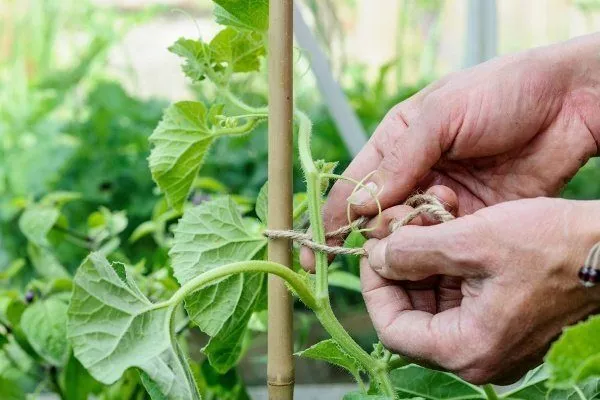
The stems are strong and vigorous. The shoots reach 2 m in length and can be tied to supports.
The fruits of the Torpedo variety, grown in Uzbekistan, reach half a meter in length.
A ripe Torpedo is easily recognized by its aroma. This variety is distinguished by its intense fragrance—the fruit exudes a distinctive melon aroma—delicate and slightly sweet.
Main characteristics
Fruits grown in temperate climates are smaller in weight and size than Uzbek "Torpedo" varieties. They are also inferior in flavor to those grown in Asia.
Main characteristics of the Torpedo melon:
| Characteristics/parameters | Description/Meaning |
| Ripening time | late-ripening, ripens no earlier than August |
| Reaching technical maturity | 60 days |
| Fruit weight | in Uzbekistan – up to 15 kg, in Russia – up to 5-7 kg |
| Transportability | excellent |
| Taste | excellent (but the taste deteriorates when there is not enough sun) |
| Aroma | bright, rich, combines notes of pineapple, duchesse pear and vanilla |
Fruits grown without hazardous chemicals don't appear on the market until late August. Before then, avoid buying oblong melons—they're either unripe or laced with harmful growth-stimulating additives.
A review of the Torpedo melon variety is presented in the following video:
Advantages and disadvantages
Advantages:
- The fruits are easy to transport – melons can be transported over long distances without any problems.
- It can be grown not only in the south of Russia, but also in regions with a temperate climate.
- The fruits are distinguished by their remarkable commercial and taste characteristics.
- The fruits have a long shelf life. Stored in a cellar or simply in a cool place, "Torpedoes" can remain fresh and delicious until spring.
This wonderful variety has one drawback: the plant is demanding in terms of growing conditions.
The "Torpedo" requires warmth, and even better, sun—lots of it. This is precisely why it's so difficult to grow truly sweet melons in temperate climates. Unlike its main competitor, the "Kolkhoznitsa," it doesn't ripen fully in temperate climates, so it doesn't reveal its true flavor.
What is better to plant: seeds or seedlings?
In southern regions, melons can be grown by simply sowing them in the ground. This planting method is only suitable in areas with warm summers, where temperatures cannot drop significantly. In temperate climates, melons planted in the ground don't have time to ripen, as they aren't planted until May. To ensure the melons have time to ripen, they are grown in hotbeds and greenhouses.
So, the choice between seedlings or seeds depends solely on the climate. Growing melons directly from the ground is, of course, easier, while seedlings require a bit of work, and then transplanting them to their permanent location. But there's no other way to grow "Torpedo" in a temperate climate.
Landing conditions
To ensure large and sweet melons grow, they need a good start and optimal growing conditions. Therefore, planting begins with selecting and preparing the site.
Regionalism
The ideal climate for growing this variety is hot and dry. The further north you go, the lighter the fruit and the less sweet it is. "Torpedo" can be grown in temperate continental climates, but only from seedlings or even in a greenhouse.
Temperature conditions
Melon is extremely heat-loving; for growth and development, it requires temperatures that avoid dropping below 15°C. For planted seeds to develop, they require daytime temperatures of 20-25°C and nighttime temperatures of up to 15°C.
Lighting
Melons require a sunny, unshaded location—this is the key to fruit growth. In greenhouses, artificial lighting with an intensity of 5,000-6,000 lux can be provided for the crop.
Soil composition
Fertile soil is selected for melon beds. Organic matter, such as humus or compost, and mineral fertilizers are added to the open ground in the fall. The optimal pH is neutral; the best soils are chernozem and sandy loam. The soil must be dug and loosened.
- ✓ Soil pH should be between 6.0-6.5 for optimal nutrient absorption.
- ✓ The depth of the fertile layer is at least 30 cm for the development of the root system.
Soil composition for planting melons:
- peat – 15%;
- sand – 25%;
- humus – 50%.
Growing methods
In the south, it's not common to tie up melons; they grow beautifully spread out across a loose melon patch. The fruits ripen directly on the soil—in hot, dry climates, they require neither shelter nor plywood. Temperate climates, with their lack of sun and high humidity, are a different matter. To protect melons from rotting, special growing techniques are used, discussed below.
In the spread
This is a common method for growing melons. The fruits and shoots spread freely throughout the melon patch. The gardener's goal is to increase the yield. To achieve this, the main shoot is pinched above the fourth leaf, and two side shoots are left untouched. The remaining shoots are secured to the ground, stimulating the formation of additional roots.
Pinching shoots allows you to beneficially redirect nutrients from the leaves and shoots to the fruits.
On the trellises
Growing melons on trellises is a labor-intensive method typically used in greenhouses. In open ground, trellis cultivation is used as a last resort—when there's a critical shortage of planting space.
How to organize trellis cultivation:
- At a distance of 2 m from the ground, 2 wires or ropes are stretched between two supports.
- As the seedlings grow, they are tied to the trellis. The first shoot is tied to the wire on the left, the second to the opposite wire.
The staking method used ensures optimal light exposure for the shoots. Staking is only necessary at first. Once the plant gains strength, it will begin to weave around the ropes itself.
Sowing rules
There's nothing complicated about planting melons, but there are some rules you need to follow to ensure good fruit and a large harvest. You need to select good seeds, prepare them, and plant them properly.
Seed selection and preparation
When purchasing melon seeds, it's important to pay attention to the expiration date. If you're harvesting the seeds yourself, choose the largest seeds.
Seed preparation activities:
- Examination. The seeds are dropped into water. The good ones sink to the bottom, the duds float.
- Etching. The seeds are wrapped in cheesecloth and dipped in a pale pink solution of potassium permanganate. Leave for 6 hours. Zinc sulfate or boric acid can be used instead of potassium permanganate, but then the treatment takes twice as long.
- Warming up. Place the seeds in a sunny spot or in an oven set to 40-50 degrees Celsius for 3-4 hours.
- Growth stimulator. To help the seeds germinate faster, a growth stimulant is added to the potassium permanganate solution.
- Hardening. The immunity of seeds is increased by soaking them in warm water, followed by keeping them at different temperatures – first at room temperature, then at 0°C.
- Germination. They are germinated in damp sawdust or gauze soaked in water. The seeds germinate, and a sprout appears. The seeds are ready for planting—in cups or in open ground.
To plant melons outdoors, use seeds collected 3-4 years ago. Seeds from the previous year are infertile, and the plants will only produce male flowers.
Melon seeds remain viable for up to eight years.
Sowing pattern and timing
The seeding depth in open ground is up to 5 cm. Different sowing patterns are used, but there should be at least 60 cm between adjacent holes. Place 4-6 seeds in each hole. Fertilize with the seeds at the same time—1 teaspoon of nitrophoska or a handful of compost.
Typically, the sowing pattern in open ground is chosen based on the climate. "Torpedo," as a late-ripening variety, is sown according to the same pattern in both the steppe and forest-steppe zones: 140x140 cm.
Sow seeds starting in early May, taking into account local climate and current temperature conditions. This is especially important for sowing outdoors. If you sow seeds too early, the first frost will destroy the seedlings. However, don't delay—the melons must have time to ripen. Given that the Torpedo melon ripens in two months, the latest sowing date is mid-July.
Sowing for seedlings
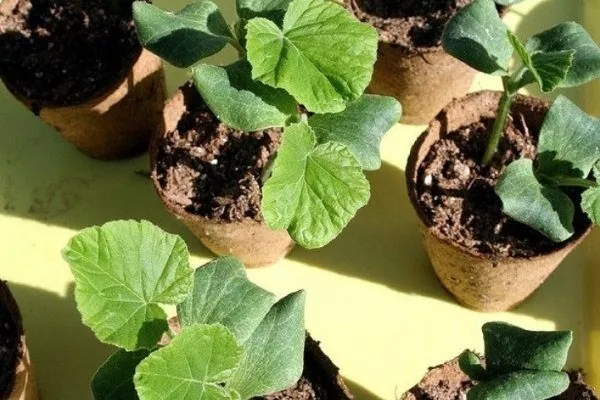
In the temperate zone, melon seedlings are sown from mid-March to the end of April. Sowing procedure:
- Prepare peat pots (d=10 cm).
- Fill the pots with soil. You can buy ready-made seedling substrate, or you can prepare your own soil mixture:
- soil – 1 part;
- humus – 3 parts;
- nitrogen and potassium fertilizers - 1 tbsp each;
- phosphorus fertilizers – 3 tbsp.
- Place 2-3 seeds in each pot, planting them at a depth of 1.5 cm. Be sure to warm the seeds before sowing.
- Provide lighting for the seedlings – they should be in the light for at least 12 hours a day.
- Before planting, fertilize the seedlings twice. The first time is 10 days after sowing. It's best to use a complex fertilizer.
- When the shoots appear, leave the strongest one and remove the rest.
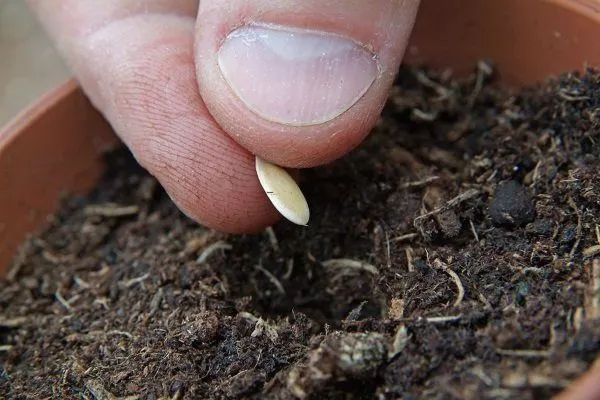
The minimum temperature for germination is +23°C, for seedling growth +21°C.
Planting seedlings in open ground
Seedlings are planted in the ground at 25-35 days old. This is done somewhat later than sowing in open ground, as it requires waiting until the threat of frost has completely passed. Seedlings can be used for both greenhouse and open ground planting.
The order of planting seedlings:
- Water the seedling pots to make it easier to remove the soil and roots. Your goal is to do this as carefully as possible without damaging the roots.
- Dig holes for the seedlings, leaving about 1 m between them. Mix humus and compost with warm water and pour this mixture into the holes.
- Transfer the seedlings to the prepared holes. Place them so that the root collar is level with the soil.
- Protect the plantings from direct sunlight for the first 2-3 days.
Never grow melons in the same place for more than two years if you don’t want to be left without a harvest.
How to properly care for a Torpedo?
Melon is a vigorous and resilient crop, capable of producing enormous, unusually large and delicious fruits. However, to achieve this, it requires specific conditions. The sweetness and size of the melons depends on the gardener's diligence.
Neglecting care can have disastrous consequences for your harvest—if the plants don't dry out or wither from thirst and lack of food sooner, they'll be ravaged by diseases and pests. Let's learn how to care for your "Torpedo."
Regularity of watering
The amount of watering depends on the climate, current weather conditions, growing method, and the growing season. Here are some tips for watering melons:
- If the melon is sown in open ground.Plants are watered starting from sowing to speed up germination. The plantation is watered about five times a week, unless there's rain. The recommended watering rate is 45 liters per square meter. The second important period for watering is from germination to fruit set. During this period, the plant's roots haven't yet penetrated deep enough into the soil, so artificial irrigation is required.
- If the melon is planted as seedlings. Water the plants as the soil dries out. Overwatering is not acceptable.
- Watering is stopped a month before harvesting. – otherwise the fruits will be unsweetened and watery, but most importantly, they will crack.
For watering melons, use only warm water, heated to a temperature of 20-25°C.
Thinning and loosening
When sowing seeds in open ground, the seedlings are thinned out twice:
- when the first leaf opens;
- after 3-4 leaves have opened.
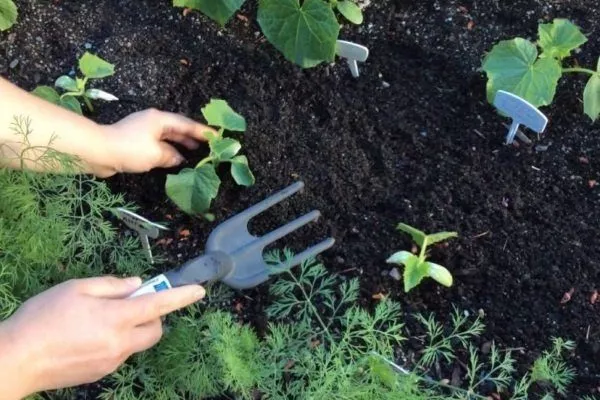
Only 1-2 of the strongest plants should remain in the hole. When thinning, loosen the soil, being careful not to disturb the area near the seedlings to avoid damaging the roots. During the growing season, melon plantings are loosened approximately 3-4 times. The loosening depth is 8-10 cm.
When and what to feed?
Melon plantings are fertilized 2-3 times during the growing season. Fertilizing is especially important when growing melons in open groundThe first one is carried out when the first leaf appears. Then the plants are fed.
The scheme and composition of fertilizers for growing melons using seedlings:
| When to apply? | What to fertilize with? |
| Planting seedlings in the ground in mid-May, when the plant has its first 4 leaves | humus or vermicompost |
| 10 days after landing | application of nitrogen fertilizers – 20 g of ammonium nitrate per bucket of water |
| In another week | humus, ash, or chicken manure solution |
| In a week | repeat the previous feeding |
In the fall, during plowing, phosphorus and potassium fertilizers are applied, and in the spring, nitrogen fertilizers are applied. Avoid applying too much nitrogen fertilizer, otherwise the crop will regrow.
Melons prefer potassium above all else. With sufficient potassium, the plant blooms well, remains disease-free, and produces fruit and ovaries vigorously. Melons are sweet and ripen quickly. All single-component fertilizers are diluted in water.
If the fertilizer is applied under the root, take the following amount per bucket of water:
- superphosphate – 50 g;
- ammonium nitrate – 15 g;
- potassium chloride – 30 g.
Pinching and removing ovaries
In temperate climates, training melon bushes is particularly important, as it determines yield. To ensure large, ripe fruits, the number of melons per bush must be limited.
Features of the formation of "Torpedo" bushes:
- There should be only 2-3 shoots left on one plant.
- The main stem is pinched when 3-4 fruits have set.
- The tops of the remaining lateral shoots are also pinched.
- When the fruit diameter reaches 5-6 cm, all excess ovaries are removed.
- Depending on the plant's vigor, 3-6 of the largest fruits are left on each plant. Climate conditions are also taken into account: the shorter and cooler the summer, the fewer fruits the plant can "nourish."
Diseases and pests
In temperate climates, the main danger for melons is high humidity. Overly wet soil and humid air are undesirable for this southern crop, as it is susceptible to bacterial, viral, and fungal diseases. If overwatered, the "Torpedo" variety is susceptible to root rot.
Diseases of Torpedo melon and measures to control them:
| Diseases | Symptoms | Treatment |
| Anthracnose | Pink or brown spots appear on the leaves. Later, ragged holes appear, and the leaves turn yellow and dry out. The fruits rot and become deformed. | Spraying with 1% Bordeaux mixture. |
| Root rot | Roots rot due to poor care and high humidity. The stems and roots change color and become thinner. Dark spots appear inside the fruit. | Water and loosen the soil between the rows properly. Soak the seeds in 40% formalin for 5 minutes. |
| Fusarium wilt | The leaves become light and spotted. The plant dies within a week. | The plant is sprayed during budding with a solution of potassium chloride. |
| Powdery mildew | A whitish coating appears on the leaves, then they turn brown and become brittle. | Spray every 11 days with 80% sulfur powder (350 g per 100 square meters). Stop spraying three weeks before harvest. |
Preventive measures for all melon diseases:
- seed treatment;
- soil disinfection;
- compliance with crop rotation.
If infection has occurred and is detected, melons are treated with a 1% copper sulfate solution. If this doesn't help, a specialized fungicide must be selected.
The risk of insect infestation is reduced if the beds are kept free of weeds and the humidity is moderate. However, if pests do attack your melon beds, it's important to use an insecticide specifically designed for the specific pest.
Torpedo melon pests and control measures:
| Pests | What harm? | How to fight? |
| Melon fly, | The fly lays eggs directly into the fruit, gnawing through the skin to reach the pulp. The larvae feed on the fruit's sap. | Biological and chemical treatments are used. They are sprayed with Mikosan, Fitoverm, Actofit, and others. |
| Spider mite | They live on the underside of leaves. Plant growth is inhibited. The bushes dry out due to loss of sap. | Preparations containing phosphorus and sulfur, or acaricides, are used. |
| Melon aphid | They suck the juices from the leaves, causing them to curl and dry out. | If aphids appear in the melon field, they are treated:
|
The melon fly is one of the most dangerous pests of melon crops. It can destroy half the harvest.
Determination of ripeness
If you pick a melon prematurely, before it reaches marketable ripeness, it will be tasteless. Such fruits will not develop a good flavor as they ripen. Moreover, they will develop an acetone smell.
Classification of melon maturity stages:
- Marketably ripe. Fruits collected at the stage of biological maturity;
- Green ripe. They are harvested at the stage of technical maturity – ripening occurs during storage.
- Technical. Fruits that have reached milky ripeness are used for canning and pickling.
- Non-commodity. They are sent to feed animals.
How to determine the ripeness of a melon right in the garden:
- The fruit has acquired the typical varietal color. In the case of "Torpedo," this is a rich yellow. A distinctive mesh pattern appears.
- The fruit has a sweet scent, especially noticeable when lightly rubbing the skin.
- Melons are easily torn from their stems, but the fruit itself becomes limp and withered.
- The skin is neither soft nor hard, but moderately springy.
- When lightly tapping the fetus, a dull sound is heard.
- ✓ The appearance of a fine mesh on the peel, not mentioned in the article.
- ✓ Easy separation of the fruit from the stalk at a slight tilt.
You can calculate the approximate ripening time by counting 90 days from the moment the seedlings appear.
The video below explains what to look for when choosing a Torpedo melon:
Harvesting and storage
Fruits intended for consumption or sale are harvested at marketable maturity. Pumpkins are beautiful, yellow, and exude a melon-like aroma. These fruits are not suitable for long-term storage, lasting no more than two months.
If the melon is to be stored, it is picked at the stage of technical maturity. "Torpedo" is a variety that tolerates storage well. This late-ripening melon has excellent shelf life and, under favorable conditions, can be stored for up to six months.
Tips for harvesting melons:
- Pick the fruits with the stem attached. A stalk of about 3 cm should remain.
- Pick melons early in the morning or in the evening. Avoid picking melons in hot weather.
- Leave the melons in the area for 3-4 days. Turn the fruit every 5-6 hours.
Requirements for the room in which melons will be stored:
- Cool. The room should be cool, but not cold. The optimal temperature for melons is +2…+4°C. Optimal humidity is 80%.
- Disinfected. You can treat the area with bleach or smoke bombs. After treatment, the area should be kept closed for 4-5 days.
- Ventilated. After keeping the room closed, it is ventilated.
- Whitewash. All wooden elements are whitewashed with freshly slaked lime.
In storage, the fruits are placed on shelves sprinkled with sawdust or chaff. Another storage method is hanging. Each fruit is placed in a large-mesh net and then tied to a crossbar.
Avoid storing melons near potatoes and apples. Potatoes impart an unpleasant flavor, causing the fruit to rot. Apples emit ethylene, which accelerates the ripening process, causing melons to become overripe. Inspect the fruit periodically; if any spoilage is noticed, remove it immediately.
Growing Asian melons in temperate climates once seemed impossible. Today, thanks to specialized farming techniques and the use of seedlings and coverings, it's possible to grow the famous "Torpedo" melon, weighing up to 5 kg.