
The Skazka melon is classified as an F1 because it's not considered a standalone variety, but rather a hybrid. It's characterized by its exceptionally sweet fruit, undemanding cultivation techniques, early ripening, and the ability to be planted in open beds, greenhouses, or under plastic. But there are other distinctive features and advantages that attract the attention of consumers and gardeners.
Who developed the variety and when?
The Skazka melon variety is considered relatively new, as it was only crossed by breeders and officially approved for cultivation in 2001. The copyright for this variety belongs to a team of breeders, including K. E. Dyutin, S. D. Sokolov, and T. V. Sokolenko.
The application for registration of the variety under number 33975 was submitted by the company OOO SEMKO-JUNIOR on February 29, 2000.
Description of the variety
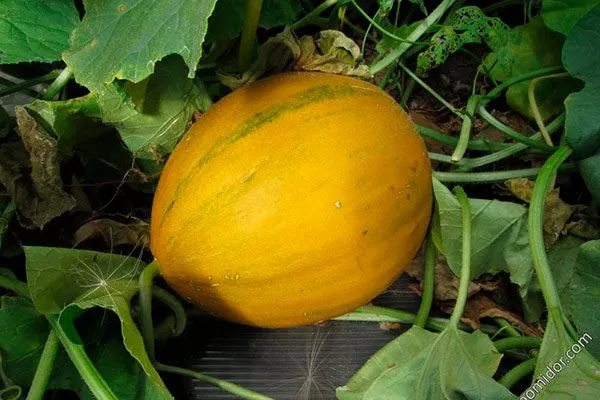
The plant is a climbing variety, but quite compact. Thanks to its sturdy stems, it can even be tied to supports. The main thing is to ensure that the medium-sized fruits don't fall to the ground.
Distinctive features of the plant and fruits
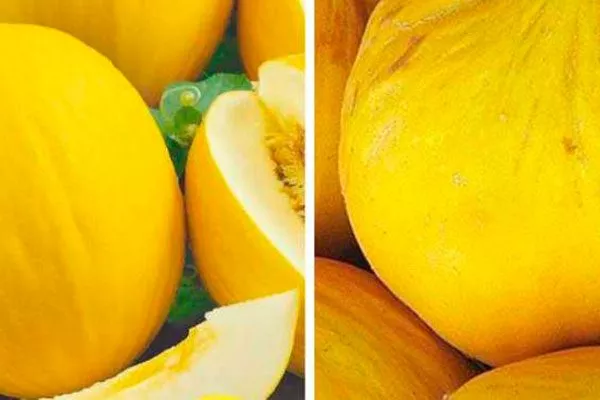
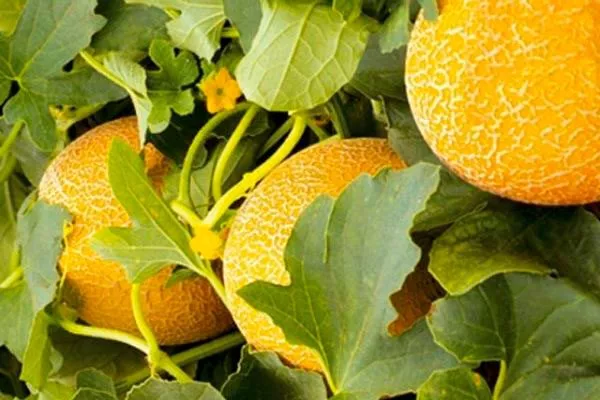
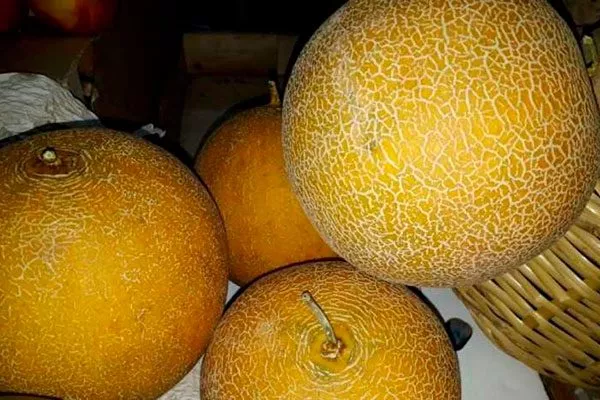
The melons are characterized by their elongated, round shape and bright, rich yellow hue. But there are other features that distinguish Skazka from other varieties:
- weight of one fruit – 1-1.8 kg, but sometimes it is more;
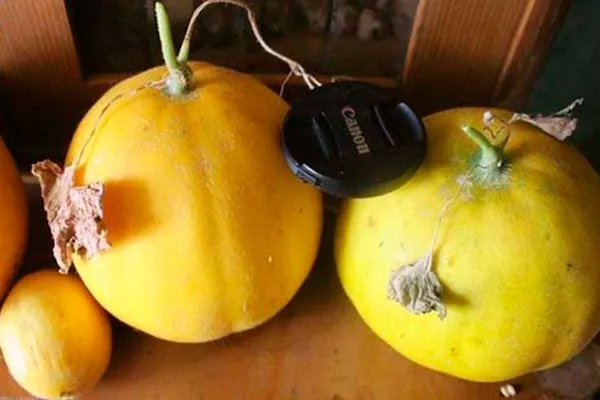
- peduncle – with white mesh;
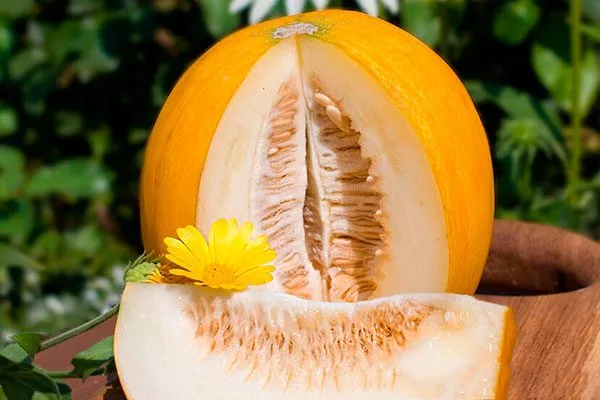
- pulp – with increased juiciness and sweetness, a crunch is felt when biting into it;
- pulp color – creamy, very delicate;
- leaf blades – slightly dissected, medium in size, green;
- peel – thin, which is especially pleasing to consumers, as it produces little waste;
- skin surface – there is a small amount of mesh present;
- segmentation – weak;
- peel shade – classic yellow;
- seed nest – medium in size;
- bones – narrow oval shape, large, in small quantities (about 0.8-1.0%);
- aroma – medium intensity, melon-like.
Composition, calorie content and benefits
The Skazka melon is not only tasty, but also healthy: it contains vitamins B, A, C, E and H, and is also rich in minerals such as magnesium, calcium, iron, phosphorus and zinc.
Regular consumption of this fruit can strengthen the immune system, improve metabolism, provide the body with essential nutrients, and even help relieve stress.
100 g of this melon contains:
- 33 kcal of energy value;
- 0.6 g protein compounds;
- 0.3 g fat cells;
- 7.4 g carbohydrates.
The vitamins in melon have a beneficial effect on the skin, moisturizing it. Magnesium and potassium microelements are important for maintaining visual acuity, while calcium is essential for strengthening the skeletal and joint system.
Characteristics
Before planting a variety, make sure it meets your requirements and needs, as well as the growing region.
Purpose and taste
Skazka melons are distinguished by their exceptional flavor: their flesh is sweet and incredibly juicy. Sugar content reaches up to 10%. They are recommended for fresh consumption, but they are also suitable for making preserves, jams, candied fruits, and other confectionery products.
Ripening time
This early-ripening variety ripens approximately two months after the first shoots appear, with the fruits ripening simultaneously. Harvest time is in late July or early August, depending on the date of outdoor sowing.
Productivity
On average, 1 square meter can yield 2.0 to 2.5 kg of melons, and this figure can be increased with proper care.
Growing regions
The fairy tale is cultivated in all regions of Russia, right up to the Far East.
The intricacies of self-cultivation
Due to the hybrid's high soil quality requirements, melon growers begin preparing planting sites well in advance, creating beds saturated with nutrient mixtures.
- ✓ Use only hardwood ash, as it contains more potassium and less chlorine, which is beneficial for melons.
- ✓ Avoid ash from burning plastic, painted wood, or other potentially toxic materials.
Before winter, in the last days of October, the soil is thoroughly dug over, cleared of debris and weeds, and burned. Ash and lime are added to improve the soil structure, reduce acidity, and create a favorable growing environment.
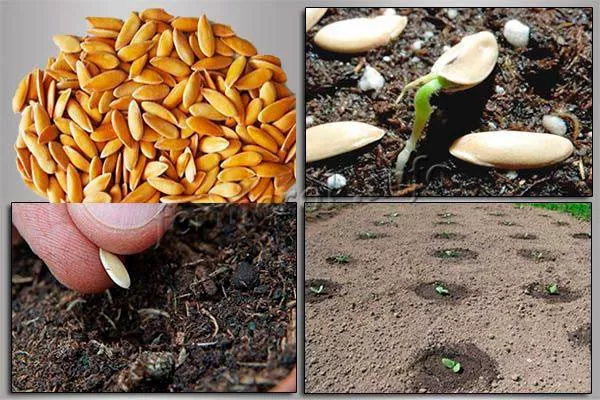
With the arrival of spring, the soil is dug again to make it loose and breathable. Melon plants are planted in cool weather, remembering to prepare the seeds first.
Sowing work
There are two methods used to plant melons:
- The seedling method is especially relevant for regions with unstable climates, such as the Urals and Siberia. High-quality soil for seedlings must be treated with a manganese solution, or you can use a ready-made universal soil mix. Planting containers should be chosen carefully; they can be made of wood or peat.
Seeds are disinfected by soaking them in aloe juice or hydrogen peroxide, after which they must be dried and placed in prepared soil.
Seedling care includes providing adequate light and watering every two weeks, focusing the water on the roots, avoiding the leaves and stems. A growth stimulant is recommended to accelerate seedling development and strengthen their immune system. - Direct seeding into the ground occurs after all possible frosts have passed, usually in mid-May. Seeds are planted in open ground at a spacing of 65 x 145 cm, and in a greenhouse at a spacing of 65-75 x 65-75 cm. Supports are installed to accommodate the hybrid's growing needs for shaping and care.
After planting, the beds are mulched with straw to retain moisture and prevent weed growth. Immediately afterward, the plants are watered thoroughly with filtered water, and watered again after a week.
Care actions
Standard care for the Skazka hybrid includes watering every 3-5 days, using 1.5 to 2 liters of water per plant. The frequency of watering is adjusted depending on weather conditions. A nettle-based nutrient solution is used weekly instead of water, which also protects the plants from pests.
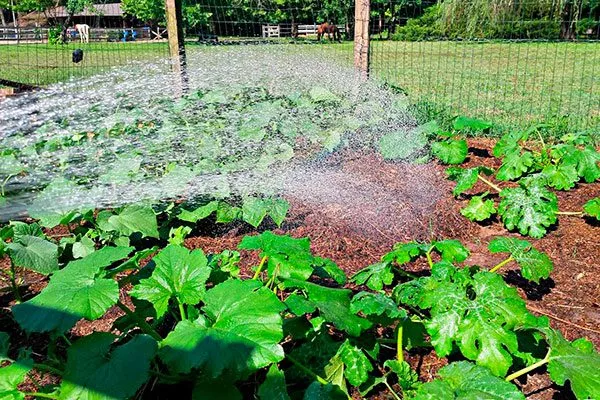
Complex feeding of melon plants involves the use of organic (liquid mullein, chicken manure) and mineral fertilizers (such as Zdraven). Skazka should be fertilized every 10-15 days, starting two weeks after planting, alternating root feeding with foliar feeding.
The subtleties of cultivation and the most important points
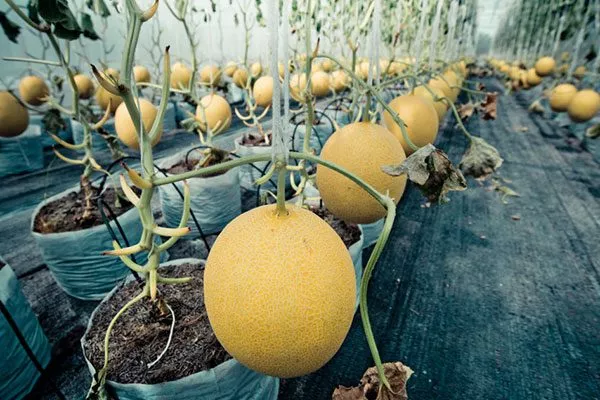
Cultivating this variety requires careful shaping of the bush, which is critical for yield and fruit quality. Regardless of the growing location, the plant is trained into a single shoot, removing all side shoots and pinching off shoots after the fourth or fifth leaf. To direct shoot growth, they are tied to supports.
What else to pay attention to:
- As a preventative measure against rot, it is recommended to place wooden stands under large fruits, avoiding their contact with wet soil.
- When planting the Skazka melon in a greenhouse, it is vital to ensure regular ventilation in order to prevent unfavorable changes in the microclimate and excess humidity.
- In open ground, in addition to standard fertilizer, it is recommended to apply potassium monophosphate once or twice per season to maintain water balance and improve the taste of the fruit.
Diseases and pests
The variety is more or less resistant and tolerant to diseases and pests, but the following problems sometimes arise:
- Pests. Melon flies, which lay their larvae in the fruit, can be controlled with soap solutions (100 g of laundry soap per 10 liters of water) for prevention and insecticides (such as Aktara or Iskra) for treatment. Spider mites, which cover leaves with a fine web and suck out their juices, can be controlled with whey-based sprays.
- Diseases. To combat fusarium wilt, which manifests itself as a gray coating on the bushes, both preventative potassium fertilization and treatment with a 1% solution of Bordeaux mixture are used.
Harvesting and use of the crop
Skazka melons, now bright yellow and with a distinctive aroma, are picked on a dry morning. After picking, they are carefully wiped and stored in a cool, dark place. To extend shelf life, the fruits are removed with part of the stem attached.
Melon is used to make not only traditional desserts like jellies, sorbets, and marmalades, but also unique snacks and drinks thanks to its sweet flavor. In Mediterranean countries, it's popular to serve sweet melon with prosciutto, lightly sprinkled with black pepper, and wrapped in thinly sliced meat.
Advantages and disadvantages of the variety
The Skazka melon variety is ideal for growing both in open ground and under plastic covers. This is just one of the many advantages this variety offers. Its other advantages include:
Disadvantages include the relatively weak aroma of the melon flesh and its high sugar content, which may be unsuitable for those watching their figure and following healthy eating habits. Fruits of this variety are not suitable for long-distance transportation.
How to choose fruits when buying?
When choosing Skazka melons in the store, follow these tips:
- Pay attention to the firmness of the fruit. Ideally, the melon should be slightly softer in the middle than at the edges.
- A ripe melon should smell pleasant, with distinct notes of sweetness and honey. An overly intense aroma may indicate overripeness, while a complete lack of aroma indicates underripeness.
- Visually, the melon should be free of visible damage: cracks, dents and scratches.
- The rind color of a ripe Skazka melon should be bright yellow and uniform, without green stripes or spots.
Reviews
The Skazka melon is popular among gardeners not only for its ease of growing and excellent taste, but also for its rich nutritional profile. Enriching the body with these beneficial components is beneficial not only in summer but also in winter, which can be achieved with delicious and simple canned melon preparations or frozen/dried melon pulp.