
The melon with the unusual name Charentay belongs to the Cucurbitaceae family and is a Muscat variety, which characterizes its unique flavor and aroma. This is a Cavaillon melon, producing tiny fruits that are quite heavy due to the density of their flesh. Other names include Cucumis melo var. or reticulatus.
History and special honors of the Charentais melon
Charente melons were first cultivated in the French town of Cavaillon, giving rise to the name "Cavaillon melon" for one of their varieties. The mid-1920s is associated with the emergence of a variety of Cavaillon melons called Charente in the department of Charente (located in the west of central France), which has since become a significant product of the region.
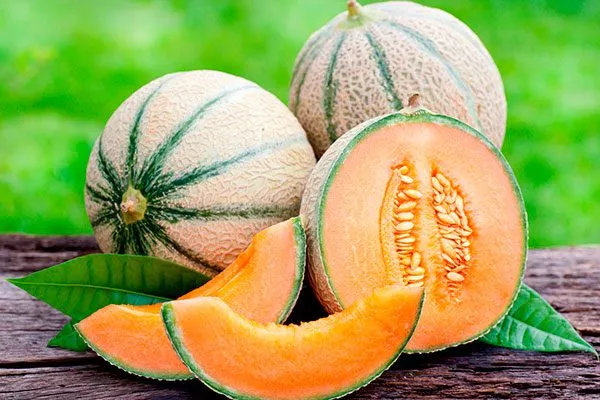
Other historical and other features of the variety:
- The Charentais melon is grown in many countries around the world today, but for one of these melons to be officially designated as Cavaillon, it must originate directly from Provence.
- This melon variety has a unique cultural aspect: there is even a community of the Brotherhood of Knights of this melon variety, dedicated to maintaining the high image of the product by monitoring the taste, density, and visual quality of the harvest, thereby confirming its authenticity.
- The Charentais melon has earned special attention, reflected not only in the installation of a nine-ton sculpture at the entrance to Cavaillon, but also in the organization of annual festivals in honor of this fruit, which even include horse races.
- These small, green-striped fruits are considered among the best in the world due to their unique aroma and taste.
- Every July, on the eve of Bastille Day, Cavaillon hosts celebrations that include the release of one hundred horses, which forms the culmination of the local Fête des Melons.
- Locals and visitors can attend melon tastings, enjoy art and tours of melon plantations, and sample various melon-based dishes. A special summer delicacy is Charentais melon canapés drizzled with port wine.
- The Charentais melon has a history of at least 500 years and is the pride of Cavaillon.
- In the 14th century, seeds were brought from the Italian town of Cantalupo to Provence. Legend has it that King Charles VIII brought them from the papal gardens near Rome.
- As early as the 16th century, this melon was known in France, where it was often served to high-ranking guests.
- The mid-19th century saw a rapid rise in the popularity of Charente due to its easy transport to the capital, which led to its widespread recognition and love among the French.
Characteristics of the appearance of the plant and fruits
The Charentais melon, which is a category of berries, is considered a long-vineed, vigorous, and highly branched plant. The Charentais can be distinguished by the following characteristics:
- pulp shade - bright, rich orange and glossy;
- aroma - strong (based on descriptions and reviews, it combines jasmine, violet and almond notes when unripe, but after full ripeness, the scent of passion fruit, bananas, apricots and honey appears);
- taste - sweet and honeyed, but there is also a slight sourness, creating harmony (many talk about the unexpected aftertaste, which manifests itself with notes of roses and citrus, which is why it is called tropical);
- internal seed box – small size;
- pulp texture - juicy;
- seeds – medium size, yellow color, elongated shape;
- leaves – with jagged edges, small in size, slightly fuzzed and rich green in color;
- flowers - only female, bright yellow;
- weight of melons – from 1 to 1.5 kg, but there are specimens weighing 2 kg;
- berry shape - flattened-rounded;
- skin thickness - thin;
- Gthinness of the skin - moderate.
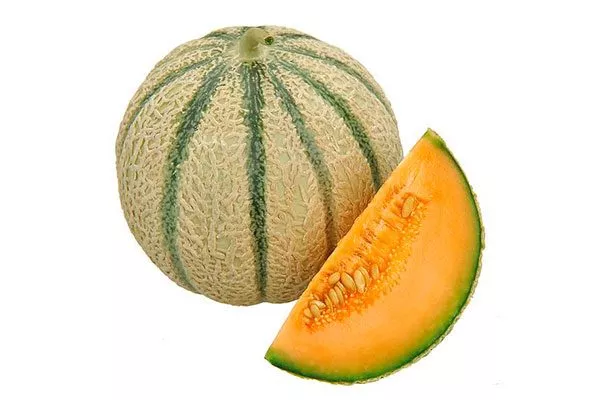
The structure and color of the peel deserve special attention:
- in the middle of the growing season the skin is golden-green, sometimes with a greyish tint, but as it ripens it acquires an orange tint;
- surface - mammillary type with clearly defined grooves that are located longitudinally;
- the mesh on the skin is refined;
- stripes are dark green.
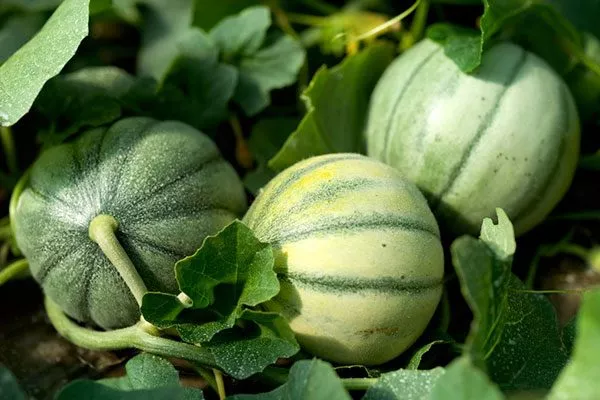
The uniqueness of Charentais lies in the fact that the skin can be either smooth or with an intricate pattern such as cracks.
Taste and purpose
Consuming it fresh or processed provides the body with a significant amount of vitamin C, while its caloric content is only 100 kcal per serving of over 300 g. This makes pepos an ideal option for those who want to enjoy the sweetness of the fruit without fear of gaining excess weight.
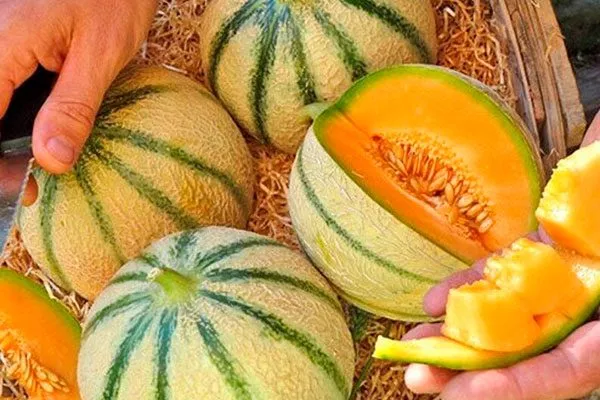
In addition, Charentais melon is an excellent source of beta-carotene, folate, potassium and dietary fiber.
Ripening and yield
Charentais is a mid-early variety. The fruits reach maturity approximately 80-90 days after sowing. The harvest is typically in August. This variety is characterized by high yields; however, there are currently no official statistics confirming this.
Subtleties of agricultural technology
Pepos are successfully cultivated not only in the Cavaillon region, where the unique combination of the Mediterranean climate and specific soil conditions lends a special quality to the fruit. Although it's difficult to precisely replicate these conditions, you can try growing these exquisite melons by purchasing seeds from specialist retailers or online gardening stores.
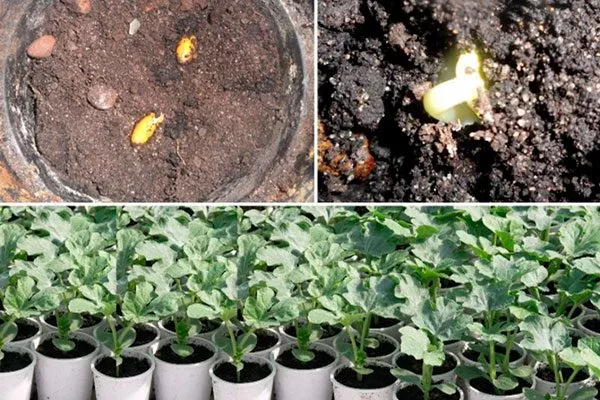
Planting and care features:
- Growers recommend sowing Charentais melons directly into open ground after the threat of spring frosts has passed. Alternatively, you can use the seedling method, sowing the seeds about a month before the planned transplanting date.
- Planting efficiency is increased by adding a thick layer of organic material to the soil surface.
- The seeds are placed at a depth of about 5 centimeters, pressing 3-4 seeds into one depression.
- During the germination process, it's important to maintain constant soil moisture. Seed germination typically takes 3 to 12 days.
- When the seedlings reach a height of 15 cm, it is advisable to mulch them with a straw mixture or other suitable material to retain soil moisture.
- A distinctive feature of Charentais melons is that they can be grown vertically without the need for supporting bags, although many gardeners use them for other types of cantaloupes.
- To obtain large fruits, gardeners are advised to leave only the three best ovaries on each plant, thereby directing the plant's energy to the development of these fruits.
- Because Charentais is a cultivar and not a hybrid, the seeds can be collected for future sowing. To do this, simply remove the seeds from the fruit and soak them in water for a couple of days, covered with a paper towel or cloth, to allow fermentation to begin.
Then separate the heavy seeds that have settled to the bottom from the empty ones that have floated to the surface, and rinse the former under running water. Then, spread them out on a paper towel to dry for a week before storing them for the next season.
How to distinguish the ripest and sugariest Cavaillon berries?
The ripest and sweetest melons are selected primarily by their weight—they should be heavy and firm, indicating the presence of sugary juices. Other ripeness parameters include:
- You can appreciate the smell of the melon - the real aroma will be extremely intense.
- When tapped, a ripe fruit produces a dull sound.
- In France, it is a common belief that the number of stripes on a melon can indicate its ripeness: ten stripes indicate it is ready to pick, while nine or eleven are a sign of under- or over-ripeness.
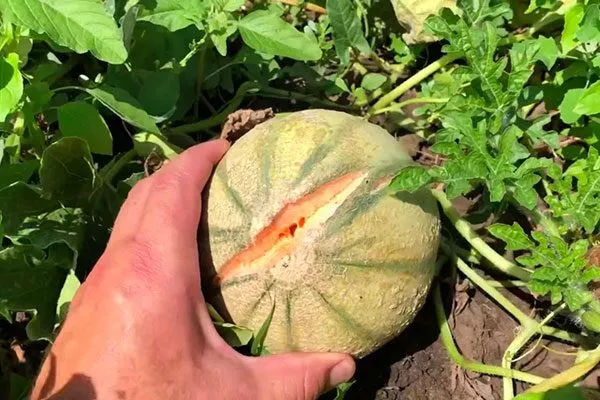
- ✓ The presence of a sweet, intense aroma.
- ✓ Dull sound when tapped.
- ✓ Cracks on the stem indicate readiness for harvesting.
Charentais melons don't usually separate from the vine when ripe because the stems begin to split, making the melon easier to remove. It's important to harvest the melons on time to avoid overripening, which can lead to cracks and spoilage, making the fruit easy prey for ants.
Pros and cons
The main advantage of this Provencal melon is its taste and aroma, but the variety also has other positive aspects:
The downside is that true Cavaillon melon can only be grown in Cavaillon and Provence. That's the French view.
The flavor of Charentais melon is difficult to describe—it's a symphony of honeyed sweetness with a touch of acidity, citrus notes, and a pink floral finish. Interestingly, the unripe fruit has nuances of overripe sweet pumpkin. Cavaillon melons boast not only exceptional flavor but also a beautiful appearance.