
The Raymond melon is the best choice for cultivation in a variety of climates due to its high disease resistance, high yield, and excellent taste. Proper care will ensure consistent, high-quality yields with minimal risk of spoilage.
Breeding history
The variety was developed by Israeli experts from the seed company Hazera Genetics. In 2011, it was approved for use and entered into the Russian State Register.
Description of the variety
The hybrid is undemanding in terms of growing conditions and tolerates stress well. The fruits withstand long-distance transport and retain their attractive appearance.
Characteristics of the appearance of the plant and fruits
It is popular due to its varietal characteristics. Distinctive qualities of the hybrid:
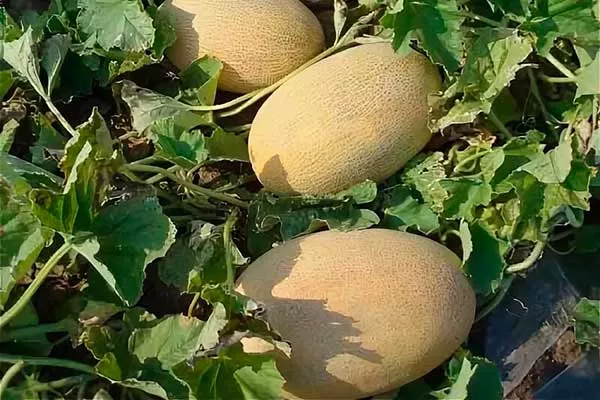
- The plant is vigorous, with shoots reaching 2-2.5 m in length. The stems are covered with large, green-colored leaves.
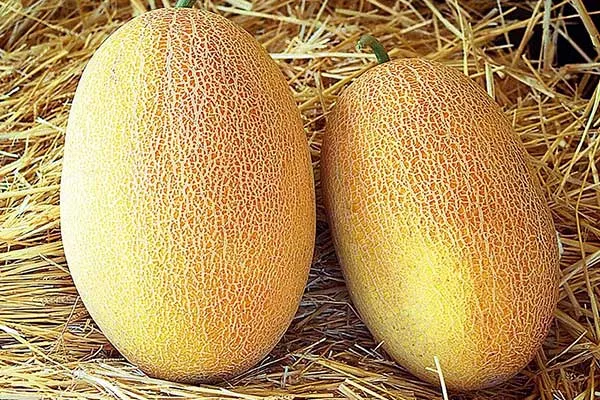
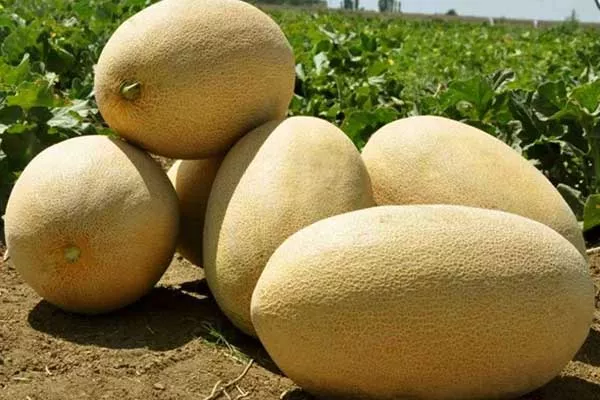
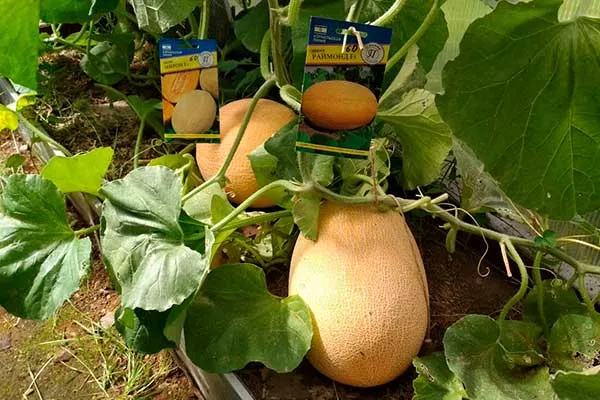
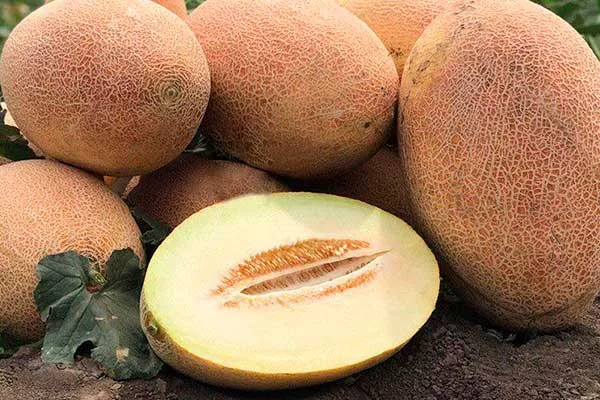
- The fruits are golden-ochre in color, with an average weight of 2.5-4 kg, but some specimens reach 7-10 kg.
- The shape is elliptical, with a distinct mesh pattern on the skin.
- The surface is smooth, not rough.
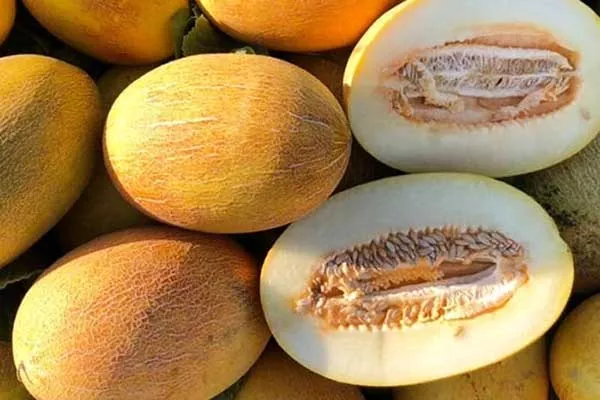
- The flesh is tender, creamy in color, slightly crispy and juicy.
Purpose and taste
It has a unique flavor. The pulp has a rich aroma and is high in sugars (6.6-6.9%), with notes of honey and pineapple. It is eaten fresh, in fruit salads, and desserts. The fruit is also suitable for making pastilles or candied fruit.
Ripening time
A mid-early hybrid. Seeds are sown for seedlings in April, and the plants are planted outdoors in May-June. The harvest is ready within 70 days of germination.
Productivity
Its economic appeal stems from abundant fruiting, high yields (up to six fruits per vine), and large size. In the regions where the variety was tested, the hybrid demonstrated impressive results.
In the Lower Volga region, under favorable production conditions, yields ranged from 112 to 128 centners per hectare, while in the North Caucasus, they ranged from 108 to 284 centners per hectare, exceeding standard yields by 30-50%. With artificial irrigation, yields meet the standard.
Growing regions
Recommended for growing in the Moscow region and the Central Black Earth Region. The variety is successfully cultivated in the southern regions of the country. It demonstrates high productivity when planted in open ground and under plastic cover. In colder regions, it is grown in greenhouses.
Application
It can be used in a variety of culinary preparations and recipes. The ripe pulp is not only eaten fresh but also used as an addition to fruit salads and combined with other fruits, such as watermelon, pineapple, and others.
It's used to make a variety of desserts: sorbet, melon balls, or fruit desserts with mint syrup or cream. The fruit can be preserved, used as a stand-alone dish, or used as an ingredient in various culinary treats.
Features of cultivation
Seeds can be sown in a greenhouse anytime from spring to summer, and in plastic tunnels, planting can begin in late April. Use medium-sized containers with a diameter of about 10 cm or boxes for sowing. Add a layer of substrate about 1 cm thick to the bottom.
During cultivation, ensure warm temperatures and constant soil moisture. Once the cuttings have developed 3-4 leaves, trim them back to the second leaf. A few days after this, transplant the plants to their permanent location.
Requirements for planting site and soil
The crop has specific growing conditions. Follow these recommendations:
- Maintain an optimal air temperature of 22°C during seedling formation and up to 28°C during flowering and fruiting. The substrate temperature should not drop below 24°C, so it is best to grow plants in heated greenhouses.
- Adequate lighting is required. The correct day length of 12-16 hours is essential.
- The substrate must be fertile, well permeable, with a reaction close to neutral.
- ✓ The optimal substrate temperature for seed germination should not be below +24°C.
- ✓ It is necessary to provide a daylight duration of 12-16 hours for optimal growth.
When choosing a location for planting in open ground, give preference to sunny places protected from strong winds.
Landing
Plant during the warm spring months, when the risk of frost is minimal. Outdoors, sow seeds about 2 cm deep in fertile, well-drained soil.
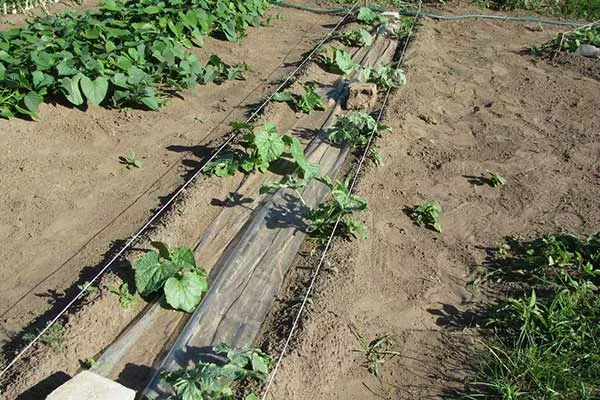
Leave a distance of about 1-1.5 m between plants to ensure adequate space for root growth and development. When planting in a greenhouse or plastic shelter, space the plants about 70-100 cm apart.
After planting, water the plants thoroughly to ensure they have sufficient moisture for rooting. Consider your local climate and care recommendations to ensure optimal conditions for growth and development.
Subtleties of agricultural technology
For planting, provide a substrate layer approximately 30 cm thick. Beneath this, a substrate such as manure or straw can be placed.
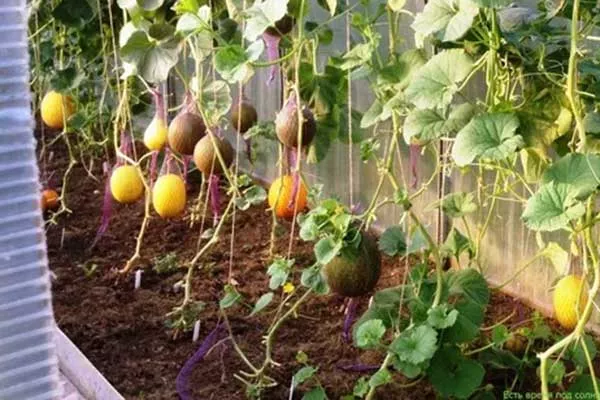
Helpful care tips:
- In hot weather, ventilate greenhouses or tunnels regularly.
- Pollination is carried out manually by inserting the anthers of male flowers into female specimens.
- Use fertilizers with sufficient potassium and phosphorus. Excess nitrogen in the soil can negatively impact crop growth and development.
- Prune the side shoots promptly, after 8-9 leaves have formed. Remove them after the 6th or 7th leaf. Prune non-fruiting shoots to avoid excessive nutrient and moisture consumption.
Prune the main shoot above the third leaf, and leave only three side shoots that grow vertically and can be tied with twine. Later, pinch the shoots above the second leaf, behind the fruit buds.
Resistance to diseases and pests
Agronomists value this variety for its high immunity: even without treatment or spraying, it is disease-resistant. The hybrid exhibits high resistance to fungal diseases such as fusarium wilt and powdery mildew.
Harvesting
Harvest Raymond melons when the fruits reach full maturity and develop characteristic characteristics of the variety, such as a change in skin color and a duller sound when tapped on the surface. This typically occurs 2.5 months after emergence.
- Determine the ripeness of the fruit by the change in color of the bark and a dull sound when tapped.
- Harvest during cooler times of the day for best preservation.
- Store ripe fruits in cool, dry places at a temperature of 10-15°C.
For storage, choose cool, dry places where the temperature fluctuates between 10-15°C. Melons can be stored in the refrigerator, but they must be ripe and dry. They will keep for about 1-2 weeks in the refrigerator.
Pros and cons of the variety
Before planting a crop in your garden, study its positive and negative characteristics. The hybrid has many advantages:
Melon Raymond F1: reviews
The Raymond melon is a variety that exhibits high disease resistance and possesses a number of positive characteristics. It is popular with both novice and experienced gardeners, thanks to its ability to be grown even in the northern regions of the country. Proper care is essential for a good harvest.