
The Bird's Milk melon lives up to its resonant name, boasting delicate flesh with a refined flavor and rich melon aroma. This variety is a favorite not only among gardeners but also among farmers and merchants—its delicious and attractive fruits transport and store well, and are in demand among consumers.
History of creation
This variety is relatively new, and information about its breeding is lacking. There are indications that it was developed specifically for areas with unstable agricultural conditions; in particular, it is recommended for cultivation in the Altai Krai.

General information
The variety is easy to grow and suitable for any type of cultivation. In the south, the Bird's Milk melon can be planted in the garden without any cover. In regions with short summers, seedling cultivation is recommended, otherwise the fruits do not have time to ripen.
Description of the plant and fruits
The bushes are distinguished by long vines, and the leaves are regular, of a standard size and shape. The fruits grow large, and under favorable conditions, they can weigh up to 2 kg.
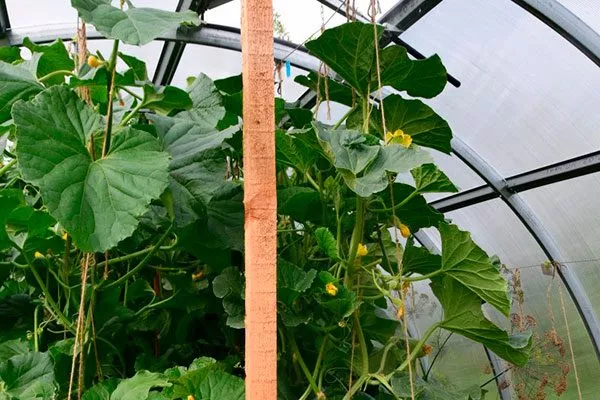
- ✓ Fruits reach a weight of up to 2 kg under optimal growing conditions.
- ✓ The variety has increased resistance to powdery mildew.
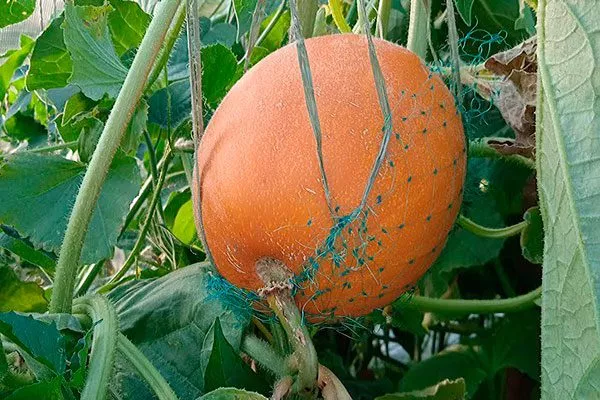
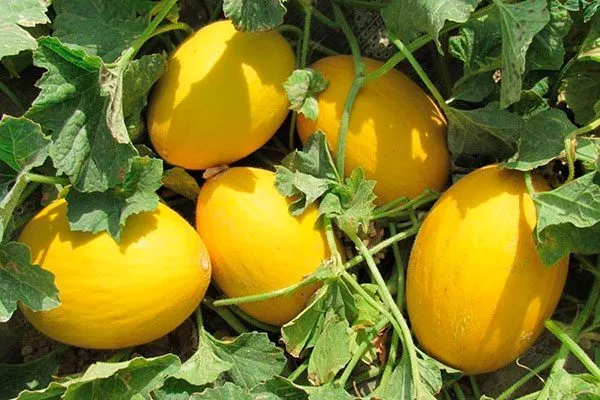
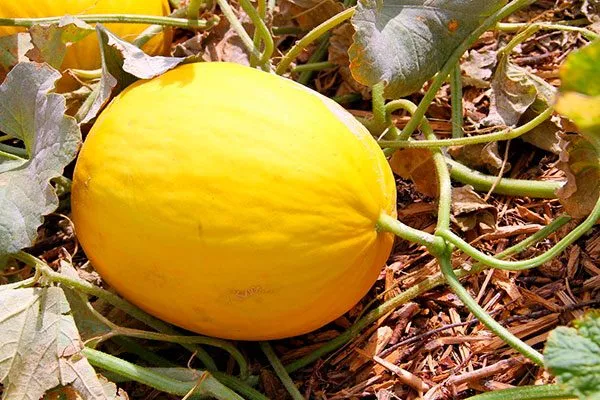
The melons are golden-yellow in color, with a rind covered with a fine, sparse mesh. The fruits are oval and smooth. The flesh is buttery, creamy, and juicy, with a very delicate texture.
Purpose and taste
Melon is extremely sweet and pleasant to the taste, ideal for eating fresh. It also looks beautiful when sliced. The fruit can be used to make jam, marmalade, smoothies, and compotes, and can also be used as a filling for baked goods.
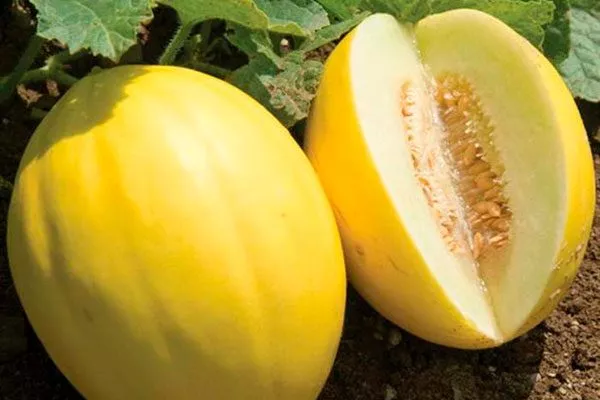
Bird's Milk melon can also be canned and added to fruit salads and ice cream. Slices of this melon pair beautifully with peaches, grapefruit, and strawberries.
Ripening time
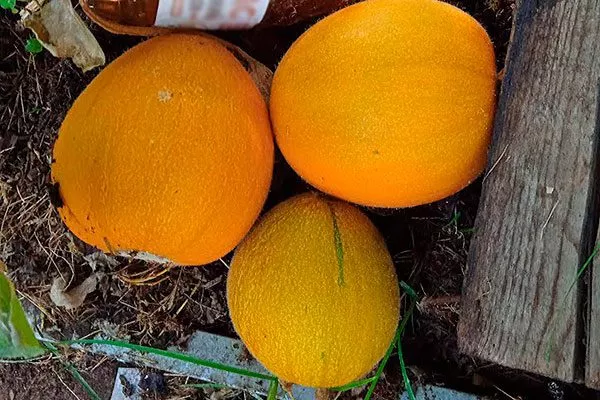
This variety belongs to the group of early-ripening melons. It takes 60-65 days from germination to fruit ripeness. Gardeners harvest the first ripe melons as early as mid-July.
Productivity
The Ptichye Moloko melon yields quite a high yield—3-5 kg per square meter. By comparison, the popular Kolkhoznitsa variety yields no more than 2.5 kg per square meter. Growing conditions and care greatly influence the variety's yield.
Advantages and disadvantages
The Bird's Milk variety has many advantages that are worth knowing about before planting. It's also helpful to be aware of any potential drawbacks in advance.
Landing
The success of growing Bird's Milk melon depends largely on proper planting. It's essential to choose a suitable location, find good seeds, and then plant them according to the proper planting technique and pattern.
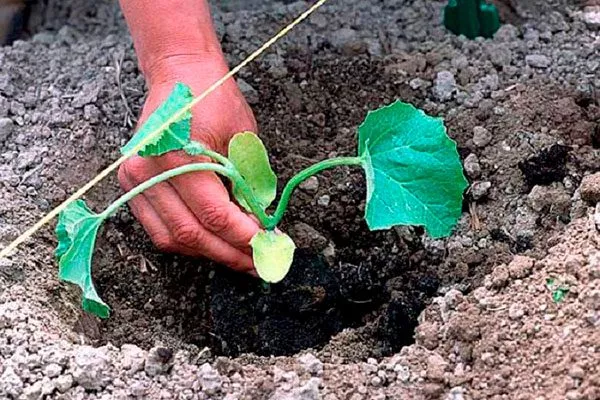
- ✓ The soil temperature for sowing should not be lower than +12°C, and the air temperature +17°C, which is critical for seed germination.
- ✓ Hardening off seedlings before planting them in open ground is necessary to adapt the plants to external conditions.
In southern regions, seeds are sown directly into the ground, while in other regions, seedlings are grown first. In temperate climates, summers are short, often rainy, and cool; if melons are grown without seedlings, they simply won't ripen in time.
Recommendations for planting the Bird's Milk melon:
- Choose a sunny, warm, level, or elevated site. Low-lying or marshy areas are contraindicated; the plant does not tolerate waterlogging.
- The soil should be light, loose, fertile, and neutral in pH. Heavy soils require the addition of sand and humus.
- Seedlings are sown in March-April. The seeds are pre-soaked in potassium permanganate and rinsed. Seedlings are planted when they have developed 3-4 true leaves. Favorable weather conditions are also essential.
- In southern regions, seeding is done in April-May, when the soil warms up to 12°C and the air temperature reaches 17°C. Under similar weather conditions, pre-hardened seedlings are also planted, but they must be covered with plastic to prevent damage from recurrent frosts.
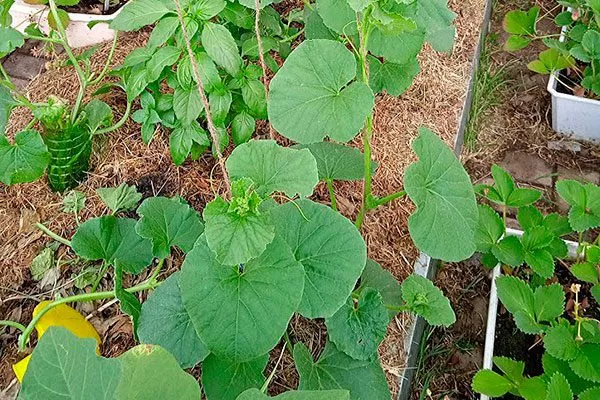
In regions where summers are not only short but also cold, it is recommended to grow melons in greenhouse conditions. - When growing melons without shelter, a 100x140 cm planting pattern is used. In greenhouse conditions, a different pattern—70x100 cm—is recommended. Mature plants in greenhouses are tied to trellises.
Care Features
Proper care is the key to a good harvest. When growing melons, it's important not to overdo it, as too much water or nutrition is just as harmful as too little, and most importantly, both immediately impact the quality of the harvest, the size, and the taste of the fruit.
Care tips:
- Water the melon beds only with warm water, in the evening or morning. During the flowering stage, water the melons 2-3 times a week; during the fruit formation period, reduce the frequency. Watering is stopped two weeks before harvest.
- After watering, the soil is loosened to allow air to reach the roots. Loosening continues until the shoots close.
- Fertilizers—organic and mineral compounds—are applied to the roots several times. Potassium and phosphorus are recommended during fruit ripening.
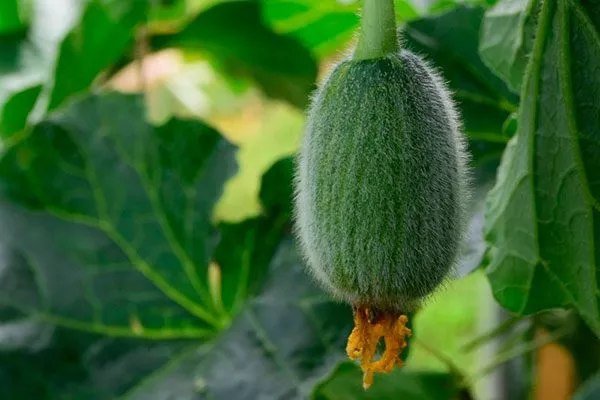
- To ensure a good harvest, it's recommended to pinch off the central stem above the fifth leaf. Three ovaries are left on each bush. This will produce truly large melons.
Resistance to diseases and pests
The variety is highly resistant to powdery mildew, and other diseases rarely affect it. Pests are also not likely to attack the Ptichye Moloko melon. However, to be on the safe side, preventative sprayings, such as with Fitosporin, can be used.
As a preventative measure, plants can be sprayed with a solution of iodine and whey: mix 1 liter of whey with 1 liter of water and add 4 drops of iodine. If the weather is rainy, melon beds are sprayed every 4 days; if dry, once a week.
If spider mites, cutworms, or aphids do appear on your plants, immediate action is necessary. It is recommended to spray your melons with Fufanol, Actofit, Fitoverm, or similar products.
Harvesting
Melon ripeness is determined by the color of the rind—it should be a rich yellow, exuding a rich melon aroma. If the fruit is fully ripe, it peels easily from the stem. If the melons are to be stored, a 5 cm stem is left on. The Ptichye Moloko melon is an early variety, so it should be stored for no more than a week.
Harvesting is carried out only in dry weather. After harvesting, the fruits should be left in the sun, with the side that was touching the ground exposed to the sun, to dry thoroughly. This will ensure the fruits will keep well and be transported. Melons are stored at a temperature of +1 to +3°C and a humidity of 70-80%.
Reviews
The Ptichye Moloko melon truly sets the standard among its competitors. Melon lovers are drawn to this variety for its perfect combination of qualities: delicious, tender flesh with excellent agronomic characteristics.