
The Autumn melon is ideal for growing in small areas—the plants and fruit take up little space but produce very high yields. This variety is characterized by excellent long-distance transportability, low maintenance and planting requirements, and a mid-season ripening period. To obtain high-quality fruit, it's important to adhere to the finer points of cultivation techniques.
Breeding history
The "Osen" melon is a proven variety registered in 2000. It was developed at the Federal Scientific Center for Vegetable Growing. The variety's creators are breeders L.V. Yemelyanova and O.P. Varivoda. The variety is adapted for cultivation in the climatic conditions of the North Caucasus and Lower Volga regions.
The variety is included in the State Register of Breeding Achievements of the Russian Federation and approved for use in the specified regions. The originator of the variety is the Federal Scientific Center, located in the Odintsovo District, Moscow Region, in the village of VNIISSOK.
Description of the plant and fruits
The variety has a moderate climbing habit, but the shoots grow long (200 to 250 cm) and strong, so it's best to tie them to supporting structures. Other characteristic features:
- shade of stems – pale green;
- surface of shoots – with slight pubescence;
- bush foliage – average;
- leaf blades – large in size, bright green, heart-shaped;
- leaf type – alternately located, with strong dissection;
- root system – well developed;
- bark on shoots – thin;
- type of whips – flexible;
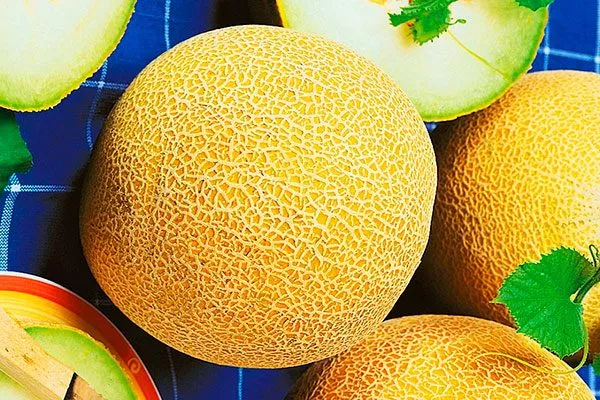
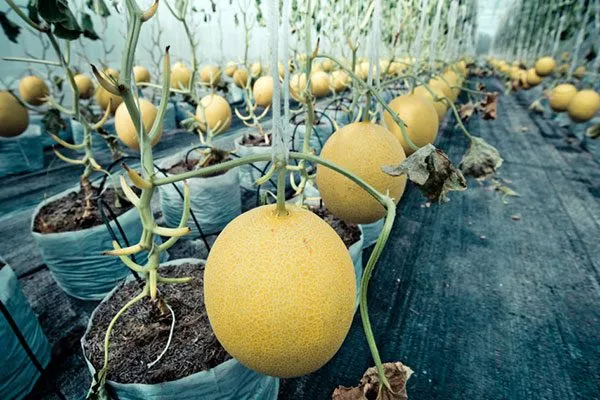
- fruit parameters – small, their weight varies from 1.6 to 2.5 kg;
- melon berry shape – spherical;
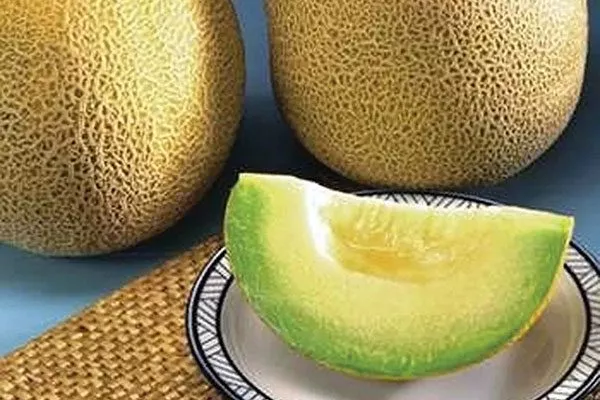
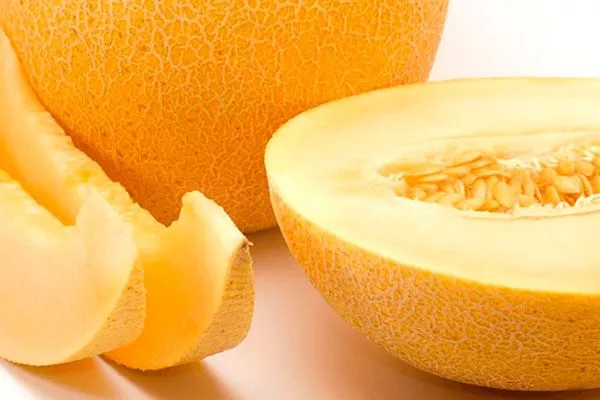
- surface of the pepos – yellow, with a dense mesh;
- fetal segmentation – weak;
- pulp – light green;
- juiciness – increased;
- granularity – small;
- seed kernel size – insignificant, and its shape is rounded;
- seeds - yellow-cream;
- seed shape – flat-oval.
Taste characteristics and uses
This melon boasts an impeccable flavor with distinct pineapple notes in its aroma. Its sugar content reaches nearly 9-10%. It's versatile: the fruit can be eaten fresh, added to various dishes, including salads and desserts, used for baking fillings, and is also suitable for processing.
Ripening and yield
This melon variety is classified as a mid-season variety. Its full development cycle, from germination to the ripening of the first pepos, takes 72 to 95 days. The first fruits can be tasted as early as mid-July, with peak yield occurring in late July or early August.
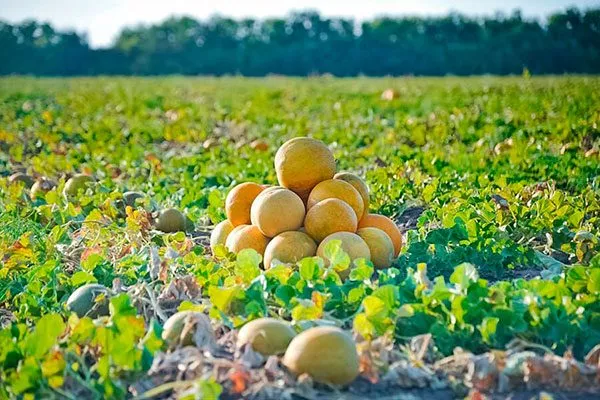
The variety's yield remains high and stable, but can vary depending on the climate of the growing region. In the North Caucasus Federal District, yields can reach 180-210 centners per hectare, in the Lower Volga Federal District, 110-130 centners, and with artificial irrigation, up to 255 centners per hectare. Up to 2-2.2 kg of sweet fruit can be obtained from one square meter of planted area.
Subtleties of agricultural technology
Melon cultivation can be done in two ways: sowing seeds directly into the soil or using seedlings. Growing seedlings is not labor-intensive; seeds should be sown from the first ten days of February to the beginning of the second ten days of March. After May 12-15, established plants can be planted in their permanent location in open ground.
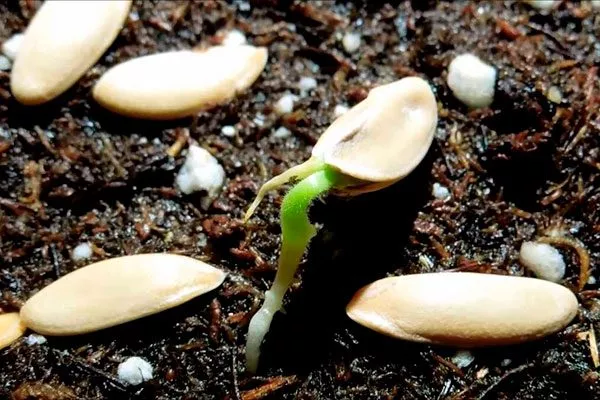
- ✓ The optimal soil temperature for sowing seeds should be at least 15°C.
- ✓ The distance between plants when planting should be at least 45-55 cm to avoid competition for nutrients.
Agricultural technology rules:
- In southern regions, direct sowing of seeds into open ground is permitted. Ideally, this should be done in early June, following a planting pattern of 45-55 cm by 65-75 cm. Given the tendency of melon bushes to spread out, avoid crowding them.
- For successful cultivation, you need an area that is well lit by the sun, protected from winds and drafts, with loose, moderately moist, fertile, non-acidic soil.
- Caring for melons includes regular but moderate watering; it is advisable to use water without chlorine.
- After irrigation, careful loosening of the soil is required to ensure air access to the plant roots.
- Fertilizing is carried out several times during the growing season – during budding and melon formation, and the variety responds well to mineral fertilizers.
Advantages and disadvantages
The positive qualities of the Autumn melon are based on the following:
Among the disadvantages, it can be noted that the variety is demanding in terms of soil quality and humidity levels, and prefers a warm climate.
Reviews of the variety
The Autumn melon is unusual because it has pineapple-like flavor notes, even though it's not a pineapple variety. Its distinct aroma and juicy, melt-in-the-mouth flesh make it a favorite among consumers. It's also popular with melon growers, thanks to its resistance to adverse conditions and high yields.