
Cantaloupe melons have gained recognition for their subtle musky aroma. This variety is easy to care for—even a novice gardener can grow it. Why grow Cantaloupe melons and what care should be taken before and during plant growth to ensure a good harvest—read more in this article.
History of origin
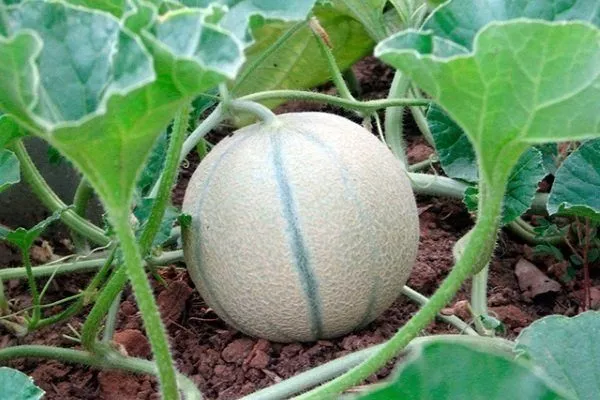
Cantaloupe is considered to have originated in Italy, but its origins lie in Central Asia, where it was brought in the 15th century as a gift to the Pope. Since then, it has been cultivated in the province of Cantaluppi, from which it borrowed its current name.
Today, this melon variety is grown throughout Europe and America. In Russia, it has been somewhat forgotten, although before the Revolution, a separate cultivar existed—the Moscow Cantaloupe.
The Cantaloupe variety is the ancestor of almost all melon varieties currently grown in Europe.
Description of the plant
Cantaloupe or Muskmelon or Thai melon belongs to the genus of pumpkins, the cucumber family.
Table of the main characteristics of the variety:
| Selection | Growing season, days | Fruit weight, kg | Fruit diameter, cm | Yield, kg/sq.m | Keeping quality, class |
| 14th century, Armenia | 80 | 0.5-1.5 | 20-30 | 3-3.3 | 3 |
Cantaloupe has the following distinctive external characteristics:
- The stems creep along the ground, branched and powerful.
- The leaf is dark green, large, with a carved, hard plate.
- The fruits can be round, oval, or slightly flattened, depending on the variety and growing conditions.
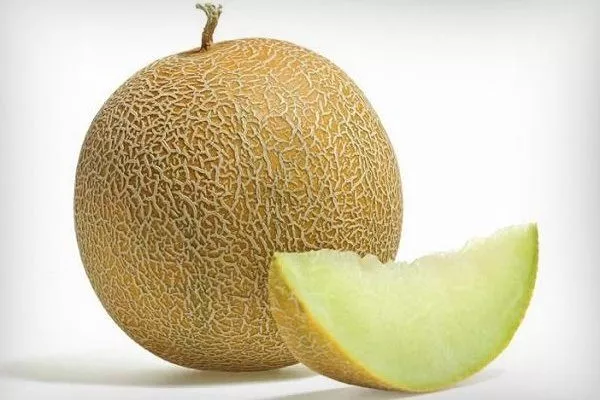
- The fruit's skin is often rough, covered with a mesh-like texture, and may be smooth in some species. The color ranges from orange, yellow, to green.
- The distinctive feature of the pulp is its distinct musky aroma. The color can be yellow or dark orange. In fruits with green skin, the color is creamy.
- The circumference of a single fruit does not exceed 30 cm. The weight varies from half a kilo to one and a half kilos.
- The fruit ripens mid-season, and the harvest is in late summer. Some hybrid varieties can be early ripening.
- The variety is undemanding to growing conditions and care, so it grows well both in the southern regions and in the middle zone.
You can see the Cantaloupe melon variety in the video below:
Chemical composition and beneficial properties
Cantaloupe melons are considered a dietary product due to their low calorie content – only 34 calories per 100 g of product.
The composition contains many useful substances and vitamins:
- carotene – beneficial for the skin and organs of vision;
- inosine – recommended for use in cases of obesity, hair loss, and to lower cholesterol;
- choline – improves memory, useful during pregnancy;
- zeaxanthin – increases the body’s protective properties against ultraviolet radiation, prevents cardiovascular diseases;
- fiber – has a positive effect on the gastrointestinal tract;
- sucrose (2 times more than in watermelon) – promotes normal functioning of the liver, brain, muscles, and nervous system;
- vitamin C (3 times more than in watermelon) – improves the functioning of the immune system;
- silicon – takes part in the formation and growth of bone and connective tissues;
- iron (2 times more than in a chicken egg) – prevents the development of anemia;
- potassium – stabilizes blood pressure.
Usage
Cantaloupe melon is most often eaten raw.
In cooking it is used for the preparation of:
- desserts;
- fruit and vegetable salads;
- candied fruits;
- baking;
- jam;
- dry.
Melon peel is used in cosmetology for the preparation of facial care products.
Advantages and disadvantages
Positive qualities of the variety:
- the dense skin prevents the fruit from cracking in conditions of high humidity;
- grows well in areas with humid summers and moderate temperatures;
- resistance to such diseases of melon crops as powdery mildew;
- ripens faster than Asian varieties;
- high taste qualities.
Among the disadvantages we can note:
- relatively short shelf life (maximum 2.5 months), recommended to be consumed raw within 3-4 weeks after harvest;
- watering is necessary during hot periods;
- small fruit size.
Hybrid varieties
For a long time, cantaloupe was grown naturally. But since the mid-20th century, new hybrids have been successfully developed. The goal is to improve and enrich the variety's flavor.
The most successful varieties are described below.
| Name | Disease resistance | Soil requirements | Ripening period |
|---|---|---|---|
| Iroquois | High | Loamy | Mid-season |
| Charente | Average | Sandy | Early ripening |
| Blondie | High | Loamy | Mid-season |
| Gaul | High | Sandy | Mid-season |
| Oksana | Average | Loamy | Early ripening |
Iroquois
Developed from the eastern American cantaloupe, the plant is distinguished by its vigorous stems. The leaves are large and dark green. The fruits are oval-shaped. The skin is covered with a rough mesh. When ripe, they weigh up to 1.7 kg. The sugar content is at least 12%.
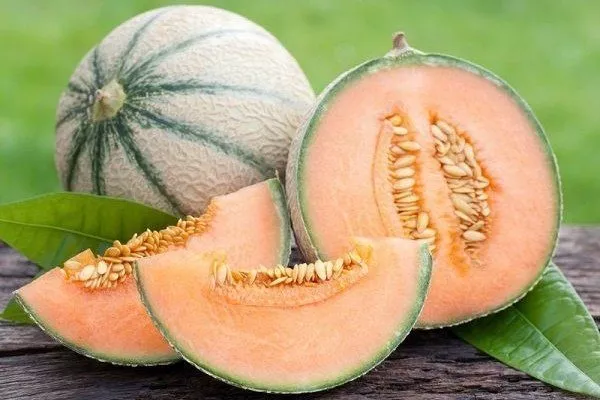
This variety is mid-season. Harvesting should be done promptly and the fruit should not be allowed to overripe.
It is resistant to many diseases.
Charente
A variety of the cultivar from France.
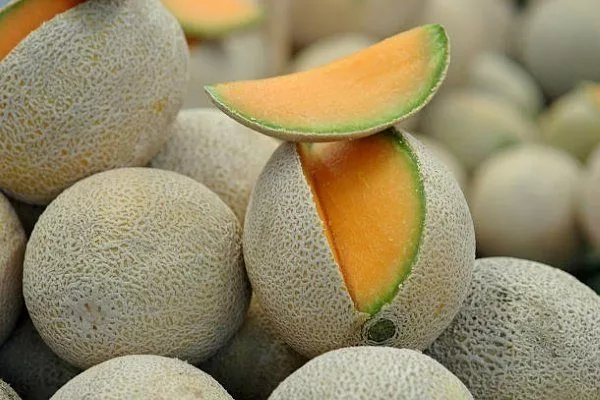
The fruits are the smallest of all cantaloupe varieties, but they boast a vibrant flavor and aroma. They are shaped like slightly flattened spheres. The rind is longitudinally grooved and smooth in texture.
An early-ripening variety grown in protected conditions.
Blondie
A relatively new variety bred from Charentais.
The hybrid adapts well to different growing conditions: climate, soil, humidity.
The plant develops strong stems, but the fruits are small, weighing up to 600 g. A distinctive feature is the absence of a mesh pattern on the skin. The fruits are oval or flattened in shape.
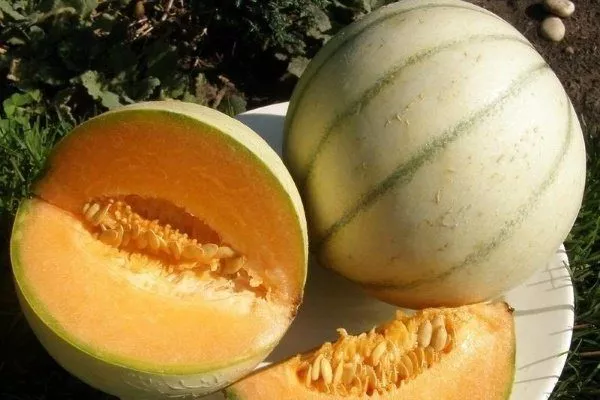
Ripening period is average, 80-90 days.
Melon of this variety is resistant to various diseases and is not affected by root rot.
Gaul
Developed by Israeli scientists.
The variety is similar in appearance to Cantaloupe. Its distinguishing feature is the pistachio-colored flesh. The fruits are medium-sized.
The variety's main advantage is its tolerance to various climatic conditions—it thrives in high humidity and during periods of drought. It is also resistant to low temperatures and major diseases.
Belongs to mid-season crops.
Oksana
A hybrid with large (up to 4-5 kg) oval-shaped, yellow fruits. The skin is covered with a dense mesh, and the flesh is white, creamy, juicy, and slightly tart. The stem is medium-sized.
This variety of melon can be grow in open ground or under agrofibre. It has good resistance to common diseases.
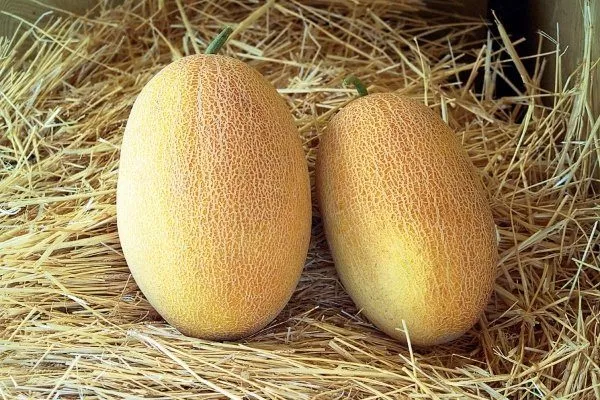
Ripening period: early (1.5-2 months).
The fruits can be stored for a long time without losing their marketable appearance.
How to grow in the garden?
Cantaloupe melons can be grown in your backyard garden. Below, we'll discuss what to consider to ensure the fruit ripens and yields a rewarding harvest.
- ✓ The soil temperature during planting should be at least +18 °C to ensure good seed germination.
- ✓ The optimal soil acidity (pH) for Cantaloupe melon is about 6, which promotes better absorption of nutrients.
Deadlines
First of all, you should choose a variety that is suitable for growing in the region where you live.
To do this, it is necessary to take into account:
- Warm period of the year. Most varieties require two to three hot summer months for the fruit to ripen. However, there are now varieties suitable for growing in cool summer conditions.
- Ripening periods. For regions with short and cool summers, choose early varieties; for the south, mid-season and late varieties are suitable.
- Sowing dates. Seeds can be planted for seedlings in April. The seedlings are transplanted into the ground after six weeks.
Or you can sow directly into open ground at the end of May.
Site selection and crop rotation
Next, consider where to sow the seeds. Consider the following factors:
- Soil. Melon will grow well in loamy and sandy soils with an acidity (pH) of approximately 6.
- Drainage. Essential for growing most melon varieties. Water should not stagnate between rows.
- Room to grow. Melons have spreading, creeping branches, so you need to allocate a fairly large bed.
- Location. Melons prefer sunny locations with protection from the wind. A southern exposure is ideal, preferably on a slope. A hedge or curtain crops (sunflowers, corn, or peas) provide good wind protection.
- Supports. These are necessary if you plan to tie up the melons (when growing varieties with small fruits). You can skip this step and let the melons ripen in the ground.
- Neighbors in the garden bedMelons can be planted alongside cucumbers, squash, and pumpkins. Many gardeners are wary of this combination, as there's a common misconception that melons will cross-pollinate with pollen from other plants. However, this isn't true.
Good neighbors are considered to be: leafy crops, radishes, horseradish, turnips.
Unfavorable neighbors are potatoes and beets. - Predecessor cultures. It would be good if grains, legumes, white cabbage, garlic, onions, and cucumbers were grown in the area before the melons.
All types of pumpkins, tomatoes, and carrots greatly weaken the soil and are not recommended as predecessors for melons.
It is not recommended to re-grow melons in the bed where Cantaloupe grew for 5 years.
Sowing pattern and depth
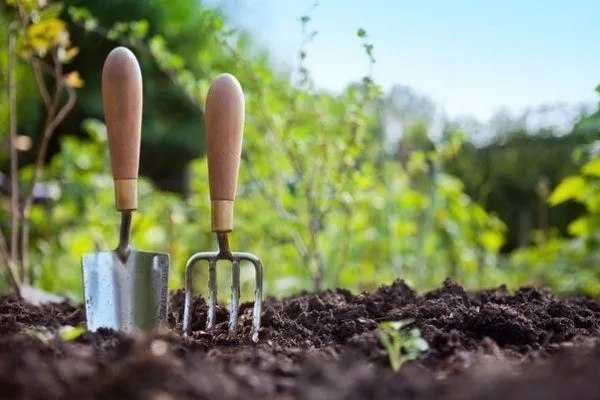
Before planting in the ground, carry out preparatory work:
- Primary digging. Dig the soil to a depth of 30-35 cm. Remove stones, branches and other foreign objects (this can be done in the fall).
- Warming of the soil. To do this, cover the selected area with plastic film in April and leave it there until the next stage of treatment. For the seeds to grow and develop well, the soil must warm up to 18°C.
- Fertilizer. Apply fertilizer to the area at a rate of 3 kg of humus or 7 kg of manure per 1 sq. m.
- Repeated digging, loosening. Re-dig the soil and loosen it thoroughly.
Now you should act in accordance with what material will be planted.
Sowing seeds
Sequence of work:
- Preparing the holes. Divide the plot into rows every 130-140 cm. In each row, make holes 4-5 cm deep, at a distance of 70-90 cm from each other.
- Sowing. Place 3-4 seeds in each hole.
- Sealing the holes. Fill the holes with soil, creating small mounds above the surface.
Planting seedlings
The best time to plant seedlings indoors is 10 days before the last frost. Check the weather forecast and choose the right time.
The method of planting seedlings is used in cold climates.
Next you will need:
- Biodegradable pots. It's recommended to use special peat or other organic pots to avoid damaging the delicate root system during planting. Be sure to purchase the required number.
- Priming. Fill the pots with nutritious soil. It's best to use soil specifically designed for seedlings.
- Sowing. Place 3-4 seeds in each pot.
- Watering. Water generously with room-temperature water. Be careful not to overwater the soil or create standing puddles.
- Seed germination. After the shoots emerge and true leaves appear, thin out the seedlings, leaving the strongest stems.
Once the danger of frost has passed and the soil has warmed up well, the seedlings can be transferred to the garden bed. To do this, use the same method as for sowing seeds. Plant the seedlings in the holes, along with the organic pot.
How to care?
Melon is an unpretentious plant, but it still requires regular care.
Temporary shelter
Immediately after planting, provide a cover for the plant. This will be needed until the melon blooms. Once the first flowers appear, remove the cover to allow insects to pollinate.
Temporary shelter promotes faster plant growth and allows harvesting 2-3 weeks earlier.
When constructing a shelter, pay attention to:
- Selection of material. Gardeners use polyethylene film or spunbel (a non-woven gardening material) for a frame cover, or they cover each hole with a cut-off PET bottle with a capacity of at least 5 liters. The choice of cover is up to you.
- Construction of the frame. An arched wire frame is suitable. Install it 50-60 cm above the rows.
- Access to plants. When constructing a shelter, remember that during the first three weeks of growth, until the stems become established, they will need to be weeded regularly. Make sure the structure is removable for access to the sprouts.
- Thinning out seedlings. If the melon was planted from seeds in the ground, thin out the seedlings, selecting the healthiest plants after the true leaves appear.
Watering
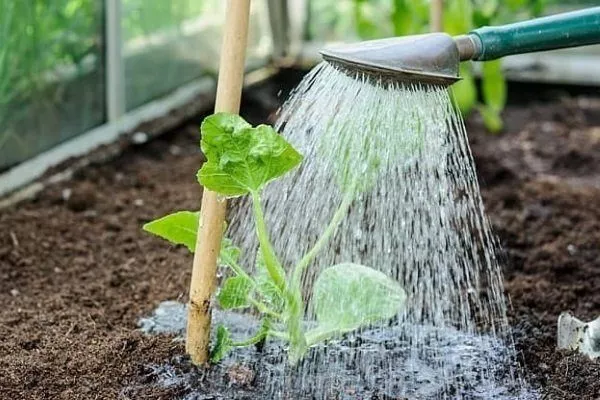
Cantaloupe melon requires a high frequency and volume of watering, which largely depends on weather conditions and growth phase.
Do not allow the soil to dry out or become over-watered.
Watering rates in hot weather:
- watering time – morning and evening;
- volume of water – 4 liters for each bush.
Watering rates in wet weather:
- watering time – 1 time in the morning or evening;
- volume of water – up to 3 liters per plant.
In rainy weather – watering stops.
After the fruits reach technical maturity (unripe, green fruits that have reached full size) - watering is reduced by half.
7-10 days before harvest They stop watering the melon completely.
Cantaloupe melon is not suitable for sprinkler irrigation.
When watering, pay attention to:
- Water temperature. It should be at least +22°C. This promotes slower evaporation of moisture.
- Distance to the root collar. Water should be poured into pre-dug holes or furrows 5-7 cm from the root collar. This will prevent rotting.
Top dressing
Components that are necessary for good growth and development of melon fruits:
- nitrogen;
- phosphorus;
- potassium;
- calcium;
- sulfur.
Apply fertilizer throughout the growing period and follow these recommendations:
- 1st feedingApply a complex mineral fertilizer (for example, Master microfertilizer, according to the instructions) when 3-4 true leaves appear on the sprouts.
- 2nd feedingA solution of rotted compost in a proportion of 3 kg per 10 liters of irrigation water, add 2 liters under each plant one and a half weeks after the first feeding.
- 3rd feeding. Apply nitrogen fertilizer (20 g of ammonium nitrate per 10 liters of water) at a rate of 2 liters of solution per seedling. Apply 10 days after the second feeding.
- 4th feedingPrepare a solution of 3 parts water and 1 part ash and water the plants at a rate of 1.5-2 liters of fertilizer per plant. Apply the solution one and a half to two weeks after the third feeding.
- 5th feedingOrganic fertilizer, for which a solution of compost, humus, or manure is suitable. Dilute 3-4 kg of organic matter in 10 liters of water.
You can add another fertilizer during the fruit set period. To prepare it, take 25 g of superphosphate, 5 g of saltpeter, and 10 g of potassium chloride and dilute the mixture in 5 liters of warm water.
Formation of bushes
Forming bushes is a necessary procedure to save the plant's energy on stem growth and direct it towards fruit formation.
There are 2 methods of formation.
In the garden
It is considered a simple method, as it does not require the installation of additional structures.
Sequence of implementation:
- Immediately after removing the protective cover, pinch the main stem at the level of the 4th leaf.
- Select 2 strong side shoots and pin them to the ground.
- The remaining shoots are pinched at the level of the 5th leaf.
In the trellis
The method involves the installation of a frame structure.
Procedure:
- After planting the plants in the ground, install stakes on both sides of each row.
- Stretch a thick cord between them at a height of 1.8-2 m.
- Tie a rope to this cord and lower it down to each hole.
- After the plant has formed 3-4 true leaves, pinch off its top.
- Use a loose loop of rope to tie the main stem along the bottom edge.
- Leave the 2 strongest shoots on the bush and remove the rest.
- When the ovaries are formed, pinch the shoots at a distance of 3 leaves from them.
- As the bush grows, it will stretch up the rope towards the trellis.
Soil care
Soil care includes 3 activities:
- Loosening. After planting, loosen the soil once a week to a depth of 5 cm. When the melon begins to bloom, reduce the frequency of loosening to once every 1.5 weeks and increase the depth to 10 cm.
- Weeding. Weed regularly as needed, carefully removing weeds from the soil along with the roots.
Weeding is recommended to be carried out together with loosening to reduce the risk of damage to the root system.
- Hilling. Apply after lateral shoots appear on the main stem. Gently rake the soil under the root collar.
Possible problems
Cantaloupe plants usually don't have any problems. However, they can sometimes be affected by diseases and pests, and produce poor fruit.
Melons grown in greenhouses are more susceptible to pests and diseases.
Diseases
Diseases, their symptoms and treatment methods:
- Downy mildew. It manifests itself as yellow spots on the leaves. A fungicide, such as chlorothalonil, can help eliminate the problem. Stake the melons to prevent the spread of the disease.
- Mycosphaerella rot. The stems are breaking, and a yellow-orange liquid is leaking from the cracks. The harvest will likely fail. After harvesting, treat the field with a fungicide. Next year, plant a different crop in the same spot.
- Sclerotial southern rot. Melons rot after rain. Heavy soil is often the cause. Reduce watering and add mulch between rows. Read more about mulching. here.
Pests
Melons can be affected by the following insect pests:
- Nematodes. Nodules appear at the roots, and the stems appear swollen. Next year, plant rye in the melon bed.
- Aphid. The leaves become sticky and wilt. Use insecticides, such as Theodan. You can also treat the plants with a mixture of essential oils or laundry soap.
- Miner moth. Gnawed holes appear on the leaves. This insect does not affect the quality of the harvest, so there is no need to control it.
- Spider mite. The leaves turn yellow and become covered in webbing. If the infestation is mild, no action is needed. If the infestation is severe, the only control is to remove the melons.
Poor fruiting
Melons bear fruit poorly for several reasons:
- Cold soil. If the soil isn't warm enough when planting, only male flowers will form on the melon. Monitor the soil temperature before planting.
- There are no pollinating insects. If there are few pollinating insects in the area, or you grow melons in a greenhouse, pollinate them by hand.
If all care measures have been carried out correctly, and the melons still do not bear fruit, try sowing rye in the bed 30 days before planting the melons.
Harvesting
Harvesting doesn't happen all at once from the entire bed. A single bush can be harvested 4 to 6 times.
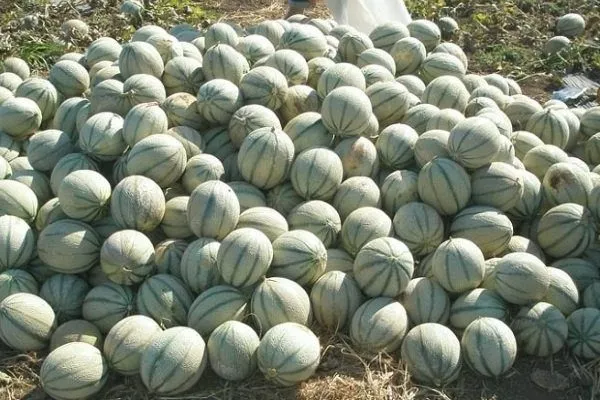
Melons are harvested as they ripen.
To determine if a melon is ripe, pay attention to the following characteristics:
- Aroma. In ripe melons it is distinct, delicate and pleasant.
- Peduncle. Cracks appear around it. A ripe melon separates easily.
- Peel. If you press on a ripe fruit, the peel will yield slightly under your finger.
- ✓ Ripe fruits emit a characteristic musky aroma, which intensifies when fully ripe.
- ✓ The stalk separates easily from the fruit, and cracks form around it, which is a sign of readiness for harvesting.
Harvest early in the morning or late in the evening. Don't remove the picked fruits immediately from the garden bed; instead, leave them in the rows for 10-14 days. Turn them every 4 days. This method increases shelf life.
Storage
Cantaloupe melons have an average shelf life. They withstand transportation well and retain their marketability when stored properly.
If the quantity of fruits is not very large, melons are stored suspended in cotton bags so that they do not come into contact with anything, in a shaded room at 75% humidity and a temperature of +13, +6 in summer and winter, respectively.
If melons have started to spoil, it is better to process them.
Gardeners' reviews
By the time they were planted in the ground, about 20 days later, the seedlings already had 4-5 leaves. Care during the summer consisted of shaping the bushes, loosening the soil, and watering on very hot days. The first melon ripened in mid-August, delighting with its sweet taste and aroma.
Cantaloupe melons are distinguished by their subtle musky aroma and tender flesh. Although native to the south, they thrive and produce fruit in cool climates. Care during the growing season includes loosening the soil, shaping the bushes and fruiting the ovaries, weeding, and timely fertilization and watering. Ripe melons can be stored for up to 2.5 months.