
The Ethiopian melon is one of the best domestic varieties. It has gained popularity due to its large fruits and excellent germination rate. It is also distinguished by its delicate flavor and vibrant aroma.
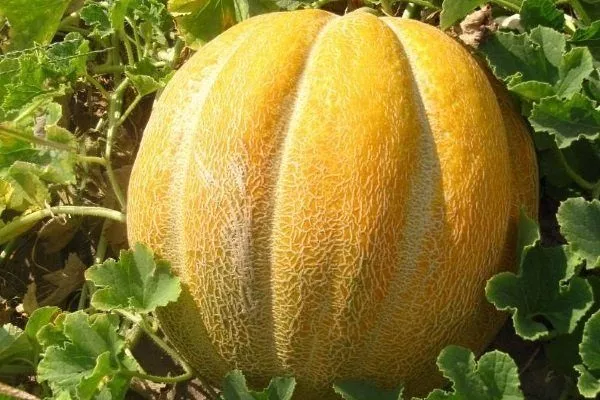
melon variety "Ethiopka"
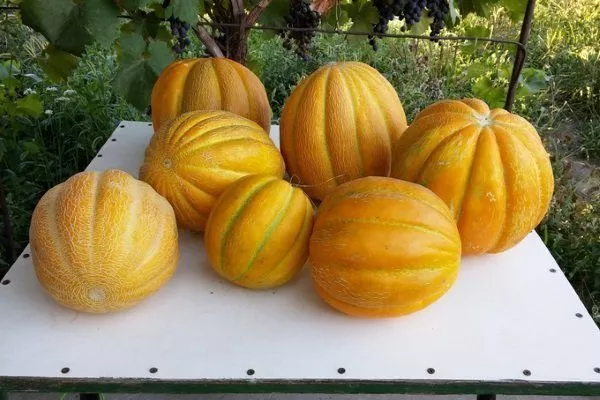
The Ethiopian melon can be distinguished from other varieties by its high germination rate and large fruit size.
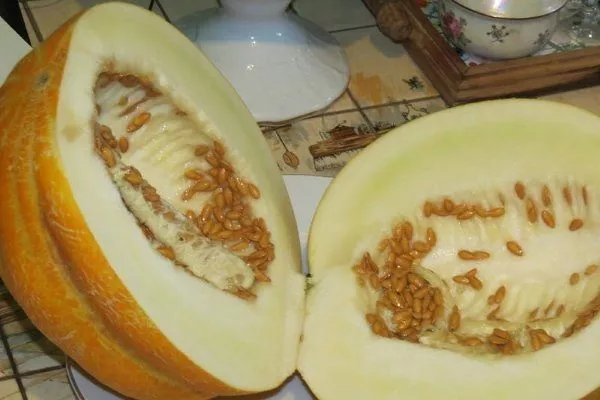
The Ethiopian melon is very juicy and has a honey flavor.
History of the variety's development
Native to India, Afghanistan, and Iran, this melon variety was specifically developed by Russian breeders for cultivation in temperate climates. Today, gardeners can grow the plant using two main methods: seedlings or direct sowing. planting in open ground.
Description and characteristics of the Ethiopian melon
This variety tolerates drought and harsh, scorching sunlight well, without developing burns or wounds. Ethiopian melon is self-pollinating, producing both male and female flowers, so there's no need to plant other crops or varieties near it.
The bush is not wide and does not have long branches. One plant produces about five fruits. Breeders describe the Ethiopian melon as follows: the fruits are large, round, yellow, and have stripes across the entire surface. Because of these stripes, they resemble pumpkins, and the melon is rough to the touch. The flesh is white, tasty, and spicy.
Main features of the Ethiopian melon:
- A mid-early ripening variety.
- The fruits can be harvested as early as 80 days after planting.
- The average weight of a melon is 4 kg.
- Store for no longer than 30 days.
- The thick rind helps the melon to be transported without damage or loss of flavor.
Advantages and disadvantages of the variety
Advantages of the Ethiopian melon variety:
- high yield;
- the taste is pleasant, the fruits are aromatic and sweet;
- the pulp is tender;
- It is not afraid of the sun and can be grown directly in the open air;
- drought and high humidity are not scary;
- has an excellent presentation;
- has good transportability;
- The plant is unpretentious in care.
The Ethiopian melon variety has quickly become a favorite among gardeners, but the plant also has its drawbacks.
Disadvantages of the Ethiopian melon variety:
- Lack of sun means a lack of growth and development. Growing this melon variety in a greenhouse is very difficult, and in northern regions, it's impossible. If the area where you'll be growing the plant doesn't receive enough sunlight, you should add as much fertilizer as possible to the soil to ensure the plant matures and begins to produce fruit.
- The soil must be moist; drought is not a problem for the leaves and fruits, but the root system will quickly die without moisture.
The video below provides an overview of the Ethiopian melon variety:
Beneficial properties
Any variety of melon is beneficial for the body, and the Ethiopian is no exception. The fruit's pulp contains potassium, copper, fiber, and organic acids. The plant is rich in vitamins C, PP, and B. Vitamin C is especially important for the body, strengthening the immune system and lowering blood cholesterol.
Vitamin B regulates metabolism and is responsible for heart and vascular function. Folic acid, a component of this variety, normalizes hormones. The fruits are eaten fresh, and the pulp is frozen, dried, and used to make delicious pastilles and sweet jams.
The plant's fruits contain a large amount of sugar, which is quickly absorbed by the body, so diabetics should exercise caution when consuming this product. The recommended daily intake is 0.3 kg.
Calorie content of melon
100 grams of Ethiopian melon contains 33 kcal. Thanks to this low calorie content, this product is suitable for anyone watching their figure. You can use a simple diet and follow it for one month:
- breakfast – 0.3 melon;
- lunch – liquid dish;
- Dinner – salad.
Features of cultivation
Growing the Ethiopian melon variety involves several stages. First, the seeds are processed, the planting site is prepared, the seeds are planted, and the seedlings are cared for.
- ✓ The site should be protected from northern winds, which can reduce the temperature of the soil and air around the plants.
- ✓ The soil must have good drainage to avoid waterlogging, which can lead to root rot.
Selecting and preparing soil
Basic rules for choosing soil for growing a variety:
- Choose a sunny and warm area; shade and cold are not suitable.
- Protect the area from winds and cold.
- The soil should be light and neutral; if the soil acidity is high, add lime.
- Do not plant bushes next to potatoes and cucumbers.
- The following can act as neighbors: turnips, radishes, corn and beans.
- Melon grows well in loamy soil. Waterlogged and clayey soil is not suitable.
- Crop rotation: plant after corn, onions, garlic, cabbage, and legumes. Do not plant after carrots and tomatoes.
- In the fall, the soil should be fertilized with humus. Add sand to clay soils. In the spring, apply 30 g of potassium salt and 30 g of superphosphate per square meter.
Seed preparation
Soak the seeds for 24 hours in lukewarm water or a special solution for treating seedlings (a mild solution of potassium permanganate or boric acid is best). This procedure will enrich them with beneficial microelements and improve germination.
- ✓ Seeds should be uniformly colored, without spots or damage.
- ✓ When pressed, the seeds should not break easily, which indicates their maturity and viability.
The first stage of seed testing makes it easy to determine the quality of the seeds: those that float are bad and unsuitable for planting. Those that sink are planted in the ground.
It is prohibited to plant untreated seed material.
Growing seedlings
In temperate climates, the crop is grown from seedlings. Three-year-old seed is suitable for planting. Work begins in mid-spring, preferably using peat pots (these can be transplanted into the ground along with the seedlings) or small containers. Each container should be filled with a nutrient-rich mixture of peat and sand (9:1). Two to three seeds are planted per pot at a depth of 20 mm.
Seedling development can be improved only by keeping the containers warm. The first sprouts will appear 7-10 days after planting. Experienced gardeners store the pots on a windowsill.
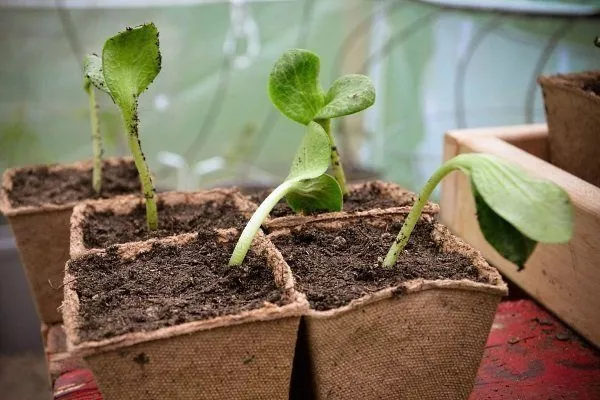
Lighting plays a key role; the plants should receive about 12 hours of light per day. Water the seedlings only with warm, settled, or better yet, filtered water. Only one plant should be left per pot—the strongest and healthiest one—and pinched off.
Weak shoots need to be cut off - they cannot be pulled out of the ground, otherwise the root system of even a strong seedling will be damaged.
Melon sprouts are fertilized with a complete fertilizer. Fourteen days before planting, the seedlings are moved to the balcony to allow them to acclimate to their new environment.
Planting seedlings in open ground
At six weeks old, the seedlings are planted in the soil. However, before planting, make sure the frost has passed and there will be no further frost. If there is a risk of frost, cover the seedlings with plastic or other protective material overnight.
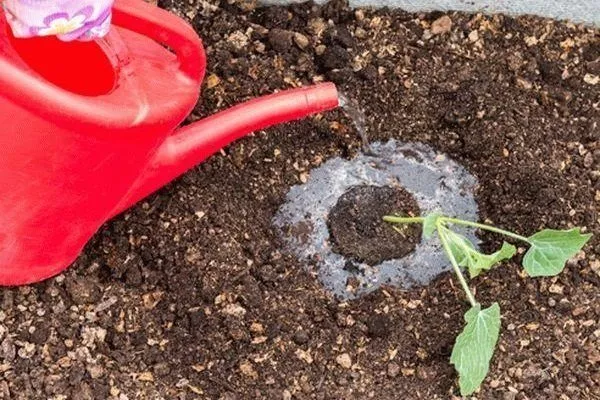
Melon seedlings are moved into holes and transplanted using the transshipment method. First, they are watered, then removed from the pots (unless they are peat containers). The most important thing at this stage is not to damage the plant's root system. The seedlings are planted 0.6 m apart, with a 0.7-0.8 m gap between rows. The root collar should be above the soil surface. After planting, river sand is sprinkled around the plants.
Care instructions
Seedlings are very sensitive to climate, watering, loosening, and fertilizing. They require constant monitoring and creation of favorable conditions for the growth and development of the Ethiopian melon variety.
Watering
After direct planting in open soil, watering and fertilizing the plant begins 10-14 days later. During this period, the melon will fully acclimate to its new location and take root.
The Ethiopian melon variety survives dry days well, but cannot survive without watering.
Water should be applied early in the morning or late in the evening after sunset. Use only warm water. When watering, be careful not to let moisture get on the leaves and stems. After watering, loosen the soil.
Formation
Plant training helps to obtain a large harvest. After transplanting the seedlings into open ground, the melon's main stem is pinched to allow the plant to direct its energy toward fruit production. Each seedling should have one shoot and two branches; all other shoots are removed.
During flowering, melons retain about 3-5 ovaries. If you want larger fruits, you can leave 2 ovaries. When the melons begin to form, they are placed in nets. The fruits are turned over periodically.
Top dressing
Fourteen days after planting, the seedlings are fertilized with mullein or ammonium nitrate. This process is repeated during bud formation. During ovary formation, superphosphate and potassium salt are used as fertilizers (at a rate of 35 g per 10 liters of water).
Diseases in growing Ethiopian melon
If agricultural requirements are not met, the plant is susceptible to various diseases. Insects also cause significant damage. To quickly identify the melon's enemies, it's important to pay attention to the symptoms of the disease. Let's look at the two most common diseases of the Ethiopian melon.
Powdery mildew
The main symptoms are the appearance of small white spots on the stems and foliage. The disease peaks when the leaves begin to curl and dry out. Powdery mildew develops due to improper crop rotation.
Powdery mildew control: Treating the plant with a sulfur solution. Take immediate action as soon as symptoms are noticed. Do not treat melons 21 days before harvest, otherwise the fruit will accumulate the chemicals.
Anthracose (scarp)
The disease manifests itself with the following symptoms: the formation of yellow or brown spots, leaves becoming brittle, drying out, and falling off. Fruits change shape and rot.
Control of anthracnose: Destroy all organic debris around the plant. Treat fruits and leaves with Bordeaux mixture and sulfur solution. Disease treatment should begin at the first sign of illness.
Gardeners' reviews
I prepared the area in the sun, and the variety ripened in 85 days. The seed package said the fruits were large, but they were actually small. The flesh was sweet, and each fruit weighed about 1.4 kg. I really liked this variety and plan to grow it again this year.
The Ethiopian melon is a high-yielding variety developed by Russian breeders. It's prized for its low maintenance. It's planted using seedlings, but for rapid development, it's important to select the right location and soil. Proper watering and fertilization are essential for a bountiful harvest.