
Dakaro F1 is a striking example of an early-ripening melon hybrid. Domestic gardeners love it for its marketable appearance, its excellent flavor with pineapple notes, and the productivity and hardiness of its bushes. It is grown from seedlings in open beds using cover material to achieve an extremely early harvest.
Breeding history
This hybrid melon variety was developed by Dutch breeders at Enza Zaden Beheer BV. They applied for its registration in 2014. Dakar has been listed in the Russian Federation State Register since 2017. The recommended cultivation region is the North Caucasus.
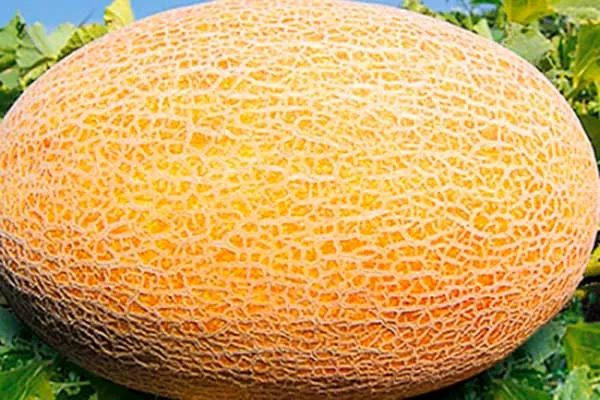
Description of the variety
This melon belongs to the Ananas cultivar. It is distinguished by vigorous growth, rapid development, vigorous flowering, and the ability to produce fruit even in adverse weather conditions. The hybrid also boasts other excellent characteristics:
- endurance (plants can withstand temperature fluctuations, drought and other stress-causing factors);
- the ability to maintain the integrity of fruits during the rainy season;
- strong immunity (the bushes are resistant to damage by viruses and fungi, in particular powdery mildew, fusarium, and downy mildew).
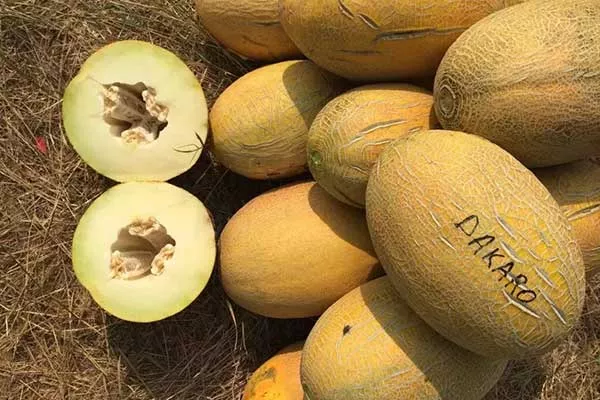
Features of the appearance of the plant and fruits
Dakar is a compact yet robust plant with well-defined, upright foliage. It is a semi-open variety, ensuring the pumpkins are well-protected from the sun during ripening. Harvesting is easy, however.
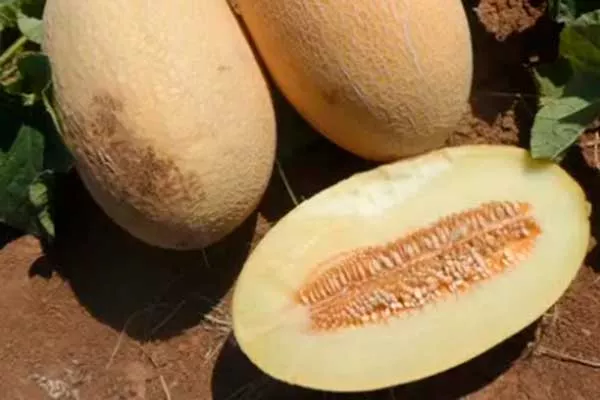
The description of the appearance of the melon hybrid bush includes the following indicators:
- climbing;
- a small number of lateral shoots;
- the presence of fluff on the lashes, thin and very strong;
- moderate foliage;
- foliage: green, medium-sized, deeply dissected;
- Flowers: small, bright yellow, with an abundance of pollen, self-pollinating.
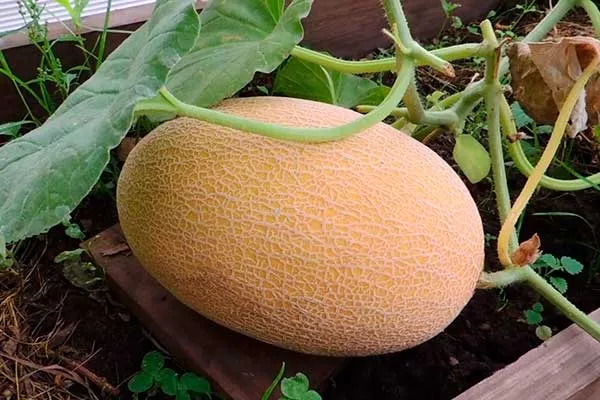
The fruits of the Dakar variety are distinguished by their marketable appearance. They have the following characteristics:
- weight - from 1.5 kg to 3 kg;
- correct oval shape;
- the bark is of medium thickness, distinguished by its greyish-yellow colour and the presence of a distinct dense mesh on its surface;
- the flesh is light yellow in color, without greenish areas, uniform, of a delicate consistency, with a crunch, very juicy and aromatic (in overripe pumpkins it becomes loose);
- seed nest size - medium;
- The seeds are small, there are not many of them in your pocket.
Characteristics
Before planting a pineapple melon hybrid in your garden, familiarize yourself with its key technical characteristics. This information will be especially useful for farmers growing the fruit for sale.
Purpose and taste
The Dakar harvest is intended for fresh consumption. The pumpkin pulp is also suitable for adding to desserts and fruit salads, and for making preserves for the winter.
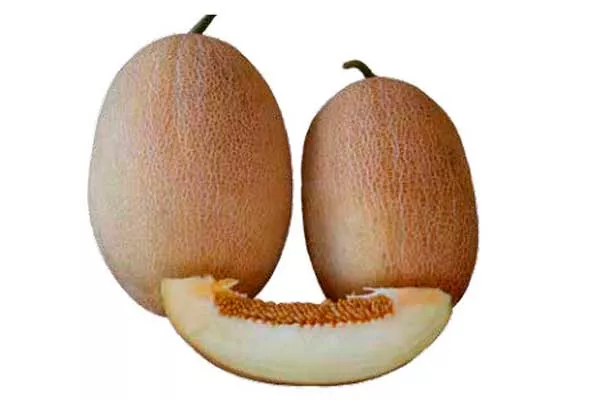
This hybrid melon is characterized by its excellent flavor. It's very sweet with a subtle pineapple note, melts in the mouth, and is exceptionally juicy and aromatic. It's distinguished by its high sugar content:
- 6.4% is the average sugar content of the pulp;
- 11% is the maximum content of substances that provide the nectar-like sweetness of the fruit (observed in conditions of increased solar activity).
Ripening time
Dakar is an early-ripening melon variety. The pumpkin ripening period is as follows:
- 68-88 days - from germination to the stage of technical maturity of fruits;
- 48-60 days - from planting seedlings in the garden to harvesting.
To obtain ultra-early fruit, gardeners and farmers cultivate the hybrid using seedlings, subsequently growing the bushes under cover. Direct sowing of seeds in open beds is also practiced, especially in the southern regions of the country.
Fruiting period
On average, gardeners begin harvesting the first fruits from the vines in the second half of July or early August. Dakar plants provide a long-lasting harvest thanks to their excellent regenerative capacity.
Productivity
This hybrid delights gardeners with its excellent productivity. By the time the first batch of melons is harvested, each plant produces 3 to 5 fruits. The average yield is 17,200 kg/ha, with a maximum (with enhanced cultivation practices) of up to 70,000 kg/ha.
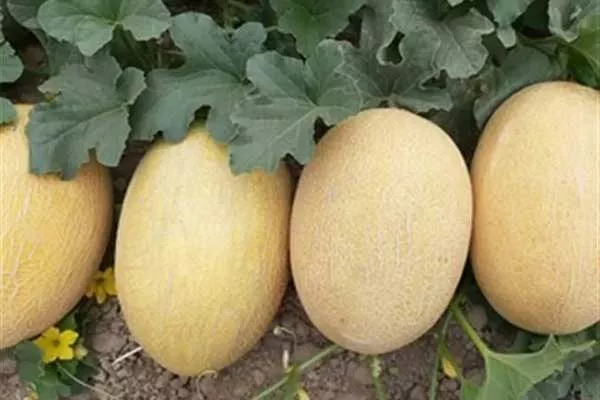
Dakar pumpkins are suitable for market sale. They are distinguished by the following characteristics:
- high marketability;
- shelf life (stored in a cool place for up to 40 days);
- transportability (the crop can be transported over long distances, but with care).
Landing
If you plan to grow pineapple melon from seedlings, begin sowing the seeds in the second or third week of April. Transplant the seedlings to the garden bed in May. Direct sowing into open ground is also acceptable during this timeframe (in regions with hot climates).
Requirements for planting site and soil
To obtain a bountiful and high-quality harvest of melons, allocate a place in the garden for it that meets the following requirements:
- located in the southern or southwestern sector of the site;
- sun-drenched throughout the day to provide the melon planting with maximum light and warmth (the yield of the crop and the sugar content of the pulp depend on this);
- protected from gusts of wind and drafts to prevent breakage of shoots and bush diseases;
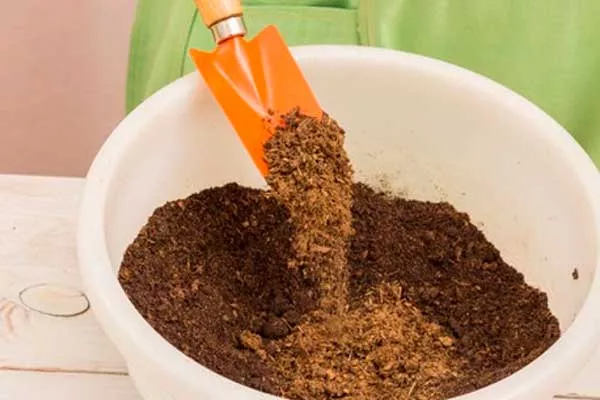
- with loose, light, water- and air-permeable fertile soil (if the soil is dense and heavy, structure it by adding sand and compost);
- not prone to flooding, well drained.
- ✓ The optimal soil temperature for sowing Dakar F1 seeds should be at least +15°C.
- ✓ To prevent fungal diseases, ensure good air circulation around the plants, avoiding dense plantings.
Preparing soil and seeds
Prepare the selected melon plot for growing the hybrid. Follow these steps:
- remove all weeds along with the roots, remove plant debris outside the garden;
- dig up the soil (cultivation depth - 30 cm);
- add organic matter, such as compost or humus (consumption rate: 3-4 kg per 1 sq. m);
- add wood ash, using 200 g per 1 sq. m;
- add mineral compounds, for example, Superphosphate (30 g/sq.m);
- level the soil.
Melon seeds also require preparation for planting. Check them for damage. Discard any damaged ones. Soak the seeds in the sun for several days, then soak them in a pale pink solution of potassium permanganate for 30 minutes. Then rinse with clean water.
Sowing seeds
When growing pineapple melon from seedlings, sow the seeds in peat pots or a tray on April 15-20. Fill the planting containers with a mixture of garden soil, peat, and sand. Place each seed in a separate container, moistening the soil first. Seedlings will appear within 3 days.
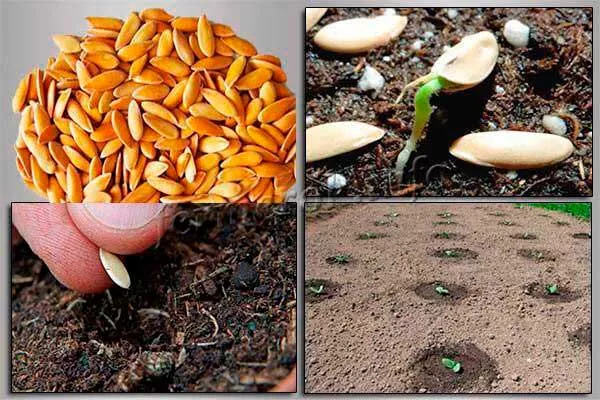
In May, transplant the seedlings into the garden using a 60x60 cm pattern. Cover the plantings with plastic film, stretching it over arches installed around the perimeter of the bed.
If you prefer to sow hybrid seeds directly into open (or protected) soil, follow these steps:
- Make holes in the ground, 1.5-2 cm deep. The distance between holes should be 50-60 cm, and between rows – 60 cm.
- Water the holes.
- Place several seeds in each one (after the sprouts appear, you will need to leave one, the thickest and strongest one).
- Sprinkle the seeds with garden soil.
For seed germination, warm temperatures are essential. The temperature should be at least 25-30°C.
Plant care
The Dakar melon requires proper care. This is the key to a bountiful harvest of large, sweet pumpkins. The key agricultural practices are irrigation and fertilizing.
Watering
Moisten the soil under the melon crop, following the scheme:
- carry out the first watering immediately after transplanting the seedlings into the garden;
- the second - after 14 days;
- then practice regular watering of the melon planting at the root or along irrigation ditches, carried out with a frequency of once every 7-10 days;
- After the fruits appear, reduce watering, and stop it completely 15-20 days before they ripen (this measure will ensure the accumulation of sugars in the pulp).

Top dressing
When growing melons from seedlings, fertilize them twice before transplanting them to the garden bed: once two true leaves have emerged and 14 days later. Use a complex mineral fertilizer, such as Kemira Lux.
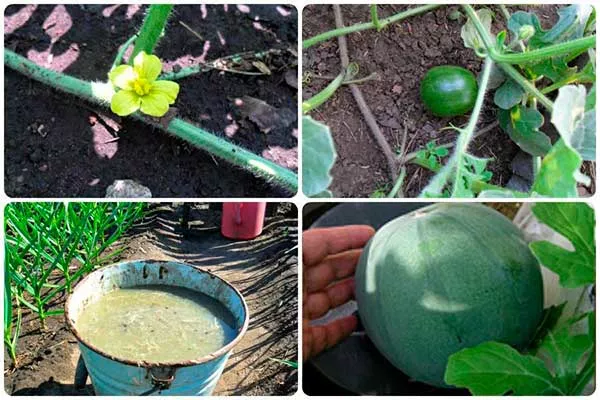
The melon crop growing on the plot will need to be fertilized again during its flowering period with the following substances:
- organic matter (rotted chicken manure or cow dung, compost, humus, fermented herbal infusion, ash);
- mineral substances (superphosphate, potassium sulfate).
- The first feeding should be carried out 2 weeks after planting the seedlings, using a complex mineral fertilizer with a predominance of nitrogen.
- The second feeding should be carried out at the beginning of flowering, using fertilizer with a high content of phosphorus and potassium.
- The third feeding should be carried out during the period of fruit formation, using potassium fertilizers to improve taste.
Melon diseases and pests
Hybrid melon varieties are resistant to many infections and pests, but poor agricultural practices and unfavorable growing conditions weaken the plants' immunity. In this condition, they are more susceptible to damage from various pathogens (fungi, viruses, bacteria) and pest attacks.
Diseases
Without proper care, melon plants suffer from the following diseases:
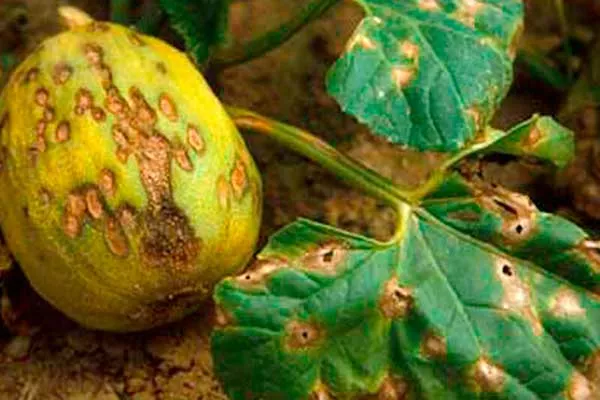
- Anthracnose (copperhead)Infected plants develop round, pale pink (or brown) spots on their leaves. These spots eventually develop holes. Leaf blades curl and dry out, and the shoots thin out and become brittle. Fruit on infected bushes becomes deformed and rots.
Treating a melon crop damaged by copperheads with Bordeaux mixture (1% concentration) will help save it. Three to four treatments will be necessary, once every 1.5 weeks. Sprinkling the plants with sulfur powder is also a good idea. - AscochytosisA melon bed infected with fungus is identified by brown spots on the shoots. These spots eventually spread throughout the entire plant. The plant dies due to damage to its roots.
If you notice symptoms of the disease, adjust watering (reduce it), dust the bushes with wood ash powder mixed with lime, or spray them with Bordeaux mixture (concentration - 1%).
To prevent fungal infections, use Silk and Immunocytophyte to treat seeds. - Root rotWeakened plants are susceptible to it. In young bushes, the roots and stems turn brown and thin out, and begin to wilt. In mature bushes, yellowing of the foliage is observed, along with a brown discoloration of the lower parts of the shoots and roots.
To prevent melon diseases, soak the seeds in a formalin solution (40% concentration) for 5 minutes before planting. - Viral infections (Cucumber mosaic virus, watermelon mosaic virus, and others). Gardeners diagnose them by the formation of mosaic-colored areas on the leaves, leaf deformation, stunted plant growth, and the appearance of speckles on the pumpkins.
Aphids are the carriers of these diseases. To prevent damage to your melon beds, get rid of this pest promptly. Destroy diseased plants; they cannot be saved. - Powdery mildewThe Dakar melon is resistant to this fungal disease. In severely weakened plants, it can manifest as white spots on foliage and shoots, drying and curling of foliage, stunted growth of vines and pumpkins, and deterioration in the appearance and taste of the fruit.
The solution to the problem is to treat the melon area with sulfur powder (80%), several times with a 3-week interval. - Downy mildewGardeners identify the disease by the yellow spots that appear on the green mass.
To prevent fungal infections, soak seeds in a solution of potassium permanganate (concentration 1%) before planting.
If you find diseased bushes in your garden bed, spray them with urea dissolved in water (10 g of substance per 10 liters of water), Oxyhom, or Topaz. - Fusarium. This fungal infection also rarely affects the Dakar hybrid, which is resistant to it. When plants are infected, they display symptoms such as discoloration of the foliage, the appearance of gray spots, wilting, and deterioration in the quality of the pumpkins. If left untreated, the plants die.
To prevent infection of the crop during the period of bud formation, spray it with a solution of potassium chloride.
Avoid using chemicals to treat a melon bed affected by an infection less than 20 days before harvest. If necessary, replace them with safe biofungicides (such as Fitosporin) or folk remedies (such as a solution of baking soda or milk with iodine).
Pests
In unfavorable years, the plot with the melon crop of the Dakar variety is attacked by parasites:
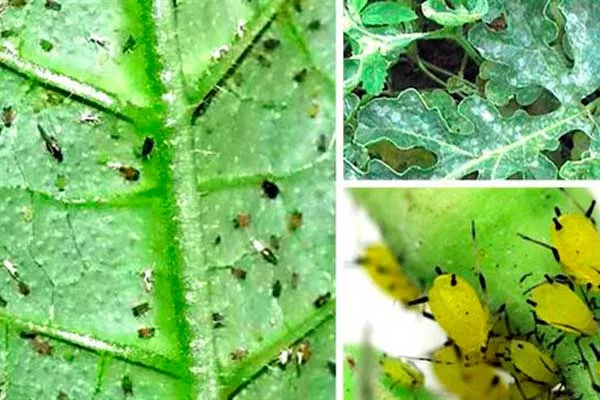
- Melon aphidGardeners find it on the undersides of leaves. The parasite feeds on their sap. Affected bushes experience withering and curling of their green foliage, and flowers fall off before they have a chance to bloom.
Get rid of the pest by treating the planting with a solution of Actellik (concentration - 30%) or Karbofos (10%). - Spider miteLike aphids, it settles on the underside of leaves. The insect feeds on their sap. This parasite is especially dangerous for melons grown in greenhouses.
Treat affected plants with a solution of Bicol, Fitoverm or Bitoxibacillin. - Wireworm (also known as the click beetle larva). This insect damages the roots of shrubs, causing their death. To prevent the pest from spreading, deep-till your garden in the fall and practice crop rotation.
- Cutworms. Parasites eat the vines. Their infestation threatens the melon planting with destruction. To eliminate caterpillars after harvest, deeply dig the soil in the area.
Melon processing
If your melon plantings become diseased, treat the infected plants with fungicides. Apply 2 to 4 treatments. Follow these guidelines:
- Do not use contact products between treatments;
- do not alternate drugs belonging to different chemical groups;
- use the same product or its analogue with the same active ingredient;
- keep the interval between treatments no more than 12 days;
- After spraying the pineapple melon planting with a systemic fungicide, use a contact agent no earlier than 8–10 days later.
Experienced gardeners use systemic products to spray young, rapidly growing plants. For mature plants, they use contact products.
Positive and negative qualities
This hybrid melon variety has become popular with domestic gardeners due to its numerous advantages:
The Dakar melon also has some disadvantages that should be taken into account when growing it:
Reviews
Dakaro is one of the most popular Dutch melon hybrids among Russian gardeners. Its fruits delight the palate with their sweet, pineapple-tinged flavor, rich aroma, and abundant juice within the tender flesh. The bushes are very productive, characterized by long and consistent fruiting, and resistance to disease and drought.