
The Bagheera melon is an attractive choice for both novice and experienced growers due to its disease resistance, high yield, and excellent flavor. This variety possesses a number of positive varietal characteristics, making it suitable for both open-field and greenhouse cultivation.
Breeding history
Developed by Russian breeder Vasily Ivanovich Blokin-Mechtalin. The author submitted an application for hybrid approval in late 2018, and in 2020, it was officially added to the State Register of Varieties Approved for Use.
Recommended for cultivation throughout Russia, including the northern, central, western Siberian and Far Eastern regions.
Description of the variety
This variety is suitable for home cultivation. It is suitable for both open field and temporary shelter cultivation. It is characterized by early maturity, high yield, and good transportability.
Characteristics of the appearance of the plant and fruits
A medium-sized, climbing plant from the melon family, ideal for gardening. It has a strong root system and good branching. Distinguishing features:
- The leaves are large, slightly dissected, and green in color.
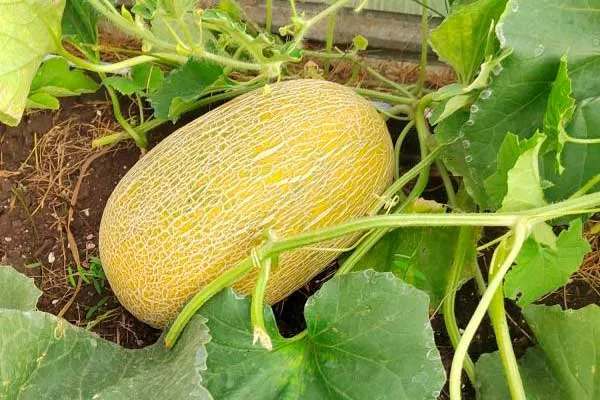
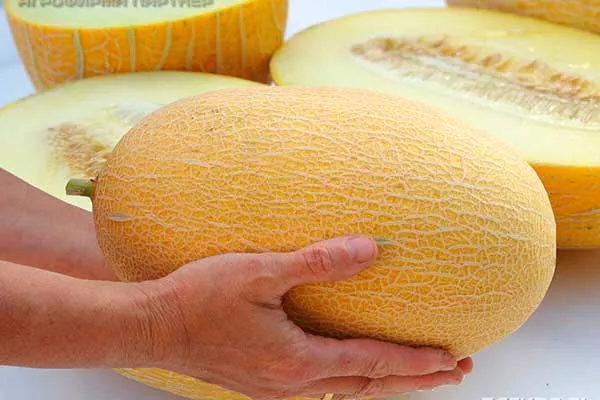
- The fruits reach large sizes, the weight of one specimen ranges from 1.5 to 1.9 kg.
- They are characterized by an elliptical shape and a rich yellow color with a slight shade of gray.
- The surface is smooth with a linear mesh structure.
- The skin is of medium thickness.
Purpose and taste
The light yellow flesh has a delicate and juicy flavor. The taste is characterized as very sweet and rich, with distinct pineapple notes.
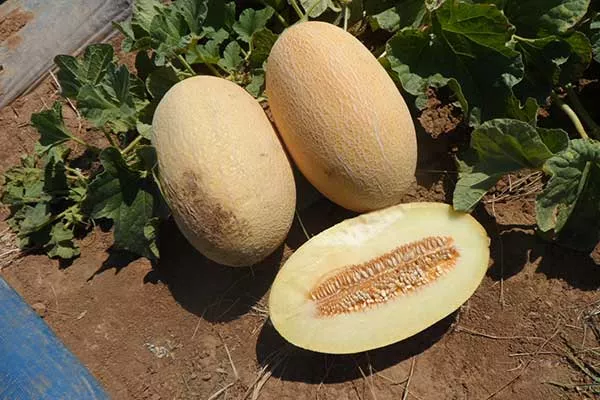
The fruits are suitable for culinary use and salads. They retain their flavor and commercial qualities for a long time and are characterized by good transportability.
Ripening time and yield
Bagheera melon is an early variety. The time from planting to ripening is 55-60 days. The main fruiting season is July-August and is characterized by simultaneous and uniform ripening.
Requirements for planting site and soil
Prefers full sunlight and a warm atmosphere, so choose open, well-lit areas protected from drafts for planting. Helpful tips:
- To protect against strong winds, plant crops near outbuildings or residential buildings, among trees and shrubs. Plant corn, beans, or sunflowers near vegetable beds.
- For successful cultivation, choose medium-loamy, light soil with neutral pH. The crop can grow in saline soils, but marshy or heavy soils are not recommended.
- Begin preparing the site for planting in the fall. Dig the soil to a depth of 20-25 cm and mix it with manure or humus (4-5 kg per square meter). For heavy and clayey soils, add 5 kg of river sand per square meter.
- In the spring, the preparation process continues. Dig the soil again, adding wood ash or dry peat to speed up snow thaw.
- When the top layer of soil warms up to +13°C, loosen it thoroughly and add superphosphate (40 g per 1 sq. m) and potassium salt (20 g per sq. m).
- ✓ The soil pH level should be strictly within 6.0-7.5 for optimal nutrient absorption.
- ✓ The soil must have high drainage capacity to avoid water stagnation at the roots.
Before planting, dig up the area again and add nitrogen fertilizers (15-20 g per sq. m).
Landing
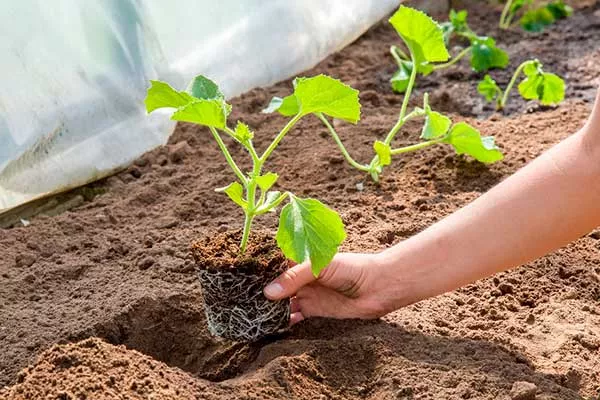
Sow seeds between April and May. They can be placed directly in the plot for subsequent cultivation or sown in individual containers to produce seedlings.
Subtleties of agricultural technology
When growing the Bagheera hybrid in a greenhouse, ventilate the area regularly to avoid excessive humidity. Otherwise, the plants may be susceptible to fungal diseases and mold.
Follow important agricultural practices:
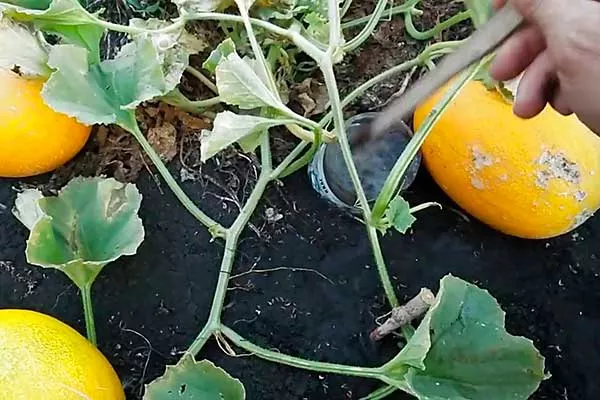
- For young seedlings, use mulch to prevent leaves, stems, and fruits from coming into contact with the soil and rotting after intensive watering or heavy rains.
- Water according to weather conditions, on average 1-2 times a week.
- Avoid overwatering the soil and keep it moderately moist.
- If necessary, carry out the procedure if the top layer of soil has dried out.
- After watering, loosen the beds to prevent a hard crust from forming.
- For feeding, use mineral and organic fertilizers once every 1.5 weeks.
At the beginning of the growing season, use nitrogen fertilizers, such as mullein or urea. In the second half of the growing season, it's advisable to switch to potassium-phosphorus fertilizers: wood ash, potassium sulfate, compost, or superphosphate.
- Carry out the first feeding 2 weeks after planting the seedlings, using nitrogen fertilizers.
- The second feeding should be carried out at the beginning of flowering, using potassium-phosphorus fertilizers.
- The third feeding should be carried out during the period of fruit formation, again using potassium-phosphorus fertilizers.
Resistance to diseases and pests
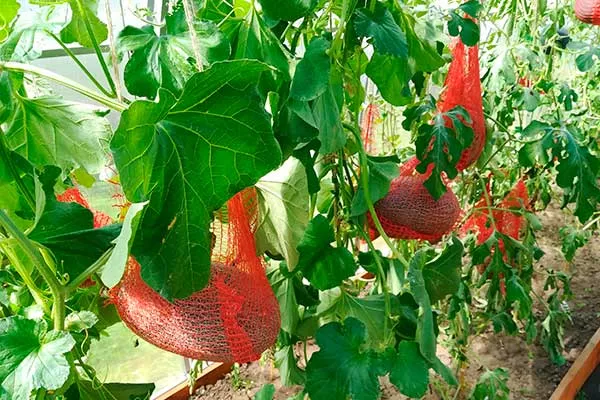
It is resistant to watermelon mosaic virus, fusarium wilt, and powdery mildew. In unfavorable growing conditions, plants may be susceptible to various diseases, which manifest as leaf spots. To protect against these diseases, pre-treat the seeds before planting and follow crop rotation guidelines.
If mature bushes are infected, treat them with fungicides or Bordeaux mixture. More severe cases can be difficult to treat. If the infection is severe, dig up the melon and destroy it outside the garden to prevent the spread of the infection to healthy plants.
Harvesting
Bagheera melons ripen within 55-60 days after emergence, typically in July-August. Harvest them when they reach optimal ripeness: they should have a vibrant color typical of the variety and a slight springy feel when pressed.

To avoid loss of quality and flavor, pick ripe melons carefully to avoid damage. After harvesting, thoroughly clean the melons to remove any dirt and disinfect them if necessary. Store in a cool, dry place at approximately 10-15°C.
Pros and cons of the variety
Before planting a new variety in your garden, research its pros and cons to avoid problems. Bagheera has many advantages:
Reviews from gardeners
The Bagheera melon is a disease-resistant crop that promises abundant, high-quality harvests. This variety attracts gardeners with its reliability and potential for successful cultivation. To ensure the plant produces large fruits that are resistant to rot and cracking, it is important to ensure timely agricultural practices.