
The Aikido melon is a striking example of a first-generation melon. Its distinctive features include excellent adaptability to various climatic conditions, resistance to diseases and pests, and a fairly good yield. Another important feature of this variety is that the fruits can be harvested immediately after the skin has completely turned yellow.
Who developed the variety and when?
The Aikido melon variety was developed by scientists at Sakata, a leading Japanese breeding company. This agricultural company has been developing unique plant varieties for many years, including this melon.
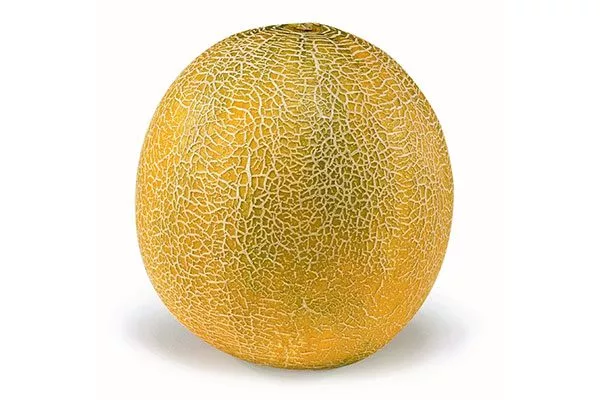
The variety was developed in the early 2000s in the company's European branch, which is why its original Japanese audience learned about it somewhat later.
Aikido was registered in Russia in 2006, when it was included in the State Register of Breeding Achievements. It belongs to the Galia type of cultivars.
Description of the plant and fruits
This is a vigorous, trailing variety distinguished by its long shelf life and impeccable transportability, even over long distances. External characteristics of the bushes and fruits:
- leaves - dissected and dark green, medium in size;
- peel – compacted and rounded;
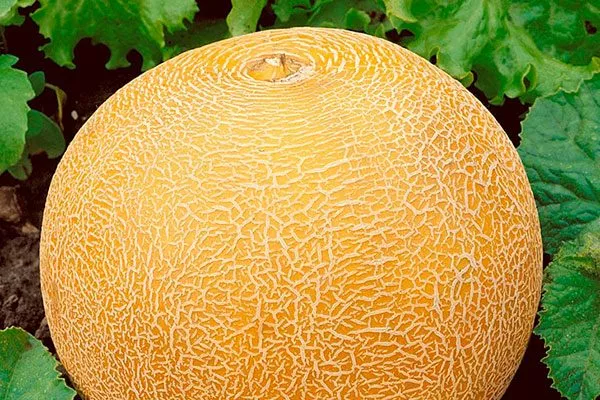
- melon color – yellow at consumer maturity, greenish at technical maturity;
- segmentation – intermediate level;
- mesh density on the surface of the peel – moderate;
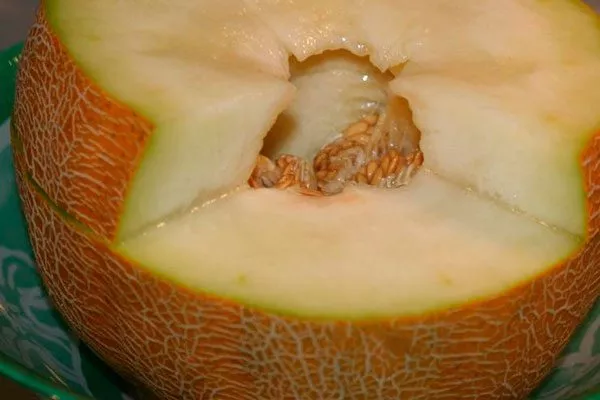
- pulp shade – light green;
- pulp structure – tender and juicy, according to consumers, it melts in the mouth;
- dimensions – medium, as the weight varies from 1.5 to 2.2 kg;
- seeds – elongated, medium, yellow-cream;
- aroma – clearly expressed;
- seed nests – medium in size.
Taste and purpose
The Aikido melon surpasses many other varieties in terms of flavor. It has a juicy and tender flesh that melts in the mouth, making it especially enjoyable to eat. Furthermore, it is highly prized for its rich sugar content, reaching 10-13%, which imparts a refined sweetness.
The fruits are widely used in the preparation of fruit salads, fresh drinks, light snacks, juices, and even jam, so there is no need to add large amounts of sugar.
At the same time, it has good storage and transportation properties, making it a popular choice for agricultural holdings and producers.
Ripening and yield
The Aikido melon ripens mid-early. From fruit set to full ripening, it takes only 35-45 days, which is a short period for pumpkins. This plant is suitable for those who prefer a quick harvest.
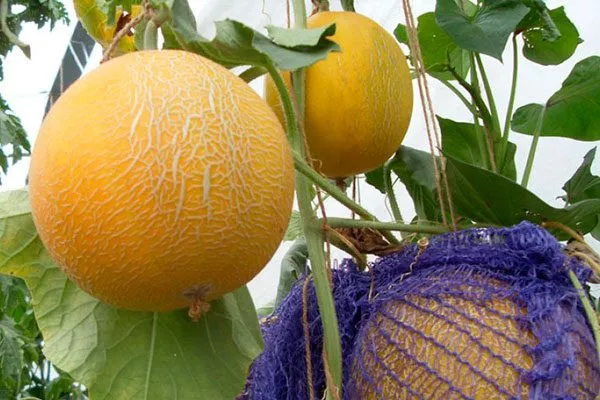
When grown outdoors, one hectare can yield between 90 and 125 centners of high-quality fruit. However, yield is influenced by many factors, including the level of agricultural management and climatic conditions.
In which regions will the Aikido melon grow?
The variety has been officially recommended for cultivation in the North Caucasus. In other regions with cooler or more variable climates, its cultivation should be considered experimental, and in critical conditions, greenhouses may be used.
Since Aikido is a hybrid early-ripening variety, it can be grown in various climatic zones:
- In the European part of Russia, it is suitable for open ground with planting through seedlings.
- In central Russia and Western Siberia, greenhouse conditions are recommended to preserve the quality of the harvest.
- In the Asian part of Russia, good results are achieved by direct sowing of seeds into open ground.
Planting methods
There are two main ways to grow this melon (this is possible due to the climbing nature and strength of the stems):
- Horizontally. In this case, the shoots spread along the ground. This makes the melon grower's work easier, but requires placing supports (boards, plywood, etc.) under the fruit to prevent the melons from rotting during watering and rain.
- Vertically. A trellis structure must be installed and the vines tied in place. Additionally, fruit nets are hung to protect the fruit from falling. This growing technique significantly reduces the distance between seedlings.
Subtleties of agricultural technology
To ensure that the fruits have time to gain weight and sweetness before ripening, it is important to adhere to the varietal and standard planting and subsequent care guidelines.
Growing seedlings from seeds
To grow seedlings in 30-35 days, follow these recommendations:
- Selection and preparation of seeds. Start by selecting high-quality, mature seeds. Soak them for 11-13 hours to speed up germination. Then, spread the seeds on damp burlap and maintain a temperature of 27-29 degrees Celsius to ensure optimal germination conditions.
- Hardening for northern regions. If you live in a cold climate, after soaking, place the seeds in a temperature range of -1 to -3 degrees Celsius for two days. This will help improve the plants' tolerance to temperature fluctuations and promote earlier formation of female flowers, leading to increased fruit production.
- Sowing. At the end of April, sow the prepared seeds in pots with a nutritious soil mixture enriched with humus, ash, and peat. Choose a warm, sunny spot in the house or on the balcony to place the pots.
- Caring for seedlings. Plant the seeds at a depth of approximately 1 cm. Water the seedlings once a week. You can also cover the seedlings with plastic film to create a greenhouse effect.
- Top dressing. Twice a month, feed the seedlings with complex fertilizers to stimulate active growth and the development of a strong plant.
- Hilling and space. Carefully earth up the young seedlings, avoiding damage to the root system. Ensure sufficient space between pots so that the plant leaves don't overlap, allowing them to receive even light and air.
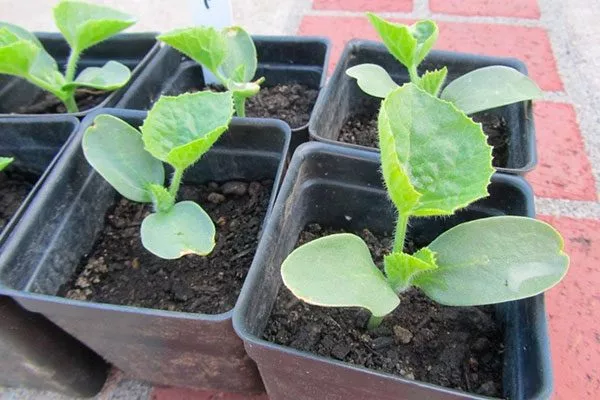
When the seedlings have grown 3 to 6 leaves, they are ready for planting. Plant them under a covering material to protect them from adverse weather conditions and create a favorable microclimate for further growth and development.
Harvesting in open ground
In warm southern climates, Aikido F1 melon seeds can be sown directly into open ground. In more moderate climates in the central and northern regions, it is recommended to use seedlings to grow this variety.
Planting by seeds:
- Melon requires ample space for vine development, so plant seeds in furrows 2.5-3 m apart and 14-17 cm between seeds within each furrow.
- The furrows should be carefully compacted.
- After emergence, thin out the seedlings in several stages to prevent overcrowding and increase yield.
- Seedlings are planted in late April or early May.
- Peat pots with seedlings are placed into the prepared holes, being careful not to damage the root ball, and covered with soil on top.
- Do not plant the plant too deeply. Mulching with humus or peat is recommended.
- Seedlings are spaced according to a planting pattern of 65-75 x 145-455 cm. If you sow seeds directly into holes, thin the seedlings as best you can, leaving only the strongest plants.
- Protect melons from the cold at night using film, as they are a heat-loving crop.
- Add charcoal to the seeding hole or furrow and sow to a depth of 2.5-3.5 cm, then water generously.
Remember that soil temperature is crucial when sowing—it should be at least 18-20 degrees Celsius. Otherwise, the seeds may not germinate, and the seedlings may die.
- ✓ The soil temperature during sowing should be at least 18-20 degrees Celsius to ensure seed germination.
- ✓ To prevent root rot, avoid watering directly at the roots and keep the soil around the plant moderately moist.
Harvesting in closed ground
The greenhouse should be covered with plastic or glass and equipped with ventilation. Seedlings with 3-6 leaves and a well-developed root system should be planted in the greenhouse at a distance of approximately 40-50 cm from each other. After planting, water the seedlings thoroughly and mulch the soil to prevent a soil crust from forming.
Recommendations:
- A week after planting, the seedlings should be watered again with warm water.
- Tying to the trellis is carried out, leaving only the main and one side stem.
- During the flowering period, fertilize with a general-purpose fertilizer once a week, and continue to do so during fruit formation.
- To extend the growing season, it's possible to use steam beds with a 30-35 cm layer of biofuel (manure mixture) and a 13-16 cm layer of soil on top. The heat from the manure warms the soil, promoting melon growth. The greenhouse is then covered with plastic film to create optimal conditions for the harvest.
How to artificially pollinate a melon?
There are two simple techniques you can use to pollinate melons:
- The first method involves hand pollination during hot, dry weather. Carefully remove the male flowers from the vines and press their stamens against the pistils of the female flowers. Female melon buds are easily identified by a characteristic small swelling behind the petals, resembling a miniature berry.
- The second method involves collecting pollen from male flowers using a lint-free material, cotton wool, or a brush, and then transferring it to female flowers. This facilitates fertilization and initiates the development of the young melon into a mature fruit.
However, if insects have access to the plants, these steps may not be necessary, as melons are also pollinated by insects. To facilitate natural pollination, simply open the greenhouse film, doors, or windows, and the process will occur naturally.
| Pollination method | Advantages | Flaws |
|---|---|---|
| Manual | Process control, high efficiency | Labor-intensive, need for precise timing |
| Natural | Minimum labor costs | Dependence on weather conditions and the presence of insects |
Possible diseases and pests
The Aikido melon variety is susceptible to root rot, so to prevent the disease, avoid watering directly at the roots and ensure moderate soil moisture around the plant. The variety is not susceptible to other diseases or pests.
Advantages and disadvantages
The main positive qualities of the variety include:
- excellent level of productivity;
- unpretentiousness;
- excellent taste;
- resistance to stress, therefore ease of adaptation;
- resistance to pests, powdery mildew, etc.
There is one drawback: you need to control the soil moisture to avoid root rot.
Recommendations for increasing the yield of the Aikido F1 variety
To further increase the yield of Aikido F1, it is important to observe several important points:
- Time for planting seedlings: This needs to be done when the soil has warmed up, based on the weather conditions of late May or early June.
- Pruning the main shoot: This stimulates the formation of female flowers on secondary shoots.
- Artificial pollination: This will ensure more reliable fruit formation.
- Care: This includes regulating the green mass to ensure better access to light and preventing overcrowding, which is important for preventing diseases.
- Watering: Plants are watered twice a week, with special care during the ripening period of the fruits, so as not to cause rotting.
- Top dressing: It is produced twice a month using mineral complexes to provide nutrition.
- Hilling: every two weeks helps improve the root system of plants.
Reviews of the variety
The Aikido hybrid melon is disease-resistant and adapts easily to new conditions, making it less resource-intensive to grow than other varieties. While it does require care, it's not as meticulous as other varieties. Consumers prefer it for its excellent flavor and aroma.