
The Orange melon is a relatively new Russian cultivar, characterized by small fruits, increased sweetness, and juiciness. It is easy to cultivate, ripens early, and is resistant to diseases and pests. Despite its recent origins, this melon has already carved out a niche among popular and sought-after varieties.
Who developed the variety and when?
The melon variety "Apelsinka" was developed through breeding research conducted by scientists Yu. I. Avdeev, O. P. Kigashpaeva, A. Yu. Avdeev, and S. T. Sisengalieva. In English-language literature and documentation, the variety is also known as "Orange."
The application for its registration as a new variety was submitted in 1914 by the Federal State Budgetary Scientific Institution VNI (Institute of Irrigated Vegetable and Melon Growing) and the Federal State Budgetary Educational Institution of Higher Education Astrakhan (Astrakhan State University). Permission for commercial use was granted four years later.
External characteristics of the plant and fruits
The Apelsinka melon variety is early maturing and suitable for both outdoor and greenhouse cultivation. It is known for its excellent flavor and ease of cultivation.
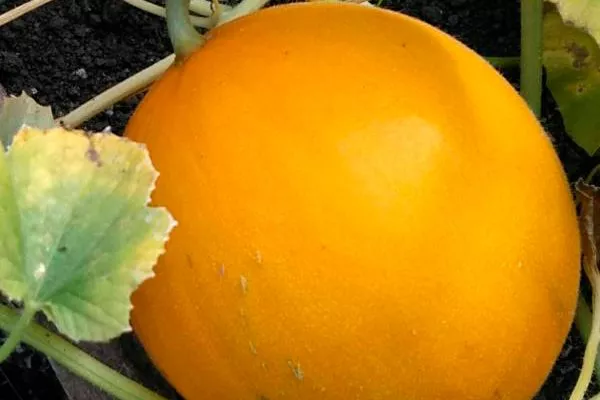
The orange variety is included in the State Register of Breeding Achievements for use in private farms and is recommended for cultivation in many regions of Russia, including the north, central Russia, Western Siberia, and the Far East.
Characteristic features:
- The plant has a medium-spreading stem and small, light green leaves that are moderately dissected.
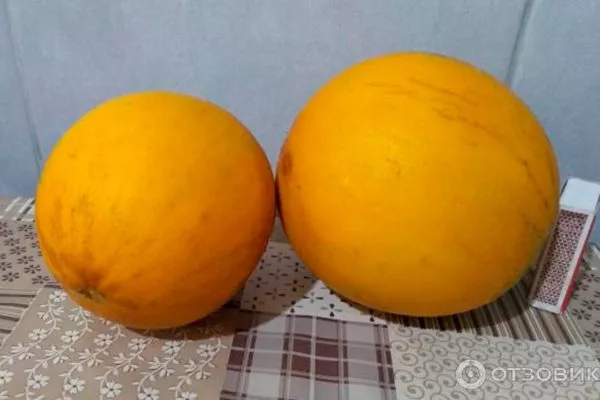
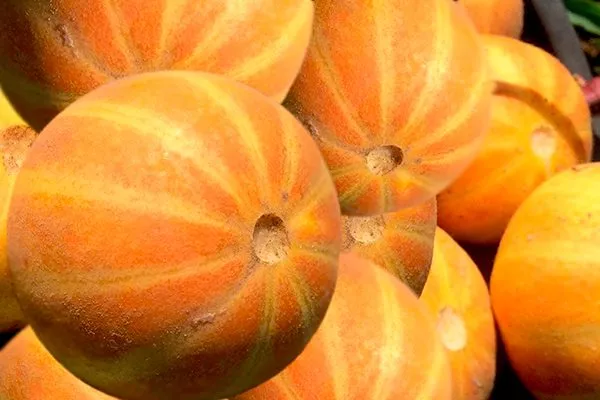
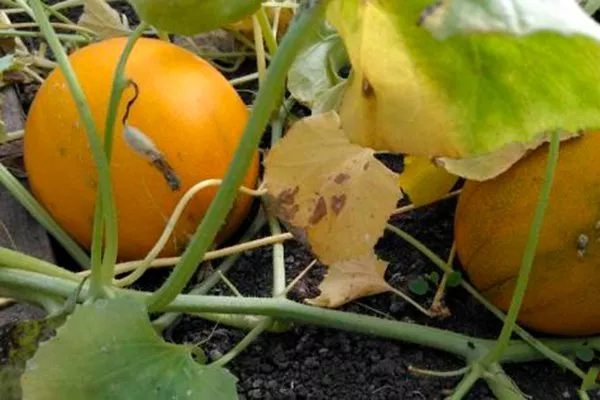
- The fruits are modest in size, weighing approximately 550-650 g. They have a broad, round shape and smooth, light-yellow skin, decorated with rare dots.
- The mesh on the peel is weakly expressed, most often it is a thin linear-mesh structure.
- The bark thickness is average.
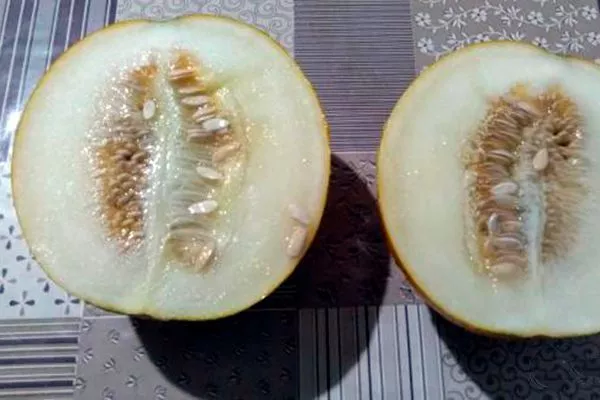
- The melon pulp is yellowish-white, soft and crumbly, and juicy.
- The seed chamber is medium in size and the seeds are short and creamy yellow in color.
Taste characteristics and uses
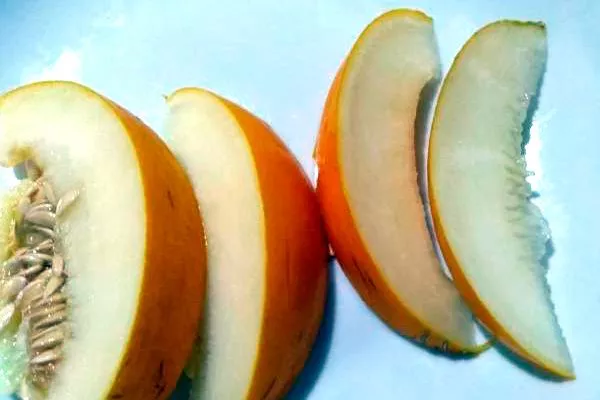
Melon flesh has a refined aroma and a rich, sweet flavor worthy of high quality recognition. The fruit is versatile and distinguished by its juiciness and soft texture, with a light yellow flesh.
Their distinctive flavor lies in the harmonious combination of sweetness and honey notes, making them ideal for fresh consumption. The fruit's compact size allows one melon to be eaten whole per meal, adding to their convenience.
Ripening and yield
From the moment the shoots emerge to harvest, it typically takes 50 to 65 days, with the fruits ripening simultaneously and fairly synchronously. The variety's yield is impressive—on average, 1.3-1.6 kg per square meter, and under favorable conditions, a single bush can produce up to 26-30 ripe melons.
Landing features
Orange melon can be cultivated using two methods:
- Direct sowing of seeds into the soil around May 15th, followed by regular watering. After emergence, pinch the seedlings above the fourth or fifth leaf and leave a couple of side shoots.
- Growing from seedlings begins in the last days of April, and ready 30-35-day-old seedlings are planted in a permanent location in open ground.
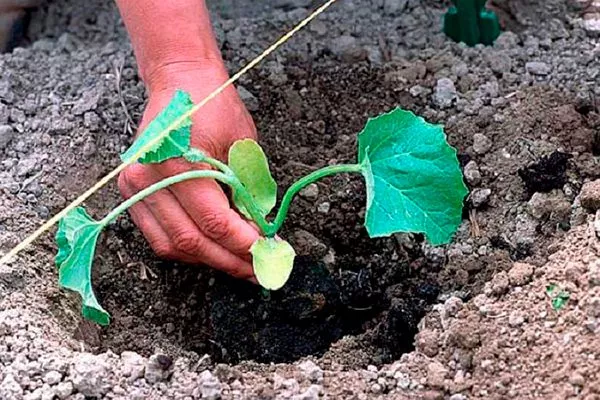
For Russia's mid-latitudes, growing Apelsinka from seedlings is the ideal option. Here's how to do it correctly:
- The seeds are sown from mid-March to the end of April, deepening them by 1.5 cm into the soil mixture.
- The seedlings are planted in their permanent growing location after a couple of months, keeping a distance of about 50-60 cm between plants.
- It is important to ensure that the root is not buried too deep to avoid fungal diseases.
After planting, it is recommended to lay down mulching material and moisten it generously with warm water.
Requirements for the planting site and soil
Melons grow most successfully and produce abundant sweet fruit when grown in sunny, open locations that receive favorable sun warming and protection from cold wind loads.
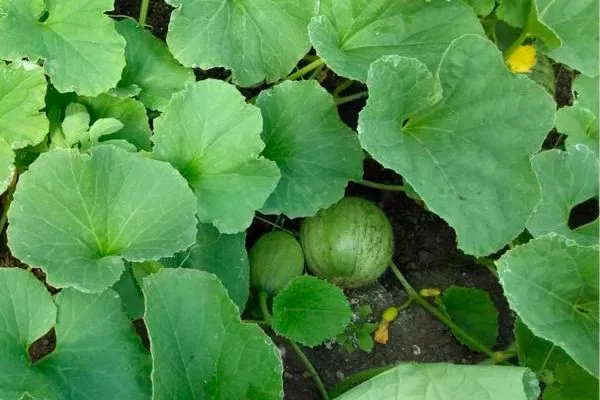
The optimal locations for planting melons are south-facing slopes. In full sun, plants are less susceptible to disease, and the fruit ripens better.
Soil characteristics:
- The soil should be light with a neutral acidity level.
- This variety is tolerant of soil salinity but does not thrive in acidic, waterlogged soils. In slightly acidic soils, it's advisable to add lime or charcoal to the planting holes. This material should be added to a layer of soil before planting.
- To increase the yield, it is necessary to enrich the top layer of soil with fertilizers, adding mineral compounds in the fall, for example, double superphosphate, as well as compost or humus.
- ✓ Check the soil acidity level, it should be neutral (pH 6.5-7.0).
- ✓ Make sure the area is well drained and not prone to standing water.
- ✓ A month before planting, add compost or humus to the soil at a rate of 5 kg per 1 m².
Subtleties of agricultural technology
The variety is not considered to be capricious, so there are only two measures that must be strictly followed.
Watering
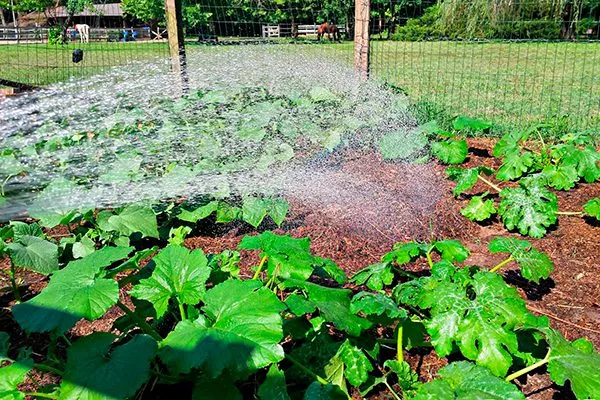
Melons should be watered regularly, stopping when the fruit begins to form to allow the pulp to accumulate sugar. Overwatering should be avoided, as this can lead to root rot.
- Two weeks after planting the seedlings, apply a complex mineral fertilizer (NPK 10-10-10) at a rate of 30 g per plant.
- At the beginning of flowering, feed the plants with a solution of mullein (1:10) or bird droppings (1:20).
- During the fruit formation period, use potassium fertilizers to improve taste.
Top dressing
The crop responds positively to fertilization. After planting, during the emergence of lateral shoots, and before budding, plants should be provided with alternating liquid mineral and organic fertilizers.
Pros and cons
The Apelsinka melon variety offers several advantages, including ease of cultivation, early ripening, tolerance to temperature fluctuations, and excellent flavor. It can be grown in a wide range of climates. Its main drawback is its small fruit size.
Reviews
The Orange melon is characterized by its exceptionally sweet and juicy flesh, versatile use, and exceptional ease of care. The main thing is to water the bushes periodically and fertilize occasionally. This is a self-sufficient variety, and its seeds can be used for planting next season.