
Blueberries are low-growing, heavily branched shrubs that produce small fruits with a distinctive appearance and flavor. The plant can even grow within the Arctic Circle. While it's more common in the wild, gardeners have recently found a way to cultivate the crop in their own gardens.
Botanical description
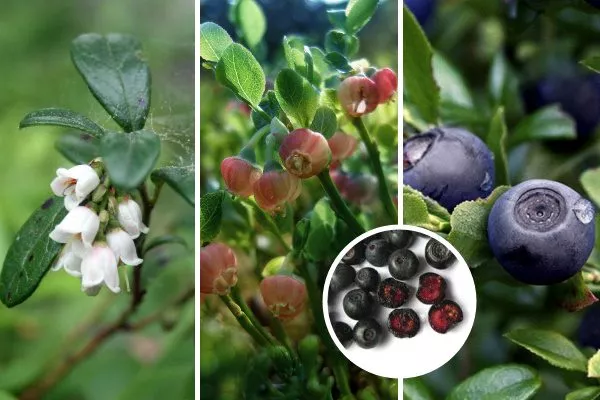
The garden blueberry is a small bush, 15 to 30 cm tall. Branches extend from the main trunk at a 70-degree angle. The leaves are alternate, small, serrated, and leathery. They are ovate in shape and green in color. They fall off as the air temperature drops.
Other botanical features:
- Flowering occurs in May. The flowers are white with a greenish tint, regular in shape, and solitary. The corolla has 5 teeth. There are approximately 10 stamens, and only one pistil. The ovary is inferior. The bud is tilted downward, appearing drooping. This feature protects the pollen from moisture and other negative influences.
- Pollination. The plant is pollinated by domestic bees or bumblebees.
- The fruits are bluish-black or pure black. When cut, a purple hue is noticeable. Inside are seeds, about 40 in number and up to 10 mm in size. Blueberries are comparable in size to a pea. The berries stand out clearly against the yellowing leaves.
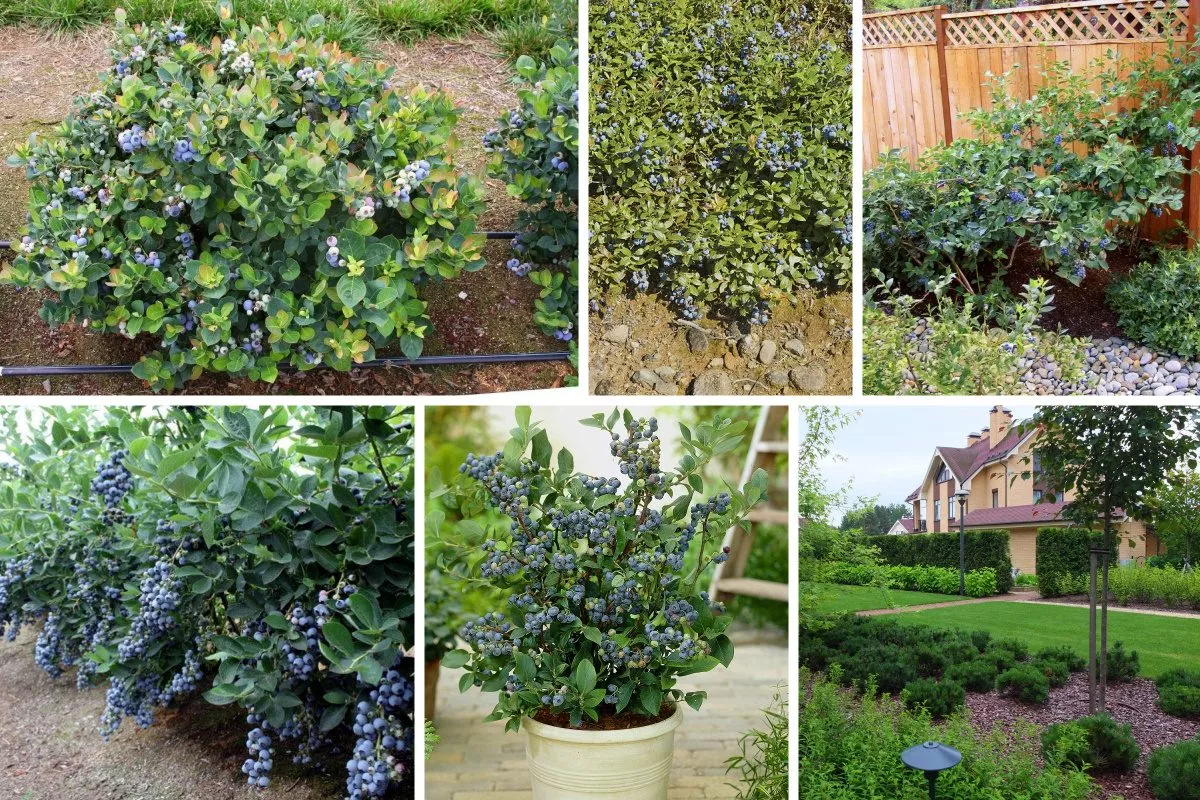
Blooming blueberries are a favorite not only among gardeners but also among landscape designers. They use the plant to add a unique touch to a property. This small bush is used for landscaping shady areas. It pairs well with conifers and can create a living carpet over tall fruit trees.
Characteristics
Wild blueberries are highly frost-resistant. The plant can withstand temperatures as low as -37 degrees Celsius. However, they cannot bear fruit without water.
Composition and calorie content of blueberries
Blueberries are popular not only for their ease of cultivation and ability to beautify the garden, but also for their rich chemical composition. The fruits contain:
- catechins – 206 mg%;
- fructose – 3.68%;
- glucose – 2.45%.
The berries are rich in tannins and various acids. They also contain B vitamins. The leaves contain flavonoids, saponin, ascorbic acid, and many other components.
The following macro- and microelements are distinguished:
- potassium;
- calcium;
- magnesium;
- iron;
- manganese;
- aluminum;
- bromine;
- barium;
- boron;
- zinc.
There are only 44 kcal per 100 g of product. Of these:
- proteins – 1.1 g;
- fats – 0.6 g;
- carbohydrates – 7.6 g;
- dietary fiber – 3.1 g;
- water – 86 g.
Taste qualities
Blueberries have a pleasant texture. The flesh is juicy. The flavor is sweet and sour. A slight tartness is noted after eating the fruit fresh. However, several factors influence the tasting experience. For example, if the fruit is not moist, the sugar taste is not noticeable.
The benefits and harms of blueberries
Blueberries' main benefits are their antioxidants and numerous beneficial compounds. They are also used to restore vision. They are believed to improve night vision (no studies have been conducted).
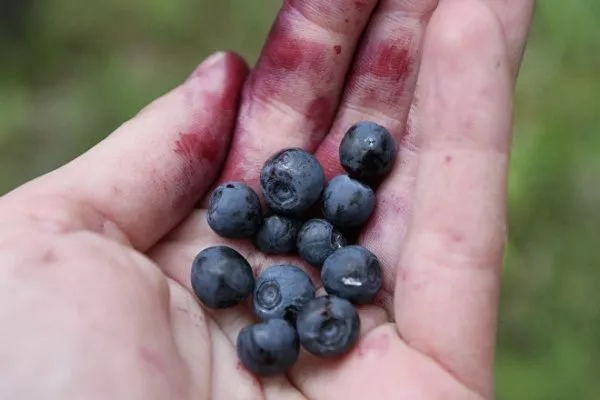
Beneficial properties that have been scientifically documented:
- relieving eye fatigue;
- acceleration of retinal renewal and improvement of its blood supply;
- elimination of skin rashes, eczema;
- aids in the absorption of iron;
- regulation of blood clotting;
- stimulation of collagen synthesis;
- strengthening of bone tissue;
- restoration of carbohydrate metabolism.
Blueberries are an excellent product for weight loss.
Contraindications
Blueberries are prohibited for consumption by people with pancreatic diseases and duodenal disorders.
Individual intolerance, pregnancy, and lactation are all reasons to avoid this natural treat. Blueberries are healthy for children, but they should only be added to their diet after one year.
Blueberry propagation
Blueberries grow wild and are cultivated almost everywhere. The plant thrives in:
- North America;
- Greenland;
- throughout Europe (except Greece);
- European part of Russia, the Urals and the Caucasus;
- Turkey;
- Western and Eastern Siberia;
- Mongolia;
- Japan.
The plant prefers coniferous and mixed forests with high humidity. Blueberry meadows can be found in birch forests, tundra, and highlands. The plant can independently form forests called blueberry meadows.
Types of blueberries
The most common type is the common blueberry (Vaccinium myrtillus), but the Ericaceae family also includes other members. The description above is of the common garden blueberry, while below are other blueberry species found in the wild throughout the world.
| Name | Bush height | Leaf color | Fruit size |
|---|---|---|---|
| Caucasian blueberry | 3 m | Green | Classical |
| Blueberry | 1.5 m | Green | Classical |
| Blueberry oval-leaved | 1 m | Green | Without the usual touch |
| Blueberry paniculata | 50 cm | Green | Soft, bright red |
| Hairy blueberry | 1 m | Green, crimson in autumn | Oblong-ovate shape |
Caucasian blueberry (Vaccinium arctostaphylos)
The wild blueberry grows in the Caucasus, northern Asia Minor, parts of Bulgaria, and Iran. Blueberry leaves are large. The plant grows to about 3 meters tall. The berries are indistinguishable from regular blueberries. The main characteristic of this species is its low frost resistance.
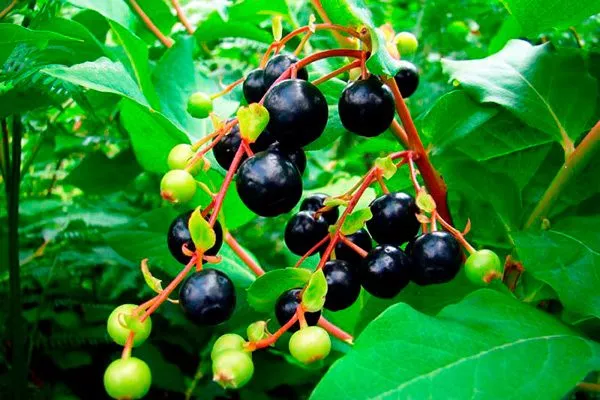
Blueberry (Vaccinium angustifolium)
Another name is Pennsylvanian. It was first discovered in eastern North America. The tree grows up to 1.5 meters tall. The leaves are green and oval. The berries are classic. Winter hardiness is not reduced. This species is virtually impossible to find in Russia.
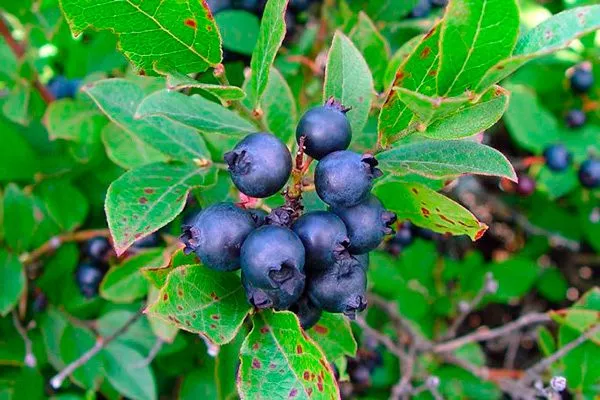
Blueberry (Vaccinium ovalifolium)
Distribution regions: Sakhalin, the Aleutian, Kuril, and Commander Islands, North America, and Japan. The blueberry bush grows up to 1 m tall and is characterized by slow growth. Flowering is not typical. The berries are distinguished by the lack of the usual bloom.
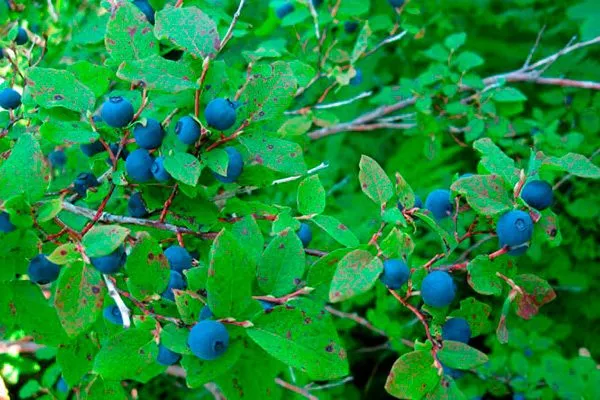
Blueberry (Vaccinium scoparium)
This member of the heather family can be found in North America. It is a miniature shrub, growing no taller than 50 cm. Its branches resemble a broom. It bears soft, bright red berries up to 6 mm in size, with a tart taste. It does not bear fruit every year.
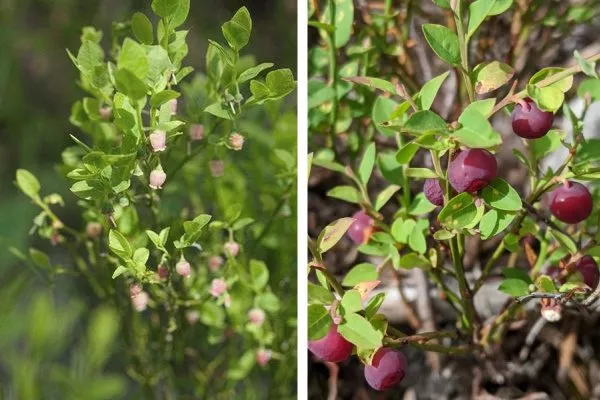
Hairy blueberry (Vaccinium hirtum)
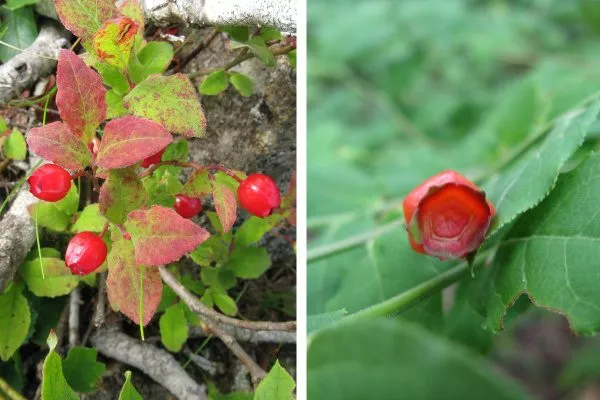
This plant is native to Sakhalin and Japan. It grows naturally not only in forests but also on the edges of swamps. It is a deciduous shrub, reaching up to 1 m in height. The berries are oblong-ovoid in shape and a classic color, reaching approximately 7 mm in diameter. The species can be identified by its upward-pointing green leaves. In autumn, they turn a crimson hue.
Agronomic subtleties of blueberries
Planting a blueberry tree in your garden is easy. Timing depends on the region's climate. Blueberries thrive in cooler climates, so in the south, it's best to begin rooting in October. Otherwise, the bush will die, expending energy on surviving the hot days rather than developing its root system.
Selecting a location
To get a good blueberry harvest, it is important to carefully select the location and soil for planting.
The following must be taken into account:
- In the wild, the crop grows in the shade. It's best to give the tree a well-lit area. If there's insufficient light, the fruit will be small.
- The plant is afraid of winds, especially winter ones. They negatively affect growth. You can protect the plant from this problem with a fence, hedge, or garden structures.
- The soil composition should be loose. Permeable, peaty, sandy soil with a high acidity level (pH 3.8-5). Groundwater levels should be within 40-60 cm of the soil surface.
- Blueberries do not tolerate flooding. Therefore, lowlands and clayey compositions are not suitable.
- ✓ The soil acidity level should be within the pH range of 3.8-5.0, which is critical for the absorption of nutrients.
- ✓ The presence of peat in the soil is mandatory to ensure the necessary structure and moisture capacity.
Landing
Planting a seedling is similar to planting blueberries, a berry similar to the huckleberry. Despite significant differences, rooting follows the same process:
- Prepare the soil. Add equal amounts of peat, sand, pine scraps, and sawdust. A few days before planting, water the bed with a mixture of 15 g oxalic acid and 100 ml apple cider vinegar. Apply powdered sulfur at a rate of 60 g per square meter. Avoid adding organic matter such as manure. Otherwise, the plant will begin to actively grow without devoting energy to fruiting.
- Make a planting hole measuring 80 x 80 cm and approximately 60 cm deep. The distance between holes is 1 m. Fill it with hydrogel (10 g of substance per 3 liters of water, use after swelling).
- It will help retain moisture in the soil layers. Dry soil guarantees that the seedling will not take root.
- Lay down drainage – expanded clay, 10 cm layer. Cover it with substrate.
- Water generously. After the water has completely absorbed, loosen the blueberry root ball and place the plant in the center of the hole.
- Sprinkle with soil without burying the plant.
- Water the planting.
- Mulch using sawdust, bark, and pine needles. Apply a layer of about 8 cm thick.
You can learn about the intricacies of planting blueberries by watching the video below:
Care
Growing blueberries is impossible without proper care. Without it, you won't be able to enjoy the delicious berries.
What activities to conduct:
- Cleaning the tree trunk circleRegularly remove dry grass and weeds.
- Loosening. The depth should be up to 3 cm. Exceeding this depth can damage the roots, which are located close to the soil surface.
- Shelter from frost. The plant tolerates subzero temperatures but does react negatively to spring frosts. Protect young plants with spunbond. Fires can be lit near mature plants in the spring to warm the branches.
- Watering. In dry climates, the plant requires water every 3-5 days. Under normal conditions, it's sufficient to moisten the soil once every 2 weeks. It's acceptable to add citric acid to the water (15 g per 10 liters of water).
- Spraying. This procedure is necessary during hot weather. Refresh the bush in the morning or evening, when the sun's rays are not too harsh.
- Top dressing. Blueberries, with their unique flavor, respond well to mineral and organic fertilizers. Chlorine is prohibited. Apply fertilizer during loosening. A mature bush requires 15 g of a complex fertilizer containing potassium, nitrogen, and phosphorus. Spread 50 g of sulfur powder under the bush once a year. This prevents the soil from becoming alkaline.
Use organic fertilizer once every three years in the fall. The recommended rate is 4 kg per square meter. - Trimming. Carry out the first pruning at planting, removing weak, flimsy, and deformed branches. Crown shaping can begin three years after rooting. Regular sanitary pruning is performed in the spring. Remove damaged shoots and prune those older than four years.
The optimal length for growth and fruiting is 20 cm. Leave only 10 healthy branches. Radical pruning is necessary every 12 years. The plant tolerates any pruning well.
- Carry out sanitary pruning of bushes in late September – early October.
- Mulch the tree trunk circles with a 10-15 cm layer of pine needles or sawdust.
- Cover young plants with spunbond or other non-woven material before the first frost.
Reproduction
There are various ways to propagate blueberry bushes, but vegetative propagation is the most effective.
Dividing the bush
In the fall, dig up the bush and carefully divide it so that each section looks like a separate plant. A tree without roots and with shoots covered in damaged buds will not survive. There should be at least five viable early shoots.
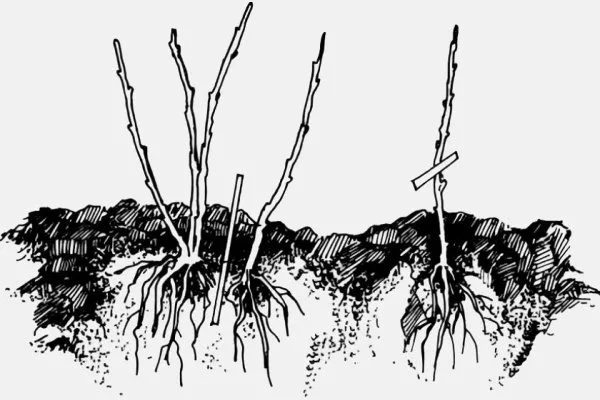
Blueberries separated from their mother can be planted outdoors according to standard guidelines. Alternatively, they can be potted and kept in a cooler growing location for the winter.
Cuttings
Using this method of blueberry propagation, you can not only obtain a bush with a good harvest, but also grow an entire forest. Here's the procedure:
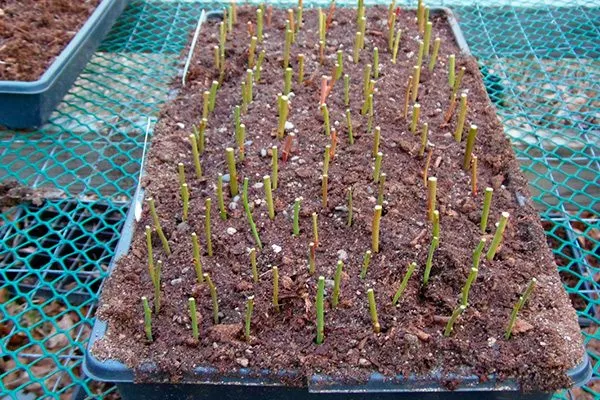
- Cut the tops of healthy, non-lignified branches to a length of 18 cm. Leave three growth buds on the cutting. Make the bottom cut at a 45-degree angle, and the top cut at a straight angle, 2 cm above the bud.
- Prepare the planting hole. Mix equal parts peat and coconut fiber. This mixture will promote rooting.
- Place the cutting at an angle and lightly compact the planting.
- Water the blueberries generously and cover with a plastic container.
- In mid-autumn, transplant the bush to its permanent location. If any difficulties arise, bury the cuttings in boxes filled with sand and overwinter them indoors at a temperature below freezing.
Propagation by seeds
It's believed that the method for propagating blueberries by seed hasn't been fully developed. However, for many gardeners, this is the most convenient option.
What to do:
- Crush the ripe berries. Cover the pulp with water.
- Empty seeds will float to the surface. They won't be needed. Remove them.
- Drain the water and add fresh water. Continue until the liquid is clear.
- Dry seeds suitable for propagation and plant them in a container with peat.
- Water the planting regularly. Then you'll see the first shoots within a month.
Protect future blueberries from frost. Place them in a cool room (up to 10 degrees Celsius). In the spring, transplant them. It will take a year for the seedlings to thrive in open ground.
Also watch a video on how to grow blueberries from seeds:
Diseases and pests
Blueberries are vulnerable to pests. The bush itself is often attacked by fungal diseases. The causative agents are the gardeners themselves, who propagate the crop by cuttings.
What exactly you might encounter:
- Stem cancer. Dark brown spots with a red border appear on the shoots. After a while, the plant begins to rot.

- Moniliosis. The fungus attacks leaves and fruits. In spring, when humidity is high, brown ulcers form. Parts of the tree gradually fall off.
- Gray rot. Initially, gray spots appear, but later the entire stem changes color. As a result, the blueberries become watery, and the entire bush becomes covered in white fluff.
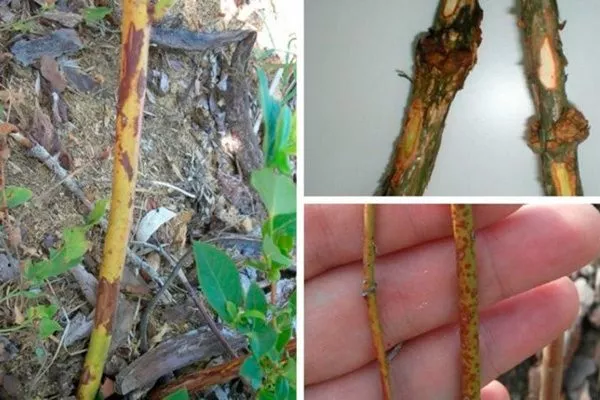
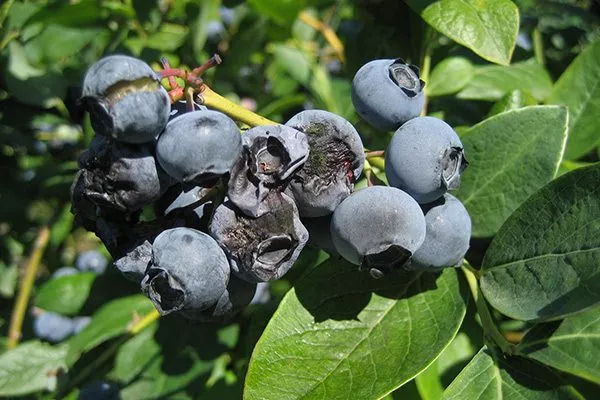
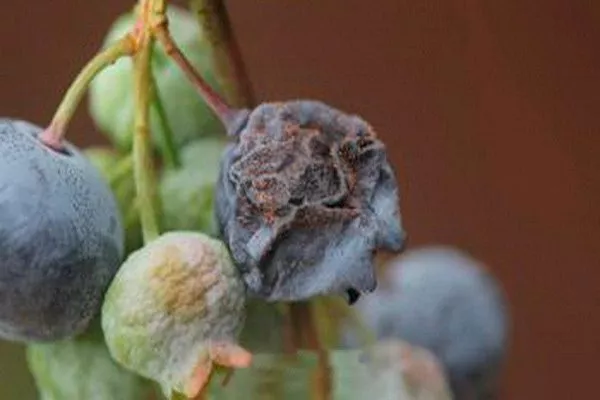
Topsin helps combat these diseases. Apply 10 g of the product per 10 liters of water. Apply foliarly. Dose 2 liters per plant. Apply 2 sprays 28 days apart.
Blueberries are a danger to birds, who prefer to feast on the sweet fruit. For protection, cover the bush with special garden netting.
Blueberry picking and storage
Blueberry picking can be a labor-intensive process if you have more than one bush in your yard. A combine harvester can help, but there's a risk of damaging the berries. The berries don't keep well, so it's best to use them for various preserves.
When do they pick blueberries?
Blueberries can be harvested from the bushes starting in early July. Fruiting is spread out, meaning not all berries ripen at the same time. When planning your blueberry harvest, consider your region. In the north, ripening occurs later.
When to start harvesting depending on the cultivation area:
- Moscow region – second half of July;
- St. Petersburg and Leningrad region – mid-July (exception: Vyborg, work is carried out on August 15);
- Nizhny Novgorod region – end of July;
- Siberia, Urals – August (if the summer was cold, then September).
Manual collection
Hand-picking blueberries is a difficult process, but it's safe for the berries. The easiest way to harvest them is in containers that can be slung over your shoulder.
There are several rules for carrying out work:
- Pick large specimens first;
- leave green fruits on the bush, after picking they cannot ripen;
- twist the stalk on which the blueberry is located slightly and remove the fruit;
- wear thick clothes that will protect you from midges;
- Choose dry weather, collect in the morning or evening.
Blueberry harvesters
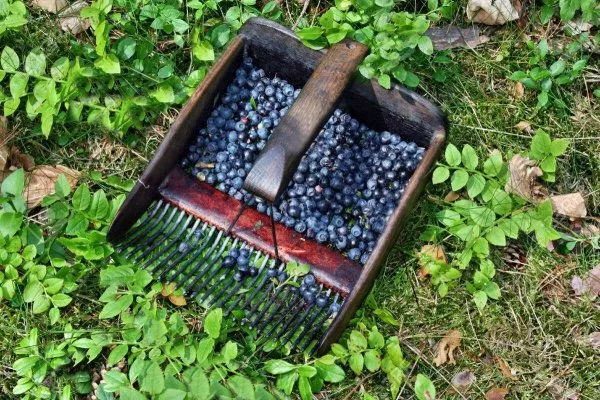
There are special ones available in gardening stores. blueberry pickers, commonly referred to as combine harvesters, which allow you to triple the berry picking process. They consist of a box with a "comb" attached to the bottom, with long, curved teeth spaced 5-6 mm apart.
The plant's branches and leaves easily pass between the cloves, and the berries end up in the container. This device is inexpensive, but you can also make your own. Several models are available, but it's important to choose the one that's least damaging to the blueberries. Some devices crush some of the fruit.
Storage
After harvesting, remove stems, leaves, twigs, unripe fruit, and debris from the entire harvest. Water will make the process easier. Pour water over the berries; the ripe ones will sink to the bottom, and the rest will float. Afterward, inspect your harvest and remove any remaining foreign bodies by hand.
There are several ways to store blueberries:
- In dried form. Spread the berries in a thin layer and place in the oven. Bake at 50 degrees Celsius (122 degrees Fahrenheit) until completely dry. Open the oven occasionally and stir the contents of the baking tray. Place the pretzels in a cardboard or wooden container. Store in a dark place.
- Freeze. All gardeners prefer to freeze dried berries. Arrange the blueberries in a single layer on a cutting board. Freeze for 3 hours. After 3 hours, remove them, transfer them to a zip-lock bag, and store at subzero temperatures. Their nutritional properties will last for up to 1 year.
Harvesting blueberries
Blueberries are most beneficial when eaten fresh. Eating sweet berries all winter is impossible, but there are ways prepare them for the winter.
What can be done:
- compote;
- canned goods (blueberries in their own juice);
- jam;
- jam;
- syrup;
- jelly;
- jam;
- sauce;
- fruit puree;
- juice;
- extract.
In industry, blueberries are used as a component for making wine or liqueurs.

Economic significance and application
Blueberries are used for more than just food. Their rich chemical composition makes them a nearly universal crop.
Medical significance
Blueberries are a valuable medicinal product. They are used in the creation of various medications. These remedies can help people with the following problems:
- gastrointestinal diseases;
- visual impairment;
- difficulty urinating;
- diabetes mellitus;
- anemia of pregnancy.
Folk medicine practitioners also resort to blueberries. The fruits are effective in treating indigestion, hemorrhoidal bleeding, cystitis, rheumatism, anemia, pyelitis, gastritis, and liver disease.
Blueberries are added to many cosmetics. This ingredient improves skin elasticity. The berry can combat free radicals by boosting glutathione production, thus providing a rejuvenating effect.
Culinary uses of blueberries
Blueberries are eaten not only fresh. Preserving them isn't always an option. The fruits are often used to make casseroles, marmalade, pastilles, parfaits, puddings, and sorbets. They can also be used as a filling for dumplings, pies, cakes, muffins, pastries, and cheesecakes. Such baked goods are a national dish in British and French cuisine.
Other culinary features:
- Used as a food coloring to decorate dishes. Blueberries are added to sauces, salads, soups, stews, porridges, and meat.
- An excellent combination is noted with strawberries. And also raspberries, currants of any kind, cottage cheese, fermented milk products.
- Honey is made from blueberries. It is distinguished by its red color, exquisite taste and pleasant aroma.
- For northern peoples, this is the main addition to food. They are eaten with meat, used to make pates and sweets. They are preserved with the addition of fish oil.
Interesting facts about blueberries
There's endless talk about blueberries. Few people know about some of their features, for example, the berry's juice was first used 50 years ago.
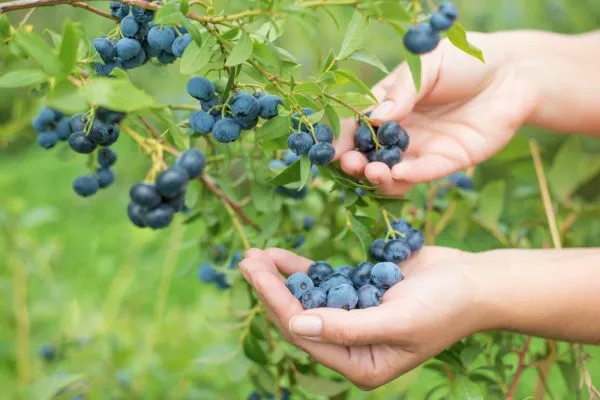
Other interesting facts:
- the waxy coating on the surface of the fruit must be removed to improve its marketability;
- Blueberries are an essential food in the astronauts' diet;
- you need to wash it immediately before eating;
- Eating blueberries for breakfast helps rejuvenate the body;
- the first harvest is meager;
- in the tundra the height of the bush is only 3 cm, and in the USA it is 9 m;
- Numerous studies have confirmed the positive effects in Alzheimer's disease;
- Blueberries are a favorite product of shamans and healers;
- the seeds are not digested by mammals, and natural reproduction of the crop in the wild occurs with feces;
- Expensive paints for artists are made from blueberries;
- most of the nutrients are not lost during the preparation of various dishes;
- the homeland is still not exactly known;
- in some regions the color of the berries may be white or red;
- a bush can form on a branch of a tall plant (seeds are carried by birds);
- There are about 6 synonyms: crowberry, blueberry, blueberry, blueberry, blackberry, blackberry;
- The leaves are used as livestock feed.
Blueberries are small shrubs with dark, sweet-tart berries with a distinctive bloom. They are prized for their rich chemical composition and are used in many areas of life. They grow in forests, but can also be grown in gardens. They are easy to care for.
I've been wanting to plant blueberries for a long time, and after reading your article, I finally decided to do so. I bought seedlings from a nursery and followed the instructions precisely. I planted them in the fall, and this spring I discovered a strong young bush with numerous buds. Thank you so much for the detailed descriptions and step-by-step instructions. By the way, I also took advantage of the interesting facts. It's truly fascinating.