
Blueberries can be harvested in several ways: by hand or with a special device called a combine harvester. The latter significantly simplifies the process. This equipment is suitable for both gardeners and those growing the fruit on an industrial scale, as there are several varieties.
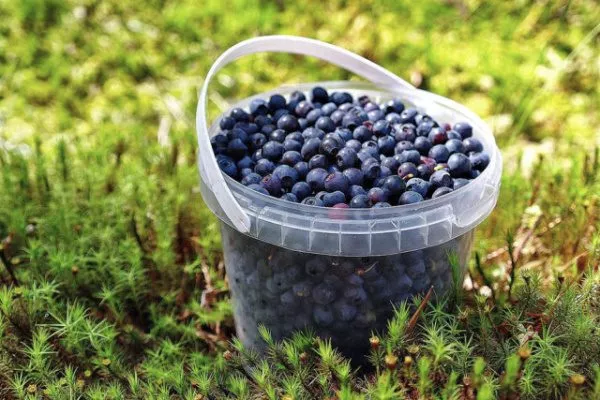
What is a blueberry harvester?
A blueberry harvester is a tool that makes a gardener's job easier. Its main purpose is to harvest a large number of blueberries from the bush and increase the speed of harvesting compared to traditional manual methods. Using a harvester also keeps your hands clean, which is another undeniable advantage.
Disadvantages of the method:
- some blueberries are damaged;
- the bush suffers because branches and leaves are torn off along with the berries, and the plant’s immunity is reduced;
- Debris (branches, parts of shoots) accumulates around the planting site and should be removed immediately to reduce the risk of fungal growth.
Manual varieties
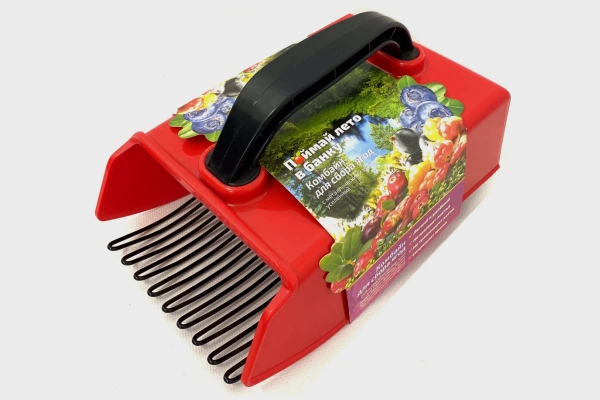
The simplest blueberry picker. It's the ideal solution for those who plant a few bushes on their property or prefer to venture into the woods for the healthy berries. These are the devices most often made by hand.
Design
The manual berry picker consists of three main parts, each with its own function.
What it consists of:
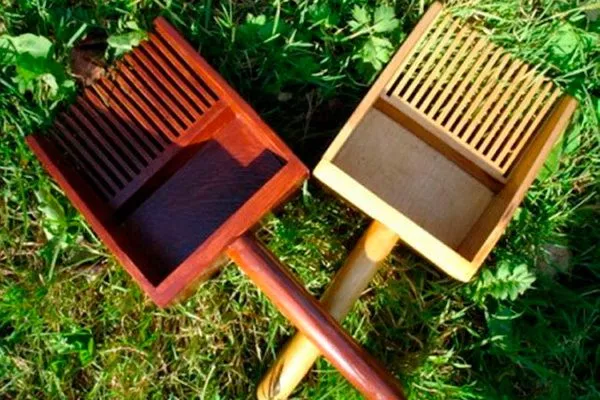
- Ladle. The compartment where the fruit falls. In some models, it may be a bag made of thick fabric.
- Damper. It prevents the crop from spilling out of the hopper because it lowers. It is attached to the rear wall of the bucket.
- Comb. A mandatory element. The distance between the teeth is usually about 3-5 mm, and they are slightly raised at the top.
- Pen. Located on the opposite wall, it's for easy use.
What materials are they made from?
There are many manual blueberry harvesters available for sale. The main difference lies in the material used.
What raw materials are used:
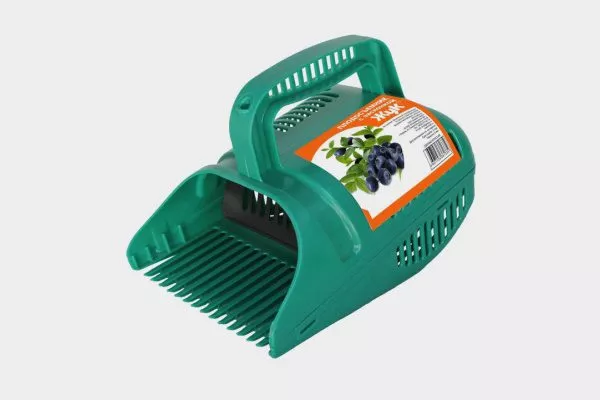
- Plastic. These are lightweight hair clippers, rarely weighing more than 300g. The handle fits comfortably in the hand, doesn't put pressure on fingers, and doesn't cause calluses. When purchasing such a device, be aware that the comb breaks easily.
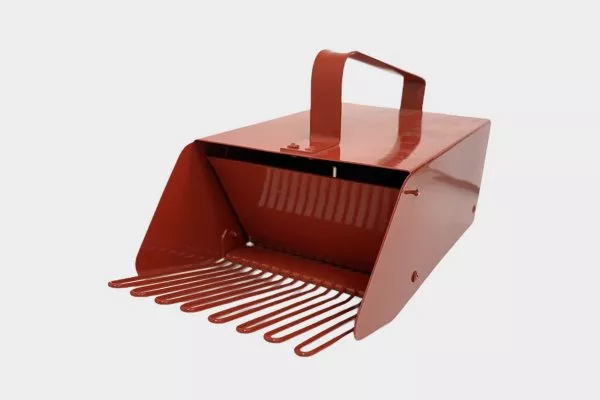
- MetalA reliable device with powerful teeth. It weighs approximately 600 g. The collector is uncomfortable during prolonged use, but lasts for several seasons.
Existing models
| Name | Material | Weight (g) | Teeth length (mm) |
|---|---|---|---|
| Fruit picker Ch-1 (berry) | Metal | 600 | 10 |
| Bug | Plastic | 300 | 5 |
| Plastex | Polymer | 350 | 7 |
| SKRAB | Plastic and metal | 400 | 8 |
It's difficult to count the number of hand-held fruit pickers available on the shelves of gardening stores and in online catalogs. There are countless options. A few of the most popular are:
- Fruit picker Ch-1 (berry). A device made entirely of metal. A reliable tool that won't spoil the berries or damage the bush.

- Bug. A plastic comb-equipped picker designed for picking different varieties of blueberries. Care must be taken when using it, as there is a high risk of damaging the fruit tissue.
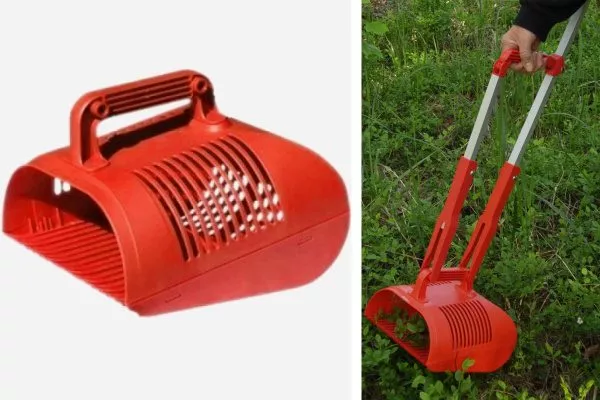
- PlastexA polymer device with a removable telescopic handle (purchased separately). An excellent solution for the elderly.
- SKRABThe device doesn't tear leaves thanks to its flexible, smooth, rod-shaped teeth. Harvesting is convenient, and the berries remain in the scoop, preserving their marketable appearance. The body is lightweight and made of durable plastic, while the teeth are metal.
Pros and cons
Manual fruit pickers are prized for their affordability. They're inexpensive and can be found at any store. Some models are even available in major supermarkets.
The video below shows how to use a hand-held blueberry harvester:
Vacuum varieties
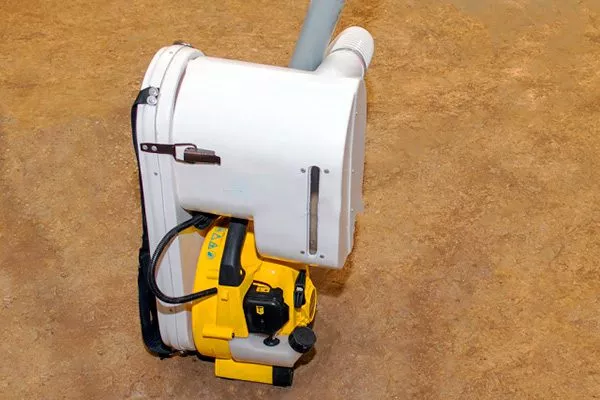
A device whose operating principle is similar to a standard household vacuum cleaner. It's suitable not only for various varieties of blueberries, but also for other wild berries and nuts.
Design
The combine's most important component, without which operation is impossible, is the engine. It is responsible for harvesting the fruit. Its primary function is to activate the air duct.
The device consists of:
- Bunkers. The capacity is 12-15 liters. It is equipped with straps that fit over the shoulders. From the outside, the device resembles a backpack.
- Air duct with flexible tubeMost often it is a transparent hose.
- Bell. A toothed attachment is put on it.
The operating principle is simple: just hold the hose close to the berries. The unit will automatically suck up the appropriate amount of blueberries and blow away any branches, leaves, and other debris.
Materials of manufacture
A harvester like this can only be made of plastic. Making the harvest hopper out of metal would make it difficult to operate, placing significant strain on the harvester's back. The hose is made of the same polymer. The straps are made of thick fabric.
Models
There is one vacuum harvester model on the market. It has a motor speed of 7,500 rpm, a tank capacity of 26 cc, and a weight of 10 kg. It costs 53,000 rubles.
Pros and cons
Easy operation is the most important advantage of vacuum cleaners. No special skills are required to use them.
Mechanical varieties
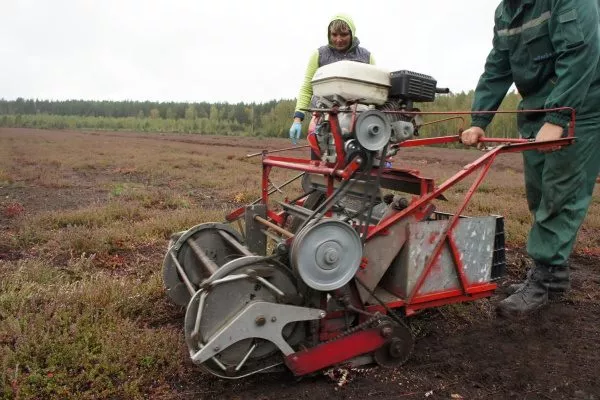
This is a manual blueberry harvester, but an upgraded version. A specialist can help you add additional options. This device is considered universal, suitable for any crop, easy to operate, and practical.
Design
All berry pickers have a similar design. The main compartment of the mechanical variety, where the harvest is collected, is designed as a box. It is closed by several metal teeth, approximately 10 cm long, spaced 3 mm apart.
An engine facilitates the harvesting process. Depending on the type, the unit is equipped with a chassis, a shaking system, and a control panel.
Materials of manufacture
Such devices are usually made of metal. Less commonly, some parts may be made of plastic. It's best to avoid the latter option, as the device's lifespan will be significantly shorter.
Pros and cons
The main advantage of a mechanical harvester is its speed and ease of operation. To empty a single bush, just one run of the machine is sufficient. A second pass is not necessary, but only if all the berries are ripe at the same time.
The downside is the cost. It's not practical for a summer cottage.
Industrial berry harvesters
Blueberry plantations grown on an industrial scale utilize specialized agricultural machinery. These typically cover areas larger than 1 hectare.
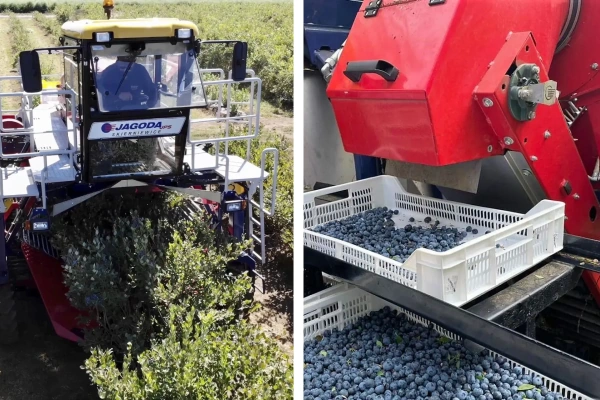
You can't harvest wild blueberries with this equipment, and buying such a harvester for a garden plot is impractical. The price exceeds 10 million rubles.
Models
There are two types of blueberry harvesters. Each type collects up to 90% of the berries on a bush.
Models:
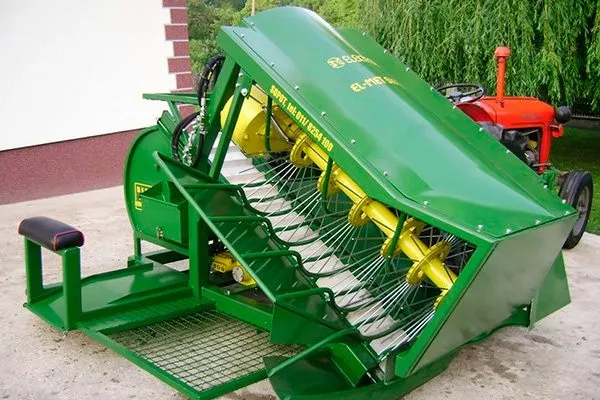
- Trailer. This type of tool uses a hydraulic system. It operates using a fan and a shaking system. A conveyor system is also used, which transfers the fruit into a special metal bin.
The chassis is adjustable, allowing you to choose the harvesting height. This is a great option if the most attractive blueberries are at the top of the bush. It's controlled by a remote control.
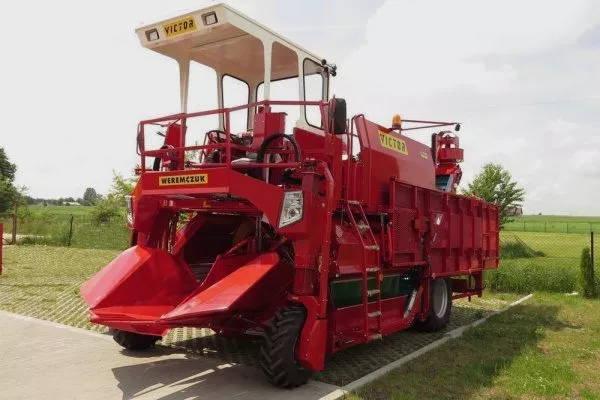
- Self-propelled. They rely on several types of traction and vary in power. Their distinguishing feature is that they work only in the area for which they were designed (meaning cleaning is only possible within a specific distance between rows).
How to choose the type of combine harvester?
The first thing to consider when choosing a blueberry harvester is the location where you'll be picking the berries. For a small plot or a trip to the woods, a standard hand-held harvester is sufficient. You can also purchase one in the following situations:
- If the fruits are used for jam. There's no need to worry about part of the harvest being damaged. The main thing is to prepare the sweet preserves quickly.
- There are problems with the back. Then you need a model with a telescopic handle.
- There are other fruit crops on the plot besides blueberries.The Pigasov combine would be a good choice.
- ✓ Consider the planting density of blueberry bushes when choosing the width of the comb.
- ✓ Pay attention to the material of the teeth: metal ones are more durable, but can damage the berries.
It's best to avoid a vacuum harvester if your berry patch is small. However, if you want to make harvesting easier and have the budget, you can purchase one. It costs around 53,000 rubles.
How to make a blueberry harvester?
The simplest hand-held fruit picker can be made without any special skills. There are many options. In most cases, you don't need to buy any additional parts.
Metal blueberry scoop
For the project, you'll need a sheet of galvanized steel, 2 mm diameter wire, 10 mm moisture-resistant plywood, a small piece of handle (for making the handle), a piece of metal-plastic pipe, and a mounting strip. You'll also need fasteners (self-tapping screws, steel rivets).
The dimensions of the future fruit collector can be seen in the drawing below:
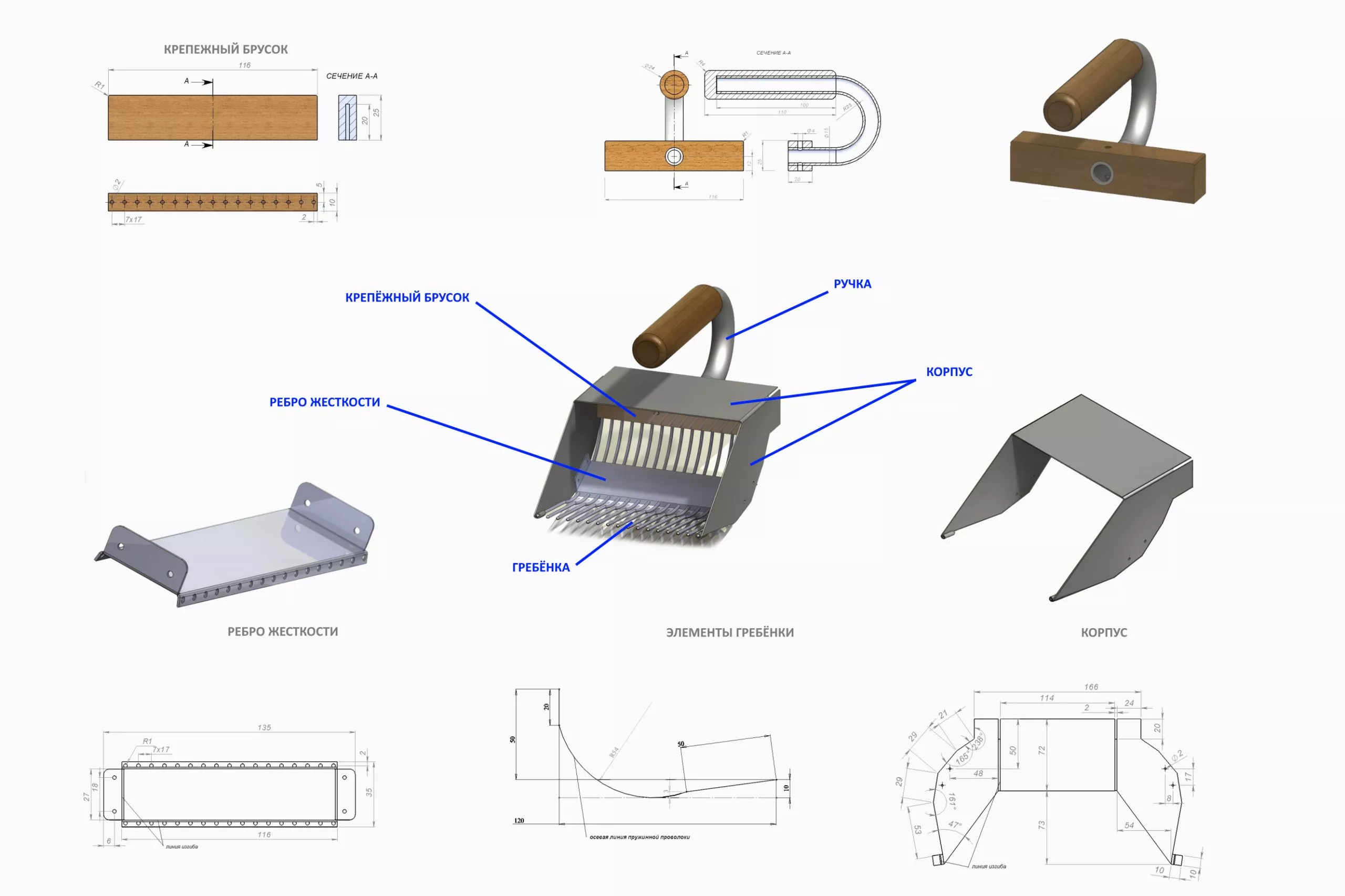
The diagram enlarges on click.
Manufacturing stages:
- Transfer the previously created drawing to a piece of metal. Cut out the pieces and bend them according to the diagram above.
- Bend the teeth of the comb (wire) so that they resemble a rake.
- Make a handle from a pipe and a handle according to the drawing above.
- Insert the teeth of the comb into the holes in the stiffener. Insert the rear ends of the comb into the holes drilled in the mounting block (pre-coat them with glue for a more secure fit).
- Connect the mounting block and the mounting strip using self-tapping screws.
- Place the housing on top and secure it with screws and steel rivets.
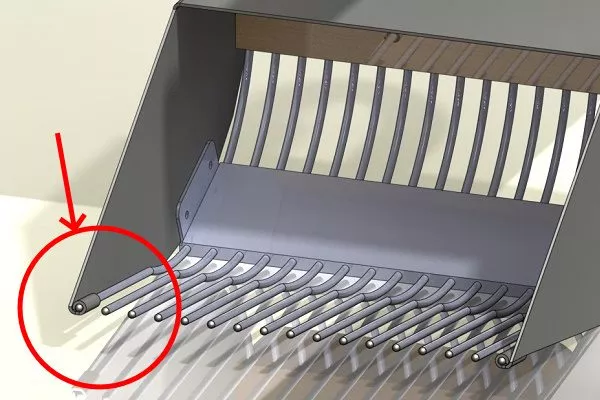
- Use pliers to bend the corner of the side edge of the housing so that it connects to the outer element of the comb. Repeat the same process on the other side.
Wooden blueberry picker
In this case, you'll need a layer of plywood up to 9 mm thick. The comb can be made from 3 mm diameter wire.
Progress of work:
- First, make the rake. Form two pieces of 18 x 18 mm lumber. Punch holes in each piece 5 mm apart. Bend the metal rods inward to prevent them from damaging the blueberries. Insert the pieces into the holes.
- Mark the outlines on the plywood according to the drawing. Cut out the pieces. Connect them using screws. This includes the wood with the rake.
- Sand the edges.
- Add a handle.
We also recommend watching the following video instruction to help the reader:
DIY Blueberry Picker Made from Skewers and Plywood
This is not only the easiest option, but also the most aesthetically pleasing. All you need is a piece of plywood and some kitchen skewers.
Progress of work:
- Transfer the pattern onto a piece of material. Cut out the pieces with a jigsaw. There should be five in total: the sides, the top, the back, and the comb.
- Make a comb out of skewers. Even chopsticks will do.
- Attach to the overall structure using self-tapping screws.
- Make a U-shaped handle from a thin tube. Install it on the lid of the collector.

A glass made from long skewers
A simple, compact, and attractive berry picker. It takes just a few minutes to create.
Progress of work:
- Form a wooden circle. Take a wooden rim the same size as the circle.
- Make holes for the future tines. Leave 1 cm from the edge. Consider the size of the fruit. If you have small blueberries growing in your area, space the holes 3 mm apart. 5 mm is the maximum. Repeat this process on the second wooden piece.
- Sand the wood to remove any roughness or unevenness.
- Place both circles on top of each other so that the holes line up.
- Insert the skewers. Place the ring 15-17 cm from the bottom.
- Secure the frame with glue.
- You can cover it with paint or varnish to make sure the device is not exposed to the negative effects of moisture for longer.
Video instructions for making a berry harvester:
Design analogs
Most berry harvesters work by combing the fruit from the bushes. Other devices can also handle similar tasks:
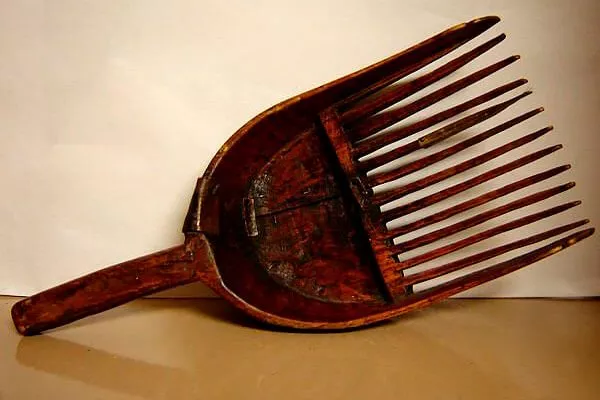
- Scoop. These are usually classic wooden pieces with long teeth on the front edge.
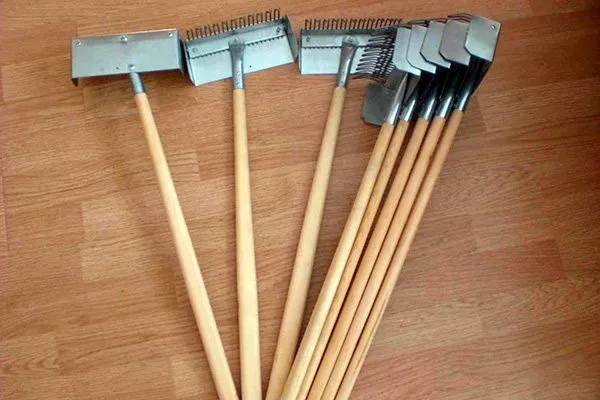
- RakeThis is a special tool for harvesting crops. It can be equipped with a handle to avoid bending over to reach low plants.
- Ladle-comb. The harvesting process is the same as with a manual combine. The only difference is that there's no blueberry bin, only a small platform.
Operating Instructions for a Berry Harvester
Any blueberry harvester is easy to use. Even a mechanized one isn't difficult. However, there are a few things to keep in mind. These are safety precautions of sorts:
- Place the teeth from below, under the fruit, and lift them up; do not pull them to the side, otherwise there is a high risk of damaging the bush and berries.
- Avoid sudden movements and support the bush when picking blueberries.
- If you feel resistance, make several movements in the horizontal plane.
- Empty the berry picker bin as often as possible - this makes it easier to remove debris and reduces the amount of crushed blueberries.
- Don't forget to lift the branches, as some of the harvest may end up on the back side.
A blueberry harvester is a specialized device that significantly simplifies the harvesting process. The device is also known as a berry picker. There are several types: mechanical, manual, and vacuum. For a garden plot, the second option is sufficient. Similar models can be made by hand.
I really liked the article—so many different options. We tried the simplest one—a glass made from skewers. I can say it works.