
Lingonberries, whether picked in the forest or from your own garden, are considered one of the healthiest berries. Preserving them for future use provides vitamins and other nutrients all winter long. There are many ways to preserve lingonberries, so everyone can find their favorite.
Beneficial properties of lingonberries
Benefit lingonberries Lingonberries have been known to humans since ancient times. Their fruits and leaves have long been used in folk medicine. Lingonberries are beneficial not only fresh but also in preserves. Lingonberries contain benzoic acid, which helps them stay fresh for a long time.
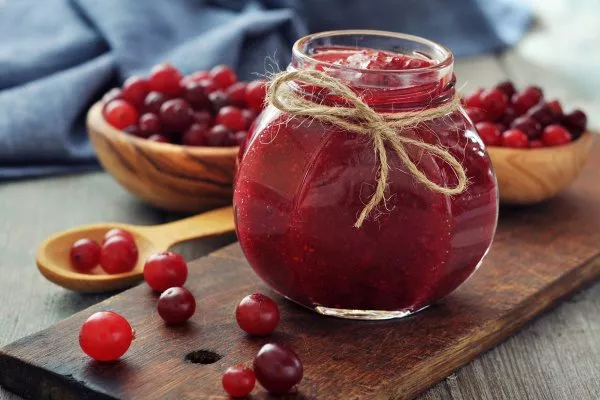
Benefits of lingonberries:
- have an antimicrobial effect;
- remove toxins;
- prevent cancer;
- relieve inflammation.
To ensure your body receives the nutrients found in lingonberries year-round, make all kinds of preparations.
- ✓ The berries must be fully ripe, without signs of rot or damage.
- ✓ Give preference to berries collected in ecologically clean areas.
- ✓ For freezing and drying, choose berries with dense skin.
Methods for harvesting lingonberries for the winter
Lingonberries have a remarkable property: their fruits and leaves retain their healing properties even after heat treatment. Preserving this berry for the winter is doubly beneficial—you get a delicious and vitamin-rich product.
Freezing
Lingonberries, like other berries, can be simply frozen. This is a particularly convenient option for those with a large chest freezer. However, a regular refrigerator with a large freezer compartment is also sufficient. And most importantly, freezing is the best way to preserve lingonberries for the winter.
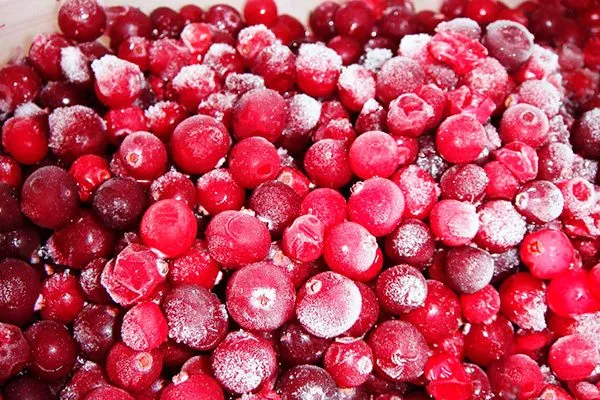
Advantages of freezing:
- preserves all useful substances;
- does not lose its taste and presentation;
- convenient to use.
If the berries are delicate and thin-skinned, they're usually not washed before freezing, as they'll lose their appeal once defrosted. However, lingonberries are quite dense and firm, so it's recommended to wash them before freezing.
Tips for freezing lingonberries:
- Wash the berries under running water (use a colander) and spread them in a thin layer on thick paper towels or paper towels. Allow them to dry thoroughly. Any water droplets remaining on them will freeze and turn into crystals, damaging the structure of the thawed berries.
- If you do freeze unwashed berries, no problem. Just rinse them immediately after removing them from the freezer.
- Freeze picked berries as soon as possible; do not keep them at room temperature. Keep them in the refrigerator for the short time remaining before freezing.
- Place the lingonberries on a small baking sheet in a single layer so they freeze properly—individually, not in clumps. Place them in the freezer, then use the "fast freeze" setting. This will reduce the formation of crystals, which can damage the berries during defrosting.
- Place the frozen berries in a special container. Seal them tightly, otherwise the berries will absorb the odors of other foods. If you store the berries in bags, remove as much air as possible.
At -18°C in the freezer, lingonberries can be stored for up to 1 year. You can also freeze pureed berries, with or without sugar. These preserves are useful for making lingonberry sauces and berry desserts. Sugared lingonberries are conveniently frozen in individual portions.
Also watch a video on how to properly freeze berries:
Pickled lingonberries
This method of preserving is not as healthy as freezing, but if you don't use a lot of sugar, you can still get a healthy product. It's quick and easy to prepare, which is why it's long been popular.
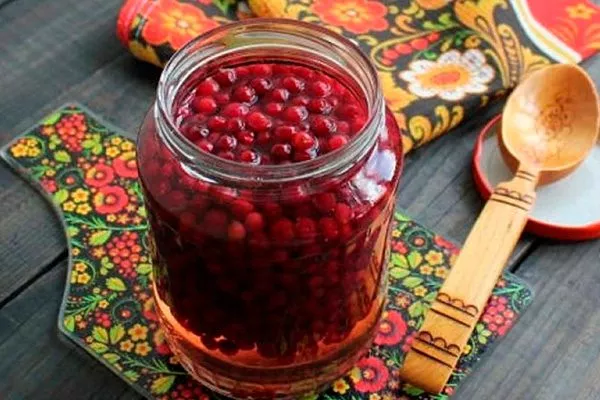
You will need:
- lingonberries - 1 kg;
- sugar - 2 tbsp;
- salt - 0.5 tsp;
- spices - to taste.
Add one or more spices to the soaked lingonberries. Typically, for 500 g of berries, use one cinnamon stick, 2-3 allspice berries, the same amount of cloves, and 2-3 cm of fresh ginger root.
Preparation procedure:
- Wash the berries, sort them, dry them in a sieve and place them in a glass container.
- Prepare the brine: mix all ingredients in 1 liter of water and bring it to a boil.
- Once cooled, pour the berries into a jar. Cover with cheesecloth and refrigerate.
Please note that you should not add more than 2 tablespoons of sugar per 1 kg of berries. In this case, it is not important as a preservative; soaked berries will not spoil anyway.
- ✓ Store in a cool place at a temperature not exceeding +5°C.
- ✓ Use glass containers with tight-fitting lids.
- ✓ Avoid exposure to direct sunlight.
We also recommend watching a video on how to prepare soaked lingonberries:
Drying
Dried lingonberries retain all their healing properties, vitamins, minerals, and other nutrients. It's recommended to dry the berries with their leaves—their compositions differ slightly, so their healing effects vary slightly. While the berries were once sun-dried, today the process can be sped up using kitchen appliances.
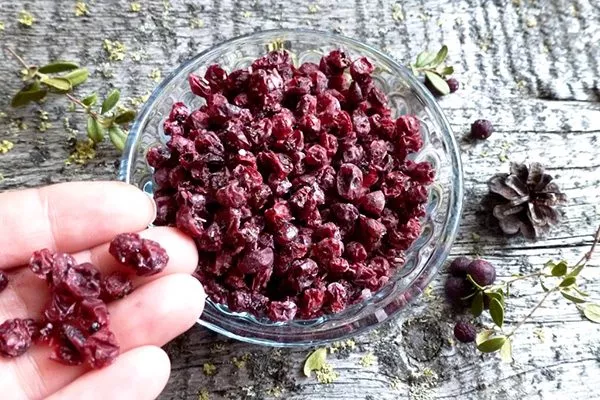
For drying it is recommended to use:
- oven in the stove;
- electric dryer;
- or a regular stove - if you have one.
How to dry lingonberries for the winter:
- Pick berries when they are 100% ripe. Depending on climate conditions, harvesting occurs in August or September.
- Carefully sort the fruit, discarding any poor-quality specimens—rotten, overripe, underripe, or bruised ones. Also, remove any twigs or other plant debris. If you're only drying the berries, remove any leaves that might be caught in them.
- Set the oven temperature to 60°C. Place a baking sheet with lingonberries spread in a thin layer.
- Stir the berries occasionally to prevent them from sticking, burning, and drying evenly. Drying time is 2-2.5 hours.
Place dried lingonberries in a glass, hermetically sealed container and store in a dry, dark place.
Also watch a video about drying lingonberries in the oven:
Homemade preserves recipes
Besides drying, freezing, and soaking, there are many other options for preserving the plant. It can be used to make drinks, preserves, and all kinds of tinctures and cordials.
Whole berries without cooking
This method is perfect for those short on time. Or perhaps you're at your dacha and the power is temporarily out. The downside of this method is the large amount of sugar.
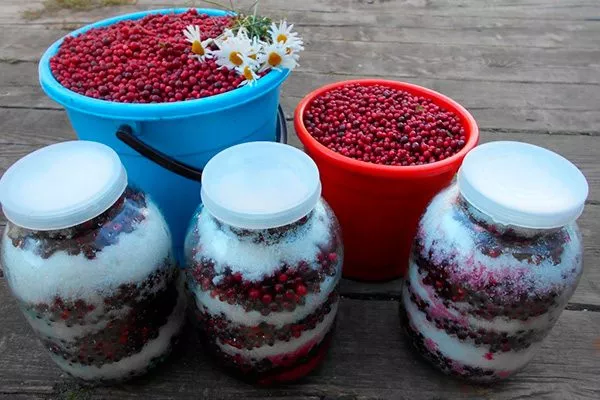
You will need:
- lingonberries - 1 kg;
- sugar - 1 kg.
How to cook:
- Sterilize the jars and layer the washed berries, alternating with sugar. Shake the jars occasionally to compact the layers. Make the final layer of sugar.
- Close the jars with nylon lids and store in a cool place.
We also recommend watching a video about preparing lingonberries without cooking:
Mashed berries with sugar
This is one of the most popular preserves among the people. Many berries, both wild and garden, are preserved this way, including lingonberries. When pureed, the product is very tasty and can be easily added to tea, pies, and desserts.
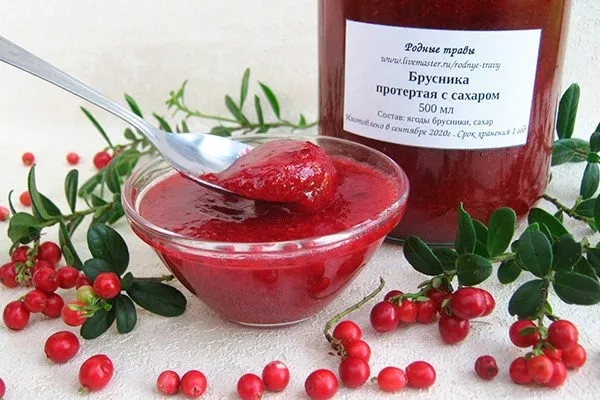
Puréed berries stay fresh for a long time and retain their vitamins. However, their high sugar content is a major drawback for a healthy diet.
You will need:
- lingonberries - 1 kg;
- sugar - 1 or 2 kg.
Step-by-step preparation procedure:
- Sprinkle the berries with sugar.
- Grind the berry-sugar mixture using a potato masher.
- Let the chopped lingonberries sit, stirring occasionally with a spatula.
- Place the berries in jars, seal with lids and place in a basement or other cool, dark place.
And watch the video on how to prepare lingonberries mashed with sugar:
Jam with added orange
Thanks to the oranges, lingonberry jam will acquire a delicate citrus flavor and aroma, as well as additional vitamins.
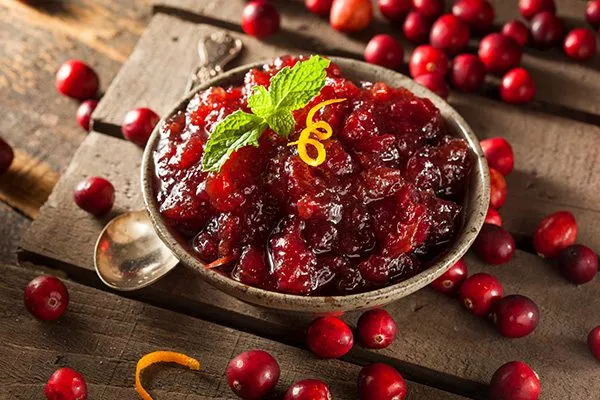
You will need for the jam:
- lingonberries - 5 kg;
- oranges - 5 kg;
- sugar - 5 kg.
Preparation procedure:
- Place the berries in a container, sprinkle with sugar and place on the stove.
- Immerse the oranges in boiling water for 2 minutes. Then dry and slice. Grind the sliced oranges.
- Once the berries come to a boil, simmer them for 15 minutes, then add the crushed orange. Simmer for another half hour, then immediately pour into jars and seal.
Also watch a video on how to make lingonberry and orange jam:
Lingonberry juice
Cranberry juice is refreshing in the heat and a vitamin-rich beverage. It's quick and easy to prepare.
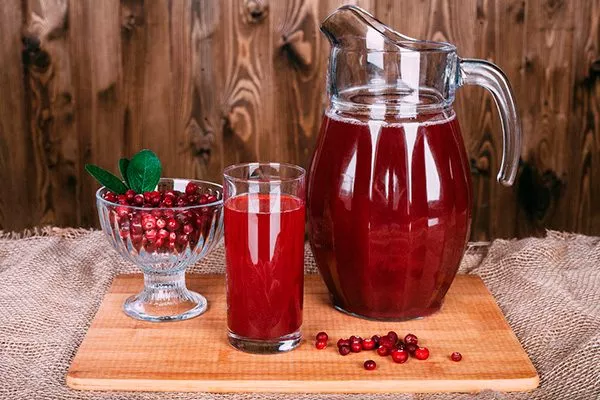
You will need:
- lingonberry - 200 g;
- sugar - 2 tbsp;
- water - 2 l.
How to make fruit drink:
- Crush the berries until they release juice.
- Boil water in a saucepan, throw in crushed lingonberries and sugar.
- Once it comes to a boil, remove from the heat. Let the mors steep and cool.
- Strain the drink through a sieve. Serve chilled.
Watch the video on how to make fruit drink:
Jam
To achieve a thick berry puree, it's recommended to add apples. They contain a lot of pectin, which gives the jam a jelly-like consistency. Without apples, it will be too runny.
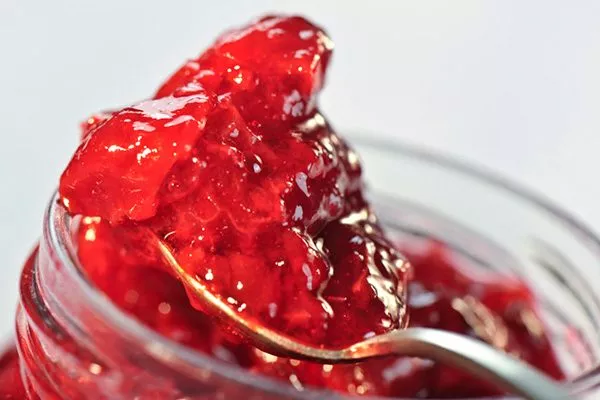
You will need:
- lingonberry puree - 1 kg;
- applesauce - 1 kg;
- sugar - 1 kg.
How to make lingonberry-apple jam:
- Place the sorted and washed lingonberries in a container. Add hot water (125 ml).
- Place the berries on the fire and boil for 6-8 minutes.
- Place the berries in a colander and rub through a sieve.
- Wash the apples and cut them into wedges, removing the cores. Place them in a saucepan, add 250 ml of water, and simmer for 10 minutes, until the apples are soft.
- Rub the boiled fruit through a sieve.
- Place the lingonberry and apple puree into a cooking container.
- Stirring constantly, cook the puree for 20 minutes, until it thickens. Add sugar, stir, and cook for another 15 minutes. The total cooking time should not exceed 45 minutes.
- Pour the jam into jars and roll up.
Additionally, watch a video on how to make lingonberry jam:
Berries in syrup
This is a fairly simple, yet tasty and healthy preparation. This product is recommended for colds and for their prevention.
You will need:
- lingonberries - 1 kg;
- sugar - 0.3 kg;
- lemon zest;
- water - 0.5 l.
How to prepare lingonberries in syrup:
- Sterilize the jars and place the lingonberries in them.
- Make the syrup. Add sugar and lemon zest to the water and bring it to a boil.
- Pour the syrup over the berries and seal the jars with lids.
The video below explains how to prepare lingonberries in syrup:
Jam
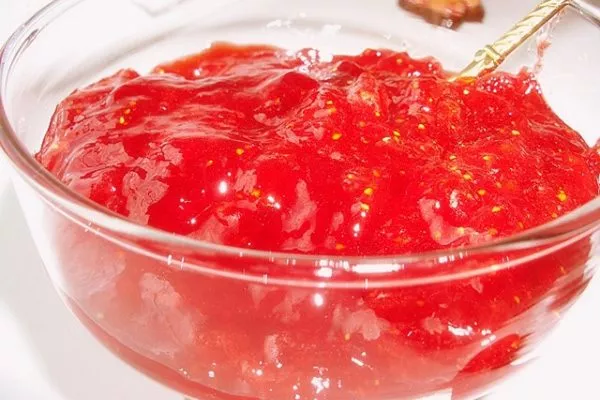
One of the best lingonberry preserves is jam. It can be spread on toast, served with tea, or used to treat colds and other ailments—it's both delicious and healthy.
You will need:
- lingonberries - 1 kg;
- sugar - 0.8 kg;
- water - 0.25 l.
How to make lingonberry jam:
- Sort and wash the berries. Place them in a deep enamel bowl, add a glass of water, and cook, stirring, for about 10 minutes.
- Add sugar to the berries, stir and simmer for 15 minutes.
- Place the jam in jars, seal, cool and store in a cool, dark place.
Lingonberries contain a lot of benzoic acid and pectin, so even after such a short cooking time, the lingonberry brew quickly turns into jelly.
Five-minute lingonberry jam
You can make lingonberry jam in a fraction of the time. The following recipe is called "five-minute jam."
You will need:
- lingonberries - 3 kg;
- sugar - 2 kg.
How to make quick jam:
- Pour boiling water over the washed and sorted lingonberries.
- Place the berries in a saucepan, sprinkle all the sugar on top and leave for an hour.
- Place the lingonberries on the stove. Cook over medium heat, stirring occasionally. Bring to a boil and simmer for 5 minutes.
- Place the jam into sterilized jars and roll up.
The video below explains how to make lingonberry jam in 5 minutes:
Lingonberries in their own juice
This method allows you to preserve the maximum amount of nutrients, and most importantly, you won’t need any other ingredients except the berries themselves.
How to cook:
- Sort out the lingonberries and cut them in half.
- Squeeze the juice from 1/2, add it to the second part - whole berries, and bring to a boil.
- As soon as the berries and juice come to a boil, remove them from the heat and place them in sterilized jars. Store in a cool, dark place.
Below is a video about preparing lingonberries in their own juice:
Lingonberry jelly
Using gelatin, you can make wonderful lingonberry jelly. It has a unique flavor and aroma, making it a wonderful vitamin-rich treat for winter tea parties.
You will need:
- lingonberries - 2 kg;
- sugar - 1 kg;
- gelatin - 50 g;
- water - 0.75 l.
How to make jelly:
- Sort the berries, pour boiling water over them, and place them in a colander.
- Mash the berries with a potato masher and then squeeze the mixture through cheesecloth.
- Add sugar to the squeezed juice and simmer over low heat until dissolved, stirring constantly.
- When the mixture boils, add gelatin, stir and cook for another 1 minute.
- Place the finished lingonberry jelly into sterilized jars and seal tightly.
Also watch a video about making lingonberry jelly:
Crushed lingonberries
This vitamin-rich preparation can be stored in a cool, dark place for up to three years. It's convenient to use for making lingonberry juices, sauces, and as a pie filling. Just like in the "lingonberries in their own juice" recipe, there are no other ingredients other than the berries.
How to prepare crushed lingonberries:
- Sort, rinse and dry the berries on paper towels.
- Place the lingonberries in a deep container and mash them with a regular potato masher.
- Fill the jars with crushed berries, pour the resulting juice into them - right to the top, cover with gauze folded in several layers and close with a lid with holes in it.
We present to you a video on how to prepare crushed lingonberries:
Compote
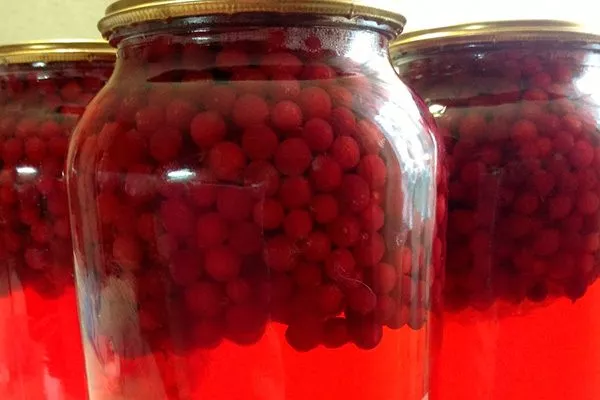
Lingonberry compotes are made with sugar, so it is recommended to drink them little by little, as soon as the first signs of a cold appear.
You will need:
- lingonberries - 1 kg;
- sugar - 0.8 kg;
- water - 8 l.
How to make lingonberry compote:
- Sort and wash the berries.
- Boil the sugar syrup. Add the berries. Bring to a boil and simmer for 2-3 minutes, stirring constantly.
- Pour into sterilized jars and roll up.
Video on how to make lingonberry compote:
Juice
Making lingonberry juice takes quite a while, so consider whether it's worth it for you; perhaps you could make fruit drink or compote instead. This juice is beneficial for those with hypertension and is contraindicated for those with hypotension. It should only be made from very ripe lingonberries.
How to prepare juice:
- Pour water over the sorted berries until they're just covered. Turn the heat on high and bring to a boil. Remove from the stove and let sit for 2-3 hours.
- Place the berries in a colander or sieve and leave overnight.
- In the morning, weigh the juice drained from the berries and mix it with sugar (2:1). Stir thoroughly until the sugar dissolves.
- Place the juice on the stove and boil for 10 minutes.
- Pour the finished juice into hot jars and sterilize: 0.5 l - 25 minutes, 1 l - 35 minutes, 3 l - 45 minutes.
- Roll up the jars and turn them upside down. Once cool, store them in the basement.
Lingonberry juice can be used to prepare sauces and gravies for meat, cocktails, kissels and other drinks.
Also watch a video on how to make lingonberry juice:
Paste
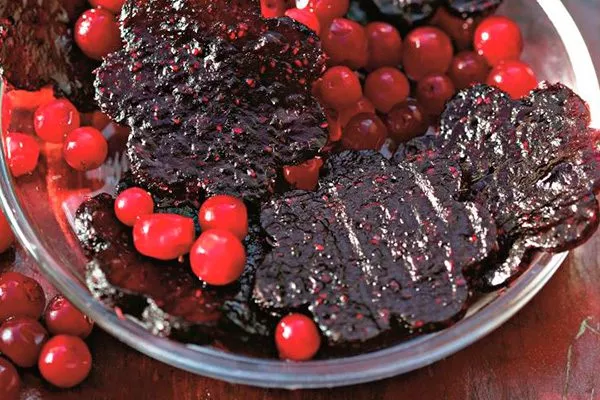
This lingonberry treat makes a wonderful teatime dessert. It's sure to please even the most discerning gourmand. Lingonberries are rich in pectin, so they retain their shape without any additives.
You will need:
- lingonberry - 1 l;
- sugar - 250 ml.
How to make lingonberry pastila:
- Place the berries in an emulsion or ceramic dish and place in an oven preheated to +60…+90°C.
- After 2-3 hours, when the lingonberries are completely soft, remove them and press them through a sieve. Add sugar and beat the puree until the sugar is completely dissolved.
- Place the resulting mixture on a parchment-lined baking sheet and place in the oven. The mixture layer should be no thicker than 3-4 mm. Set the remaining puree aside for now. Set the oven temperature to 40–60°C.
- After 2 hours, add a new layer on top of the dried layer and return to the oven. You'll need to make 3 to 5 layers in total.
- Cut the pastila into pieces and store in a dry place.
Also watch a video about making lingonberry pastila:
Lingonberry wine
Lovers of light alcoholic drinks can use lingonberries to make wine, which can be served with a variety of desserts.

You will need:
- lingonberries - 2 kg;
- sugar - 0.9 kg;
- water - 2 l.
How to make lingonberry wine:
- Crush unwashed lingonberries to a puree consistency and place in a jar.
- Cover the berries with water and add 300 g of sugar. Stir, cover with cheesecloth, and leave in a dark, warm place for 3-4 days. During this period, stir the fermenting berries twice a day.
- Pour the fermented mixture into a clean bottle, squeezing the berry puree through cheesecloth. Add another 300 g of sugar and, after stirring, place a rubber glove with a hole made in it with a needle over the neck of the bottle.
- Place the bottle in a dark place for 5 days. Then add the remaining sugar, dissolving it in 0.5 liters of the fermenting liquid. Cover the bottle again with a glove and leave the mixture to ferment for another 0.5-1 month.
- Once fermentation is complete, decant the wine without disturbing the sediment. Add more sugar or alcohol/vodka, if desired, to raise the alcohol content.
- Pour the wine into a clean glass container and place in a dark place to mature. Every 2-3 weeks, transfer the wine to a new container, leaving the sediment at the bottom of the old one. After 2-3 months, bottle the finished wine, cork it, and store it in the cellar.
Video on making lingonberry wine:
Lingonberry liqueur
Making lingonberry liqueur is much easier than making wine. You don't have to constantly pour it from bottle to bottle. Simply top it up with alcohol or vodka once.
You will need for the liqueur:
- lingonberries - 0.5 kg;
- sugar - 0.1 kg;
- vodka - 1 l.
How to make liqueur:
- Place the selected lingonberries in a jar and pour vodka over them. Stir, cover, and place in a warm place for 30 days. Shake the jar occasionally.
- Strain the infused liqueur through a piece of cheesecloth, add sugar. Stir and bottle.
Also watch a video on how to make lingonberry liqueur:
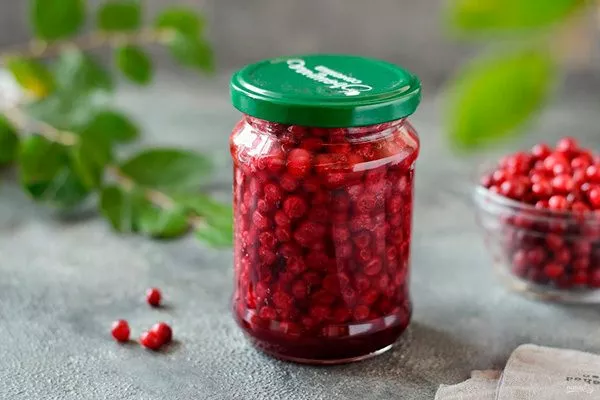
Pickled lingonberries
Lingonberries are quite piquant when pickled. The berry acquires an even more refined flavor when combined with apples and pears.
You will need:
- lingonberries - 1.5 kg;
- sugar - 370 g;
- pears and apples - 750 g each;
- water - 0.9 l;
- vinegar - 190 ml;
- salt - 0.5 tsp;
- cloves, allspice peas and cinnamon - to taste.
How to pickle lingonberries:
- Sort out the lingonberries and fruits and wash.
- Cut the pears and apples into quarters. Drop them into boiling water. Boil the pears for 5 minutes, and the apples for 3 minutes. Drain the fruit in a sieve.
- Place the berries and fruits in washed and oven-dried jars. Cover them with something and prepare the marinade.
- Dissolve the sugar and salt in water, and add the spices. Bring to a boil and simmer until the dry ingredients are completely dissolved. Remove the pan from the stove, pour in the vinegar, cover, and let cool.
- Pour the marinade into the jars, cover with lids and sterilize: 2-liter jars - 25 minutes, liter jars - 15 minutes, half-liter jars - 10 minutes.
- Seal the jars tightly, turn them upside down, and cover them with a warm blanket. Once the jars have cooled, take them to the cellar.
Salted lingonberries
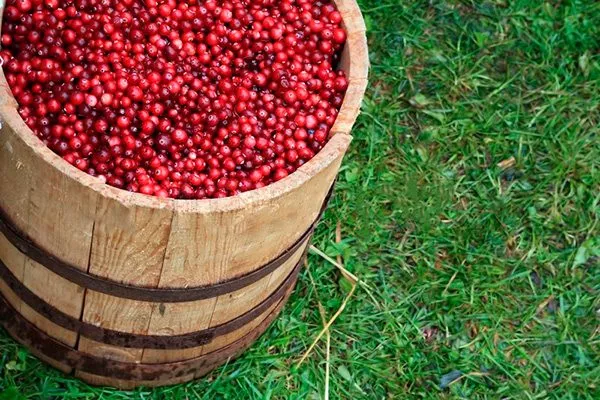
By pickling the berries for future use, you'll have an excellent base for making a variety of dressings and condiments. And best of all, you can add it to sauerkraut.
You can pickle the berries in either jars or wooden barrels. Store the pickles in a cool, dark place.
You will need:
- lingonberries - 1 kg;
- sugar - 1 tsp;
- water - 1 l;
- salt (preferably sea salt) - 5 tsp;
- cloves - 2 pcs.
How to pickle lingonberries:
- Prepare the marinade. Boil water and dissolve salt, sugar, and spices in it.
- Pour the marinade over the selected berries in jars. Cover with cheesecloth and ventilated lids. Store in the basement.
Lingonberries on water
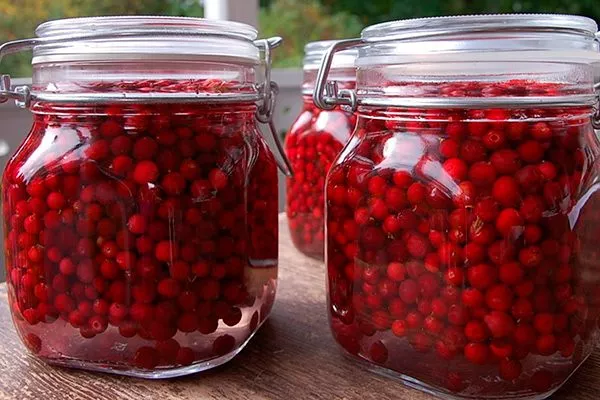
This storage method is suitable for those with a basement or cellar. The resulting lingonberries can be stored for about a year. For every 1 liter of lingonberries, you'll need 2 liters of water.
How to cook:
- Place the lingonberries in jars or barrels.
- Cover the berries with water.
- Place lingonberry leaves on top.
How can you use fresh and frozen berries?
Lingonberry preserves can be enjoyed not only as a stand-alone food or dessert, but also used in a variety of dishes. Frozen lingonberries are especially convenient—they're sugar-free and, most importantly, retain all their beneficial nutrients.
Lingonberry sauce for meat
A variety of sauces are made with lingonberries. The sweet and sour flavor of this berry pairs particularly well with meat. If you've stocked up on frozen lingonberries for the winter, you can make any sauce you want at any time.
Before making the sauce, be sure to defrost the berries. Be sure not to overcook them.
You will need:
- frozen lingonberries - 250 g;
- sugar - 60 g;
- water - 80 ml;
- cinnamon - a pinch;
- ground black pepper - 1/4 tsp;
- anise - 2 g.
How to cook:
- Place the defrosted lingonberries in a saucepan and mash.
- Pour water over the crushed berries, bring to a boil and simmer for 5 minutes.
- Bring the mixture to a puree consistency, but leave some of the berries whole.
Video on how to make lingonberry sauce:
Lingonberry pie
Fresh and frozen lingonberries can be used in a variety of baked goods. Try this lingonberry pie, which only gets better when refrigerated.
For the test you will need:
- butter - 100 g;
- sugar - 100 g;
- vanillin - 1 package;
- baking powder - 1 tsp;
- eggs - 1 piece;
- flour - 200 g.
For the cream:
- sour cream - 200 g;
- sugar - 100 g.
Take 300 g or a little more of frozen lingonberries. You'll also need 1 tbsp of starch.
How to make lingonberry pie:
- First, prepare the dough. Place the butter (taken out of the refrigerator) in a bowl, add the sugar and vanilla, and cream the butter and sugar together.
- Beat the egg into the mixture, add a pinch of salt, and stir. Add the flour and baking powder. Mix thoroughly until the dough is soft and elastic. It's best to refrigerate it for 20 minutes. However, if you're in a hurry, you can start making the pie right away.
- Take a 26 or 28 cm diameter pan, grease it with butter and spread the dough evenly over the pan.
- Mix the thawed berries (1 hour is enough) with starch. This will help thicken the juice.
- Place the berries on the dough and spread them evenly. Place in the oven and bake for half an hour at 180°C.
- In a bowl, mix sour cream with sugar and whisk.
- Remove the pie from the oven, pour the cream over it and place it in the refrigerator for 3-4 hours so that it is soaked in juice and the cream thickens.
- Remove the finished pie from the pan, cut into pieces and serve with tea.
Also watch a video on how to make lingonberry pie:
There are many ways to preserve lingonberries for the winter, each with its own unique characteristics. The choice depends on your tastes and personal preferences, diet and health, and the purpose for which you're preserving the berries. It's best to prepare several preparations at once—for example, fruit drink, frozen lingonberries, or jam for tea.