
Lingonberries are a delicious wild berry with a distinctive sweet and sour flavor, healthy and low in calories. They are found in specific locations, so lovers of lingonberry juices and sauces may have to scramble through the forest to find a fruiting lingonberry patch. But the effort is worth it—lingonberries are a powerful immune booster and one of the healthiest berries in the world.
Briefly about the berry
Lingonberry is a dwarf shrub with bright red berries, highly prized in folk medicine and cooking. Lingonberry fruits are sweet and sour, with a distinctive bitterness.
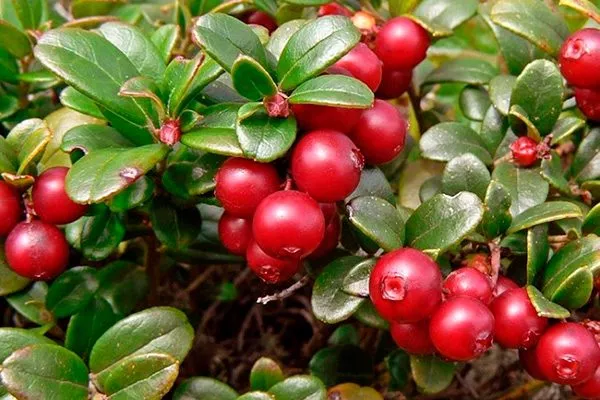
After frost, lingonberries become soft and watery, and are not suitable for transporting. However, covered with snow, the red berries can hang on the branches until spring. Leaves may fall in the fall or overwinter on the bushes.
Lingonberries are a low-calorie berry. They are 88% water, about 7% carbohydrates, and the rest are fats and proteins. They are rich in vitamins and microelements, possessing powerful healing properties, and are widely harvested in areas where they are widely available.
Biological description
Lingonberry belongs to the genus Vaccinium, in the Ericaceae family. It is an evergreen perennial subshrub that can bear fruit for 100 years or more.
Roots
The above-ground portion of the lingonberry plant is small, but it has a strong, long rhizome, growing up to 1 m in length. This is a powerful "pump" for extracting nutrients from the soil.
The cord-shaped rhizome is covered with numerous bushes. Like other heathers, lingonberry exhibits a mutually beneficial symbiosis between its roots and fungi.
Bushes
Lingonberry is a creeping or upright shrub, reaching a height of 10-40 cm. The average height is 15-20 cm. The plant, stretching towards the sun due to stumps and fallen trees, can reach a height of 2 m.
Leaves
The leaves are arranged alternately and are very striking. They are dark green, dense, and leathery, glossy on top and matte underneath. They are 0.5-3 cm long and 1.5 cm wide. The leaf blade is elliptical or obovate, with entire, recurved margins.
- ✓ The presence of club-shaped water-absorbing formations on the underside of the leaves.
- ✓ Glossy shine and density of the leaf blade.
A distinctive feature of lingonberries is the presence of club-shaped water-absorbing formations located on the underside of the leaves.
Flowers
Lingonberries have brown flower buds that open throughout almost the entire fruiting period. The emerging white-pink flowers resemble small bells, gathered in inflorescences.
Fruit
Lingonberries are spherical fruits up to 8-10 mm in diameter. Unripe berries are greenish-white and firm; when ripe, the skin turns red and glossy. The pulp contains numerous small, reddish-brown seeds.
Spreading
Wild lingonberries can be found in tundra, forest, and arctic zones. They grow in temperate climates and are intolerant of heat and drought. Their distribution spans vast territories, including the corresponding climate zones of North America, Scandinavia, the Netherlands, Sweden, and Greenland.
Lingonberries are quite widespread throughout Russia. They grow in forests and swamps across Siberia, the Urals, and the Far East. They can also be found in the Caucasus, but they are especially abundant in the Novgorod and Leningrad regions—they are the largest harvesters.
Flowering and yield
Lingonberry blooms in May and June. When in bloom, a delicate floral fragrance wafts over the lingonberry bush. The bell-shaped flowers, porcelain-white or pale pink, look stunning against the glossy green leaves.
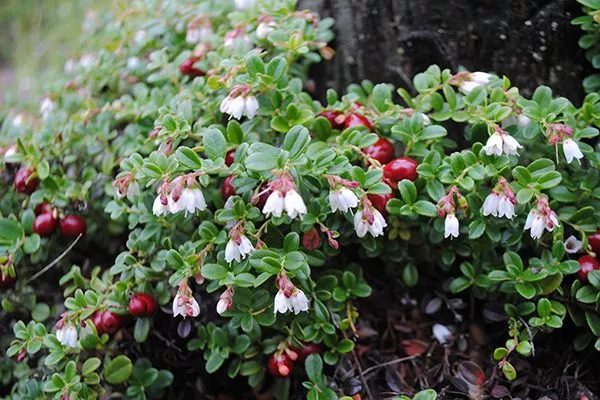
Lingonberry blooms for two weeks. Its primary pollinators are bumblebees and honeybees, but the plant can also self-pollinate. It takes 1.5 months for the fruit to develop and ripen.
The average yield of lingonberries is 300-600 g per 1 sq. m. The amount collected from one bush depends on varieties — 150-200 g, from 1 hectare — 35-40 centners of berries.
Composition and calorie content of lingonberries
Lingonberries are a veritable storehouse of vitamins, minerals, and other beneficial substances. The berries also contain mono- and disaccharides, ash, water, starch, organic acids, dietary fiber, and trace elements.
Lingonberries are rich in:
- ascorbic acid;
- vitamins A, B, C, PP, E;
- pectins;
- catechins;
- carotene;
- natural sugars;
- minerals - calcium, magnesium, sodium, potassium, phosphorus, iron, manganese;
- acids - citric, benzoic, malic, oxalic.
100 grams of fresh lingonberries contain only 46 kcal. The calorie content of lingonberry preserves, dishes, and drinks depends on the preparation method and the presence of sugar, oil, and other ingredients.
Caloric content of prepared products with lingonberries, kcal per 100 g:
- lingonberry jam - 245;
- berries, ground with sugar - 222;
- marmalade - 315;
- lingonberry compote/fruit drink — 43/41;
- sauce - 172;
- sauerkraut with lingonberries - 50-58;
- lingonberry pie - 250-290.
Beneficial properties of lingonberries
Lingonberry retains its beneficial properties regardless of the season, making it suitable for health and treatment year-round. Both the berries and leaves of this plant are equally beneficial, but their composition differs, leading to their different uses.
Lingonberries
Lingonberries have a unique flavor and are widely used in culinary creations. This berry is equally intriguing to folk healers, who use it to prepare a variety of remedies. However, regular fruit drink or compote are no less beneficial than concentrated tinctures or decoctions.
Benefits of lingonberries:
- normalizes oxidative processes in cells (vitamins A, C, E and group B);
- stimulates oxygen transport, increases endurance (iron, manganese);
- strengthens the cardiovascular system (flavonoids);
- normalizes metabolism and digestion (organic acids);
- removes toxins (antioxidant lycopene);
- disinfects (antiseptic glycoside vaccinin and others);
- improves vision (zeaxanthin pigment and others);
- increases endurance (tannins).
Lingonberry leaves
Lingonberry leaves are no less beneficial than the fruit. They contain a wealth of active components. They are used to make teas, decoctions, and infusions that not only provide the body with essential nutrients but also quench thirst perfectly.
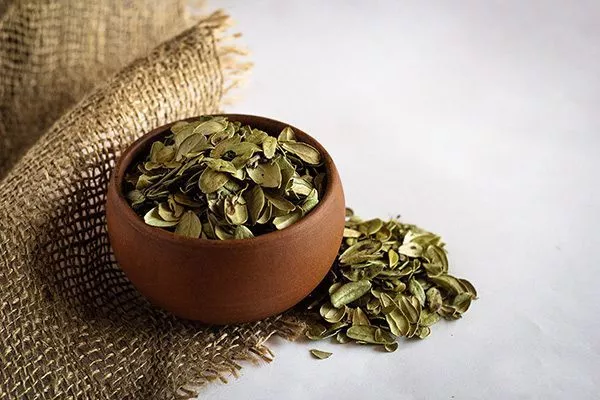
The composition of leaves differs from that of fruits. Like berries, they contain a wealth of vitamins, organic acids, flavonoids, and tannins. They even contain more trace elements than fruits.
Benefits of lingonberry leaves:
- prevent diseases of the genitourinary system due to hypothermia (antiseptic arobutin);
- have a diuretic effect;
- have antiseptic and anti-inflammatory effects;
- slow down the natural aging process;
- prevent sexual dysfunction.
Possible harm
Like other foods, lingonberries are beneficial only when consumed in moderation. Excessive consumption of berries, teas, or infusions can have negative effects on the body.
Potential harm from lingonberries if consumed uncontrolled:
- increased acidity of gastric juice;
- exacerbation of chronic gastrointestinal diseases;
- lowering blood pressure is dangerous for people with hypotension;
- allergic reactions.
Lingonberry leaves and berries harvested in industrial zones and contaminated areas may contain radioactive substances. Therefore, harvesting should only be done in ecologically clean areas.
Agricultural technology for growing lingonberries
In nature, lingonberries grow primarily in damp and marshy areas, in humid forests and shelterbelts, so to grow them, it is necessary to create conditions as close to natural as possible.
- ✓ The soil acidity level must be strictly within the pH range of 3-5, which is critical for the absorption of nutrients.
- ✓ The presence of fungal symbiosis is essential for the normal development of the root system.
Landing
Lingonberries grow best in sandy loam, peaty, and acidic soils with a pH of 3-5. The berries grow particularly large in these soils. Furthermore, peaty soils produce the highest yields.
Features of planting lingonberries:
- The berry will not grow on clays and heavy loams; it also does not tolerate flooding or high groundwater levels, despite its love of high humidity.
- Sunny, well-watered sites are preferred. In shade, lingonberries bloom sparsely and bear little fruit.
- The berry generally doesn't suffer from a shortage of organic or mineral fertilizers, but it does require sulfur. It is recommended to apply 50 grams of sulfur per square meter.
- For soils that don't contain peat, it's recommended to add a soil mixture—mix river sand and pine sawdust with high-moor peat in a ratio of 2:5. Humus and compost are not necessary.
- The area where the lingonberries grow should be located in a slight draft so that excess evaporation is blown away and does not provoke fungal infections.
- The ideal location for lingonberries is near coniferous hedges (pine, juniper). The lingonberry bush will have natural protection from strong winds, which will favorably influence the activity of pollinating insects.
- The maximum permissible groundwater level is 60 cm from the ground surface.
How to plant lingonberries:
- In the area prepared for planting, dig holes 30 cm deep. Use a planting pattern of 30 x 40 cm (the distance between holes x the distance between rows).
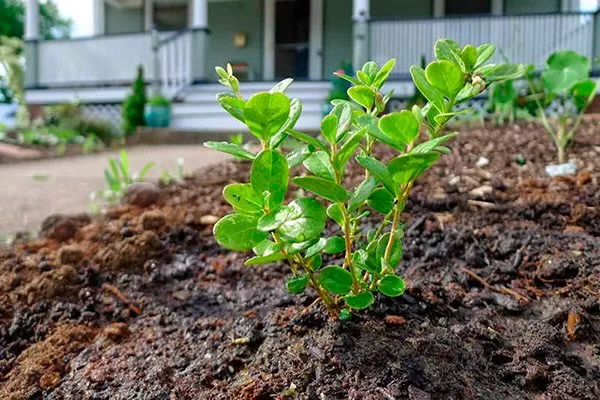
- Plant lingonberry seedlings, deepening their roots by 10-15 cm.
- Cover the roots with soil and compact it with your hands.
- Water the plantings with warm, settled water.
- Mulch the soil with bark chips or pine needles. This mulch will not only protect the soil from drying out but will also acidify it.
Also watch a video about planting lingonberries:
Watering
Lingonberries have a shallow root system that dries out quickly in loose soil. Soil moisture must be maintained at a consistently high level—around 70%. To achieve this, the plantings are watered at least once a week, or at least once a week.
Recommendations for watering:
- In hot weather, lingonberries are watered more often - up to 2-3 times a week
- Overwatering lingonberry plants, let alone flooding them, is strictly prohibited. Water restricts air access to the roots, which immediately affects the plants' health.
- The berry needs watering most during the second wave of harvest, when flower buds for the future harvest are forming on the bushes.
- The best way to water berry plants is by sprinkling, but only if they are well-ventilated. Drip irrigation is also an option.
- It is recommended to water the berry bush in the morning or evening to prevent the wet leaves from burning in the sun.
- The water consumption rate for lingonberry is 10 liters per 1 sq. m.
Loosening and mulching
Lingonberry bushes require frequent but careful tilling, removing weeds along the way. Mulch is applied to the soil around the bushes to retain moisture, prevent weed growth, and regulate soil acidity.
If the soil is peaty, it is recommended to mulch it with coarse river sand or fine gravel. Sandy soils are sprinkled with pine sawdust, pine needles, and peat.
Fertilizing lingonberries
Lingonberries don't require fertile soil, so don't overdo it with fertilizer when growing them. It's better to underfeed this berry than overfeed it. Excess nutrients lead to reduced yields, leaf drop, and stunted growth.
Recommendations regarding feeding:
- Lingonberries do not require a lot of nitrogen, so there is no need to feed them with manure and bird droppings, which can burn the sensitive roots of this berry;
- It is prohibited to feed lingonberries with potassium chloride;
- the first feeding is carried out in the 4th year after planting, when the lingonberry begins to bear fruit;
- Recommended mineral compositions: urea, ammonium nitrate, ammonium sulfate, potassium sulfate, superphosphate;
- Lingonberries growing on peat soils require the addition of manganese, boron, zinc and copper.
Mineral fertilizers for lingonberries are applied exclusively in the form of solutions and only to moist soil.
Table. Approximate fertilizing schedule for lingonberries:
| Deadlines | Fertilizer, rate per 1 sq. m |
| Mid-April (beginning of the growing season) |
|
| Before flowering | ammonium sulfate - 5 g |
| After picking the berries | ammonium sulfate - 5 g |
The above-mentioned fertilizers can be replaced with a single complex fertilizer, such as Kemira Universal. Alternatively, instead of mineral fertilizers, you can fertilize lingonberries with high-moor peat—simply spread it evenly over the soil surface.
Treatment of lingonberries from diseases and pests
Lingonberries have a very strong immune system, are resistant to most berry diseases, and don't attract pests. However, high humidity and extreme heat pose a risk of fungal infections.
What diseases can lingonberries get?
- Sclerotinia. With this disease, berries shrink and dry out. This problem is treated with Bordeaux mixture. The berry bushes are treated first before the leaves emerge, and then again in the fall, after the leaves have fallen. Two to three sprays are applied. Zuparen-3 can also be used before flowering and after harvest.
- Rust. The disease can be recognized by the dark orange spots covering the leaves. Treatment involves spraying the bushes with Bordeaux mixture—before the leaves emerge and after they fall.
- Exobasidium. It affects all above-ground parts. Leaves become deformed and turn pink, developing a whitish coating. Three to four sprays of Bordeaux mixture, carried out at weekly intervals, help control the disease.
Pests rarely attack lingonberries, but even when they do, they don't cause significant damage to the plants or yield. The most common pests found on this berry are leaf-eating caterpillars, leaf beetles, and leaf rollers.
It's recommended to first remove these pests by hand to avoid using poisons. However, if the berry bush is heavily attacked, including by aphids or scale insects, insecticides are essential. However, they should only be used when absolutely necessary.
Trimming
It's performed to rejuvenate berry bushes 7-10 years after planting. During pruning, most of the old shoots are removed. This procedure is aimed at maintaining high yields and longevity of the bushes.
Lingonberry bushes can be pruned at any time during the growing season, but early spring is considered the best time. Long branches are cut back by 1/3, and old branches are removed completely. It's important to leave several branches on the bush. The cuttings can be used as cuttings for propagation and to expand the plantation.
Wintering
Lingonberries tolerate cold quite well, surviving temperatures down to -30°C without cover. However, in areas with little snow, to prevent freezing, it is recommended to cover the berries with some insulating material, such as spunbond, foam rubber, film, or spruce branches.
Insulation will help lingonberries avoid damage due to early autumn frosts, which spoil unripe berries.
Reproduction of lingonberry
Lingonberries can be propagated by any vegetative method or by seed. The latter method is more labor-intensive and is more suitable for non-varietal berries.
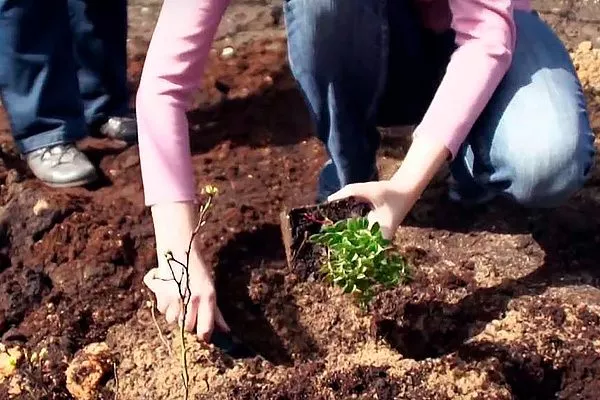
Stem cuttings
This method is used in early spring and late fall. Cuttings at least 5 cm long are used for propagation.
How to propagate by cuttings:
- Prepare a soil mixture of peat and sand (2:1). Pour it into the planting containers and moisten.
- Soak the cuttings in a growth stimulator for 3-4 hours (optional).
- Insert the lower cuts of the cuttings into the substrate, leaving at least 2-3 buds outside.
- Cover the plantings with bags to create a microclimate inside and a temperature of +25°C.
- Spray and ventilate the plantings periodically.
After a year, when the cuttings have developed roots, they can be transplanted to a permanent location.
Root segments
This method is used if the rhizome has shoots or growth buds. It is applied in late April to early May.
How to propagate:
- Fill the bed with a mixture of sand and peat (1:3).
- Make holes (10 cm) in the substrate and water.
- Plant the rhizome pieces in the garden bed, cover with soil and water again.
- Stretch a film over the plantings and water them for a month. Don't allow the substrate to dry out.
Once the cuttings have taken root, the film is removed, but watering is continued. After 1-2 years, the lingonberries grown from root cuttings can be planted in a plantation.
Daughter bushes
In the spring, young bushes, connected to the mother plant by a rhizome, are dug up and transplanted into prepared beds. They can also be planted in separate containers for further growth; they will be ready for transplanting in one year.
Bushes separated from the parent plant are planted in the garden bed in the spring. In the fall, they are mulched with peat, spruce branches, or covered with spunbond.
Seeds
The seeds are extracted from well-ripened berries, dried and hardened, for example, by storing them in damp sand in the refrigerator for 4 months.
How to propagate by seeds:
- Sow the seeds in a peat-sand mixture. Cover with transparent film. Keep the mini greenhouse moist and ventilated.
- When the seedlings emerge, remove the covering. After four leaves appear, transplant the seedlings into a greenhouse bed.
Finally, watch a video about how to propagate and care for lingonberries:
Harvesting and preparation
Lingonberry leaves are harvested in early spring, just as the snow begins to melt, or in mid-autumn. Lingonberry leaves collected in the summer are not suitable for medicinal purposes—they turn black during drying.
Lingonberries keep well fresh and frozen. They are dried and made into all sorts of preparations and delicaciesDried berries can be roasted, ground, and brewed into lingonberry tea.
Tips for collecting lingonberry leaves:
- When collecting raw materials, try not to damage the shoots, use the plucking method;
- the leaves can be collected again in 5 years, not earlier;
- Before drying, wrap damaged and darkened leaves.
Dry the prepared ingredients in a dark, warm place. Spread a cloth and arrange the lingonberry leaves in a thin layer on it.
The fruits ripen over a long period—from late July until the first frost. Harvested lingonberries are preserved for the winter in a variety of ways: dried, frozen, soaked, made into fruit drinks, and made into lingonberry jam.
The berries are picked at different times, but the entire bush ripens by the end of August. Harvesting takes place in warm, rain-free weather—in the morning, after the dew has cleared, or in the evening, before sunset. The berries are gathered into baskets; placing them in bags is not recommended, as they will bruise. The fruit is carefully harvested, without damaging the bushes, either by hand or using specialized harvesters.
How to grow lingonberries in pots?
Lingonberries are so beautiful that many people choose to grow them indoors or on balconies. They are planted in large containers due to their long rhizomes. The key to caring for them is maintaining humidity; overwatering or drying out can kill the plant.
How to plant lingonberries in a pot:
- Provide drainage in a wide, low pot. Pots must have holes.
- Mix high-moor peat and coarse river sand in a ratio of 1:3. Pour the mixture into a flowerpot.
- Plant lingonberry seedlings, purchased from a nursery or dug up in the forest, in the prepared substrate.
- Firm the soil and water the plant. Pour out any remaining water from the tray.
Keep the lingonberry in a well-lit area. You can also move the plant outdoors, such as onto a balcony or loggia.
The intricacies of growing lingonberries in different regions
Cultivated lingonberries easily adapt to a variety of climates, tolerating both frost and heat equally well, provided they are properly cared for.
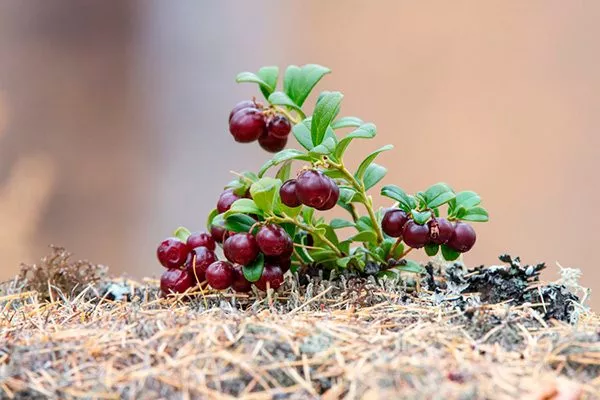
Features of lingonberry cultivation by region:
- In the south of RussiaIn hot climates, there is no need to cover berry bushes.
- In the northern regions There is a risk of freezing of early flowering varieties, so plantations there are covered with non-woven materials until stable warmth sets in.
- In the central zone and Moscow region. The local climate is suitable for lingonberries, with plenty of warmth and light for repeated fruiting. In principle, it's possible to grow the berry here on an industrial scale. However, lingonberry cultivation is not widespread in Russia, and it's currently primarily of interest to amateur gardeners.
Lingonberries combine the best qualities of berries—they're healthy, delicious, and even decorative. Whether grown in garden beds or pots, this plant will provide you with a wealth of benefits, taste, and aesthetic pleasure. This berry grows primarily in Russia in its natural habitat; unfortunately, commercial cultivation of lingonberries is not yet practiced.