
Visually, yellow-fleshed watermelons can be confused with the familiar red berry, as their rind is also green, covered with stripes or spots of darker shades. These watermelons are similar in shape and size to regular watermelons, but they can be clearly distinguished by the appearance of the interior, taste, and even aroma. What kind of watermelons are these, how are they different from regular ones, and how are they grown? Let's find out below.
History of appearance
The yellow watermelon was developed several decades ago as a result of an experiment by breeders who crossed two types of berries—the common melon and the wild variety. It inherited its sweetness and juiciness from the former, and its flesh color from the latter. It's worth noting that the wild watermelon itself is not edible, as it has an extremely unpleasant taste.
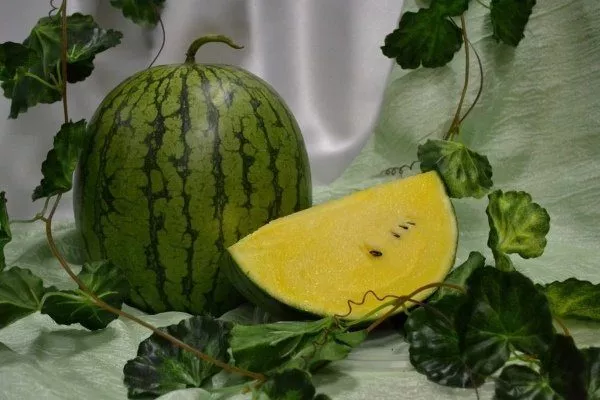
Scientists have completely rejected the idea that the yellow watermelon was bred using GMO technology with the introduction of lemon or mango genomes, and the only reason for the hybrid's yellow flesh is the "inheritance" from the wild watermelon.
Yellow watermelons were originally widely grown in Mediterranean countries and Thailand, but today they are popular worldwide. In Russia, they grow not only in temperate regions but also in the harsh climates of the Urals and Siberia, as they produce large fruits even in the absence of the bright Mediterranean sun and warmth.
Yellow watermelon is also known as "moon" or "baby." In Thailand and Spain, this berry is more popular than red, with Thais preferring oval varieties, while Italians prefer round ones.
Description of characteristics
A yellow-fleshed watermelon resembles a regular berry in appearance, but upon closer inspection, several differences can be noted. First, their rind is darker, and second, it can be uniform in color, meaning it lacks stripes. However, a "baby" watermelon always has light or brighter yellow flesh.
The fruits can weigh from 3 kg to 10 kg. The largest berries ripen in hot southern climates. In northern regions, watermelons weighing between 3 and 5 kg ripen.
Energy value
The nutritional value of one slice of watermelon (about 150 g) is as follows:
- Caloric value: 38 kcal;
- fiber: 1 g;
- carbohydrates: 6.2 g;
- proteins: 0.6 g;
- fats: 0.1 g.
One slice of watermelon contains 17% of the daily value of vitamin A and 21% of vitamin C. It is also rich in calcium, potassium, magnesium, iron, sodium, and phosphorus. Watermelon is virtually fat- and cholesterol-free, making it a low-calorie food and suitable for weight loss. It can also be included in the diets of people with obesity or atherosclerosis.
Some watermelons of this subspecies have lemon, mango, and pumpkin flavors, making them particularly prized by gourmets. However, the composition of these berries remains unchanged: they contain fiber, glucose and fructose, vitamins, and microelements.
Beneficial properties
Yellow-fleshed watermelon is valued for the following beneficial properties:
- strengthens the body's defenses, helping to resist the effects of infections and viruses, as it contains ascorbic acid;
- has a diuretic effect, effectively cleanses the gastrointestinal tract of waste products and excess fluid, and normalizes the functioning of the digestive system due to the content of dietary fiber;
- strengthens vision and prevents the development of eye diseases by saturating the body with vitamin A;
- improves the condition of nails, hair and bones due to the calcium content;
- has a positive effect on the heart and blood vessels, reducing the likelihood of developing anemia and low blood count, as it saturates the body with iron, magnesium and potassium;
- stabilizes intercellular metabolism due to the content of carotenoids.
The rich composition of minerals and vitamins makes yellow watermelon an extremely beneficial product for the cardiovascular system, kidneys, and endocrine glands.
Harm and contraindications
Despite all the benefits of yellow watermelon, it can have a negative impact on the body if certain contraindications are met. These include:
- bowel problems;
- diabetes mellitus;
- renal failure (watermelon increases the load on the kidneys);
- individual intolerance.
If there are no such contraindications, watermelon can be safely included in the diet.
Differences from red watermelon
Of course, the main difference between the two types of watermelons lies in the color of the flesh. The color of the inside of a yellow watermelon is unusual for this plant, but the flesh has virtually the same nutritional qualities – very juicy and with a pleasant sugary flavor. As for the other differences, they are as follows:
- the rind on watermelons with yellow flesh is thinner and drier, somewhat reminiscent of the skin on a pumpkin or melon;
- There are practically no seeds inside a yellow watermelon, and when the berry ripens, they darken, but remain thin and soft, reminiscent of the seeds of young zucchini;
- yellow watermelon contains less sugar, so it can be consumed in small quantities by diabetics, but only with the permission of a doctor;
- the flesh of a yellow watermelon has almost the same juiciness and density as the flesh of a red one, but contains less free juice (water);
- the aftertaste after yellow watermelon is longer;
- Yellow watermelons ripen faster than red ones, so they are considered early.
You can find out how yellow watermelon tastes different from red watermelon in the following video:
Main varieties and hybrids
| Name | Growing season (days) | Fruit weight (kg) | Fruit shape | Pulp color |
|---|---|---|---|---|
| Lunar | 70-90 | 3-4 | Oval-round | Bright lemon |
| Golden Grace F1 | 70-75 | 6-8 | Round-oval | Bright yellow |
| Yellow dragon | 60-62 | 4-6 | Rounded | Bright yellow |
| Yanosik | 75-82 | 3-6 | Rounded | Yellow |
| Prince Hamlet F1 | 70-80 | 1-2 | Rounded | Lemon yellow |
| Imbar F1 | 60-65 | 4-6 | Rounded | Dark yellow or orange |
| Orange Method | 60-65 | 2-2.5 | Rounded | Orange-yellow |
| Yellow doll | 70 | 2.2-3 | Oval | Lemon yellow |
| Primo Orange F1 | 45-50 | 3-4 | Rounded | Bright orange |
Breeders offer a wide selection of yellow watermelon varieties. In the former Soviet Union alone, about a dozen varieties have been developed. For example, Ukrainian breeders introduced the Kavbuz hybrid, but it was not widely grown because its flavor was too reminiscent of pumpkin. The following table shows which yellow watermelon varieties and hybrids are in demand today:
| Variety | Homeland | Characteristics |
| Lunar | It was bred at the All-Russian Research Institute of Melon and Vegetable Growing, located in Astrakhan, by crossing an Astrakhan berry and a wild representative of the melon family. | This is an early-ripening variety with a growing season of 70-90 days. The moon watermelon yields 1.6 kg per square meter. A single berry can weigh 3-4 kg. It has an oval-round shape, a peel with distinct stripes, bright lemon-colored flesh, and a distinctive flavor with hints of mango. This variety is cold-tolerant. |
| Golden Grace F1 | This variety originates from Holland and is produced by the Hazera seed company. It is popular among Russian, Ukrainian, and Belarusian gardeners. | A watermelon hybrid with a growing season of 70-75 days. Suitable for growing in a variety of soil types. The average fruit weight is 6-8 kg. It has a round-oval shape, a light green rind with dark stripes, and bright yellow flesh with small, almost translucent seeds. This variety is resistant to low temperatures and low light. |
| Yellow dragon | The variety's homeland is considered to be Thailand. It is most often grown there, as it produces a full harvest in this climate zone. | The Yellow Dragon's growing season averages 60-62 days. Each fruit weighs between 4 and 6 kg. It is round, but its ends are slightly elongated. The rind is thin and dark. The flesh is bright yellow (canary yellow) and has a sweet, honey-like flavor. |
| Yanosik | A heat-loving crop native to Poland, grown in open ground and film tunnels. | This is an original mid-early variety that ripens in 75-82 days. Each berry weighs between 3 and 6 kg. The fruits are round or round-ovoid, with a light, thin rind with subtle stripes and yellow flesh with few seeds. This variety exhibits disease resistance and can be stored without losing its flavor. |
| Prince Hamlet F1 | The breeders of the hybrid variety are not indicated, but seeds are produced by producers in many countries, including Russia and the USA. | This is a mid-season hybrid, ripening in 70-80 days. The plant yields 4-6 kg per square meter. Each fruit averages 1-2 kg. It has a round shape, a thin, dark green rind, lemon-yellow, seedless flesh, and a sweet, rich flavor. |
| Imbar F1 | A seedless hybrid bred by Israeli selection team Hazera Genetics. | The Imbar variety matures in 60-65 days. It has medium vigor and sets fruit easily in a variety of conditions. Fruit weigh 4-6 kg and have a glossy, dark green, stripe-free rind. The Imbar flesh is firm and crisp, seedless, and dark yellow or orange in color. |
| Orange Method | An early-ripening hybrid from Russia, bred for the middle zone. | The variety's growing season is 60 to 65 days. A ripe watermelon weighs about 2-2.5 kg. The fruits are round, with a striped rind and orange-yellow flesh, which has a honey-like flavor and is particularly sweet (sugar content: 13%). |
| Yellow doll | A hybrid from the USA. Can be grown in limited space. | An early-ripening variety that ripens in 70 days. The fruits are small, weighing up to 2.2-3 kg. They are oval in shape and have a thin, light-green rind covered with almost black stripes. The flesh is a vibrant lemon-yellow color, firm in texture, sweet in flavor, and a honey-like aroma. |
| Primo Orange F1 | The hybrid's homeland is the Czech Republic. It is used for outdoor cultivation. | An ultra-early variety, it ripens in 45-50 days. The fruits are typically round and weigh up to 3-4 kg. The rind is thin and green, covered with dark green stripes. The flesh is bright orange, sweet (sugar content 11-12%), and juicy. A small number of seeds are found in the center of the fruit. |
- ✓ For regions with short summers, varieties with a growing season of up to 70 days are preferable, such as ‘Primorange F1’ or ‘Yellow Dragon’.
- ✓ In areas with insufficient sunlight, choose varieties that are resistant to low temperatures and lack of light, such as ‘Golden Grace F1’.
Popular varieties in Russia include Lunar, Orange Honey, Prince Hamlet, and Golden Grace; Yellow Doll in the USA; Yellow Dragon in Thailand; Janusik in Poland; Primo Orange in the Czech Republic; and Imbar in Israel.
Growing seedlings
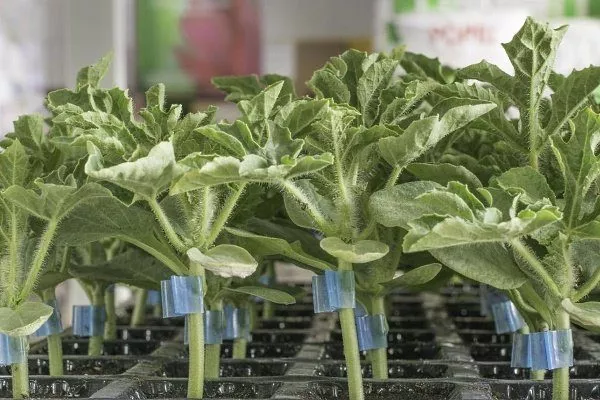
You can sow watermelon seeds for seedlings in late March or early April, so they can be transplanted to their permanent location—in open ground, a greenhouse, or a hotbed—around mid-May. In any case, to get a good harvest, you need to properly grow the seedlings. We'll discuss how to do this below.
Preparation
Before you start sowing, you will need:
- Select a container for seedlingsIt's extremely sensitive to transplanting, as the seedlings experience stress, and the roots can be damaged even by slight disturbance. To avoid future complications, it's best to use ready-made containers for growing seedlings, such as peat cups, disposable containers with drainage holes, or cassettes. The optimal container size is 250-300 ml, as this will allow you to easily remove the seedlings and their root ball without disturbing the plant's root system.
- Prepare the substrateTo grow seedlings, you can use a mixture consisting of equal parts river sand, peat, and soil (humus). For every 10 kg of this substrate, you can add 200-250 kg of wood ash. To avoid having to prepare the mixture yourself, you can purchase a pumpkin growing mix at a gardening store.
- Prepare the seedsBefore planting, soak the seeds in warm water (50°C) for several hours, then soak them in a weak solution of potassium permanganate or potassium permanganate for 1-1.5 hours. After soaking, rinse the seeds with clean water and dry.
Sowing
Once the seeds and substrate are ready, you can sow:
- Fill the container 2/3 full with substrate.
- Water the soil with warm water.
- Place two seeds in the soil, cover with a 2 cm layer of peat-sand mixture, and lightly moisten. If using seedling trays, place one seed in each cell filled with moist soil. A suitable depth for planting is 3-4 cm.
- Cover the container with film until the first shoots appear. Transfer it to a warm, bright place.
Care
The following activities need to be carried out:
- WateringOnce the first shoots emerge, water the seedlings moderately around the edges of the container every other day. Avoid pouring out large amounts of water, as water hammer can cause irreparable damage to the seedlings.
- LooseningOnce a crust forms on the soil, it must be carefully loosened to avoid damaging the plant's root system.
- LightingWatermelon seedlings require long daylight hours—about 12 hours. In the evening, the seedlings should be illuminated with lamps. Artificial lighting is also useful on cloudy days.
- Temperature conditionsOnce the first shoots appear, the temperature should be reduced to 18ºC for 4-5 days. Subsequently, it should be maintained at 22ºC.
- Top dressingWhen the third leaf appears, it is recommended to apply liquid mineral fertilizers and liquid mullein.
- HardeningThis is done 2-3 days before planting the seedlings outdoors. It involves gradually lowering the temperature, reducing the amount of watering, and regularly ventilating the room. This will make the plant more resilient to low temperatures and drought, and its roots will develop much faster than those of unhardened plants.
Hardening should be moderate, otherwise the seedlings will develop slowly, and in the worst case, will not recover at all.
Planting in open ground
Seedlings with 2-3 true leaves can be planted in open ground. These typically appear 25 days after sowing. They should be planted in a sunny and warm area with shade on the south side. The best soil types for yellow watermelon are sandy and sandy loam.
Before planting, the soil should be loosened 2-3 times, with the final loosening done on the day of planting. The root ball should be planted in moist, warm soil, working extremely carefully to avoid damaging the roots and shoots. The plant should be planted deep enough so that the root collars are completely underground, otherwise they may be damaged by wind. Seedlings should be planted in holes spaced approximately 80 cm apart.
After planting, the seedlings need to be watered to compact the soil and prevent the roots from getting trapped in air pockets created during transplanting. This technique will also promote rapid root development.
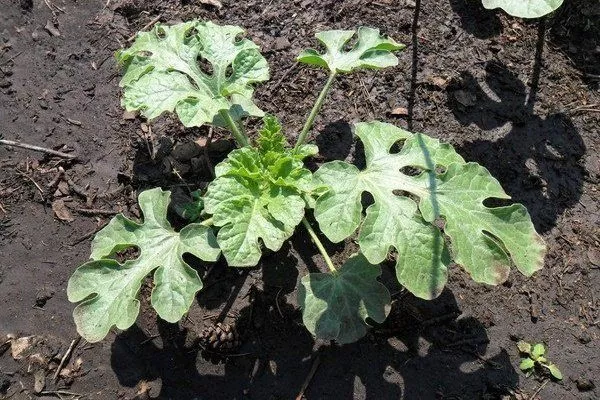
Within a week, the yellow watermelon seedlings will take root and produce new leaves.
Caring for yellow watermelons
To ensure a full harvest, watermelon seedlings require proper care. First of all, after planting, the watermelons should be covered at night for several nights if there are significant temperature fluctuations. Additionally, care includes the following:
- WateringInitially, the plant should be watered once every two days, and then once or twice a week. To ensure the watermelons fill out quickly and don't suffer from moisture shortages, water thoroughly, literally flooding the melon bed (30-35 liters per square meter).
- Top dressingPlanted seedlings are fed with standard pumpkin fertilizers. Ten days after planting, apply 10-15 kg of compost and 25 g of phosphorus-potassium fertilizer per square meter of soil. Another fertilizing option is to fertilize the soil with ammonium nitrate after 10 days, liquid manure after 1-2 days, and superphosphate after 2-3 weeks. Apply phosphorus-potassium fertilizers only after fruit set. Fertilizing will help increase watermelon yield, but keep in mind that yellow varieties do not tolerate excess nitrogen fertilizers well. Fertilizer application plan
- 10 days after planting, add ammonium nitrate (10 g per 1 sq. m).
- 1-2 days after the first feeding, add liquid mullein (1:10 with water).
- 2-3 weeks after the first feeding, add superphosphate (20 g per 1 sq. m).
Applying large amounts of manure will prolong the growing season, make the plant more vulnerable to various diseases, and produce weak fruits with unsweetened pulp.
- LooseningBefore flowering begins, the soil in the rows and between rows should be loosened several times.
- PinchingTo ensure the fruits grow as large as possible, you should leave the first 2-3 fruits and pinch the vine after them, 3 leaves apart.
- Protection from diseasesIf preventative measures are ignored, watermelons can become susceptible to disease, resulting in poor-quality fruits with poor-quality flesh. Therefore, from the beginning of flowering, between rainfalls, the plant should be treated with fungicides such as Ridomil Gold and Quadris.
Unfortunately, when growing yellow watermelons, melon growers sometimes have to deal with the problem of seedlings being affected by the following diseases and pests:
- PeronosporosisAn infection that causes leaves to dry out, leaving only petioles and veins. To prevent this disease, disinfect the seed before planting and then treat the seedlings with Oxychom.
- AnthracnoseUnlike the previous infection, anthracnose attacks not just the leaves, but the entire plant. When it spreads to the roots, the watermelon dies. To combat the infection, the planting can be treated with a bleach suspension or Bordeaux mixture.
- Melon black aphidThis is a pest that sucks the lifeblood out of the plant. If it infects a watermelon, insecticides such as Inta-Vir or Aktara can be used against it.
Proper plant care will ensure a quick harvest of yellow watermelons. Ripe fruits can be eaten fresh, preserved, and pickled.
Harvesting
Around the end of July, the fruits will begin to gain weight, so you can begin preliminary preparations for their harvesting:
- Place a piece of plywood under each fruit to prevent rotting;
- Reduce watering to give the pulp maximum sweetness.
Once you notice the fruits have stopped gaining weight, wait two weeks before harvesting. You can also pay attention to other signs of watermelon ripeness:
- the peel is white or yellowish in color where the fruit touched the ground;
- shiny crust color;
- a dull sound when tapping the berry;
- dry tail.
When harvesting, one should not ignore signs of ripeness, since the watermelon does not ripen after being cut.
If the fruits are already ripe, they should be cut from the stem rather than pulled off, and this should be done carefully to avoid damaging the rind. Harvested fruits should be placed upside down and kept at a temperature of 10-15°C. Humidity should be high – 85-90%.
The yellow watermelon was first created by Mediterranean breeders by crossing a wild berry with a common one. Today, similar varieties are popular not only in southern regions but also in temperate climates. Thus, any melon grower can grow a unique watermelon with a honey-like flavor and yellow flesh in their garden, perfect for garnishing any summer dessert.