
Thanks to hardy and early-ripening varieties, even residents of the Non-Black Earth Region can now grow watermelons outdoors. Let's learn how to plant watermelons, what planting options are available, and how to care for a melon patch.
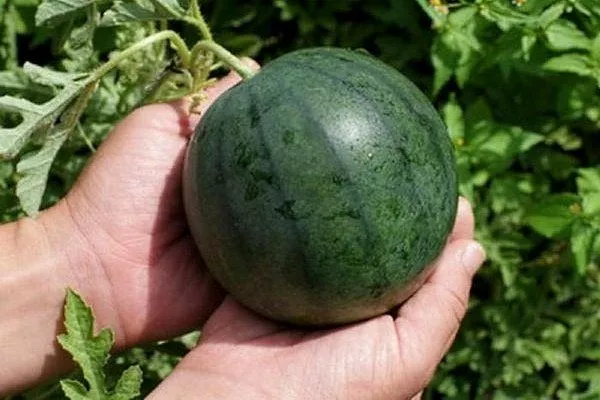
Peculiarities of growing watermelons in open ground
When growing watermelons outdoors, the main factors are ambient temperature, summer length, and the number of sunny days per year. If you plant a variety with a long growing season in a region with a short summer, it simply won't have time to ripen before the cold weather sets in.
- ✓ Resistance to sudden temperature changes.
- ✓ Ability to ripen quickly in short summer conditions.
- ✓ Resistance to diseases common in the region.
What should you pay attention to when choosing a variety?
Watermelons once grew only in the warmest regions of the Russian Empire. Today, this crop is conquering not only the Moscow region, but also Siberia and the Urals. Specific varieties have been developed and zoned for each region and climate. the best varieties of watermelons.
When choosing a variety, consider:
- frost resistance of the variety and the climate in the region;
- requirements for soil and other growing conditions;
- ripening periods.
Regionality and climate
Varieties with a long growing season are suitable only for southern regions. In cooler climates, only early-ripening varieties with a growing season of 70-90 days can be grown.
To make it easier for gardeners and large farmers to select watermelons suitable for growing in their region, all varieties have been divided into several groups. The variety groups are based on geographical characteristics:
- Russian;
- Western European;
- Little, Central and East Asian;
- Transcaucasian;
- Far Eastern;
- American;
- Indian;
- Afghan.
Watermelons from the Russian group, and less commonly from the Central Asian or Transcaucasian group, are suitable for mid-latitudes. These varieties are distinguished by increased environmental resilience, allowing them to maintain yields even under stressful conditions.
Our melon growers often plant imported hybrids—they're typically beautiful, tasty, productive, hardy, and highly marketable. The downside of imported hybrids is their high maintenance requirements, so amateur growers are better off avoiding them.
Features of cultivation in different climatic zones:
- Transbaikalia. Early-ripening varieties are grown here using seedlings. The seedlings are grown in peat pots. Planting occurs around the end of May, waiting for the soil to warm up. The seedlings should have 3-4 leaves. Growing instructions:
- the seedlings are hardened for 7 days at a temperature of +15–17 °C;
- watermelons are grown in high beds;
- The beds are covered with film stretched over arches.
- South of Russia. Here, seeds can be sown directly into the soil—the climate permits. Planting time is from late April to early June.
- Bashkiria. It's colder here than in the Moscow region, with frosts possible until June. Seedlings are planted in May, and the seedlings are covered with plastic. Only early varieties are planted so they have time to ripen before the cold weather sets in. Growing tips:
- Watermelons are planted as seedlings. If the seeds are sown in the ground, then the soil is mulched and cover with film.
- A thermal sleeve is laid in the film tunnel.
- Central Russia and the Urals. Only seedling cultivation is practiced here. Seedlings are planted in late spring. Greenhouse cultivation is also used. Only early varieties are grown.
- North-West region. Growing watermelons here seemed like a pipe dream. Today, they're even grown in the Murmansk region and Karelia. They're grown in greenhouses, and the varieties are early-ripening.
- Far East. The seedling method is used. A distinctive feature of local agricultural practices is planting in raised beds. This is done due to the heavy rainfall that often occurs here in the second half of summer.
This video explains from A to Z how to grow watermelons outdoors:
Recommended watermelon varieties for different regions:
| Region | Recommended varieties | Note |
| Central regions and the Urals | Siberian, Skorik, Ogonyok | Early varieties with small fruit weight |
| Far East | Ogonyok, Early Kuban, Skorik | Early and mid-season varieties |
| Bashkiria | Sorento F1, Crimson Sweet, Earthling, Top Gun F1 | Early and mid-season varieties with a short growing season. Weight: 4-6 kg. |
| Southern regions | Ataman F1, Kholodov's Gift, Astrakhan, Volzhanin, Spring Bush 334, Kholodok, Black Prince, Delight, Yubileiny | Varieties with varying ripening times and low frost resistance. They are characterized by their large size and sweetness. |
| Transbaikalia | Ogonyok, Sugar Baby, Ultra-early ripening watermelon. | Small varieties, watermelons weigh 1.5-2 kg. |
| All regions | Skorik, Sugar Baby, Honey Giant, Ogonyok, Prince Albert F1, Sugar Baby, Williams F1, Gift of the Sun | These are universal varieties that are suitable for growing in any region. |
Seed quality
Once the variety is selected, the seeds are purchased. If they fail to germinate, are infected with diseases, or are defective, there may be no harvest at all.
Tips for selecting seeds:
- Buy seeds collected 2-3 years ago. Freshly collected seeds will produce plants with male flowers, while fruits will appear from female flowers.
- Test the seeds for germination. Place 5 g of table salt in 100 ml of water. Submerge the seeds in the salt solution. Wait a few minutes. Discard any seeds that float to the surface—they're no longer usable. Rinse and dry any that remain at the bottom thoroughly.
Quality of seedlings
To obtain good, high-quality seedlings, they are grown under specific conditions, fertilized, and hardened off. Here's the procedure for growing watermelon seedlings:
- The optimal temperature for seed germination is around 30°C. At these temperatures, seeds germinate on the sixth day.
- As soon as the seeds germinate, the temperature is immediately lowered to 18 °C.
- The seedlings are given two days to adapt, then the weak seedlings are removed from the containers, leaving the strongest ones.
- The temperature is raised to 20-25°C. At night, it is lowered to 18-20°C. The seedlings are grown in this mode for about three weeks.
- The seedlings are provided with adequate lighting to prevent them from becoming leggy. Special lamps are used during the dark hours. The room is regularly ventilated, preventing drafts.
- After 10-12 days, the seedlings are fed with a 1:10 solution of fermented mullein. A second feeding is given after 14 days. The seedlings are again watered with the mullein solution, but this time, superphosphate (50 g), potassium sulfate (30 g), and ammonium sulfate (15 g) are added to each liter.
- A week before planting in the ground, the seedlings are hardened off. Watering is reduced. The seedlings spend their final days in an outdoor greenhouse. Before planting, the seedlings are sprayed with 1% Bordeaux mixture.
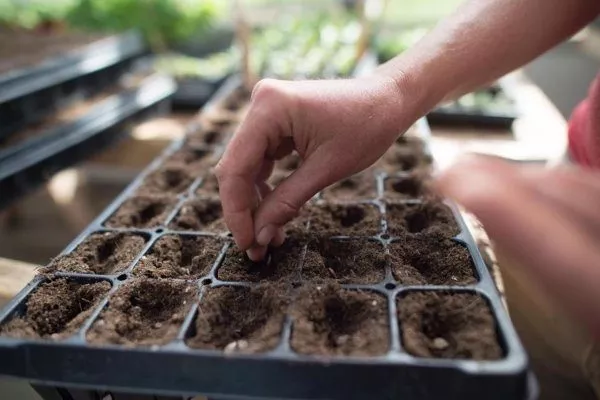
The best varieties of watermelons with characteristics
| Name | Growing period (days) | Fruit weight (kg) | Productivity |
|---|---|---|---|
| A Gift to the North | 75-85 | 10-11 | Average |
| Skorik | 62-87 | 2-4 | High |
| Sugar Baby | 75-80 | 4-6 | High |
| Pink champagne | 80-90 | 5-7 | Average |
| Ogonyok | 70-80 | Up to 5 | High |
| Libya F1 | 65 | 10 | Very high |
| Chilly | 85-95 | Up to 5 | High |
| Turbo F1 | 55 | 9-15 | Very high |
| Catherine F1 | 60 | 7-8 | High |
| Ataman F1 | 70-85 | 3-16 | High |
In watermelons, melon growers value a combination of all the qualities on which the profitability of their cultivation depends:
- productivity;
- size and taste of fruits;
- marketability;
- keeping quality;
- endurance – frost resistance, drought resistance, immunity to diseases;
- requirements for growing conditions and other factors.
Varieties that perform well in the Kuban region may produce unsightly fruit in the Moscow region or fail to ripen at all. Therefore, the decisive factor when choosing a variety for cultivation is the zoning.
Watermelon varieties popular in Russia:
| Variety | Description |
| A Gift to the North | Ripens in 75-85 days. Fruits weigh 10-11 kg. Yield is average, but consistent. The flesh is juicy, crisp, and sweet. It has a high immunity, stores well, and transports well. |
| Skorik | Ripens in 62-87 days. Weight: 2-4 kg. The flesh is sweet, with a honey flavor. |
| Sugar Baby | The growing season is 75-80 days. Average weight is 4-6 kg. Sweet, with a good taste. |
| Pink champagne | The growing season is 80-90 days. Average weight is 5-7 kg. The flesh is juicy, with a honey flavor. This variety is easy to grow and tolerates moisture well. |
| Ogonyok | Ripening time: 70-80 days. Small fruits, up to 5 kg. Thin rind. Granular flesh. Resistant to low temperatures. |
| Libya F1 | Ripens in 65 days. Weight: 10 kg. Slightly elongated shape. Red, very sweet flesh. Very productive, stores well, and is a marketable variety. |
| Chilly | A mid-late variety, ripening in 85-95 days. The fruits are small, weighing up to 5 kg. The skin is firm, and the flesh is sweet and juicy. They have excellent shelf life. |
| Turbo F1 | An ultra-early hybrid. Ripens in 55 days. Weight: 9-15 kg. Very tasty flesh. |
| Catherine F1 | The growing season is 60 days. Average weight is 7-8 kg. This hybrid is prized for its sweetness and tender flesh. |
| Ataman F1 | The growing season is 70-85 days. The fruits are elliptical, with a rich, sweet flesh. They weigh 3-16 kg. |
Preparing seeds for sowing
Pre-selected and germination-tested seeds are prepared for planting. To ensure strong and healthy seedlings, it is recommended to prepare the seeds before planting.
Preparatory activities:
- Disinfection. This procedure is aimed at preventing diseases. The seeds are immersed in potassium permanganate (0.5–1% concentration) for half an hour. They are then dried by laying them out on a cloth napkin.
- Warming up. The seeds are soaked for half an hour in water heated to 45°C. This treatment promotes better germination. It's important not to overheat them. Another option is to warm the seeds in the sun for a week. The warmed seeds are immersed in Cytovit or Zircon (one ampoule per 2 liters).
- Scarification. The procedure involves puncturing the seed coat. Germination is accelerated significantly. This procedure is performed 2-3 weeks before sowing.
- Soaking in a nutrient solution. To increase yield, seeds are soaked in a micronutrient solution containing manganese, boron, and molybdenum. The solution concentration is 0.05. The soaking time is 16 hours.
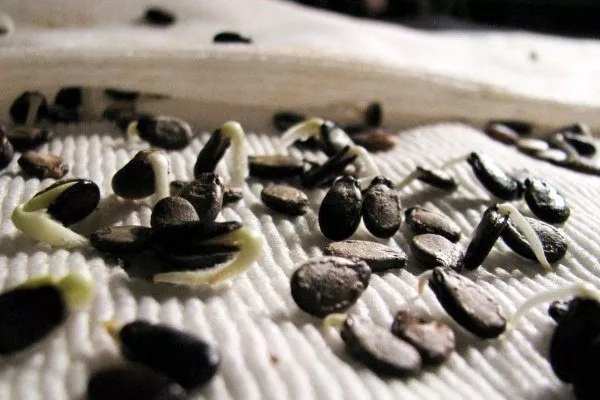
- Germination. To speed up germination, the seeds are germinated by wrapping them in a damp cloth. The ambient temperature is 20–25°C. The cloth is regularly moistened to prevent it from drying out. The top layer is removed several times throughout the day to allow air to circulate. As soon as sprouts appear, sowing begins.
Site selection and soil preparation
The size and flavor of future watermelons depend on the quality of the soil—its structure and fertility. This crop is very sensitive to growing conditions, so preparation for planting begins with selecting a suitable site and fertilizing it.
Features of site selection:
- SoilWatermelons grow best in light, loose, and fertile soils. Fruits grown in virgin sandy loam chernozems are especially good. Sandy and sandy loam soils enriched with humus are also suitable. Clay soils are less favorable.
- Predecessors. Watermelons grow well after onions, tomatoes, rye and winter wheat, root vegetables, cruciferous vegetables, and oat-pea mixes. It's not advisable to grow watermelons after watermelons themselves.
- Growing conditions. Good lighting and protection from winds.
Soil preparation:
- In early autumn, the soil is dug up and rotted manure is added.
- Spring pre-sowing harrowing—in March and April—prevents moisture evaporation. Also, when growing watermelons on a large scale, deep loosening and shallow hoeing are performed three times.
- Application of mineral fertilizers. The following is applied per 1 square meter:
- urea or ammonium nitrate – 30 g;
- superphosphate – 30 g;
- potassium fertilizers – 20 g.
- Soil pH adjustment. Acidic soils (pH below 6) have excess iron, manganese, and aluminum. Plants stunt and die due to soil toxicity. Salt-rich soils (pH above 7.5) are deficient in boron, iron, manganese, phosphorus, zinc, and copper. Fruit cracks and rots. Useful techniques for improving soil pH:
- adding chalk, crushed eggshells or ash (at least 0.5 kg of ash is added per 1 sq. m);
- selection of good predecessors;
- growing green manure;
- fertilizing the soil with manure in the fall (in the spring, manure attracts mole crickets).
Excessive fertilizers used in watermelon cultivation negatively impact the quality of the produce—the greenery grows rapidly, and nitrates accumulate in the fruit pulp.
Planting: Step-by-Step Instructions
In the southern regions of Russia and the Central Black Earth Region, watermelons can be grown by sowing seeds directly into the ground. In other regions, the crop is planted as seedlings, either in open ground or in greenhouses. Let's look at both planting methods.
Planting watermelons with seeds in open ground:
- Plant seeds when the soil warms up to 12-15 °C.
- Prepare rows for planting seeds. Plant seeds at intervals of 70-150 cm—the bushes need plenty of room to grow. Especially spreading varieties require intervals of about 2 m. The width between rows should be 1.5 m.
- Prepare planting holes. Plant seeds 4-8 cm deep in loose, light soils and 4-6 cm deep in dense, heavy soils. The hole should be 1 m in diameter and 30 cm deep. Avoid adding fresh manure to the hole, as it can promote disease and impair the taste of the watermelons. Add the following:
- compost or humus – 1 kg;
- ash – 1 tbsp;
- nitroammophosphate – 1 tsp;
- If the soil is heavy, add sand.
- Water the hole with 2 liters of water. Once it's absorbed, plant the seeds.
- Place 4-5 seeds in the prepared hole, burying them 3-6 cm deep. Cover them with soil and firm down. Do not water the hole. To prevent a crust from forming, sprinkle the surface with humus.
- Once sprouts emerge, the seedlings are thinned out, leaving the strongest plants. The procedure is repeated at the 3-4 leaf stage. After thinning, 1-2 plants remain in the hole.
Watermelons grown by direct sowing into the ground are more resistant to stressful situations, but the crop ripens later than when planted from seedlings.
In regions with short summers, planting seedlings is the only way to grow watermelons. Seeds are sown a month before planting. If stable warmth sets in, say, at the end of May, then seeds for seedlings are sown in late April.
The order of planting seedlings:
- Hardened and properly prepared seedlings should be transplanted at daytime temperatures of 15-20°C. Nighttime temperatures should not fall below 8°C.
- Dig holes for transplanting seedlings. The minimum distance between adjacent holes is 50 cm. The optimal layout is 100 x 70 cm. The holes should be slightly larger than the pots containing the seedlings.
- Add 1/2 cup of ash to each hole. Mix the ash with the soil and water the hole.
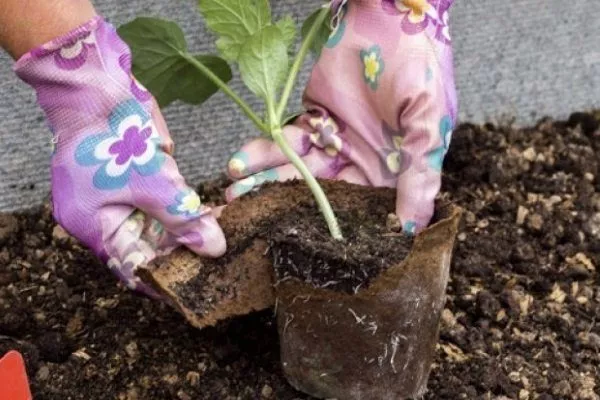
- Water the seedlings to make it easier to remove them from the pots.
- Remove the seedling's roots along with the soil. Carefully transfer the soil ball into the hole and press it in slightly deeper.
- Water the transplanted seedling at the roots. The water should be slightly warm. Add a 1 cm layer of sand around the holes.
The process of caring for watermelons
If watermelons aren't properly cared for, even the highest-quality seedlings planted in fertile soil won't produce a harvest. Watermelons require a comprehensive range of care, including regular weeding, watering, fertilizing, and protection from diseases and pests.
- The first thinning of seedlings is carried out 2 weeks after emergence.
- The first feeding is applied at the stage of 3-4 true leaves.
- Regular loosening of the soil around plants to improve aeration.
Irrigation scheme
Watermelons are juicy fruits, so it's no surprise that they thrive on moisture. However, they don't require abundant and frequent watering. Overwatering can lead to disease.
Features of watermelon watering:
- At first, seedlings or transplants are watered approximately once a week. The soil should be moist to a depth of 25-30 cm.
- Watermelons need moisture most during the green growth phase. The soil should be constantly moist, but not waterlogged.
- Watermelons are watered at the roots. The best time to water is in the evening. The water should be warm.
- When the female flowers on the plant open, the watering rate is reduced.
- Watermelons are watered only until the fruits are formed.
- Once the fruit is ripening, watering is not necessary. The plant has very strong roots, allowing it to extract moisture from deep within. Excessive moisture negatively impacts the fruit's flavor—the watermelons lose their sweetness and become watery.
Fertilizing
Watermelons require moderate fertilization, with particular caution when applying nitrogen fertilizers—it's best to avoid them altogether unless absolutely necessary. Watermelon fertilizing tips:
- The first feeding is done when the shoots begin to grow. It is recommended to use mullein infusions mixed with wood ash. These can be replaced with ammophoska or azophoska, according to the dosage specified in the products. Approximate fertilizer composition for 10 square meters:
- ammonium nitrate or urea – 150 g;
- superphosphate – 150 g;
- potassium salt – 50 g.
- Fertilizer is applied before rain or during watering.
- If the plants are showing poor growth, they can be fed with liquid manure - dilute it in water, adding 1 liter under each plant.
- Fertilizing stops immediately after the fruit sets.
Bush formation
Bush training begins when the fruits reach the size of a chicken egg. Training is done in dry, sunny weather to allow the cuts to dry faster. All excess shoots must be removed promptly to prevent the bush from wasting energy on foliage. Excess fruit is also removed, as the plant cannot adequately nourish all the watermelons that have set.
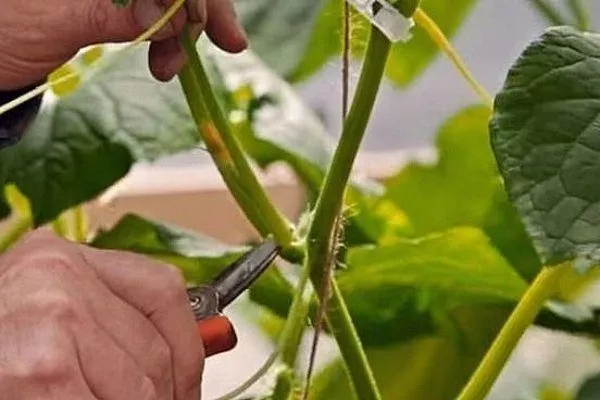
Features of bush formation:
- Prune the side shoots, leaving only two fruits on each. If the variety has large fruits, leave only one fruit on each shoot.
- Pinch the main shoot so that only 2 leaves remain after the fruit.
- Do not leave more than 6 fruits on one bush.
- When the watermelon grows to the size of a fist, pinch off the shoot, leaving 4-5 leaves behind.
- Once fruit formation is complete and the fruit begins to grow vigorously, side shoots will appear in the axils of the shoots. Remove these side shoots weekly to prevent them from draining the plant's energy. Do this carefully, as turning the vines over is not recommended during this time.
As the watermelons grow, place plywood underneath them to prevent them from rotting in rainy weather. It's also recommended to turn the watermelons sideways from time to time, but carefully to prevent them from falling off.
Weeding
If the seeds are planted in open ground, loosening is done before the seedlings emerge. To avoid damaging the seeds and sprouts, "beacon" plants that germinate before the watermelons, such as lettuce, radishes, and other plants, are sown in the holes.
During the growing season, weeding is carried out several times. Over time, watermelons grow so large that they suppress weed growth, and weeding becomes unnecessary.
Shelter
In all regions except southern Russia, watermelons are covered with plastic, especially at the beginning of the growing season. This is usually removed in late June, when there is no risk of nighttime frost. However, if there is a significant difference between day and night temperatures, it is best to leave the plastic on.
It's also recommended to cover watermelon plantings during rain. The cover should be regularly ventilated to prevent condensation.
Pollination
Watermelons are pollinated by insects. In good weather, there are enough insects for effective pollination. However, if it's cloudy outside, the flowers must be pollinated by hand—the stamens of one flower are brought to the pistils of several others. The fruits ripen 1.5 months after pollination.
Treatment against diseases and pests
Protecting watermelons from diseases and pests involves two approaches:
- Agrotechnical. Its essence lies in the precise fulfillment of agricultural technology requirements:
- correct crop rotation – watermelons are replanted in the area after 5 years;
- treat seeds before planting;
- the melon field is located on light sandy loam soils;
- compliance with the timing of deep digging (plowing) and planting;
- preventing soil over-watering.
- Chemical. Plants are treated with the following preparations:
- Decis, Fundazol and Bordeaux mixture are used to combat powdery mildew, anthracnose, rot and spotting.
- Fenituram – pre-sowing treatment. 3 g per 1 kg of seeds. Mix the product with flour paste. Kills seedling flies.
- Fitoverm helps fight aphids and thrips.
- Natural. To ensure the products are environmentally friendly, watermelons are sprayed with natural products:
- tinctures of garden plants;
- solutions of soap and other household preparations;
- tobacco dust infusion - it is especially effective against aphids;
- infusion of wood ash;
Traps and sweet baits help control wireworms and leaf-eating caterpillars.
Secrets to Growing Square Watermelons
Square watermelons have only one practical advantage: they're easier to store and transport. Growing cube-shaped watermelons doesn't really make sense, unless you want to grow an exotic-shaped fruit.
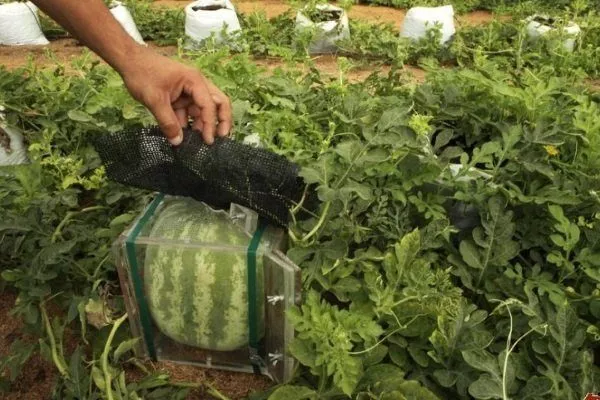
What you need to grow square fruits:
- cubic transparent plastic containers;
- the diagonals of the cube faces should be slightly larger than the expected diameter of the fruit;
- the cubes are reusable, collapsible, with a 3-4 cm hole in one side for escaping;
- there are many holes in the edges for ventilation;
- An apple-sized fruit is placed in a transparent cube.
This technology makes it possible to grow fruit of any shape, for example, pyramidal.
Harvesting and storage
Signs of ripe watermelons:
- the matte crust acquires a shine;
- the crust is hard and cannot be pierced with a fingernail;
- the stalk dries up;
- at the point of contact with the ground there is a yellow spot;
- When you tap an unripe watermelon, you can hear a ringing sound; ripe fruits make a muffled sound.
Late-ripening watermelons store best. Harvesting instructions:
- the fruits are cut with sharp pruning shears along with 5 cm stalks;
- watermelons are transported to storage, laid in one layer on a straw bed;
- watermelons are inspected from time to time, removing those that have begun to spoil;
- The optimal storage temperature is +6-8 °C, humidity – 85%.
The maximum storage time for the most shelf-stable varieties is three months.
How to plant seedless watermelons in the ground?
Seedless watermelons are the result of selective breeding. Seedless hybrids have softer, more watery flesh than regular watermelons, yet very sweet. These watermelons do contain seeds, but they're very soft and easy to eat.
To grow seedless watermelons, seeds are obtained by crossing previously pollinated watermelon varieties. Seeds taken from the fruits of seedless hybrids do not possess the characteristics of the parent plant.
Features of planting seeds of seedless hybrids:
- Due to the presence of air pockets, it is not advisable to soak the seeds, as this may cause them to rot.
- Plant the seeds in warm soil, preheated to 30 degrees.
- Germination takes a long time. The containers in which the plants have sprouted are moved to a cooler location, and the seedlings are left to germinate. Otherwise, growing the seedlings and planting them in the ground is no different from growing regular watermelons.
Thanks to new varieties adapted to short, less-than-sunny summers, our gardeners can grow watermelons in their own plots. Watermelons are easy to grow, but getting truly sweet and delicious fruits is a real science. Try growing your own watermelons yourself, following proper agricultural practices.