
Experienced gardeners have long since developed a method for growing watermelons in Siberia. The key is to properly prepare the soil for planting, treat the seeds, and provide them with quality care.
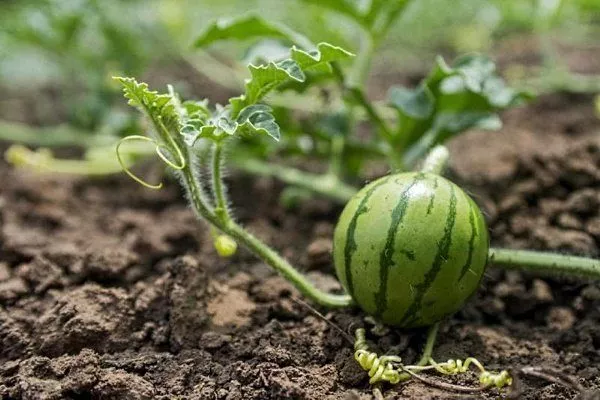
Peculiarities of growing watermelons in Siberia
A key feature is the extremely short summer. The plant must be grown within a short period of time. This is why early-ripening varieties are selected, and seedlings are used for planting. The period between spring frosts and autumn cold is approximately 90 days. This time is sufficient for early-ripening varieties.
- ✓ Optimal soil pH for watermelons: 6.0-6.5.
- ✓ Soil loosening depth before planting: not less than 30 cm.
Seeds are sown in mid-spring, seedlings are planted in early summer, and the fruits can be harvested in mid- to late summer. Summers in Siberia are hot, with temperatures reaching 35 degrees Celsius (95 degrees Fahrenheit) recorded. The season can also be rainy. Even if a gardener purchases early watermelon seeds, if there is heavy rainfall, the berries will not have time to ripen.
In Siberia, the years for growing melons vary: from good to poor. However, in unfavorable years, Siberians find a solution: they salt or sugar the unripe berries. They make jam or candied fruit from them.
The best varieties for growing in Siberia
In this area, growing a large berry weighing around 15 kg is only possible in a winter garden. The plant will have time to develop green tops during the short summer, but as soon as the cold weather sets in, everything will die, and you won't get a harvest. Small watermelons weighing 4 kg will ripen perfectly, especially with proper care.
When choosing a variety, pay attention to the following characteristics:
- weight of berries (no more than 4 kg);
- early maturity;
- homeland (place of selection).
| Name | Fruit weight (kg) | Ripening period (days) | Pulp color |
|---|---|---|---|
| Ogonyok | 2 | 75 | orange-red |
| Sugar baby | 5 | 75 | red/pink |
| Siberian giant | 6 | 100 | red |
| Beijing Peasant Joy | 8 | 100 | sugar |
| A gift to the North | 10 | 80 | sugar |
Ogonyok
Every melon lover has grown the Ogonyok watermelon variety in their garden. It was developed back in the 1950s. Today, new varieties are becoming popular, and this one is gradually being replaced.
Characteristics of the Ogonyok variety:
- whip length 1.7 m;
- the leaves are small;
- berries in the form of a green ball;
- the weight of one fruit is about 2 kg;
- the flesh is orange-red, sweet;
- the seeds are small.
If you don't monitor the number of ovaries on a single plant, the watermelons will grow very small—about the size of an apple—but this won't change the flavor; it will remain sweet and juicy. The skin is thin and generally unsuitable for transportation. Ogonyok fruits can be stored for about a week. The first fruit can be picked 2.5 months after germination.
Watch the video below for a review of the "Ogonyok" watermelon variety, grown in Siberia:
Sugar baby
The variety also has another name: Sugar Baby. It was developed by French breeders many years ago. It is now known in many countries. Its appearance is very similar to Ogonyok, the only difference being the size of the berries, which can reach 5 kg. The flesh of a ripe Sugar Baby is red, but can also be pink. The skin is thin and ripens 2.5 months after the ovaries form. It does not spread, growing compactly.
Siberian giant
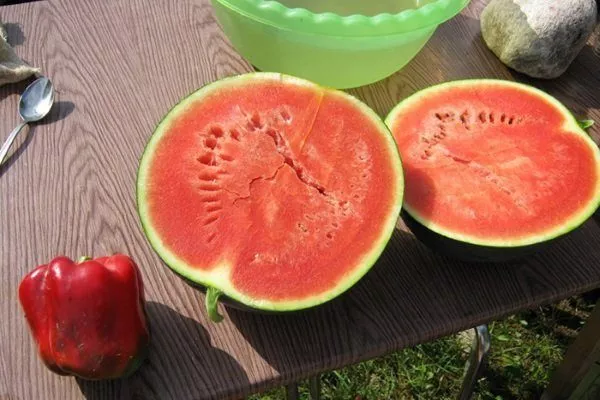
This melon hybrid is self-pollinating. It grows both in greenhouses and in open ground. This results in a bountiful harvest, and the plants are resistant to cold and drought. A single berry can weigh up to 6 kg. The flesh is tasty, aromatic, and red. The seeds are small.
This variety was developed relatively recently, so there's little information about it. There are also some dissatisfied reviews from gardeners. The main mistake Siberian gardeners make is not rationing the harvest. This variety requires no more than three ovaries to be left on the plant.
Beijing Peasant Joy
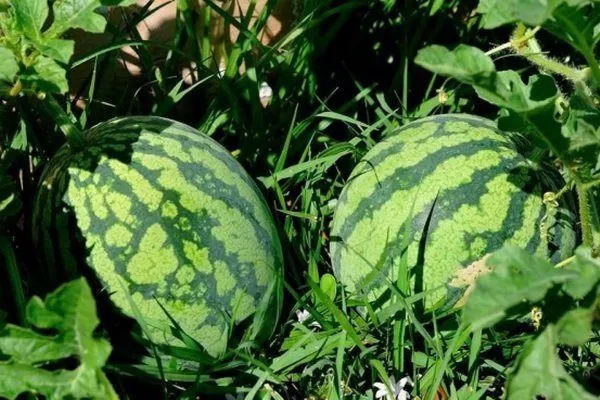
This hybrid variety produces its first harvest 100 days after fruit set. It has excellent transportability, producing elongated, striped fruits. Each fruit weighs up to 8 kg.
Due to the large berries, no more than two should be left on a single plant. The skin is thick, the flesh is sweet. The seeds are small and few in number. They can be grown outdoors, but are best planted in a greenhouse. After harvesting, the berries ripen rather than spoil.
A gift to the North
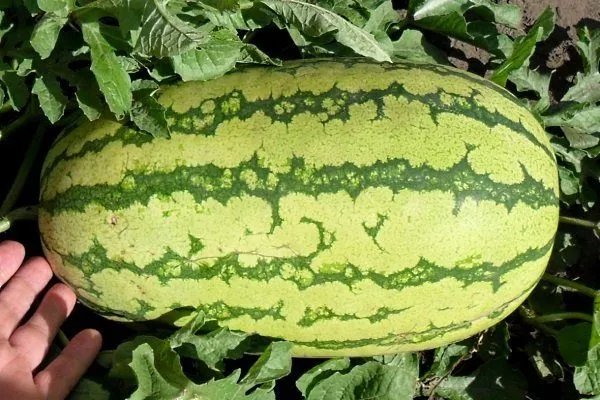
Ripens in 80 days after fruit formation. Grows in open areas, protected from drafts. A single fruit, under good conditions and care, can weigh up to 10 kg. The pulp is sweet and has an excellent flavor. This hybrid variety has a long shelf life and tolerates transportation well. Keep a covering material on hand to protect the variety from rain and cold snaps. Harvest is strictly regulated.
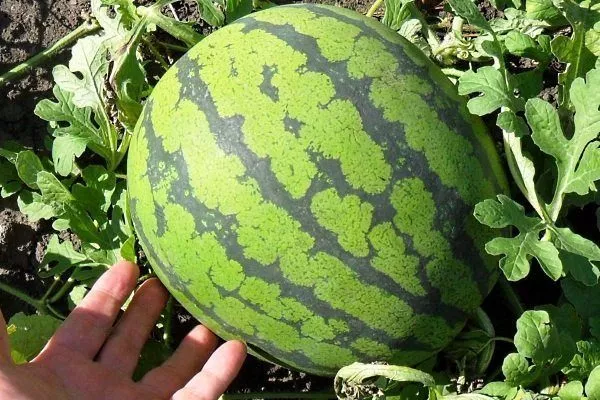
Growing conditions
Growing melons in Siberia isn't easy, but with a responsible approach, every gardener can reap a bountiful and delicious harvest.
Ideal timing for planting seeds
If you decide to plant the seedlings directly in open ground, do so in the last days of spring. Seeds take about seven days to germinate, so the sprouts will form by the time the weather warms up in Siberia. If you use a covering material, you can sow as early as mid-May.
As for seedlings, they are planted in open soil or in a greenhouse from June 10 to 15, and the seeds themselves for seedlings are planted from April 23 to May 1.
Planting seeds for seedlings: a step-by-step guide
The seedling method is used to grow large varieties with a long ripening period or early ripening ones in order to get the harvest as early as possible.
Growing melons requires a special nutritious soil, which you can buy at the store or make yourself. From your garden, you'll need vermicompost (the result of decomposing organic matter). This is a reddish-colored substance found under leaves, tops, and other debris.
Vermicompost is commonly called humus or compost.
You'll need 1 part chopped straw and 3 parts humus. The nutrient solution for growing seedlings is ready. In Siberia, it's impossible to wait for seedlings to acclimate to the soil after transplanting, so they must be grown directly in large containers without transplanting.
Watermelons have long taproots that need to be protected from damage during transplantation. Large containers are recommended to ensure good seedling development. Melon roots grow much faster than the above-ground portions. By the age of one month, they reach 0.2 m. This is the recommended depth for the pot.
Algorithm for sowing seeds for seedlings:
- Prepare the planting material. A couple of days before, select the seeds for germination: wrap them in gauze soaked in water and place them in a warm place (around 30 degrees Celsius). Before soaking, soak the seeds in hot water for a couple of minutes. This disinfects and softens the seeds, which will result in sprouting much faster.
- Fill the container with prepared nutrient soil, leaving 50 mm to the top.
- Water. If the soil has settled a little, add more mixture.
- Place 2 seeds in each container, remove weak sprouts.
- Add another 30 mm of soil on top, do not water.
- Add mulch in the form of dried grass or straw.
- Place the containers in a warm place (up to +30 degrees Celsius).
Caring for seedlings and preparing for planting
Place the pots with emerging seedlings on a south-facing windowsill. If there's not enough sun and warmth, use grow lights. Watermelons take up a lot of space, so be realistic about your available space. Five plants grown in good conditions are much better than 20 overcrowded and uncomfortable plants.
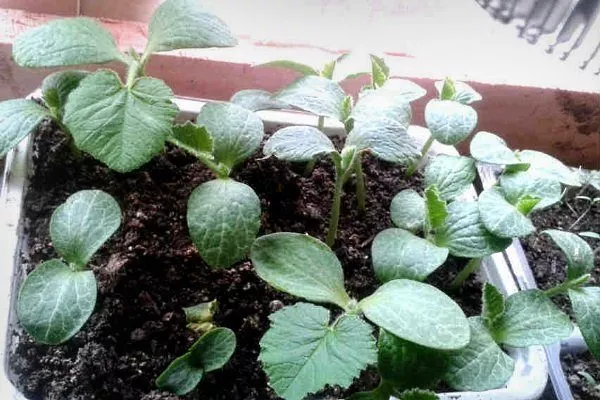
Water the seedlings as soon as the soil dries out. If you used a humus-rich nutrient mixture, there's no need to fertilize the seedlings additionally. Seven days before planting, harden off the plants by taking the pots outside daily. Start with 1 hour, then increase the time.
- Hardening off seedlings should begin 10 days before planting, gradually increasing the time spent outdoors.
- Before planting, treat the root system with a growth stimulator.
By the time of transplanting the watermelon, the seedlings should have 4 leaves.
Transplanting seedlings into open ground
Melons occupy a large area. Watermelons are planted 1 meter apart. The plot should not be shaded by bushes or trees. In densely populated areas, yields decrease.
The ideal location for growing watermelons is an open, raised area. Siberian gardeners know that it's best to use boxes or warm beds. In this case, the watermelons are raised above the soil, placed under dry tops, branches, logs, or grass.
Do not use manure, droppings or other organic matter to create warm beds.
Melons need loose soil to ensure the root system receives adequate fertilizer and water. Avoid adding too much sand. Instead, use sawdust, bark, straw, and other materials. Any material that quickly rots and becomes fertilizer is suitable.
The soil for planting melon seedlings in Siberia is prepared as follows:
- scatter natural leavening agents over the soil;
- For every 1 sq. m add 1 tbsp. urea, 1 tbsp. superphosphate, 1 tbsp. potassium.
This should be done 7 days before planting. To ensure the soil remains loose after fertilizing, cover it with agrofibre or hay.
Algorithm for planting seedlings in open ground:
- Dig a hole the size of the container.
- Fill the pot with water and give the soil time to absorb it.
- Carefully remove the seedlings from the container, along with the soil ball. If the pot is plastic, you can cut it open.
- Place the seedling in the hole and cover it with soil.
- Add water. If the soil has settled, add a little more.
- Apply mulch. Read about mulching the soil. Here.
Experienced gardeners cut plastic pots into several pieces before sowing the seedlings, then secure the pieces together with tape. This tape is easily removed during planting. The key is not to disturb the melon's root system; summers in Siberia are short, and there's no time to wait for the seedlings to recover and begin growing again.
Caring for watermelons in open ground
If the soil is mulched, watermelons should be watered no more than twice every 30 days, except on extremely hot days. Fertilizer should be added along with the water; a solution of mullein or mineral fertilizers can be used. Spraying should be done in calm weather.
| Irrigation method | Frequency | Efficiency in Siberia |
|---|---|---|
| Drip | 2 times a month | High |
| Surface | Once a week | Average |
Pinching is a necessary part of care. Two shoots are almost always left, and any side shoots on them are removed. This procedure should be performed weekly. Gardeners monitor the emergence of extra shoots and remove them promptly. Two to three ovaries should remain on the central shoot to ensure the watermelons don't grow too large and have time to ripen by the end of summer.
Once the berries reach 50 mm, pinch off the top of the shoot. Leave five leaves after the last green fruit. Place the berries on boards to keep them off the ground.
Gardeners should always remember that watermelon is a southern berry, so when growing it in Siberian conditions, it is necessary to follow basic rules:
Weeds are harmful because they feed on all the nutrients intended for watermelons. Weeds are pulled out by the roots. In the final stages of the growing season, stop loosening the soil.
In midsummer, fertilizing with phosphorus and potassium won't hurt. Experienced Siberian gardeners stop watering a week before harvest, but many descriptions say the plant doesn't need water for a month before harvest. This is a misconception; plants need watering, especially on hot days. Without water, the berries become tasteless and small.
A peculiarity of Siberia is that watering depends on the weather; sometimes the rains take care of everything and the summer resident doesn’t have to water the plants at all.
How to grow a watermelon in a greenhouse?
The time for planting watermelons depends on the room's temperature. The optimal temperature is 25 degrees Celsius. These conditions are achieved at different times depending on the type of greenhouse (plastic, polycarbonate, etc.).
In Siberia, seedlings are planted in plastic and glass greenhouses at the same time as in the open ground. Polycarbonate greenhouses are particularly common; plants are planted in them after May 20th. Melons are grown in greenhouses not to achieve a bountiful harvest, but to protect the seedlings from wind, cold, and precipitation.
The only downside to this method of planting watermelons is that a minimal number of insects fly into the greenhouse, so pollination will have to be done independently.
There are two methods for growing watermelons: from seeds and from seedlings. The soil is prepared in the same way as for open-air cultivation. The seedlings are spaced more compactly: 0.7 x 0.7 m. Watermelons are grown on trellises.
If you planted seedlings during a period when frost is still possible, provide the young plants with additional protection. You can use boxes, agrofibre, paper, etc.
Plastic bottles filled with water are excellent heat sources; they are placed around the greenhouse. During the day, they are heated by the sun and at night, they transfer heat to the plants. A similar technology can be used when growing melons in open ground.
Diseases and pests
Watermelons grown in Siberia are also vulnerable to diseases and harmful insects. The most dangerous enemies of melons are:
- Powdery mildew. Symptoms: White spots appear on the foliage and stems, leading to plant death. If left untreated, the problem will spread to the berries. Powdery mildew control: treat plants with colloidal sulfur or Topaz, Bayleton, or Planriz.
- Anthracnose. The disease develops due to high humidity in the greenhouse. Symptoms include yellow-brown or pink spots. Control: Treatment with Bordeaux mixture or chemicals.
- Spider mite. Symptoms: The plant wilts and curls up; pests feed on the watermelon juice. Pest control: Folk remedies, such as those with tobacco and laundry soap, are helpful.
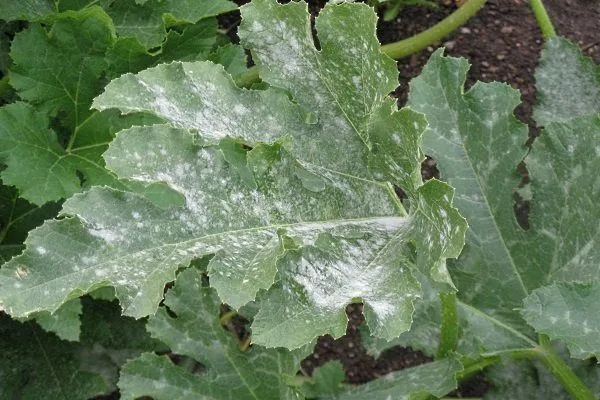
Powdery mildew
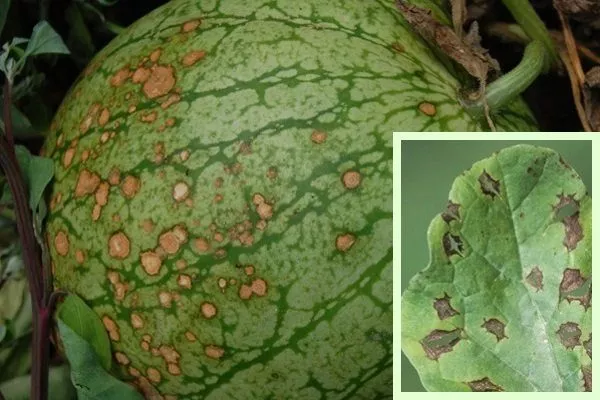
Anthracnose disease
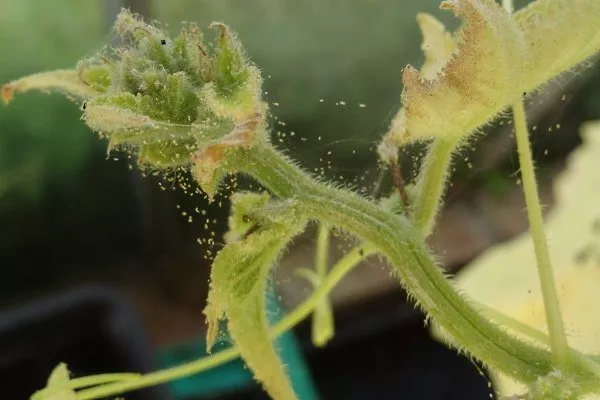
Spider mite
Professional chemicals can be used to eliminate diseases and pests. To prevent the entire harvest from being wasted, diseased plants are removed.
Harvesting and storage
Small fruits ripen much earlier than larger varieties. A ripe berry's stem is completely dry. The skin takes on a glossy finish, and the pattern becomes more distinct. To be sure the fruit is ripe, tap it – you should hear a dull sound. Another sign is the presence of a yellow spot.
Early varieties with thin skins are not suitable for long-term storage, so it's important to pick the berries on time. Choose a dry day to harvest watermelons. The fruits are carefully placed in cardboard boxes and covered with paper.
Experienced gardeners from Siberia have come up with several tricks for preserving watermelons as long as possible. Some store the berries in ashes, others wrap them in cloth or cover them with a layer of wax. In any case, the berries should be kept in a well-ventilated basement, at a temperature of 3 degrees Celsius and a humidity level of around 80%.
At home, fruits will last longer if they are stored in a cool place and turned daily.
Helpful tips
Tips from experienced gardeners:
- Make an open bed only using black material; transparent films will not produce results.
- Make cross-shaped cuts in the material and plant the seedlings in them.
- Before planting, treat the seeds with a growth stimulator.
- When transplanting seedlings, take the root system together with the soil lump.
- Use large peat pots.
- Avoid overwatering watermelons, as too much moisture can damage the roots.
Gardeners' reviews of growing watermelons in Siberia
Watermelon, a heat-loving melon crop like watermelon, can also be grown in Siberia. To do so, it's essential to choose the right variety and planting method. Particular attention should be paid to proper and regular care.