
This ultra-early watermelon is one of the best domestic varieties. It attracts gardeners and summer residents not only because of its extremely early ripening time but also because of its other characteristics.
Description of the variety
The Ultrarannij variety has a compact plant with rather limited lateral branching.
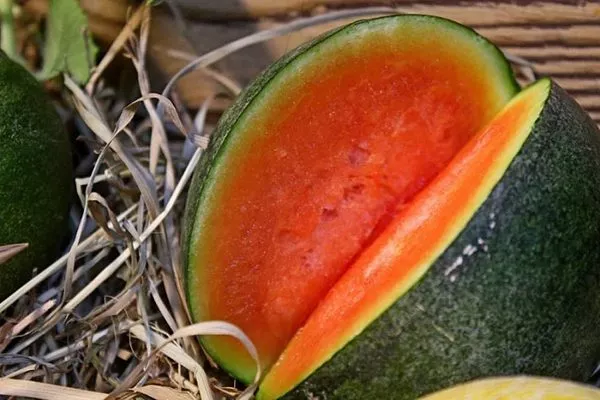
Description of fruits:
- shape - round;
- coloring - dark green with even darker stripes;
- weight - 4-6 kg;
- the pulp is bright red, grainy, with a delicate texture;
- seeds are medium-sized and dark.
The fruits are distinguished by their high sugar content and excellent flavor. The pulp is sweet with a small number of seeds. Some fruits are seedless.
Purpose of the variety
Watermelons become tasty and ready to eat as early as the 20th of July—there is no need to wait until August, the month in which all other early varieties are harvested.
The fruits are used for:
- fresh consumption;
- watermelon juice;
- jams;
- pickles;
- production of various food products (instead of watermelon-flavored powder substitutes).
Productivity
The Ultra-Early variety is characterized by a medium yield. 25-35 kg of watermelons can be grown in 10 square meters. Yields can be increased by fertilizing and regular watering—the variety is very responsive to care.
Pros and cons
Before planting the Ultra-early variety on your plot, it is worth evaluating all its advantages and disadvantages.
The Ultra-Early watermelon ripens earlier than other varieties. From sowing the seeds to harvesting, it takes 80-90 days. If grown from seedlings, the ripening period is reduced to two months.
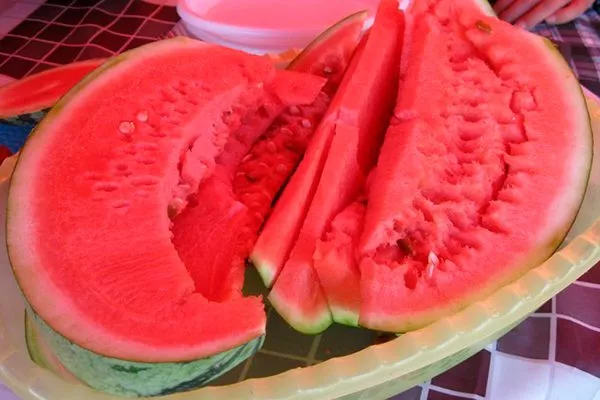
If you sow the seeds in the third ten days of April, you can harvest ripe watermelons as early as the end of July. Seedlings are planted outdoors in early June, and the harvest is 60 days later, in early August.
Requirements for planting site and soil
To achieve a good harvest, the Ultra-early watermelon requires the most favorable growing conditions. The first step is to select a suitable plot for sowing or planting seedlings.
- ✓ The soil temperature during planting should not be below +16°C to ensure seed germination.
- ✓ The area should be illuminated to the maximum, at least 8 hours of direct sunlight per day.
Landing site requirements:
- the soil is nutritious and fertile;
- The area should be well-lit, sunny, spacious, and preferably on a hill.
Predecessors
The Ultra-Early Watermelon is recommended for planting in areas previously used for carrots, cabbage, or potatoes. Areas previously used for melons and pumpkins are considered unsuitable for growing watermelons.
Seed preparation
Only smooth seeds are selected for sowing; they should not have any damage, dents or cracks.
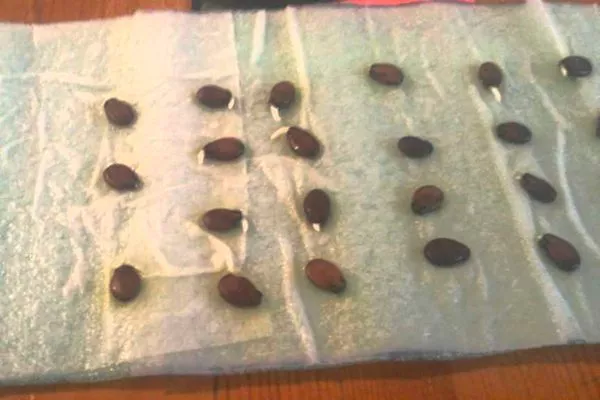
The procedure for preparing planting material:
- Soak the seeds in a 1% solution of potassium permanganate (1 gram per 100 ml of water) for 20-30 minutes.
- Dry the treated seeds at room temperature.
- Wrap the seeds in wet gauze soaked in warm water.
An indicator that seeds are ready for planting is the emergence of sprouts. This usually occurs within 24 hours. After this, the seeds can be planted in open ground or in pots for growing seedlings.
Features of planting in the ground
In the south, the Ultra-early watermelon, like all other varieties, is sown in open ground, while in other regions, seedlings are preferred. Seedlings are planted in open ground, or in greenhouses if the climate is unfavorable. Planting occurs when the risk of temperatures dropping below 16°C is eliminated.
How to prepare the soil:
- In the fall, dig up the soil to the depth of a shovel, removing stones, rhizomes, and other plant debris along the way.
- Early in the spring, as soon as the snow melts, dig up the soil again, adding diluted manure and wood ash to the soil.
- To make the soil lighter, looser and more breathable, add wood sawdust and cleaned river sand to it.
Features of planting Ultra-early watermelon:
- Sowing is done no earlier than the end of April, and seedlings are planted at the end of May or even at the beginning of June.
- The optimal sowing pattern is 40x50 cm. The distance between rows is 50 cm, and between adjacent plants – 40 cm.
- It's recommended to plant at least two seeds per hole to ensure 100% germination. If several seedlings sprout, keep the strongest one.
Seedling method of growing
Prepare the soil for the seedling pots in advance. Regular garden soil will do, but a peat-based mixture is considered a better option. The soil should be fertilized with manure six months before planting, and then watered with Bordeaux mixture before planting.
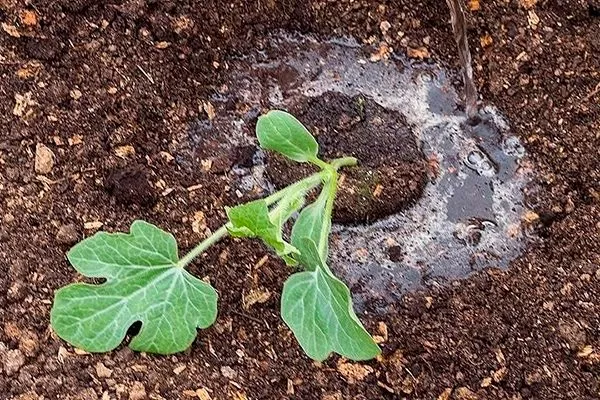
Features of growing Ultra-early watermelon seedlings:
- Special mesh containers or regular flower pots are used as planting containers.
- Sprouted seeds are planted at a depth of 2-3 cm. The soil temperature should be approximately 12°C. Plant two or more seeds per pot. Once seedlings emerge, select the stronger seedling.
- The crops are moistened with a small amount of water, covered with polyethylene film, transparent plastic or glass, and placed in a warm, well-lit place.
Seedlings should appear in about 10 days. While the seedlings are growing, they need to be watered moderately and provided with favorable growing conditions. After a month, the seedlings will be ready for transplanting into the ground.
Care
The Ultra-Early variety, although considered easy-to-grow, requires some care, without which it's impossible to achieve good harvests. This care also affects the quality of the harvest—the size and flavor of the fruit.
- The first feeding should be carried out 2 weeks after germination, using nitrogen fertilizers.
- The second feeding should be carried out at the beginning of flowering, using complex mineral fertilizers.
- The third feeding should be carried out during the period of ovary formation, using potassium-phosphorus fertilizers.
Care for the Ultra-early variety consists of the following agricultural measures:
- Watering. In temperate climates, watermelons require less frequent watering than in southern regions. In hot weather, the crop requires more frequent and intense watering. Warm water is used for irrigation.
Water at a rate of 20-30 liters of water per square meter. The approximate frequency is once a week. During flowering, this frequency increases to twice a week. When the fruit sets and ripens, watering is reduced to once every two weeks. Generally, water moderately, as the Ultra-early watermelon's robust root system is capable of replenishing lost moisture on its own. - Fertilizers. Watermelon is fertilized alternately with mineral and organic fertilizers. The first feeding is nitrogenous. For example, you can add ammonium nitrate (20 g per 10 liters of warm water). The second and third feedings involve applying complex fertilizers at intervals of 2-3 weeks.
- Loosening. It is recommended to do this after every watering, irrigation, or rain. Loosen the soil until the leaves of the plants in the rows close together.
- Formation. Fruits are formed on the main stem. Four to five ovaries are left on each plant. The rest are removed.
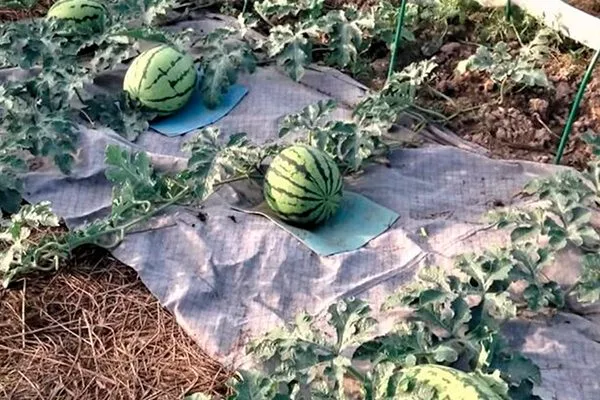
It's recommended to pin the vines down or cover them with moist soil to prevent them from being blown over by the wind. When growing outdoors, it's recommended to place plastic film, plywood, or other non-rottable material under each fruit.
Resistance to diseases and pests
The Ultra-Early watermelon is a disease- and pest-resistant variety. However, under unfavorable conditions and poor agricultural practices, the risk of damage increases. Preventative measures can help prevent disease and insect attacks.
The most common diseases include various rots, powdery mildew, mosaic, fusarium, and anthracnose. The most dangerous and widespread pest of watermelon crops is aphid.
It is recommended to treat the plants three times with 1% Bordeaux mixture, including during fruiting and 5-7 days before harvest. The interval between sprayings is one week. For severe infestations, use fungicides such as Topaz, Fundazol, etc. Aphids are controlled with a soap solution, and insecticides such as Inta-Vir can also be used.
The Ultra-Early variety will appeal to gardeners who value early ripening. This early-ripening watermelon boasts excellent flavor and is ideal for fresh consumption.