
The SRD 2 watermelon variety has become a favorite among many gardeners due to its low maintenance, early ripening, and excellent taste. The plants are virtually disease-free, significantly reducing the risk of rot. By following proper gardening recommendations, you can grow healthy and delicious fruits. Only by following proper care will you achieve abundant harvests.
Who developed the variety and when?
Developed by Soviet breeder K. E. Dyutin in collaboration with scientists S. D. Sokolov and S. M. Bogoyavlenskaya, it was added to the State Register in 2001 and granted permission for use.
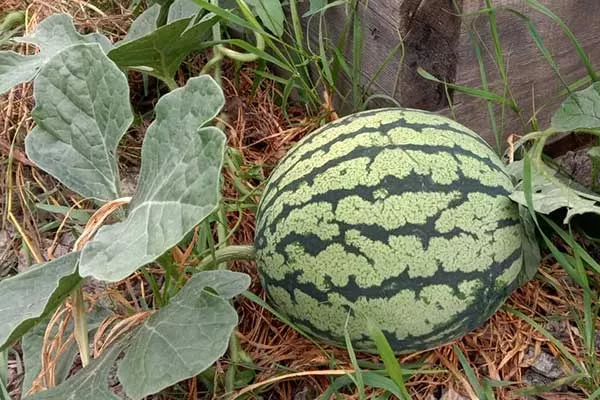
Where does the name SRD-2 come from?
The outstanding scientist and honored scientist Konstantin Efimovich Dyutin worked on the selection process. SRD stands for "Super Early Dyutin."
In addition, the breeder developed numerous varieties of watermelons, including Yarilo, Foton, and Skorik. He also worked with other melons, including melons, pumpkins, squash, and pattypan squash. Many who tried or grew these varieties appreciated the scientist's talent and his contribution to the development of agriculture.
Description of the plant and fruits
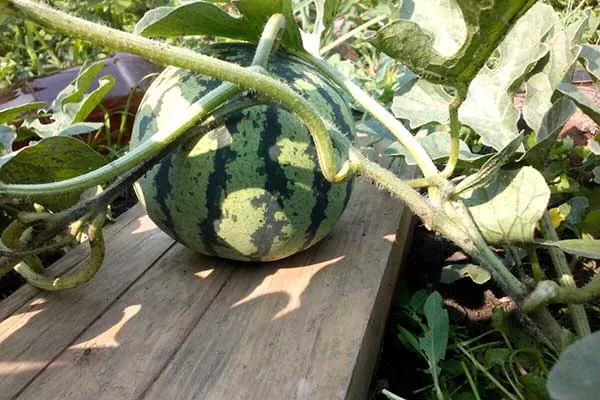
The bush is characterized by a single-stem structure and limited development of lateral shoots. The main trunk length varies from 1.5 to 2 meters. The shoots bear medium to large, weakly dissected, green leaves.
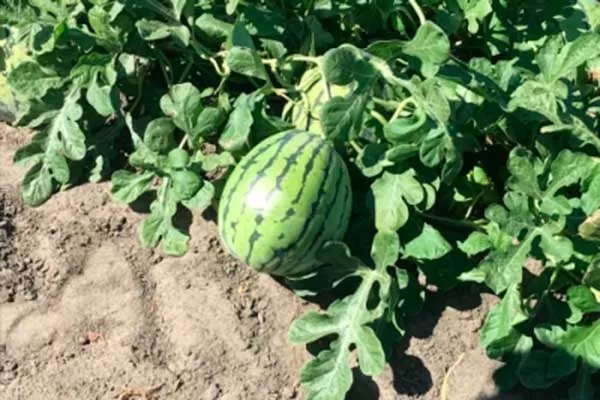
Main characteristics of berries:
- Size - average.
- Weight - varies from 4 to 6 kg, sometimes there are specimens up to 9 kg.
- Form - round and correct.
- Coloring – light green or green with narrow dark green stripes.
- Bark - flexible, 1.3-1.5 cm thick, weakly segmented.
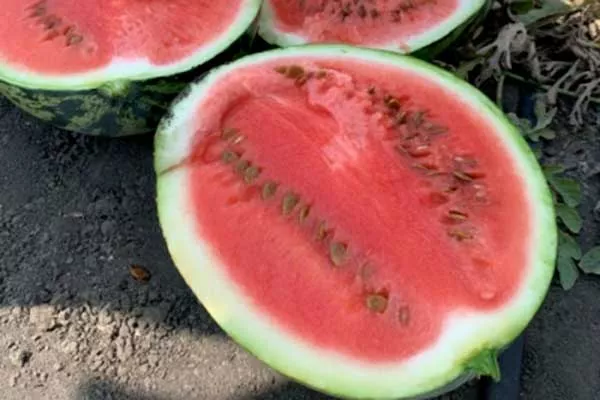
- Pulp – Bright red, moderately firm and grainy, with a high juice content.
The seeds are white with a slight grey tint.
Taste and purpose
The berry has an excellent flavor, with a sugar content of approximately 6.5%. Ripe fruits are aromatic and juicy, but retain their marketable qualities for no longer than 25 days, indicating their poor shelf life. Long-distance transportation is not recommended, as watermelons are not suitable for this purpose.
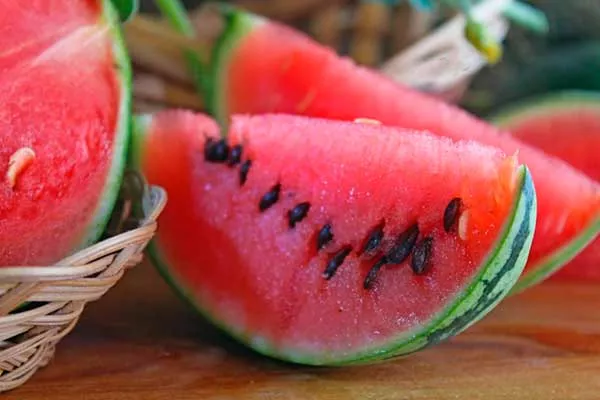
The berry is eaten fresh and used in the food and pharmaceutical industries. Watermelon rinds are used to make juices and infusions, and the pulp is used to make sweet salads, jams, and desserts.
Ripening and yield
SRD 2 is an early-ripening variety. From the first shoots to harvest, the berries take only 58-60 days. In typical garden plots, yields range from 2.6 to 3.1 kg per square meter, ensuring sweet and tasty fruit in a short time.
Growing regions
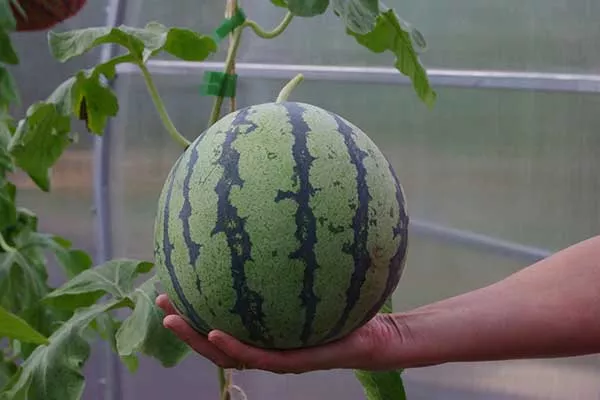
The crop is successfully cultivated in all regions of Russia, including Siberia, but in northern areas, seedlings are used. Seeds of this variety are offered by the Russian Siberian company Semko.
| Disease | Stability of SRD 2 | Control measures |
|---|---|---|
| Anthracnose | High | Treatment with copper-containing preparations |
| Powdery mildew | High | Use of sulfur-containing fungicides |
Disease resistance
This variety has a strong immune system. Plants are resistant to mildly virulent strains of diseases such as anthracnose and powdery mildew. They are rarely attacked by melon aphids.
Landing rules
Growing the crop doesn't take much time, but it does require following important guidelines. Follow these recommendations:
- Choose open and well-lit areas, as plants need bright light.
- Place seeds in beds protected from strong gusts of wind to avoid damage to the stems and trunk.
- Fertile, loose and sandy soils with good drainage and neutral acidity are preferred.
- The crop requires regular watering, so the site should be near a water source.
- Avoid growing watermelons after cucurbitaceae crops to avoid common diseases and pests.
- ✓ The optimal soil acidity should be within the pH range of 6.0-6.8.
- ✓ The soil must contain at least 3% organic matter before planting.
Before sowing, thoroughly loosen the soil and remove weeds. Add organic matter to enrich the soil with nutrients.
Follow the sowing pattern:
- Place rows at a distance of 1-1.5 m from each other.
- Leave 30-40 cm between seeds.
- The seeding depth is 3–5 cm.
This will provide plants with good conditions for growth and development.
Caring for watermelon
Caring for a crop involves several important steps to ensure healthy growth and crop formation.
- Thinning and hilling. When the plants have 2-3 true leaves, they are hilled with moist soil to strengthen the root system.
- Feeding and shaping. Fertilize the plants regularly, directing the shoots toward the center of the rows, covering them with soil to prevent them from twisting. Leave no more than three main shoots on each plant, removing all shoots without fruit.
- Watering. Although watermelons are considered drought-resistant, moisture is necessary during periods of active growth and berry formation.
- Protection and acceleration of ripening. In August, cover the bed with spunbond, especially during nighttime cold spells, to speed up ripening. Remove the cover in the morning.
These measures will help maintain plant health and ensure a bountiful harvest.
Harvesting and storage
Small SRD 2 watermelons ripen faster than larger ones, and you can tell when they're ready by several signs: a dry stem, shiny skin, a clear pattern, a dull sound when tapped, and a yellowish spot on the side.
Since early, thin-skinned varieties are not suitable for long-term storage, harvest the berries promptly. Harvest on a dry day, carefully placing the berries in cardboard boxes and covering them with paper. To extend shelf life, use ash, wrap the watermelons in cloth, or coat them with wax.
Positive and negative qualities
The crop has both advantages and disadvantages that should be considered before planting. Advantages of SRD 2:
- Versatility. Watermelon is successfully grown both in open ground and in film greenhouses.
- Responsiveness to watering. The bushes respond well to balanced irrigation.
- Adaptation to climate. This variety is suitable for most regions of Russia, from the North to the Far East.
- Strong immunity. The plant has high resistance to powdery mildew and anthracnose.
- Pest control. The berries resist melon aphids.
- Early ripening period. Obtaining a harvest in a short period of time is a reality.
- Excellent taste. Ripe fruits have excellent taste and aroma.
Among the disadvantages, some gardeners note a short shelf life, high maintenance requirements, and difficulties with transportation.
Reviews
The SRD 2 watermelon deservedly holds a place of honor among the best early melon varieties. This variety delights gardeners with its excellent taste and is adapted for growing in a wide range of Russian climates. It's important to study the crop's key characteristics, planting, and care guidelines to maximize yields.