
The Skorik watermelon is an interesting variety, distinguished by both its large size and its distinctive flavor. It has many immediately apparent advantages. However, despite these advantages, it is not very popular abroad.
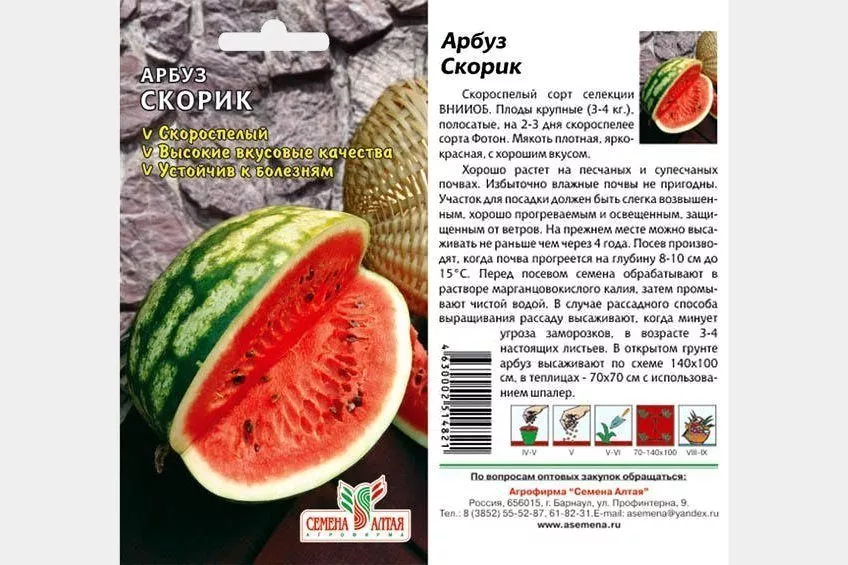
Description and characteristics of the Skorik watermelon
The Skorik watermelon was bred in 1997. It ripens quickly and produces large fruits. Its flavor is vaguely reminiscent of honey, and the flesh is juicy and soft. It is now widely grown in Russia and Ukraine.
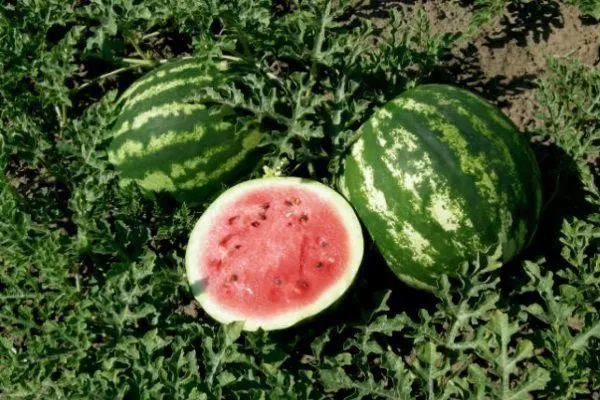
Like all watermelons, Skorik is spherical, with long, jagged black stripes. Watermelons ripen almost simultaneously in the fields, allowing for a quick harvest of a sweet crop, which can be stored for a considerable time. For example, it can be kept in the refrigerator for several months. One hectare can yield up to 30 tons of fruit, with each watermelon weighing 3 kg.
Due to its durability, you won't see any harmful diseases on the rind. It's usually light or dark green, smooth, and matte. The flesh inside is bright red, with a distinct watermelon aroma.
Advantages and disadvantages of the variety
Watermelon has many benefits. These include:
- early maturity;
- quality of taste, aroma and juiciness of the fruit;
- long-term storage;
- resistance to serious diseases;
- all fruits ripen almost simultaneously.
Skorik has significantly fewer disadvantages. Among them:
- high price for seeds;
- demanding of weather.
Ripening time and yield
The Skorik watermelon is an early-ripening variety. It takes 65-90 days from the first seedlings to the fruit's full ripening. Sometimes, this occurs even earlier if fertile, high-quality soil is selected for planting.
If you plant the seeds at the beginning of the ripening period—April—you'll have fully grown young shoots by mid-April, and some time later, when you plant them outdoors, the watermelons will ripen. On average, the fruits weigh 2-4 kg.
The largest recorded weight of the Skorik watermelon was 17 kg.
Planting the Skorik watermelon
By following basic tips and recommendations, it's not difficult to grow healthy watermelons. For the Skorik variety, light, fertile soil and warm temperatures are essential.
Seed preparation
It's important to carefully select seeds, inspecting them for any signs of damage or disease. To find the highest quality, inspect them for the following characteristics:
- very small size;
- shape – oval;
- monotonous black color;
- light weight, 1000 – only 90 g.
- ✓ Checking seeds for mechanical damage and signs of disease.
- ✓ Seed weight assessment: 1000 seeds should weigh about 90 g.
Don't skimp on seeds, and buy only from trusted sellers in specialized stores.
Seeds can be stored for quite a long time if kept in a warm, dry environment. Lightweight paper bags are ideal for storing seeds, as they allow oxygen to reach the seeds. However, they should be changed at least once a year to ensure proper ripening.
Growing seedlings
Seeds are planted in early April. Plant the seeds at a depth of 3 to 5 cm. During the initial growth phase, the watermelon will require mineral fertilizers, but not too frequently, as the Skorik watermelon is very sensitive to them. Instead of such fertilizers, you can use nutrient pots suitable for automatic fertilizers. Within a month, the grown shoots will be ready for transplanting to their permanent location.
Planting seedlings in open ground
The seedlings are transplanted into open soil when the first young leaves—three to six—appear on the shoots. This happens approximately one month after planting, or a maximum of one and a half months. During the transplanting process, remember to handle the root system carefully, especially the root collar—the Skorik watermelon is susceptible to fungal diseases.
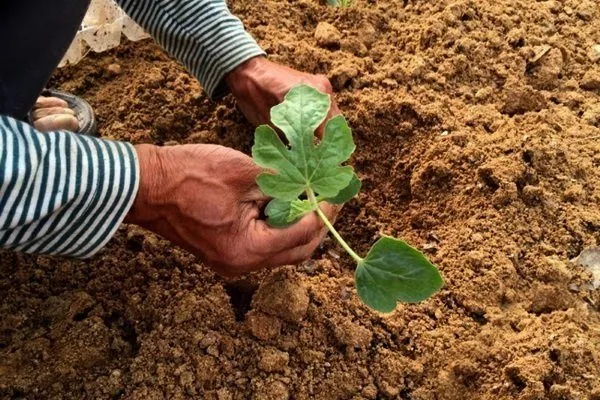
It would be great if plants such as potatoes, carrots or tomatoes grew in this soil before the watermelons.
Cold temperatures after transplanting won't have a beneficial effect either—the plant will die. Provide it with maximum warmth. After a couple of days from planting, side shoots will begin to grow, but these should be pruned immediately, as only one whole stem is needed for fruit production.
During ripening, the plant will need all the necessary procedures:
- regular watering;
- timely feeding;
- pruning;
- mandatory garter;
- weed cutting;
- loosening.
More information about the specifics of growing watermelons in open ground is available.here.
Maintenance is also made easier by the plant's high resistance to serious diseases. Within 1.5 to 2 months after planting the seeds, the fruits will ripen, and harvesting can begin.
Caring for seedlings after planting
The plant does not require careful care, but even despite this, do not forget to water it on time, apply fertilizer when necessary, and remove weeds.
Watering
The Skorik watermelon has strong roots, as evidenced by its taproot system. It is capable of extracting sufficient moisture from deep within the soil. Watering should be infrequent—once every few days. However, if you sense or see a dry spell approaching, you will need to water more frequently.
Watering too frequently will make the watermelon too juicy, as well as affect its taste, which will lose its aroma and honey flavor.
The most important nuance is that two weeks before harvesting, watering is completely stopped.
Top dressing
The plant requires complex fertilizers in moderate quantities. Especially if it's potassium-rich, it should be applied in very small amounts. Fertilizing the soil and the watermelon occurs both during the seedling growth phase and during the growth of the shoots themselves:
- Growing seeds.
- Ripening of fruits.
- Apply mineral fertilizers while the seeds are growing.
- Use potassium fertilizers in minimal quantities during fruit ripening.
The plant will need mineral fertilizers more during the first stage. Potassium fertilizers are ideal during ripening.
Harvesting and storage
After harvesting, the watermelons are stored in one place for several days. If you plan to store them for a long time, cut them into pieces (quarters or halves) and store them in a cool place. A freezer is best.
This storage method will preserve the watermelon's flavor, juiciness, and aroma, compared to storing it whole without slicing it. This way, it will last even into winter.
During storage, you can remove the seeds from the segments and collect them before planting again. This isn't recommended, though, as they won't be as good as the ones you planted.
Gardeners' reviews
The Skorik watermelon has both positive and negative aspects. It does have some drawbacks, but they're so minor that they're easy to overlook. The advantages outweigh the disadvantages, primarily the speed of ripening and the fruit's unique flavor. No gardening experience is necessary if you're planning to grow the Skorik; success depends solely on following all the care instructions. If you follow them, you'll reap a bountiful harvest of juicy watermelons.