
To grow the Sakharny Malysh variety in your garden, you need to know some of the intricacies of the process. Read on to learn about the characteristics of this watermelon, growing guidelines for different regions, harvesting and storage conditions, and other useful information.
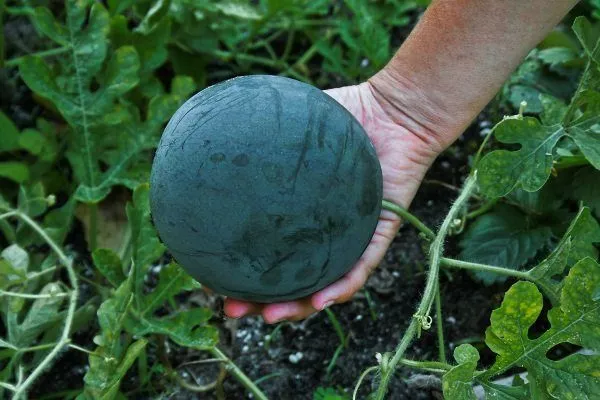
watermelon variety "Sugar Baby"
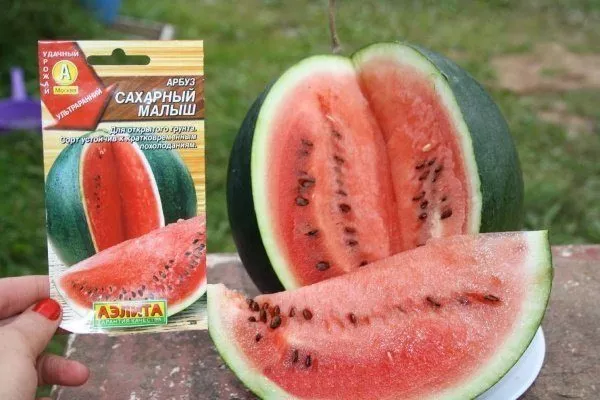
The watermelon "Sugar Baby" has excellent taste qualities
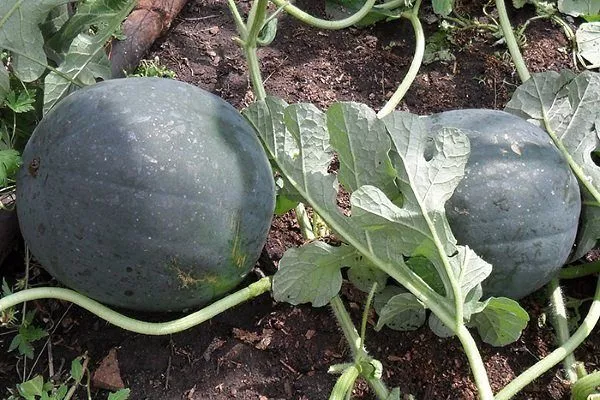
The universal variety “Sugar Baby” is popular among gardeners, both professionals and amateurs
General characteristics and history of the variety
Sugar Baby, or Sugar Baby, is one of the oldest and most popular varieties. It was developed by foreign breeders in the 1950s. In 2008, it was added to the State Register for the Central Black Earth Region of the Russian Federation, which includes the Belgorod, Kursk, Lipetsk, Oryol, Tambov, and Voronezh regions.
This is an early-ripening watermelon variety, meaning the fruits are harvested 75-85 days after germination. The plant is a climbing plant. The main stem does not exceed 1.8 m in length, so it can be grown on a trellis in a greenhouse. The medium-sized leaves are gray-green and deeply dissected. The fruit is usually spherical and smooth. The rind is thin but dense, a rich dark green.
When viewed up close, stripes of a darker color than the main color become visible across the entire surface.
The weight depends on the growing region. In warmer regions with more sunny days, the fruit can weigh up to 6 kg, while the average is 3-4 kg. In greenhouses, a ripe fruit can weigh around 1 kg. The dark red flesh is juicy, grainy, sweet, and tender. However, in low light, its flavor deteriorates, becoming watery and tasteless. The seeds are small and brown. They have a characteristic mottled pattern on their surface.
Advantages and disadvantages
The benefits of the Sugar Baby watermelon include:
- early maturity;
- high commercial qualities;
- thin skin;
- transportability of fruits;
- long-term storage;
- unpretentiousness;
- resistance to spring temperature drops;
- drought resistance;
- immunity to various diseases, including fusarium.
The disadvantages include the small size of the fruit and the long ripening time in a humid climate, so it is necessary to carefully select the location for the plant's growth.
Features of cultivation in different regions
To produce sweet, ripe fruit, good lighting is essential. Watermelons should be exposed to at least eight hours of direct sunlight. Choose an open, sunny location, away from shade from nearby buildings, trees, or tall plants. The best option is to plant watermelons on south- and southeast-facing slopes.
Subtleties of growing in other regions:
- In cooler climates, gardeners mulch the soil black film that accumulates heat.
- In areas with short summers, experts recommend planting watermelon seedlings. Planting in open groundThis is also possible, but it doesn't always end successfully. At low summer temperatures, the seeds may not germinate.
- In northern regions, watermelons are grown in polycarbonate or film greenhouses, with supplemental lighting if necessary.
The plant is pollinated by insects. However, if the greenhouse windows are all closed due to cold or the weather is cloudy, pollination is done manually.
Preparing the soil for planting
Watermelon does not tolerate peat soil, nor soil with a high clay or black soil content. To ensure good growth, it is planted in a light, loose substrate enriched with minerals.
- ✓ Soil pH should be in the range of 6.0-6.5 for optimal growth.
- ✓ The soil must be well drained to avoid water stagnation.
The best predecessor crop is radish. This way, you won't have to worry about spider mites attacking the watermelon. However, it's best not to grow it after pumpkins, as they share common pests and diseases.
Growing methods
There are two main methods of growing watermelon: seedlings and non-seedlings.
| Method | Advantages | Flaws |
|---|---|---|
| Seedless | Less labor, direct exposure to sunlight from the first days | Risk of failure in regions with short summers |
| Seedling | High probability of getting a harvest in a temperate climate | Additional time and resource costs for growing seedlings |
Seedless
It's suitable for warm, sunny regions with no recurrent frosts and long, hot summers. Before sowing, prepare the seeds:
- First, they are sorted and discarded. Empty seeds are easily identified by placing them in a glass of salt water. It only takes 10 minutes for the good seeds to sink to the bottom and the empty ones to float to the surface.
- The selected seeds are then dipped in a light pink solution of potassium permanganate for several hours for disinfection.
- The next step is to soak them in hot water (50°C) and leave them for 24 hours. This procedure accelerates seed germination.
- Then the water is drained, the seeds are blotted with a dry cloth and sown directly into open ground.
Planting begins as soon as the soil warms to 15°C at a depth of 10 cm. Holes are dug 1 m apart. The row spacing is 1.5 m. Seeds are planted to a depth of 3-5 cm. Sowing usually occurs in late April.
Seedling method
It is used in temperate climates, as well as in areas with short summers. Seedlings are typically planted in a greenhouse. This increases the likelihood of a ripe, high-quality harvest. Seeds for seedlings are sown in mid-spring. The soil is loose and rich in sand and mineral fertilizers (the latter can be replaced with wood ash and humus).
Before sowing, prepare the seeds in the same way as before planting them in open ground. Sow them directly into individual containers to prevent the delicate roots from becoming entangled and damaged during transplantation. The container should be no more than 8 cm deep.
The seeds are planted 2-3 cm deep. The cups are kept warm and well-lit, ensuring the soil does not dry out. They are transplanted to their permanent location when the third true leaf forms. After transplanting, on cold nights, the seedlings are covered with cut-off plastic bottles or plastic film.
Caring for a Sugar Baby
Caring for this variety requires following watering rules, timely fertilization, and some additional features.
Watering
Water the plants infrequently but thoroughly. When the watermelons ripen, stop watering completely, otherwise they may crack. Always use warm water. This procedure is carried out in the evening, when the heat has subsided.
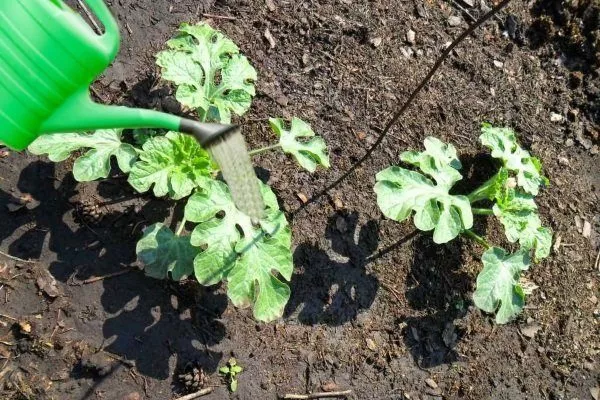
After watering or precipitation, always loosen the soil until the shoots have grown.
Top dressing
Fertilizers are applied in several stages:
- When 2-3 leaves appear, feed the watermelon with nitrogen fertilizer. This will stimulate the growth of green mass. Repeat the feeding after 15 days.
- When fruit set and ripening occur, mineral fertilizers containing potassium and phosphorus are applied. Particular attention should be paid to potassium-containing fertilizers. They promote the formation of female flowers, boost plant immunity, and improve the taste of the fruit.
Additional care
All weeds around young plants are removed. During prolonged rains, the newly formed fruits are covered and placed on cardboard, bricks, or wooden crates to prevent rotting. If the watermelon is grown on a trellis, they are tied up with netting as they ripen. The gardener guides the growing shoots in the desired direction and covers the roots with soil to encourage additional root formation.
In case of pest attacks or disease development, appropriate insecticides and fungicides are used. Solutions are prepared and applied strictly according to the manufacturer's instructions.
Ideally, of course, you would do without chemicals altogether, since watermelon tends to accumulate nitrates and other substances.
Optimal growing conditions in Siberia
In Siberia, the Sugar Baby watermelon is grown using seedlings. Seeds for seedlings are sown in late April – early May. When growing outdoors, it's best to err on the side of caution and create arched shelters or cover the plantings with covering material. The plants are also covered during cold nights. Generally, care is the same as for growing in other regions.
We recommend reading the article about How to plant and grow watermelons in Siberia.
Collection and storage
There's no exact time for harvesting watermelons, as they vary from region to region, and ripening depends on weather conditions. However, there are a number of external signs that indicate ripeness:
- dry tail;
- dull sound when tapped;
- wilting leaves and stems;
- characteristic crackling sound.
Watermelons are stored in the refrigerator, basement, and cellar at temperatures between 2 and 5°C. The key is to ensure the rind is free of damage, such as scratches, dents, or cracks. The optimal weight for storing watermelons is 4-5 kg.
In the video below, a gardener held a tasting of his own "Sugar Baby" watermelon variety:
Gardeners' reviews
The Sugar Baby has received only positive reviews, as it is an early-ripening and easy-to-grow variety.
Sugar Baby impresses with its low-maintenance care and disease resistance. Its advantages also include its ultra-early maturity, allowing for harvesting not only in designated growing areas but also in temperate climates, and, through seedling planting, in the Siberian Federal District.