
To grow the Romanza hybrid in your garden, you need to follow certain rules. Learn more about the variety, its characteristics and features, as well as growing and harvesting instructions below.
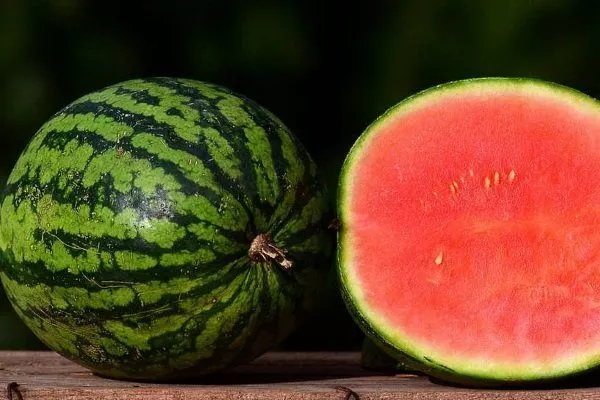
Watermelon variety "Romanza"

watermelon seeds, variety "Romanza"
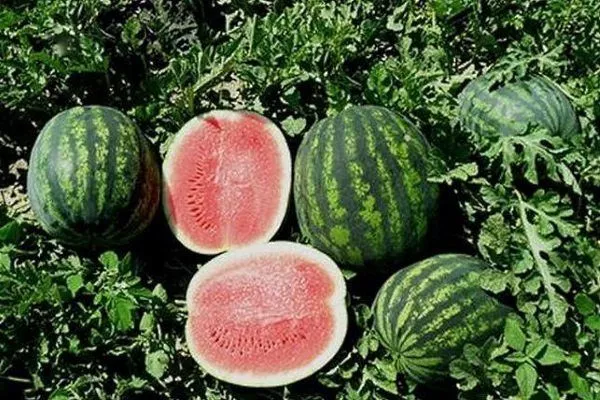
Once you cut into the Romanza watermelon, you can enjoy the sweet, crisp, red flesh.
Description of watermelon
The Romanza watermelon is a relatively new hybrid melon from Dutch breeders. Experts recommend growing it in the North Caucasus region and the Urals—in the Chelyabinsk and Kurgan regions, the Orenburg region, and the Republic of Bashkortostan.
It was entered into the State Register of the Russian Federation in 2007.
This is a vigorous annual plant with medium-length vines. Leaves range from medium to large in size and are dark green or green in color. Plants produce numerous ovaries, and under favorable weather conditions and with proper care, they can be harvested up to three times per season. The fruits are medium-sized, with each berry weighing no more than 8 kg.
Watermelons are round, smooth, and green with medium-wide dark green stripes. The rind is thin and easily damaged when overripe. The flesh is red, medium-firm, and crisp. It has a very high sugar content. Even a fully unripe watermelon with pink flesh is sweet.
The seeds are small, brown, and speckled. Despite being an early-ripening hybrid, it has good shelf life and a long shelf life of up to one month. The fruits are transportable.
Technical features
It has the following technical characteristics:
- Disease resistance. Watermelon Romanza is moderately resistant to fusarium wilt and anthracnose.
- Cultivation in different regions. The crop is suitable for growing in southern regions and areas with cooler climates. In the latter case, covering the plant may be necessary to protect it from frost. Crops can also be covered with transparent film.
- Ripening period from planting seedlings. This hybrid is a mid-early variety. The first fruits can be harvested within 50-72 days after planting, depending on the growing region.
- Average fruit weight. On average, the fruits weigh 7.5 kg.
How to plant a watermelon?
When planting the Romanza watermelon, adhere to the following rules:
- Landing site. Watermelon does not tolerate any shade. Therefore, the site should be open—out of shadow from nearby buildings or trees—protected from the wind, slightly elevated, and well-heated. This hybrid is grown both in open ground and under cover.
- Seeds. Romanza watermelon seeds are treated with the fungicide Thiram to protect young plants from pathogens and disease-causing microorganisms. They are sown dry directly into the soil without pre-treatment.
- Soil. The plant prefers to grow in fertile sandy and sandy loam soils with a neutral or slightly acidic pH. Growing watermelons in highly acidic soils results in small fruits that crack before they ripen.
- Crop rotation. It's recommended to grow the crop in one place for only one year. It should only be returned to the same area after four years. It should also not be planted after nightshade crops such as tomatoes, peppers, eggplants, potatoes, and melons such as melons, squash, pattypan squash, pumpkins, and watermelons.
- Method of sowing. Seeds can be sown directly into open ground or using seedlings. However, plants grown directly outdoors tend to be more resilient. Sowing should be done in well-warmed soil—the temperature should be at least 15°C at a depth of 8-10 cm.
The seedlings are transplanted to a permanent location when the last frosts have passed and they have 3-4 true leaves. Distance between plants:- in a greenhouse using trellises - 70x70 cm;
- in open ground — 140×140 cm.
- ✓ The optimal soil pH level should be between 6.0 and 6.5 to ensure best nutrient absorption.
- ✓ The soil must have good drainage to prevent water stagnation and root rot.
The video below shows how to grow the Romanza watermelon variety:
Features of cultivation
The Romanza hybrid has its own growing characteristics:
- Watering. Water it generously when young. Drooping leaves indicate a lack of moisture. Reduce watering as the fruit ripens.
- Fertilizers. Watermelon responds well to organic and mineral fertilizers. A mullein solution (1:10 water to mullein) is applied after planting the seedlings two to three times per season, at intervals of 10 to 15 days. This promotes rapid foliage growth.
During flowering and fruit set, the plant requires a large amount of potassium, so it is watered with an ash solution or fed with potassium-containing mineral fertilizers. All fertilizers are applied only after watering. - Formation of a bush. This is one of the most important agricultural practices. The first central shoot is pinched at the beginning of growth, as it primarily produces male flowers. This helps accelerate the growth of the lateral shoots, which are where female flowers are usually set and ovaries are formed.
Next, pinching of the vines is carried out when the fruits on them have grown to the size of an average apple. - Regionality. In northern regions with cool, short summers, three side shoots are left on the plant, each bearing 5–8 fruits. The remaining shoots, which grow throughout the growing season, are removed so that the plant can devote all its energy and nutrients to the ripening watermelons.
In southern regions, more fruits are left. However, the more fruits there are on the plant, the smaller they will be. If you want to grow the largest watermelon possible, the optimal number of ovaries left on the bush should be no more than three.
The plant can also adjust its fruit production if it lacks moisture or nutrition. In this case, some watermelons stop growing and dry out. - Mulching. This hybrid can also be mulched with black film. As a result:
- heat is retained in the soil;
- weeds do not germinate;
- moisture is retained in the soil;
- a hard crust does not form.
- Disease prevention. Although the Romanza hybrid is immune to diseases, it is not immune to them or pests, so preventative measures are a good idea. Watermelons are sprayed with the biological preparation Fitoverm.
The use of more drastic chemical insecticides is permissible during massive insect infestations. When preparing solutions, strictly follow the manufacturer's instructions and spray the plants at the specified time to ensure that the consumed watermelon does not pose a health risk to humans.
Fungal infections are treated with a colloidal sulfur solution, "Hom." Treatment is most effective if administered at the initial stage of the disease.
- ✓ Yellowing of leaves between the veins may indicate a magnesium deficiency.
- ✓ Stunted growth and small leaves may be a sign of nitrogen deficiency.
Harvesting
A ripe watermelon can be recognized by the following signs:
- drying stalk;
- withering tendrils and leaves;
- the crust becomes shiny over the entire surface;
- a yellow spot appears on the side where it touched the ground;
- When you knock on it, it produces a dull sound.
The fruits are harvested in dry, sunny weather. Romanza watermelon can be stored for up to one month without losing its flavor or appearance.
Reviews of the Romanza variety
This variety receives mostly positive reviews:
Growing new hybrids can often be daunting. The Romanza variety is no exception. However, with the right growing and care guidelines, it will delight you not only with a bountiful harvest but also with delicious, sweet, honey-like fruits.