
The watermelon "Podarok Severu" is an early-ripening hybrid, adapted to growing in harsh and cool climates. If you plant the seeds in the south, you can harvest even earlier than expected. Other names include "Podarok Severu" (Northern Gift).
Who developed the variety and when?
There's little information about who developed the "Podarok Severu" variety and when. However, it's known for certain that its development began in the 1980s. However, who exactly developed it remains a mystery. The main reason for its selection was its ability to thrive in the harsh climate of northern regions.
Research was conducted over a decade, and this hybrid was developed in 1993. In 2007, it won an award at the International Exhibition. It was added to the state register of "Gift to the North" in 2012.
Peculiarities
Planting material, like seedlings and mature bushes, has a strong immune system, making the variety resistant to diseases and pests. However, plants can be damaged by adverse factors such as excessively rainy summers and sudden frosts in late spring. To avoid these consequences, the bushes should be covered.
Description of the plant and fruits
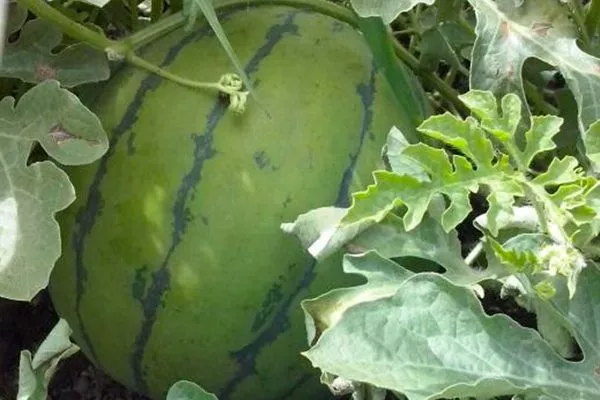
Looking at the "Gift to the North" watermelon bushes, one can say that their appearance is classic for melons. However, there is one peculiarity: the foliage has an emerald sheen, and when exposed to direct sunlight, it lightens.
Fruit characteristics:
- weight – about 8-10 kg, but you can get even larger berries;
- shape – round;
- the surface of the peel is completely smooth, with a slight gloss;
- coloring – standard striped – light and dark green;
- stripes - narrow and wide, uneven;
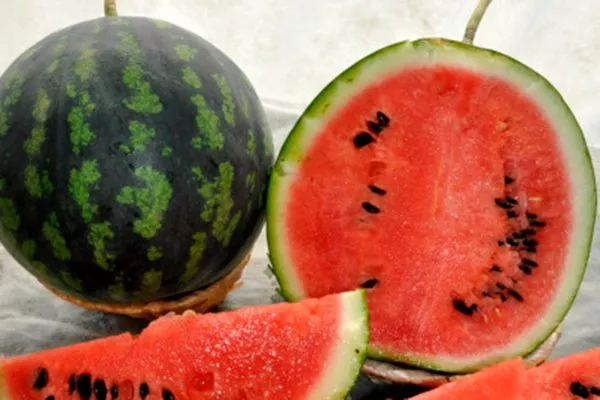
- the pulp is red, crispy and juicy in structure;
- the seeds are large.
Taste and purpose
The hybrid has a watermelon-like flavor and aroma, very sweet and extremely sugary. This variety is primarily intended for fresh consumption, but modern homemakers also make juice, jam, and desserts from the pulp.
Ripening and yield
Gift to the North ripens quickly – from sprouting to technical maturity, it takes 70-85 days. Under unfavorable weather conditions, maturity is reached only after 90-95 days.
Advantages and disadvantages
The Gift of the North has many positive aspects, including the following:
There is only one drawback - excessive sweetness, therefore there are restrictions on consumption (diabetes, liver failure).
Landing features
The "Gift of the North" watermelon is planted in two ways: as seedlings or from seeds in garden beds. The first option is suitable for all regions with cool and harsh climates, while the second is exclusively for the south. The time for planting seeds in open ground is after May 20th, and for seedlings, the first few days of May. Plants are transplanted into open ground or greenhouses after June 15th.
Requirements for planting site and soil
The best site for melons is sunny, windless, and draft-free. This is especially important in cold climates, as watermelons don't tolerate north winds. Soil quality deserves special attention:
- the structure is loose and as sandy as possible (but you can’t plant in sand alone), so sandy loam is an excellent solution;
- drainage is essential, as water should not stagnate (otherwise the roots and fruits will rot);
- acidity – neutral or reduced (optimal values 7.0-7.5 pH);
- Fertility – increased (organic matter and minerals are needed).
- ✓ The soil pH level should be strictly within 7.0-7.5 for optimal nutrient absorption.
- ✓ Drainage is required to prevent water stagnation and root rot.
Seed preparation
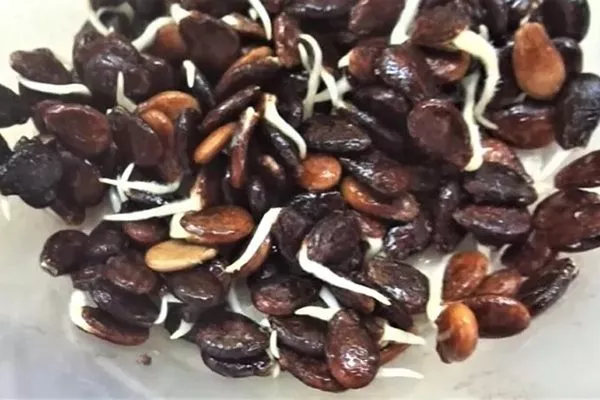
Since Podarok Severu is a hybrid, seeds should be purchased from a specialized gardening store. Today, all manufacturers produce planting material that undergoes multiple preparations, including disinfection, stratification, and so on. Therefore, there is no need to prepare the seeds before planting.
The landing process
To plant seeds outdoors, you need to prepare the area in advance. The same procedure applies before transplanting seedlings. To do this, follow these instructions:
- Dig up the beds, first removing any debris and weeds.
- When digging, add organic fertilizer to the soil: 6 to 10 kg of humus, compost, or rotted manure per square meter. The exact amount depends on the soil's fertility or depletion.
- Level the surface and form holes. For sowing seeds, the depth should be about 5-7 cm, and for seedlings, at least 10-12 cm.
When planting the seeds, all that remains is to deepen them, cover them with soil and water them.
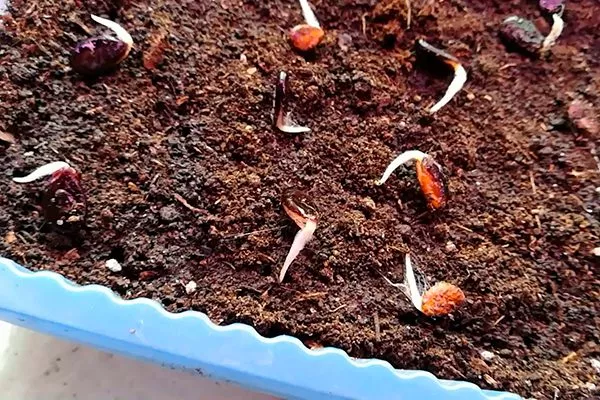
Sowing seeds for seedlings and their subsequent cultivation is carried out as follows:
- Prepare the containers. For the "Gift of the North" watermelon, it's best to use peat cups, as the hybrid doesn't tolerate transplanting or pricking well. However, if this isn't possible (and it's very expensive), you can use regular plastic cups or cut-off bottles.
They need to be disinfected and holes made in the bottom. - Now prepare the nutrient substrate. Take 5 parts each of rotted leaves and compost, and add 1 part vermiculite or perlite.
- Fill the containers 1/2 full.
- Press the soil down and water.
- When the water has drained and is completely absorbed, add 2 seeds.
- Sprinkle with 1 cm of soil mixture, and then cover with the same layer of dry sand.
- Place the cups in a warm place and provide the planting material with light for 11-12 hours.
- Cover with plastic wrap. Remove it twice a day to allow the soil to air out, which will prevent mold. Water periodically.
- When the first shoots appear, remove the cover completely.
- When 3-4 leaves have formed, begin replanting. To do this, place the bushes, complete with root ball, in the prepared holes, cover with soil, and water lightly.
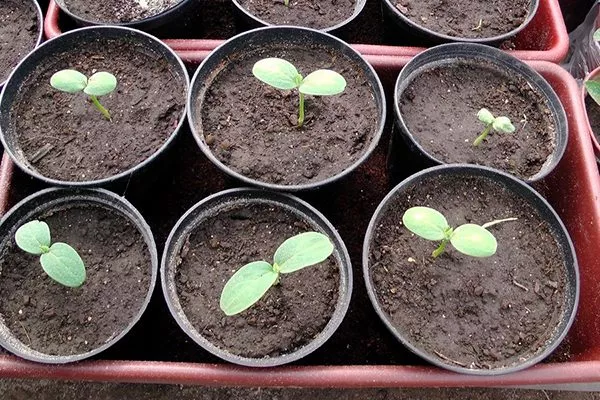
Subtleties of agricultural technology
About two weeks after transplanting the seedlings or a month after sowing the seeds, be sure to fertilize the seedlings. You can use commercial nitrogen-containing fertilizers or urea. Fertilize the plants every couple of weeks thereafter until fruit forms.
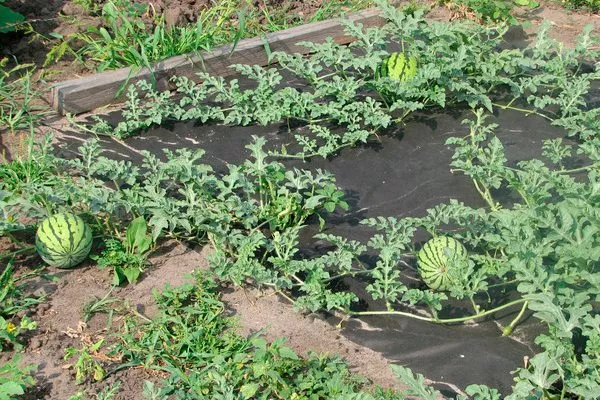
There are other nuances to growing the Podarok Severu watermelon variety:
- water the bushes 2 times a week until the period of ovary formation, then reduce the frequency by 2 times;
- pinch off each stem where lemon-sized berries have already formed;
- trim off weak or side-growing shoots;
- tie up the shoots so that they do not spread along the ground;
- After the fruits have formed, place boards, thick cardboard, pieces of plastic, etc. under them, so that they will stay clean and will not rot during the rains.
- Water plants in the morning to avoid rapid evaporation of water and a drop in soil temperature at night.
- Use drip irrigation to evenly moisten the root zone without over-watering the leaves.
Reviews from gardeners
The "Gift to the North" watermelon is suitable for cultivation in all climate zones. It offers increased resistance to diseases and pests, excellent flavor, and a distinct watermelon aroma. Caring for the bushes is easy; the key is to follow standard agricultural practices.