
Watermelon is a universally beloved seasonal treat, eagerly awaited by children and adults alike. This melon is incredibly tasty and a perfect thirst-quencher—the perfect summertime treat. Gardeners can choose from around 1,200 varieties of watermelon. They are grown in 96 countries worldwide, and Russia is among the largest watermelon producers, with an annual harvest of around one million tons. Let's take a look at the most popular varieties.
| Name | Ripening period (days) | Fruit weight (kg) | Disease resistance |
|---|---|---|---|
| Astrakhan | 85-100 | 4-8 | Fusarium, anthracnose |
| Borchansky | 63-33 | 2.6-2.8 | Arid environment |
| Crimson Sweet | 80-85 | 8-12 | Fusarium |
| Dumara F1 | 55-60 | 16 | Fusarium, sunburn |
| Ogonyok | 71-87 | 2-3 | Fusarium, anthracnose |
| Producer | 75 | 9-12 | Fusarium, stem rot, downy mildew |
| A gift from the sun | 64-73 | 1.4-2.9 | Drought |
| Charleston Gray | 75-80 | 11-17 | Fusarium, anthracnose |
| Lunar | 57-60 | 2-3 | Severe weather conditions |
| Top Gun F1 | 54-75 | 8-10 | Diseases |
| Chilly | 85-97 | 7 | Fusarium, anthracnose |
| Photon | 80-95 | 5-6 | Lower temperature, lack of light |
| Karistan F1 | 65-75 | 10-12 | Diseases |
| Skorik | 62-87 | 2.1-3.8 | Anthracnose |
| Sugar baby | 75-85 | 3-5 | Powdery mildew, anthracnose |
| Refined sugar | 80 | 4 | Diseases |
| Pink Champagne F1 | 80-95 | 4-7 | Humidity |
| F1 Trophy | 60 | 10-12 | Fusarium, drought, low temperatures |
| Pharaoh F1 | 72 | 15-18 | Diseases |
| Turbo F1 | 55-65 | 10-16 | Diseases |
| Ataman F1 | 55-65 | 16 | Fusarium, anthracnose |
| Honey Giant | 65-80 | 12-15 | Diseases |
| Red Star F1 | 65-76 | 7-8 | Diseases |
| Romanza F1 | 63-82 | 8 | Diseases |
| Russian size F1 | 100 | 10 | Diseases |
| F1 bomb | 70-73 | 11-13 | Diseases |
| Melania F1 | 80-110 | 9-12 | Heat, cold |
| Icarus | 82-111 | 3-4.5 | Drought |
| Kimera | 83-90 | 10-12 | Diseases |
| Vizier F1 | 68-72 | 12-14 | Fusarium wilt, anthracnose |
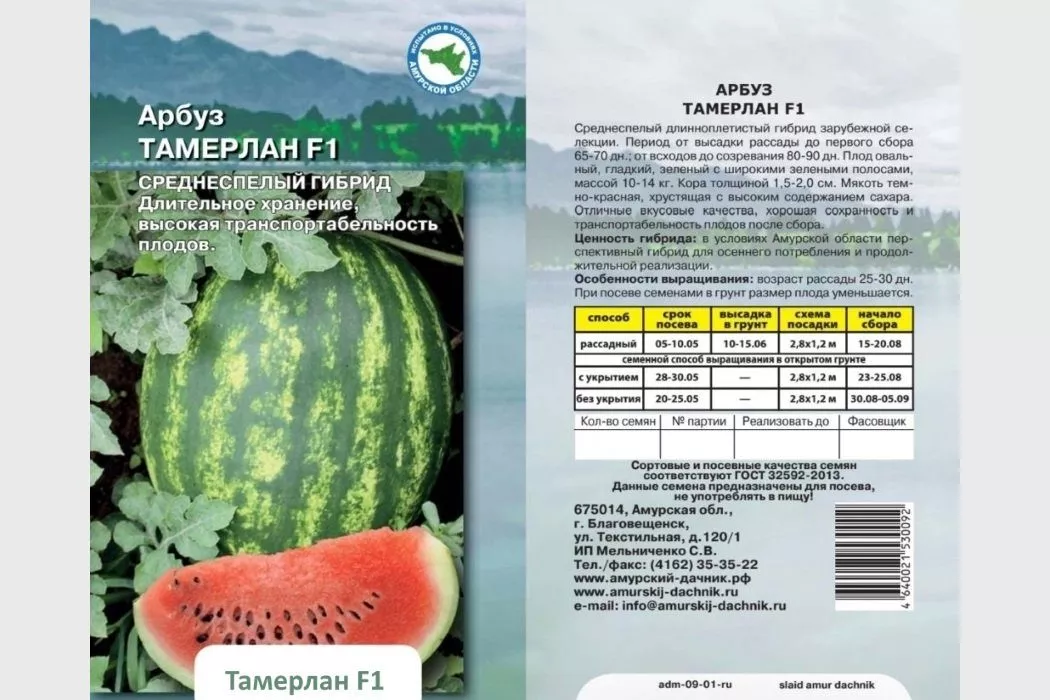
| Tamerlan F1 | 95 | 12-14 | Early wilting, diseases |
| Maristo F1 | 58-60 | 9-11 | Anthracnose |
| Siberian Lights | 78-95 | 2-5 | Fusarium |
| Erken F1 | 56-60 | 8-10 | Anthracnose |
| Orange Honey F1 | 75-85 | 2-2.5 | Diseases |
| Ultra-early | 80 | 4-6 | Diseases |
| Kai F1 | 70-75 | 7-10 | Low temperatures, low light |
| SRD-2 | 55-60 | 4-5 | Powdery mildew, anthracnose, melon aphid |
| A Gift to the North F1 | 75-85 | 10 | Diseases |
| Surprise | 65-70 | 4-4.5 | Drought |
| Baraka F1 | 72-77 | 11-13 | Fusarium wilt, anthracnose |
| Yellow seedless F1 | 60-80 | 1.9-3.8 | Diseases |
| Anniversary NK F1 | 80-90 | 8-10 | Diseases |
Astrakhan
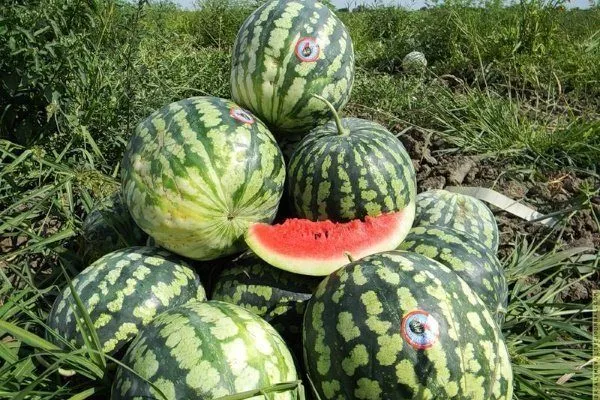
A renowned variety, well known to Russians. A mid-late ripening type, it thrives in warm climates. The round fruit weighs 4-8 kg. This is a classic watermelon—striped. It's a benchmark for taste and appearance. The seeds are small, dark brown or black. This variety is delicious, can be stored safely for some time, and transports well. It is resistant to fusarium and anthracnose.
The seeds are planted 3-4 cm deep. The first leaves appear in 8-9 days. Planting time depends on the climate; seedlings are planted when the threat of nighttime frosts has passed. Planting pattern: 170 x 50 cm. Ripening occurs 85-100 days after sprouting. The plants are medium-tall and disease-resistant. Yields up to 115 tons/ha.
Borchansky
A heat-loving, early variety. It delights gardeners with high yields. It has excellent flavor and a superb presentation. It is drought-tolerant and disease-resistant. The rind of these oval, green watermelons is streaked with fine stripes. They weigh 2.6-2.8 kg. The flesh is bright red, juicy, and sweet.
Sow seeds in May. Plant them at a depth of 2-3 cm. Seedlings emerge in 5-6 days. The optimal temperature for germination is 20-25°C. Planting pattern: 100 x 100 cm. In warm climates, seeds can be sown in open ground; in others, under plastic film. Ripening from germination to maturity takes 63-33 days. Harvest in July-August. Yield up to 240 c/ha.
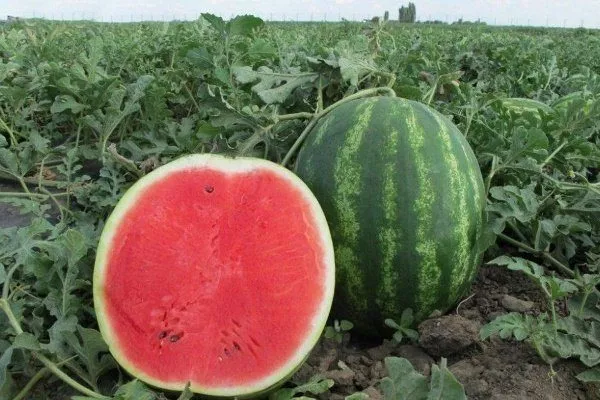
Watermelons are 92% water. The pulp contains between 5.5 and 13% sugar. Ripe fruits contain fructose, which does not cause insulin stress on the pancreas. This is why watermelon is allowed in small doses for diabetics.
Crimson Sweet
A mid-early variety with a high sugar content. Developed in France, it is popular throughout Europe. It is enjoyed not only fresh but also used for various preserves. The round-oblong fruit is dark green with light green stripes. The flesh is crisp, intensely red, and veinless. It weighs 8-12 kg, but typically reaches no more than 5 kg.
Reaches technical maturity in 80-85 days. Planting occurs in May. Seed depth is 4-5 cm. Planting pattern: 140 x 100 cm. Average yield per hectare is 200 centners. It is virtually immune to fusarium. Excellent quality retention, tolerates transportation well, and is drought-tolerant.
Dumara F1
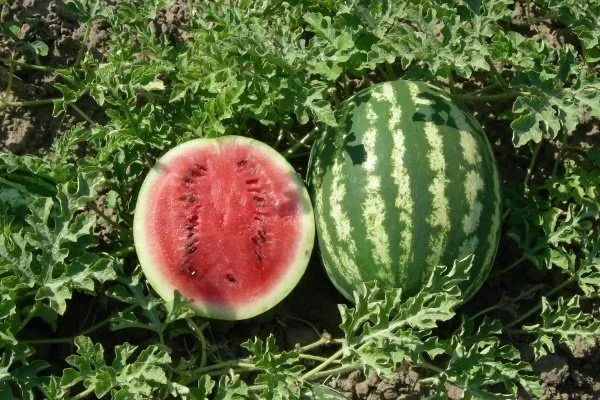
This hybrid fruit weighs 16 kg or more. It ripens early and is quite tasty. The skin is light green with wide, dark green stripes. The fruit is elliptical. The flesh is red to dark red, with a delicate texture. It has a high sugar content. It is resistant to fusarium wilt and sunburn. Even in the field, it retains its marketability for a long time.
Ripening period: 55-60 days. Planting in the ground: May. Sowing depth: 4-5 cm. Bush density: 6-7 thousand plants per 1 hectare. Average yield: 250-300 c/ha.
Ogonyok
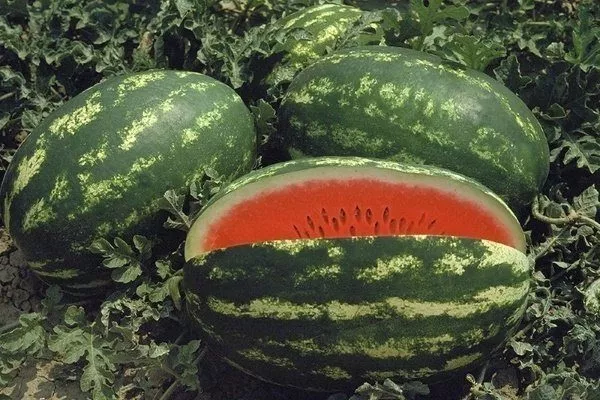
An early, productive variety. The fruits are small, spherical, with a black-green skin. There are no stripes. The skin is thin. Weight is 2-3 kg. The flesh is a piercing red, grainy texture. Good commercial quality. Eat fresh (not preserved). The variety tolerates spring coolness well.
Reaches technical maturity in 71-87 days. In southern regions, seeds are sown outdoors in April-May. Planting pattern: 140 x 100 cm. The average yield is 150-370 c/ha. Harvesting takes place in August-September. Resistant to fusarium and anthracnose.
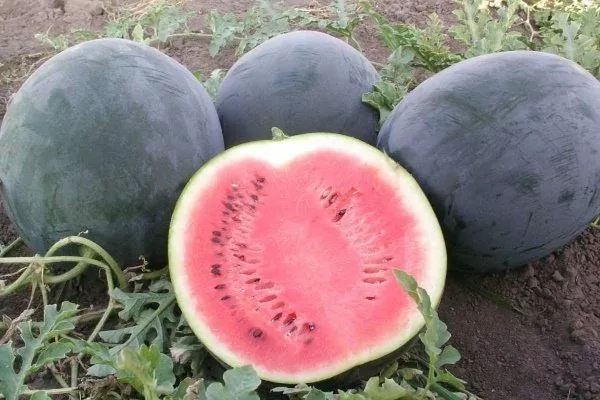
Watermelons originate from the Kalahari Desert in South Africa. Wild watermelons the size of tennis balls can still be found there. The Egyptians were the first to cultivate watermelons, over 4,000 years ago.
Producer
An early variety with exemplary yield. It's exceptionally sweet, with sugar levels reaching up to 13%. It weighs 9-12 kg. The fruits are oval, light green, and have dark green stripes. The flesh is tender, grainy, and sweet, with no veins. Its thick rind makes it ideal for long-distance transport.
This variety is characterized by vigorous growth, good foliage, and long vines. It reaches maturity in 75 days. Planting distance: 150 x 60 cm. It is resistant to fusarium, stem rot, and downy mildew. A yield of 95 tons of watermelons can be obtained per hectare. This variety is popular for its flavor and consistent yield.
A gift from the sun
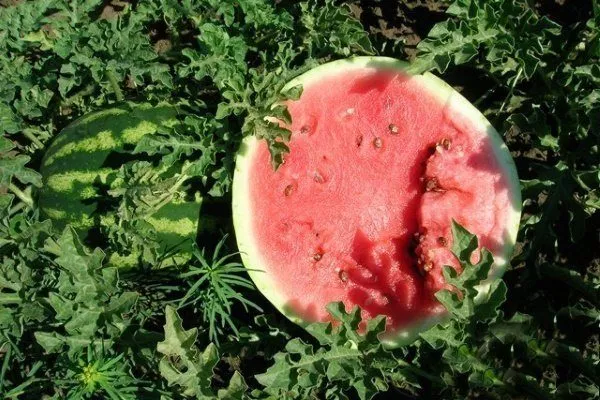
This "gift of the sun" ripens early, delighting gardeners with its striking color. The watermelon has a thin, yellow skin with no stripes. The fruits are round. Beneath the yellow rind is a delicate, red flesh with a wonderful aroma. It weighs 1.4-2.9 kg, sometimes reaching 4 kg. It tolerates drought well, is disease-resistant, and has excellent flavor.
Ripening takes 64-73 days. Seeds are sown in May. Up to 300 centners per hectare can be grown. Planting pattern: 180 x 60 cm. They tolerate long-distance transportation well. If desired, these watermelons can be grown not only in the south but also in central Russia.
Charleston Gray
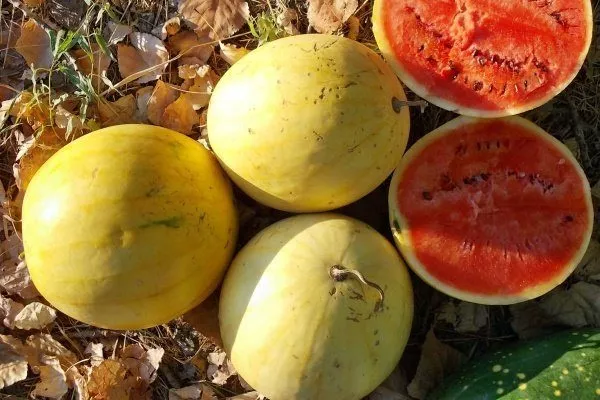
This mid-early variety attracts attention with its unique appearance. It is productive, with excellent taste and marketability. The oblong, cylindrical watermelons are light green. The color of the rind prevents the fruit from heating up for a long time in the melon field. The flesh is intensely pink. The seeds are small and dark. Weight: 11-17 kg. Transports easily.
Resistant to diseases such as fusarium and anthracnose. Seeds are sown in May. The growing season lasts 75-80 days. Seeds are planted at a depth of 2-4 cm. Seedlings are planted when the soil warms up to +15°C. Planting pattern: 140-70 cm. Up to 100 tons of watermelons can be harvested from one hectare. Harvesting takes place in July-August.
Lunar
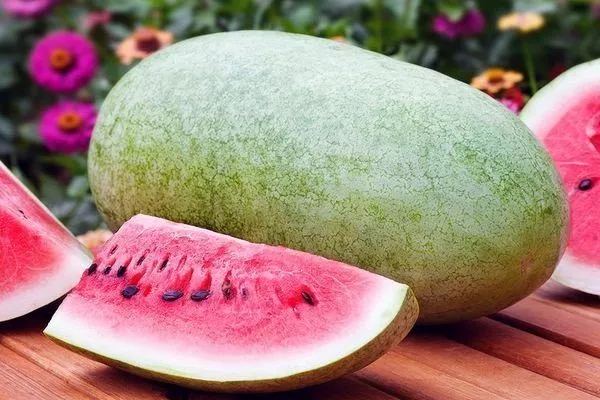
An original early variety. Its distinguishing feature is the unusual color of its flesh. The Moon Watermelon has a yellow hue. The oval fruits are light green, with dark green stripes. They weigh 2-3 kg. The flesh is distinguished by its delicate texture, juiciness, and distinctive flavor—with hints of exotic fruits. The rind is thin.
Ripening period is 57-60 days. Yields up to 240 centners per hectare. Due to its early maturity, this variety can ripen even in central Russia. Planting distance is 190 x 70 cm. This undemanding plant tolerates harsh weather conditions. Seedlings are sown in late April, and planted in the ground in late May.
Top Gun F1
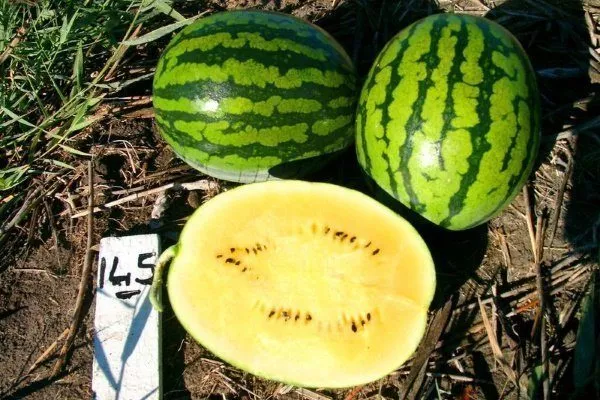
An early hybrid. Even the most discerning watermelon connoisseur will appreciate it. This hybrid is disease-resistant. The bark is light green, with dark green stripes. The bark is medium thick, and the seeds are small to medium. Weight: 8-10 kg. Fruits can reach 16 kg. The flesh is red and tender.
The growing season is 54-75 days. Sowing is in May. The planting pattern is 180 x 60 cm. 7,000-8,000 plants are planted per hectare. The yield per hectare, with irrigation, is 330-500 centners. Cultivated in any soil, both open and closed.
Chilly
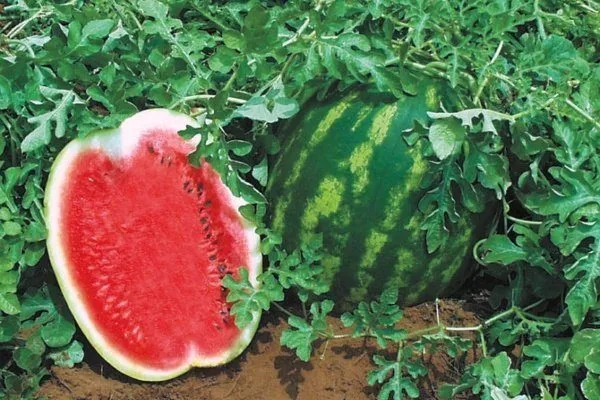
A mid-late cohort. Fruitful, with ideal marketability. The watermelons are slightly elongated and spherical. The skin is dense and firm, greenish, with black-green stripes. The flesh is an intense pink, grainy, tender and juicy, and very sweet. Weight: up to 7 kg.
The plant is vigorous, with long vines. The growing season is 85-97 days. Planting is in April-May. Planting pattern: 100x140 cm, in greenhouses – 70x70 cm. They do not tend to overripen. They retain their original qualities perfectly, lasting up to 5 months. They can be stored for up to half of the winter. They yield up to 35 tons per hectare, and up to 50 tons if they are provided with the perfect environment.
Photon
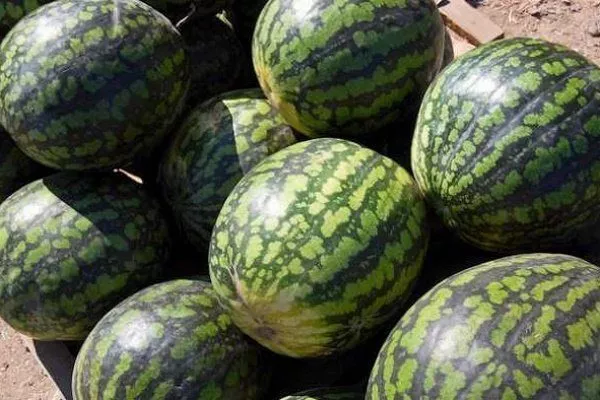
An early variety. Oblong, light green watermelons with dark green stripes. The rind is thick. The seeds are small and black. They weigh up to 5-6 kg. The flesh is intensely red, grainy, sweet, and rich in flavor.
The growing season is 80-95 days. In southern regions, seeds are sown in April-May. In temperate climates, seedlings are planted in early summer, a month after germination. It tolerates prolonged low temperatures and low light, and is drought-tolerant. Planting spacing is 140 x 70 cm. Yield: 7 kg per square meter.
Karistan F1
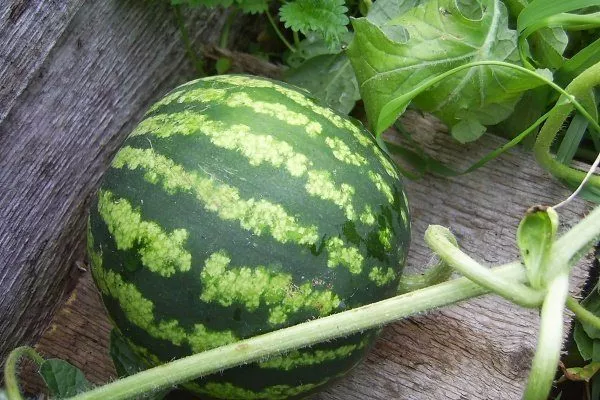
A recently developed hybrid with a mid-early ripening period. This watermelon is easy to transport, has good commercial qualities, and is delicious. The rind is light green with dark green stripes. It has a broadly elliptical shape, thin rind, and small dark seeds. It weighs 10-12 kg. The flesh is sweet and crunchy.
Ripening occurs in 65-75 days. Sowing is done in May. The planting pattern is 190 x 70 cm. The sowing depth is 4-5 cm. Up to 250 centners can be grown per hectare.
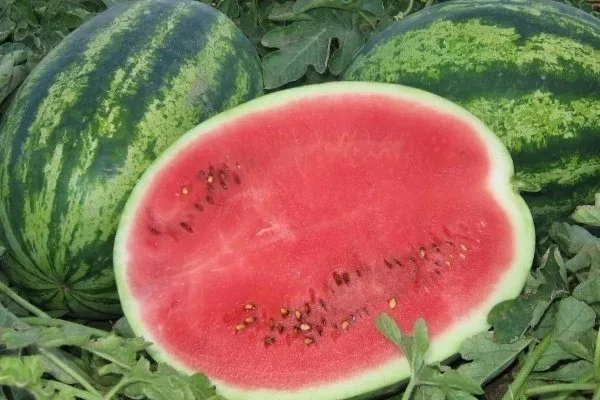
Skorik
An early variety. These watermelons have a classic appearance – green and striped. They are eaten fresh. The rind is moderately thick. The tender flesh is bright red. It has a distinct watermelon aroma. The seeds are black. Weight: 2.1-3.8 kg.
The ripening period from germination to first harvest is 62-87 days. The crop forms uniformly. The variety is resistant to anthracnose. There is a risk of bacterial spot. Planting distance is 190 x 70 cm. Planting depth is 4-5 cm. It easily produces up to 250 centners per hectare.
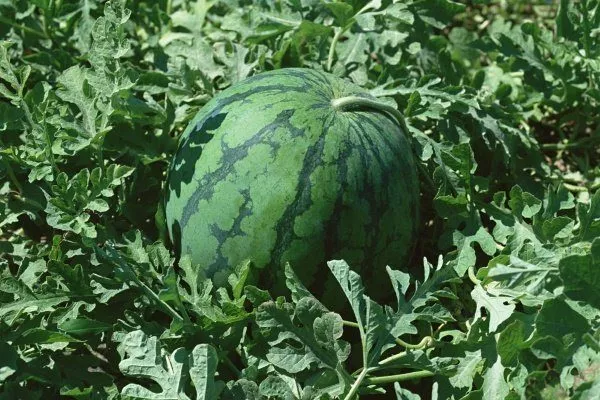
Sugar baby
Another name is Sugar Baby. Or rather, that's the English translation. This early-ripening, high-yielding variety has a high sugar content. It's eaten fresh. It's resistant to powdery mildew and anthracnose. A product of American selection. The fruits are smooth, round, and dark green. The stripes are barely visible. The skin is thick, the seeds are small, and the flesh is intensely red. Weight: 3 to 5 kg.
Ripening period: 75-85 days. Seed depth: 4-5 cm. Maximum yield: 200 c/ha. Planting pattern: 140 x 50 cm. Grows well in light, fertile soil. Up to 40 watermelons can be harvested from an area of 30 square meters.
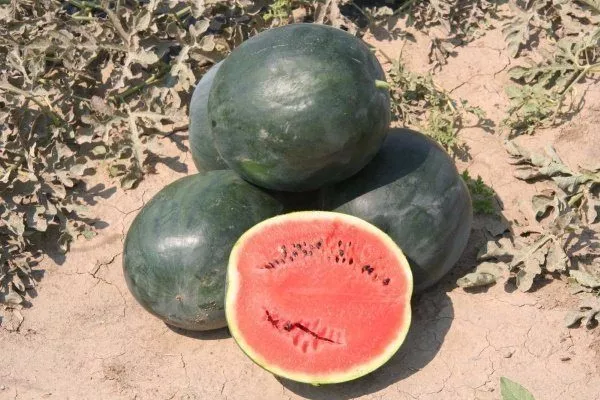
Refined sugar
A mid-early variety. Weighing up to 4 kg, the watermelon is round and thin-skinned. Light green with grayish spots. The flesh is typically red. Excellent flavor – a rich, sugary watermelon aroma.
Ripening period: up to 80 days. Suitable for any soil. Planting: open ground – 140x70 cm, indoors – 70x70 cm.
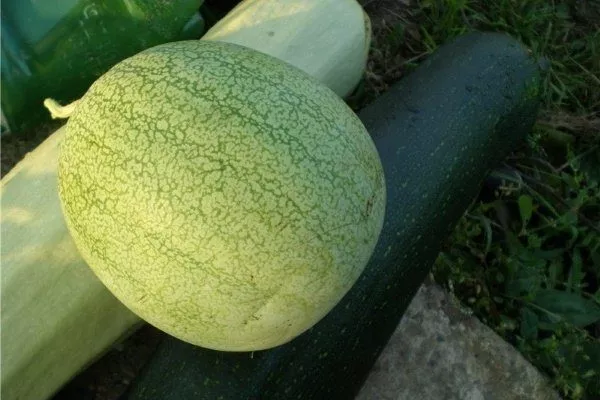
Pink Champagne F1
An early-ripening hybrid. Fruit weight is 4-7 kg. The bark is dark green with yellowish stripes. The flesh is bright pink. The seeds are large and dark. Suitable for fresh consumption and canning. Transportability is average.
Planting pattern: 100 x 50 cm. Grown in open ground and greenhouses. Ripening takes 80-95 days. The harvest is ready in mid-July. The plant is undemanding and moisture-tolerant. The hybrid is ideal for temperate climates. Yields up to 300 c/ha.
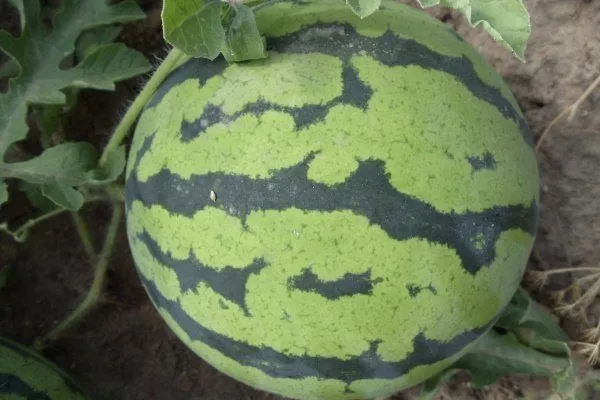
The largest fruit grew in the United States in 2005. It weighed 120 kg. The variety was Carolina Cross. The record is listed in the Guinness Book of World Records. The largest fruit in Europe grew in Russia, weighing 61 kg. The variety was "Russian Size."
F1 Trophy
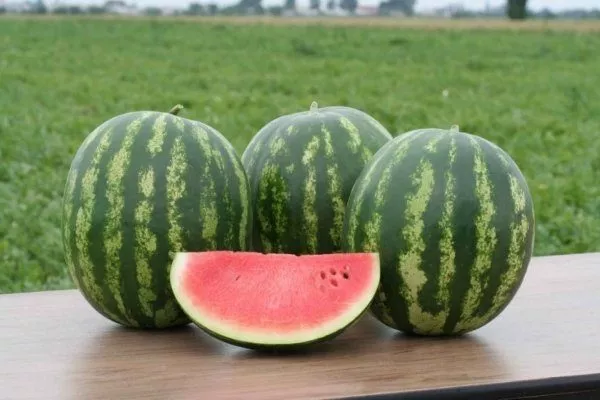
A very early hybrid. Attractive to gardening enthusiasts with its interesting coloring. Oval watermelons are yellowish-green in color, with grayish-green stripes. They weigh 10-12 kg. The rind is medium-thick, making these large watermelons unbreakable during transport – they can be safely transported over long distances. The seeds are small and brown. The flesh is intensely red, crunchy, and high in sugar. Resistant to fusarium, drought, and low temperatures.
Ripens in an average of 60 days. Planting: 190 x 70 cm. Yield: 300 c/ha. Adapts to a variety of climates and soils.
Pharaoh F1
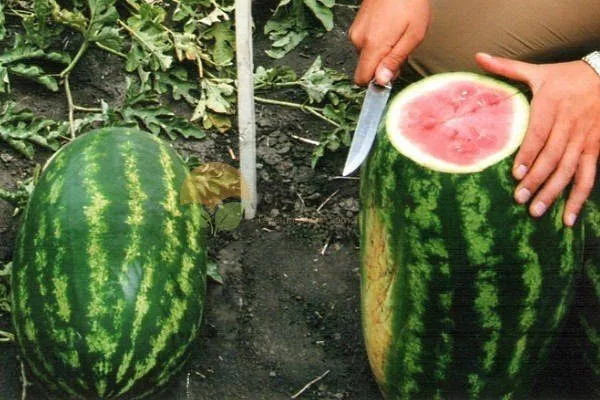
A mid-early, high-yielding hybrid. Fruits are very large, weighing up to 15-18 kg. Excellent taste. The fruits are oval-oblong, green with dark stripes. The flesh is bright red and non-fibrous. It has a high sugar content. The rind is firm, preventing breakage during transportation.
The maturation period, from germination to technical maturity, is up to 72 days. When sown directly into the soil, it takes 85-87 days. Planting is done according to a 140x100 cm spacing. The sowing depth is 4 cm. Plant density is 5,000-6,000 plants per hectare. Yields are up to 800 centners per hectare. The harvest is in late summer.
Turbo F1
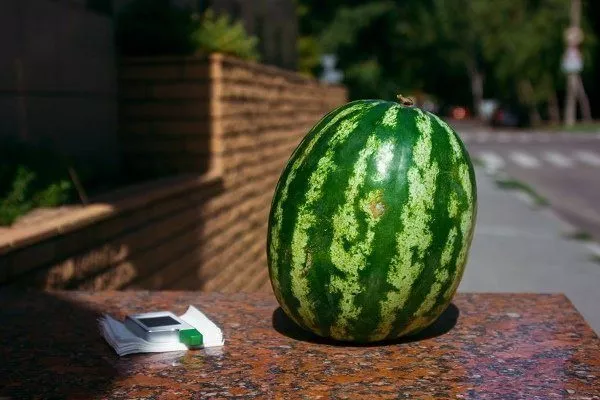
An extra-early hybrid. Weight: 10-16 kg. Round shape. Green color with lighter stripes. Firm, red flesh. The fruits don't burn in the scorching sun, protected by well-developed foliage. This hybrid is easy to transport, has an attractive presentation, and excellent flavor.
Under favorable conditions, the plant produces 4-5 ovaries. It prefers sandy or sandy loam soil. Planting distances are 140 x 100 cm, or 70 x 70 cm under plastic cover.
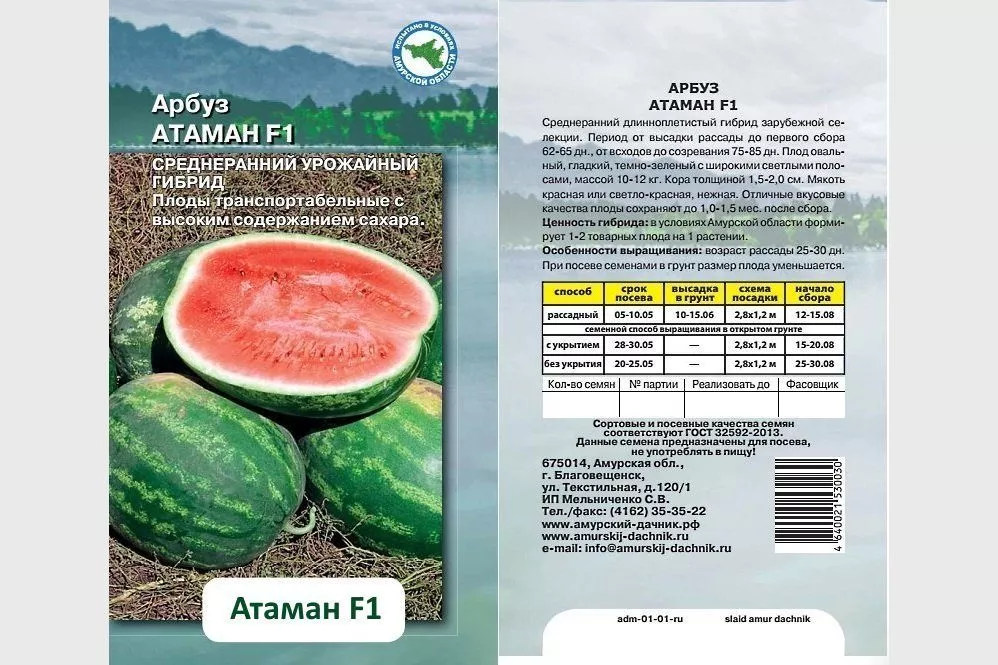
Ataman F1
This is a super-early hybrid. The fruits are large and oval, growing up to 16 kg. The skin is dark green and glossy, with lighter stripes. The flesh is bright red and grainy. It retains its nutritional qualities for a long time and is resistant to breakage during transit.
Ripens in 55-65 days after germination. If sown under film, ripening occurs in 40-45 days. With drip irrigation, yields reach 100 t/ha. The hybrid is resistant to fusarium and anthracnose. It is grown by direct seeding and from seedlings.
Marbled watermelons
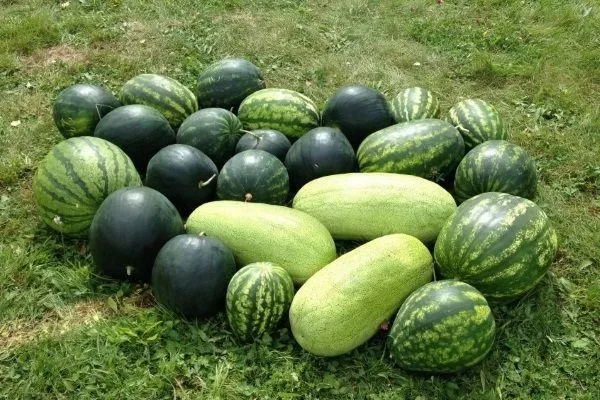
Marbled watermelons are distinguished by a distinctive pattern on the rind. The fruits are light-colored, with dark green veins. There are several marbled varieties, all of which are substantial and contain few seeds. The most famous marbled varieties are Honey Giant and Charleston Gray. They were developed by Russian and French breeders, respectively.
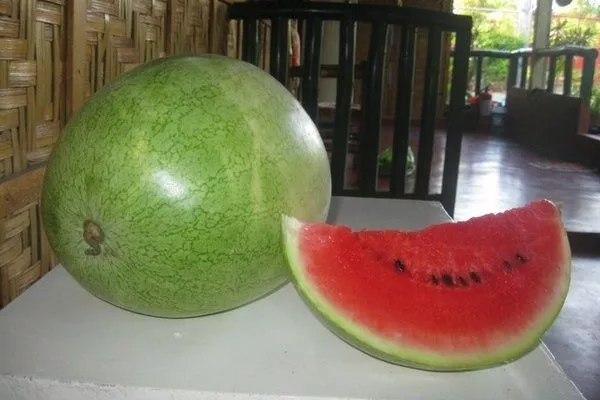
Honey Giant
An early variety. Weight: 12-15 kg. Very sweet taste. The watermelons are oblong. The fruit grows up to 60 cm in length. The flesh is an intense pink-red. A well-ripened watermelon has a honey-like flavor. Excellent taste. Suitable for fresh and canned eating.
The growing season is 65-80 days. Suitable for both indoor and outdoor cultivation. Planting pattern: 100x70 cm. Plant in April-May. Grows well in light, fertile soils. One of the best hybrids for temperate climates.
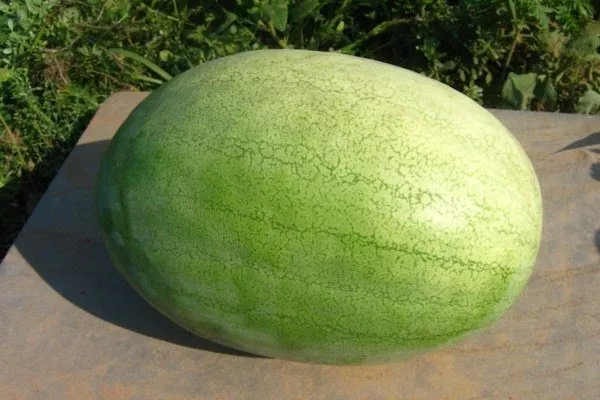
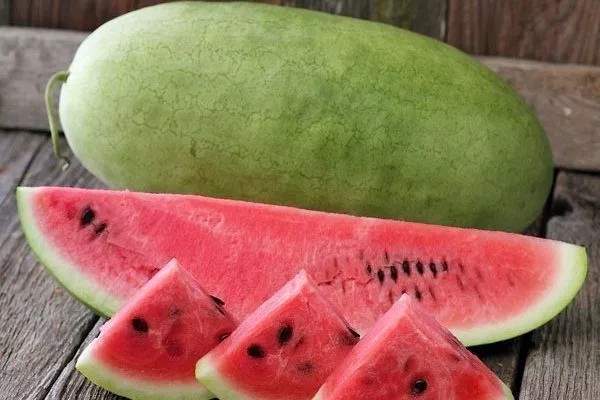
Charleston Gray
A mid-season variety. Vegetable growers and consumers alike are drawn to its unusual elongated shape. These unusual watermelons promise unique flavors. The color is light green. The flesh has a deep pink hue. They are eaten fresh. They offer high marketability and excellent flavor. Due to their light color, the fruits stay cool for a long time. They weigh 12-18 kg. The variety is disease-resistant.
Ripening takes 75-90 days. Planting pattern: 140x70 cm. Seed depth: 4 cm. Up to 100 tons can be harvested per hectare.
Red Star F1
An early hybrid. Suitable for fresh eating. Smooth, spherical fruits with dark green skin. The rind is medium thick. The flesh is dark red and tender. Weight: 7-8 kg. Excellent transportability.
From germination to maturity, it takes 65-76 days. It produces up to 380-470 centners per hectare. The seeding depth is 4 cm. The layout is 170 x 90 cm. It adapts easily to a variety of climates.
Romanza F1
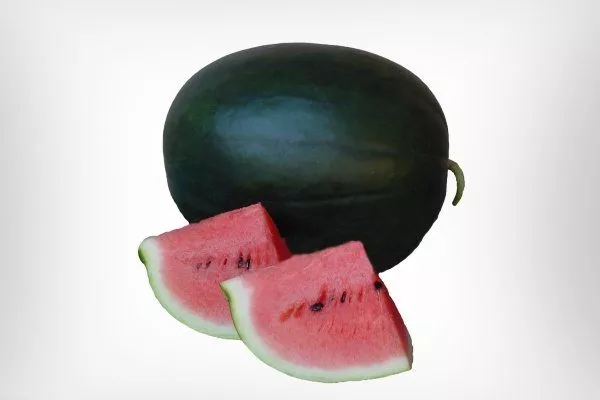
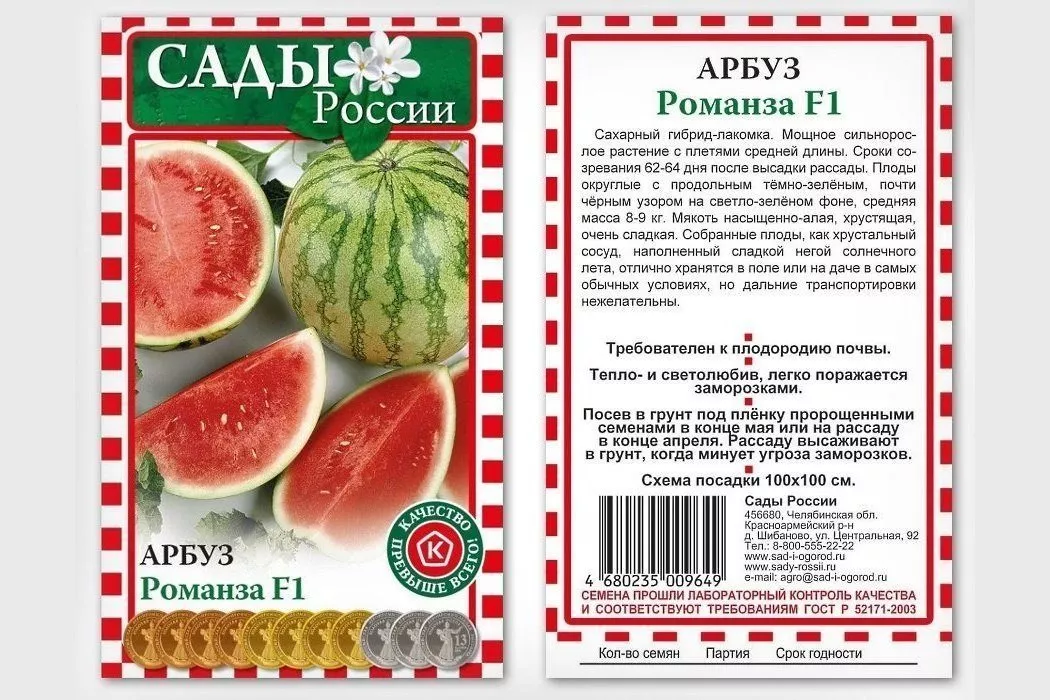
A mid-early, high-yielding hybrid. Round, dark-colored watermelons with stripes, the stripes even darker than the background. Weight: up to 8 kg. The flesh is crunchy, medium-firm, and intensely red. The seeds are very small. High sugar content. The hybrid is disease-resistant and transports well. Excellent commercial quality and shelf life.
The ripening period is 63-82 days. It keeps well in the field and in piles. It is suitable for long-term storage. Planting pattern: 140x100 cm. Up to 230-300 centners are harvested per hectare.
Russian size F1
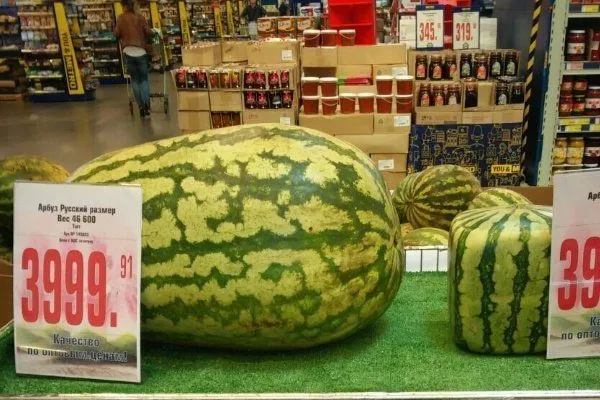
The main advantage is the size of the fruit. They weigh from 10 kg. To grow a giant, you need to provide it with favorable conditions. It is possible to grow fruits weighing 30 kg or more. The fruits have an elongated, torpedo-shaped form. The flesh is juicy, grainy, and aromatic.
Despite its large fruit, this plant is unfussy but thrives in sunny locations. Its growing season lasts up to 100 days. Planting pattern: 80x80 cm. Seeds are planted 4 cm deep; seedlings emerge in 8 days. Sow seeds in April, and transplant seedlings in early summer.
F1 bomb
A mid-early hybrid with a high yield. Developed by Israeli breeders. The oval watermelons are green with darker stripes. They weigh 11-13 kg, with a maximum yield of 22 kg. The flesh is dark red, crisp, and sweet.
The maturation period is 70-73 days. The ideal seedling density per hectare is 6,000. Avoid frequent watering. With drip irrigation, weekly misting is sufficient.
Melania F1
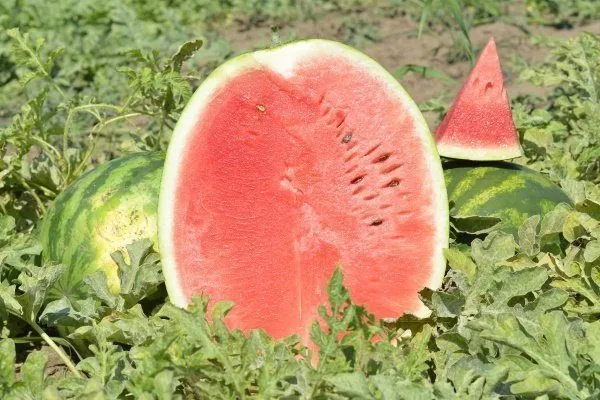
A mid-late Dutch hybrid. For fresh consumption. Heat and cold tolerant. Excellent flavor. Elliptical, green fruits with dark green, blurred stripes. The skin is medium thick, the flesh is red. Small seeds. Weight: 9-12 kg.
Ripening in 80-110 days. Planting pattern: 190x70 cm. Yield per hectare: 140-300 c/ha.
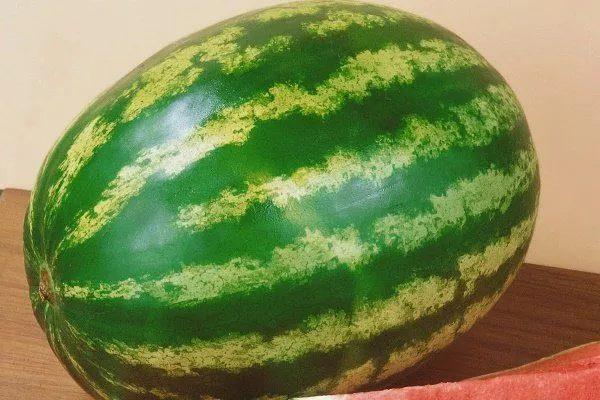
Icarus
A mid-season variety. Elliptical watermelons. The skin is dark green with a subtle netting. The skin is medium thick. The flesh is grainy, with a raspberry hue. A very tasty variety. Weight: 3-4.5 kg. Anthracnose is a threat to this variety. However, Ikar is not susceptible to this disease in melon fields; it is a danger when grown under plastic wrap. Watermelons of this variety are eaten fresh, stored until winter, and processed.
Ripens in 82-111 days. Planting pattern: 190 x 70 cm. Seed depth: 4-5 cm. Seed sowing: May. Recommended soils: light sandy loam, neutral, alkaline. The variety's advantages include drought tolerance and transportability. 125-165 centners per hectare are yielded.
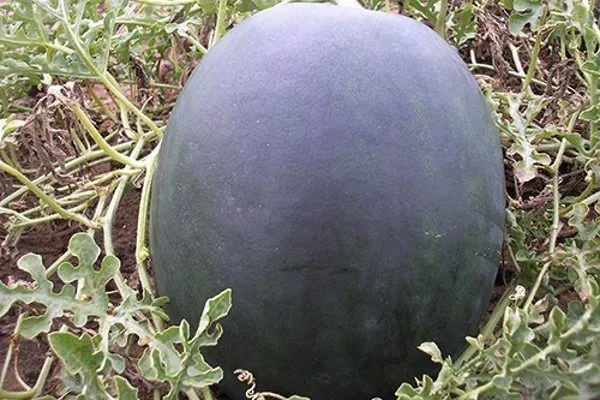
Kimera
A mid-season table variety. High-yielding and disease-resistant. Broadly elliptical, green striped fruits. Weight: 10-12 kg. Dark red, medium-firm flesh. High sugar content – 8.1%.
Ripening period: 83-90 days. Yield: 300-450 c/ha. Seeds are sown in May.
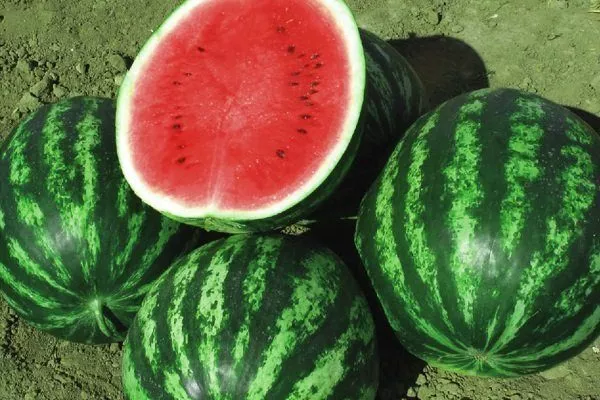
Vizier F1
A mid-early hybrid. Fruits are elongated. It boasts record yields and excellent transportability. Fruits weigh 12-14 kg, with a maximum of 20 kg. The skin is a rich green with uniform dark stripes. The flesh is firm, crisp, dark red, and sweet. Fruits retain their marketable appearance for a long time. Ripening period: 68-72 days.
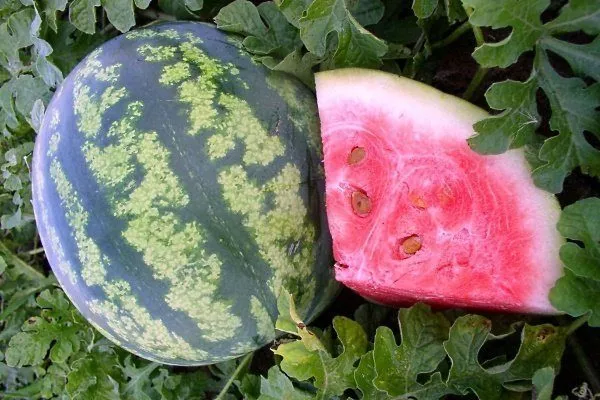
Densuke is a watermelon grown only on the Japanese island of Hokkaido. 65 kg of this delicacy, black, are produced there annually. A single fruit can fetch up to $3,500.
Tamerlan F1
A mid-late hybrid. Weight: 12-14 kg. Large, oval-shaped fruits. Light green skin with dark green stripes. Dark crimson flesh, sweet, juicy, and delicate.
The growing season is 95 days. The period from planting seedlings to fruiting is 75-80 days. This hybrid is recommended for growing both outdoors and indoors. It is resistant to early wilting and most diseases. It prefers drip irrigation. It is easy to store and transports well.
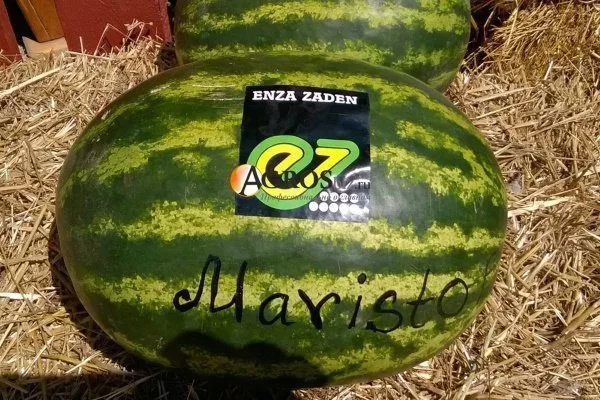
Maristo F1
An early Dutch hybrid. Weight: 9-11 kg. Fruits are uniform in weight and shape, round, dark green, and striped. The dense, bright red flesh is fiberless. Fragrant and sweet. The hybrid is sun-tolerant. The fruits transport well.
Maristo is resistant to anthracnose. Suitable for fresh consumption. Ripening period is 58-60 days. This is one of the most delicious and beautiful watermelons.
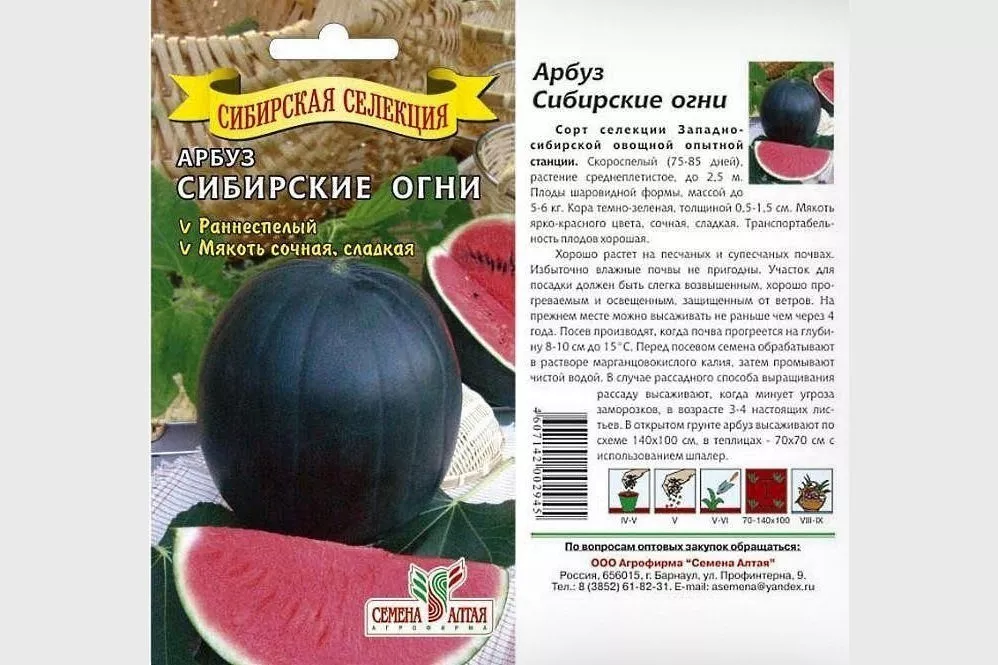
Siberian Lights
An early, cold-hardy variety. It boasts excellent marketability and flavor, with very sweet flesh. The fruits are broadly elliptical, weighing 2-5 kg. The skin is thin, dark green, and finely striped. The flesh is bright red and very juicy. Suitable for fresh consumption.
Ripening period: 78-95 days. One of the most popular varieties. Excellent for growing under plastic and in open ground. Transports well. Yield: 370 c/ha. Seeds are sown in May. Sowing pattern: 140 x 100 cm. Sowing depth: 4-5 cm. Resistant to fusarium.
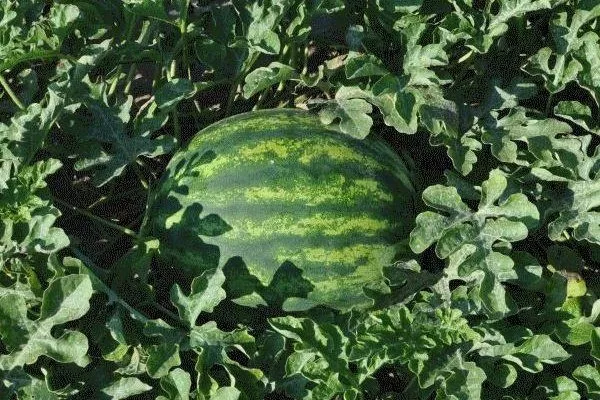
Erken F1
An ultra-early hybrid bred in Turkey. The fruits are round, light green, with dark green stripes. They weigh 8-10 kg. The flesh is juicy, sweet, deep red, and crunchy. These fruits are easy to transport and have a good flavor.
The plant has well-developed foliage, which protects the fruit from sunburn. It is resistant to anthracnose. Ripening takes 56-60 days from germination. Each plant produces an average of 2-3 watermelons. This hybrid is heat-resistant and high-yielding.
Orange Honey F1
An early hybrid for growing in temperate climates. The fruits are round, with dark stripes on a light green background. They weigh 2-2.5 kg. The flesh is an unusual orange color. This hybrid is very sweet. Eaten fresh, this watermelon makes a beautiful and delicious dessert. Sugar content is 13%.
Seeds are sown in May. Planting interval: 100 x 50 cm. Prefers sunny sites. Plant seeds 3-4 cm deep. Seedlings emerge in 10-14 days. Plant only after frost has passed. Requires timely weeding, loosening, watering, and fertilizing.
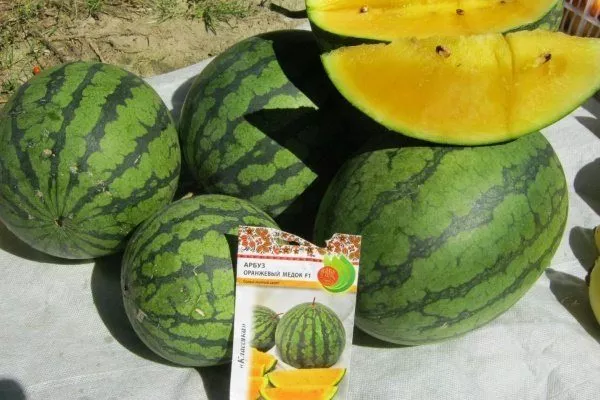
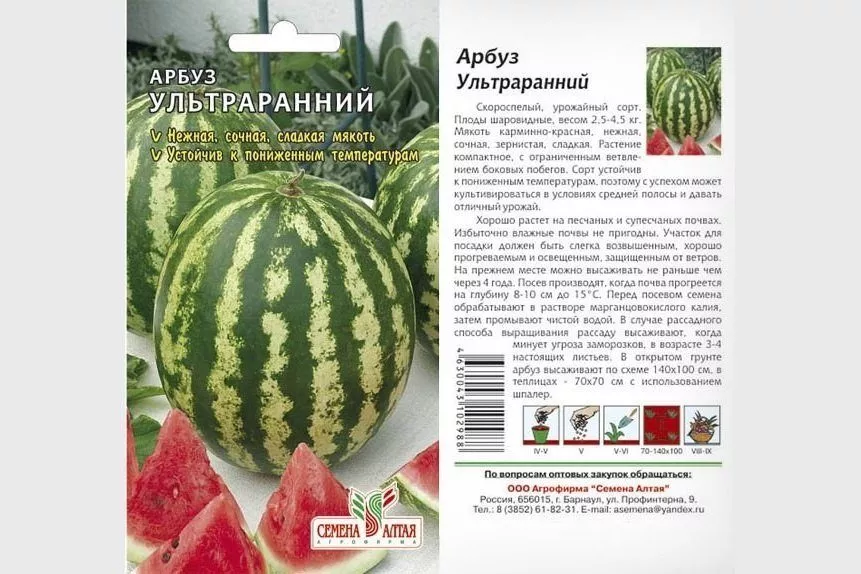
Ultra-early
An ultra-early variety. Round, dark-green fruits with even darker stripes. Weight: 4-6 kg. The flesh is deep red, tender, and grainy. A very sweet variety. Very disease-resistant and easy to grow.
Sow seeds in early May. Plant at a 100x100 cm planting pattern. From germination to fruiting takes 80 days. In southern regions, sow outdoors in April-May. When grown under plastic, form a single-stemmed plant by removing side shoots up to 50 cm long, and pinching all other shoots above the first to third leaf.
Kai F1
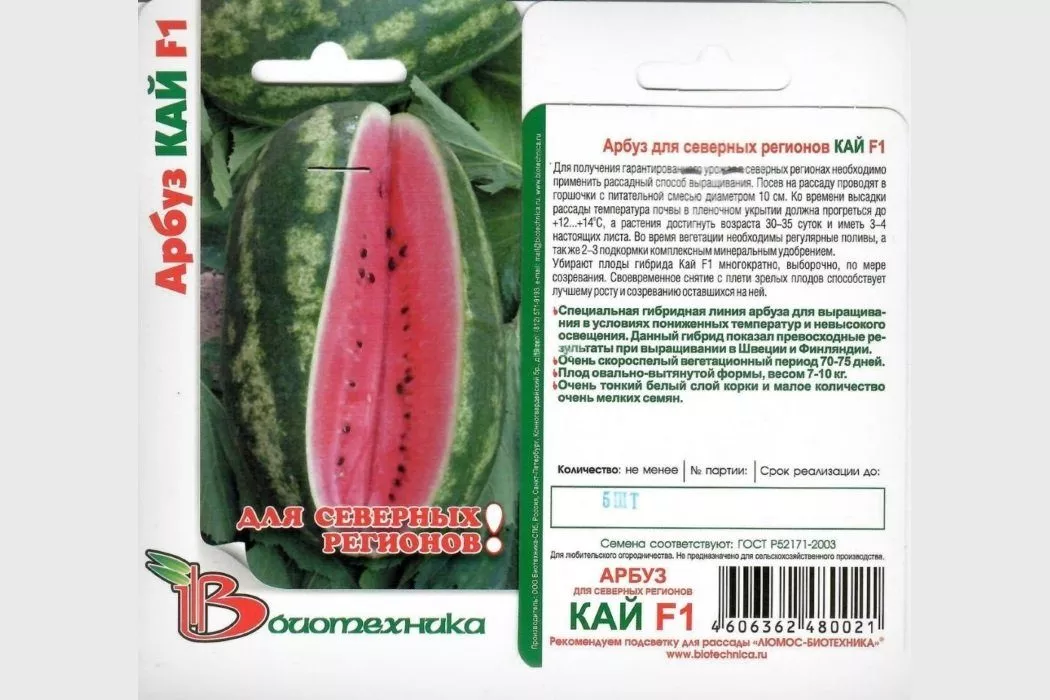
This early-ripening hybrid was bred specifically for northern regions. The hybrid line was created for low temperatures and low light conditions. This watermelon has proven itself in Sweden and Finland. It is grown under plastic and in greenhouses.
The growing season is 70-75 days. The fruits are oval-elongated, weighing 7-10 kg. The rind is light green, with dark green, intermittent stripes. The flesh is juicy and sweet, a bright crimson hue. The seeds are small and very few in number.
The watermelon hybrid is planted under plastic wrap using the seedling method. The seedlings are grown in pots filled with a nutrient-rich mixture. Month-old seedlings are planted out when the soil warms to 12-14°C. The fruits are harvested selectively as they reach ripeness.
SRD-2
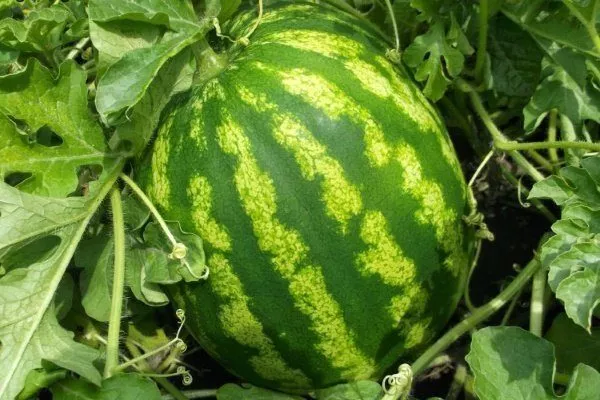
An early, high-yielding variety. An ultra-early ripening watermelon with excellent flavor. Resistant to powdery mildew, anthracnose, and melon aphid. The fruits are elongated and round. The color is light green, with narrow, dark green, prickly stripes. The red flesh is grainy, sweet, and juicy. Weight: 4-5 kg. The rind is medium-hard and does not crack. Sugar content: up to 7%.
The ripening period is 55-60 days. Planting is in May. The planting pattern is 90 x 50 cm. A single plant produces 2-3 watermelons. Yields are up to 300 centners per hectare. The fruits retain excellent flavor for 30 days after harvest. The recommended planting density is 6,000-7,000 plants per hectare. This variety is characterized by its shelf life and transportability.
A Gift to the North F1
An ultra-early hybrid with a high sugar content. Suitable for northern regions. The flavor of the fruit is almost as good as watermelons grown in the southern regions. The fruits are round, light green with dark green spiny stripes. They weigh up to 10 kg. The flesh is crisp and juicy, a rich red color.
This hybrid is disease-resistant, easy to transport, and drought-tolerant. However, watermelons are sensitive to night frosts and stagnant water, so they should be covered with plastic film early in the growing season. It prefers open, wind-protected sites. The growing season of this extra-early hybrid is 75-85 days from sowing to harvest. Planting begins no earlier than the first or second ten days of May. Seedlings are planted in mid-June. Yield, with irrigation, is 300-350 c/ha.
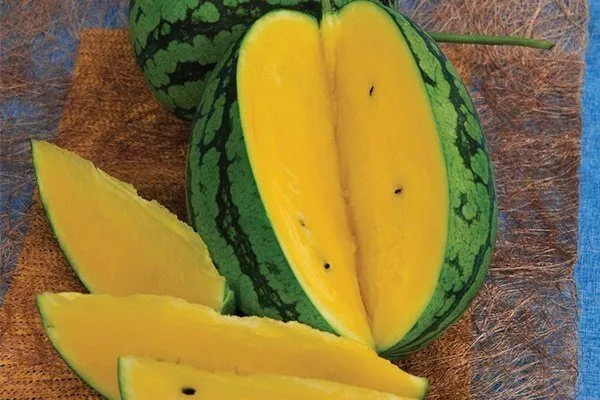
Surprise
An early variety. This is a surprise from Kuban breeders. It has a distinctive yellow flesh color. The flesh is medium-firm, sweet, and juicy. It is almost seedless. The fruits are round, whitish, with dark green spiny stripes. Weight: 4-4.5 kg.
This variety is drought-resistant and grows well in temperate climates. These watermelons have excellent shelf life, retaining their flavor for up to 2-3 months. Seeds for seedlings are sown in late April. Planting pattern: 100 x 40 cm. Yields up to 200 centners per hectare. They grow both under plastic and in open melon beds.
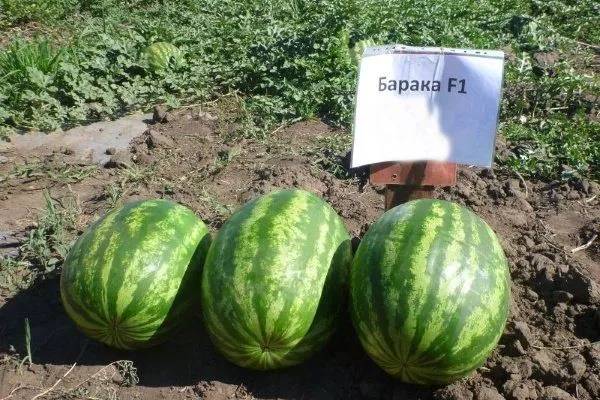
Baraka F1
A mid-early Dutch hybrid. Stores well in the melon field and is easy to transport over long distances without losing its marketable appearance. Excellent flavor and disease resistance. The fruits are oval, dark green, with lighter stripes. The flesh is dark red and non-fibrous. The seeds are small. Fruit weight: 11-13 kg.
Ripening period: 72-77 kg. Planting pattern: 180-200 x 60-80 cm. Seed depth: 4-5 cm. The plant is vigorous, well-foliated, and the fruit is reliably protected from sunburn. Yields up to 300 c/ha. The yield is especially good with drip irrigation. The hybrid is resistant to fusarium wilt and anthracnose.
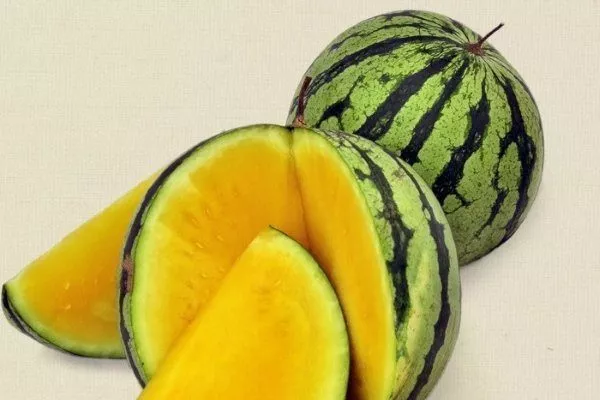
Yellow seedless F1
This early-ripening hybrid has a distinctive, bright yellow flesh. The flesh is virtually seedless. The fruits are round and striped. The flesh has a mango flavor. The fruits are eaten fresh and can also be used to make watermelon honey, desserts, and candied fruit.
Planting interval: 50x100 cm. Prefers sunny locations. Grows in various climate zones and adapts well. Produces decent yields in central Russia. Disease-resistant. This hybrid is not suitable for long-term storage.
Anniversary NK F1
An early-ripening hybrid with oblong fruits. It attracts gardeners with its unique shape, excellent flavor, and ease of cultivation. A single plant produces 3-4 oval, striped fruits. The flesh is granular, juicy, crisp, dense, aromatic, and sweet. It weighs 8-10 kg. It has very few seeds. Fruit length is 30-40 cm.
The ripening period is 80-90 days. Planting pattern: 150x70 cm. The hybrid grows well in any climate, tolerating both scorching sun and cool weather. It can even be grown in Siberia.
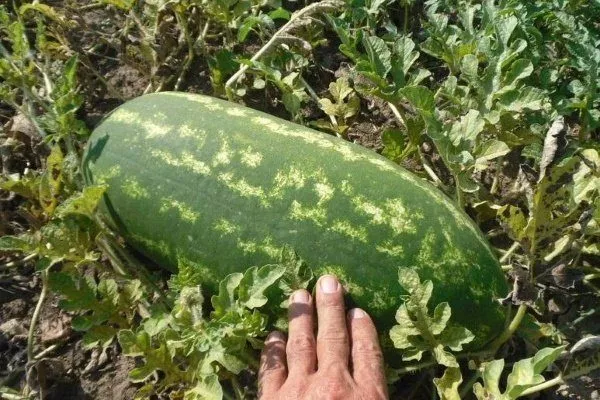
Other varieties
Pannonia F 1. An early-ripening hybrid. It transports well, is disease-resistant, and retains its good flavor for a long time. The round fruits are dark green. The flesh is deep red and sweet. Ripens in 70-74 days. Weighs 3-5 kg.
Rose of the South-East. A mid-early variety. The spherical fruits are light green with wide, dark stripes. They weigh 2.5-4.5 kg. Ripens in 80 days. Excellent flavor.
Memory of Kholodov. An early variety. Unique coloring, light-colored fruits without stripes. Round watermelons are light green, almost white. The flesh is red and delicate. Weight: 2.8-5.5 kg. Ripening period: 90-110 days. Yield: up to 250 c/ha. Large, brown seeds with black speckles.
Volzhanin. A mid-season variety. Fruit shape is broadly elliptical. Light green color with spiky dark green stripes. Dark red, grainy flesh. Sugar content is up to 7.2%. Ripening period is 85-110 days. Yield without irrigation is up to 120 c/ha.
American. A mid-early hybrid. Retains flavor and marketability for up to 40 days. Drought- and low-temperature resistant. Broadly elliptical, light-green fruits with green spiny stripes. Red flesh is medium-firm. Weight up to 4.5 kg. Ripening period: 70-90 kg. Yield: up to 240 c/ha.
Northern lights. An ultra-early variety. Valued for its abundant harvest. The fruits are round, green, and stripe-free. The flesh is pink and sweet. High commercial quality. The fruits ripen in 65-70 days. They weigh up to 3 kg.
Farmer F 1.An early hybrid. It transports well and is disease and drought resistant. The round, light-green fruits have dark stripes. The flesh is red and medium-firm. They weigh up to 3 kg. Ripening time is up to 80 days. Up to 400 centners can be harvested per hectare.
Whole-leaf. A variety with excellent taste, marketability, and transportability. Drought- and disease-resistant. The spherical, whitish fruits are stripe-free. The tender, grainy red flesh. They weigh up to 5 kg. Ripening takes up to 90 days. Up to 40 tons can be grown per hectare.
Tulip. A high-yielding early variety. Valued for its tolerance to low spring temperatures. Excellent flavor and good marketability. Spherical, black-green fruits. The flesh is tender, grainy, and red. Weight: up to 3 kg. Ripens in 80 days.
Majestic. A high-yielding early hybrid. One hectare can yield up to 85 tons of watermelons. Resistant to powdery mildew and other diseases. The elongated, smooth fruits are light green with dark green stripes. The flesh is red. The seeds are small and brown. Ripens in 80-82 days.
Favorite. A mid-season variety. Eaten fresh. Retains excellent flavor for 30-40 days. Broadly elliptical fruits are green, with darker stripes. The flesh is red. Weight: up to 3.5 kg. Ripening occurs in 70-85 days. One hectare can yield up to 300 centners of watermelons.
Daredevil F 1. A mid-early hybrid. Excellent flavor. Heat and disease resistant. Fruits weigh up to 8 kg and are elliptical in shape. Green in color, with darker, more diffuse stripes. The flesh is dark red. Fruit ripens in 65-85 days. Yields up to 350 centners per hectare.
Bingo. A mid-early variety bred in Poland. It transports well over long distances. The round fruits are light green with green spots. The skin is thin, and the seeds are small. The flesh is grainy and dark red. Weight: 8-12 kg. Ripening period: 64-76 days. Yield: 190-240 c/ha.
Galaxy. A mid-early variety with excellent flavor. The round, smooth fruits are light green, with dark green, prickly stripes. The flesh is red and medium-dense. The seeds are small and dark brown. Weight: up to 5 kg. Sugar content: 8.9%. Ripens in 68-75 days. Yield: up to 250 c/ha.
Earthling. An early variety. Susceptible to powdery mildew and not resistant to anthracnose. The elongated, spherical fruits are light green with wide, green stripes. The flesh is granular and pink. Weight: up to 6 kg. Ripens in 75-85 days. Yield: up to 350 c/ha.
Celebration F 1A mid-season hybrid. The fruits are elongated and elliptical. The skin is light yellow, with narrow, dark green stripes. The flesh is light red and grainy. Resistant to fusarium. Weight: up to 6 kg.
Black Prince. A mid-late variety. Easy to transport, retains marketable qualities for up to 50 days. Tolerant of temperature fluctuations. Cylindrical, dark green fruits. Red, medium-firm flesh. Weight: 3-9 kg. Ripening period: 72 to 100 days. Yield: 150-350 c/ha.
Yarilo. An early variety. Seeds germinate at lower temperatures and are disease-resistant. Spherical and oblate-spherical fruits are dark green. The flesh is red and juicy. They weigh 3-5 kg. Ripening time is up to 80 days. Yields up to 300 c/ha.
Irinka F 1.An early hybrid with excellent flavor. Disease-resistant. Suitable for candied fruit. The fruits are round and green, with dark, thin stripes. Sugar content is 12%. Weight: 3-5 kg. Ripens in 80-85 days. One plant can produce 10-15 kg of watermelons.
Peasant. A versatile mid-late variety with high commercial qualities. Excellent flavor. Oval, light green fruits with dark stripes. Thick skin. Red, granular flesh. Weight: 5-8 kg. Ripens in 100-105 days.
Odysseus F 1. An early hybrid. Broadly elliptical, light yellow fruits with dark green, wide, and diffuse stripes. The flesh is pinkish-red. Weight: 3-9 kg. Ripening occurs in 75-85 days. 1 hectare yields 160-270 centners.
Extraordinary. A mid-season variety with excellent flavor. Oval, smooth, dark green fruits. The flesh is grainy, red, and juicy. Weight: up to 3.7 kg. Yield: 150-340 c/ha.
Pannonia F 1. An early-ripening hybrid. It transports well, is disease-resistant, and retains its good flavor for a long time. The round fruits are dark green. The flesh is deep red and sweet. Ripens in 70-74 days. Weighs 3-5 kg.
Coral. An ultra-early variety. Suitable for fresh consumption, pickling, and making watermelon honey. These watermelons are very tasty. The fruits are spherical, black-green. The flesh is bright red, juicy, and grainy. Weight: 2-3 kg. Ripens in 70-77 days.
Volgogradets KRS 90. An early, drought-resistant variety. Weight: 3-6 kg. Broadly elliptical, light green fruits with green, prickly stripes. Ripening time: 65 to 78 days. Up to 300 centners of watermelons are harvested per hectare.
Delicatessen F 1. An early-ripening, drought-resistant hybrid. Retains marketable qualities for up to 30 days. Round, green-striped fruits. Sweet, raspberry-red flesh. Weight: 1.5-3.8 kg. Ripening period: up to 90 days. Yield: up to 300 c/ha.
Prince. An early variety. The spherical fruits are light green with dark stripes. The flesh is bright crimson, very sweet and tender. This variety is distinguished by its excellent transportability and drought tolerance. Weight: 4-6 kg. Disease resistance. Ripening: 65-73 days.
Honey Lazybones F 1. An early-ripening, drought-resistant hybrid. High sugar content. Easy to transport. Round, light-green fruits. Weight: 1.9-3.8 kg. Ripens in 60-80 days.
Montenegrin. An early, versatile variety. Suitable for fresh and pickled consumption. Globular shape, black-green color. The flesh is tender and red. Drought-resistant. Weight: 2.5-3 kg. Grows well in light, fertile soils.
Sinchevsky. A mid-season, disease-resistant variety. Spherical shape. Light green skin with dark green stripes. The flesh is a rich crimson color with a grainy texture. Weight: 3.3-6.5 kg.
Which variety to choose? A gardener's guide
Thanks to breeders, gardeners can choose the most suitable watermelon variety from a vast selection. Each variety is different, so we've prepared a short chart to help you choose a watermelon variety:
| Types of varieties | Varieties and hybrids |
| The most productive ones are from 35 to 100 t/ha | Sugar Baby, Crimson Sweet, Charleston Gray, Delicatessen F1, Fire, Chill |
| Early maturing – 60-80 days. | Sugar Baby, Honey Giant, Dumara F1, Ogonyok, Zenit, Lunar, Charleston Grey, Winner 395, Top Gun F1, Producer |
| Mid-season – 80-90 days | Astrakhan, Black Prince, Volzhanin, Crimson Sweet, Delicatessen F1, Imbar F1, Ikar |
| Late – more than 90 days | Kholodok, Red King, Melitopol 60 |
| Seedless yellow | Lunar, Imbar F1, Yellow Buttercup F1 |
| Seedless red | King of Hearts, Regus F1, Prince Hamlet F1, Majestic F1, Sandai Special, Sagas F1 |
| The sweetest | Melitopol 60, Pobeditel 395, Bykovsky – 22, Astrakhan |
| The largest | Carolina Cross, Russian Size, Palladin F1, Astrakhan, Crimson Glory F1, Charleston Gray |
| For open ground | Melitopolsky 142, Rose of the South-East, Radiant, Astrakhansky, Yarilo, Volgar, Ogonyok |
- ✓ Consider the climatic conditions of your region to select the appropriate variety.
- ✓ Pay attention to the variety's resistance to diseases that are particularly common in your area.
- ✓ Decide on the preferred ripening time (early, mid-season, late).
- ✓ Consider the purpose of cultivation (for fresh consumption, processing, long-term storage).
For gardeners planning to plant watermelons, the following tips are helpful: choose varieties that are optimal for your climate, soil, and irrigation. Focus on your preferences—choose the shape, color, and "favorite size" to suit your taste. Pay attention to the rind thickness, flesh texture, and seed size—for many, these nuances are also very important.
Hello, Ms. Marina. You've done a fantastic job, thank you for such a comprehensive overview! I suddenly got a light-colored watermelon, and only from you did I find out what it's called—Rafinad!
Good luck in both farming and the Internet)))