
A square watermelon looks very unusual, as we're used to round watermelons. However, these fruits are becoming less of a novelty these days. Let's find out the secret behind this shape and how to grow these berries yourself.
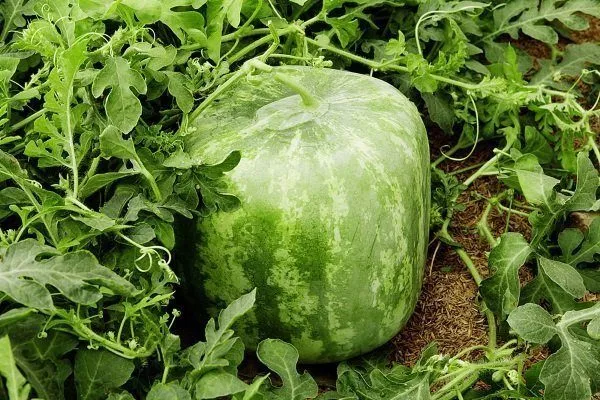
The history of unusual berry shapes
Square-shaped watermelons first appeared in the Land of the Rising Sun—Japan—about 30 years ago. Back then, Japanese breeders in Kagawa Prefecture on the island of Shikoku first attempted to create a fruit with an unconventional shape.
Why grow square watermelons?
Initially, square watermelons were created to make transporting the produce more convenient and comfortable. This shape allowed the melons to be arranged compactly and avoid being bruised during transport. Furthermore, the berry's unusual appearance attracted attention, thus creating a new business opportunity. People began growing these watermelons and making money from them.
Where is it grown?
Today, Japan isn't the only country selling unusually shaped watermelons. Brazil and the UAE have joined the fray. These crops grow best in southern latitudes. However, even in Moscow and other central Russian cities, you can already find square-shaped fruits grown in your own garden.
What is the secret of the watermelon's square shape?
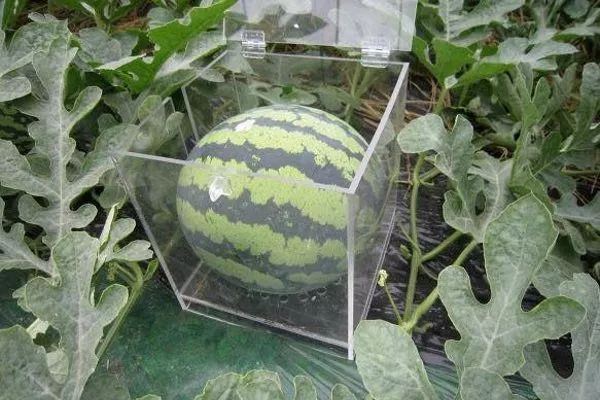
There's no specific "square" watermelon variety. So what's the secret to this shape? It's simple: at a certain point, the fruit is placed in a special, rigid container, which gives it the desired shape. This container can be made of plastic, plastic, or glass.
Making a square shape yourself
Don't waste money on a watermelon growing mold; create your own. You'll need the following tools and materials:
- main material of the box (polycarbonate, plexiglass or plywood) – 1 sheet (panel) with a thickness of approximately 12 mm;
- metal corner with a width of at least 30 mm;
- door hinges – 4 pcs.;
- door fasteners – 2 pcs.;
- fastening elements – bolts with nuts, self-tapping screws;
- jigsaw;
- drill;
- screwdriver;
- feather drill with a diameter of 0.25 cm.
- ✓ The material should be strong enough to withstand the pressure of the growing watermelon, but not too heavy to damage the plant.
- ✓ The transparency of the material is important for monitoring the development of the fetus and its condition.
- ✓ Weather resistance, especially if the form will be used outdoors.
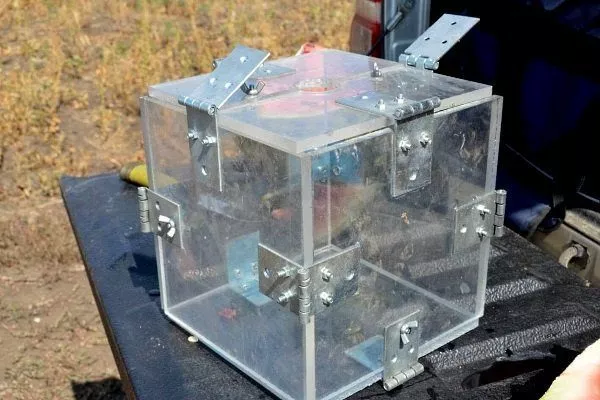
The process of creating a container:
- Cut out 6 pieces from the main box material. Make one 25 x 25 cm, and the others slightly larger. The diagonal of the container should be wider than the diagonal of the watermelon itself, otherwise it won't fit.

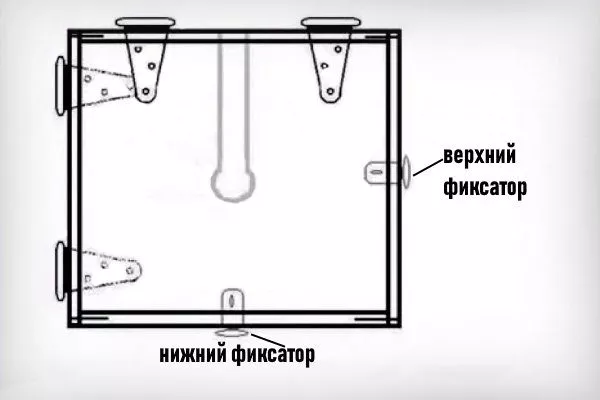
- Prepare the blanks for assembly. On the piece that will be the top lid, drill a 2.5 cm hole. From this hole, cut a strip about 2 cm wide towards the edge.

- Assemble the structure. Attach two door hinges to the side wall and the lid. The lid should overlap the ends of the side walls.
Next, connect the pieces using screws with protruding heads. If necessary, reinforce the frame joints with metal corners.

- Make the finishing touches. Attach the two remaining door hinges to the bottom of the box to create a second door. You'll need it when removing the fruit from the mold. Attach locks to both doors. Cut a few small ventilation holes in the corners of the structure. For better heat absorption, paint the box black or transparent.
The Pros and Cons of Growing Unusual Fruits
Square watermelons have their own specific advantages over round ones:
- low risk of damage to fruits during transportation;
- the possibility of compact arrangement of berries during storage;
- convenient shape for cutting portions;
- Long shelf life - some sources say that this watermelon can be stored for about a year without spoiling.
But this culture also has the following disadvantages:
- unripeness of fruits due to the berries being in a container for shaping;
- risk of damage when in contact with the container - if it is too tight, the berry, growing, will become deformed;
- decrease in taste qualities.
Features of cultivation
To ensure a bountiful harvest of square-shaped watermelons, it's important to choose the right planting location. It should be sunny and not shaded. This melon doesn't like shade. The soil should be well-structured, rich in micronutrients, and non-acidic.
If the soil doesn't meet these requirements, mix in a little lime or wood ash. Add river sand to light, loose soil while digging.
Avoid planting watermelons where other melons, cucumbers, and cabbage were previously grown. This can introduce harmful viruses into the seeds. Grow the crop in areas previously occupied by peas, potatoes, corn, or sunflowers.
Preparing and planting seeds
Watermelons are most often grown from seedlings. This method involves planting the seeds in small cups in March and, once the sprouts emerge, transferring them to open ground.
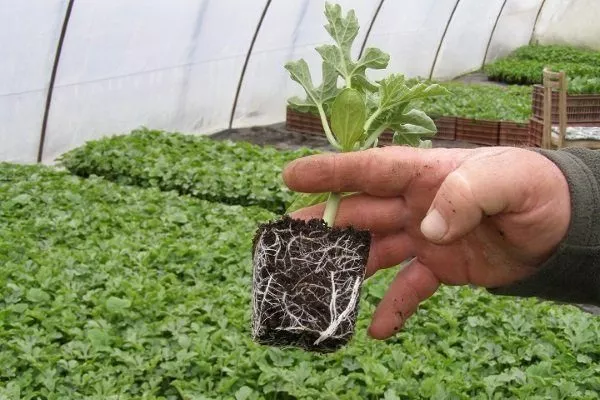
This method is applicable in those regions where the climate does not allow melons to be grown directly outdoors.
How to grow seedlings:
- soak the seeds in a growth stimulator for 3 days;
- put them in the refrigerator for 2 days;
- Sow the prepared seeds in cups with fertile soil;
- Cover the seedlings with film.
To ensure timely germination and healthy development of the seeds, water them regularly, ventilate them, and maintain an optimal temperature of 25°C or higher. Avoid growing seedlings on a windowsill, as melons and gourds do not tolerate temperature fluctuations.
After 1.5 weeks, watermelon sprouts will appear. Plant the seedlings outdoors at the end of the last month of spring or early summer. The seedlings should already have at least five leaves. The weather during planting should be warm and sunny. Add humus to the soil before planting.
Caring for seedlings before placing them in a mold
For the first 2 weeks after planting the seedlings outside, take proper care of them:
- Water the seedlings regularly with warm water – once a week or once every 3 days if it’s hot;
- cover them at night when the temperature drops;
- systematically loosen the soil and feed the melon patch with liquid organic fertilizers;
- ventilate the sprouts by lifting the film (if they are covered);
- get rid of emerging weeds;
- Mulch the holes with a 10 cm layer of straw.
Growing in a greenhouse
If you live in a cold climate, grow watermelons in a greenhouse. The optimal height for such a greenhouse is approximately 1.7 meters. Grow only melons in it, as watermelons don't like other plants in a confined space. Humidity in the greenhouse should not exceed 60%, and the temperature should not exceed 30 degrees Celsius.
Sow watermelon seeds, not seedlings, in the greenhouse soil. Water the plants regularly and ventilate the greenhouse. Despite the external protection, keep a cover ready for the watermelons in case of a nighttime temperature drop.
When and how to place in the mold and what to do next?
When the watermelon grows to the size of a tennis ball (approximately 6-10 cm in diameter), place it in the container you've created to form a square. Do this by threading a loop of the watermelon through a hole in the container.
- ✓ Soil temperature should be at least +15°C for optimal growth.
- ✓ Watering should be regular, but not excessive, to avoid cracking of the fruit.
- ✓ The form should be placed so that the watermelon receives uniform sunlight from all sides.
What to do after placing the fruit in a container:
- adjust the watermelon so that its stripes are located clearly vertically along its edges;
- water the crop generously as well;
- Cover the container on top to prevent overheating.
Once the watermelon reaches the size of its container, it will begin to take on its shape. Typically, the crop takes about 95-100 days to mature after being planted outdoors. The key is to catch the moment when the watermelon is ripe but not too large. This should be avoided, otherwise it will burst the container.
Once the berries are ripe, pick them from the bed by twisting the stems a few times and remove them from the container. For a reusable container, simply remove the lid.
Sometimes, after removing a watermelon from its container, its color isn't vibrant enough. To fix this, leave the berries in the sun for 2-3 days.
How to determine the degree of ripeness of fruits?
Signs of ripeness in square watermelons are the same as in round ones:
- dry stalk;
- muffled sound when tapping;
- yellowed part of the watermelon at the bottom.
Incidentally, square-shaped watermelons may not fully ripen if the container is not the right size. If the container is too small, further growth will cause the berries to crack. It's important to catch this early if this happens.
Harvesting and storage
Watermelons can be harvested 95-100 days after planting. If you plan to store the fruit for a long time, harvest them during the first stage of ripeness. You can cut the fruit with a knife or pruning shears, leaving at least 5 cm of stem.
Store watermelons on a thin layer of straw in a dark place. Arrange the berries on shelves or in earthen trenches. If the fruit has any damage, it will not keep for long.
Watch the video below on how to grow, select, and store a square watermelon:
How much does a square watermelon cost and where can I buy it?
Square watermelons are enjoyed not only as food but also as table decorations. Buy them online (for example, at Globus Gourmet) or look for them in supermarkets. Just keep in mind that the price of such a delicacy in Moscow can be 25,000-30,000 rubles per piece.
Reviews from gardeners and consumers
The secret to creating square watermelons turned out to be quite simple. However, without proper cultivation techniques and care, attempting to grow such a fruit in your garden may not be entirely successful. Consider the climate of your region and be sure to choose a sturdy container for creating the shape.
Are plastic and plastic not the same thing?